How Hot Pavement Affects Tire Performance on Your 4Runner

Hot pavement can drastically impact your 4Runner’s tire performance. Temperatures around 140°F affect tire composition, reducing grip and increasing the risk of blowouts. High heat causes tire pressure to rise, leading to potential overinflation, which compromises handling and safety. Worn tires are particularly vulnerable, as they struggle to dissipate heat effectively. Regular inspections for bulges and tread depth are essential. Understanding how heat affects your tires is key to maintaining safety and performance in hot conditions.
How Hot Pavement Impacts Your 4Runner’s Tires

Hot pavement can reach temperatures around 140°F, greatly affecting your 4Runner’s tires. At such high temperatures, tire composition plays an essential role in heat dissipation. The friction from rolling resistance can compromise tire integrity, reducing grip on hot surfaces and negatively impacting performance metrics. If your tires are worn, their ability to dissipate heat diminishes, accelerating tread wear and increasing hydroplaning risks during summer thunderstorms.
Maintaining proper tire pressure is critical; even a 10-degree temperature increase can considerably elevate PSI, affecting handling and safety. Seasonal changes necessitate regular inspections for bulges and tread depth to prevent heat-related damage. Understanding how road conditions and driving habits influence tire performance allows you to leverage advancements in tire technology, ensuring peak performance. By actively managing these factors, you liberate your driving experience, enhancing both safety and efficiency on hot pavement.
Understanding Tire Pressure Changes in High Temperatures
As temperatures rise, tire pressure can fluctuate considerably, impacting your vehicle’s performance. A 10-degree Fahrenheit increase can elevate tire pressure by 1 PSI, primarily due to heat expansion. This overinflation can accelerate tire wear and raise the risk of blowouts, especially on hot pavement. Maintaining the recommended PSI is essential; both overinflated and underinflated tires lead to uneven wear and compromised handling.
For summer safety, regularly checking tire pressure when tires are cool helps guarantee accurate readings. Pressure monitoring should be part of your maintenance routines, as high tire pressure diminishes traction and handling, particularly during sharp turns or sudden stops. By following inflation tips and understanding temperature effects, you can protect your 4Runner’s performance metrics and optimize driving safety. Prioritize regular checks to adapt to the heat and maintain your tires in peak condition.
Signs Your 4runner Tires Are Suffering From Heat Damage
Tire health is vital for maintaining your 4Runner’s performance, especially during summer heat. Signs of heat damage can jeopardize your tire longevity and safety. First, watch for high tire pressure, as overinflation can occur when air expands with heat. This can lead to reduced handling capabilities and traction, particularly at high speeds.
Inspect your tires for interior damage, like bulging or delamination, which often results from excessive heat and rolling resistance. A drop in fuel efficiency may also indicate underlying tire issues, as overheated tires increase rolling resistance.
Regular inspections are important; look for cracks, bulges, or reduced tread depth. Addressing these signs promptly can enhance your tires’ heat resistance and prevent costly repairs. By staying vigilant, you guarantee your 4Runner performs at its best, even under scorching conditions.
How Hot Weather Changes Your Tire Rubber
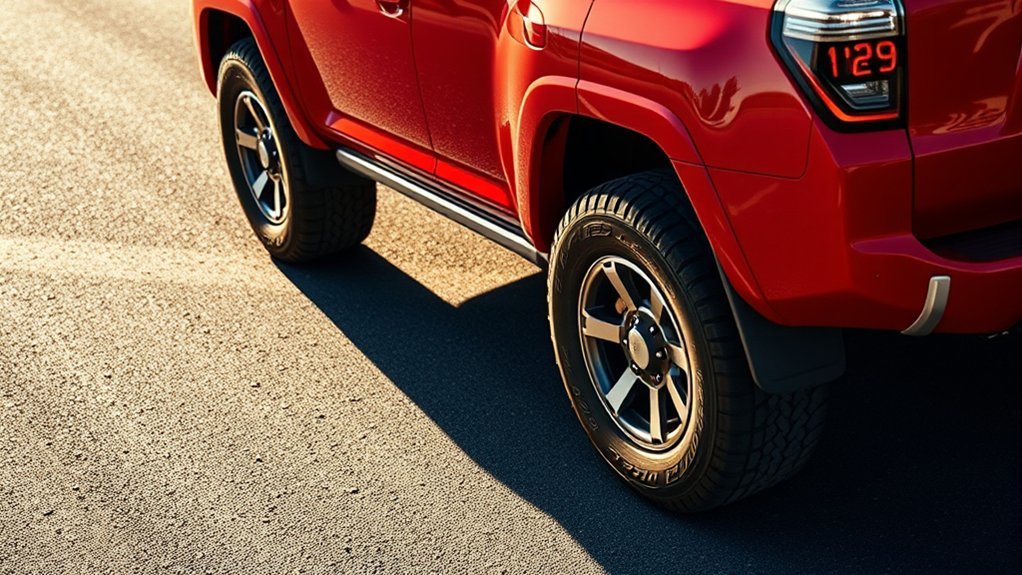
When temperatures rise, the rubber in your tires undergoes significant changes that affect performance and safety. The tire composition becomes more flexible, allowing it to adapt to the pavement texture. However, this increased flexibility can lead to accelerated wear patterns, especially if your tires lack proper heat resistance. During summer driving, elevated temperatures can cause air expansion within the tires, risking overinflation that compromises rubber integrity and contact with the road. Prolonged exposure to heat may also result in dry rot, weakening the rubber and increasing the risk of blowouts or sidewall failure. These changes directly influence traction and handling, critical factors for your safety on hot road conditions. Be mindful of how hot weather alters your tire’s lifespan, as understanding these effects is essential for maintaining peak tire performance.
How Overinflation Affects Handling and Safety
Overinflating your tires can greatly compromise handling stability and increase the risk of blowouts. As the contact patch shrinks, traction diminishes, making sharp turns and sudden maneuvers less predictable. Additionally, uneven tire wear accelerates, reducing tread life and jeopardizing overall safety on the road.
Effects on Tire Wear
As temperatures soar, maintaining the correct tire pressure becomes critical, particularly because hot pavement can cause significant air pressure increases. Overinflated tires, due to heat effects, lead to uneven wear and a reduced contact patch, compromising traction during acceleration and braking. This directly impacts performance metrics, as the tire composition struggles to maintain adequate grip. Increased friction generates excessive heat, further accelerating tread wear and heightening blowout risks. When tire pressure exceeds recommended levels, shock absorption diminishes, adversely affecting ride comfort and vehicle stability. Regular pressure monitoring and seasonal adjustments are essential for peak maintenance frequency, aligning with your driving habits to guarantee longevity and safety of your 4Runner’s tires.
Impact on Handling Stability
While maintaining proper tire pressure is essential for peak vehicle performance, overinflated tires can severely compromise handling stability. Increased pressure reduces the contact area with the pavement, diminishing traction and cornering performance, especially on hot surfaces. Stiffer tires result from elevated heat, leading to diminished shock absorption and a harsher ride, which negatively affects steering response.
| Impact Factor | Overinflation Effect | Resulting Performance |
|---|---|---|
| Contact Area | Reduced | Lower traction |
| Tire Stiffness | Increased | Harsher ride |
| Handling Precision | Compromised | Weaker cornering |
| Shock Absorption | Diminished | Reduced comfort and control |
Regularly checking tire pressure guarantees ideal performance, enhancing stability and safety for your 4Runner in hot conditions.
Increased Blowout Risk
Excessive tire pressure on hot pavement greatly elevates the risk of blowouts, threatening both handling and safety. When temperatures rise, tire air pressure can increase dramatically, leading to overinflation. This results in a smaller contact patch with the road, reducing traction and making your 4Runner susceptible to skidding or losing control. A mere 10-degree rise in temperature can inflate tire pressure by 1 PSI, compromising vehicle stability. Furthermore, overinflation accelerates tread wear, diminishing tire longevity and increasing the risk of blowouts during high-speed maneuvers. For effective blowout prevention, it’s essential to maintain proper tire pressure, ideally checked when tires are cool. Prioritizing these practices guarantees peak handling and enhances safety under demanding conditions.
Tire Inspection Tips for Summer
As summer heat intensifies, regular tire inspections become vital for maintaining performance and safety. You should focus on visual wear indicators, pressure checks, and establishing a regular rotation schedule to mitigate the effects of hot pavement. By staying proactive, you can guarantee your tires remain in peak condition throughout the season.
Visual Wear Indicators
Inspecting your tires regularly is essential, especially during the summer months when heat can exacerbate wear and damage. Start by checking tread depth using the penny test; if Lincoln’s head is visible, it’s time to replace your tires for ideal grip. Uneven tread depth can indicate alignment issues, which are vital to address. Next, examine the sidewalls for bulges or blisters, as these may reveal internal damage worsened by high temperatures. Additionally, monitor for vibrations while driving, as they can signify uneven wear or structural issues. Staying vigilant with these visual wear indicators can enhance your safety and performance, ensuring your 4Runner performs reliably on scorching pavement.
Pressure Check Essentials
Regular tire pressure checks are crucial during summer months when pavement heat can greatly impact performance. High temperatures can cause air inside your tires to expand, leading to overinflation and increased wear. Here’s how to maintain ideal tire pressure:
| Action | Frequency | Purpose |
|---|---|---|
| Check tire pressure | Weekly | Guarantee alignment with specs |
| Inspect for damage | Monthly | Identify bulges or cracks |
| Tread depth test | Monthly | Use the penny test for safety |
A 10-degree temperature rise can considerably alter PSI. Maintain proper tire pressure to enhance handling and fuel efficiency; underinflated tires risk overheating. Adopt good maintenance habits to guarantee safety on hot pavement.
Regular Rotation Schedule
To maintain peak tire performance during the sweltering summer months, you should rotate your tires every 5,000 to 7,500 miles. This regular tire rotation benefits you by guaranteeing even wear, which is vital when pavement temperatures soar above 140°F. Uneven wear can compromise traction and safety, especially on hot surfaces.
During inspections, use the penny test to check tread depth; if Lincoln’s head is visible, replace those tires. Additionally, look for bulges or cracks that hot pavement can exacerbate, increasing blowout risks. Monitor tire pressure weekly to avoid overinflation, which accelerates wear. Finally, confirm proper alignment and balance as part of your maintenance schedules to improve handling and stability, especially on uneven summer roads.
Best Practices for Tire Maintenance in Hot Conditions
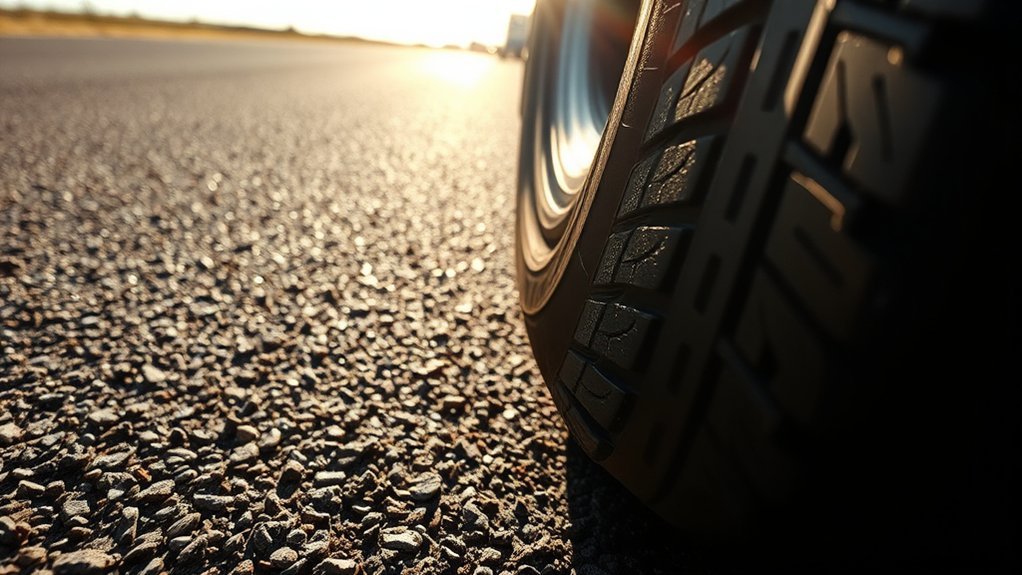
While driving in hot conditions, maintaining proper tire health is vital for safety and performance. Start by regularly checking and maintaining tire pressure when tires are cool; heat can cause air to expand, leading to overinflation and uneven wear. Inspect your tires for heat-related damage, like cracks or bulges, especially after long drives on hot pavement. Tire cleaning is important to remove debris that can cause extra friction and heat buildup.
Rotate your tires regularly to promote even wear and extend their lifespan, which is especially significant in high temperatures. Don’t forget to perform alignment checks to guarantee peak performance and handling. Additionally, confirm your 4Runner’s tires are rated for hot weather, and consider investing in high-quality tires designed for extreme conditions. Whenever possible, park in shaded areas to minimize direct sun exposure, further protecting your tires from degradation.
When to Replace Your Tires?
Knowing when to replace your tires is essential for maintaining performance and safety. Monitor tread depth, aiming for at least 2/32 of an inch, and look for visible signs of wear or damage. Additionally, consider the age of your tires; replacing them every six years can prevent issues related to rubber degradation.
Signs of Wear
When evaluating your tires, recognizing the signs of wear is essential to maintaining safety and performance. Use the penny test: if Lincoln’s head is visible, it’s time to replace your 4Runner’s tires to guarantee adequate grip. Regularly inspect for cracks, cuts, or bulges on the sidewalls and tread; these indicate potential damage requiring immediate attention. Unusual vibrations while driving may signal uneven tread wear, compromising performance. Additionally, monitor for high tire pressure or overinflation, often exacerbated by hot pavement conditions. Finally, keep an eye on tread wear patterns; excessive or uneven wear can affect traction and handling. Prioritizing these signs during tire maintenance will enhance your driving experience and safety.
Recommended Tread Depth
Understanding the recommended tread depth is vital for ensuring your safety on the road. The minimum safe tread depth is 2/32 of an inch, but for ideal performance, particularly in wet conditions, you should replace your tires at 4/32 of an inch. To check tread depth, use the penny test: if you can see all of Lincoln’s head when inserted with his face down, it’s time for tire replacement. Worn tires increase stopping distances and elevate the risk of hydroplaning, especially on hot pavement. Regular inspections are important; look for uneven wear, cracks, or bulges that signal the need for replacement. Maintaining adequate tread depth enhances traction, safety, and fuel efficiency, reducing rolling resistance.
Age of Tires
While many drivers focus on tread wear, the age of your tires is equally important for safe performance. Tires should be replaced every six years, regardless of tread depth, due to rubber deterioration over time. High temperatures from hot pavement accelerate this aging process, leading to dry rot, weakened sidewalls, and an increased risk of blowouts. Regular visual inspections for cracks or bulges are essential; these signs indicate potential failure, especially in extreme heat. Utilize the penny test to assess tread depth—if Lincoln’s head is visible, it’s time for new tires. Additionally, maintain proper tire pressure, as overinflation or underinflation can further compromise performance and safety, necessitating earlier replacement to guarantee your 4Runner’s reliability.
Choosing the Best Tires for Hot Weather Driving
Selecting the right tires for hot weather driving is essential for optimizing performance and safety. Focus on tire types specifically engineered for high temperatures, utilizing heat-resistant rubber compounds that enhance durability and reduce tread wear. Robust tread patterns are vital; they should effectively channel water to improve traction on hot, wet pavement and minimize hydroplaning risks.
Ensure the tires you choose meet or exceed your 4Runner’s load capacity to prevent overheating and blowouts during summer activities. Regularly check and maintain tire pressure, as overinflated tires can wear unevenly and compromise handling on hot surfaces. Investing in high-quality tires from reputable brands not only boosts performance but also leads to long-term savings through improved fuel efficiency and reduced wear. By making informed tire choices, you empower your driving experience, allowing you to navigate the heat with confidence and control.
Final Thoughts on Keeping Your 4Runner’s Tires Safe
Maintaining the safety and performance of your 4Runner’s tires in hot weather demands consistent attention. Regularly check your tire pressure, as high temperatures can cause air to expand, leading to overinflation and increased wear. Inspect for heat-related damage like cracks or bulges, which can compromise safety and performance. Confirm your tires are rated for high temperatures; quality tires designed for hot conditions will enhance tire longevity and summer safety. Parking in shaded areas can greatly reduce heat exposure, minimizing the risk of dry rot and maintaining tire integrity. Additionally, adhere strictly to your 4Runner’s load capacity, as overloading can lead to overheating and potential tire failure on hot pavement. By diligently managing these factors, you can empower your 4Runner’s performance and guarantee a safer driving experience, allowing you to explore new horizons with confidence. Keep your tires in top shape, and enjoy the journey ahead.
Frequently Asked Questions
Does Hot Pavement Wear Tires Faster?
Yes, hot pavement does wear tires faster. Elevated temperatures impair tire composition, reducing heat dissipation. This accelerates tread degradation and increases blowout risks, especially for tires struggling to manage excessive heat during high-speed driving.
Conclusion
To keep your 4Runner’s tires safe in extreme heat, regular checks are essential. For instance, consider a driver who ignored tire pressure warnings during a summer road trip; they experienced a blowout, leading to costly repairs and a dangerous situation. By staying vigilant about tire maintenance and understanding how heat affects performance, you can prevent mishaps and guarantee a smoother ride. Remember, proactive care today can save you from headaches tomorrow.

Related Articles
How to Recycle or Donate Old 4Runner Tires Responsibly
Check your state's tire laws, then discover the surprising ways your old 4Runner tires can be transformed into something completely unexpected.
Read More
How Temperature Changes Affect Your 4Runner Tire Pressure
How do temperature changes influence your 4Runner's tire pressure? Discover crucial tips for optimal safety and performance that you can't afford to miss!
Read More
Why Mismatched Tires Cause Problems on a 4WD 4Runner
Four mismatched tires can destroy your 4Runner's drivetrain in ways you won't notice until it's too expensive to ignore.
Read More