
Tire Hydroplaning Prevention: Tips for 4Runner Drivers
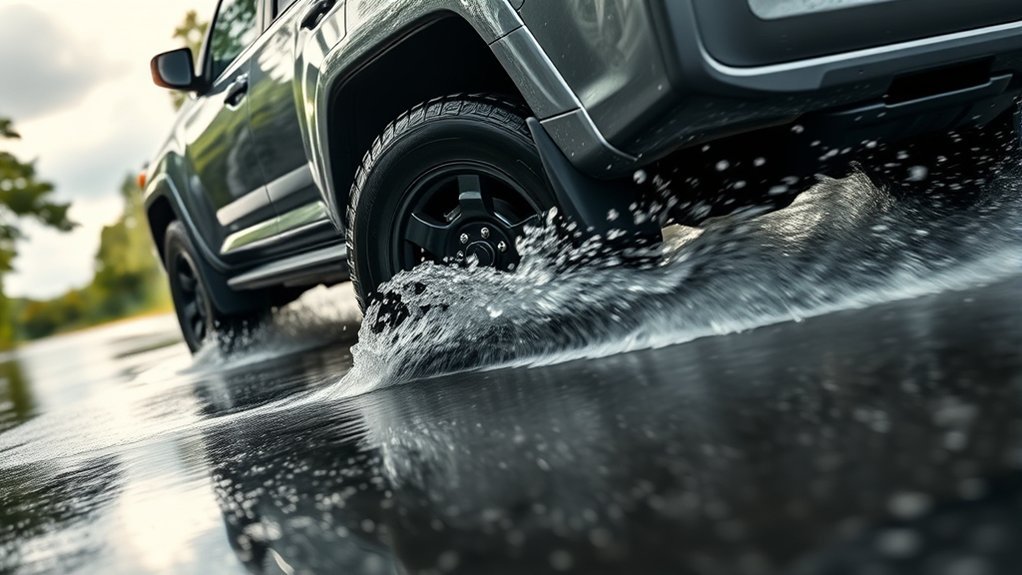
To prevent hydroplaning in your 4Runner, keep your tire tread above 4/32” and pressure properly inflated. Drive at slower speeds in wet conditions and avoid sudden maneuvers. Regularly check tire health and rotate them every 5,000-7,500 miles. Make certain your headlights and wipers are functioning for better visibility. When hydroplaning, gently steer and avoid hard braking. Stay aware of road conditions. Discover additional strategies to enhance your safety on rainy roads.
What Hydroplaning Is and How to Prevent It in Your 4Runner

Hydroplaning poses a considerable risk for 4Runner drivers, particularly in wet conditions. This phenomenon occurs when your tires lose traction on slick surfaces, often within the first 10 minutes of rain due to oils and debris. To prevent hydroplaning, maintain your tire tread depth above 4/32”. Worn tires are more vulnerable, especially at speeds over 35 mph. Regularly check tire pressure and verify your tires are properly inflated; under-inflated tires can’t channel water effectively, increasing hydroplaning risks. During rainy conditions, avoid sudden acceleration or hard braking; smooth driving techniques help maintain tire traction and control. Finally, invest in high-quality, all-weather or performance tires designed with deep grooves and siping features. These enhancements improve wet grip and greatly reduce the chances of hydroplaning, giving you greater confidence and safety on the road.
Smart Driving Techniques to Stay Safe in the Rain
Driving in the rain demands heightened awareness and skill to guarantee safety. In rainy conditions, reducing your speed is vital; vehicles above 35 mph are more prone to hydroplaning when water accumulates on the road. Disable cruise control to enhance your vehicle handling and responsiveness, allowing you to react swiftly to changes in road conditions.
Verify that your headlights and windshield wipers are functioning properly to improve visibility. This is essential for maneuvering wet surfaces safely. Avoid sudden braking or acceleration; gentle steering and gradual speed adjustments maintain traction and control, especially during hydroplaning situations.
Regularly check your tire tread depth, replacing tires when they reach 4/32” to ensure peak water dispersion and grip. By adopting these smart driving techniques, you empower yourself to traverse rainy conditions confidently, enhancing both your safety and that of others on the road.
Key Tire Maintenance Practices to Prevent Hydroplaning
To maintain peak tire performance and minimize the risk of hydroplaning, regular tire maintenance is essential. Start with tire tread checks—replace tires when they reach 4/32” to guarantee ideal water dispersion. Make inflation checks a priority; under-inflated tires decrease traction and heighten the risk of hydroplaning.
Here’s a quick reference table to guide your maintenance:
| Maintenance Task | Frequency | Importance |
|---|---|---|
| Check Tire Tread | Monthly | Prevents hydroplaning |
| Tire Rotation | Every 5,000-7,500 mi | Guarantees even wear |
| Inflation Checks | Monthly | Maintains traction |
| Wiper Inspection | Every 6 months | Guarantees visibility in rain |
Choosing Tires to Prevent Hydroplaning in Wet Conditions

When selecting tires for your 4Runner, prioritize those designed specifically for wet conditions, as they excel at channeling water away from the tread. Look for tire types that feature deep grooves and quality rubber compounds, which effectively reduce the risk of hydroplaning. Advanced siping enhances water dispersion, providing better traction on slippery roads. Confirm your tires maintain a tread depth of at least 4/32” to maximize grip in rainy weather. High-performance tires are engineered to expel water efficiently, improving stability during heavy downpours. Regularly check tire pressure and perform rotations to extend tire life and maintain peak performance in wet conditions. By choosing the right tread patterns and tire types, you’ll liberate yourself from the worry of hydroplaning and enjoy a safer driving experience. Invest in tires that meet these criteria, and you’ll navigate wet roads with confidence.
How to Respond When You Hydroplane?
Experiencing hydroplaning can be alarming, but knowing how to respond can help you regain control. First, remove your foot from the accelerator to allow your tires to regain traction. Avoid sudden braking, as this can worsen the situation, leading to skidding or spinning. Instead, focus on steering gently in the direction you want to go; minimal steering inputs will help maintain stability during this critical moment. Keep calm and assess your surroundings rather than panicking; composure is key in executing emergency maneuvers effectively. Remember, hydroplaning causes are often linked to excessive speed on wet roads, so maintaining a slower speed in rainy conditions is essential. By following these steps, you empower yourself to navigate through hydroplaning safely, ensuring a smoother driving experience in challenging weather.
Frequently Asked Questions
What Are Two Tricks to Avoid Hydroplaning?
To avoid hydroplaning, maintain adequate tire tread depth and reduce vehicle speed during wet conditions. Make certain your tires have proper inflation, as both factors greatly enhance traction and control on slippery surfaces.
What Is the 3 Second Rule Driving in the Rain?
The 3-second rule in rain driving? It’s your ticket to freedom! Count three seconds after the car ahead passes a fixed point. For extra safety, aim for four to five seconds—your tires will thank you!
Should You Use 4h or 4l in Rain?
You should use 4H in rain for better traction and driving stability. It distributes power to all wheels, improving grip and control on slippery surfaces, while 4L limits your reaction speed in such conditions.
Conclusion
By mastering smart driving techniques and maintaining your tires, you can dramatically reduce the risk of hydroplaning in your 4Runner. Remember, it’s not just about avoiding accidents; it’s about ensuring every drive feels as safe as a cozy night by the fire. Choose the right tires and stay vigilant in wet conditions, and you’ll navigate the rain like a pro. Stay prepared, and you’ll conquer any storm that comes your way!

Related Articles

Understanding Tire Date Codes: A 4Runner Owner Guide
Keep your 4Runner safe by decoding tire date codes—because that "new" tire might already be a ticking time bomb.
Read More
Why 4Runner Tires Are Noisy on the Highway and How to Fix It
Discover the surprising reasons your 4Runner tires are noisy on the highway and learn effective solutions to restore your driving comfort.
Read More
Why Tire Sidewall Strength Matters on a 4Runner
Tire sidewall strength separates the 4Runners that finish the trail from those that don't—here's what most drivers miss.
Read More