
Radial vs Bias-Ply Tires for Off-Road: Which Is Better
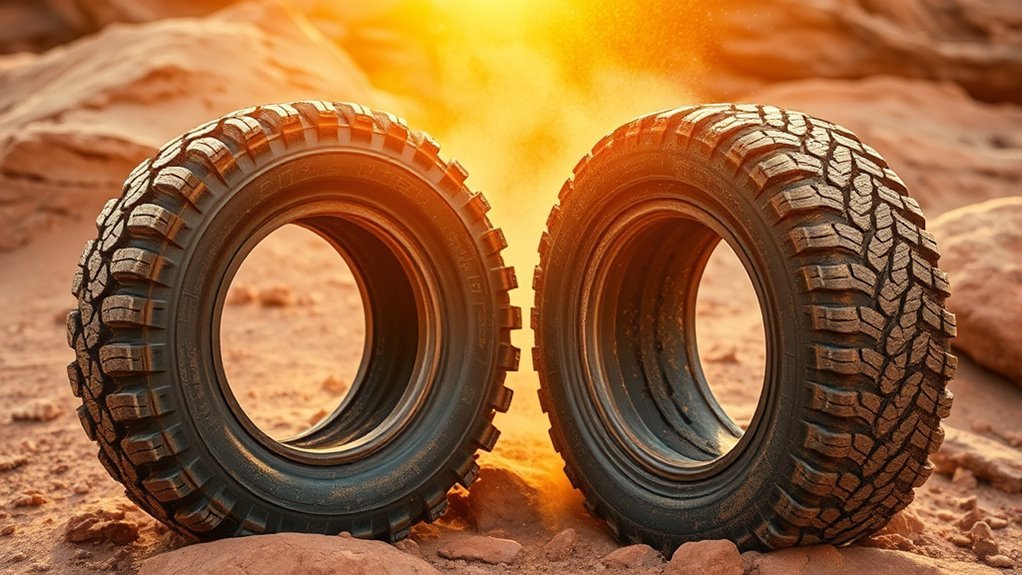
Choosing between bias-ply and radial off-road tires comes down to where you drive most, how much pavement you cover, and how much sidewall abuse your tires will see. Bias-ply tires often make sense for slow, severe trail work. Radial tires usually fit daily-driven 4x4s, overland rigs, and mixed highway-and-trail use better.
Quick Answer
Choose bias-ply tires for dedicated rock crawlers, mud rigs, farm-style use, or trailered builds that need strong sidewalls at low speed. Choose radial tires for daily driving, highway miles, overlanding, towing, and mixed terrain because they usually ride smoother, run cooler, and wear more evenly.
Key Takeaways
- Bias-ply tires use angled plies and often give you tougher sidewalls for slow, sharp, technical terrain.
- Radial tires use plies that run across the tire with a stabilized tread belt, which helps ride comfort, heat control, and pavement handling.
- For rock crawling, bias-ply can be a smart choice, but modern reinforced radials can still work well for many trail rigs.
- For highway-heavy use, radials are usually the better long-term choice because they run cooler and tend to wear more evenly.
- Never choose by construction alone. Check the tire’s load index, load range, DOT marking, speed rating, and manufacturer pressure guidance.
Bias-Ply or Radial: The Off-Roader’s Quick Decision Guide
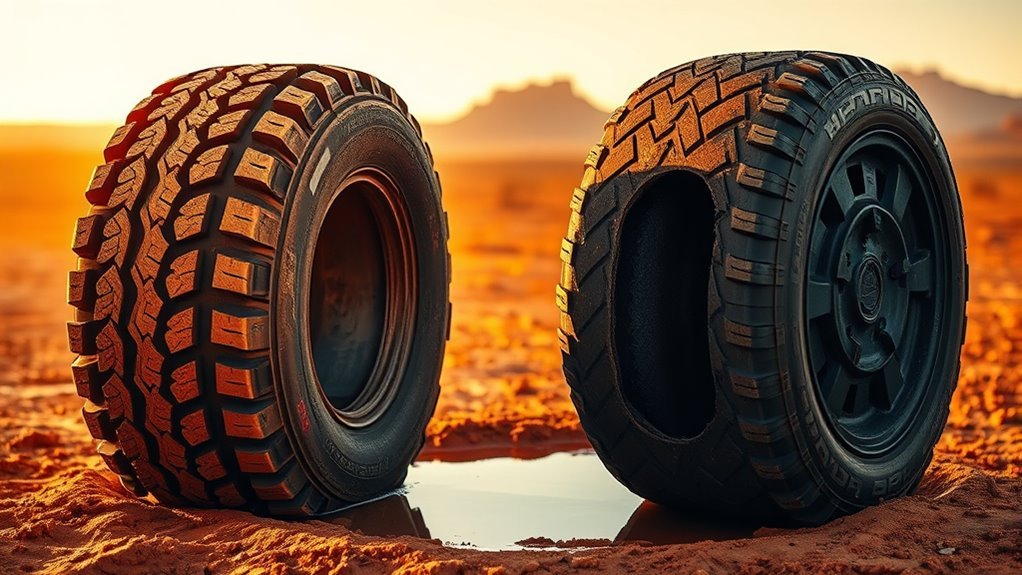
If your 4×4 spends most of its life on pavement with weekend trail use, start with a quality radial all-terrain or mud-terrain tire. Radials usually ride better, track straighter, and handle heat better during long road miles because the sidewall can flex more independently from the tread area. The U.S. Federal Register explains that radial body cords deflect more easily under load and generate less heat than bias-ply cords.
If your rig is trailered to the rocks, spends most of its time aired down, or sees sharp ledges, deep ruts, and low-speed abuse, bias-ply tires may fit better. Their angled ply layers can create a tough carcass and strong sidewalls, which is why many dedicated rock crawlers and mud rigs still use them.
| Your Use Case | Better Starting Point | Why |
|---|---|---|
| Daily driver with weekend trails | Radial | Better road manners, smoother ride, cooler highway running |
| Overlanding and long highway trips | Radial | More comfort and more even treadwear over distance |
| Dedicated rock crawler | Bias-ply or reinforced radial | Bias-ply often gives stronger sidewall abuse resistance, but some modern radials are very capable |
| Mud bogging or trailered competition rig | Bias-ply | Strong carcass and aggressive tread options can help in slow, severe terrain |
| Tow rig, work truck, or mixed cargo use | Correct load-rated radial or bias-ply | The tire’s load index and load range matter more than construction alone |
Tire construction matters, but it never replaces fitment, load rating, pressure, tread design, and how you actually drive.
[Products Worth Considering]

Wykodra tire plugs provide quick vulcanizing repairs for tubeless tires, helping you seal punctures and get back on the road. The industrial-strength rubber creates a long-lasting, leak-resistant bond and is designed for emergency fixes without removing the tire. Choose between two standard plug sizes with color-matched options for small to larger damage across many vehicles and off-road uses.
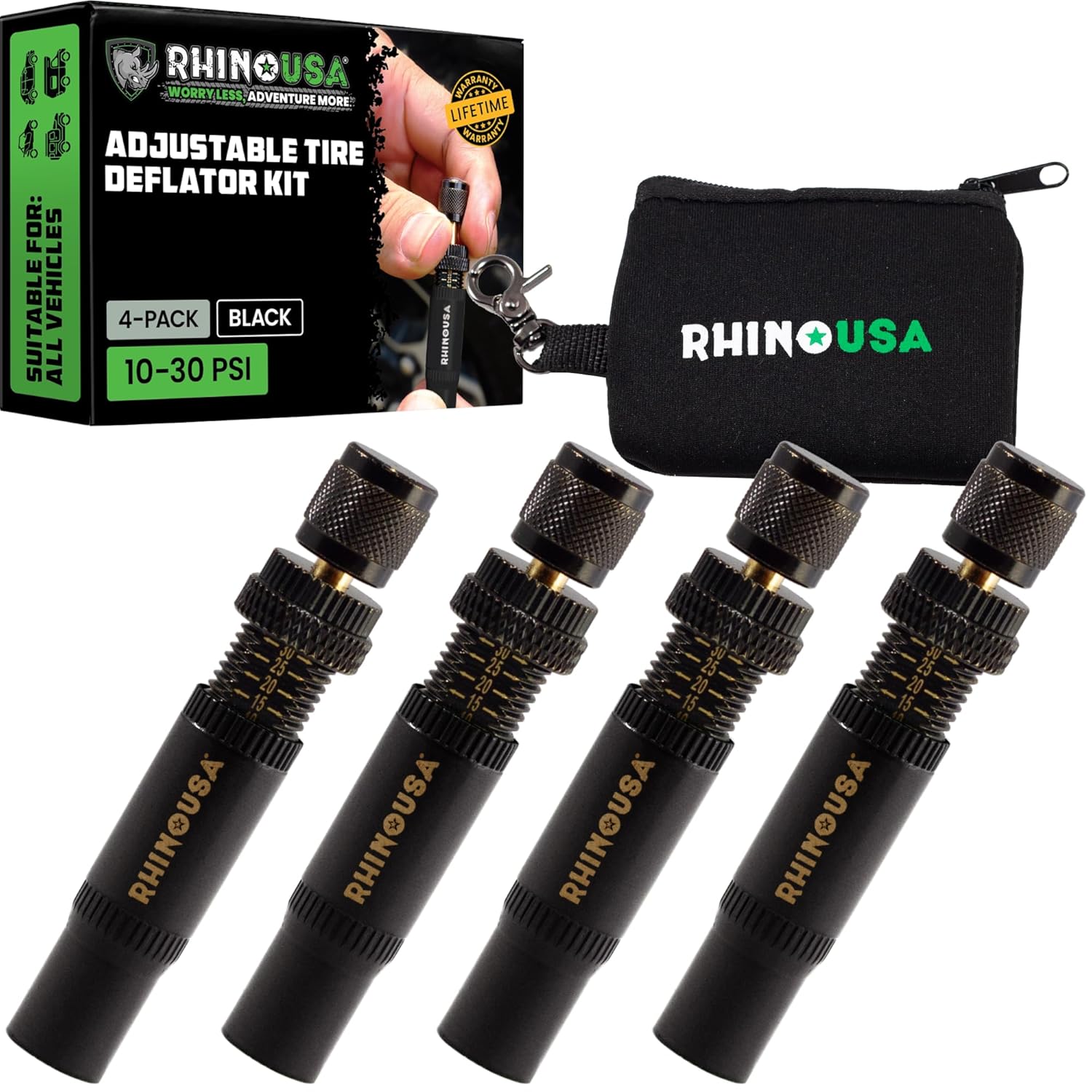
Use the Rhino USA adjustable tire deflators to air down all four tires at once by screwing one deflator onto each valve stem, letting you step away while the tires reach your preset pressure. Each deflator independently adjusts across a 10–30 PSI range with laser-etched indicators for quick setup and verification, making it ideal for beach, sand, and rocky off-road trails.

Camco Trailer Aid Plus tandem tire ramp lifts your trailer for quick, safe tire changes with ample clearance from its 5 1/2-inch lift. It helps you change a flat tire without unloading cargo, making roadside and routine maintenance more efficient. The heavy-duty, waterproof and rustproof polymer design supports up to 15,000 lb and is built for easy portability and storage.
What Bias-Ply and Radial Construction Mean
A bias-ply tire uses body ply cords laid at alternating diagonal angles. A radial tire uses body ply cords laid roughly 90 degrees to the tread centerline, with a belt under the tread to stabilize the contact patch.
You can often identify construction by reading the tire size on the sidewall. The letter R means radial. The letter D means diagonal construction, which is another term for bias-ply. The letter B means belted bias. Sidewall markings also show important details such as tire size, load index, speed rating, maximum pressure, and construction type.
Note: Do not choose a tire only because it is bias-ply or radial. Match the tire size, wheel size, load capacity, speed rating, and street-use status to your vehicle and driving conditions.
How Bias-Ply Construction Handles Extreme Terrain and Heavy Loads
Your off-road build may need a tire that can take sharp rocks, ledges, ruts, and sidewall contact without giving up. Bias-ply construction can help because its angled plies overlap through the carcass. This design often creates a stiffer, tougher sidewall than a comparable standard radial.
Bias-ply tires usually help in three areas:
- Sidewall toughness: The layered carcass can resist cuts, bruises, and small punctures better in slow, sharp terrain.
- Low-speed load support: The stiffer carcass can feel stable under heavy trail rigs, trailers, and equipment-style use.
- Aired-down grip: At low off-road speeds, reduced pressure can help the tread conform to rocks, roots, and ruts.
The trade-off is comfort. Bias-ply tires can feel rough on pavement, follow road grooves, and require more balancing attention. They also tend to flat-spot more noticeably after sitting.
Where Radial Tires Win on Pavement Comfort and Heat Dissipation
Radial tires usually win when your off-road rig still sees regular road miles. Their construction lets the sidewall flex while the tread stays more stable against the road. That helps the tire absorb bumps, keep a steadier contact patch, and reduce heat buildup during longer drives.
Smoother Highway Ride
On pavement, radial construction can make your truck feel calmer and easier to control. The flexible sidewall absorbs many small road impacts instead of sending every vibration into the steering wheel and suspension.
This matters most when you drive long distances to a trailhead, commute on your off-road tires, or tow with the same vehicle you use on weekends. Less vibration also means less driver fatigue.
Superior Heat Management
Heat is one of the biggest enemies of tire life. Radial tires generally run cooler because their body cords deflect more easily under load and the tread area stays more stable. This is one reason radials became the standard for most passenger cars and light trucks.
That cooler operation matters during highway speeds, loaded travel, and summer trail trips. It can also help with more even wear when the tire is properly inflated and aligned.
Better Cornering Stability
Radials usually feel more predictable in corners. The tread stays flatter and more consistent, while the sidewall flexes separately. Bias-ply tires can feel less precise, especially with tall sidewalls and large off-road sizes.
This does not mean a radial is always the better trail tire. It means a radial is usually the better choice when your trail rig must also brake, turn, and cruise safely on pavement.
Which Tire Type Has Stronger Sidewalls for Rock Crawling
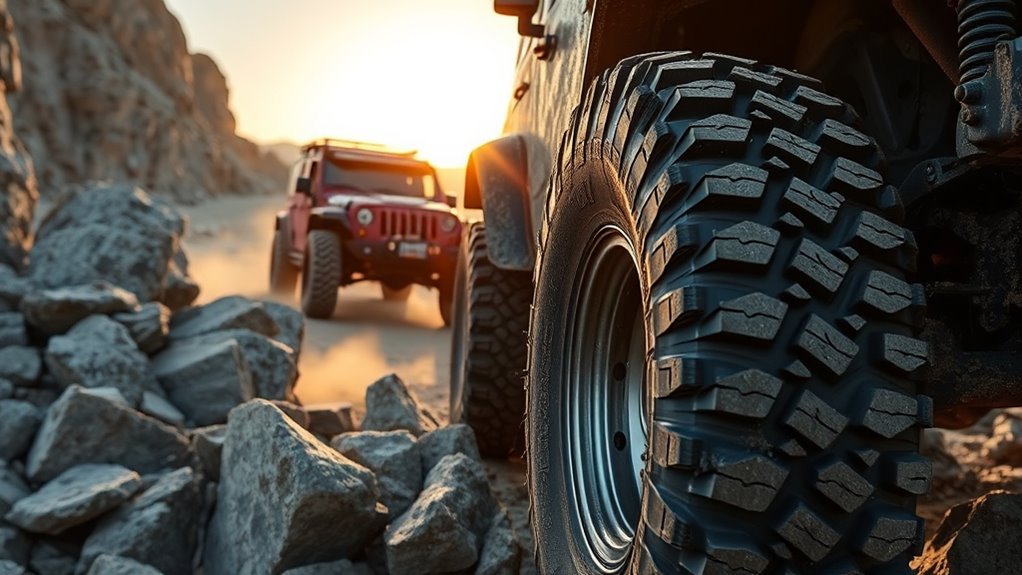
For pure rock crawling, bias-ply tires often have the sidewall advantage. Their multiple angled plies can help resist sidewall punctures and limit how far a cut spreads. That is useful when the tire is wedged against sharp rock at low pressure.
Still, the answer is not automatic. Many modern off-road radials use reinforced sidewall rubber, extra protective layers, and deflection ribs. A high-quality radial mud-terrain may outperform a weak bias-ply tire in real use. Always compare the specific tire model, not just the construction type.
Sidewall Construction Differences
Bias-ply tires build strength through overlapping diagonal layers. Radials build road control through a flexible carcass and a stabilized tread belt. That difference explains why bias-ply tires often feel tougher in sidewall abuse, while radials often feel better on mixed surfaces.
Three details matter most:
- Ply layout: Diagonal plies spread force differently than radial plies.
- Sidewall design: Extra rubber, protective ribs, and reinforced layers can change real-world durability.
- Inflation pressure: Lower pressure improves trail grip but exposes more sidewall to rocks and roots.
Puncture Resistance Comparison
Bias-ply tires are often more forgiving after a small sidewall injury because the layered carcass can help keep damage from spreading. Radial sidewall damage can sometimes tear farther under torque and load, especially if the tire is driven hard while damaged.
That said, you should not treat any sidewall cut as safe. If a sidewall is torn, bulging, leaking, or showing cords, replace the tire or use your spare. Temporary trail plugs may help you get out of the woods, but they are not a permanent sidewall repair.
The Bias-Ply Flat-Spot Problem and How It Hurts Daily Driving
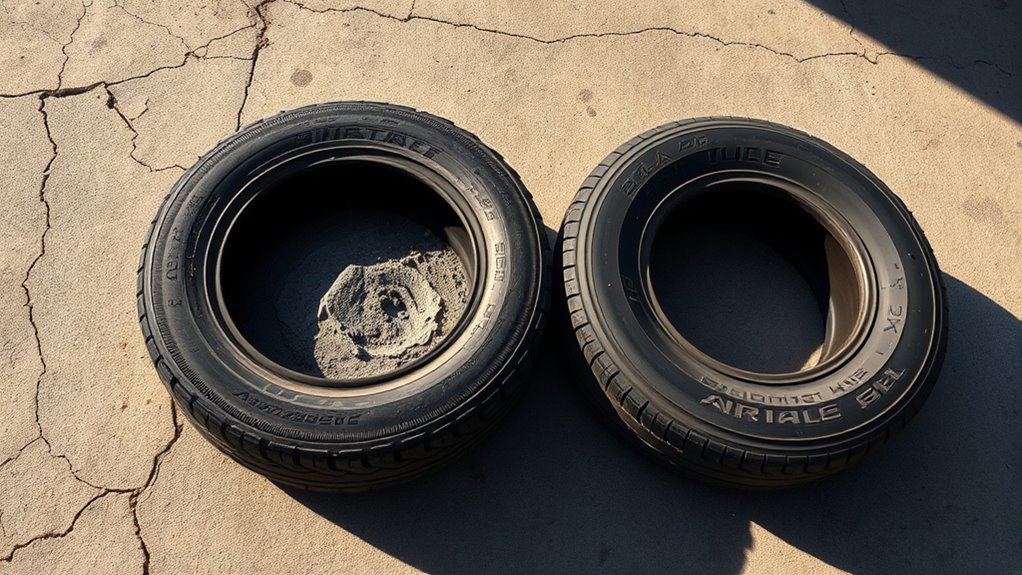
Bias-ply tires can develop flat spots after the vehicle sits. The section of tread touching the ground can take a temporary set, especially in cold weather or after several days of parking. When you drive away, the tire may thump until it warms up and rounds out.
Flat spotting can cause three daily-driving problems:
- Rough starts: The first few miles can feel bouncy or uneven.
- Extra vibration: The steering wheel and suspension may feel harsher than normal.
- More balancing frustration: A tire that changes shape after sitting can make vibrations harder to chase.
Radials can also flat-spot after long storage, but they usually recover faster and create fewer daily-driving complaints. If your 4×4 is also your commuter, this is one of the strongest reasons to choose radial tires.
How Load Capacity Limits Shape Big-Tire Builds
Load capacity is not a guess. It is printed on the tire sidewall through the load index, load range, maximum load, and maximum inflation pressure. You need those numbers to match your vehicle weight, cargo, towing use, and wheel rating.
Large off-road tires can create extra stress on axles, bearings, steering parts, brakes, and suspension. A tire that looks strong is not enough. You must confirm that its load rating fits your rig.
For heavy vehicles and big-tire builds, check these items before buying:
- The vehicle’s Gross Vehicle Weight Rating and axle ratings
- The tire’s load index or maximum load rating
- The wheel’s load rating and approved tire size range
- The tire’s DOT marking if you plan to drive on public roads
- The manufacturer’s pressure guidance for road use and off-road use
Warning: Never drive highway speeds on trail pressure. Aired-down tires can overheat, handle poorly, wear unevenly, and fail. Air back up before returning to pavement.
[Products Worth Considering]

This AUTOWN flat tire repair kit is designed for quick, reliable puncture repairs using a plug kit and spiral probe tool to simplify installation. Built for durability and safe handling, it offers strong adhesion and flexibility to help maintain tire air tightness. With a portable storage case and a multi-vehicle approach, it’s suitable for cars, motorcycles, ATVs, tractors, lawn mowers, RVs, jeeps, and trucks.
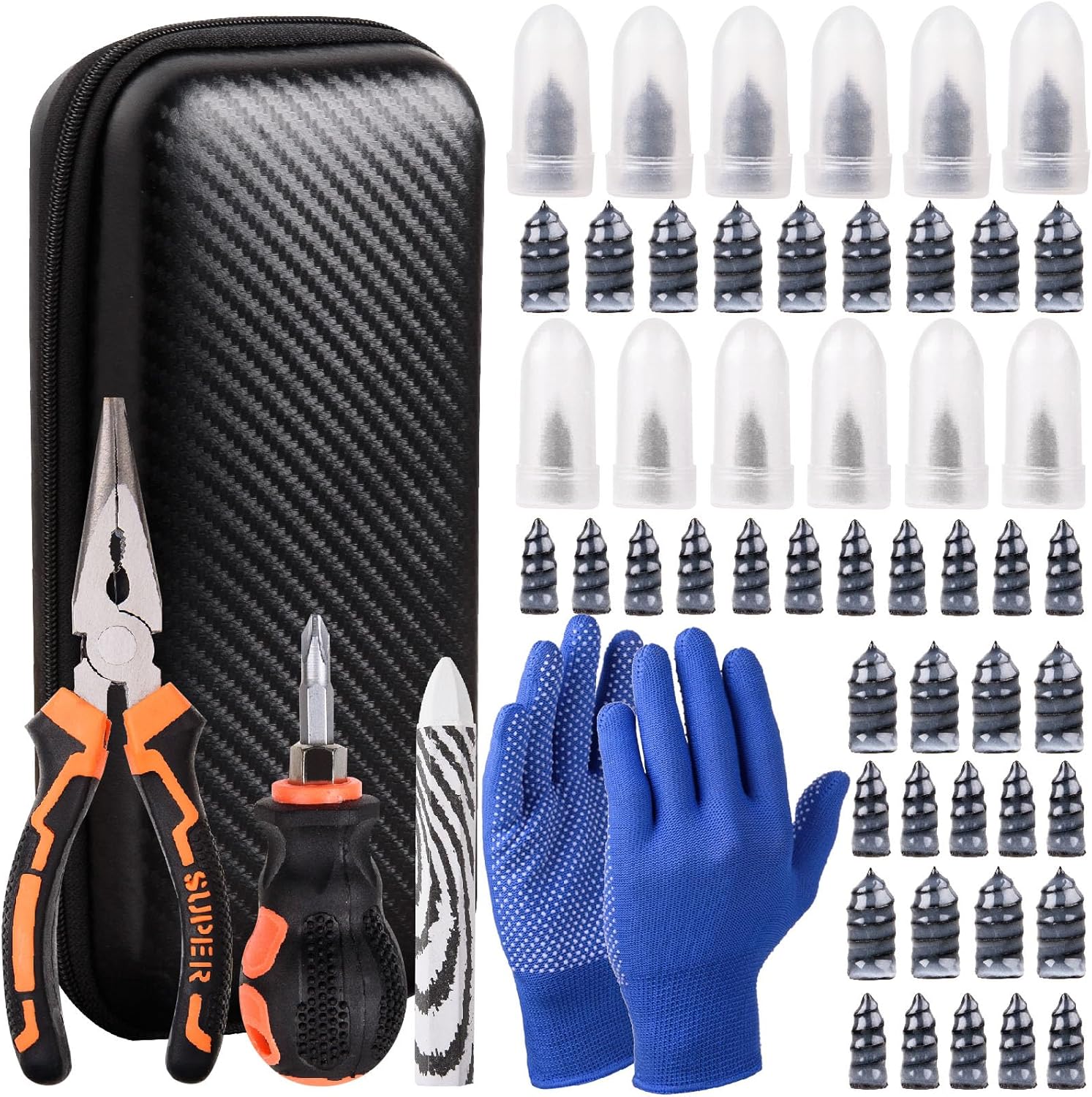
This tire sidewall puncture repair kit fixes flats fast without removing the tire, helping you get back on the road in minutes. It includes self-tapping repair nails, essential tools, gloves, and a portable storage bag for convenient roadside use. Designed for tubeless tires, it helps create a tight, leak-resistant seal for cars, motorcycles, trucks, SUVs, and ATVs.
Why Many 42-Inch and Larger Extreme Tires Are Bias-Ply
Many extreme off-road tires in the 42-inch-and-larger range are bias-ply because that construction suits slow, severe terrain and aggressive tread designs. These tires are often built for rock crawling, mud, trailered rigs, or competition-style use rather than smooth highway travel.
Bias-ply construction can help in this size range because it offers:
- Strong sidewall structure: Useful when the tire is pushed into rocks and ruts.
- Severe-terrain durability: Helpful for slow-speed abuse and sharp impacts.
- Aggressive tread support: Many extreme tread patterns pair well with a stiff carcass.
Do not assume every large tire is street legal or suitable for your truck. Some extreme specialty tires are meant for off-road use only. Check the tire’s DOT marking, speed rating, load rating, and manufacturer guidance before using it on public roads.
Which Tire Type Works With Your Suspension and Which to Avoid
Your suspension also affects the right choice. A stiff tire can make a stiff suspension feel harsher, while a flexible tire can make a street-driven truck easier to live with.
| Suspension Type | Best Starting Point | Be Careful With |
|---|---|---|
| Coil-sprung, daily-driven 4×4 | Radial | Heavy bias-ply tires that add harshness and vibration |
| Independent front suspension | Radial | Oversized, heavy tires that stress steering and CV parts |
| Leaf-sprung work truck | Correct load-rated radial or bias-ply | Any tire with too low a load rating |
| Solid-axle rock crawler | Bias-ply or reinforced radial | Low-profile tires with limited sidewall cushion |
For sensitive suspension systems, radial tires usually make the vehicle easier to steer, brake, and control on pavement. For rugged solid-axle trail rigs, bias-ply tires can make sense when sidewall strength matters more than comfort.
Where Radial Tires Save Money Long-Term and Where They Do Not
Radial tires often save money when you drive many pavement miles. They usually run cooler, wear more evenly, and ride better, which can reduce replacement frequency and make the vehicle easier to live with.
Your savings may come from:
- More even treadwear: Radials often keep a more stable footprint on pavement.
- Less heat stress: Cooler running can help protect the tire during long highway use.
- Better daily comfort: Less vibration can reduce driver fatigue and make long trips easier.
Bias-ply tires can still be the better value for rigs that see little pavement. If the vehicle is trailered, used at low speed, or built for extreme sidewall abuse, the lower road comfort of bias-ply tires may not matter much.
Tire Pressure Safety for Off-Road Use
Airing down can improve traction by letting the tread conform to rocks, sand, mud, and roots. It can also soften the ride on rough trails. But lower pressure increases heat, sidewall exposure, and bead-unseating risk when used incorrectly.
Use these pressure rules:
- Air down only when trail conditions call for it.
- Drive slowly when aired down.
- Avoid sharp steering and hard braking at very low pressure.
- Carry a reliable pressure gauge and air source.
- Air back up before highway driving.
- Inspect sidewalls, valve stems, tread cuts, and bead areas after rough trails.
Pro Tip: Keep a small tire log with your trail pressure, road pressure, terrain, and tire behavior. After a few trips, you will know what pressure works best for your specific tire and vehicle weight.
Frequently Asked Questions
Are radials better than bias-ply tires?
Radials are better for most daily-driven trucks, highway miles, towing, and mixed terrain because they usually ride smoother, run cooler, and wear more evenly. Bias-ply tires can be better for dedicated off-road rigs that need tough sidewalls at low speed.
Are radials good for off-road driving?
Yes. Radial all-terrain and mud-terrain tires work very well for most off-road drivers. They are especially strong for overlanding, forest roads, desert travel, snow, gravel, and weekend trail use where you still drive pavement.
Are bias-ply tires better for rock crawling?
Bias-ply tires are often better for dedicated rock crawling because their sidewalls can resist cuts and bruises well. However, some reinforced radial rock-crawling tires are also strong, so compare the exact tire model, sidewall design, and load rating.
What is the best all-around off-road tire construction?
For most drivers, a radial off-road tire is the best all-around choice. It gives you better road comfort, more stable handling, and good trail performance. Choose bias-ply only when severe off-road durability matters more than pavement manners.
Can I drive bias-ply off-road tires on the highway?
You can drive some bias-ply tires on the highway if they are DOT-approved, correctly sized, properly inflated, and rated for your vehicle. Expect more noise, vibration, flat spotting, and less precise handling than a comparable radial tire.
Conclusion
Choose bias-ply tires when your rig is built for slow, severe terrain and sidewall strength matters more than road comfort. Choose radial tires when you drive pavement, tow, overland, commute, or need one tire to handle both road and trail.
The safest choice is the tire that matches your terrain, vehicle weight, wheel size, load rating, pressure needs, and road use. Construction matters, but the full tire specification matters more.
Sources
- Federal Register: Federal Motor Vehicle Safety Standards; Tires — supports the construction differences between bias-ply and radial tires, including heat and sidewall behavior.
- BFGoodrich: How to Read a Tire Sidewall — supports sidewall marking, construction letter, load index, and speed rating guidance.
- BFGoodrich Off-Road Guide: Tire Selection — supports off-road tire selection, terrain matching, and the need to air back up before paved-road driving.
- Michelin: Radial or Bias Tires for Fertilization — supports the general radial advantages of heat dissipation, footprint, and more uniform wear in heavy-use applications.
- NHTSA TireWise: Tire Safety Ratings and Awareness — supports tire age, tire safety, and maintenance awareness.
- Interco Tire: Comparing Bias Ply to Radial Tires — supports off-road-specific sidewall, puncture, flat-spot, pavement, and handling trade-offs.

Related Articles
When to Switch From All-Season to Winter Tires on a 4Runner
Ineffective all-season tires in cold weather can jeopardize your safety—discover when to make the crucial switch for better traction and handling.
Read More
4Runner Tire Mileage: How Many Miles Should They Last
Curious about how long your 4Runner tires should last? Discover essential tips and factors that influence tire longevity.
Read More
How Long Do Toyota 4Runner Tires Typically Last
How long do Toyota 4Runner tires typically last? Discover the factors that influence tire longevity and essential tips for maintenance.
Read More