
How to Prevent Flat Tires on a Car: Maintenance Tips
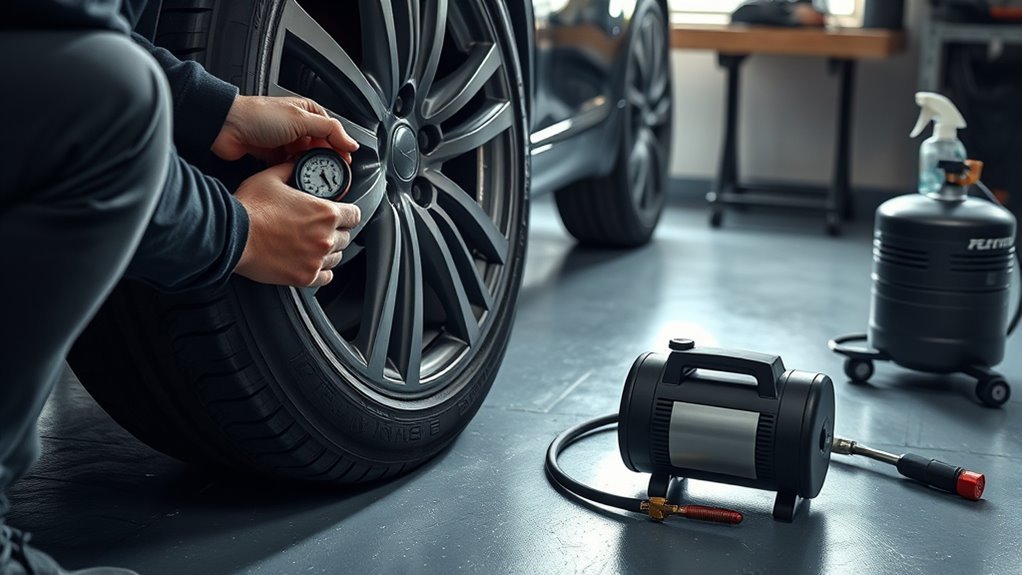
Flat tires are not always avoidable, but most are preventable with a simple maintenance routine. The biggest causes are underinflation, worn tread, road debris, pothole impacts, valve leaks, overloading, and old or damaged rubber. Check your tires monthly, inspect them before long trips, and fix small problems before they turn into roadside emergencies.
Quick Answer
To prevent flat tires, check tire pressure monthly when tires are cold, inspect tread and sidewalls for damage, rotate tires every 5,000–7,000 miles, avoid potholes and debris, stay within your vehicle’s load limit, and keep your spare tire or repair kit ready.
Key Takeaways
- Use the PSI listed on the driver’s door placard or owner’s manual, not the number printed on the tire sidewall.
- Check tires when they are cold, and recheck after big temperature swings.
- Replace tires with bulges, cracks, exposed cords, repeated pressure loss, or tread worn to 2/32 inch.
- Rotate tires on schedule and watch for uneven wear, which can point to alignment, suspension, or inflation problems.
- Inspect your spare, jack, lug wrench, and tire repair kit before you need them.
At a Glance
| Time Required | 10–20 minutes per month |
| Difficulty | Easy |
| Tools Needed | Tire pressure gauge, tread depth gauge or penny, flashlight, valve caps, and air compressor or air pump |
| Cost | Usually $0–$20 for basic checks; more if a tire needs repair, rotation, alignment, or replacement |
Quick Action Checklist: Prevent Flat Tires
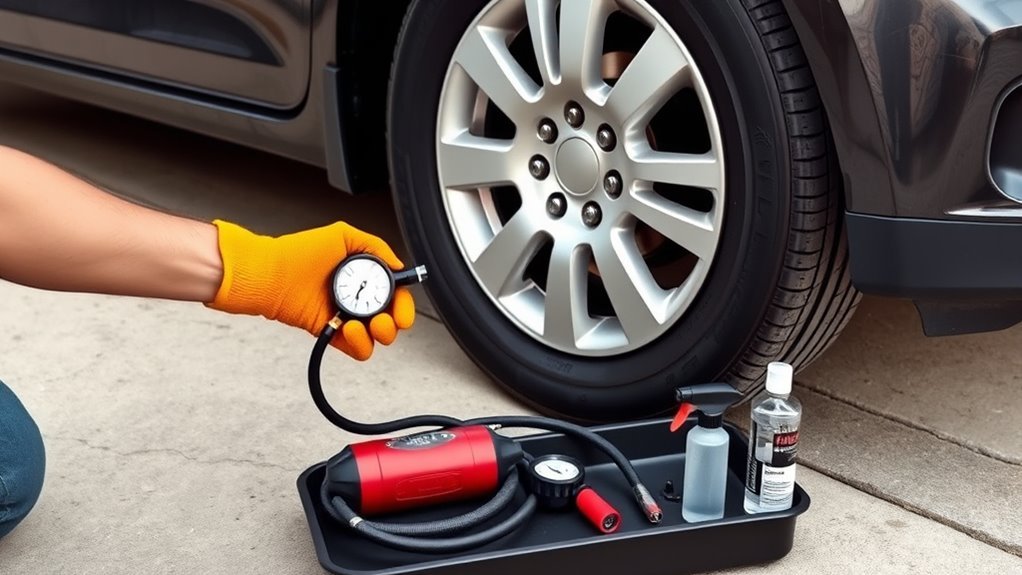
Start with a quick monthly routine: check tire pressure, scan the tread and sidewalls for cuts, bulges, cracks, nails, screws, glass, or embedded debris, and make sure your vehicle is not overloaded. These few minutes can help you spot slow leaks, aging rubber, and damage before the tire fails on the road.
- Check tire pressure at least once a month and before long trips.
- Inflate tires to the vehicle manufacturer’s recommended cold PSI.
- Inspect tread depth and sidewalls for damage.
- Rotate tires every 5,000–7,000 miles, or as your owner’s manual recommends.
- Avoid potholes, construction debris, sharp shoulders, and hard curb impacts.
- Replace damaged, bald, or repeatedly leaking tires promptly.
- Check your spare tire, jack, lug wrench, and repair kit.
Warning: Do not keep driving on a tire with a visible bulge, exposed cords, deep sidewall cut, or rapid pressure loss. Stop in a safe place and use a spare, roadside assistance, or professional tire service.
[Products Worth Considering]

EVOULTES heavy duty tire inflator with an integrated gauge delivers accurate pressure readings from 10–120 PSI, helping you inflate, deflate, and check tires in one tool. The 16.5-inch extended dual-head air chuck with swivel base reaches hard-to-access dual wheel valves on trucks and RVs. A brass trigger core and side-mounted air release valve make operation smooth, with standard 1/4" NPT threading and quick-connect compatibility for easy setup.

This portable cordless tire inflator delivers up to 160 PSI with fast 17 L/min airflow to help you quickly top up tires and get back on the road. It features dual power mode, running on a 21V rechargeable battery or a 12V DC adapter for convenient roadside use. An automatic shut-off with digital pressure gauge helps prevent overinflation, and a built-in LED light improves visibility in low-light conditions.

The JACO FlowPro Tire Inflator measures, inflates, and airs down tires up to 100 PSI with battery-free operation and ±2% accuracy after calibration. It features a glowing pressure dial for night visibility, a heavy-duty steel build with a hybrid hose, and a precision push-to-inflate thumb trigger. The patented Lightning Air Chuck locks on for a secure seal, and the kit includes quick-connect hardware for easy inline use with your air compressor.
Check and Maintain Tire Pressure Monthly
Because tire pressure affects safety, handling, tread life, and fuel economy, check it monthly with a reliable gauge. The correct PSI is listed on your vehicle’s tire information placard, usually on the driver’s door jamb, or in the owner’s manual. Do not use the maximum pressure printed on the tire sidewall as your normal inflation target.
For the most accurate reading, check pressure when the tires are cold. According to NHTSA TireWise, “cold” means the vehicle has not been driven for at least three hours. If the tire is warm, the reading may be higher than the true cold pressure.
Do not rely only on the tire pressure monitoring system. TPMS is designed to warn about significant underinflation, but it may not alert you to every slow leak early enough. A manual gauge check helps you catch a tire that is losing a few PSI between checks.
Pro Tip: Keep a digital or dial tire gauge in your glove box. Gas station gauges can be damaged or inaccurate, so your own gauge gives you a more consistent reading.
How to Check Tire Pressure Correctly
- Find the recommended PSI on the driver’s door placard or in the owner’s manual.
- Check pressure before driving, or wait at least three hours after driving.
- Remove the valve cap and press the gauge firmly onto the valve stem.
- Compare the reading with the recommended cold PSI.
- Add air if the tire is low, or release a small amount if it is overinflated.
- Recheck the PSI, then reinstall the valve cap tightly.
- Repeat for all four tires and the spare if your vehicle has one.
Watch for Slow Leaks
A tire that repeatedly loses pressure may have a nail, leaking valve stem, cracked wheel, bead leak, or previous repair failure. If one tire drops more than the others, do not just keep topping it off. Have it inspected and repaired before the leak gets worse.
Rotate and Inspect Tires Every 5,000–7,000 Miles
Rotate your tires every 5,000–7,000 miles, or at the interval listed in your owner’s manual. The Tire Industry Association recommends regular rotation to help tires wear evenly and last longer. Rotation also gives you a good chance to inspect each tire closely.
During each rotation, check tread depth, sidewalls, valve stems, and wear patterns. Look for feathering, cupping, bald shoulders, or one tire wearing faster than the others. These signs can point to underinflation, overinflation, worn suspension parts, or poor alignment.
Check Tread Depth
Tread gives your tires grip, especially on wet roads. A tread depth gauge is best, but a penny can give you a quick check. Insert a penny into the tread with Lincoln’s head facing down. If you can see the top of Lincoln’s head, the tread is about 2/32 inch or less and the tire should be replaced.
The U.S. Tire Manufacturers Association notes that tires should be replaced when tread reaches 2/32 inch. Many drivers choose to replace tires earlier if they often drive in heavy rain, snow, or poor road conditions.
Read Tire Wear Patterns
| Wear Pattern | Possible Cause | What to Do |
|---|---|---|
| Both outer edges worn | Underinflation | Check PSI and inspect for leaks |
| Center tread worn | Overinflation | Set pressure to vehicle spec |
| One edge worn | Alignment issue | Schedule an alignment check |
| Cupping or scalloping | Suspension or balance issue | Have suspension and balance inspected |
| Random bald spots | Locked braking, damage, or internal tire problem | Get professional inspection |
Avoid Road Hazards and Weather That Cause Flats
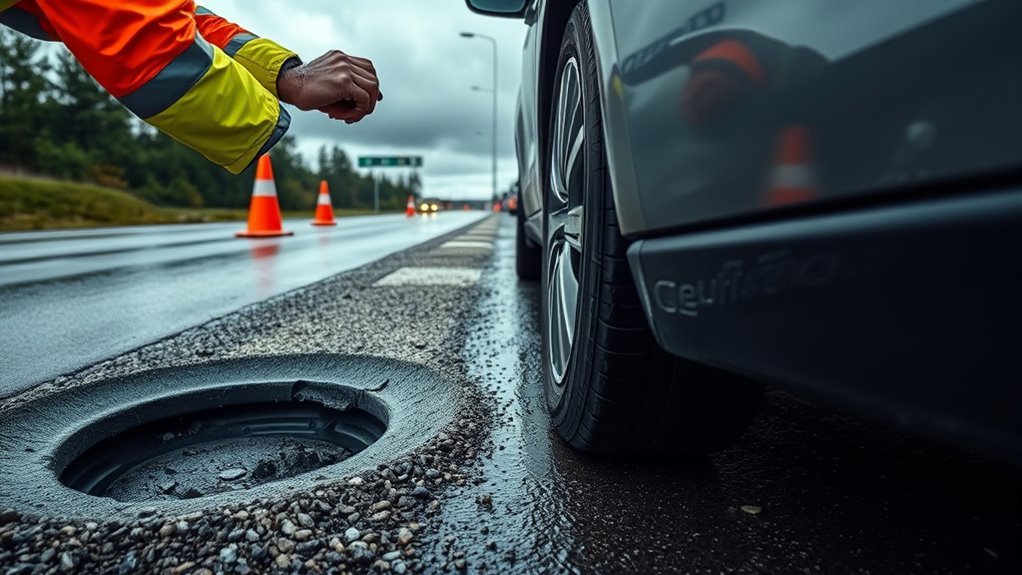
Road hazards cause many punctures and impact breaks. Watch for nails, screws, glass, metal scraps, potholes, sharp gravel, broken pavement, and debris near construction zones. When it is safe, slow down and steer around hazards instead of hitting them directly.
Watch for Road Debris
Stay alert in areas where punctures are more likely, such as construction zones, alleys, parking lots, road shoulders, and areas with storm debris. If you must drive through debris, go slowly and inspect your tires afterward.
| Action | Indicator | Response |
|---|---|---|
| Visual scan | Debris ahead | Avoid or maneuver safely |
| Post-impact check | Bulge, vibration, leak, or steering pull | Stop safely and inspect |
| Inflation check | Low PSI or repeated pressure loss | Inflate, monitor, and repair |
Account for Temperature Changes
Tire pressure changes with temperature. AAA explains that tire pressure typically drops about 1 PSI for every 10°F decrease and rises at roughly the same rate when temperatures increase. That means a tire that was correctly inflated during warm weather may become underinflated during a cold snap.
- Check tire pressure after major temperature swings.
- Check pressure more often during seasonal changes.
- Inflate to the vehicle-recommended cold PSI, not by visual judgment.
- Inspect tires after driving through potholes, ice-damaged pavement, or construction zones.
Note: A tire can look normal and still be underinflated. Always use a gauge instead of judging pressure by appearance.
Pick the Right Tires and Keep Your Spare Ready
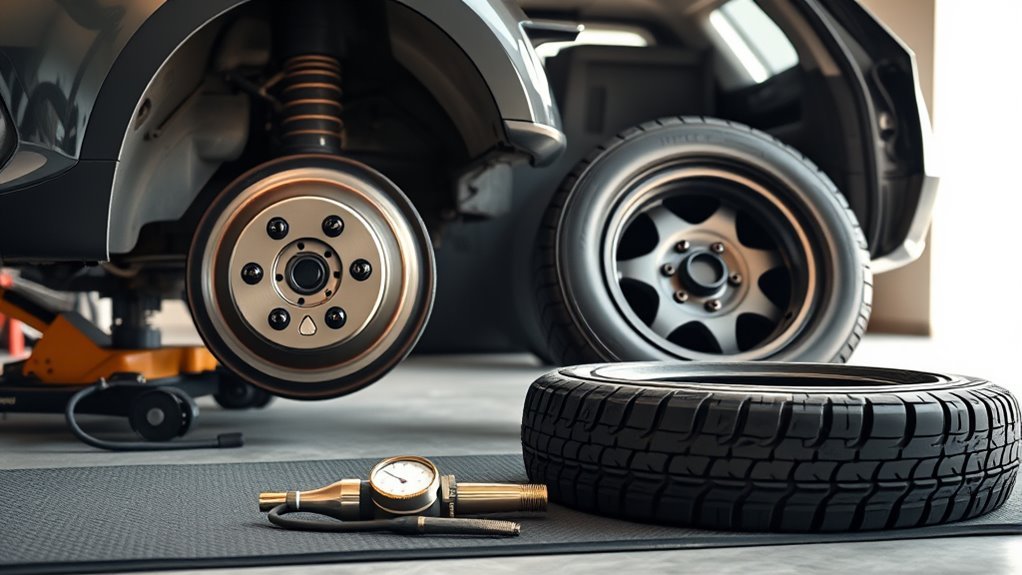
Choose tires that match your vehicle’s size, load rating, speed rating, and driving conditions. The right tire helps protect handling, braking, ride comfort, and puncture resistance. The wrong tire can wear faster, reduce control, or place extra stress on the vehicle.
Choose the Correct Tire Type
Use the tire size and specifications listed in your owner’s manual or on the driver’s door placard. Match the load index and speed rating to your vehicle’s requirements. If you regularly drive on rough roads, gravel, construction areas, or debris-prone streets, consider tires with stronger construction or reinforced sidewalls when they are appropriate for your vehicle.
- Check tire size, load index, and speed rating before buying.
- Choose tread patterns that match your climate and road surfaces.
- Use winter tires where snow and ice are common.
- Use all-season or touring tires for typical mixed driving.
- Replace tires in pairs or full sets when needed to keep handling balanced.
Inspect the Spare Regularly
A spare tire is only useful if it is inflated and safe. Check the spare’s pressure, tread, sidewalls, and age at least monthly or before long trips. Also confirm that the jack, lug wrench, wheel lock key, and tire repair kit are in the vehicle and usable.
Compact temporary spares often require a higher PSI than regular tires, so always follow the vehicle manufacturer’s instructions. Many temporary spares also have speed and distance limits, commonly printed on the spare tire itself.
Keep Matching Tire Size
Make sure your replacement tires match the size, load capacity, and speed rating specified for your vehicle. Tires on the same axle should match in size and construction. Mismatched tires can affect braking, traction control, anti-lock brakes, all-wheel drive systems, and overall handling.
- Record the tire size and specs for all four tires and the spare.
- Buy matching tires in axle pairs when replacing only two.
- Follow the owner’s manual for rotation patterns and AWD tire requirements.
- Verify your spare’s size, load rating, pressure, and use limits.
Prevent Flats Before Long Trips
Long trips put more heat, speed, and load on tires. Before a road trip, inspect all tires carefully and give yourself time to repair or replace a problem tire before leaving.
- Check cold tire pressure on all four tires and the spare.
- Inspect tread depth across the full width of each tire.
- Look for nails, screws, cracks, bulges, and sidewall cuts.
- Make sure valve caps are installed.
- Confirm your vehicle is not overloaded.
- Check that luggage weight is balanced and secured.
- Verify your jack, lug wrench, wheel lock key, inflator, and repair kit.
- Know whether your vehicle has a spare, run-flat tires, or only a sealant kit.
A five-minute tire check before a long drive can prevent hours of roadside stress later.
[Products Worth Considering]

This multi-function tire valve stem removal tool set makes it fast to remove, install, bleed, and clean valve cores for easier tire maintenance. It includes valve core removers, a 4-way spool tool, replacement valve caps, and spare cores to handle replacements and repairs with confidence. Universal compatibility suits cars, trucks, motorcycles, bicycles, and more for roadside convenience.

This tire repair kit provides fast emergency puncture repair without removing the tire from the rim, helping you get back on the road quickly. Its screw plug system is designed for punctures in both tread and sidewall and includes a complete patch plug tool set with essential accessories. A portable storage bag makes it easy to carry for cars, trucks, SUVs, motorcycles, and heavy-duty applications.
When to Get Professional Help or Replace a Tire
Some tire problems need professional attention right away. If you spot uneven tread wear, bald spots, frequent pressure loss, vibration, pulling, cracking, bulges, or sidewall damage, have the tire inspected before driving far. A tire shop can check for punctures, internal damage, valve leaks, bead leaks, bent wheels, and alignment issues.
| Sign | Action |
|---|---|
| Uneven wear | Inspect tires, alignment, and suspension |
| Bald spots or tread at 2/32 inch | Replace the tire |
| Frequent pressure loss | Repair leak or replace tire if unsafe |
| Vehicle pulls or steering feels off | Check alignment, tire damage, and suspension |
| Cracks, bulges, exposed cords, or sidewall cuts | Replace immediately |
What Not to Do When Preventing Flat Tires
- Do not drive on a tire that is visibly flat or severely underinflated.
- Do not ignore a TPMS warning light.
- Do not plug a tire sidewall or shoulder puncture.
- Do not mix tire sizes unless the vehicle manufacturer specifically requires staggered sizes.
- Do not exceed the vehicle’s load limit.
- Do not use old, cracked, or damaged tires just because they still hold air.
- Do not assume a spare is ready without checking its pressure and condition.
Frequently Asked Questions
What are the four most important tire maintenance tips?
Check tire pressure monthly, inspect tread and sidewalls for damage, rotate tires every 5,000–7,000 miles, and replace tires that are worn, cracked, bulging, or repeatedly losing air.
How do I prevent tires from going flat?
Keep tires inflated to the recommended cold PSI, inspect them for punctures and sidewall damage, avoid road debris and potholes, rotate them regularly, and repair slow leaks early. Also keep your spare tire or repair kit ready.
How often should I check tire pressure?
Check tire pressure at least once a month, before long trips, and after major temperature changes. Always check when tires are cold for the most accurate reading.
Can I drive with a nail in my tire if it is not flat?
You should not ignore it. A nail can cause a slow leak or sudden pressure loss. Check the pressure, avoid long or high-speed driving, and have the tire inspected and repaired as soon as possible.
When should a tire be replaced instead of repaired?
Replace the tire if the puncture is in the sidewall or shoulder, the tire has a bulge, cords are exposed, tread is at 2/32 inch, the tire has major cracking, or a professional says the damage is not safely repairable.
Conclusion
Preventing flat tires comes down to consistent checks and quick action. Keep tires inflated to the correct cold PSI, inspect tread and sidewalls, rotate on schedule, avoid road hazards, choose the right tires, and keep your spare ready. If you notice repeated pressure loss, bulges, cracks, bald spots, or uneven wear, get professional help before the tire leaves you stranded.
Sources
- NHTSA TireWise — tire pressure, cold inflation, tire placard guidance, and tire safety basics.
- NHTSA Tire Safety Checklist — monthly pressure checks, spare tire checks, inspection points, and overloading warning.
- Tire Industry Association: Tire Rotation — tire rotation interval and even-wear guidance.
- U.S. Tire Manufacturers Association: Tire Care Essentials — tread depth, wear bars, monthly inspections, and tire care basics.
- AAA: How Temperature Changes Affect Tire Pressure — temperature-related PSI changes.
- 49 CFR § 571.138 — federal TPMS performance standard and purpose.

Related Articles
305 Tire Size Explained: How Big Is It?
I explain how big a 305 tire really is—and why the exact fit can surprise you.
Read More
Tire Ply Rating Explained: What the Numbers Mean
Tire ply ratings reveal more than numbers, hinting at strength, load capacity, and hidden tradeoffs you’ll want to understand before choosing.
Read More
2 Ply Vs 4 Ply Tires: What’s the Real Difference?
I’ll explain the real difference between 2-ply and 4-ply tires, and the choice may surprise you depending on where you drive.
Read More
One Comment