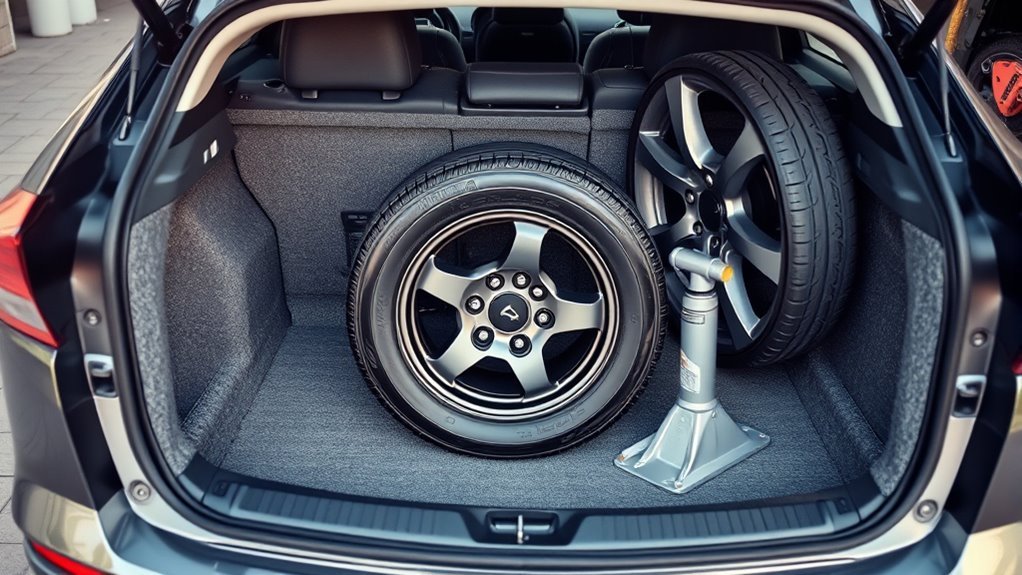
A temporary spare can get your Hyundai Sonata moving again, but it can also create handling and drivetrain problems if you treat it like a normal tire. Most compact spares carry strict speed, distance, and pressure limits, so you need to check the label on the spare and your owner’s manual before you drive. This guide explains Sonata spare tire size, pressure, safe driving limits, fitment checks, and maintenance steps.
Quick Answer
Many Hyundai Sonata temporary spares use a compact tire such as 215/60R16 and need high pressure, often around 60 psi. Check the sidewall, spare-tire label, and owner’s manual for your exact model year. Follow the common 50/50 rule: stay near 50 mph and use the spare only long enough to reach repair service.
Key Takeaways
- Check the spare tire label and owner’s manual before you rely on any Sonata spare.
- Keep a compact temporary spare near its listed pressure, which often sits around 60 psi.
- Limit speed and distance on a temporary spare so you reduce heat, handling, and drivetrain risks.
- Inspect the spare monthly for low pressure, cracks, bulges, and valve-stem damage.
- Replace the damaged full-size tire as soon as you can so the spare stays an emergency tool.
Sonata Spare Tire Quick Specs: Size, PSI, and the 50/50 Rule
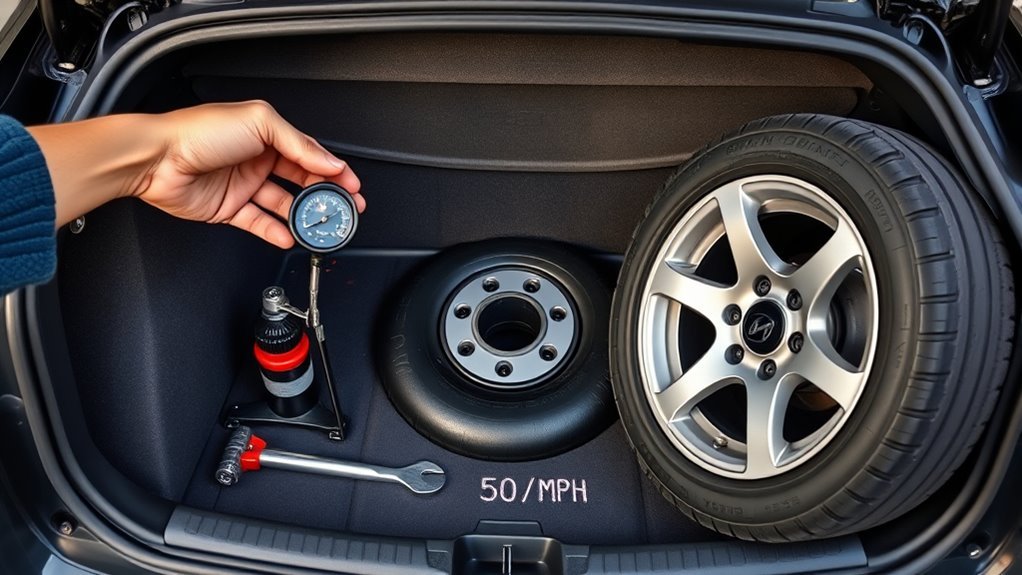
Although Sonata full-size tire sizes vary by model year and trim, many factory temporary spares use a compact size such as 215/60R16. You should inflate the spare to the pressure printed on its sidewall or label, which commonly lists about 60 psi for compact spares.
Follow the 50/50 rule unless your owner’s manual gives a stricter limit. That means you don’t exceed about 50 mph, and you drive only about 50 miles before repairing or replacing the full-size tire.
Check the spare’s pressure monthly with a reliable gauge. Inspect the sidewalls for cracks, bulges, embedded objects, or dry rot before you install it.
Replace the spare if it shows damage, loses air, or reaches the age limit listed by the tire maker. Keep a compact inflator, lug wrench, jack, wheel chocks, and torque wrench in your emergency kit.
Sonata Spare: Speed and Distance Limits, Risks, and Why They Matter
Once you know the spare’s size, pressure, and basic care steps, focus on its driving limits. A Hyundai Sonata temporary spare usually carries a maximum speed near 50 mph and a short-use distance limit near 50 miles.
Warning: Use the Sonata temporary spare only for short emergency trips, and restore a full-size tire as soon as you can.
- Exceeding the listed speed or distance can build heat and strain the tire.
- The spare’s narrow tread can reduce traction, increase stopping distance, and make the car feel less stable.
- A mismatched rolling diameter can stress drivetrain parts, especially on all-wheel-drive models.
- Low spare pressure can cause poor handling, tire damage, or sudden failure.
Respect these limits so you can reach service without creating a second safety problem. Treat the spare as a bridge to repair, not a normal tire.
When to Use the Spare: Short Trips, Long Trips, and AWD/FWD Notes
Use a Hyundai Sonata temporary spare only when you need to move the car after a flat tire. Avoid long trips, highway speeds, heavy loads, and bad weather whenever possible.
On all-wheel-drive (AWD) models, tire diameter matters because the drivetrain expects all four tires to rotate at similar speeds. On front-wheel-drive (FWD) models, many tire-safety guides prefer placing a temporary spare on the rear so the front wheels keep stronger traction and steering control.
Check the owner’s manual before you drive, since placement rules can vary by model year and drivetrain. Also confirm that the spare has the correct pressure before you leave.
Short Trips Only
When you fit the Sonata’s compact spare, use it as a short-term solution. Keep your speed low, avoid sudden steering, and plan a direct route to a tire shop or safe repair location.
- Limit speed and distance to reduce heat, handling changes, and drivetrain stress.
- Move a good rear tire to the front if your manual recommends that layout for your FWD Sonata.
- Install the temporary spare on the rear when that guidance applies to your vehicle.
- Replace or repair the full-size tire before you resume normal driving.
A temporary spare gives you enough mobility to reach help. It doesn’t restore full braking, grip, or load capacity.
AWD/FWD Compatibility
Temporary spares can affect FWD and AWD Sonatas in different ways. For FWD models, putting the spare on the rear can help keep the best available tire on the front axle, where steering and braking loads are high.
For AWD Sonatas, use extra caution because one different-size tire can upset driveline balance. Consult the owner’s manual for model-specific guidance before you drive on a compact spare.
Keep to the listed speed and distance limits. Avoid rain, snow, ice, and rough roads because the spare has less grip than a normal tire.
Full-Size vs Space-Saver: Which Is Safer for Your Sonata?
A full-size spare usually gives your Sonata better control than a space-saver spare, but only if it matches the vehicle’s required tire and wheel specs. The tire must match load rating, diameter, width, wheel size, bolt pattern, and clearance needs.
A space-saver spare weighs less and takes up less trunk room. The tradeoff comes from lower grip, shorter service range, and strict speed limits.
- Performance: a matching full-size spare supports more predictable steering and braking.
- Safety: a space-saver spare can reduce grip and stability during hard stops or wet-road maneuvers.
- Storage: a compact spare fits the trunk well more easily than a full-size tire.
- Maintenance: any spare can fail if you ignore pressure, age, or sidewall damage.
Choose a full-size spare if you often drive remote routes or want stronger backup capability. Keep either spare clean, inflated, and secured.
[Products Worth Considering]

This spare tire tool kit is designed for the 2004 to 2018 Ford F-150 to help you loosen and tighten wheel lug nuts and manage the spare tire and provided jack functions from underneath the vehicle. It includes the lug nut wrench and extension pieces plus a convenient storage carrying case for organized transport. The jack itself is not included.

Upgrade your wheels with MIKKUPPA closed-end lug nuts designed for reliable fit and corrosion resistance. The one-piece, cold-forged and heat-treated steel construction helps resist rust and stripping, while the integrated finish delivers a durable black appearance. Built to OEM standards with a conical 60-degree seat, these nuts provide a secure solution for compatible Ford, Honda, Jeep, and Chevrolet models.

These M14x1.5 closed-end chrome lug nuts are a one-piece replacement designed for secure fitment on compatible GM, Ford, and select Chrysler/Dodge models. Featuring a 60-degree conical seat and anti-rust chrome plating, they help resist corrosion and maintain a bright look for everyday driving. Built for long-term durability, they include OEM-style part references and are backed by 12 months of support.
Check Fitment for Your Sonata: Measurements, Hub Centricity, and Storage
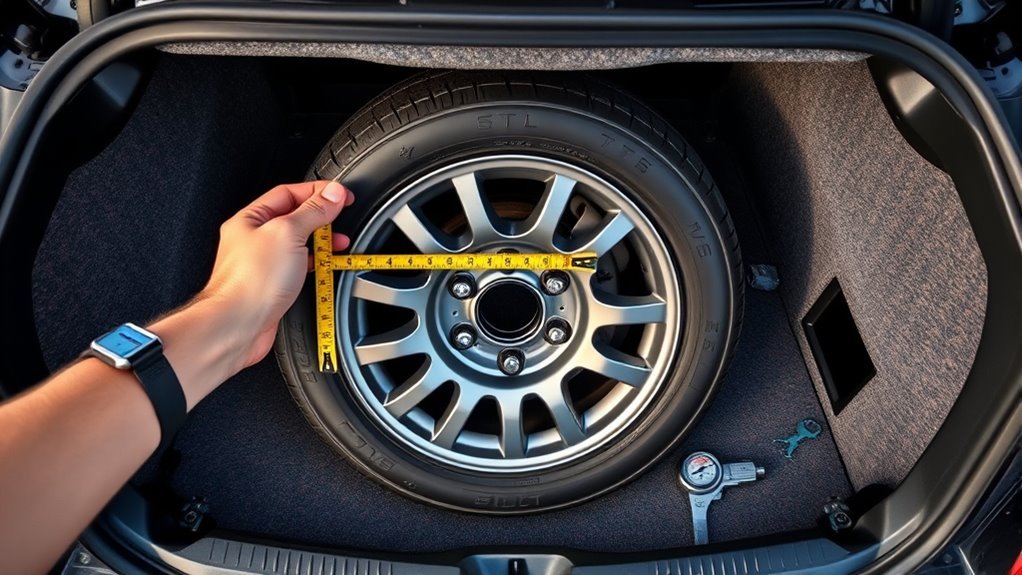
Before you carry a full-size spare, measure the trunk well so the tire won’t shift or block your tools. You also need to check wheel fitment, bolt pattern, offset, and hub bore.
A wheel that doesn’t center on the hub can vibrate or place extra load on the studs. Use the correct fastener, hold-down bolt, or strap so the spare stays fixed during a hard stop.
[Products Worth Considering]

The Dr.Roc spare tire tool kit helps you release, lower, or raise your spare tire with reliable extension tools and a lug nut wrench. It is made from rustproof automotive-grade steel and includes an organized carry case for convenient storage. Designed for compatibility with select GM models from the late 1990s through 2019, it uses upgraded extension components to install and remove spare tires with less hassle.

The GADFISH spare tire carrier is built for reliable hauling with a reinforced welded triangular structure and a behind plate that securely holds the tire up to 150 lbs. It fits a wide range of trailer wheel lug setups, making it suitable for boat trailers as well, while the sloping design helps reduce wind resistance and provides low-ground clearance. Installation is designed to be straightforward with different length bolts and no drilling required.

The Trivd Frol 1/2" air impact wrench delivers high performance torque up to 1500 ft-lbs with a twin hammer impact mechanism for strong, balanced blows. It features an ergonomic grip, compact lightweight design, and quick-stop control with 3 forward speeds up to 8000 RPM plus a reverse speed. Built for demanding automotive repair and tire shop work, the rear exhaust helps keep debris away from the surface.
Measure Trunk And Well
Start by measuring the trunk well’s diameter, depth, and mounting-bolt clearance. Compare those numbers with the outer diameter and width of the tire you plan to carry.
Look for cargo hooks, battery access panels, trim lips, or tool trays that reduce usable space. Confirm that the tire won’t touch the trunk lid or shift when you secure it.
- Measure diameter, depth, and bolt clearance.
- Check trim panels and tool storage for interference.
- Confirm that the spare sits flat and stays secured.
Keep the measurements with your vehicle notes. Accurate fitment checks reduce roadside stress and help your trunk stay useful.
Hub Centric Ring Needs
Before you mount a replacement wheel or spare, confirm the Sonata’s hub diameter and lug specifications. Check lug count, bolt pattern, thread pitch, wheel offset, and center bore.
Hub centricity matters because the wheel should center on the hub, not just the lug nuts. If an aftermarket wheel has a larger center bore, use the correct hub-centric ring for that wheel and hub.
Clean the mating surfaces before installation. Seat the ring fully, and inspect it for cracks, warping, or looseness before you store the spare.
Store Full-Size Securely
When you store a full-size spare in your Hyundai Sonata, verify that the tire and wheel match the vehicle’s recommended size and load needs. Some Sonatas use sizes such as P215/55R17 or P235/45R18, but your door-jamb placard and manual provide the exact spec.
Confirm hub-centric fit and measure trunk clearance so the wheel won’t interfere with the spare well or cargo. Store the tire in a clean, dry spot where it won’t rub against sharp tools.
- Verify fit: confirm diameter, width, offset, bolt pattern, and hub bore.
- Inspect storage: keep the tire clean, dry, and secured.
- Maintain readiness: check pressure, tread, sidewall, and valve condition.
Secure storage protects you during a crash or hard stop. It also keeps the spare ready when you need it.
Step-by-Step Emergency Checklist: Hyundai Spare Kit Use and Safety
A clear checklist helps you change a tire without rushing. Confirm that the spare tire, jack, and lug wrench are present and in good condition before you lift the car.
- Move the car to a stable, well-lit location away from traffic.
- Turn on the hazard lights and engage the parking brake.
- Place wheel chocks if you have them.
- Check the spare’s pressure and inspect the sidewall for cracks or bulges.
- Loosen the lug nuts slightly while the wheel still touches the ground.
- Place the jack at the manufacturer’s lift point.
- Raise the vehicle until the flat tire clears the ground.
- Remove the lug nuts and take off the flat tire.
- Install the spare and hand-thread each lug nut.
- Lower the car and tighten the lug nuts in a star pattern.
- Use a torque wrench to tighten the nuts to the manual’s specification.
- Store the tools and flat tire securely before you drive.
Never crawl under a car that only rests on a jack. If the road shoulder feels unsafe, call roadside assistance instead of changing the tire yourself.
[Products Worth Considering]

The Gurduenon scissor car jack tire changing kit is designed for quick flat-tire replacement with a lifting capacity of 2.5 tons and a scissor-lift range sized for many vehicles. The complete emergency set includes a ratchet wrench, lug wrench, gloves, a pencil tire pressure gauge, and a storage bag for convenient trunk or garage use. Universal compatibility makes it suitable for cars, SUVs, and other vehicles roadside assistance needs.

Secure a full-size spare on your trailer with this powder-coated steel spare tire mount bracket. It fits most 4-, 5-, and 6-lug wheel bolt patterns and mounts to trailer tongues up to 4 in wide and 5 in tall. Built for reliable carry with a max 150 lb load rating and includes zinc-plated hardware for straightforward installation.

This ecocstm ratchet wrench is designed to make emergency and routine tire changes faster with a 360° rotating head and quick forward/reverse switching. The extended handle provides extra leverage to reduce effort and hand fatigue, while the adapter helps fit many scissor jacks on cars, SUVs, trucks, and vans. Built for reliable performance with durable construction, it’s a practical travel essential for on-the-road preparedness.
After Installation: Driving Tips and What to Avoid
Once the spare is fitted and the tools are secure, drive with care. Confirm the spare’s pressure, then follow the speed and distance limits printed on the tire or listed in the manual.
Pro tip: Check lug-nut torque again after a short drive if your owner’s manual recommends a recheck.
- Keep speeds near the temporary spare’s listed limit, often about 50 mph.
- Avoid cruise control so you can manage speed and road feel yourself.
- Leave more stopping distance than usual.
- Avoid hard braking, fast turns, and quick lane changes.
- Stay out of rain, snow, and ice when you can.
- Drive straight to repair service or a safe place to replace the tire.
Pay attention to vibration, pulling, noise, or warning lights. Stop in a safe place if the car feels unstable.
Maintenance & Replacement: Pressure Checks, Age Limits, and Upgrade Advice
You may rarely use your Sonata’s spare, but it still needs routine care. Check pressure every month and after large temperature changes.
Inspect for age-related dry rot, cracks, bulges, exposed cords, punctures, and valve-stem damage. Replace any spare that looks damaged or can’t hold pressure.
Many tire makers recommend replacing old tires by age even when tread looks usable. Check the tire date code and follow the tire maker’s guidance for service life.
If you drive on a temporary spare for too long, replace or inspect it before you return it to the trunk. For remote travel, consider a full-size spare that matches your Sonata’s wheel and tire specs.
Common Mistakes to Avoid With a Sonata Spare
Drivers often create problems by treating a compact spare like a normal tire. The most common mistakes involve speed, distance, pressure, and fitment.
- Don’t drive highway speeds on a temporary spare unless the tire label allows it.
- Don’t ignore a low-pressure spare just because it looks firm.
- Don’t mix an unknown wheel size or bolt pattern with your Sonata.
- Don’t carry a loose full-size spare in the trunk.
- Don’t delay the full-size tire repair after the car becomes drivable.
These simple checks protect the tire, the vehicle, and everyone in the car.
Frequently Asked Questions
What Is the Speed Limit on a Hyundai Spare Tire?
You should follow the speed limit printed on the spare tire and listed in your owner’s manual. Many temporary spares carry a 50 mph limit, and you should slow down more in rain, snow, or heavy traffic.
What Happens if I Go Over 50 Mph on a Spare Tire?
You increase the risk of heat buildup, poor handling, longer stopping distance, and tire failure. You can also stress drivetrain and stability-control systems if the spare’s rolling diameter doesn’t match the other tires.
Can You Drive Full Speed on a Full-Size Spare Tire?
You can usually drive more normally on a full-size spare if it matches the original tire size, load rating, speed rating, and wheel specs. Check pressure and condition first, and follow any limits in your owner’s manual.
Does It Matter What Size Your Spare Tire Is?
Yes. The wrong spare size can affect steering, braking, traction, and drivetrain parts. Use the size listed for your Sonata, and avoid unverified wheels or tires.
How Often Should You Check a Sonata Spare Tire?
Check the spare tire pressure about once a month and before long trips. Also inspect the sidewall, tread, valve stem, and date code so you don’t discover a bad spare during an emergency.
Safety Disclaimer: This article is for informational purposes only and does not replace your Hyundai owner’s manual or professional roadside help. If the vehicle feels unstable, the spare looks damaged, or you can’t change the tire safely, stop driving and call a qualified technician or roadside-assistance provider.
Conclusion
Keep your Sonata’s spare ready by checking the size, pressure, condition, and speed limit before you need it. Treat a temporary spare as short-term emergency equipment, not a regular tire.
Inspect it monthly, store it securely, and repair the damaged full-size tire as soon as possible. A prepared spare setup gives you a safer path from a flat tire to a real fix.