OE Tires vs. Replacement Tires for Toyota Camry: Do You Have to Match OEM?
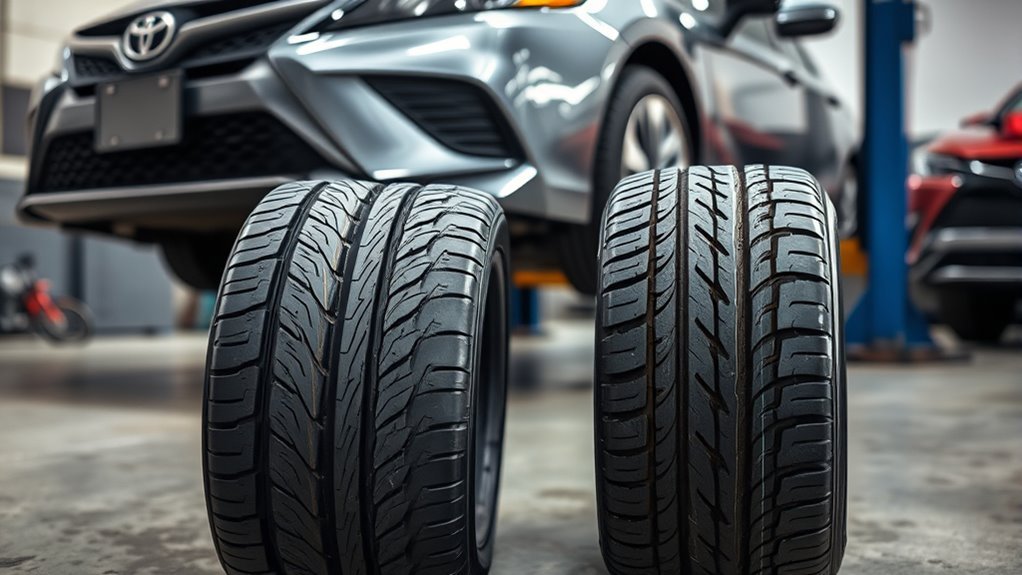
You don’t have to match Toyota’s OE tires exactly, but you do need to stay within the Camry’s approved size, load index, and speed rating. OE tires are tuned for quiet ride, low rolling resistance, and Toyota’s comfort targets, while replacements can improve grip, tread life, or wet traction. Switching can change noise, comfort, and handling response. If you compare treadwear, traction, and fitment carefully, you’ll see why some choices work better for your driving needs.
What Are OE Tires on a Camry?
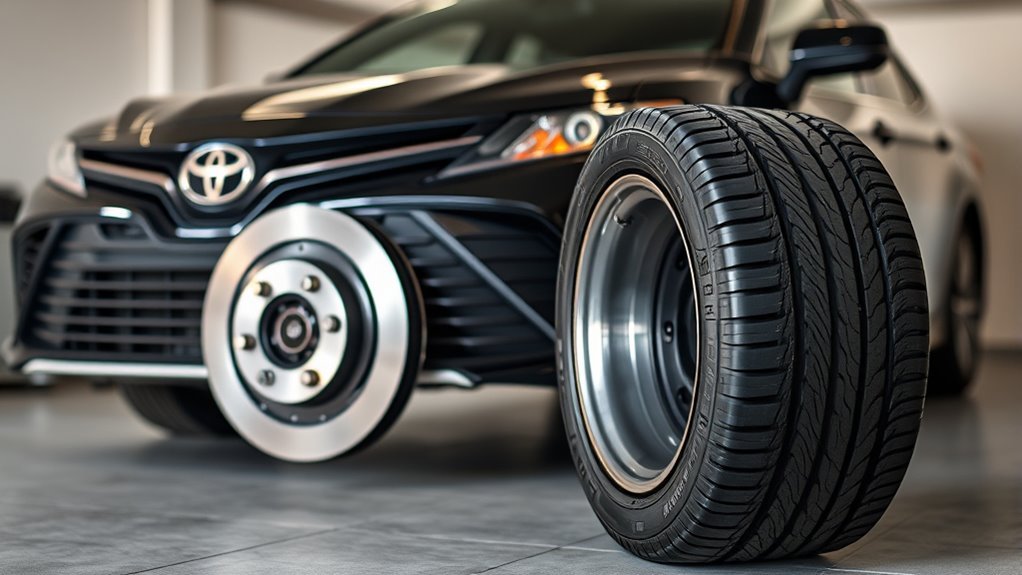
OE tires on a Toyota Camry are the original equipment tires selected by the manufacturer to match the car’s handling, comfort, and safety targets. You get a tire built to Toyota’s test standards, with tread patterns and rubber compounds engineered for balanced tire performance. These OE designs often prioritize a quiet, smooth ride and efficient rolling resistance, so you may notice strong comfort and fuel economy from day one. That same softness can reduce tread life, though, and some OE sets wear out before 25,000 miles. Your results depend on driving style, road conditions, and maintenance. Some drivers report only 10,000 miles, while others reach 62,000 miles. In practice, OE tires give you a calibrated baseline, not a universal lifespan. They’re tuned to help your Camry feel composed and responsive, but they don’t guarantee durability.
Do Camry Replacement Tires Need OEM Specs?
No, replacement tires for your Camry don’t have to match OEM specs exactly, but they should stay within Toyota’s recommended size, load index, and speed rating. That framework protects compatibility with your vehicle’s steering, braking, and stability systems while preserving predictable tire performance. You can choose aftermarket tires that deliver stronger grip, longer tread life, or better durability, as long as they match the Camry’s load requirements and intended use. Check your owner’s manual first; it gives the baseline specs you should follow. Then compare tread patterns, compound, and construction to see whether a tire suits your driving environment. If you drive in rain, heat, or on rough pavement, you can select a tire built for those conditions without being locked into OEM branding. Liberation here means choice with discipline: you’re free to move beyond factory tires, but you shouldn’t ignore the engineering limits your Camry needs to stay safe, efficient, and responsive.
What Changes When You Switch Tires?
When you switch from OE tires to replacement tires, you can change ride comfort, road noise, and overall damping because tread design and rubber compound affect how the Camry absorbs pavement inputs. You’ll also notice shifts in handling response and stability, since different widths, aspect ratios, and construction can alter steering feel and cornering behavior. Longevity can improve too, as many aftermarket tires carry higher treadwear ratings than typical OE options.
Ride Comfort Changes
Switching from OEM tires to aftermarket replacements can change ride comfort noticeably, because tire construction, compound choice, and sidewall stiffness directly affect how the Camry feels on the road. If you choose a tire tuned for tire performance, you’ll usually accept comfort trade offs: firmer response, less compliance, and a harsher impact over joints and patches. OEM tires often use softer compounds and more forgiving sidewalls, so they isolate vibration better, though they may wear faster. Tread design also matters; aggressive patterns can add road noise and make the cabin feel busier. If you drive hard, you’ll notice these differences sooner. By selecting a tire that matches your priorities, you reclaim control over ride quality instead of accepting factory defaults.
Handling And Longevity
If you move from OE tires to aftermarket replacements, handling can improve noticeably because you can choose higher-grip compounds, stiffer sidewalls, or tread patterns built for specific road conditions. That flexibility gives you more tire performance control and more grip options than factory fitments usually allow. OE Camry tires often use softer rubber for comfort, but that can shorten tread life, sometimes below 25,000 miles. Aftermarket models may last longer if you pick a durability-focused design, though performance tires can wear faster because they trade longevity for traction. Your driving style still matters: hard braking and aggressive cornering accelerate wear on any tire. If you upsize or choose a higher-profile tire for heavier loads, you can improve both stability and longevity.
Why Camry OE Tires Wear Out Faster
Camry OE tires often use softer compounds and lower treadwear ratings, so they trade durability for ride comfort and grip. You’ll see faster tread loss when those tires are exposed to hard braking, aggressive cornering, and repeated heat cycles. In practice, your driving habits can shorten OEM tire life well below what replacement tires often achieve.
Softer OEM Compounds
OE factory tires often use softer rubber compounds to improve ride comfort and noise isolation, but that tuning usually comes at the expense of tread life. For your Camry, tire softness means the tread deforms more readily, gripping the road yet abrading faster under load. That’s one of the core comfort trade offs.
| Compound | Feel | Wear |
|---|---|---|
| Softer OEM | Smooth | Faster |
| Harder aftermarket | Firmer | Slower |
| Mixed driving | Variable | Uneven |
If you brake hard, corner aggressively, or run hot pavement, you can accelerate loss quickly; some drivers see 50% tread gone by 10,700 miles. Others, with gentler use, stretch OEM life toward 62,000 miles. The point is simple: you’re not locked into comfort-first rubber.
Low Treadwear Ratings
- Lower treadwear numbers signal faster rubber loss
- Softer compounds improve ride feel, not longevity
- OEM tuning prioritizes first-drive approval over endurance
- Higher-rated aftermarket tires can extend service intervals
For you, the fix isn’t brand loyalty; it’s selecting a tire with a higher treadwear index that matches your usage and frees you from premature replacement cycles.
Driving Habits Matter
Even with Toyota Camry OEM tires engineered for comfort, your driving habits can shorten tread life quickly because softer compounds wear faster under hard braking, rapid acceleration, and aggressive cornering. If you drive with frequent stop-and-go bursts, you’ll accelerate wear, and some owners see tread loss below 25,000 miles, with reports of 50% depletion in 10,700 miles. Your driving styles matter more than the brand label: city traffic increases heat and scrub, while rural roads may reduce cycling but still punish tires under load. Match tire selection to how you actually drive, not how the car was delivered. Consistent tire maintenance—rotation, pressure checks, and alignment—helps preserve life, but it can’t offset abusive inputs. Choose tires that support your freedom to drive on your terms.
Best Tire Features for Camry Drivers
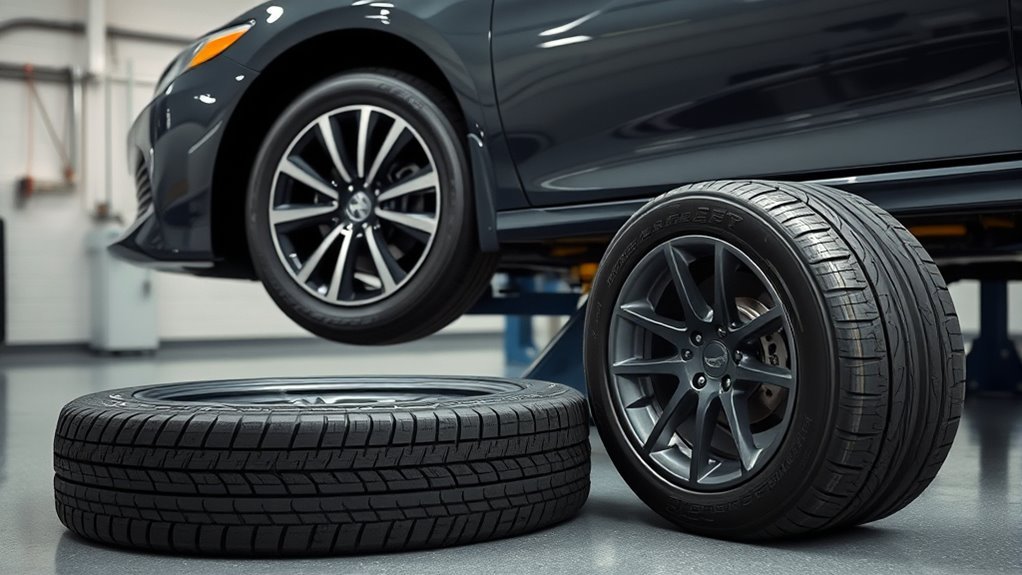
For Camry drivers, the best tires balance longevity, comfort, and everyday efficiency, so you should look for a treadwear rating of at least 40,000 miles, an all-season compound, and noise-reduction features. That baseline supports tire durability and steady traction performance without locking you into OEM-only choices. Softer rubber compounds can improve compliance and cut cabin noise, while a higher-profile size like 225/65R17 may add cushion on rough pavement.
- All-season tread for broad weather utility
- 40,000-mile-plus treadwear for longer service life
- Noise-control design for quieter commuting
- Improved traction ratings for confident cornering
You’ll get the most liberated, practical result when you match the tire to your roads and ride priorities, not just the factory label. For daily driving, these features help you preserve control, efficiency, and comfort with less compromise.
How to Compare Camry Tire Ratings
When you compare Camry tire ratings, start with treadwear because OEM tires often wear out sooner than expected, with some drivers seeing major degradation before 25,000 miles. Use a treadwear evaluation to gauge how long a tire can resist compromise, then check speed and load ratings against OEM specs or higher. That keeps your tire performance comparison grounded in safety, control, and the freedom to drive on your terms. Next, review traction and temperature grades, plus tread design, to see how each tire handles wet roads, heat, and cornering. Online tire selectors and comparison charts make this faster by isolating measurable data instead of marketing noise. Don’t stop at numbers, though: user reviews reveal real-world longevity, ride quality, and consistency across brands. Match the tire to your climate and road conditions, and you’ll choose a replacement that supports independent, confident driving without accepting factory limits.
When the Factory Tire Size Makes Sense
Matching the OEM tire size on your Toyota Camry makes sense when you want the vehicle to perform exactly as engineered. You preserve calibrated tire performance, steering response, and brake feel while keeping the chassis within its intended operating envelope.
Matching the OEM tire size keeps your Camry’s steering, braking, and performance exactly as engineered.
- You retain the factory balance of comfort and fuel efficiency.
- You keep safety features aligned with the Camry’s tested dynamics.
- You reduce the risk of fitment errors, rubbing, or speedometer drift.
- You stay closer to the original tread and compound design, which can support warranty compliance.
If you value predictable control, the OEM size gives you a clean baseline. It also limits variables when you evaluate replacement tires, so you can judge changes with precision instead of guesswork. For you, that means less compromise and more control over how your Camry drives, stops, and responds on every mile.
Where to Buy Camry Replacement Tires
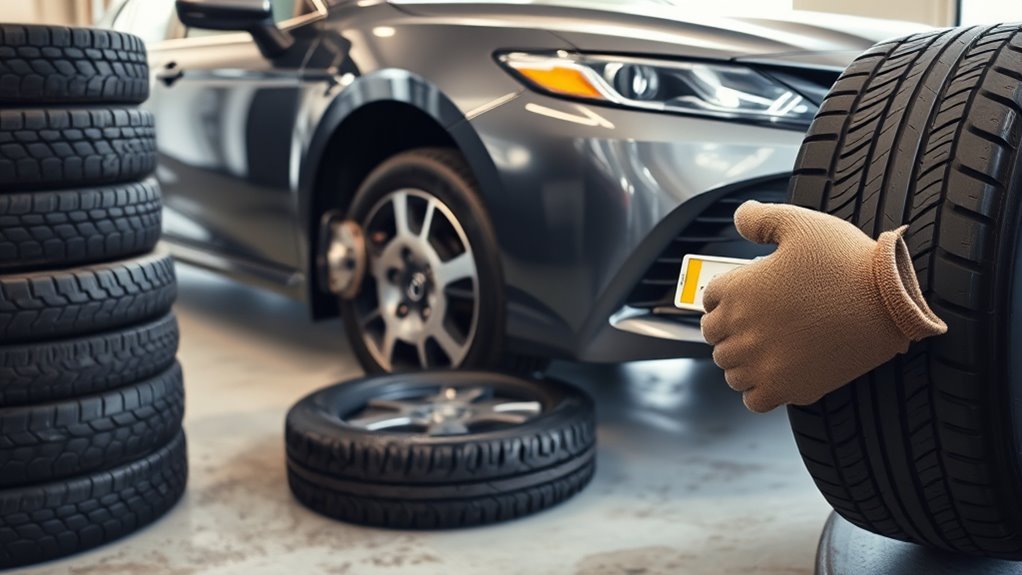
Shopping for Camry replacement tires starts with comparing retailers that can match your model year and trim accurately. You can use tire retailers with strong online shopping tools, like selectors and comparison charts, to narrow choices fast. SimpleTire is one option: it offers broad inventory, competitive pricing, sign-up discounts, and military savings. Many sellers also ship tires fast and free, so you can route them to your home or an installer. Before you buy, inspect treadwear ratings and user reviews; they reveal real durability, grip, and noise behavior. Local tire shops and national chains can add installation, often bundling labor with the purchase.
| Channel | Strength | Tradeoff |
|---|---|---|
| Online retailers | Price, selection | No hands-on inspection |
| SimpleTire | Discounts, shipping | Fitment must be checked |
| Local shop | Installation support | Higher total cost |
| National chain | Bundled service | Less flexibility |
| Comparison tools | Accuracy | Requires careful input |
Choose the path that restores control and keeps you moving.
Frequently Asked Questions
What Tire Brand Does Toyota Recommend?
Toyota recommends Michelin, Bridgestone, and Dunlop for your Camry, because you’ll get strong tire performance and fewer warranty considerations. You should verify your owner’s manual and match the specified size, load, and speed ratings.
Conclusion
If you’re choosing tires for your Toyota Camry, you don’t have to match OEM exactly, but you do need to match the vehicle’s load, speed, and size requirements. Notably, studies show tire rolling resistance can affect fuel economy by as much as 4%. That means your replacement choice can change efficiency, ride quality, and braking performance. Focus on the specs that matter most, not just the factory name, and you’ll make a smarter, safer decision.

Related Articles
All-Terrain Tires vs. All-Season Tires for Toyota Camry: What You Should Know
Get the real difference between all-terrain and all-season Camry tires before you choose the wrong set for your driving needs.
Read More
Toyota Camry 17-Inch Tire Size: Complete OEM Specs and Fitment Guide
Discover crucial details about your Toyota Camry's 17-inch tire size, ensuring optimal performance and safety; find out what you need to know next!
Read More
Low-Profile Tires vs. Standard Tires on Toyota Camry: Ride & Handling Differences
Keen to know whether low-profile or standard tires transform your Toyota Camry’s ride and handling? Discover which setup surprises drivers most.
Read More