
How to Check Tire Tread Depth at Home: 3 Easy Ways
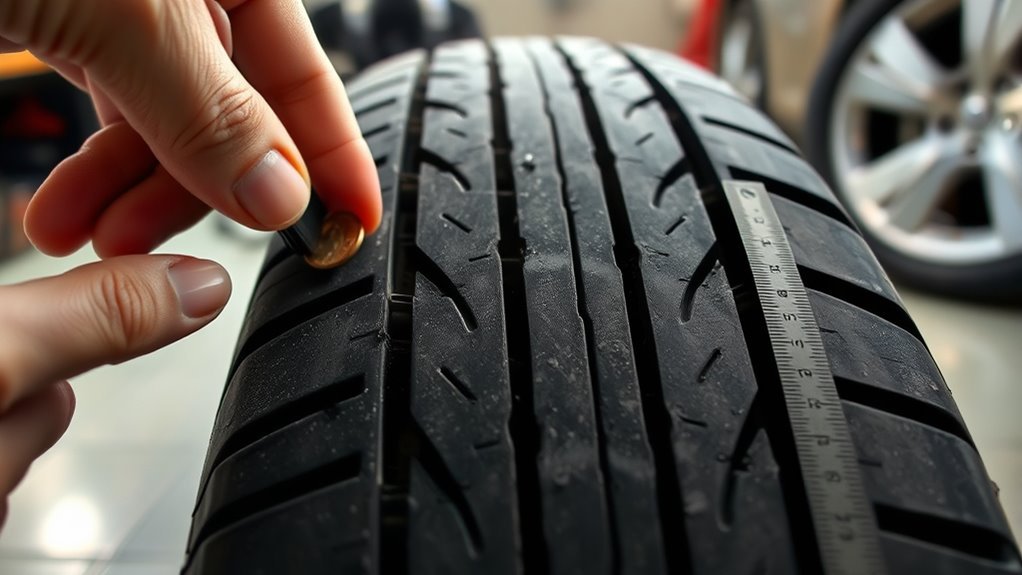
You can check tire tread at home three quick ways: do the penny test—insert a penny head‑down into grooves; if Lincoln’s head shows, tread’s under 2/32″ and must be replaced; use a quarter or a calibrated tread‑depth gauge for more precise readings—if Washington’s head shows you’re under 4/32″; and inspect molded wear bars—bars flush with tread mean legal limit. Check multiple grooves and rotate, repair, or replace based on uneven or localized wear for safer driving and learn more below.
Do the Penny Test (Quick Tire Tread Check)
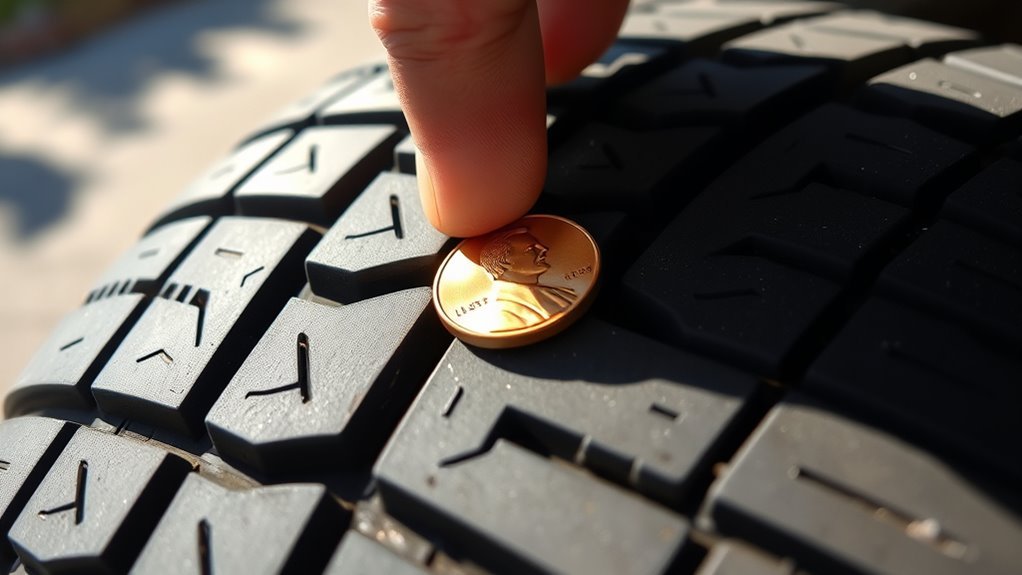
Use a penny to quickly check tread depth: insert it into a tread groove with Lincoln’s head upside down and facing you. You’ll perform the penny test to assess tire safety in minutes. If Lincoln’s entire head is visible, the tread is too shallow—under 2/32″—and the tire requires immediate replacement. Don’t check only one spot: probe several grooves across the tire to detect uneven wear. Hold the penny perpendicular to the tread and note visibility consistently; full-head visibility in multiple grooves confirms legally bald tires. This quick, hands-on check won’t give exact millimeters but provides a reliable pass/fail for safe driving. Repeat monthly or before long trips to maintain tire safety.
Use a Quarter or a Tread‑Depth Gauge for Accurate Readings
If you want a more precise check than the penny test, try a quarter or a dedicated tread‑depth gauge. Insert the quarter with Washington’s head facing down; if his entire head is visible the tread is under 4/32“, signaling significant tread wear and likely replacement, especially in wet or snowy conditions. For higher measurement accuracy, use a calibrated tread‑depth gauge: insert the probe into the deepest groove until the base sits flush on the tread surface and read the scale. Take readings in multiple grooves across the tire and around the circumference to capture uneven wear. Record the lowest values; 4/32″ or less demands immediate action. Regular checks with these tools preserve traction, safety, and tire performance.
Read Wear Bars and Decide When to Rotate, Repair, or Replace
When the molded treadwear indicator bars appear flush with the surrounding tread, you’ve reached the 2/32″ legal limit and must replace the tire immediately. Inspect all grooves—if bars are visible in multiple spots, that signals uneven tread wear and decreased tire safety. Rotate tires if one or two show advanced wear but others are healthier; rotation evens tread wear and can delay replacement. If wear is localized (sidewall, puncture area), evaluate for repair only if tread depth is well above wear bars and repair protocols are met. Always prioritize tire safety: near-bar depth means replace.
| Condition | Action |
|---|---|
| Bars flush | Replace immediately |
| Bars visible multiple grooves | Rotate soon |
| Localized damage, deep tread | Repair possible |
| Near bars | Replace for safety |
Frequently Asked Questions
How to Check Tire Tread Without a Penny?
Use a quarter, dime, ruler, or tread depth gauge to check tread wear; insert the coin or gauge into the deepest groove, read measurement or compare to indicator bars, and act to maintain tire safety.
What Is the 20P Trick for Tyres?
Imagine a quick test: you slip a 20p coin into the groove—if the outer band’s visible, you’ve got concerning tread wear. You’ll act decisively to preserve tire safety and replace unevenly worn tyres.
Conclusion
You’ve learned three quick ways to check tread depth so you can act before traction fails. Do the penny test for a fast screen, use a quarter or a gauge for precise millimeter readings, and inspect wear bars to judge service life. Like a medical checkup that catches problems early, routine tread checks keep you safer and prolong tire life. Rotate, repair, or replace tires promptly based on those measurements.

Related Articles
How Much Does a Car Tire Weigh? Complete Weight Guide by Type
Standard car tire weights vary widely by type, and the full guide reveals why some are surprisingly heavier than others.
Read More
Easy Tire Levers Guide: Avoid Pinching Tubes
Gentle leverage, valve alignment, and a second lever keep your tube safe—learn the simple tricks to avoid pinches and what to do if it won’t budge.
Read More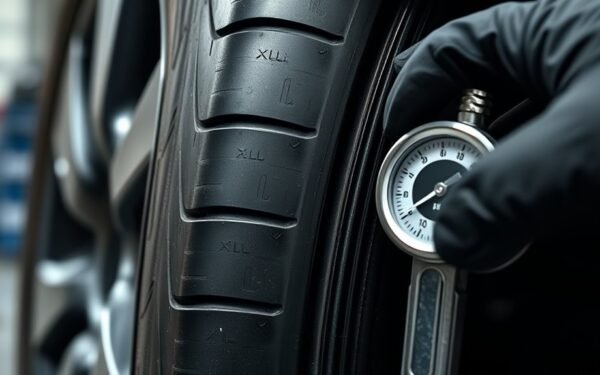
XL Tire Meaning Explained: Extra Load Guide
Curious what XL means on a tire and how Extra Load affects pressure, capacity, and safety—discover why proper inflation matters and what to check next.
Read More