
How to Remove Lug Nuts on a Toyota Camry Safely and Without Damage
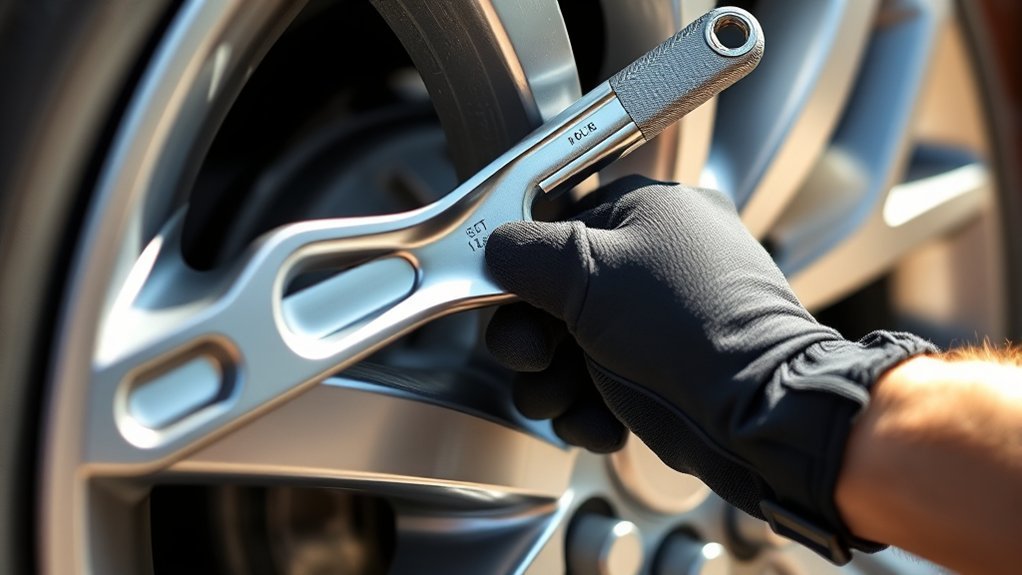
Removing lug nuts on a Toyota Camry is usually simple, but a rusted lug nut or stuck wheel can quickly become unsafe if you lift the car too soon, use the wrong socket, or rely on the jack alone. The safest approach is to stabilize the car first, break the lug nuts loose while the tire is still on the ground, lift only at the recommended jack point, and finish with the correct torque when the wheel goes back on.
Quick Answer
To remove Toyota Camry lug nuts safely, park on solid, level ground, set the parking brake, chock the opposite wheel, and loosen each lug nut about a quarter turn before lifting. Use a snug-fitting lug wrench or six-point socket, lift only at the owner’s-manual jack point, and tighten the wheel in a star pattern to the correct torque after reinstalling it.
Key Takeaways
- Break the lug nuts loose while the tire is still on the ground; do not wait until the car is fully raised.
- Use the Camry’s recommended jack point and never put any part of your body under a vehicle supported only by a jack.
- For a stuck lug nut, use a snug six-point socket, steady pressure, and penetrating oil if needed; stop before the nut rounds off.
- For a stuck wheel, leave one lug nut threaded on loosely, apply penetrant at the hub center, and tap the tire sidewall—not the rim or brake parts.
- Keep lug studs, lug nuts, and nut seats clean and dry. Do not apply oil, grease, or anti-seize to the wheel bolts or lug nuts.
At a Glance
| Time Required | 15–45 minutes, depending on rust, tools, and whether the wheel is stuck to the hub |
| Difficulty | Easy for normal lug nuts; moderate if nuts are rusted, overtightened, stripped, or fitted with wheel locks |
| Tools Needed | Lug wrench or breaker bar, snug six-point socket, Toyota jack or rated floor jack, wheel chocks, torque wrench, gloves, safety glasses, rubber mallet, and penetrating oil for rusted parts |
| Cost | $0 if you already have the tire tools; about $10–$80 for penetrant, chocks, sockets, or a basic torque wrench |
How to Safely Jack Up Your Toyota Camry
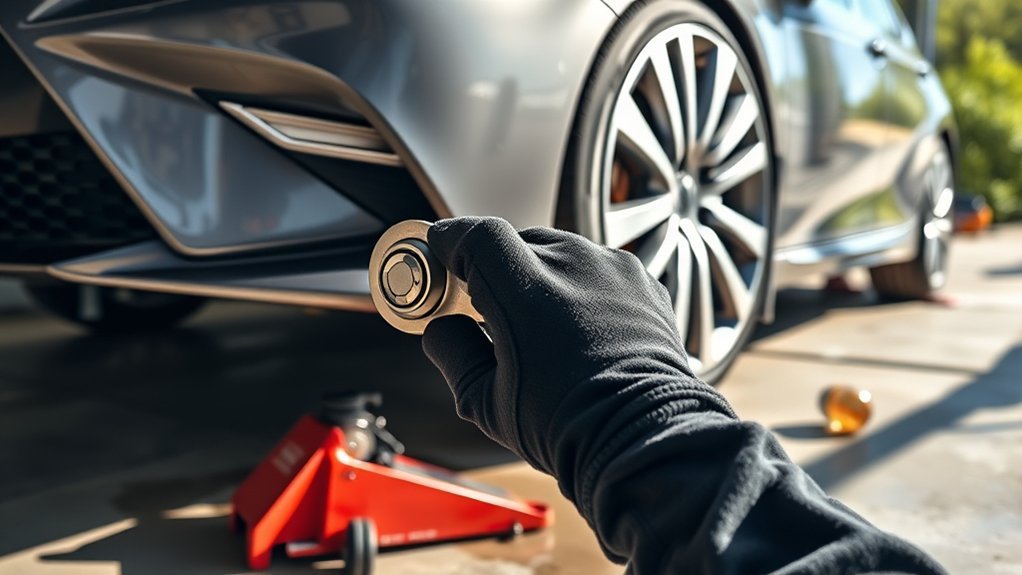
Start by choosing the safest location possible. Park on a flat, hard surface away from traffic, turn on the hazard lights if you are roadside, shift to Park, and set the parking brake. Place wheel chocks at the wheel diagonally opposite the wheel you are lifting. If you do not have chocks, use a solid block as a temporary backup, but do not use loose rocks or anything that can roll.
Warning: A jack is a lifting tool, not a safe long-term support. Never put your head, arm, leg, or torso under a Camry that is supported only by a jack. If the wheel is stuck and you need to pull, tap, or work around the hub for more than a quick tire change, support the vehicle with a properly rated jack stand at a manufacturer-approved support point.
Before lifting the Camry, use the lug wrench to loosen each lug nut about a quarter turn while the tire is still touching the ground. This gives you leverage and helps keep the wheel from spinning. Do not fully remove the nuts yet.
Next, place the jack only at the jack point shown in your Toyota owner’s manual. On most Camry models, the roadside scissor jack points are along the pinch welds near the wheels, but exact locations vary by year and trim. If you are using a floor jack at home, follow the owner’s manual or service information for the correct lift point, and make sure the jack pad contacts a solid structural area rather than plastic trim, the floor pan, or a suspension part not intended for lifting.
Raise the car only high enough for the tire to clear the ground. If anything shifts, lowers unevenly, or feels unstable, stop immediately, lower the vehicle, and reset the jack on firmer ground.
[Products Worth Considering]

HYDRAULIC JACK AND STAND COMBO - [1] floor jack and [2] ratchet jack stands. Constructed of heavy duty steel with a welded frame design for durability. Suitable for vehicles up to 2TON/4000 lbs. Providing you with the essentials to lift and support most cars, Not recommendable for Pick-Up, truck, too big SUVs etc.

【Best Protection for Your Car Undercarriage】: These jack stand pads protect your car undercarriage and surface paint, and prevent your frame rails and pinch welds from bending, when you use a car jack.

Pair of 3 Ton (2.7 metric Ton) jack stands with 6,000-pound capacity
Common Causes of Stuck Wheels and Lug Nuts
A stuck lug nut and a stuck wheel are two different problems. A stuck lug nut means the fastener will not turn. A stuck wheel means the lug nuts are off, but the wheel will not separate from the hub.
Common causes include corrosion between the wheel center bore and the hub, road salt exposure, moisture, dirt on the hub face, overtightened lug nuts, cross-threaded studs, damaged lug nut seats, and wheel locks with missing or damaged keys. Older vehicles and vehicles driven in snowy or coastal areas are more likely to have rust bonding the wheel to the hub.
Improper installation can also create future trouble. Lug nuts should be started by hand, tightened gradually in a star pattern, and finished with a torque wrench. An impact wrench can remove nuts quickly, but using one carelessly during installation can overtighten or damage studs.
Tools You Need to Remove Stuck Lug Nuts
Use tools that fit tightly and give controlled leverage. The most useful setup is a six-point socket on a breaker bar because it grips the flat sides of the lug nut better than a loose or worn wrench. A cross-style lug wrench can also work if it fits snugly.
- Lug wrench or breaker bar: gives steady leverage for loosening tight nuts.
- Six-point socket: reduces the chance of rounding a stuck lug nut.
- Torque wrench: needed for final tightening after reinstalling the wheel.
- Wheel chocks: help prevent rolling while the vehicle is raised.
- Penetrating oil: useful for rusted nuts or a wheel stuck to the hub.
- Rubber mallet or dead-blow mallet: helps loosen a stuck wheel without striking the rim face.
- Gloves and safety glasses: protect your hands and eyes from rust flakes, dirt, and tool slips.
- Wheel lock key: required if your Camry has locking lug nuts.
Note: Many recent Toyota Camry models use a wheel nut torque of 76 ft-lb / 103 N·m, but you should confirm the exact specification for your model year, wheel type, and lug nuts in your Toyota owner’s manual or service information.
[Products Worth Considering]

Fitment: 6 Spline Lug Nut Socket Key Tool only work for 6 spline aftermarket Lug Nuts 1/2", M12 x 1.25, M12 x 1.5 thread pitch

Specification:OD:20.8mm(0.82"),ID:16mm(0.63"),Overtall:78mm(3"),Socket Drive:1/2".Package include 1PC 6 Spline Lug Nut Tool Key.

1pc Small 6 Spline Lug Nut Key, Silver Socket Key Replacement. Works with most DPAccessories, Gorilla, Accuwheel, & more 6-point Spline Type Tuner Locking Lug Nuts with smaller diameter (M12, M12x1.5, 12x1.25, 1/2", 1/2"x20 Thread Pitch).
How Penetrating Oil Helps Remove Stuck Wheels
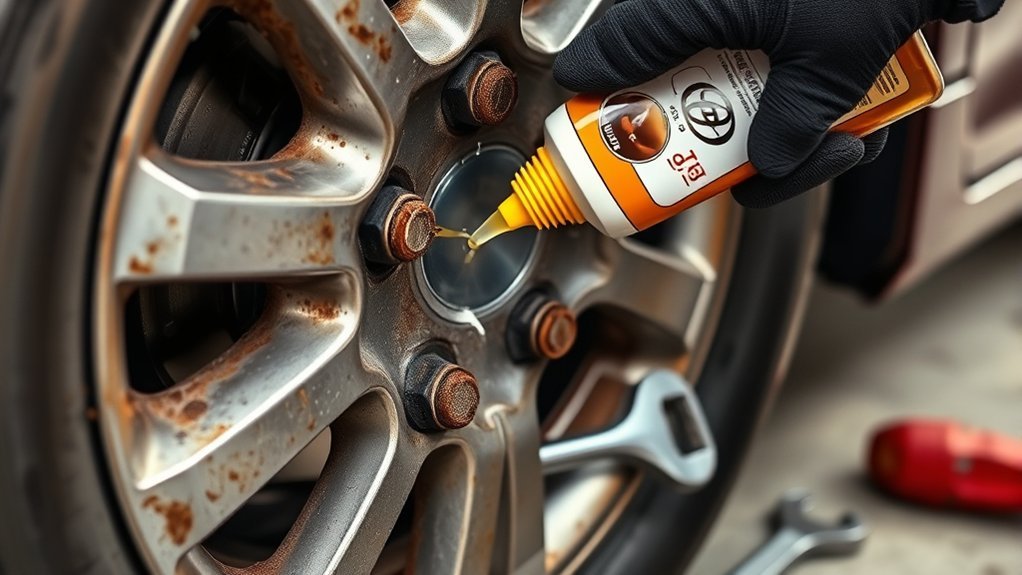
Penetrating oil is designed to creep into tight gaps and help loosen rusted or seized metal parts. For a stuck lug nut, apply it where the nut meets the exposed stud and let it soak. For a stuck wheel, apply it around the center hub where the wheel meets the hub pilot. Give it at least 10–15 minutes to work before trying again.
Use the straw applicator so you can aim the product instead of soaking the whole wheel. Keep penetrant off the brake rotor friction surface, brake pads, tire tread, and the final lug nut seating surfaces. If penetrant gets on the lug studs or nuts during removal, wipe the parts clean before reinstalling the wheel.
Warning: Do not use oil, grease, or anti-seize on Toyota wheel bolts, lug nuts, or the tapered/conical nut seats. Lubricated fasteners can be over-tightened at the same torque reading and may loosen later. Clean rust and dirt, but keep the fastener threads and seats dry unless Toyota service information for your exact vehicle says otherwise.
[Products Worth Considering]

BREAKS FREE RUSTED & FROZEN PARTS – PB Blaster Penetrating Oil uses a powerful penetrating catalyst to quickly break through rust and corrosion, loosening stuck nuts, bolts, and mechanical parts.

BREAKS FREE RUSTED & FROZEN PARTS – PB Blaster Penetrating Oil uses a powerful penetrating catalyst to quickly break through rust and corrosion, loosening stuck nuts, bolts, and mechanical parts.

BREAKS FREE RUSTED & FROZEN PARTS – PB Blaster Penetrating Oil uses a powerful penetrating catalyst to quickly break through rust and corrosion, loosening stuck nuts, bolts, and mechanical parts.
Step-by-Step: Remove Toyota Camry Lug Nuts Safely
- Park safely. Stop on solid, level ground, set the parking brake, and turn on hazards if you are roadside.
- Chock the opposite wheel. Place chocks at the wheel diagonally opposite the wheel being lifted.
- Check for wheel locks. If one lug nut looks different, find the wheel lock key before starting.
- Break the lug nuts loose. With the tire still on the ground, turn each nut counterclockwise about a quarter turn. Use steady pressure, not bouncing or jerking.
- Jack at the correct point. Lift the Camry only at the owner’s-manual jack point.
- Remove the lug nuts. Once the tire is off the ground and the car is stable, remove the nuts and place them where they cannot roll away.
- Remove the wheel. Pull the tire straight toward you. If it does not move, follow the stuck wheel steps below.
Pro Tip: Press the lug wrench downward with controlled body weight when possible instead of pulling upward. A downward push is usually more stable and less likely to make you fall if the nut breaks loose suddenly.
Techniques for Loosening a Stuck Lug Nut
If one lug nut will not turn, slow down before it rounds off. A rounded lug nut is harder and more expensive to remove.
Use the Right Socket and Steady Pressure
Use a clean, snug six-point socket. Seat it fully on the lug nut, keep the breaker bar straight, and apply smooth pressure counterclockwise. Do not use a loose adjustable wrench, pliers, or a shallow socket that barely engages the nut.
Apply Penetrating Oil
Spray a small amount of penetrating oil at the base of the stuck nut where it meets the stud. Let it soak for 10–15 minutes. If the nut still resists, apply again and wait longer. Avoid spraying the brake rotor or tire tread.
Avoid Common Mistakes
- Do not jump on the wrench; it can slip, bend studs, or knock the car off the jack.
- Do not use heat near tires, valve stems, TPMS sensors, or brake components unless you are a trained technician.
- Do not reinstall a nut that is cracked, rounded, cross-threaded, or badly rusted.
- Do not use an impact wrench for final tightening unless you still finish with a torque wrench.
What If the Lug Nut Is Stripped?
If the socket slips or the lug nut corners are rounded, stop. A damaged-lug-nut extractor socket may remove it, but it can also damage the nut beyond roadside repair. If you do not have the correct extractor, or if the wheel lock key is missing, call roadside assistance or a tire shop.
Techniques for Loosening a Stuck Wheel
If all lug nuts are off but the wheel will not come loose, the wheel is probably stuck to the hub by rust. This is common on wheels that have not been removed for a long time.
Leave One Lug Nut On Loosely
Thread one lug nut back on by hand a few turns before trying to free the wheel. It should be loose enough that the wheel can move, but still on the stud so the wheel cannot fall suddenly when it breaks free.
Tap Wheel Gently
Apply penetrating oil around the center hub opening and wait 10–15 minutes. Then tap the tire sidewall with a rubber mallet or dead-blow mallet. Hit the tire, not the wheel face, rim lip, brake rotor, caliper, or backing plate. Rotate the wheel a little and tap again from different positions.
If the wheel still does not move, place a short block of wood against the tire sidewall and tap the wood with the mallet. The wood spreads the force and helps avoid wheel damage. Keep your feet out from under the tire and keep your body clear of the wheel’s path.
Note: Some people loosen lug nuts slightly and rock the vehicle to break a wheel free. Avoid that method at home or roadside because it can damage studs, shift the vehicle, or create a control problem. Use controlled tapping or get professional help instead.
Things to Keep in Mind Before You Start
Safety First Always
Do not attempt lug nut removal if the Camry is on a slope, soft shoulder, gravel that shifts, or too close to traffic. Move passengers away from the vehicle and traffic. If the location is unsafe, call roadside assistance rather than trying to save a few minutes.
Proper Tools Required
A factory tire tool can work for an emergency, but a breaker bar, six-point socket, and torque wrench make the job safer and cleaner. Keep the socket square to the nut, and inspect the lug nuts before removal. If a nut is cracked, swollen, rounded, or cross-threaded, replacement is safer than reuse.
Clear Work Area Needed
Keep tools, removed lug nuts, and the wheel cover away from the area where you will step. At night, use a flashlight or headlamp so you can see the jack point, lug nuts, and ground condition clearly.
Maintenance Tips to Prevent Sticking Wheels
Preventing stuck wheels is mostly about cleanliness and correct torque. Each time the wheel is off, clean loose rust and debris from the hub face and the wheel’s center bore with a wire brush or shop towel. The wheel should sit flat against the hub before you install the lug nuts.
Do not oil or grease the studs, lug nuts, or nut seats. If rust keeps bonding the wheel to the center hub, a qualified technician may apply a very thin corrosion-prevention film only to the center hub pilot area, but it must stay off the studs, lug nuts, nut seats, brake rotor friction surface, and wheel mounting faces. When in doubt, leave it clean and dry and follow Toyota service information.
Here are the best maintenance habits:
| Task | Frequency | Why It Matters |
|---|---|---|
| Clean hub face and center bore | Whenever the wheel is off | Reduces rust buildup that can bond the wheel to the hub |
| Inspect lug nuts and studs | At each tire rotation or wheel removal | Finds damaged, rounded, stretched, or cross-threaded hardware before it fails |
| Torque lug nuts with a torque wrench | Every wheel installation | Helps prevent loose wheels, damaged studs, and warped components |
| Check spare tire pressure | Monthly and before long trips | A flat or underinflated spare may not be usable in an emergency |
How to Diagnose and Fix Stuck Wheel Problems

Use this quick diagnosis before applying more force:
- Nut will not turn: treat it as a stuck lug nut. Use a six-point socket, penetrant, and steady leverage.
- Nut turns but will not come off: threads may be damaged or the stud may be spinning. Stop and get professional help.
- All nuts are off but wheel will not move: the wheel is stuck to the hub. Reinstall one lug nut loosely, use hub-focused penetrant, and tap the tire sidewall.
- Wheel moves crookedly but will not slide off: rust or a bent component may be binding it. Do not pry against brake parts.
- You hear grinding, cracking, or see the car move on the jack: stop immediately and lower the vehicle safely.
The goal is not maximum force. The goal is controlled force while the Camry stays stable, the fasteners stay usable, and the brake and wheel parts stay undamaged.
How to Reattach and Torque the Wheel
Before reinstalling the wheel, wipe the lug studs and lug nut seats clean and dry. Lift the wheel onto the hub, align the holes, and start every lug nut by hand. If a nut will not spin on smoothly by hand, do not force it with a wrench; back it off and check for cross-threading.
- Hand-tighten all lug nuts until the wheel sits flat.
- Snug the nuts in a star or crisscross pattern.
- Lower the Camry until the tire just touches the ground and cannot spin.
- Use a torque wrench in a star pattern to tighten to the correct specification for your model year.
- Fully lower the vehicle, remove the jack, and check the torque once more in the same pattern.
For many recent Toyota Camry models, the wheel nut torque specification is 76 ft-lb / 103 N·m. Always verify the exact value in your owner’s manual, especially if your wheels, lug nuts, or model year differ from the standard setup.
When to Call a Professional for Assistance
Call roadside assistance, a tire shop, or a mechanic if the lug nuts are stuck beyond normal hand-tool force, the wheel lock key is missing, the lug nut is stripped, the vehicle is unstable, or you are on an unsafe roadside shoulder. Paying for help is cheaper than damaging a wheel stud, brake rotor, wheel, or jack point.
Signs of Persistent Sticking
- Heavy rust around the hub, wheel center bore, or lug nuts
- A lug nut that rounds off or changes shape under the socket
- A nut that spins but does not loosen
- A wheel that remains stuck after controlled tapping and penetrant
- Any movement of the vehicle on the jack
- Unusual vibration, wobble, or noise after reinstalling the wheel
Lack of Proper Tools
If you do not have a snug socket, a working jack, wheel chocks, or the wheel lock key, do not improvise with unsafe tools. A poor-fitting tool can round the lug nut and turn a simple tire change into a tow.
Safety Concerns and Risks
Do not continue if you are working on a slope, on soft ground, in heavy traffic, or in poor visibility. Move the car to a safer location if possible. If you cannot, stay away from traffic and call for help.
Owner-Reported Tips That Are Safe to Use
Camry owners commonly run into stuck wheels after winter driving, long intervals between tire rotations, or tire-shop over-tightening. The safest tips are simple: rotate tires on schedule, ask shops to use a torque wrench for final tightening, keep the hub clean, and store the wheel lock key where you can find it during an emergency.
A rubber mallet, patient soaking time, and a clean hub usually solve mild sticking. If you feel tempted to use extreme force, stop and reassess the setup. Excessive force can bend studs, chip alloy wheels, damage brake parts, or make the car unstable on the jack.
Frequently Asked Questions
Can I use a power tool to remove Toyota Camry lug nuts?
Yes, an impact wrench can remove lug nuts if you use the correct socket and the vehicle is stable. Do not use an impact wrench for final tightening unless you still verify the final torque with a torque wrench. Over-tightening can damage studs and make the next removal much harder.
What should I do if a lug nut is stripped?
Stop using the regular socket once it starts slipping. Try a damaged-lug-nut extractor only if you have the correct size and know how to use it. Otherwise, call a tire shop or roadside assistance before the nut becomes impossible to grip.
Is there a specific order for loosening and tightening lug nuts?
Use a star or crisscross pattern. When removing, break each nut loose a little before fully removing them. When installing, hand-start every nut, snug them in a star pattern, then use a torque wrench in the same pattern so the wheel seats evenly.
How tight should I reattach Toyota Camry lug nuts?
Many recent Toyota Camry models use 76 ft-lb / 103 N·m. Confirm the specification in your owner’s manual for your exact year and wheel setup. Always use a torque wrench for final tightening.
What type of penetrating oil is best for lug nuts?
Use a true penetrating oil made for rusted or seized nuts and bolts, such as WD-40 Specialist Penetrant or PB B’laster. Apply a small amount, let it soak, and wipe the lug studs and nuts clean before reinstalling the wheel.
Should I put anti-seize on Toyota Camry lug nuts?
No. Do not put anti-seize, oil, or grease on the lug studs, lug nuts, or nut seats. Toyota warns against lubricating wheel bolts and wheel nuts because it can affect tightening and allow the nuts to loosen. Keep the fasteners clean and dry.
What if the wheel is stuck after all lug nuts are removed?
Thread one lug nut back on loosely so the wheel cannot fall. Apply penetrating oil around the center hub, wait 10–15 minutes, and tap the tire sidewall with a rubber mallet while rotating the wheel. Do not strike the rim face, brake rotor, caliper, or backing plate.
Sources
- Toyota Owners Manuals and Warranties — owner’s manual lookup for vehicle-specific jack points, spare tire instructions, and model-specific guidance.
- Toyota Tech Wheel Torque Values — Toyota wheel torque values, including Camry entries listed at 103 N·m.
- Canadian Centre for Occupational Health and Safety: Working Under Vehicles — jack, chock, jack point, parking brake, and safety stand precautions.
- AAA Club Alliance: How to Change a Tire — safe tire change sequence, star-pattern tightening, and when to call roadside assistance.
- NHTSA TireWise — tire safety and maintenance information for drivers.
- WD-40 Specialist Penetrant and PB B’laster Penetrant — product information for penetrating oil used on rusted or stuck nuts and bolts.
Conclusion
You can safely remove Toyota Camry lug nuts when you work in the right order: stabilize the car, loosen the nuts before lifting, jack only at the correct point, separate stuck lug nuts from stuck wheel problems, and reinstall the wheel with clean, dry fasteners and a torque wrench. If the lug nut strips, the wheel lock key is missing, the car feels unstable, or the roadside location is unsafe, stop and call a professional.

Related Articles

Toyota Camry All-Season Tires Explained: What They Can and Can’t Do
In exploring Toyota Camry all-season tires, discover their benefits and limitations—are they really the right choice for your driving needs?
Read More
Toyota Camry Tire Traction in Ice and Snow: A Practical Winter Driving Guide
Learn essential tips for maximizing tire traction on ice and snow in your Toyota Camry, ensuring your winter driving is safe and confident. Discover more now!
Read More
Do Toyota Camry Tires Need Snow Chains? When They Help and When They Don’t
How do snow chains enhance your Toyota Camry's winter driving safety, and when should you avoid using them? Discover the essential details inside!
Read More