Hyundai Sonata Tire Recalls & NHTSA Complaints: What to Know

If you own a Hyundai Sonata, tire-related recalls and NHTSA complaints are worth checking before a small tire issue becomes a safety problem. A recall may apply to your Sonata by VIN, to the tire itself by DOT Tire Identification Number (TIN), or to a service campaign listed by Hyundai. The safest approach is simple: verify your recall status through official tools, inspect your tires regularly, and report serious tire problems when they happen.
Quick Answer
To check Hyundai Sonata tire recall concerns, search your 17-digit VIN on the NHTSA recall lookup and the Hyundai recall lookup. Also check the tire’s DOT TIN if the tire may be recalled separately. If you see bulges, exposed cord, severe cracking, repeated air loss, or a TPMS warning, have the tires inspected promptly.
Key Takeaways
- A tire complaint is not the same as a recall. Complaints can help NHTSA identify safety trends, but a recall requires an official safety-defect or noncompliance determination.
- Use both official recall tools: NHTSA for vehicle, tire, equipment, complaints, and investigations; Hyundai for VIN-specific safety recalls and service campaigns.
- A TPMS light means at least one tire may be significantly underinflated or the system may need service; it does not prove there is a recall.
- Check tire pressure and tread monthly, and rotate tires according to the owner’s manual or sooner if uneven wear appears.
At a Glance
| Time Required | 5–10 minutes to check VIN and tire TIN; longer if you schedule dealer or tire-shop inspection. |
| Difficulty | Easy for online lookup; moderate if you need to read the tire DOT code on the inner sidewall. |
| Tools Needed | VIN, tire DOT TIN, tire pressure gauge, flashlight, and your Sonata owner’s manual or door-jamb tire placard. |
| Cost | Official safety recall remedies are normally free for eligible vehicles or tires; routine tire inspection, rotation, alignment, or replacement may cost extra. |
What a Hyundai Sonata Tire Recall Really Means

A recall is not just a complaint. A recall happens when Hyundai, a tire manufacturer, or NHTSA determines that a vehicle, tire, or equipment item has a safety-related defect or fails to meet a federal safety standard. For a Hyundai Sonata owner, the important detail is whether the issue applies to your exact VIN, tire model, tire size, and tire DOT TIN.
That distinction matters because tire problems can come from different sources. A vehicle recall may involve a factory-installed part on certain Sonata model years. A tire recall may involve a specific tire line or DOT production range, even if the tire was installed after the car left the factory. A complaint is an owner report that may help investigators identify a pattern, but it does not automatically mean every Sonata is recalled.
Note: A recall does not automatically change a vehicle’s public crash-test rating. The real concern is safety risk if an affected part, damaged tire, or recall remedy is ignored.
Start with the official NHTSA recall search and Hyundai’s official Safety Recalls and Service Campaigns lookup. Keep in mind that VIN results can lag shortly after a recall is announced, so check again later if Hyundai or NHTSA has recently published a campaign that may include your model year.
Common Tire Issues Reported by Owners
Not every tire issue is a recall, but certain symptoms deserve quick attention. Sonata owners should take tire complaints seriously when they involve pressure loss, visible damage, vibration, pulling, or uneven tread wear.
Uneven or Rapid Tread Wear
Uneven tread wear can come from low tire pressure, improper wheel alignment, out-of-balance wheels, worn suspension parts, aggressive braking, or delayed rotation. If one tire is wearing much faster than the others, do not just replace the tire and move on. Ask the shop to inspect alignment, balance, suspension, and tire pressure history.
Sidewall Cracking, Bulges, or Visible Cord
Sidewall cracking can be caused by age, impact damage, underinflation, heat exposure, or manufacturing defects. Small cosmetic surface checking is different from deep cracks, bulges, bubbles, cuts, or exposed fabric. Bulges and visible cord are urgent safety signs.
Warning: Do not keep driving normally on a tire with a bulge, exposed cord, deep sidewall crack, rapid pressure loss, or severe vibration. Use the spare or roadside assistance if needed, and have the tire inspected before highway driving.
Vibration, Pulling, or Noise
Vibration at speed may point to tire imbalance, separated belts, bent wheels, or suspension issues. Pulling to one side can come from alignment problems, brake drag, uneven pressure, or tire damage. A repeating thump, roaring sound, or steering-wheel shake should be checked before it becomes a blowout risk.
Repeated Air Loss
If a tire keeps losing air, inspect the tread for punctures, the valve stem for leaks, the bead area for corrosion or damage, and the wheel for cracks or bends. A TPMS warning can alert you to low pressure, but it cannot tell you the exact cause.
How TPMS Helps and Where It Falls Short
Tire Pressure Monitoring Systems (TPMS) help warn you when tire pressure drops below a safe threshold. Some systems use pressure sensors inside the wheels, while others use wheel-speed and vehicle sensors to detect differences that suggest underinflation. On model year 2008 and newer passenger vehicles, TPMS is required equipment in the United States.
A TPMS light does not always mean there is a recall. It usually means one or more tires are significantly underinflated, or the system itself has a fault. If the warning lamp flashes for about 60–90 seconds and then stays on, the TPMS may need diagnosis by a dealer or qualified shop.
Note: TPMS is not a substitute for regular tire checks. Use a tire pressure gauge at least once a month, when the tires are cold, and set pressure to the driver-side door placard or owner’s manual specification—not the maximum pressure molded on the tire sidewall.
[Products Worth Considering]

The Milton 555e digital tire inflator delivers fast, accurate pressure readings with a backlit display and multiple unit options, making tire inflation quick and easy. Its durable 20" EPDM rubber hose and grip‑head chuck provide reliable connection, while the ±1 PSI accuracy ensures precise inflation for cars, bikes, and trucks.

The CRAFTSMAN 3-in-1 tire inflator combines a high‑pressure air compressor, car vacuum, and dust blower into one compact tool, delivering up to 160 PSI for quick tire inflation and powerful suction for interior cleaning. Its dual power options—20 V cordless battery or 12 V car plug—provide flexibility for roadside emergencies or garage use, while the LCD display and LED light ensure precise control and visibility in low‑light conditions.

The KeenPower digital tire inflator delivers fast, precise inflation up to 160 PSI with an easy‑to‑read LCD and automatic shut‑off. Featuring four smart preset modes, manual pressure entry, and dual power from a 21V rechargeable battery or 12V DC, it adapts to any vehicle or emergency need. Integrated LED lights with SOS, steady, and strobe options illuminate work in darkness, while the compact handheld design ensures portability and convenience.
Immediate Steps for Affected Sonata Owners
If you suspect your Sonata is affected by a tire-related recall or safety complaint, work through the steps below before replacing parts or filing a report. This helps you avoid confusion between a Hyundai vehicle campaign, a tire manufacturer recall, and a normal maintenance issue.
| Step | Action | Why It Matters |
|---|---|---|
| 1 | Check your VIN on NHTSA and Hyundai. | Confirms open safety recalls or Hyundai campaigns for your exact vehicle. |
| 2 | Find the DOT TIN on the tire sidewall and check tire recall tools. | A replacement tire can be recalled even if the Sonata itself is not. |
| 3 | Photograph the tire, tread, DOT code, damage, and dashboard warning lights. | Creates a useful record for the dealer, tire maker, warranty claim, or NHTSA complaint. |
| 4 | Schedule inspection with a Hyundai dealer or trusted tire shop. | A professional can separate recall work from alignment, road-hazard, or wear issues. |
| 5 | Report serious safety issues through NHTSA’s safety complaint form. | Owner reports help NHTSA monitor possible safety trends and recall scope. |
[Products Worth Considering]

The M7 SmartIgnition Jump Starter delivers instant power to dead 12V batteries and inflates tires with precision, thanks to DirektDrive technology and auto-stop compression. It offers TÜV‑certified automotive durability, 60Wh power bank, and multi‑mode LED flashlight, making it a reliable emergency companion for cars, SUVs, RVs, and motorcycles.

The AIRSURE portable tire inflator delivers 150 PSI, inflating tires three times faster than standard pumps while featuring a real‑time LCD display and auto shut‑off for safety. It includes a USB charging port and LED light for emergencies, and works with cars, bikes, motorcycles, and sports balls, making it a versatile companion for road trips and outdoor adventures.
How to Check Your VIN, Tire TIN, and Recall Status
Your VIN is a 17-character number usually found on the driver-side dashboard near the windshield, the driver-side door jamb, insurance documents, registration, or title. Enter that VIN into both official recall tools:
- NHTSA Recalls — checks vehicles, tires, car seats, equipment, investigations, complaints, and manufacturer communications.
- Hyundai Safety Recalls and Service Campaigns — checks Hyundai VIN-specific recalls, service campaigns, and dealer remedy information.
For tire-specific recalls, look for the DOT Tire Identification Number on the tire sidewall. The last four digits show the week and year of manufacture, but a full recall match may require the complete DOT code. If the code is on the inward-facing sidewall, a tire shop can help read it safely.
You can also use the U.S. Tire Manufacturers Association tire recall lookup for many tire brands, and use NHTSA’s tire recall search for broader federal recall information.
Pro Tip: Save a screenshot of your VIN result, tire TIN, tire size, tire brand/model, mileage, and service invoice. If the issue returns, your records make warranty, recall, or complaint follow-up much easier.
Why Regular Tire Maintenance Is Crucial for Safety
Good tire care helps prevent many problems that can be mistaken for recall defects. Underinflation, delayed rotation, poor alignment, and damaged tires can all lead to uneven wear, tread damage, poor handling, longer stopping distance, and higher blowout risk.
| Maintenance Task | Recommended Frequency | What to Check |
|---|---|---|
| Tire pressure | At least monthly, when tires are cold | Use the driver-side door placard or owner’s manual PSI, including spare tire if equipped. |
| Tread depth | Monthly with pressure check | Replace tires worn to 2/32 inch, or sooner if wet traction is poor or damage appears. |
| Tire rotation | Follow the owner’s manual; many Sonata manuals list 7,500 miles, or sooner if irregular wear develops | Check balance, uneven wear, damage, and lug-nut torque after rotation. |
| Alignment and balance | When tires wear unevenly, the car pulls, or vibration appears | Inspect suspension, wheels, and tire condition before assuming the tire is defective. |
| Sidewall and tread inspection | Monthly and before long trips | Look for cracks, cuts, nails, bubbles, exposed cord, or tread separation signs. |
NHTSA reports that proper inflation and regular tire maintenance support safety, fuel economy, and tire life. A monthly pressure check is still needed even when your Sonata has TPMS.
Who to Contact for Tire Monitoring or Recall Issues
If your Sonata has an open Hyundai recall or service campaign, contact a Hyundai dealer first. If the problem appears tied to the tire brand, tire DOT code, or replacement tire, contact the tire manufacturer or tire retailer as well.
- Hyundai dealer: Best for VIN-specific recalls, service campaigns, TPMS diagnosis, and factory warranty questions.
- Hyundai Customer Care: Use MyHyundai Contact Us if you need case support, reimbursement questions, or help updating ownership details.
- Tire retailer or manufacturer: Best for tire warranty, road-hazard, replacement tire recalls, and DOT/TIN questions.
- NHTSA: Use Report a Safety Problem for serious tire failures, blowouts, tread separation, repeated pressure loss, or safety patterns.
When you contact anyone, have your VIN, tire brand, tire model, tire size, DOT TIN, mileage, photos, service records, and a short timeline of the problem ready.
Frequently Asked Questions
How do I know if my Hyundai Sonata has a tire recall?
Check your 17-digit VIN on the NHTSA and Hyundai recall lookup pages. Then check the tire’s DOT TIN if the tire itself may be recalled. A VIN search may not catch every aftermarket tire recall, so the tire code matters.
Are Hyundai Sonata recall repairs free?
Eligible safety recall remedies are normally completed free of charge. Hyundai’s lookup tool can show VIN-specific recall or campaign information, and a Hyundai dealer can confirm whether your Sonata qualifies for a no-cost remedy.
Does a TPMS light mean my tires are recalled?
Usually, no. A TPMS light most often means one or more tires are significantly underinflated, or the TPMS system has a malfunction. Check pressure with a gauge, inspect the tires, and verify recalls separately by VIN and tire DOT TIN.
Can I drive with sidewall cracking on my Sonata tires?
Do not ignore sidewall cracking. Light surface aging should still be inspected, but deep cracks, bulges, cuts, exposed cord, or fast pressure loss mean the tire may be unsafe. Avoid highway driving until a qualified tire professional checks it.
Should I file an NHTSA complaint for tire problems?
File a complaint if the problem involves a safety risk such as tread separation, blowout, repeated unexplained pressure loss, severe sidewall damage, crash, injury, fire, or a pattern that a dealer or tire shop cannot resolve. Include photos, mileage, VIN, tire DOT TIN, and repair records.
Will Hyundai replace a transmission for free?
Transmission coverage is separate from tire recalls. Hyundai may repair or replace a transmission at no cost only if your vehicle qualifies under warranty, an active safety recall, a service campaign, or a documented extended-coverage program. Check your VIN with Hyundai and ask a dealer to confirm eligibility.
Conclusion
Hyundai Sonata tire recalls and NHTSA complaints are easiest to handle when you separate facts from symptoms. Check your VIN, check the tire DOT TIN, inspect your tires monthly, and document problems with photos and service records. If your Sonata is eligible for a recall remedy, schedule the repair with a Hyundai dealer. If you see serious tire damage or a repeated safety issue, do not wait—get the tire inspected and report the problem through official channels.
Sources
- NHTSA Recalls — official vehicle, tire, equipment, complaint, investigation, and recall lookup guidance.
- Hyundai Safety Recalls and Service Campaigns — Hyundai VIN-specific campaign lookup and dealer remedy information.
- NHTSA TireWise — tire pressure, tread, TPMS, blowout, aging, and maintenance safety guidance.
- Hyundai Owner’s Manual: Tire Rotation — tire rotation, uneven wear, damage inspection, and tire replacement guidance.
- NHTSA Datasets and APIs — complaint and investigation data background.
- U.S. Tire Manufacturers Association Tire Recall Lookup — tire recall lookup resource for many tire brands.

Related Articles

Danger of Using Summer Tires in Winter on a Hyundai Sonata
Potentially perilous, using summer tires in winter on your Hyundai Sonata can compromise safety—discover the hidden dangers that await you on icy roads.
Read More
Can You Mix Nitrogen and Air in Hyundai Sonata Tires? Answered
Discover the implications of mixing nitrogen and air in your Hyundai Sonata tires—are the benefits worth the risks? Explore the answer inside!
Read More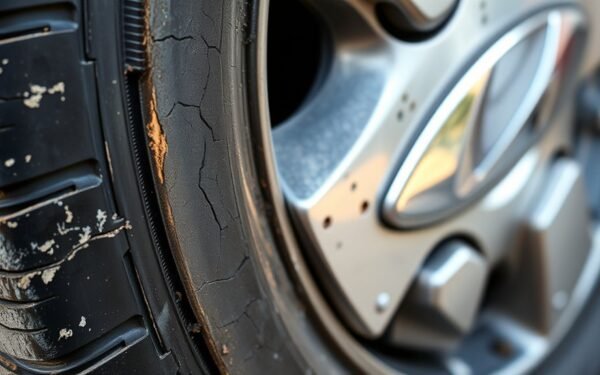
How to Tell If Hyundai Sonata Tires Are Too Old to Use Safely
Understand how to assess the age of your Hyundai Sonata tires and discover crucial signs of deterioration that could compromise your safety on the road.
Read More