
Hyundai Sonata Vibration From Tires at Highway Speed: Causes

If your Hyundai Sonata vibrates at highway speeds, start with the parts that touch the road: tire pressure, tire condition, wheel balance, and alignment. A shake that shows up around 55–70 mph is often tire or wheel related, but brake, suspension, steering, wheel bearing, axle, or engine issues can also cause vibration depending on when it happens.
Quick Answer
A Hyundai Sonata usually vibrates at highway speeds because of an out-of-balance wheel, uneven tire wear, low or incorrect tire pressure, a bent wheel, or alignment-related tire wear. If the tire has a bulge, exposed cord, separation, or the car shakes violently, slow down safely and have it inspected before continuing.
Key Takeaways
- A vibration that appears mainly at highway speed usually points first to tire balance, tire damage, uneven wear, or a bent wheel.
- Check tire pressure when the tires are cold, using the pressure listed on the driver-side placard or your Sonata owner’s manual, not the number molded on the tire sidewall.
- Alignment problems more often cause pulling, a crooked steering wheel, or uneven tire wear; wheel balance more often causes smooth-road highway shake.
- Do not keep driving at highway speed on a tire with a bulge, visible cord, belt separation, or pressure that will not hold.
At a Glance
| Time Required | 10–30 minutes for basic checks; 30–90 minutes at a tire or repair shop for balancing, alignment, or inspection. |
| Difficulty | Easy for tire pressure and visual inspection; professional service needed for balancing, alignment, suspension, brake, bearing, or axle diagnosis. |
| Tools Needed | Tire pressure gauge, tread depth gauge or penny, flashlight, gloves, and a safe parking spot on level ground. |
| Cost | Basic inspection can be free; wheel balancing, alignment, tire replacement, or suspension repairs vary by shop, tire size, and model year. |
Identifying and Resolving Common Vibration Issues in Your Hyundai Sonata

When your Hyundai Sonata shakes at highway speed, identify the pattern before replacing parts. A vibration felt mostly through the steering wheel often points to the front tires, wheels, steering, or suspension. A shake felt through the seat or floor can come from rear tires, rear wheels, wheel bearings, brakes, or drivetrain parts.
Start with the simplest checks. Use a tire pressure gauge when the tires are cold and set each tire to the pressure shown on the driver-side tire placard or in the Hyundai owner’s manual for your exact model year. The number on the tire sidewall is the tire’s maximum pressure, not the Sonata’s recommended cold pressure.
Next, inspect all four tires for uneven wear, flat spots, scalloped tread, nails, cracks, cuts, bulges, or exposed cord. Hyundai owner guidance says drivers should pay attention to steering wheel vibration, pulling to one side, tire pressure, uneven tire wear, damaged tires, and loose wheel nuts during routine checks.
Warning: Do not keep driving at highway speed if a tire has a bulge, visible cord, tread separation, sudden pressure loss, or a shake that feels severe enough to affect control. Slow down smoothly, avoid hard steering or braking, and have the tire inspected or replaced before continuing.
[Products Worth Considering]

EVOULTES heavy duty tire inflator with an integrated gauge delivers accurate pressure readings from 10–120 PSI, helping you inflate, deflate, and check tires in one tool. The 16.5-inch extended dual-head air chuck with swivel base reaches hard-to-access dual wheel valves on trucks and RVs. A brass trigger core and side-mounted air release valve make operation smooth, with standard 1/4" NPT threading and quick-connect compatibility for easy setup.

The JACO FlowPro Tire Inflator measures, inflates, and airs down tires up to 100 PSI with battery-free operation and ±2% accuracy after calibration. It features a glowing pressure dial for night visibility, a heavy-duty steel build with a hybrid hose, and a precision push-to-inflate thumb trigger. The patented Lightning Air Chuck locks on for a secure seal, and the kit includes quick-connect hardware for easy inline use with your air compressor.

Blackline Blackout is a water-based trim and tire dressing that restores rubber, vinyl, and plastic with a rich satin, blackout look. Its no-sling formula dries quickly and helps prevent messy transfer onto paint. The coating repels water and offers UV protection to help prevent fading, cracking, and discoloration for a clean, long-lasting finish.
What to Check First When Your Sonata Vibrates at Highway Speed
| Symptom | Most Likely Area | First Action |
| Shake starts around highway speed and fades at lower speed | Wheel balance, tire wear, bent wheel, out-of-round tire | Inspect tires and schedule wheel balancing. |
| Car pulls to one side or steering wheel is off-center | Alignment, tire pressure mismatch, tire conicity, suspension wear | Correct tire pressure first, then request an alignment inspection. |
| Vibration happens mainly while braking | Brake rotors, pads, calipers, wheel hub | Have the brake system inspected before replacing tires. |
| Vibration changes when accelerating | CV axle, drivetrain mount, engine misfire, wheel/tire under load | Check for warning lights and ask for drivetrain and engine diagnosis. |
| Humming or growling gets louder with speed | Wheel bearing, tire cupping, uneven tread | Have the wheel bearings and tire tread inspected. |
Step-by-Step Vibration Diagnosis
1. Check Cold Tire Pressure
Park the Sonata for at least three hours, then check all four tires with a gauge. Adjust the pressure to the recommended cold inflation pressure on the driver-side placard or in your owner’s manual. Do not rely on appearance alone, because a radial tire can be underinflated without looking flat.
2. Inspect the Tires and Wheels
Look across the tread and sidewalls with a flashlight. Watch for bulges, cuts, bubbles, cracks, exposed fabric, missing tread chunks, nails, or a section of tread that looks higher or lower than the rest. Also look for a bent rim, heavy curb rash, or missing wheel weights.
3. Balance the Wheels
If the Sonata vibrates on a smooth road mostly at highway speed, ask for a dynamic wheel balance. Hyundai’s owner information says that if the vehicle vibrates while driving on a smooth road, the wheels may need to be rebalanced. Use approved wheel weights to avoid wheel damage.
4. Check Alignment if the Car Pulls or Wears Tires Unevenly
Alignment is different from balance. Balance corrects heavy spots in the tire-and-wheel assembly. Alignment adjusts wheel angles so the tires track correctly. If the Sonata pulls to one side, the steering wheel is crooked, or the tires show feathering or one-sided wear, schedule an alignment inspection.
5. Inspect Suspension, Steering, Brakes, and Drivetrain
If tires, balance, and alignment do not solve the vibration, have a technician inspect tie rods, ball joints, control arm bushings, struts, wheel bearings, brake rotors, calipers, CV axles, engine mounts, and any engine misfire codes. Worn parts can let normal road force turn into a steering wheel or cabin shake.
Pro Tip: Before visiting a shop, write down the speed where the vibration starts, whether it is felt in the steering wheel or seat, whether braking changes it, and whether the car pulls. This helps the technician test the right system first.
Signs of Worn or Damaged Tires
Worn or damaged tires are one of the most common reasons a Hyundai Sonata shakes at highway speed. Look out for these warning signs:
- Uneven tread wear: Feathered, cupped, scalloped, or one-sided wear can create steering wheel or cabin vibration and may point to alignment, balance, suspension, or pressure problems.
- Tire bulges: A blister or bubble on the sidewall or tread can signal internal damage. Treat this as a safety problem, not a comfort issue.
- Broken cords or belt separation: A tire that looks wavy, lumpy, or out of round can shake more as speed rises and should be inspected immediately.
- Inflation issues: Underinflation can cause overheating, poor handling, and tire failure. Overinflation can reduce ride comfort and make the tire more vulnerable to impact damage.
- Low tread depth: The National Highway Traffic Safety Administration says tires should be replaced when tread is worn to 1/16 inch, and treadwear indicators or the penny test can help identify when a tire is worn out.
A highway-speed vibration is not just annoying. It is often the car’s early warning that a tire, wheel, steering, suspension, or brake part needs attention.
How Unbalanced Tires Cause Vibrations in Your Hyundai Sonata
Unbalanced tires can greatly affect your Hyundai Sonata’s comfort at speeds above city driving. When weight is unevenly distributed around the tire-and-wheel assembly, the wheel can hop or wobble slightly as it spins. At highway speed, that small imbalance can become a steady shake through the steering wheel, seat, floor, or dashboard.
Wheel balance problems often feel speed-sensitive. The car may feel normal at 30 mph, start to shake around 55 mph, and become more noticeable near 65–75 mph. The fix is not guessing or adding air; it is having the tire-and-wheel assembly checked on a balancing machine.
Hyundai recommends rotating tires according to the maintenance schedule or sooner if irregular wear develops, and checking tire balance during rotation. Some Hyundai owner information lists tire rotation at 12,000 km or 7,500 miles, but you should follow the schedule for your Sonata’s exact year, trim, tire size, and driving conditions.
How Proper Wheel Alignment Reduces Vibration Problems

Proper wheel alignment helps your Hyundai Sonata track straight and wear tires evenly. Misalignment can happen after hitting a pothole, curb, road debris, or after suspension repairs. It can also develop gradually as suspension and steering parts wear.
Alignment is most suspect when you notice:
- The Sonata pulls left or right on a smooth, level road.
- The steering wheel sits crooked while driving straight.
- One tire shoulder wears faster than the other.
- The tread feels feathered when you run your hand across it.
Alignment does not always cure a pure highway-speed shake by itself. If the vibration happens on a smooth road with no pulling, wheel balance or a tire/wheel defect is usually a better first check. If misalignment has already caused uneven tire wear, you may need both an alignment and tire replacement or rotation to fully smooth the ride.
Note: TPMS is helpful, but it is not a replacement for checking tire pressure with a gauge. Temperature changes can lower tire pressure, and the warning may not appear until pressure is significantly low.
[Products Worth Considering]

This portable cordless tire inflator delivers up to 160 PSI with fast 17 L/min airflow to help you quickly top up tires and get back on the road. It features dual power mode, running on a 21V rechargeable battery or a 12V DC adapter for convenient roadside use. An automatic shut-off with digital pressure gauge helps prevent overinflation, and a built-in LED light improves visibility in low-light conditions.

This portable cordless tire inflator delivers fast, efficient inflation for cars, motorcycles, bikes, and sports balls with a digital pressure gauge. Use the one-click PSI preset with auto shut-off for accurate, hands-free topping to your target pressure up to 150 PSI. It’s compact and rechargeable with a built-in emergency LED light plus valve adapters and accessories for quick, ready-to-go use.
When the Problem Is Not the Tires
If tire pressure, tire condition, balancing, and alignment all check out, broaden the diagnosis. A Sonata can vibrate for reasons that feel similar but happen under different conditions.
Brake-Related Vibration
If the steering wheel or brake pedal shakes mainly when slowing down, the problem may be brake-related. Warped or unevenly worn rotors, sticking calipers, worn pads, or wheel hub issues can create vibration under braking.
Suspension and Steering Wear
Loose tie rods, worn ball joints, damaged control arm bushings, weak struts, or loose wheel bearings can make the car feel unstable and amplify tire vibration. These parts should be inspected promptly because they affect handling and tire wear.
Bent Wheel or Out-of-Round Tire
A pothole can bend a rim or damage the tire internally. The tire may still hold air but shake at speed. A road-force balance or wheel runout check can help find a tire or wheel that is not perfectly round.
Engine or Drivetrain Vibration
If the vibration occurs at idle, during acceleration, or with a flashing check-engine light, it may not be a tire issue. Possible causes include engine misfire, worn engine mounts, CV axle problems, or drivetrain imbalance. Do not keep driving with a flashing check-engine light; have the car diagnosed.
Why Regular Maintenance Keeps Your Ride Smooth
Maintaining your Hyundai Sonata goes beyond wheel alignment. Tire pressure, tire rotation, wheel balance, brake inspection, suspension checks, and engine diagnosis all work together to keep the car smooth and safe.
Use your exact Sonata owner’s manual as the final authority for service intervals. Hyundai’s general owner guidance recommends checking tire pressure and condition regularly, watching for steering wheel vibration, and noticing if the vehicle pulls to one side. Hyundai tire information also says abnormal tire wear is commonly linked to incorrect tire pressure, improper alignment, out-of-balance wheels, severe braking, or severe cornering.
After any tire rotation, tire repair, wheel replacement, pressure adjustment, or suspension/ABS/ESC work, check your owner’s manual for TPMS reset instructions if your Sonata requires it. Some Hyundai systems need the tire pressures set correctly first, then the system reset with the vehicle parked.
When to See a Mechanic Immediately
Schedule service as soon as possible if the vibration is getting worse, the car pulls suddenly, the steering feels loose, a tire repeatedly loses air, or you see uneven wear after only a short period of driving. Use a tow instead of driving if a tire has a bulge, exposed cord, active separation, severe pressure loss, or the vehicle feels hard to control.
Ask the shop to check these items in order:
- Cold tire pressure and tire placard match.
- Tire tread depth, sidewall condition, and signs of separation.
- Wheel balance, missing wheel weights, bent wheels, and road-force variation.
- Alignment, especially toe and camber readings.
- Loose lug nuts or wheel mounting problems.
- Tie rods, ball joints, control arm bushings, struts, wheel bearings, and brake rotors.
- CV axles, engine mounts, and misfire codes if the vibration changes with acceleration or engine load.
Frequently Asked Questions
Why are my tires vibrating at high speeds?
High-speed tire vibration usually comes from wheel imbalance, uneven tire wear, internal tire damage, low or uneven tire pressure, a bent wheel, or an out-of-round tire. Start with a cold pressure check and visual inspection, then have the wheels balanced if the vibration happens on a smooth road.
Should I ignore minor vibrations?
No. A small vibration can be the first sign of tire imbalance, uneven wear, loose steering or suspension parts, or tire damage. It may also worsen quickly after a pothole impact. Check the tires right away and schedule service if the vibration continues.
Why does my car feel like it is vibrating on the highway?
A car that vibrates mainly on the highway often has a tire or wheel issue because rotational force increases with speed. The most common checks are tire pressure, tire damage, wheel balance, wheel runout, and alignment-related tire wear.
Can low tire pressure make a Hyundai Sonata shake?
Yes. Low tire pressure can make the vehicle less stable, increase heat buildup, worsen uneven wear, and contribute to vibration. Check pressure when the tires are cold and use the Sonata’s placard or owner’s manual pressure, not the tire sidewall maximum.
Do I need balancing or alignment?
If the Sonata shakes on a smooth road at highway speed, start with wheel balancing. If it pulls to one side, the steering wheel is off-center, or the tires are wearing unevenly, request an alignment inspection. Many vibration complaints require checking both.
Is it safe to drive with a vibration at highway speed?
It depends on severity. A light vibration should still be inspected soon. Do not continue highway driving if the shake is severe, the car feels hard to control, a tire is bulging, cord is visible, pressure will not hold, or the TPMS warning appears with poor handling.
Conclusion
Addressing tire vibrations in your Hyundai Sonata starts with a careful, safety-first inspection. Check cold tire pressure, look for tire damage, verify wheel balance, and correct alignment problems before the wear spreads to suspension, steering, brakes, or bearings. If the vibration is severe or a tire looks damaged, stop treating it as a comfort problem and have the vehicle inspected before more highway driving.
Sources
- NHTSA TireWise — tire safety, maintenance, labeling, and consumer tire guidance.
- NHTSA Tire Safety Brochure — tire pressure, tread inspection, tire balance, wheel alignment, and tire replacement guidance.
- Hyundai Owner’s Manual Portal — model-year owner manual lookup for Sonata maintenance and tire information.
- Hyundai Tire Rotation Guidance — rotation interval examples, balance checks, uneven wear, tire damage, and lug nut torque reminder.
- Hyundai Wheel Alignment and Tire Balance Guidance — when pulling, unusual tire wear, or smooth-road vibration may require service.
- eCFR 49 CFR § 570.62 Tires — tire condition inspection standards for tread, bulges, separation, and exposed cord.

Related Articles

Danger of Using Summer Tires in Winter on a Hyundai Sonata
Potentially perilous, using summer tires in winter on your Hyundai Sonata can compromise safety—discover the hidden dangers that await you on icy roads.
Read More
Can You Mix Nitrogen and Air in Hyundai Sonata Tires? Answered
Discover the implications of mixing nitrogen and air in your Hyundai Sonata tires—are the benefits worth the risks? Explore the answer inside!
Read More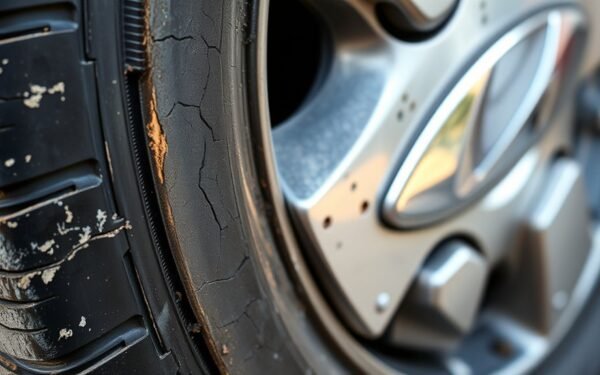
How to Tell If Hyundai Sonata Tires Are Too Old to Use Safely
Understand how to assess the age of your Hyundai Sonata tires and discover crucial signs of deterioration that could compromise your safety on the road.
Read More