
Hyundai Sonata Negative Camber Causing Tire Wear: How to Fix
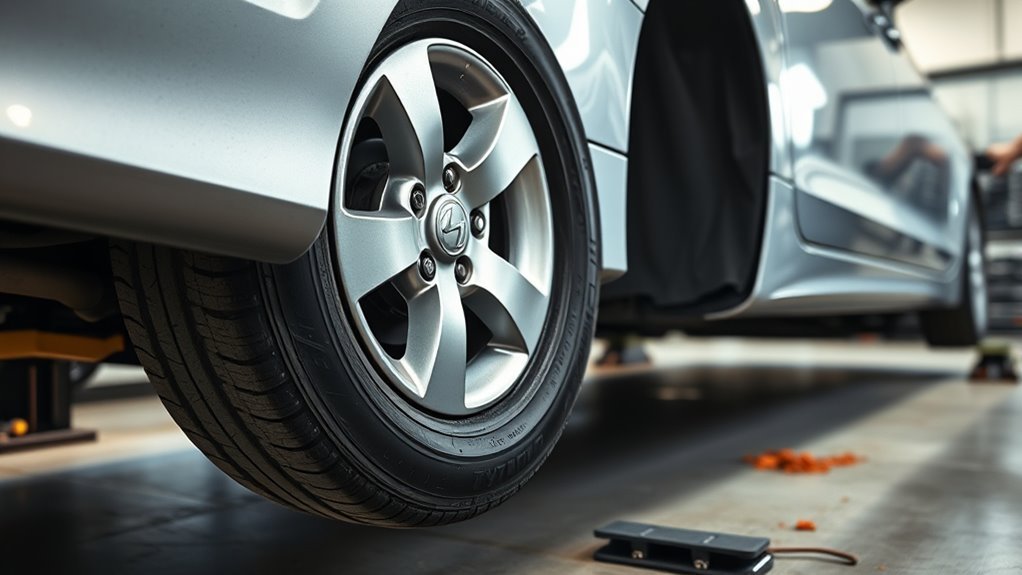
Negative camber can be one reason your Hyundai Sonata wears the inner edges of its tires, but it should not be diagnosed by tire wear alone. Toe alignment, low tire pressure, worn bushings, weak struts, bent suspension parts, and curb or pothole impacts can create similar wear patterns. Use this guide to spot the signs, check the simple items first, and know what to ask for before paying for another set of tires.
Quick Answer
Negative camber can wear the inner edge of a Hyundai Sonata tire because the top of the wheel leans inward and loads the inside shoulder. The real fix is not just replacing tires. Check cold tire pressure, inspect suspension parts, measure tread wear, and have a shop align camber and toe to the exact factory specifications for your Sonata’s year and trim.
Key Takeaways
- Inner-edge tire wear can come from negative camber, toe-out, worn suspension parts, or a combination of those issues.
- Hyundai recommends rotating tires every 12,000 km (7,500 miles) or sooner if irregular wear develops, and checking for uneven wear during rotation.
- Camber is not always factory-adjustable on every Sonata model or axle, so a proper alignment printout matters before buying parts.
- If cords, bulges, severe vibration, or very low tread are present, replace or repair the tire before continuing to drive normally.
At a Glance
| Time Required | 10–20 minutes for a home inspection; 45–90 minutes for a professional alignment and suspension check. |
| Difficulty | Easy for visual checks; moderate to advanced for suspension repair; alignment should be done on a calibrated alignment rack. |
| Tools Needed | Tire-pressure gauge, tread-depth gauge or penny, flashlight, notepad or phone camera, and a professional alignment machine for final measurements. |
| Cost | Basic inspection is usually free at home. Alignment, tire replacement, camber hardware, control arms, bushings, or struts vary by shop, model year, and part quality. |
How Negative Camber Causes Tire Wear in Your Hyundai Sonata
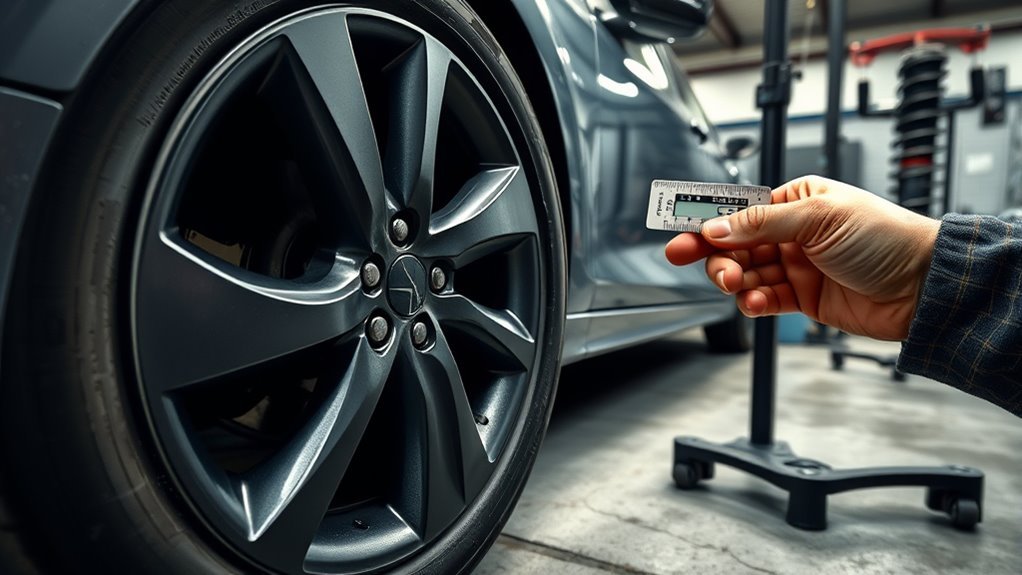
Camber is the inward or outward tilt of the wheel when viewed from the front or rear of the car. Negative camber means the top of the wheel leans inward toward the vehicle. A small amount of negative camber may be normal depending on the model and suspension design, but camber that is outside specification can put extra load on the inside shoulder of the tire.
That inside-shoulder loading can create smooth inner-edge wear. However, camber is only one part of the story. Toe alignment, which is the direction the tires point when viewed from above, can scrub the tread very quickly when it is out of spec. That is why a Sonata with inner tire wear should be checked for both camber and toe, not just camber.
For general alignment background, Bridgestone explains camber, toe, and caster, and Continental notes that toe settings affect tire wear and scrubbing.
Note: Do not chase a universal camber number such as “-2 degrees.” The correct range depends on your Sonata’s exact year, trim, wheel size, suspension condition, and front or rear axle specification.
[Products Worth Considering]

Protect your Tesla during lifting with durable rubber jack pads designed to cushion pressure and help safeguard the battery and chassis. The non-slip, plug-and-play puck set fits Tesla Model 3/Y/X/S for safe, secure jacking. Each pack includes a portable storage case for cleaner trunk organization.

Universal magnetic jack pad with aluminum grooved design to protect vehicle pinch welds during lifting. Durable nylon pad inserts are upgraded and secured with screws to resist damage and keep in place. Designed to fit most single vehicle pinpoint welds for safer, stable jacking when changing tires, repairs, or performing oil changes.

The JACO FlowPro Tire Inflator measures, inflates, and airs down tires up to 100 PSI with battery-free operation and ±2% accuracy after calibration. It features a glowing pressure dial for night visibility, a heavy-duty steel build with a hybrid hose, and a precision push-to-inflate thumb trigger. The patented Lightning Air Chuck locks on for a secure seal, and the kit includes quick-connect hardware for easy inline use with your air compressor.
Signs of Negative Camber and Tire Wear in Your Hyundai Sonata
The most common clue is tread that is visibly thinner on the inside edge than in the center or outside shoulder. You may also notice a rough edge when you run your hand lightly across the tread, extra road noise, vibration, or a Sonata that pulls to one side on a flat road.
Use the table below to avoid blaming camber too quickly:
| What You See | Likely Cause | What to Check Next |
|---|---|---|
| Smooth wear mostly on the inner edge | Negative camber, toe-out, or both | Four-wheel alignment printout with camber and toe readings |
| Feathered tread blocks that feel sharp in one direction | Toe alignment problem | Toe-in and toe-out readings before replacing parts |
| Cupped, scalloped, or patchy wear | Weak struts, imbalance, worn steering parts, or mechanical looseness | Struts, shocks, wheel balance, wheel bearings, tie rods, and ball joints |
| Both outer shoulders worn faster than the center | Low tire pressure or hard cornering | Cold tire pressure using the driver-door pressure label |
Warning: If you see exposed cords, a sidewall bulge, deep cracking, or tread worn to the wear bars, do not keep driving normally. Hyundai states that the tread wear indicator appears when tread is below 1/16 in. (1.6 mm), and the tire should be replaced when that happens.
How to Check Negative Camber Tire Wear Before Paying for Repairs
Start with the checks you can do safely at home, then use a shop for the measurements that require alignment equipment.
- Check cold tire pressure. Use the tire-pressure label on the driver-side center pillar, not the maximum pressure molded into the tire sidewall. Hyundai says recommended pressures should be maintained for ride, handling, and minimum tire wear, and the pressure label gives the recommended value for your vehicle. Hyundai tire pressure label reference
- Measure tread depth in three places. Measure the inner edge, center, and outer edge of each tire. Write down the numbers so you can compare all four tires.
- Look for direction and location. Inner wear on both rear tires points to a different diagnosis than one front tire wearing on the inside.
- Inspect for obvious damage. Look for bent wheels, leaking struts, torn bushings, cracked rubber, loose tie-rod ends, and signs of a recent curb or pothole impact.
- Ask for a before-and-after alignment printout. The printout should show camber, toe, caster, and whether each angle is in the green specification range for your exact Sonata.
Pro Tip: Take clear photos of the worn tire edges before the alignment. If new tires wear quickly again, your photos and alignment printout help prove whether the root cause was corrected.
How Suspension Components Affect Alignment Issues
Alignment settings depend on the suspension holding each wheel in the correct position. If a component is loose, bent, or worn, an alignment may not stay in spec for long.
Suspension Component Functionality
Control arms, bushings, ball joints, tie rods, struts, shocks, wheel bearings, and subframe mounting points all help control wheel position. Worn bushings can allow the wheel to shift under braking or cornering. Weak struts or shocks can let the tire bounce, which can create cupped or scalloped wear. Michelin’s tire-wear guidance lists worn mechanical parts and suspension issues among causes of irregular wear. Michelin irregular tire wear guide
Alignment Adjustment Limitations
Not every Sonata camber angle is adjusted the same way. Some angles may be factory-set, some may be adjustable by factory hardware, and some may require replacing a bent or worn part before the numbers come back into range. Aftermarket camber bolts or adjustable arms can sometimes help, but they must match the vehicle, axle, and repair goal.
Do not install camber hardware just because the inside of a tire is worn. First confirm the actual camber and toe readings on an alignment rack.
Impact on Tire Wear
When suspension parts are worn, the tire may not roll squarely on the road. The result can be inner-edge wear, outer-edge wear, feathering, cupping, vibration, or a pull. Replacing tires without correcting the alignment or worn parts usually means the new tires will repeat the same wear pattern.
Properly Aligning Your Hyundai Sonata
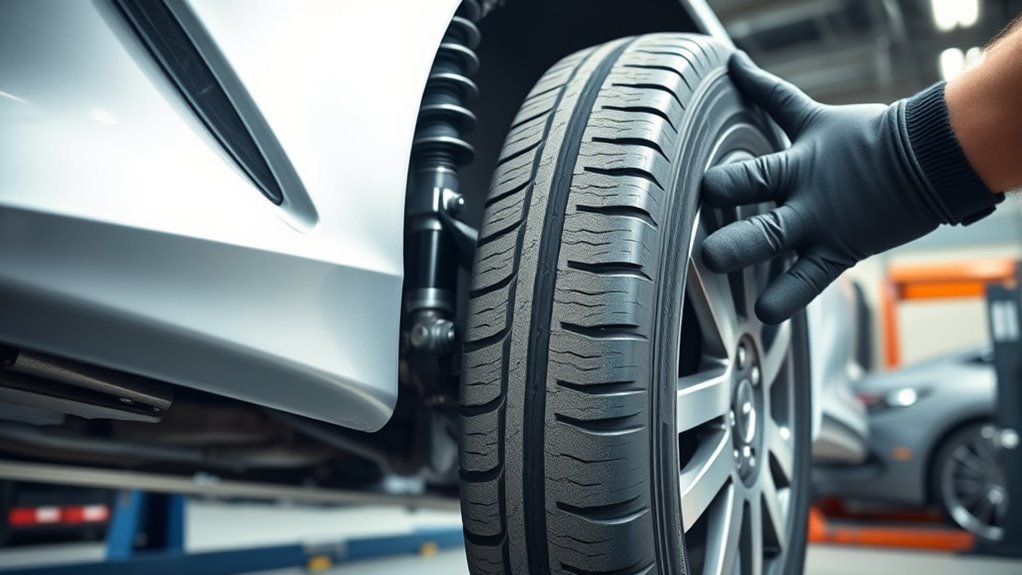
Hyundai says the wheels are aligned and balanced at the factory for tire life and performance, and that alignment may need to be reset if you notice unusual tire wear or the vehicle pulling one way or the other. Hyundai wheel alignment and tire balance guidance
A good Sonata alignment visit should include more than a quick toe adjustment. Ask the shop to:
- Set tire pressures to the driver-door label before measuring alignment.
- Inspect suspension and steering parts before making adjustments.
- Use your exact year, trim, wheel size, and suspension configuration in the alignment machine.
- Print before-and-after readings for front and rear camber, caster, and toe.
- Explain any angle that cannot be brought into spec.
| Action | Why It Matters | When to Do It |
|---|---|---|
| Check tire pressure cold | Incorrect pressure can mimic or worsen uneven wear. | Monthly, before long trips, and before alignment. |
| Rotate tires | Helps equalize tread wear and reveals irregular patterns early. | Every 12,000 km (7,500 miles) or sooner if irregular wear develops, per Hyundai guidance. |
| Get a four-wheel alignment | Confirms camber and toe instead of guessing from tire wear. | After unusual wear, pulling, curb impact, suspension repair, or new tires. |
| Inspect suspension parts | Worn parts can prevent alignment from staying in spec. | Before alignment and whenever cupping, clunks, or vibration appear. |
When to Replace Worn Suspension Parts
Replace worn suspension parts when inspection shows looseness, cracks, leaks, bending, or movement that changes the wheel angle. Common examples include split control-arm bushings, leaking struts, loose ball joints, worn tie-rod ends, damaged wheel bearings, or a bent component after impact.
[Products Worth Considering]

This roadside assistance kit helps drivers and passengers in urgent situations after an accident or breakdown, providing practical support while waiting for help. It includes a lightweight, compact tire inflator for fast inflation of standard vehicle tires, plus reinforced jumper cable protection for safer handling. Ideal for winter weather, road trips, camping, and travel, with everything stowed neatly in a trunk bag.

EVOULTES heavy duty tire inflator with an integrated gauge delivers accurate pressure readings from 10–120 PSI, helping you inflate, deflate, and check tires in one tool. The 16.5-inch extended dual-head air chuck with swivel base reaches hard-to-access dual wheel valves on trucks and RVs. A brass trigger core and side-mounted air release valve make operation smooth, with standard 1/4" NPT threading and quick-connect compatibility for easy setup.
Signs of Worn Parts
Watch for clunking over bumps, steering wander, vibration at highway speed, a steering wheel that does not return smoothly, uneven ride height, or cupped tread. If the car pulls after tire pressure is corrected, the suspension and alignment should be checked together.
Timing for Replacement
Do not replace parts only because a tire is worn. Replace parts when a technician can show looseness, damage, leakage, or an alignment angle that cannot be corrected because the part no longer holds the wheel where it should. If tires are already severely worn, replace the unsafe tire and correct the cause before installing a full new set.
Impact on Alignment
An alignment is only as good as the parts holding it. If a control arm bushing or tie rod moves under load, the alignment numbers on the rack may look acceptable while the tire still scrubs on the road. That is why suspension inspection should happen before alignment adjustments, not after repeat tire wear.
Why Regular Tire Maintenance Matters
Regular tire maintenance helps you catch camber and alignment problems before they destroy a tire. Hyundai recommends rotating tires every 12,000 km (7,500 miles) or sooner if irregular wear develops, and checking for uneven wear and damage during rotation. Hyundai tire rotation guidance
Check tire pressure when the tires are cold, keep a record of tread-depth readings, and watch for changes after pothole hits or curb contact. NHTSA’s TireWise tire-safety resources also emphasize tire pressure, rotation, tread checks, aging, and recalls as part of safe tire care.
The best time to find a camber or toe problem is before the inner edge reaches the wear bars. Once the inside shoulder is bald, the tire may be unsafe even if the outer tread still looks acceptable.
How to Find the Right Mechanic for Your Sonata
Choose a shop that can diagnose the cause, not just sell an alignment. Look for a technician who is comfortable with Hyundai suspension, has a modern four-wheel alignment rack, and provides a printed alignment report.
Ask these questions before authorizing repair:
- Will you inspect tire pressure, suspension, and steering parts before alignment?
- Can I get before-and-after camber, caster, and toe readings?
- Which angle is out of spec, and is it front or rear?
- Is the angle adjustable with factory hardware on my Sonata, or does a worn/bent part need replacement?
- If you recommend camber bolts or adjustable arms, are they correct for my model year and axle?
- Is there a workmanship warranty on the alignment or installed parts?
Note: A shop should be able to explain the alignment printout in plain language. If the answer is only “you need tires,” get the tire-wear cause confirmed before replacing them.
Frequently Asked Questions
Can negative camber affect fuel efficiency in my Hyundai Sonata?
Yes, it can contribute indirectly if the alignment causes the tire to scrub instead of rolling cleanly. Toe misalignment, low tire pressure, and worn parts can also increase rolling resistance. Fixing pressure, alignment, and suspension issues helps protect tire life, handling, and efficiency.
How often should I check my camber angle?
You do not usually need a camber-only check on a fixed mileage schedule. Check tire wear and pressure regularly, rotate tires every 12,000 km (7,500 miles) or sooner if irregular wear develops, and get a four-wheel alignment when you notice pulling, uneven wear, steering changes, vibration, after a hard impact, or after suspension repair.
Is negative camber adjustable on all Hyundai Sonata models?
No. Adjustment options depend on the Sonata’s model year, trim, axle, suspension design, and installed parts. Some angles may be factory-set, some may adjust with factory hardware, and some may require replacing damaged parts or using approved aftermarket alignment hardware. Always start with a vehicle-specific alignment printout.
Will negative camber void my vehicle warranty?
Factory alignment, tire, and suspension coverage depends on your warranty terms, mileage, vehicle history, and whether aftermarket parts or impact damage are involved. Negative camber by itself does not automatically answer the warranty question. Keep tire-rotation records, alignment printouts, photos of wear, and repair invoices before discussing coverage with a Hyundai dealer.
Can I fix negative camber myself without professional help?
You can safely inspect tread wear, check cold tire pressure, look for damaged parts, and document symptoms at home. Final camber and toe correction should be done on a calibrated alignment rack because the technician must compare the readings with Hyundai’s exact specifications for your Sonata.
Do I need new tires before fixing the alignment?
If the tire has exposed cords, bulges, severe cracking, or tread worn to the wear bars, replace it before normal driving. If the tire is still safe, a shop may diagnose and align the vehicle first, then rotate or replace tires based on tread depth and wear pattern.
Conclusion
Negative camber can cause inner-edge tire wear on a Hyundai Sonata, but the smart repair is a full diagnosis: pressure, tread depth, suspension condition, camber, and toe. Start with the simple checks, then ask for a professional four-wheel alignment printout. When the root cause is fixed before new tires are installed, your Sonata is more likely to track straight, handle predictably, and use the full tread instead of wearing out the inside edge early.
Sources
- Hyundai Owner’s Manual — Tire rotation — supports the 12,000 km / 7,500 mile tire-rotation interval and uneven-wear inspection guidance.
- Hyundai Owner’s Manual — Wheel alignment and tire balance — supports alignment checks when unusual tire wear or pulling appears.
- Hyundai Owner’s Manual — Tire specification and pressure label — supports using the driver-side center-pillar pressure label.
- Hyundai Owner’s Manual — Tire replacement — supports replacing tires at the tread wear indicator / 1.6 mm threshold.
- NHTSA TireWise — supports tire pressure, rotation, tread, aging, and recall safety guidance.
- Bridgestone Tire Alignment Guide — supports the explanation of camber, toe, caster, and suspension-related misalignment.

Related Articles

Danger of Using Summer Tires in Winter on a Hyundai Sonata
Potentially perilous, using summer tires in winter on your Hyundai Sonata can compromise safety—discover the hidden dangers that await you on icy roads.
Read More
Can You Mix Nitrogen and Air in Hyundai Sonata Tires? Answered
Discover the implications of mixing nitrogen and air in your Hyundai Sonata tires—are the benefits worth the risks? Explore the answer inside!
Read More
How to Tell If Hyundai Sonata Tires Are Too Old to Use Safely
Understand how to assess the age of your Hyundai Sonata tires and discover crucial signs of deterioration that could compromise your safety on the road.
Read More