Hyundai Sonata Tire Blowout Risk in Extreme Heat: Prevention Guide
Extreme heat can raise tire pressure, increase road friction, and make existing tire problems show up faster on your Hyundai Sonata. The safest plan is simple: check the correct cold tire pressure, inspect tread and sidewalls, avoid overloading the car, and treat your Sonata’s TPMS as a backup—not a replacement for a tire gauge.
Quick Answer
Extreme heat can increase Hyundai Sonata tire blowout risk when tires are underinflated, overloaded, worn, damaged, or driven hard for long distances. Check pressure when tires are cold, use the PSI on the driver-door placard, inspect tread and sidewalls monthly, and never bleed air from hot tires just because the reading looks high.
Key Takeaways
- Use the cold PSI on your Sonata’s tire placard or owner’s manual—not the maximum pressure printed on the tire sidewall.
- Tire pressure can change about 1–2 PSI for every 10°F temperature change, so hot-weather checks must be done carefully.
- Underinflation, overloading, worn tread, sidewall damage, and road hazards are the big summer blowout risks.
- A TPMS warning light is helpful, but it may not warn you until a tire is significantly low.
- If a blowout happens, hold the wheel, do not slam the brakes, ease off the accelerator, and guide the car to a safe place.
At a Glance
| Time Required | 5–10 minutes for a pressure and visual check; 15 minutes if you also check tread depth on all four tires. |
| Difficulty | Easy for basic checks; use a tire shop if you find bulges, cracks, cords, vibration, repeated air loss, or uneven wear. |
| Tools Needed | Digital tire pressure gauge, tread depth gauge or penny, flashlight, valve caps, tire inflator or air compressor, and your Sonata tire placard or owner’s manual. |
| Cost | Usually $0–$25 for DIY checks if you already have air access; tire replacement, alignment, or TPMS service costs vary by tire size and shop. |
Why Tire Blowouts Are a Serious Concern in Extreme Heat
Hot weather does not automatically make a healthy tire fail. The danger rises when heat combines with low pressure, excess load, worn tread, old rubber, impact damage, or long high-speed driving. Those conditions make the tire flex more, build more internal heat, and lose strength over time.
A TPMS warning can come late. Check tire pressure with a gauge monthly, before long trips, and before carrying heavy loads.
The National Highway Traffic Safety Administration says maintaining proper tire pressure, observing load limits, avoiding road hazards, and inspecting for damage are key steps for avoiding tire failure. That matters even more in summer because pavement heat, heavy travel, and long highway drives can expose problems that were already developing.
Warning: Do not drive on a tire with a sidewall bulge, exposed cord, deep crack, repeated air loss, or visible separation. Install the spare if safe to do so or call roadside assistance.
How Heat Affects Tire Pressure and Performance
Heat affects tire pressure because the air inside the tire expands as temperature rises. The U.S. Tire Manufacturers Association notes that inflation pressure can increase or decrease by about 1–2 pounds for every 10°F temperature change. That is why summer pressure checks need to be done the right way.
Tire Pressure Changes
The correct pressure for your Hyundai Sonata is the recommended cold tire pressure listed on the driver-side door jamb placard or in the owner’s manual. “Cold” does not mean cold weather; it means the car has been parked for at least three hours or driven only a very short distance.
| Situation | What It Means | Safe Action |
|---|---|---|
| Temperature rises 10°F | Pressure may rise about 1–2 PSI. | Check when cold, not after a hot drive. |
| Warm tire reads 4–6 PSI high | This can be normal after driving. | Do not bleed air from a warm tire just to match the cold PSI. |
| Tire is low when checked cold | The tire needs air or may have a leak. | Inflate to the placard PSI and recheck soon. |
Note: Hyundai warns that warm tires normally exceed recommended cold tire pressure by 4–6 PSI and says not to release air from warm tires to adjust pressure. Recheck and fine-tune the pressure when the tires are cold.
Heat Impact on Performance
Underinflated tires flex more as they roll. That extra flexing creates heat buildup and stress, which can lead to irregular wear and internal damage. Overinflated tires can also be more vulnerable to cuts or impact damage from potholes and road debris. The goal is not “more air for summer” or “less air for summer”; the goal is the Sonata’s correct cold PSI.
Heat also makes road hazards more punishing. Potholes, construction debris, curbs, and sharp objects can damage a tire that is already weakened by low pressure, worn tread, or sidewall aging.
Signs Your Tires Are at Risk of Blowouts
Your Sonata’s tires usually give warning signs before a blowout. Check them when parked on level ground, with enough light to see the inner and outer shoulders of the tread.
Tire Pressure Warning Lights
If the TPMS light comes on, slow down, avoid hard cornering or braking, and check the tires as soon as safely possible. Hyundai notes that many newer vehicles have TPMS, but tires can naturally lose 1–2 PSI per month, so the warning light should not be your only maintenance plan.
A TPMS light may appear only after pressure is significantly low. That means a tire can be below the ideal pressure before the dashboard warning appears. Use a gauge monthly, before road trips, and before carrying heavy passengers or cargo.
Visible Tread Wear
Tread depth matters because tread gives the tire grip, especially during summer storms. A tire at 2/32 inch has reached the common replacement threshold. If you use the penny test and can see the top of Lincoln’s head, it is time to replace the tire. For frequent rain driving, consider replacing earlier if wet traction is poor.
- Check the inner, center, and outer tread grooves on every tire.
- Look for wear bars that are flush with the surrounding tread.
- Watch for one-sided wear, cupping, feathering, or bald edges.
- Use a tread depth gauge when possible; it is more reliable than a coin.
- Have alignment and suspension checked if wear is uneven.
Sidewall Bulges Or Cracks
Sidewall damage is a serious warning sign because the sidewall carries load and absorbs impacts. Bulges, bubbles, deep cracks, blisters, exposed cords, or cuts can signal structural weakness.
| Sign | What It May Mean | Action |
|---|---|---|
| Bulge or bubble | Internal damage from impact or weakness. | Do not keep driving; replace or tow. |
| Deep sidewall cracks | Aging, heat exposure, or dry rot. | Have the tire inspected and replaced if needed. |
| Repeated pressure loss | Leak, puncture, valve issue, or wheel problem. | Repair only if the puncture is safely repairable in the tread area. |
| Cord or fabric visible | The tire is unsafe. | Replace immediately. |
Essential Summer Tire Maintenance
Summer tire maintenance is about preventing heat buildup and catching damage before it becomes a highway emergency. Add these checks to your routine before hot-weather road trips:
- Check cold pressure monthly. Use the driver-door placard or owner’s manual for the correct PSI.
- Check before long drives. Do this before the tires heat up from highway travel.
- Inspect tread depth. Replace tires at 2/32 inch and sooner if wet traction is poor.
- Inspect sidewalls. Look for cracks, bulges, cuts, and impact damage.
- Check valve caps. Missing caps can let dirt and moisture into the valve stem.
- Avoid overloading. Follow the tire and loading placard for passenger and cargo weight.
- Slow down for potholes and debris. Impact damage can turn into a later blowout.
- Check tire age. Read the DOT date code and have older tires inspected, even if tread looks good.
[Products Worth Considering]

The Milton 555e digital tire inflator delivers fast, accurate pressure readings with a backlit display and multiple unit options, making tire inflation quick and easy. Its durable 20" EPDM rubber hose and grip‑head chuck provide reliable connection, while the ±1 PSI accuracy ensures precise inflation for cars, bikes, and trucks.

This digital tire pressure gauge combines a sturdy pistol grip inflator with a backlit 0.1 PSI display for quick, accurate readings in any lighting condition. Its 360° swivel gauge and 20" rubber hose make it easy to use and store, while the integrated inflate/deflate trigger and ¼" NPT air inlet provide fast, reliable tire maintenance.

The Milton 507KIT delivers fast, accurate tire inflation, deflation and pressure measurement with a backlit LCD gauge and 14" rubber hose. Its 3‑in‑1 design meets ANSI/ASME standards and provides readings from 0‑250 PSI with 0.1 PSI resolution. The ergonomic pistol‑grip body and brass lock‑on chuck make one‑handed operation effortless, while the auto‑off feature conserves battery life.
How to Check and Manage Your Tire Pressure
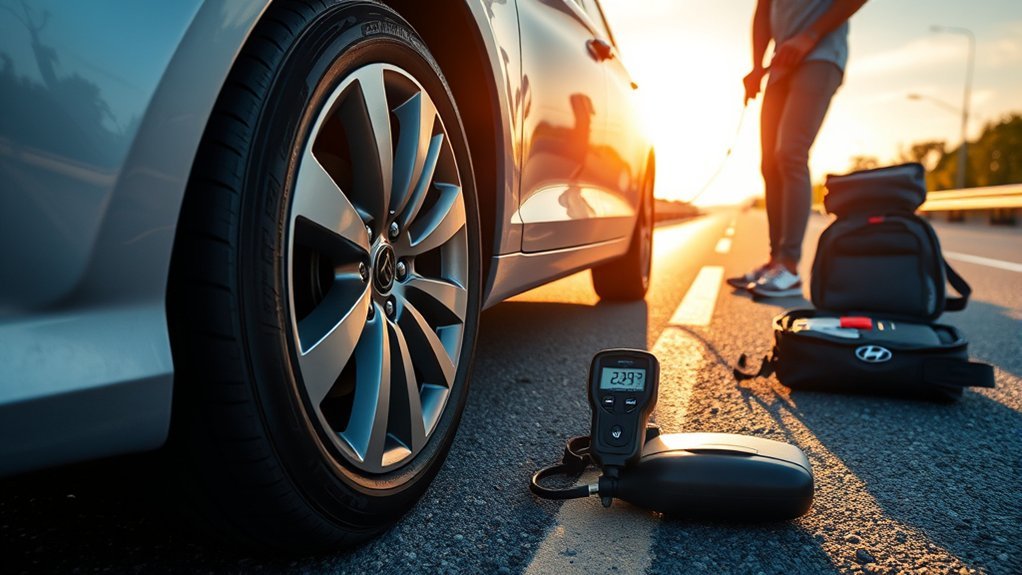
Checking tire pressure takes only a few minutes, but it is one of the most important ways to reduce blowout risk in extreme heat. Use a quality gauge, check all four tires, and include the spare if your Sonata has one.
Step-by-Step Tire Pressure Check
- Park and let the tires cool. Check pressure before driving or after the car has been parked for at least three hours.
- Find the correct PSI. Look at the tire and loading placard on the driver-side door jamb or check the Hyundai owner’s manual.
- Remove the valve cap. Keep it in your pocket so it does not roll away.
- Press the gauge firmly onto the valve stem. A hiss means the seal is not tight; try again.
- Compare the reading to the placard PSI. Add air if the tire is low.
- Recheck after adding air. Small adjustments are easier than overfilling.
- Replace the valve cap. It helps keep dirt and moisture out of the valve stem.
- Repeat for every tire. Front and rear tire pressures may differ on some vehicles, so follow the placard.
Pro Tip: Keep a digital gauge and tread depth gauge in the glove box. Gas station gauges can be worn or inaccurate, especially during busy summer travel months.
Optimal Tire Pressure Levels
The optimal pressure for your Hyundai Sonata is the cold PSI on your specific car’s placard. Do not use the tire sidewall’s “maximum pressure” as the target. That sidewall number is the tire’s maximum limit under specified conditions, not the vehicle manufacturer’s recommended pressure.
Some Sonata model years and trims may use different tire sizes, load ratings, or pressure recommendations. If the placard is missing or unreadable, use the Hyundai digital owner’s manual or ask a Hyundai dealer or qualified tire shop to verify the correct setting.
Tools for Measuring Pressure
A basic tire kit for summer driving should include:
- A digital tire pressure gauge.
- A small tread depth gauge.
- A portable tire inflator or access to reliable compressed air.
- Replacement valve caps.
- A flashlight for inner-sidewall inspection.
- Your roadside assistance number or app.
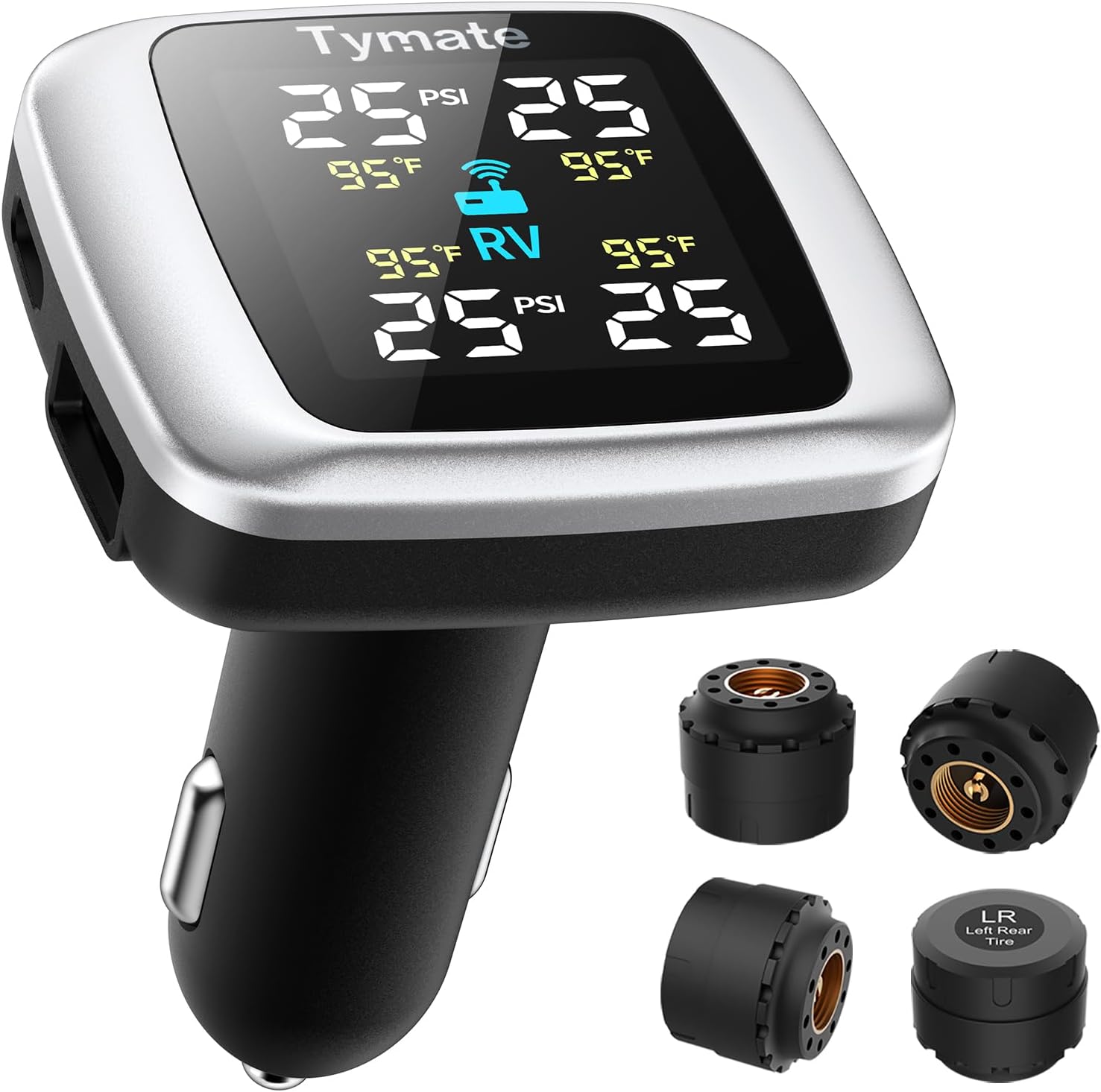
Aftermarket tire monitors can be useful, especially for drivers who take long trips, but do not rely on an aftermarket temperature alarm as your only safety check. Pressure, tread, sidewall condition, load, and driving habits still matter.
Frequency of Pressure Checks
Check your Sonata’s tire pressure:
- At least once a month.
- Before long road trips.
- Before carrying heavy passengers or cargo.
- After a big temperature swing.
- Any time the car pulls, vibrates, rides harshly, or the TPMS light comes on.
The Importance of Tire Rotation and Alignment
Tire rotation helps even out wear between front and rear tires. Hyundai’s digital owner’s manual recommends rotating tires every 12,000 km or 7,500 miles, or sooner if irregular wear develops. During rotation, tires should also be checked for balance, uneven wear, and damage.
Alignment matters because misaligned wheels can scrub the tread unevenly and shorten tire life. Watch for a steering wheel that is off-center, the car pulling to one side, vibration, cupped tread, or one edge wearing faster than the other. If you hit a pothole hard, have the tires and alignment checked before a long hot-weather drive.
Choosing Tires to Reduce Blowout Risks in Heat
The best tire for reducing heat-related blowout risk is not simply the most expensive tire or a tire with a well-known brand name. It must match your Sonata’s required size, load index, speed rating, and service type.
- Match the placard size. Use the tire size listed on the Sonata’s tire placard or owner’s manual unless a qualified professional confirms an approved alternative.
- Check the load index. The tire must support the vehicle’s load requirements.
- Use the right seasonal tire. Summer or all-season tires are usually better choices for hot conditions than winter tires, which wear faster in heat.
- Check the UTQG temperature grade. NHTSA explains that temperature grades indicate a tire’s resistance to heat under controlled testing.
- Avoid mixing tire types. Do not mix radial and bias-ply tires, and avoid mixing significantly different tread designs unless a tire professional approves it.
- Be careful with run-flat options. A model such as Bridgestone DriveGuard Plus may help after some pressure-loss events if it fits your exact Sonata size and specifications, but it does not replace proper pressure checks and inspections.
When replacing tires, replace pairs or sets as recommended by your tire professional. New tires should normally go on the rear axle if only two tires are replaced, because rear grip helps vehicle stability in wet conditions.
[Products Worth Considering]

The GERCHWAY tire inflator combines a durable rubber‑protected gauge with a 360° swivel air chuck for hands‑free operation and reliable sealing on any valve. Its 100 PSI range delivers ±2 PSI accuracy, making it ideal for most passenger and light‑truck tires. The battery‑free design ensures you can measure, inflate, or deflate without worrying about power loss, while the universal ¼ NPT connection fits any standard compressor.
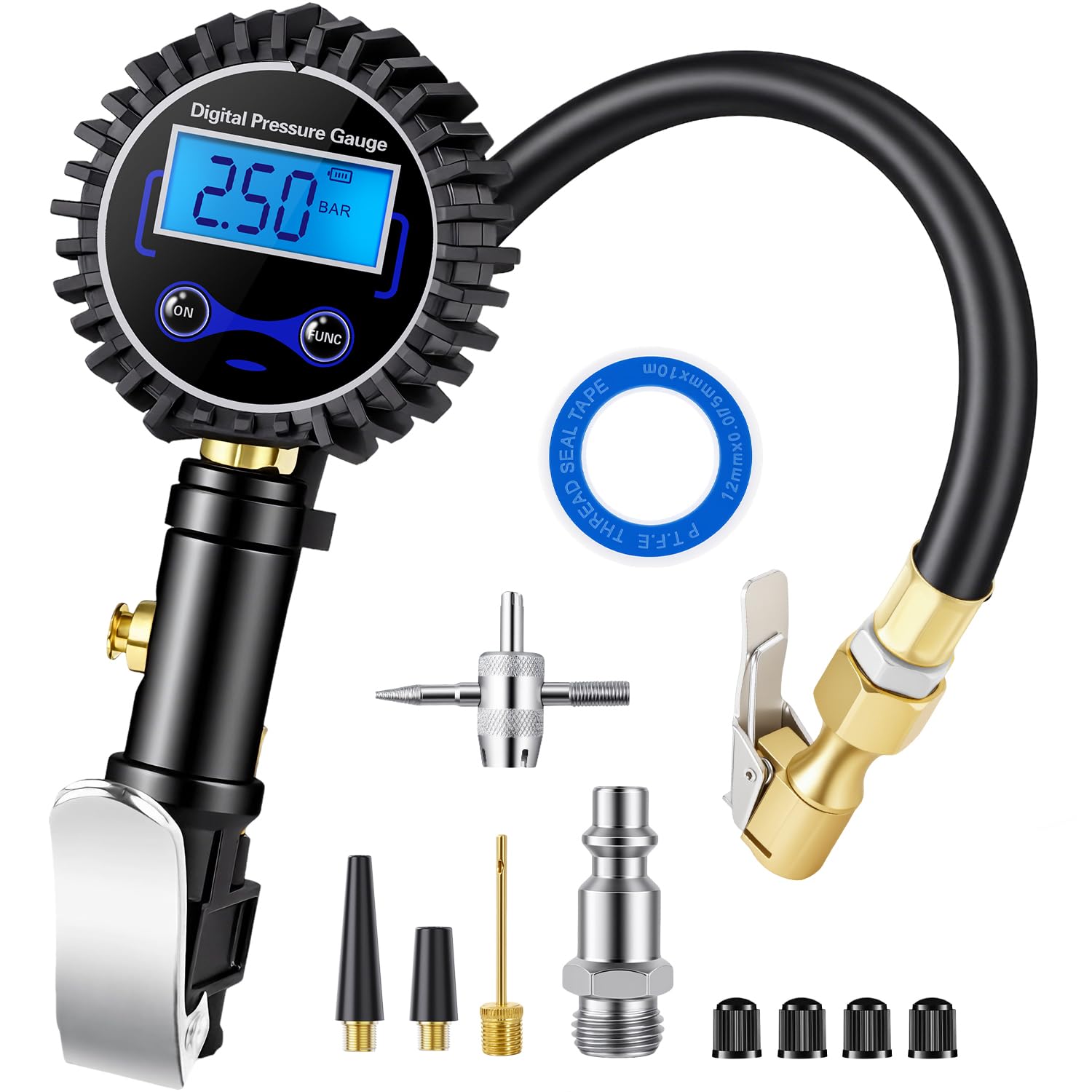
The Digital Tire Pressure Gauge with Inflator offers precise pressure readings with a high‑resolution LED display and four unit options, making tire maintenance quick and accurate. Built from stainless steel and brass, it includes a durable rubber hose, quick‑connect coupler, and a 3‑year warranty for reliable, everyday use across cars, RVs, bikes, and inflatables.

Designed for use on passenger cars
What to Do If You Get a Blowout?
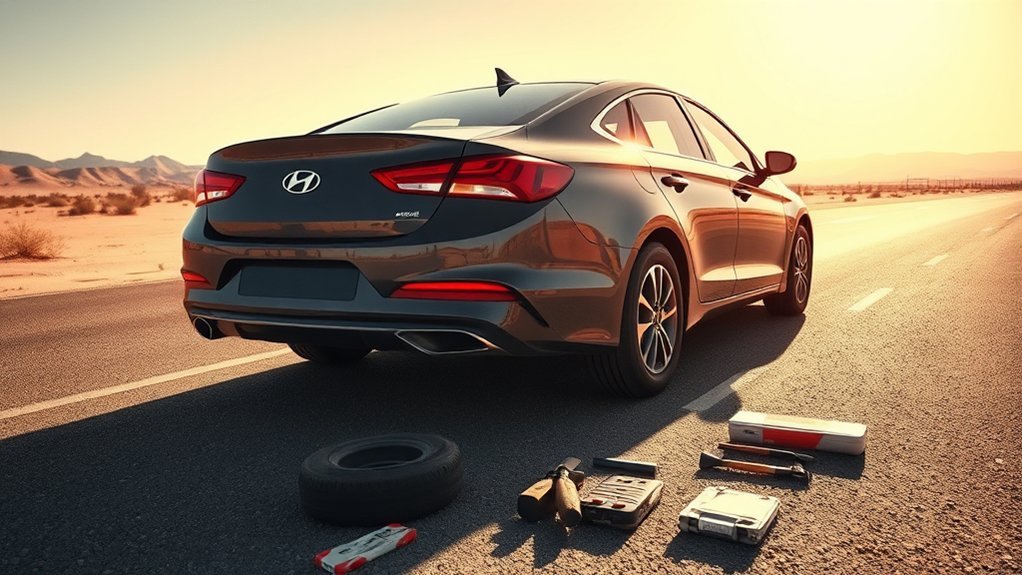
A blowout can be loud and sudden, but your first job is to keep the Sonata balanced and pointed where you want it to go. Follow the NHTSA blowout response guidance:
- Hold the steering wheel firmly with both hands.
- Do not slam the brakes. Sudden braking can make the car harder to control.
- Gradually release the accelerator. Let the car slow in a controlled way.
- Steer where you want the vehicle to go. Avoid jerking the wheel.
- Move off the road only when stable and safe. Choose a shoulder, parking lot, or wide safe area.
- Turn on hazard lights. Make yourself visible to other drivers.
- Call for help if needed. Do not stand close to traffic while inspecting or changing a tire.
| Do | Avoid |
|---|---|
| Hold the wheel firmly. | Do not slam the brakes. |
| Ease off the accelerator. | Do not jerk the wheel toward the shoulder. |
| Steer smoothly to a safe place. | Do not stop in a traffic lane if you can safely avoid it. |
| Use hazard lights and call assistance. | Do not drive far on a damaged tire or flat spare. |
Utilizing Technology for Tire Monitoring
Your Sonata’s TPMS can warn you when a tire becomes significantly underinflated, and some models may show individual tire pressures on the instrument display. Use that information, but verify with a gauge when the tires are cold.
TPMS is not designed to replace regular inspections. It may not warn you about worn tread, sidewall cracks, a tire that is too old, a tire overloaded near its limit, or a bulge caused by impact damage. It also may not warn as early as you want before a long hot-weather drive.
Note: If the TPMS light flashes and then stays on, the system may have a fault. Check your tire pressures manually and schedule service.
[Products Worth Considering]

PROCESS LEVEL ACCURACY: This heavy duty tire pressure gauge is calibrated manually to ANSI B40.1 Grade A (plus-minus 1% of span)

HIGH ACCURACY: Every ETENWOLF's pencil tire gauge is calibrated to ANSI B40.1 Grade B, it is accurate to 2% of span in the middle 50% of range and 3% of span in the lower and upper 25% of range. Each of ETENWOLF pencil tire pressure gauge is manually calibrated and has its unique calibration number printed on the pencil
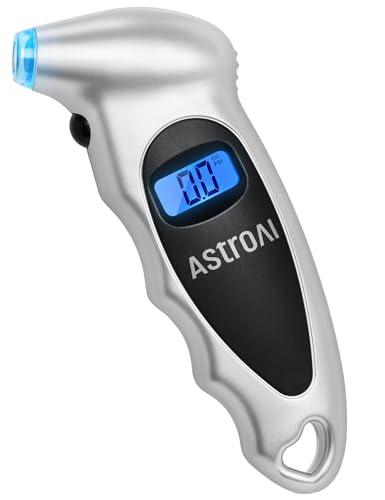
Accurate, Dependable Readings: Factory‑calibrated to ±1 PSI, so you can confidently match your vehicle’s recommended PSI (check the door jamb sticker). Ideal for monthly checks and road trips — consistent results every time, cold or warm.
Expert Tips for Safe Summer Driving in Your Sonata
Summer driving in your Hyundai Sonata is safer when tire checks become part of your normal routine. Use this simple checklist before heat waves and road trips:
| Tip | Details |
|---|---|
| Check cold tire pressure | Use the driver-door placard PSI and check before driving. |
| Inspect tread depth | Replace at 2/32 inch and consider replacing earlier for frequent rain driving. |
| Check sidewalls | Look for bulges, cracks, cuts, blisters, or exposed cord. |
| Watch the load | Do not exceed the passenger and cargo weight on the tire and loading placard. |
| Rotate on schedule | Follow Hyundai’s 7,500-mile guidance or rotate sooner if irregular wear appears. |
| Drive smoothly | Avoid hard impacts, curb strikes, aggressive cornering, and high-speed driving on suspect tires. |
Also check your spare tire or tire mobility kit before summer travel. A flat spare, missing jack, expired sealant, or missing lug key can turn a manageable tire problem into a long roadside delay.
Frequently Asked Questions
What temperature is too hot for a tire?
There is no single tire-temperature number every Sonata driver can safely use because most factory systems do not show tire temperature. Treat heat as a risk multiplier: low pressure, overloading, high speed, worn tread, and sidewall damage make hot-weather tire failure more likely. If you smell burning rubber, feel severe vibration, see a bulge, or lose pressure, stop safely and get help.
Should I lower my Hyundai Sonata tire pressure in summer?
No. Do not lower pressure just because the weather is hot or a warm tire reads higher after driving. Check pressure when the tires are cold and set it to the PSI on the driver-door placard or owner’s manual.
Can I rely on the Sonata TPMS instead of checking tire pressure?
No. TPMS is a warning system, not a maintenance routine. It may not alert you until a tire is significantly underinflated, and it cannot inspect tread, sidewall cracks, bulges, tire age, or road-impact damage.
Where do I find the correct Hyundai Sonata tire pressure?
Look on the tire and loading placard on the driver-side door jamb. If the placard is missing or unreadable, check the Hyundai owner’s manual or Hyundai digital manual for your model year, trim, tire size, and load condition.
What tire damage means I should not keep driving?
Do not keep driving on a tire with a sidewall bulge, exposed cord, deep sidewall cut, visible separation, repeated pressure loss, or severe vibration. Stop in a safe place and use the spare or roadside assistance.
Conclusion
Extreme heat raises the stakes for Hyundai Sonata tire care, but blowout prevention still comes down to the basics: correct cold PSI, monthly pressure checks, healthy tread, clean sidewalls, proper load, and smooth driving. Use your TPMS as a helpful warning, but trust a gauge and visual inspection before hot-weather trips. A few minutes of maintenance can protect your Sonata, your passengers, and everyone sharing the road.
Sources
- NHTSA TireWise: Tire Safety Ratings and Awareness — tire pressure, blowout response, tread, and tire safety guidance.
- NHTSA Tire Safety Brochure — load limits, placard information, tread depth, road hazards, and tire failure prevention.
- U.S. Tire Manufacturers Association: Tire Care Essentials — monthly checks, cold tire pressure, TPMS limits, tread depth, rotation, and alignment.
- Hyundai Owner’s Manual: Recommended Cold Tire Inflation Pressures — cold pressure and warm-tire pressure warning.
- Hyundai Owner’s Manual: Tire Rotation — 7,500-mile rotation guidance and inspection notes.
- MyHyundai: Vehicle Tire Safety and Maintenance — Hyundai tire pressure, TPMS, and natural pressure-loss guidance.

Related Articles

Danger of Using Summer Tires in Winter on a Hyundai Sonata
Potentially perilous, using summer tires in winter on your Hyundai Sonata can compromise safety—discover the hidden dangers that await you on icy roads.
Read More
Can You Mix Nitrogen and Air in Hyundai Sonata Tires? Answered
Discover the implications of mixing nitrogen and air in your Hyundai Sonata tires—are the benefits worth the risks? Explore the answer inside!
Read More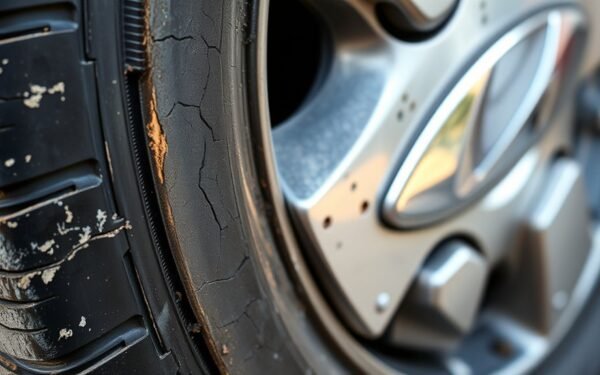
How to Tell If Hyundai Sonata Tires Are Too Old to Use Safely
Understand how to assess the age of your Hyundai Sonata tires and discover crucial signs of deterioration that could compromise your safety on the road.
Read More