
Hyundai Sonata Compact Spare: 50–70 Miles at 50 MPH

A compact spare can get your Hyundai Sonata moving again, but it gives you a much smaller safety margin than a regular tire. You need to limit speed, distance, load, and sharp handling until you reach a tire shop. This guide explains how far you can drive, how fast you should go, and what to check before you use the spare.
Quick Answer
You can usually drive a Hyundai Sonata donut spare about 50 to 70 miles at speeds no higher than 50 mph. Use it only as a temporary emergency tire, and go straight to a repair shop or safe service location. Check the spare’s pressure, tread, sidewalls, and lug nuts before you drive.
Key Takeaways
- Keep a Hyundai Sonata donut spare at or below 50 mph.
- Plan to drive only about 50 to 70 miles before fitting a regular tire.
- Check compact spare pressure, which often sits near 60 PSI.
- Avoid hard braking, sharp turns, heavy loads, and long highway trips.
- Replace an old, cracked, or vibrating spare before you rely on it.
Quick Answer: Hyundai Sonata Donut Spare, 50 to 70 Miles, 50 MPH or Less

A Hyundai Sonata donut spare can usually get you about 50 to 70 miles. Keep your speed at or below 50 mph, even when traffic moves faster.
Treat the donut as an emergency tool, not a normal tire. Limit your trip, reduce cargo weight, avoid sustained highway driving, and head to a repair facility.
Before you drive, inspect the spare. Confirm the correct air pressure, look for cuts or cracks, and make sure all lug nuts sit tight and even.
[Products Worth Considering]

This spare tire tool kit is designed for the 2004 to 2018 Ford F-150 to help you loosen and tighten wheel lug nuts and manage the spare tire and provided jack functions from underneath the vehicle. It includes the lug nut wrench and extension pieces plus a convenient storage carrying case for organized transport. The jack itself is not included.

EVOULTES heavy duty tire inflator with an integrated gauge delivers accurate pressure readings from 10–120 PSI, helping you inflate, deflate, and check tires in one tool. The 16.5-inch extended dual-head air chuck with swivel base reaches hard-to-access dual wheel valves on trucks and RVs. A brass trigger core and side-mounted air release valve make operation smooth, with standard 1/4" NPT threading and quick-connect compatibility for easy setup.

This roadside assistance kit helps drivers and passengers in urgent situations after an accident or breakdown, providing practical support while waiting for help. It includes a lightweight, compact tire inflator for fast inflation of standard vehicle tires, plus reinforced jumper cable protection for safer handling. Ideal for winter weather, road trips, camping, and travel, with everything stowed neatly in a trunk bag.
Donut Spare Distance and Speed Limits for a Hyundai Sonata
Your Sonata’s donut spare supports short emergency use only. Plan on 50 to 70 miles, then fit a full-size tire as soon as you can.
Keep speeds at or below 50 mph to reduce heat, stress, and handling risk. Check the spare’s inflation before you leave, because compact spares often need about 60 PSI.
Warning: Do not treat a donut spare as a regular tire, because long distance or high speed driving can cause heat damage and poor control.
Why the Distance Limit Matters
If you get a flat on a Hyundai Sonata, the donut spare should only get you to help. The usual range is about 50 to 70 miles, or 80 to 113 kilometers.
Use that limit to plan your route before you move. Choose the nearest safe tire shop, dealer, or repair facility instead of finishing your normal trip.
- Track your miles: Note the odometer reading when you install the spare.
- Inspect the tire: Check the spare before driving and again if the car starts to shake.
- Replace the damaged tire promptly: Restore a full-size tire to regain normal grip and range.
Recommended Speed Cap
When you run a donut spare on a Hyundai Sonata, keep your speed at 50 mph or less. This limit helps reduce heat buildup, tread stress, and loss of grip.
Avoid hard acceleration, sudden braking, and sharp turns. These moves place extra force on a compact spare with less tread and a smaller contact patch.
Check pressure again if the car feels unstable. Low pressure increases heat and can make the spare fail sooner.
Full-Size Spare Mileage and Speed Differences
A roadworthy full-size spare works more like your regular tires. If it matches the Sonata’s tire size, load rating, and condition, you can usually drive farther than you can on a donut.
You still need to inspect it first. Check pressure, tread depth, sidewall condition, and age before you rely on it at normal speeds.
A safe full-size spare gives you more range than a donut, but only if it matches the vehicle and remains in good condition.
- Check pressure and tread: Low pressure or worn tread reduces safe range.
- Match the tire size: A mismatched spare can affect braking, handling, and drivetrain stress.
- Rotate or replace it when needed: An unused spare still ages over time.
Why Donut Spares Have Strict Limits
Donut spares save trunk space and weight, but that design comes with tradeoffs. They use a smaller tread area, lighter construction, and lower long-distance capability.
Those limits affect braking, cornering, ride quality, and heat control. That’s why you should drive slowly and keep the trip short.
Reduced Traction and Grip
A donut spare has less contact with the road than a regular tire. That smaller footprint can increase stopping distance, especially on wet or loose pavement.
You should leave more space between your Sonata and the car ahead. Slow down before turns and avoid sudden lane changes.
- Tread and width: A smaller tread area gives the tire less road grip.
- Stability: A narrow profile reduces cornering strength and steering feel.
- Operating limits: Lower speed and mileage limits reduce heat and failure risk.
Limited Structural Design
Manufacturers build donut spares for temporary use, not daily driving. Their lighter sidewalls and compact tread can wear faster under repeated load and heat.
Use the 50 to 70 mile and 50 mph guidelines as firm safety limits. They reflect the spare’s design limits, not just a convenience rule.
Safety Checklist Before You Drive on a Spare Tire
Before you drive on your Hyundai Sonata’s spare tire, check pressure, tread, sidewalls, mounting, and route. A quick inspection can prevent a second tire problem.
- Confirm the spare’s pressure with a tire gauge.
- Look for cracks, dry rot, bulges, cuts, or uneven wear.
- Make sure all lug nuts sit tight and follow the correct tightening pattern.
- Keep your speed within the spare tire limit.
- Drive directly to a repair facility or safe service point.
Carry the correct jack, lug wrench, wheel lock key, and tire pressure gauge. Keep them where you can reach them during an emergency.
[Products Worth Considering]

This portable cordless tire inflator delivers up to 160 PSI with fast 17 L/min airflow to help you quickly top up tires and get back on the road. It features dual power mode, running on a 21V rechargeable battery or a 12V DC adapter for convenient roadside use. An automatic shut-off with digital pressure gauge helps prevent overinflation, and a built-in LED light improves visibility in low-light conditions.

The JACO FlowPro Tire Inflator measures, inflates, and airs down tires up to 100 PSI with battery-free operation and ±2% accuracy after calibration. It features a glowing pressure dial for night visibility, a heavy-duty steel build with a hybrid hose, and a precision push-to-inflate thumb trigger. The patented Lightning Air Chuck locks on for a secure seal, and the kit includes quick-connect hardware for easy inline use with your air compressor.
How to Care for and Extend Your Spare Tire’s Life

Check your Sonata’s spare tire at least once a month. Compact spares often need about 60 PSI, so they can lose enough air to become unsafe while stored.
Store the spare in a cool, dry, shaded place when your vehicle design allows it. Keep it away from solvents, oil, and long exposure to heat or sun.
If your Sonata has a full-size spare, include it in routine tire checks. Ask a tire professional whether it should enter the rotation pattern for your tire setup.
| Task | Frequency |
|---|---|
| Air pressure check, often near 60 PSI for compact spares | Monthly |
| Visual inspection for cracks, dry rot, and tread loss | Monthly |
| Full-size spare rotation check | During tire service |
| Cleaning and safe storage | As needed |
What to Do if the Spare Is Old, Cracked, or Causes Vibration
Do not rely on a spare that shows cracks, dry rot, bulges, or exposed cords. Rubber ages even when the tire sits unused.
Replace a spare that is more than 10 years old, unless your vehicle manual gives a shorter limit. Many tire shops may refuse to service very old tires because the rubber can fail without warning.
- Replace unsafe rubber: Fit a new spare if you see age damage or sidewall cracking.
- Diagnose vibration: Ask a technician to check balance, runout, mounting, and structural damage.
- Limit emergency use: If you must move the car, stay under 50 mph and drive only to help.
Frequently Asked Questions
How far can you drive on a Hyundai spare tire?
You can usually drive about 50 to 70 miles on a Hyundai donut spare. Keep the trip short and go straight to a tire repair shop or safe service location.
Can you drive 120 miles on a spare tire?
You should not plan to drive 120 miles on a donut spare. That distance goes beyond the common 50 to 70 mile limit and raises the risk of heat damage or failure.
Can you drive 400 miles on a spare tire?
You should not drive 400 miles on a donut spare. A compact spare is only a short-term emergency tire, so replace it with a regular tire before any long trip.
Can you put a donut spare on the front of a Hyundai Sonata?
Follow your owner’s manual for placement guidance. If the manual advises against front placement, move a good rear tire to the front and place the donut on the rear.
What PSI should a Hyundai Sonata donut spare have?
Many compact spares require about 60 PSI, but you should confirm the exact number on the tire sidewall or vehicle placard. Use a gauge before driving because stored spares can lose air over time.
Safety Disclaimer: This article is for informational purposes only and does not replace your Hyundai owner’s manual or advice from a qualified tire professional. Always follow the instructions for your exact model year, tire size, and spare tire type.
Conclusion
A Hyundai Sonata donut spare should only carry you about 50 to 70 miles at 50 mph or less. Check pressure, tread, sidewalls, and lug nuts before you drive.
Avoid hard braking, fast turns, heavy loads, and long highway trips while the spare is installed. Your next step is simple: get the damaged tire repaired or replaced as soon as you can.
Keep the spare maintained now, and it can help you stay safe when a flat tire interrupts your drive.

Related Articles

Danger of Using Summer Tires in Winter on a Hyundai Sonata
Potentially perilous, using summer tires in winter on your Hyundai Sonata can compromise safety—discover the hidden dangers that await you on icy roads.
Read More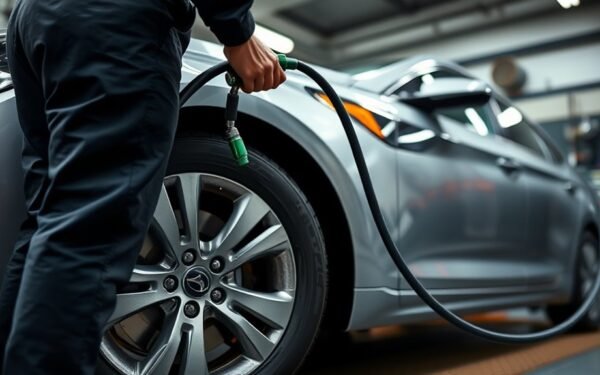
Can You Mix Nitrogen and Air in Hyundai Sonata Tires? Answered
Discover the implications of mixing nitrogen and air in your Hyundai Sonata tires—are the benefits worth the risks? Explore the answer inside!
Read More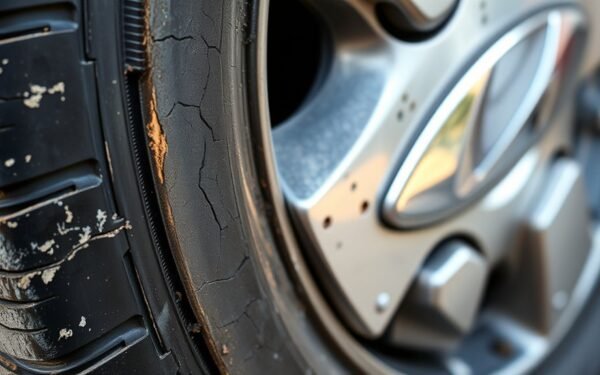
How to Tell If Hyundai Sonata Tires Are Too Old to Use Safely
Understand how to assess the age of your Hyundai Sonata tires and discover crucial signs of deterioration that could compromise your safety on the road.
Read More