
How to Break a Car Window in an Emergency Safely
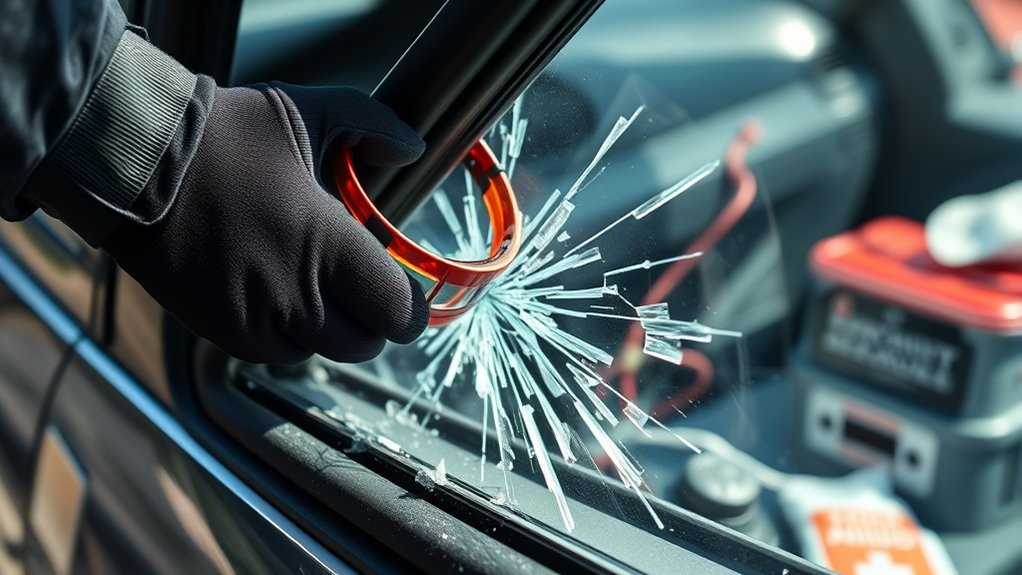
Only break a car window in a true emergency, like fire, sinking water, or a child or pet in extreme heat. Use a spring-loaded glass breaker if you have one, and target a side window’s corner, not the windshield or sunroof. Protect your hands, unbuckle everyone, and exit quickly after the glass shatters. If the window’s laminated or you’re tool-free, there are a few safer backup options you should know.
Key Takeaways
- Break a window only in immediate danger, such as fire, flooding, extreme heat, or a trapped child or pet.
- Choose a side window, not the windshield or sunroof, because tempered glass breaks more easily and safely.
- Use a spring-loaded glass breaker if available, or strike the window’s corner firmly with a metal tool.
- Unbuckle seat belts first, then help passengers exit quickly and move away from broken glass.
- Cover your hands, avoid shards, and check for outside hazards before leaving the vehicle.
[Products Worth Considering]

The SPTA wheel and tire brush kit makes it easy to remove dirt from wheels, rims, and hard-to-reach areas without needing a high pressure washer. Ergonomic handles and soft, chemical-resistant bristles help you clean faster while reducing the risk of scratching. The set is versatile for cars, trucks, motorcycles, bicycles, RVs, boats, and more.

This 22-piece car wash and detailing kit includes a collapsible 20L bucket, lint-free wash mitt, microfiber sponge, super-absorbent drying towels, and specialized tools for wheels, tires, and windows. Soft, scratch-free accessories help protect paint and glass while tackling grime both inside and out. It’s a complete interior and exterior care set for cars, motorcycles, RVs, and home cleaning tasks like windows and mirrors.

This VEVOR tire bead breaker uses a slide-hammer impact and wedge tip to separate tire beads from rims quickly and efficiently without damaging hub surfaces. The long handle and sturdy steel construction help reduce user strain while providing reliable, portable tire changing for cars, trucks, and more. Ideal for home mechanics and repair shops handling multiple vehicle tire sizes.
When To Break A Car Window

You should only break a car window when there’s an immediate danger that makes waiting unsafe, such as a child or pet trapped in a hot car, a crash that leaves you unable to open the doors with fire or explosion risk, a vehicle sinking in water, a passenger who needs urgent medical help, or a high-risk situation where staying inside puts you in more danger than getting out.
Act fast if heat is rising, smoke is spreading, water is filling the cabin, or someone’s condition is worsening. In an emergency situation, you may need to break a window to create an exit or reach the person inside.
Don’t delay while you look for a better option if every second counts. Use this step only when doors won’t open or waiting could cause serious harm. If you can safely call for help first, do it, but if the threat is immediate, break a window and get everyone out as quickly as possible.
Choose The Safest Car Window
Once it’s clear a window has to be broken, choose the safest one: a side window. Most side windows use tempered glass, which shatters more readily than the laminated glass in windshields and many rear windows. That makes them your best escape option in an emergency.
If you can, target a corner of the side window. Corners are weaker than the center, so you’ll usually need less force to break them. Avoid the windshield and sunroof; they’re built to resist impact, and when they do break, they can create more dangerous debris.
Check the vehicle’s manual if you have time. It can tell you which windows use tempered glass and which don’t, helping you plan the fastest exit.
In a crisis, prioritize the side windows because they give you quicker, easier access out of the car.
Pick The Best Glass Breaker
A spring-loaded glass breaker is usually the best choice because it takes less force and works more reliably than hammer-style tools. You should pick a glass breaker made to break tempered glass, since most car windows are tempered and designed to shatter into small fragments. That improves effectiveness and helps you act fast.
- Choose a model with a spring-loaded tip for consistent impact.
- Look for a built-in seatbelt cutter to speed up escape.
- Keep it within easy reach, not buried in the glove box.
Before you need it, practice in a controlled setting so you understand how the tool fires and how much pressure it needs.
Practice with the tool in a controlled setting so you understand how it fires and how much pressure it needs.
Test the grip, the release, and the cutter if it has one. When you select the right tool and store it where you can grab it quickly, you’re better prepared to respond safely if an emergency happens and you need to break tempered glass.
Break The Window At The Corner
| Target | Result | Force |
|---|---|---|
| Corner | Best shatter point | Low |
| Center | Harder to crack | High |
| Precise hit | Faster escape | Less |
Keep your aim exact. A glancing blow can waste time and leave the glass intact. If you use the headrest pole or a dedicated tool, press it firmly into the corner before striking. In an emergency, every second matters, so focus on the spot most likely to give way.
Free Seat Belts And Exit Fast
Unbuckle all seat belts first so everyone can move without delay.
Free passengers before you break out, then get out fast through the window.
If water’s rising, don’t pause—every second matters.
[Products Worth Considering]

This 1/2-inch drive breaker bar delivers powerful leverage for loosening and tightening stubborn lug nuts and automotive fasteners. The 180-degree flex head helps you reach tight spaces at the angle you need, making tire and brake jobs easier. A spring-loaded ball detent design holds 1/2-inch sockets securely while the chrome-moly head provides durable strength for everyday use.

Secure your vehicle during transport with this 4-pack of heavy-duty tire tie down straps designed for trailers and hauling. The ratchet system with flat hooks and D-rings helps you tension the straps quickly, while the wheel-friendly design protects tires. With high break strength and corrosion-resistant hardware, these straps provide reliable, confidence-inspiring tie-down security for cars, trucks, and UTVs.

Make hard-to-reach areas easier to access with the MAXXHAUL truck tire service step featuring an adjustable width and height. The foldable design stores compactly, while the serrated non-slip platform provides secure footing for tire-related maintenance. It fits most stock tire sizes up to 31-inch diameter with a 300-lb capacity.
Unbuckle All Seat Belts
Free everyone’s seat belt as soon as you can so all passengers can move freely and get out fast if the situation worsens. You should unbuckle seat belts before you reach for an escape tool or try the window, because every second matters.
In a sinking or wrecked car, tangled straps slow you down and can trap movement. Keep your motions calm and direct, and check each buckle once.
- Pull the release tab firmly.
- Clear the strap from arms and legs.
- Practice the sequence before an emergency.
When you rehearse this step, you cut hesitation and improve response time under stress. If water rises or smoke spreads, you’ll want no delays.
Freeing seat belts first helps you act cleanly, safely, and fast.
Free Passengers First
Once everyone’s seat belts are off, get the passengers out first if the doors or windows are usable, because every second matters in a car emergency.
You should free passengers quickly, then guide them to move away from the vehicle so you can work without hesitation.
Check the situation fast: if a door opens, use it; if not, prepare to break glass only when you’ve confirmed you need that exit.
Keep your instructions short and direct so no one freezes or delays.
Once they’re clear, you can focus on the window with no distractions.
Tell everyone to stay low and step out fast, because danger can change in seconds.
In an emergency, speed and order protect lives, and you need both.
Exit Before Water Rises
If the car is in water, unbuckle everyone right away and get moving before the water rises and the doors jam under pressure. Focus on getting out fast, because water can flood the cabin in seconds.
Keep calm, choose the nearest exit, and if a window won’t open, break the glass at a corner to improve your chance of escape. Don’t waste time fighting the door if pressure has trapped it.
- Free seat belts first, then guide passengers out.
- Use a window tool, headrest spike, or other hard object to break the glass.
- Climb out quickly and help others follow.
Move decisively, breathe steadily, and stay safe by acting before the vehicle sinks deeper.
What To Do If The Window Is Laminated?
If the window’s laminated, it won’t shatter easily, so don’t waste time trying to punch through it like tempered glass.
Use a dedicated glass-breaking tool made for laminated glass if you have one, and check your owner’s manual or window label to confirm what you’re dealing with.
If that route won’t work fast enough, move to a side window or another escape route right away.
Laminated Glass Limits
Laminated glass, which is common in windshields and rear windows, is much harder to break than tempered glass because it’s designed to stay together on impact.
When you’re facing laminated glass, standard tools usually cause only minor damage, so don’t waste time on repeated hits. If you’re breaking a window in an emergency, check for a side window first, since those are usually tempered and shatter more easily.
- Target side windows before the front or rear glass.
- Use a hard object on the edge only if nothing else works.
- Move quickly; laminated glass can delay escape.
If the window resists, shift your focus and keep your effort on the fastest exit.
Escape Tool Options
When a window is laminated, standard escape tools won’t do much, so your best move is to switch to a side window first, since it’s usually tempered and easier to shatter.
If you still need to address laminated windows, use a safety hammer or a specialized glass-breaking tool made to penetrate layered glass. Aim at the corner, not the center, because the edge breaks more readily.
These escape tool options work best when you strike firmly and repeatedly. If you don’t have a tool, use a hard object like a headrest to hit the window edge as a last resort.
Stay focused, protect your face and hands, and keep your efforts on the easiest opening you can reach.
Alternate Exit Routes
Because laminated glass is designed to stay intact, breaking it may not be your best option, so check for other exits first.
Look for alternate exit routes before you force the window. Try doors, hatchbacks, or sunroofs; they may still open even when the laminated glass won’t break easily.
- Test each door handle and lock calmly.
- Use a specialized glass cutter if you’re trapped and have one.
- Remove the headrest and strike the corner only if no other exit works.
Keep your focus on getting out safely, not on saving property.
If you can move freely, choose the simplest opening and leave immediately.
If the car is damaged or unstable, stay low, act fast, and use the safest route available.
Break A Car Window Without A Tool
If you don’t have a tool, remove the headrest from the seat and use its metal poles to strike one of the corner points of a side window.
Target the corner, not the center, because the glass there will break more easily and needs less force. Keep your stance steady, hold the poles firmly, and hit with controlled, direct blows until the windows crack.
In an emergency, choose a side window instead of the windshield; windshields are built to resist impact and won’t give way as quickly.
Once the glass shatters, move fast. Water can rise or flood into a submerged car in seconds, so every moment counts.
Cover your hand if you can, then clear a path and climb out carefully. Watch for sharp shards around the frame and seat area, and keep your body low as you exit.
Focus on speed, accuracy, and a clear escape route to break free safely.
Avoid These Escape Mistakes
To escape safely, avoid the mistakes that slow you down or put you at greater risk. Don’t waste time on the windshield; laminated glass resists impact and can injure you. Focus on a side window instead.
Skip improvised tools like headrests or hard objects unless you have no better option; a spring-loaded punch works faster and more reliably in an emergency. Never stop to grab belongings. If water is rising, every second counts.
Stay calm, unbuckle, break or roll down the window, and exit immediately.
Stay calm, unbuckle, break or roll down the window, and get out immediately.
- Check outside first so you don’t send broken glass onto bystanders or into hazards.
- Aim for a side window, not the windshield, to reduce effort and risk.
- Use the S.U.R.E. steps to keep your actions clear and controlled.
Calm, fast choices help you leave the vehicle safely and reduce injury.
Frequently Asked Questions
What Can Break a Car Window in an Emergency?
A safety hammer breaks car windows best in emergency situations. You can also use a spring-loaded tool, a hard metal pole, or a spark plug tip, but follow safety precautions and strike a corner, not the center.
What Device Shatters a Car Window?
A spring-loaded center punch or emergency safety hammer shatters a car window fast—like thunder in your hand. Use it with safety precautions in emergency situations, aiming at a corner for the quickest escape.
What Shatters a Car Window?
Tempered glass shatters under focused impact from a safety hammer, spring-loaded punch, or hard pointed object. You should target a corner, not the center, and follow safety precautions because glass properties make windows break into blunt fragments.
What Tool Do Police Use to Break Car Windows?
Police use a safety hammer or window punch; you can strike tempered glass with its pointed tip to shatter it fast. Often, you’ll also find a seatbelt cutter attached, helping you act quickly in emergencies.
Conclusion
When you’re trapped, stay calm, stay focused, and stay fast. Choose the safest window, strike the corner, and clear the glass. Cut the seat belt, release the door, and get out. If the glass is laminated, use the right tool or another exit. If you don’t have a tool, use a hard object and protect your hands. Don’t panic, don’t waste time, and don’t forget: your safety comes first.
[Products Worth Considering]
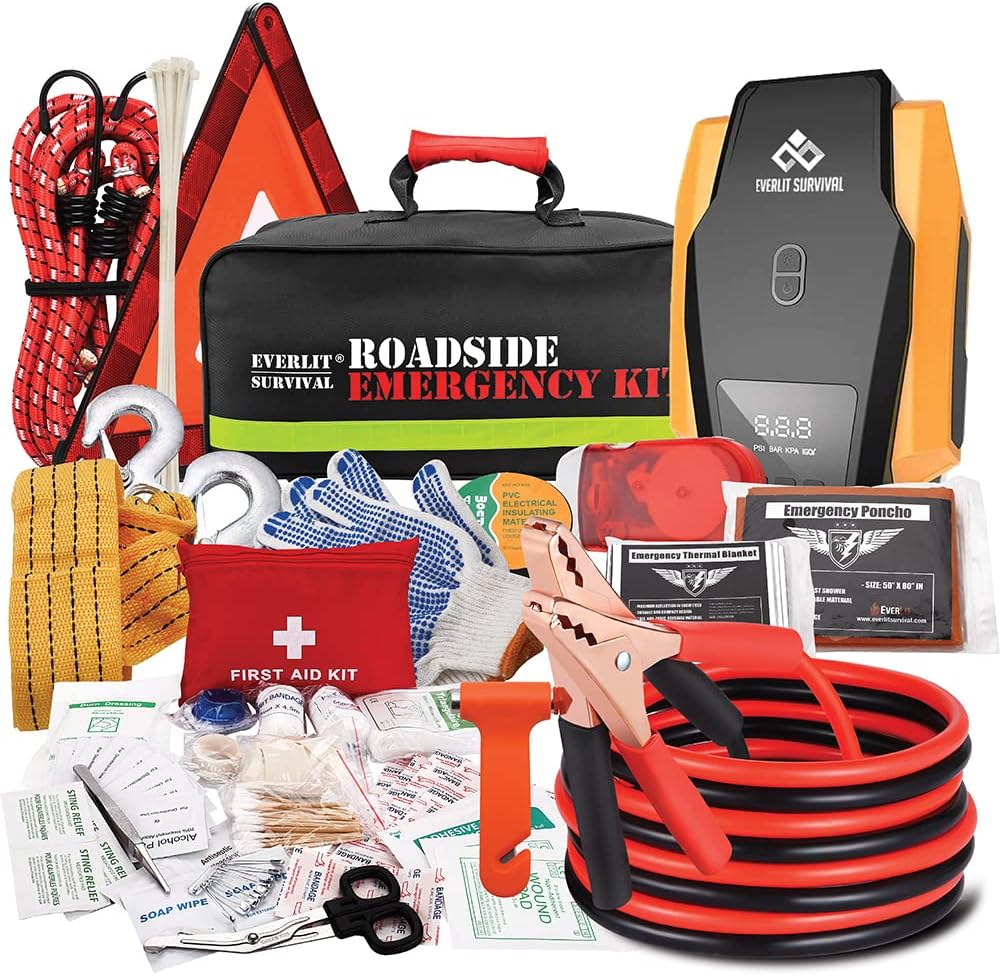
The Everlit Road Guardian emergency kit is designed for roadside breakdowns, combining essential safety gear and roadside tools in one compact bag. It includes a digital 12V auto tire inflator with preset and auto shutoff, plus 12-foot 8-gauge jumper cables to get you moving again. You also get a full 108-piece first aid kit, reflective warning tools, safety gloves, and emergency convenience items for safer travel.

This tire repair screw set includes self-tapping plugs and a screwdriver to help you quickly complete tubeless tire repairs for many vehicle types. The set provides two rubber screw diameters for different puncture needs and uses a sealant-coated screw tip to help prevent air leakage and water entry. It’s designed for secure fixing with wear-resistant metal-and-rubber construction.

Slip the Powerbuilt tire step over your vehicle’s tire to reach roof racks, engine bays, truck boxes, and more without overreaching. Its adjustable, universal design fits tires with a cross tread width up to 13 inches, including car, truck, RV, and semi tires. The non-slip cheesegrater surface and anti-slip tape provide secure grip while the open design lets mud and debris pass through. Fold-flat storage with rubber bumpers helps keep your tire and the step protected between uses.

Related Articles

How to Buy Car Insurance: Coverage Guide for Beginners
Choose the right car insurance coverage and compare smarter to avoid costly gaps—discover the key details beginners often miss.
Read More
How to Get Cheap Car Insurance: 10 Ways to Cut Costs
Maximize savings on cheap car insurance with 10 smart cost-cutting moves, and discover the one strategy most drivers overlook.
Read More
How to Drive on Black Ice: Winter Safety Tips
Protect yourself on black ice with smart winter driving tips that could keep your car steady when the road turns dangerously invisible.
Read More