
What Does TT Mean on a Tire? Tube Type Explained
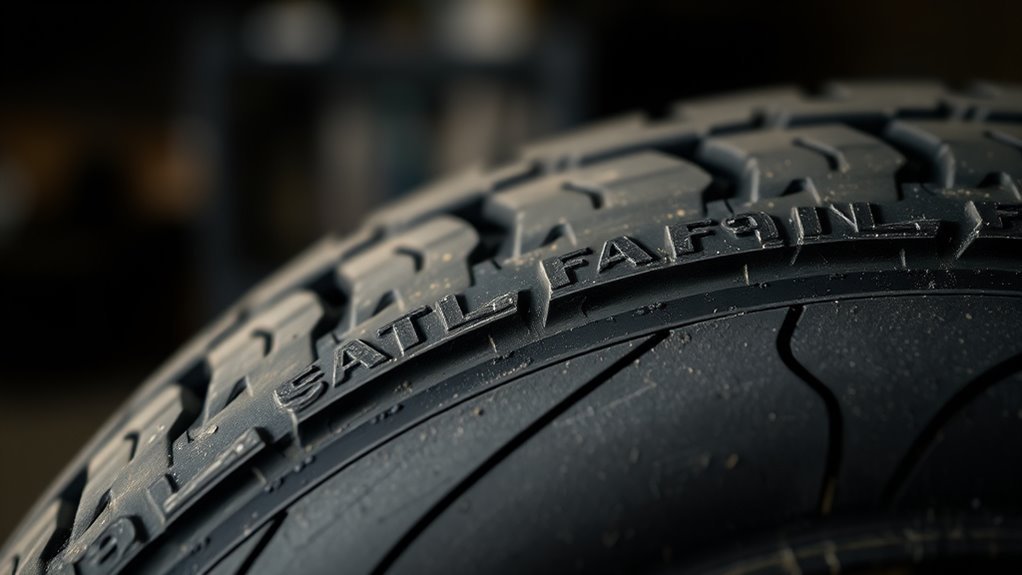
When you see “TT” on a tire, it means “Tube Type.” The tire needs a separate inner tube to hold air. You fit the tube inside the tire, line up the valve with the rim hole, and inflate slowly. This helps the bead seat correctly. TT tires are common on older motorcycles and some off-road rigs. They offer bias-ply flex characteristics and need different repair steps than tubeless tires. Keep reading to learn the specific pros, cons, and service steps.
What “TT” on a Tire Means (Quick Answer)
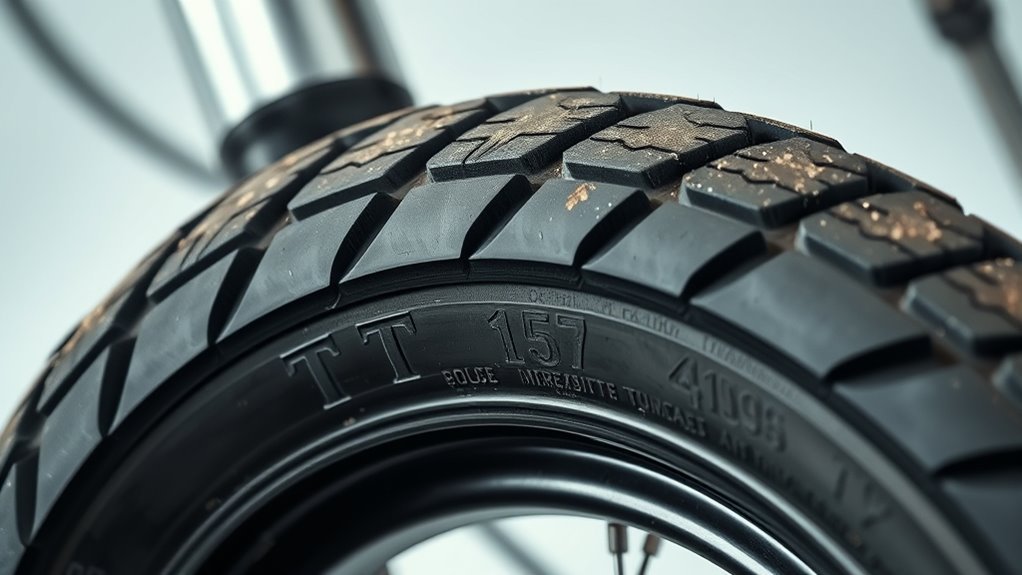
“TT” on a tire stands for “Tube Type.” It means the tire requires an inner tube for inflation and operation. TT marks tires that use an inner tube inside a bias-ply carcass instead of a tubeless radial design. For tire maintenance, inspect both the tire and tube for cuts, pinch flats, and valve problems. Punctures cause rapid deflation because sharp objects can go through both layers. Repair and replacement need full wheel disassembly to reach the tube. Plan for longer service times and keep spare tubes and tools handy. TT setups stay common on motorcycles and some heavy-duty applications where traditional bias-ply and tube systems work best.
TT vs TL: Key Differences at a Glance
Tube-type (TT) and tubeless (TL) systems differ in one main way. TT tires use a separate inner tube to hold air. TL tires seal directly to the rim. That difference changes installation and repair. TT setups need full disassembly to replace a tube. TL tires only need the bead broken and resealed. You also see performance and cost trade-offs. TT tires tend to be less flexible with lower heat buildup. TL systems usually offer easier maintenance and lower long-term costs.
Tube Type Basics
Both types hold air for the wheel, but tube-type (TT) and tubeless (TL) tires differ in construction and service. TT systems use an inner tube and rim-mounted valve. Maintenance focuses on tube durability and periodic replacement. TT tires often use bias-ply construction, which is stiffer and produces less heat than radial ones. This affects ride feel and load response. Repairing a TT tire requires disassembly to reach the tube. That adds downtime and labor. TT assemblies also include extra parts like the tube and valve stem, which raises the initial cost. In contrast, TL tires create a sealed chamber against the rim. This lets you repair at the bead without full disassembly. It simplifies field service and reduces the number of parts.
Tubeless Versus Tubes
When you compare tube-type and tubeless systems side by side, focus on how they hold air and react to damage. TT uses an inner tube with a valve stem and can lose air fast when punctured. TL forms a sealed chamber that usually leaks slowly. This gives you time to handle the repair. Installation and basic tire maintenance differ too. TT requires full disassembly to replace the tube or valve stem. TL needs only bead breaking for the same job. Construction and performance also contrast. TT commonly uses bias ply with less flex and lower heat generation. TL typically uses radial construction for better comfort and handling. Both types can suffer from underinflation, so check pressures regularly.
Read Your Tire Sidewall: Find TT, Size, Load, and PSI
Find the “TT” marking first so you know the tire needs an inner tube. Then read the size code for width, aspect ratio, and rim diameter to confirm fit. Finally, note the load index and maximum PSI on the sidewall to match capacity and safe inflation.
Finding TT Marking
Wondering where to find the TT marking on your tire sidewall? Start a focused tire inspection for motorcycle safety by scanning the entire sidewall. The TT mark usually appears with other key data. Look specifically:
- Near the size and load index groupings
- Adjacent to maximum inflation pressure markings
- On the shoulder area for older or bias-ply tires
- In recessed characters on remanufactured or weathered tires
You will see “TT” for Tube Type. This means the tire requires an inner tube and is often bias ply. Note that TT tires can lose air rapidly if the tube is punctured. Always check the sidewall TT designation against your motorcycle owner’s manual to confirm the recommended tire type and safe operation.
Reading Size Codes
Start by reading the alphanumeric size code stamped on the sidewall. This short sequence tells you tire width in mm, aspect ratio in percent, and rim diameter in inches, plus load index and speed rating when shown. You parse formats like 120/70-17 or 180/55ZR17. The first number is section width, the second is aspect ratio, and the number after the dash or R is rim diameter. Include the load index that follows the size. It shows maximum carrying capacity. TT marking confirms tube-type construction, which affects mounting. For accurate size code interpretation, match the exact numbers and construction type to your rim and vehicle. Tire compatibility must include rim diameter, width range, and whether an inner tube is required.
Locating Load And PSI
With the TT and size code identified, check the sidewall for the load index and maximum PSI. This helps you match tire capacity to your bike and riding conditions. Use the load index to find load capacity and the PSI marking to know the tire’s maximum inflation pressure. Neither replaces the manufacturer’s recommended pressure. Locate the numeric load index (usually next to the size code) and the “MAX PSI” value elsewhere on the same sidewall. Convert load index to pounds using a chart if needed. Then compare it to your motorcycle’s gross axle weight rating.
- Note TT marking: requires tube for air retention.
- Read load index to find load capacity.
- Observe MAX PSI: this is the ceiling, not the operating pressure.
- Always verify recommended pressure in the owner’s manual.
Pros and Cons of Tube Type (TT) Tires for Motorcycles
Tube-type (TT) motorcycle tires use simple construction with an inner tube to hold air. They come with distinct trade-offs you should weigh when choosing tires. You gain lower cost and suitable performance in lower-speed, heavy-duty uses. Bias-ply TT designs generate less heat because of reduced flex. However, a sharp puncture can cause rapid deflation since the tube holds the air. Use strict tube maintenance tips and reliable puncture repair techniques to reduce risk. Repairs are more challenging. Valve stem replacement needs full disassembly, and tube patches or replacements take more time than tubeless fixes. Expect reduced comfort and handling compared with modern tubeless radials, even though TT offers affordability and durability in specific roles.
When to Use TT Tires: Vintage, Off‑Road, and Other Cases
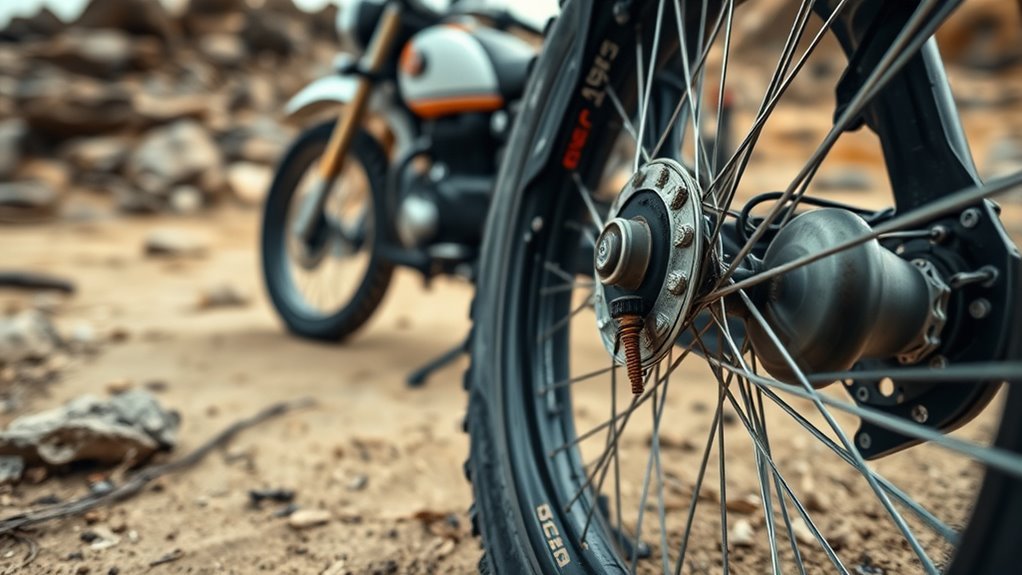
When you restore a vintage bike, ride off-road, or build a race machine that benefits from bias-ply behavior, TT (tube-type) tires are often the right choice. They match original rim designs, offer predictable flex characteristics, and handle heat differently than modern tubeless radials. You choose TT tires when authenticity, controlled carcass flex, or specific heat generation rates matter.
- Restoration: vintage motorcycles requiring tube-compatible rims and period-correct performance.
- Off‑road: bias-ply TT construction gives durable sidewall flex and consistent off-road performance on rough terrain.
- Racing: applications needing predictable handling and lower carcass temperatures.
- Compatibility checks: verify rim design and manufacturer limits accept tube-type use; monitor pressure and tube condition.
TT tires demand regular inspection due to tube vulnerability to puncture.
[Products Worth Considering]

The Milton 555e digital tire inflator delivers fast, accurate pressure readings with a backlit display and multiple unit options, making tire inflation quick and easy. Its durable 20" EPDM rubber hose and grip‑head chuck provide reliable connection, while the ±1 PSI accuracy ensures precise inflation for cars, bikes, and trucks.

The Steelman Straight Air Chuck Tire Inflator offers a compact, durable solution for inflating tires with a built‑in gauge and flexible hose. Its push‑on chuck eliminates the need for clamps, while the polished steel casing and brass fittings ensure long‑lasting performance. Compatible with any portable or fixed tank air compressor, it delivers precise pressure readings from 10 to 90 PSI, making it ideal for cars, trucks, and other vehicles.

This digital tire pressure gauge combines a sturdy pistol grip inflator with a backlit 0.1 PSI display for quick, accurate readings in any lighting condition. Its 360° swivel gauge and 20" rubber hose make it easy to use and store, while the integrated inflate/deflate trigger and ¼" NPT air inlet provide fast, reliable tire maintenance.
Install, Repair, and Replace TT Tires Safely (Step‑by‑Step)
Now that you have chosen TT tires for authenticity or specific handling, follow a clear, methodical approach to install, repair, and replace them safely. Start by verifying the “TT” sidewall marking to confirm tube type. Follow tire safety protocols: inspect the rim for rust, burrs, or damage and clean it thoroughly. Place the inner tube inside the tire, align the valve stem with the rim hole, and avoid twisting or pinching the tube. Use gradual bead seating: inflate slowly, watch for bulges or irregularities, then reach recommended pressure. For punctures, remove the tire, inspect the tube, patch or replace the tube as required, re-seat the bead, and recheck pressure and alignment. Follow these installation tips consistently.
[Products Worth Considering]

The GERCHWAY tire inflator combines a durable rubber‑protected gauge with a 360° swivel air chuck for hands‑free operation and reliable sealing on any valve. Its 100 PSI range delivers ±2 PSI accuracy, making it ideal for most passenger and light‑truck tires. The battery‑free design ensures you can measure, inflate, or deflate without worrying about power loss, while the universal ¼ NPT connection fits any standard compressor.

The GERCHWAY Digital Bike Tire Pressure Gauge offers precise ±1% accuracy across a 3–200 PSI range, fitting both Presta and Schrader valves without extra adapters. Its 16‑inch hose provides extra reach for easy inflation on bikes, motorcycles, SUVs, and cars, while the 1/4" NPT quick connector enables direct compressor attachment. Designed for quick checks, deflation, and inflation, it delivers reliable, leak‑free performance for all your tire needs.

High-performance Vulcanizing Fluid: The bike tire patch kit contains 24 ml quick-drying vulcanizing fluid with high viscosity, which can repair tires quickly and efficiently. Combined with the patch, you can start riding again in just a few minutes
TT vs TL: 7‑Point Checklist to Choose the Right Tire for Your Bike
Choosing between TT and TL tires affects safety, maintenance, and performance. Evaluate seven key factors before you buy: compatibility, puncture behavior, installation complexity, heat/flex characteristics, repair options, comfort/performance, and sidewall markings.
Before buying TT or TL tires, evaluate compatibility, puncture behavior, installation, heat/flex, repairs, comfort, and markings.
- Compatibility: confirm rim type and sidewall “TT” or “TL” marking.
- Puncture response: TT risks rapid deflation; TL often allows gradual loss or self-seal.
- Installation & tire maintenance: TT requires inner tube work; TL needs sealant and bead seating tools.
- Performance & heat management: TT bias ply construction offers less flex and heat resistance than TL radial designs.
Use this checklist to balance riding safety and maintenance burden. Choose TL for modern performance and TT only when rim or application requires it.
[Products Worth Considering]
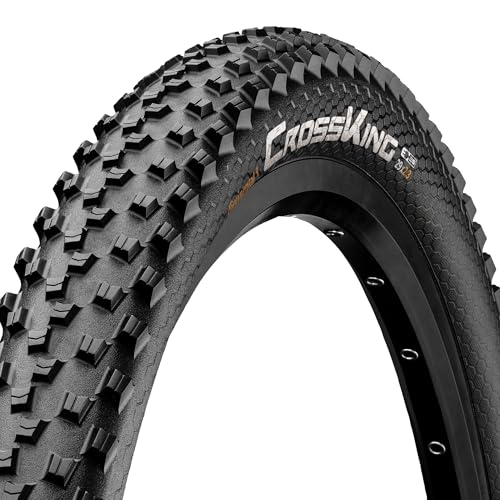
The Cross King is a versatile competition and trail tire, sure footed in turns

Lighter, faster and with stronger sidewalls. The new standard in road tubeless ready technology. Ride faster, more comfortable, and with increased puncture protection. Tubeless Ready.

The Grand Prix 5000 AllSeason TR tire has been designed to keep you protected from the elements.
Frequently Asked Questions
What Does TT Mean for Tires?
TT means a Tube Type tire that requires an inner tube. You perform tube installation and valve-stem seating during tire maintenance. You handle bias-ply characteristics and expect more disassembly and careful sealing than with tubeless designs.
What Is Tt and Tl?
You are choosing between TT and TL. TT tube types need inner tubes and more tire maintenance. TL tubeless seals to the rim, reducing maintenance and puncture fuss. So you pick TT for vintage or TL for modern convenience.
Conclusion
Think of “TT” as the old-fashioned heartbeat of your tire—a tube held within a rugged shell. You choose TT when classic fitment, off-road resilience, or simple roadside repairs matter more than weight savings or puncture resistance. Inspect sidewalls for the marking, match size and pressure, and follow proper mounting and patching steps. Use the 7-point checklist to confirm compatibility. When in doubt, replace with the correct TT or switch to TL for modern performance.

Related Articles
What Does THE P Stand For on a Tire? Full Meaning Explained
I’ll explain what the “P” on a tire really means and why it could change how you choose your next set.
Read More
How to Use a Tubeless Tire Repair Kit: Complete Field Guide
Learn how to fix tubeless tire punctures fast with the right kit, because one small mistake can leave you stranded on the trail.
Read More
How to Tell a Tire’s Diameter: Easy Guide to Reading Tire Size
Want to decode tire sidewall numbers and find the right diameter, but wonder what those hidden digits really mean?
Read More