
How Tire Pressure Affects Handling in a RAV4

Proper tire pressure can change how your Toyota RAV4 steers, brakes, rides, and wears its tires. The right number is not a guess or the maximum PSI printed on the tire sidewall. For the safest handling, check the cold tire pressure listed on your RAV4’s driver-side door-jamb Tire and Loading Information Label or in the owner’s manual, then keep all tires at that specification.
Quick Answer
Tire pressure affects RAV4 handling by changing how much tire tread contacts the road. Underinflated tires can feel slow, soft, and unstable, while overinflated tires can feel harsh and reduce grip. Use the cold PSI on the driver-side door-jamb label, not a universal number.
Key Takeaways
- Many RAV4 models use tire pressures in the low-to-mid 30s PSI, but your exact target is the cold PSI on the driver-side door-jamb label.
- Low tire pressure can make steering feel sluggish, increase tire heat, wear the tread edges, and reduce stability.
- Too much pressure can make the ride harsh, reduce the tire’s contact patch, and wear the tread center faster.
- Cold weather can lower pressure by about 1–2 PSI for every 10°F drop, so check more often during seasonal changes.
- TPMS is a warning system, not a replacement for checking pressure with a gauge.
At a Glance
| Time Required | 5–10 minutes |
| Difficulty | Easy |
| Tools Needed | Accurate tire pressure gauge, air compressor or tire inflator, and valve caps |
| Cost | Usually free if you own a gauge and inflator; a basic gauge is commonly inexpensive, and some service stations charge a small fee for air |
How Tire Pressure Influences RAV4 Handling and Stability

Your RAV4’s tires are the only parts of the vehicle touching the road, so air pressure has a direct effect on traction, steering response, braking feel, ride comfort, and tire wear. Correct cold tire pressure helps the tread sit on the pavement the way Toyota intended, giving the vehicle a stable contact patch and predictable steering.
When the tires are underinflated, the sidewalls flex more than they should. That can make the RAV4 feel heavy, vague, or slow to respond when changing lanes or cornering. Underinflation can also create extra heat, increase edge wear, and raise the risk of tire damage.
When the tires are overinflated, the center of the tread can carry too much of the load. That can make the ride feel stiff, reduce grip on rough or wet pavement, and increase center tread wear. A small pressure difference may not feel dramatic, but repeated driving with the wrong PSI can reduce comfort, handling consistency, and tire life.
The best handling target is not the highest PSI your tire can hold. It is the cold tire pressure Toyota specifies for your exact RAV4, tire size, and load setup.
[Products Worth Considering]

This portable cordless tire inflator delivers up to 160 PSI with fast 17 L/min airflow to help you quickly top up tires and get back on the road. It features dual power mode, running on a 21V rechargeable battery or a 12V DC adapter for convenient roadside use. An automatic shut-off with digital pressure gauge helps prevent overinflation, and a built-in LED light improves visibility in low-light conditions.

The JACO FlowPro Tire Inflator measures, inflates, and airs down tires up to 100 PSI with battery-free operation and ±2% accuracy after calibration. It features a glowing pressure dial for night visibility, a heavy-duty steel build with a hybrid hose, and a precision push-to-inflate thumb trigger. The patented Lightning Air Chuck locks on for a secure seal, and the kit includes quick-connect hardware for easy inline use with your air compressor.

This portable cordless tire inflator delivers fast, efficient inflation for cars, motorcycles, bikes, and sports balls with a digital pressure gauge. Use the one-click PSI preset with auto shut-off for accurate, hands-free topping to your target pressure up to 150 PSI. It’s compact and rechargeable with a built-in emergency LED light plus valve adapters and accessories for quick, ready-to-go use.
The Recommended Tire Pressure for Your Toyota RAV4
Many Toyota RAV4 models use a recommended cold tire pressure in the low-to-mid 30s PSI range, but the exact number can vary by model year, trim, tire size, drivetrain, and market. The most reliable source is your Toyota owner’s manual tire inflation section and the Tire and Loading Information Label on the driver-side door jamb.
Look for a label that lists the original tire size and the recommended cold inflation pressure for the front and rear tires. Some RAV4 trims use tire sizes such as 225/65R17, 225/60R18, or 235/55R19, and the recommended PSI may not be identical across every setup.
Warning: Do not use the maximum PSI printed on the tire sidewall as your normal driving pressure. That sidewall number is the tire’s maximum limit, not the RAV4’s recommended operating pressure.
Where to Find the Correct RAV4 PSI
- Driver-side door jamb: Open the driver’s door and read the Tire and Loading Information Label.
- Owner’s manual: Use the tire inflation pressure section for your exact model year.
- Toyota dealer or tire professional: Ask for guidance if you changed tire size, load rating, wheel size, or tire type.
Should You Change PSI for Better Handling?
For normal road driving, stay with Toyota’s cold tire pressure specification. Raising pressure above the placard number may make steering feel sharper at first, but it can also reduce ride comfort and grip. Lowering pressure below the placard can make the RAV4 feel softer, but it can also increase heat, tire wear, and instability.
Note: If you are towing, carrying heavy cargo, driving off-road, or using non-original tires, check the owner’s manual and tire manufacturer guidance before changing pressure.
Checking and Adjusting Tire Pressure in Your RAV4
For the most accurate reading, check your RAV4 tire pressure when the tires are cold. The National Highway Traffic Safety Administration defines cold tires as tires that have not been driven on for at least three hours. Toyota recommends checking tire inflation pressure regularly, and its owner guidance notes that checking every two weeks is recommended.
- Park on level ground. Wait at least three hours after driving, or check first thing in the morning before the tires heat up.
- Find the correct cold PSI. Read the Tire and Loading Information Label on the driver-side door jamb.
- Remove the valve cap. Keep it somewhere clean so dirt does not enter the valve stem.
- Press the gauge firmly onto the valve stem. A quick hiss is normal, but a long hiss means the gauge is not sealed correctly.
- Compare the reading to the door-jamb PSI. Add air if the tire is low. Release a small amount of air if the tire is high.
- Recheck after adjusting. Do not rely on one quick reading after adding air.
- Replace the valve cap. Repeat the process for all four tires and the spare tire if your RAV4 is equipped with one.
Pro Tip: Keep a dedicated tire gauge in your RAV4. Gas-station gauges can be worn or inaccurate, and a small digital or dial gauge makes pressure checks faster and more consistent.
What If the Tires Are Hot?
Tire pressure rises after driving because the air inside the tire heats up. If you must add air while the tires are warm, add enough to avoid driving on a seriously underinflated tire, then recheck and fine-tune the pressure when the tires are cold. Do not bleed a warm tire down to the cold placard number, because it may become underinflated once it cools.
How Seasonal Changes Affect RAV4 Tire Pressure

Seasonal temperature changes can make your RAV4’s tire pressure move up or down even when there is no puncture. According to Goodyear’s cold-weather tire pressure guidance, tires can lose about 1–2 PSI for every 10°F drop in temperature. That is why a tire pressure warning light often appears during the first cold mornings of fall or winter.
The fix is simple: check the tires cold and inflate them to the door-jamb PSI. Do not automatically add an extra 2–3 PSI above Toyota’s recommended cold pressure unless your owner’s manual, tire manufacturer, or a qualified tire professional tells you to do so for a specific tire/load situation.
Warm weather can have the opposite effect. After highway driving or on hot afternoons, the pressure reading may be higher than the cold placard number. That does not always mean the tire was overinflated when cold. Let the tires cool, then recheck before releasing air.
TPMS Warnings: What Your RAV4 Is Telling You
Your RAV4’s Tire Pressure Monitoring System helps warn you when tire pressure becomes seriously low, but it should not replace manual checks. Toyota explains that if the TPMS senses seriously low pressure, the low tire pressure icon appears, and if the indicator stays on, you should check all tires and refill, repair, or replace any tire below the proper pressure.
- Solid TPMS light: Check all tires with a gauge as soon as it is safe. Inflate low tires to the cold placard PSI.
- Light on cold mornings, then off later: Pressure may be borderline low and rising as the tires warm. Check cold pressure, even if the light turns off.
- Flashing light that stays on: This can indicate a TPMS malfunction. Check pressure manually and schedule service if the warning continues.
- Light after tire rotation or replacement: The system may need relearning, registration, or sensor service depending on model year and repair work.
Note: TPMS may not warn you until pressure is already significantly low. A tire can be underinflated before it looks visibly flat, so use a gauge on a schedule.
Don’t Make These Tire Pressure Mistakes With Your RAV4
Most RAV4 tire-pressure problems come from small habits that seem harmless. Avoid these mistakes to protect handling, tire life, and fuel economy.
- Using the tire sidewall PSI as the target: The sidewall number is a maximum tire limit, not your RAV4’s recommended pressure.
- Checking only after driving: Hot tires read higher. Use cold readings whenever possible.
- Relying only on TPMS: TPMS is useful, but it is not a routine maintenance tool.
- Ignoring one low tire: One tire that repeatedly loses pressure may have a nail, bead leak, valve-stem issue, or wheel damage.
- Forgetting the spare: If your RAV4 has a spare, check it too. A flat spare is not helpful during a roadside emergency.
- Changing tire size without checking pressure guidance: Different tire sizes and load ratings can require different inflation guidance.
[Products Worth Considering]

Adam’s Pro Tire Hex Grip applicators are molded foam sponges designed for precise, even tire dressing application. The ergonomic grip helps you spread product without overapplying, reducing sling that can splash onto paint and helping keep your hands clean during wheel and trim detailing. They’re durable, washable, and reusable for repeated detailing sessions.

Upgrade your tires with authentic 40mm caliber bullet-shaped stem caps designed to help keep inflation consistent and secure. The patented insert helps protect TPMS and the lacquer coating resists tarnishing for a stylish look. Easy to install on standard Schrader valve stems, these caps fit cars, trucks, SUVs, motorcycles, BMX and bicycles.
Tire Pressure Symptoms and Quick Fixes
| Symptom | Likely Tire-Pressure Issue | What to Do |
| Steering feels slow or heavy | Possible underinflation | Check cold PSI and inflate to the door-jamb specification. |
| Ride feels harsh or bouncy | Possible overinflation | Recheck cold PSI and release air only if above the placard number. |
| Outer tread edges wearing faster | Often linked to underinflation or alignment issues | Set pressure correctly and inspect alignment if wear continues. |
| Center tread wearing faster | Often linked to overinflation | Adjust to cold placard PSI and rotate tires as recommended. |
| One tire keeps losing air | Possible puncture, valve leak, bead leak, or wheel issue | Do not keep topping it off indefinitely; have the tire inspected. |
How Tire Pressure Affects Fuel Economy, Braking, and Tire Life
Handling is only one part of the tire-pressure story. The NHTSA TireWise tire-safety guide says proper tire pressure affects safety, tire durability, and fuel consumption. When pressure is low, the tire flexes more and creates extra rolling resistance. When pressure is too high, the tire may not use the tread evenly.
Correct pressure helps the RAV4 maintain predictable braking and cornering, but it cannot make worn-out tires safe. Check tread depth, look for cracks or bulges, and inspect for uneven wear whenever you check pressure. If the treadwear indicators are showing, or if a tire has visible damage, pressure adjustment is not a substitute for replacement or professional inspection.
Frequently Asked Questions
How does tire pressure affect RAV4 handling?
Tire pressure affects the tire’s contact patch, sidewall flex, steering response, and stability. Low pressure can make the RAV4 feel slow or unstable, while high pressure can make the ride harsh and reduce grip. Correct cold PSI gives the most predictable handling.
Does tire pressure affect handling?
Yes. Tire pressure affects how the tread meets the road. Underinflation can cause sluggish steering and extra heat, while overinflation can reduce comfort and grip. The best handling balance comes from using the manufacturer’s cold tire pressure specification.
What PSI should Toyota RAV4 tires be?
Many RAV4 models are in the low-to-mid 30s PSI range, but the correct number depends on your model year, trim, tire size, drivetrain, and market. Use the cold PSI listed on the driver-side door-jamb Tire and Loading Information Label.
Should I inflate my RAV4 tires to 40 PSI for better handling?
No, not for normal road driving unless Toyota or a qualified tire professional specifically recommends it for your exact setup. Use the cold PSI on the door-jamb label. Overinflation can make the ride harsh and may reduce grip.
Why does my RAV4 tire pressure light come on in cold weather?
Cold air lowers tire pressure. A 10°F temperature drop can reduce tire pressure by about 1–2 PSI, which may trigger the TPMS light if the tires were already close to the warning threshold. Check the tires cold and inflate to the door-jamb PSI.
Can I rely on the RAV4 TPMS instead of checking tire pressure?
No. TPMS is a warning system for significantly low pressure or system faults. It does not replace routine checks with an accurate gauge. Check pressure regularly, especially before long trips and during large temperature swings.
Conclusion
Maintaining the right tire pressure is one of the simplest ways to keep your RAV4 stable, comfortable, and predictable on the road. Use the driver-side door-jamb label as your final PSI guide, check pressure when the tires are cold, and treat TPMS as a backup warning rather than your only maintenance tool. With regular checks, your RAV4 will steer better, brake more confidently, wear tires more evenly, and handle seasonal temperature changes with fewer surprises.
Sources
- Toyota Owners — RAV4 Tire Inflation Pressure — backs the door-jamb label, owner’s manual, and routine tire-pressure-check guidance.
- Toyota Support — How TPMS Works — backs TPMS warning-light guidance.
- NHTSA TireWise Tire Safety Guide — backs cold-tire checks, placard PSI, TPMS limits, tire pressure safety, tire wear, and fuel-consumption guidance.
- Goodyear — Tire Pressure in Cold Weather — backs the 1–2 PSI change per 10°F temperature shift.
- Toyota Owners — RAV4 Tires — backs treadwear, tire condition, and replacement-inspection guidance.

Related Articles

Toyota RAV4 TPMS Reset: Easy Steps That Work
Unlock the secrets to resetting your Toyota RAV4's TPMS effortlessly—discover the essential steps to ensure your tires are always safe.
Read More
Toyota RAV4 Tire Rotation: DIY Steps & Pattern
Take control of your Toyota RAV4's tire maintenance with our simple DIY rotation guide—discover the best steps for optimal performance and longevity!
Read More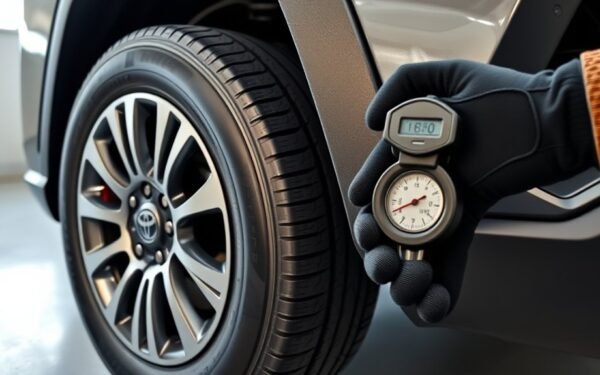
Mix Tire Brands on a Toyota RAV4? Expert Guide
Keeping your RAV4 safe? Learn when mixing tire brands risks traction, ABS/TCS and AWD damage — and what exact matches you must insist on.
Read More