
Toyota RAV4 Wheel Offset Explained: A Guide for Fitment
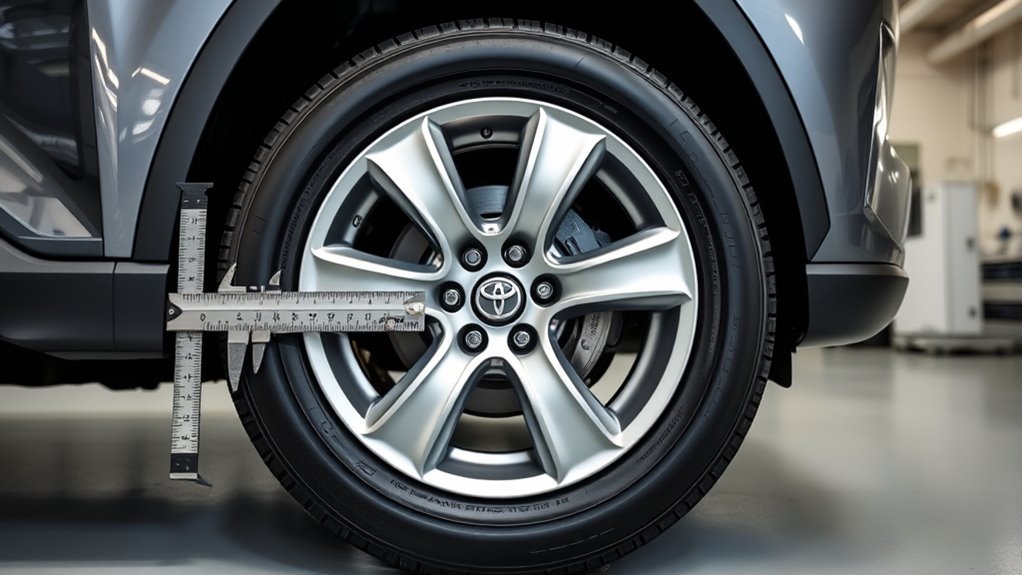
Understanding wheel offset is one of the easiest ways to avoid rubbing, poor stance, and unsafe wheel fitment on a Toyota RAV4. The right offset keeps the wheel centered in the wheel well, protects suspension clearance, and gives the SUV the look you want without pushing the tires too far inward or outward.
Quick Answer
For most 2019–2025 Toyota RAV4 wheel upgrades, staying close to the factory-style offset range in the mid-30s to low-40s is the safest choice. A mild +30 mm setup can work on many builds, but wider wheels and taller tires must be test-fitted for fender, liner, suspension, and full-lock steering clearance.
Key Takeaways
- Lower positive offset pushes the wheel outward. For example, +30 mm sits farther out than +38 mm when wheel width is the same.
- Offset is only one part of fitment. Wheel width, tire size, bolt pattern, center bore, load rating, and alignment all matter.
- Very aggressive offsets can cause rubbing. They may also increase steering effort, road spray, and stress on wheel bearings.
- Always verify your exact RAV4 year and trim. The 2026 RAV4 starts a new generation, so do not assume every 2019–2025 fitment carries over.
Understanding Wheel Offset for Better Fitment
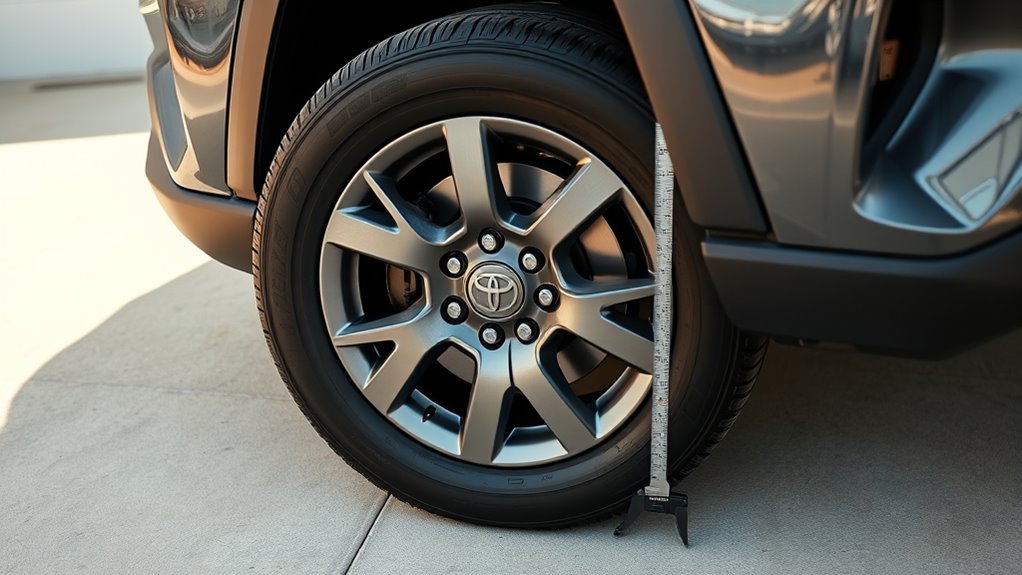
Wheel offset is the distance between the wheel’s centerline and the hub-mounting surface. It is measured in millimeters. A wheel with more positive offset tucks farther inward, while a wheel with less positive offset moves farther outward. Tire Rack explains offset as a key measurement that affects wheel position, performance, and appearance, and Discount Tire also notes that offset and backspacing work together to determine how a wheel fits in the wheel well: Tire Rack wheel offset guide and Discount Tire offset and backspacing guide.
That detail matters on the RAV4 because small offset changes can become noticeable once you add a wider wheel or taller all-terrain tire. A wheel that sits too far inward can contact suspension components. A wheel that sits too far outward can rub the fender liner, throw more road spray down the side of the vehicle, or require trimming.
Note: Offset should always be compared against your current wheel. A +30 mm wheel is still a positive-offset wheel, but it sits farther outward than a +38 mm wheel of the same width.
[Products Worth Considering]

These M14x1.5 closed-end chrome lug nuts are a one-piece replacement designed for secure fitment on compatible GM, Ford, and select Chrysler/Dodge models. Featuring a 60-degree conical seat and anti-rust chrome plating, they help resist corrosion and maintain a bright look for everyday driving. Built for long-term durability, they include OEM-style part references and are backed by 12 months of support.

Upgrade your wheels with MIKKUPPA M12x1.5 mag seat lug nuts built for secure, corrosion-resistant performance. These closed-end chrome lug nuts are a direct replacement for select Toyota models, including Camry, Corolla, RAV4, Sienna, Avalon, Highlander, Matrix, Venza, and Prius. Triple-chromium plating and cold-forged, heat-treated steel help deliver strength for daily driving and replacement needs.

Upgrade your wheels with MIKKUPPA closed-end lug nuts designed for reliable fit and corrosion resistance. The one-piece, cold-forged and heat-treated steel construction helps resist rust and stripping, while the integrated finish delivers a durable black appearance. Built to OEM standards with a conical 60-degree seat, these nuts provide a secure solution for compatible Ford, Honda, Jeep, and Chevrolet models.
Positive vs. Negative Offset: What You Need to Know
Most modern RAV4 wheels use positive offset. That means the mounting surface is toward the outer face of the wheel. A positive offset helps keep the wheel under the fender and close to Toyota’s intended steering geometry.
Zero offset means the mounting surface is exactly on the wheel centerline. Negative offset means the mounting surface is behind the centerline, pushing the wheel outward. Negative-offset wheels are common on some trucks and lifted off-road builds, but they are usually too aggressive for a stock-height RAV4 unless the owner is prepared for trimming, extra poke, and possible clearance issues.
Types of Wheel Offset
- Positive offset: The mounting pad is toward the outside face of the wheel. This is the normal layout for most RAV4 fitments.
- Zero offset: The mounting pad is centered. This usually pushes a RAV4 wheel much farther outward than stock.
- Negative offset: The mounting pad is toward the inner side of the wheel. This creates a wide stance but can cause rubbing and added stress.
Impact on Handling
Offset affects more than appearance. It changes track width, scrub radius, steering feel, and bearing load. A mild move outward can make the stance look better and may improve tire clearance on the inside edge. A large move outward can make steering heavier, increase kickback over bumps, and make the vehicle more likely to spray dirt along the doors.
The best goal for a daily-driven RAV4 is simple: keep the wheel close enough to factory geometry that the SUV still tracks, steers, brakes, and wears tires normally.
Fitment Considerations
Before buying wheels, check these fitment specs:
| Fitment item | Why it matters |
|---|---|
| Offset | Controls how far inward or outward the wheel sits. |
| Wheel width | A wider wheel adds width to both the inner and outer edges, even if offset stays the same. |
| Bolt pattern | Many 2019–2025 RAV4 setups use 5×114.3 mm, but always verify your exact model. |
| Center bore | Toyota hub-centric fitment commonly uses a 60.1 mm hub bore. Universal aftermarket wheels may need hub-centric rings. |
| Load rating | The wheel and tire must be rated for the vehicle’s weight and intended use. |
| Lug torque | Toyota lists 76 ft-lbf, or 103 N·m, for the 2026 RAV4 Hybrid wheel nuts in the flat-tire procedure: Toyota Owners manual. |
How Does Wheel Offset Impact Your RAV4?
Changing offset changes where the tire sits in the wheel well. That affects four major areas:
- Outer poke: Lower positive offset pushes the tire closer to the fender edge.
- Inner clearance: Lower positive offset can create more space between the tire and suspension on the inside.
- Steering feel: Big offset changes can alter scrub radius and make the steering feel heavier or more nervous over bumps.
- Tire wear and alignment: Poor fitment can make rubbing worse and may lead to uneven wear if alignment is not corrected after suspension or tire changes.
Here is a practical example. If you move from a 17×7 wheel with a +38 mm offset to a 17×7.5 wheel with a +30 mm offset, the wheel does not move outward by only 8 mm. Because the new wheel is also wider, the outer lip sits roughly another 6 mm outward from width alone. The total outer change is about 14 mm, or a little over half an inch, before tire sidewall shape is considered.
Pro Tip: When comparing two wheels, compare both width and offset. Offset alone does not tell the whole story.
Choosing the Right Wheel Offset for Your RAV4 Model
The safest offset for your RAV4 depends on your model year, trim, tire size, ride height, and how much tire poke you want. Toyota identifies the 2019 RAV4 as a TNGA-K-based fifth-generation model, and Toyota identifies the 2026 RAV4 as the sixth generation with HEV and PHEV powertrains: 2019 Toyota RAV4 newsroom release and 2026 Toyota RAV4 newsroom page.
That means a fitment that works on a 2019–2025 RAV4 should not automatically be treated as proven on a 2026+ RAV4. The new-generation vehicle needs exact trim verification.
Offset Impact on Handling
A stock-like offset usually gives the most predictable daily driving feel. A mild lower offset can give a more planted stance, but going too aggressive can create:
- more steering effort;
- more fender-liner contact at full lock;
- more road spray and dirt along the doors;
- possible wheel-bearing and suspension stress over time;
- a greater chance of tire poke outside local inspection or road-safety rules.
Recommended Offsets by Generation
| RAV4 model years | Best offset approach | Notes |
|---|---|---|
| 2019–2025 | Stay close to factory-style fitment in the mid-30s to low-40s for the safest daily setup. Mild +30 mm wheels can work on many builds when wheel width and tire size are reasonable. | Common aftermarket choices include 17×7.5 +30 wheels, but full-lock and compression checks are still required. |
| 2026+ | Verify by exact trim, wheel size, and tire size before assuming compatibility. | Toyota identifies 2026 as the sixth-generation RAV4, so earlier fitment examples should be treated as guidance only. |
| 2013–2018 and older | Use year-specific fitment data instead of applying 2019+ recommendations. | Older generations have different body, suspension, and clearance limits. |
Common Wheel Offset Ranges for Toyota RAV4 Vehicles
Use these offset ranges as a practical starting point, not as a guarantee:
| Offset style | Typical result | Best for |
|---|---|---|
| +38 to +45 | Stock-like or slightly tucked | Daily driving, minimal rubbing risk, OEM-style handling |
| +30 to +37 | Mildly wider stance | Subtle flush look, moderate all-terrain tire upgrades |
| +18 to +29 | Noticeable poke | Owners willing to test-fit carefully and possibly trim liners or mud flaps |
| 0 or negative offset | Very aggressive outward position | Usually not recommended for a stock-height RAV4 |
Warning: Do not choose wheels by offset alone. A low-offset wheel with extra width and a taller tire can rub even if another owner reports that the same offset worked on a different tire or trim.
Benefits of Upgrading to Aftermarket Wheels
Aftermarket wheels can be a smart upgrade when they solve a specific fitment goal. They can help you fit a preferred tire size, increase sidewall height for rough roads, improve wheel strength for trail use, or create a more aggressive stance.
For example, some RAV4 owners look at 17×7.5 +30 wheels such as the Method MR701. A listed 17×7.5 +30 MR701 in 5×114.3 has a 73 mm hub bore, 5.43 inches of backspacing, and a universal 5×114.3 application, so the buyer must still confirm hub-centric rings, lug hardware, and vehicle fitment before purchase: Method MR701 17×7.5 +30 specifications.
Just remember that aftermarket wheels are not automatically lighter or more efficient. A lighter wheel can reduce rotating weight, but a heavier all-terrain tire can cancel that out and may add road noise, braking distance, and fuel use.
When Stock Wheels Are Enough — and When They Limit You
There is nothing wrong with keeping stock RAV4 wheels. For commuting, family use, winter tires, and normal highway driving, the factory setup is usually the safest and quietest choice.
Stock wheels may become limiting only when your goal changes. You may want aftermarket wheels if you need:
- More tire sidewall: A 17-inch wheel can give more sidewall than larger factory wheels.
- A different tire size: Some all-terrain sizes need more inner clearance or a different wheel width.
- Stronger trail-focused construction: Some wheels are built for harder off-road use than basic factory wheels.
- A wider stance: Lower positive offset can move the tire outward for a more flush look.
If you are happy with factory tire size, ride quality, and stance, upgrading wheels is optional rather than necessary.
[Products Worth Considering]

These aluminum alloy tire valve stem caps with an O-ring seal help protect valve stems from corrosion while adding a clean, stylish look to your vehicle. The universal fit works across cars, trucks, motorcycles, bicycles, and more, making them an easy upgrade for everyday driving and off-road use. Installation is quick, and the included four-pack keeps all your tires dressed and protected.

Upgrade your Toyota’s wheels with durable aluminum alloy valve stem caps that help protect valve cores from corrosion and direct exposure to road grime, clay, water, and snow. Rubber rings improve sealing to help prevent air leakage and maintain stable tire pressure for safer driving. These caps are easy to install or remove without tools and add a unique, stylish look to your car.

Upgrade your 2024-2026 Tesla Model 3 Highland with REEVAA all-weather mud flaps designed for seamless fit along the original body lines. The set of four delivers strong splash protection against mud, gravel, and road debris while using OEM-grade durable materials. Installation is non-destructive with original hole positions and snap-in clips, and the aerodynamic design helps minimize impact on efficiency.
Essential Tips for Achieving Proper Fitment and Clearance for Your RAV4
At a Glance
| Time Required | 30–60 minutes for measurement and clearance checks |
| Difficulty | Moderate for DIY measuring; professional installation recommended for final fitment |
| Tools Needed | Tape measure, straight edge, torque wrench, jack stands, tire pressure gauge |
| Cost | Free for planning; varies for wheels, tires, hub rings, TPMS, mounting, balancing, and alignment |
Use this checklist before ordering wheels:
- Confirm your current wheel size and tire size. Check the tire sidewall, door-jamb tire placard, and wheel markings.
- Compare the new width and offset. Estimate both inner clearance and outer poke.
- Verify bolt pattern and center bore. A universal 73 mm wheel on a Toyota hub commonly needs quality hub-centric rings.
- Check tire load index. The tire must meet or exceed the load requirement for your RAV4.
- Check wheel load rating. Do not install wheels that are under-rated for vehicle weight or intended use.
- Test full steering lock. Turn left and right while moving slowly forward and backward.
- Check compression clearance. Rubbing may appear only when the suspension compresses over dips or driveways.
- Retorque after installation. Use the Toyota torque value for your model and recheck after the wheels settle.
All-terrain tires such as the BFGoodrich All-Terrain T/A KO2 are popular for off-road-style RAV4 builds, but tire dimensions vary by exact size and load range. Always check the tire maker’s specification page before ordering: BFGoodrich All-Terrain T/A KO2.
Real-World Experiences With Wheel Upgrades
RAV4 owners often look for a setup that gives a slightly wider stance without turning the vehicle into a full custom build. A common pattern is a 17-inch wheel with a mild lower offset and an all-terrain tire that is taller than stock.
The key lesson from real-world fitment is not that one size works for everyone. It is that the same size can behave differently depending on tire brand, tread shoulder shape, mud flaps, alignment, lift height, and trim. Two tires with the same printed size can have different actual widths and shoulder profiles.
The safest RAV4 wheel upgrade is not the most aggressive offset. It is the setup that clears at full lock, clears under suspension compression, matches the hub and bolt pattern, and keeps the vehicle easy to drive every day.
Maintenance Tips for Modified Wheel Setups
After changing wheel offset, treat the first few weeks as a shakedown period. Listen for rubbing, check for tire marks on liners, and inspect lug nuts after the wheels have been driven.
- Torque correctly: Use a calibrated torque wrench and tighten in a star pattern. For the 2026 RAV4 Hybrid, Toyota lists 76 ft-lbf, or 103 N·m, in the flat-tire procedure.
- Recheck torque: Recheck after the first short drive and again after about 50–100 miles.
- Inspect inner and outer clearance: Look for shiny rub marks on liners, struts, mud flaps, and pinch-weld areas.
- Watch tire wear: Uneven shoulder wear can indicate alignment or pressure issues.
- Keep the wheel wells clean: Wider setups can throw more debris into the liners and door-seal areas.
- Use proper hub rings when needed: If the wheel bore is larger than the Toyota hub, hub-centric rings can help center the wheel correctly.
Frequently Asked Questions
What does +35 offset mean on a rim?
A +35 offset means the wheel’s mounting surface is 35 mm toward the outer face of the wheel from the wheel centerline. On a RAV4, +35 is usually a fairly conservative positive offset, but the final fit still depends on wheel width and tire size.
Is +30 offset good for a Toyota RAV4?
A +30 offset can be a good mild aftermarket choice on many 2019–2025 RAV4 builds, especially with a 17×7.5 wheel. It moves the wheel outward compared with many stock-style offsets, so you still need to check tire width, fender-liner clearance, mud flaps, and full-lock steering.
Will 245/65R17 tires fit a RAV4 without rubbing?
Sometimes, but it is not guaranteed. A 245/65R17 all-terrain tire is taller and wider than many factory RAV4 tire sizes. Fit depends on model year, trim, wheel offset, tire brand, alignment, suspension condition, mud flaps, and whether the vehicle is lifted.
Do I need hub-centric rings for aftermarket RAV4 wheels?
You may need them if the aftermarket wheel’s center bore is larger than the Toyota hub. Many universal 5×114.3 wheels use a larger bore, such as 73 mm. Hub-centric rings help center the wheel on the hub and can reduce vibration when properly installed.
Are negative-offset wheels safe on a stock RAV4?
Negative-offset wheels are usually too aggressive for a stock-height RAV4. They can create heavy poke, rubbing, extra steering effort, and more stress on wheel bearings and suspension parts. A mild positive offset is usually a better choice for daily use.
Conclusion
Choosing the right Toyota RAV4 wheel offset is about balance. A stock-like offset keeps the SUV predictable and comfortable, while a mild lower offset can add stance and create room for certain tire upgrades. The safest setup is the one that matches the bolt pattern, centers correctly on the hub, carries the right load rating, clears at full lock, and keeps Toyota’s handling feel intact.
If you are unsure between two offsets, choose the more conservative option and test-fit before committing to a full wheel-and-tire package. A clean fitment should look good, drive smoothly, and avoid rubbing without relying on guesswork.
Sources
- Tire Rack — What Is Wheel Offset? — supports the offset definition and positive/negative offset explanation.
- Discount Tire — Wheel Offset & Backspacing — supports the relationship between offset, backspacing, and wheel position.
- Toyota USA Newsroom — 2019 RAV4 — supports the TNGA-K platform reference for fifth-generation RAV4.
- Toyota USA Newsroom — 2026 RAV4 — supports the sixth-generation 2026 RAV4 and HEV/PHEV lineup context.
- Toyota Owners — 2026 RAV4 Hybrid flat tire procedure — supports the 76 ft-lbf / 103 N·m wheel nut torque value.
- MAPerformance — Method MR701 17×7.5 +30 specifications — supports the example aftermarket wheel specifications.
[Products Worth Considering]

Monitor tire tread wear with a smart, color-coded depth gauge that shows clear condition ranges at a glance. The bar is range marked for fast, easy readings, helping you maintain safer traction and performance. Each gauge is portable with a pocket clip, and the set includes 20 units for daily use and sharing.

Measure tire tread depth quickly and accurately with this LUMITECO dial gauge that reads in 1/32" increments up to 14/32". The color-coded green/yellow/red zones make it easy to judge tire wear and know when replacement is needed. A rugged, compact design with a protective pouch helps keep the gauge ready for use on cars, trucks, motorcycles, and more.

This professional wheel and rim cleaning brush set lifts brake dust, grime, and dirt with soft, scratch-free microfiber and synthetic wool fibers. The rim brush bends up to 360 degrees for easy access to hard-to-reach areas around spokes, lips, and faces. Ideal for thorough cleaning of car, truck, motorcycle, bicycle, RV, and more wheel and tire surfaces.

Related Articles

Toyota RAV4 TPMS Reset: Easy Steps That Work
Unlock the secrets to resetting your Toyota RAV4's TPMS effortlessly—discover the essential steps to ensure your tires are always safe.
Read More
Toyota RAV4 Tire Rotation: DIY Steps & Pattern
Take control of your Toyota RAV4's tire maintenance with our simple DIY rotation guide—discover the best steps for optimal performance and longevity!
Read More
Mix Tire Brands on a Toyota RAV4? Expert Guide
Keeping your RAV4 safe? Learn when mixing tire brands risks traction, ABS/TCS and AWD damage — and what exact matches you must insist on.
Read More