
Is General a Good Tire Brand? Honest Review & Comparison
General Tire is a good brand for many drivers who want reliable daily-use tires, useful warranty coverage, and options for cars, crossovers, trucks, off-road driving, and winter weather. The strongest choice depends on the exact model, however. A quiet touring tire such as the AltiMAX RT45 serves a very different purpose from a Grabber X3 mud-terrain tire.
Quick Answer
Yes, General is a good mainstream tire brand for drivers who value sensible pricing, broad model choice, and useful warranty benefits. Its current lineup includes touring, all-weather, performance, truck, off-road, and winter tires. Compare exact models and sizes, because performance and mileage coverage vary across the range.
Key Takeaways
- General is best viewed as a value-oriented mainstream brand rather than a bargain-only or premium-luxury brand.
- The current AltiMAX RT45 replaces the older RT43 as General’s main all-season touring tire for passenger cars and crossovers.
- Select models carry mileage warranties of up to 75,000 miles, but a mileage warranty is not a promise of actual tire life.
- General’s 45-day satisfaction program is generally an eligible exchange for other General tires, not an unrestricted cash refund.
- Choose by exact model, size, load rating, climate, and road use rather than relying on the brand name alone.
Is General Tire a Good Brand?
Yes. General Tire is a credible choice for daily driving, highway use, all-weather travel, winter conditions, and several types of truck or SUV use. The brand was founded in Akron, Ohio, in 1915, and Continental acquired General Tire in 1987.
That ownership gives General access to a large global tire company, but it does not mean every General tire performs like every Continental-branded tire. Each model has its own tread design, compound, warranty, size range, load capacity, and intended use.
The most accurate verdict is that General makes several competitive tires for drivers who prioritize practical features and reasonable total cost. It is not automatically the best brand for every vehicle, and its more aggressive truck tires should not be judged by the same standards as its touring tires.
| Area | General Tire Verdict |
|---|---|
| Everyday value | A strong reason to consider the brand, especially when the exact model is priced below a comparable competitor. |
| Touring and commuting | The AltiMAX RT45 and Grabber H/T cover common car, crossover, SUV, and light-truck needs. |
| Snow and winter | General offers all-weather and dedicated winter models, including tires carrying the Three-Peak Mountain Snowflake symbol. |
| Off-road selection | The Grabber range includes highway-terrain, all-terrain, and mud-terrain choices. |
| Warranty | Useful coverage is available, but eligibility, mileage, exclusions, and required maintenance vary. |
Note: This evaluation is based on General’s current U.S. product information, published warranty terms, model categories, and federal tire-safety guidance. It does not assume that every General tire performs alike or claim first-hand testing of every model.
[Products Worth Considering]

MORNYRAY universal tire covers help protect RV, truck, SUV, trailer, and camper tires from sun, rain, and snow with waterproof, anti-UV fabric and a soft inner lining. Elasticized bands and windproof buckle design help keep covers securely in place for easy on and off use. The set includes a storage bag for convenient handling when not in use.

The 22800 wheel stud installer makes replacing wheel studs quick and secure, saving time and effort during tire service. It uses a ratchet or impact wrench to pull new studs firmly into place, helping when existing studs are too long. Compatible with most automotive wheels and light-duty truck wheel studs, it’s designed for easy, tool-assisted installation.

Protect your spare wheel with a waterproof, dustproof tire cover made to resist sun and harsh weather. The elastic band design makes it easy to install and remove without tools, while reinforced stitching helps it keep its shape. Available in multiple sizes, it fits common RV, trailer, Jeep, SUV, and truck spare tires.
What Makes General Tire Stand Out?
Broad Range of Tire Types
General’s current catalog covers more than ordinary passenger-car tires. The lineup includes touring, ultra-high-performance all-season, all-weather, highway-terrain, all-terrain, mud-terrain, and dedicated winter products. That makes it possible to stay within the brand while choosing a tire matched to a specific type of driving.
The brand’s main categories include:
- Touring tires for comfort, low noise, commuting, and highway driving.
- All-weather tires for year-round use with stronger certified snow capability than an ordinary all-season tire.
- Performance tires for quicker steering response and stronger dry or wet handling.
- Highway-terrain tires for crossovers, SUVs, and pickups that spend most of their time on pavement.
- All-terrain tires for mixed pavement, gravel, dirt, light trails, and snow.
- Mud-terrain tires for drivers who prioritize traction on mud, rock, and rough trails.
- Winter tires with compounds and tread designs intended for cold, snow, and ice-covered roads.
Useful Warranty Benefits
General’s Shield+ Advantage Plan includes several forms of coverage for eligible replacement passenger and light-truck tires. Depending on the tire and claim, these may include a limited manufacturer warranty, mileage coverage, a 45-day customer-satisfaction trial, and 12-month road-hazard coverage.
These programs add value, but they are conditional. The original receipt, proof of purchase, tire condition, maintenance history, authorized-dealer requirements, treadwear, vehicle use, and cause of damage may all affect eligibility.
Wear-Monitoring Features on Selected Models
Some General tires include a Replacement Tire Monitor and Visual Alignment Indicators. On the AltiMAX RT45, these visual features are intended to help drivers notice replacement wear and possible alignment-related wear patterns.
They are helpful inspection aids, but they do not replace monthly pressure checks, tread inspection, rotation, balancing, or professional alignment service.
Where General Tires Fall Short
No tire brand is strong in every category, and General has several limitations worth considering before you buy.
- Performance varies by model. A positive experience with an AltiMAX touring tire does not predict how a Grabber mud-terrain tire will feel on the highway.
- Mileage coverage varies by size and speed rating. Two versions of the same tire line may not carry identical warranty mileage.
- Manufacturer comparisons may use internal testing. When General describes a product as best in class, read the footnote to see the tested size, competitors, and conditions.
- Aggressive truck tires involve trade-offs. Added tread depth and off-road construction may bring more weight, firmer road manners, or greater noise than a highway-oriented tire.
- Not every model fits every vehicle. Availability depends on wheel diameter, width, load index, speed rating, and other fitment details.
- General may not lead every premium category. A higher-priced competitor may offer better results in a particular independent test, size, or performance area.
A 60,000- or 75,000-mile warranty is conditional coverage, not a guarantee that every driver will receive that many miles.
Current General Tire Models to Know
The older AltiMAX RT43 developed a strong following, but shoppers looking for a current replacement should start with the AltiMAX RT45. General’s present lineup also contains distinct choices for all-weather, performance, highway, off-road, and winter use.
| Model | Type | Best For | Key Details |
|---|---|---|---|
| AltiMAX RT45 | All-season touring | Commuting, highway travel, passenger cars, and crossovers | Designed for wet and dry handling, light-snow traction, low noise, and long wear. Select fitments carry up to a 75,000-mile limited warranty. |
| AltiMAX 365 AW | All-weather touring | Drivers who want one year-round set with stronger snow capability | Carries the Three-Peak Mountain Snowflake symbol and a 60,000-mile limited warranty. |
| G-MAX AS-07 | Ultra-high-performance all-season | Sportier cars, crossovers, light trucks, and SUVs | Emphasizes responsive all-season handling and carries a 50,000-mile limited warranty. |
| Grabber H/T | Highway-terrain all-season | Crossovers, SUVs, and pickups driven mainly on pavement | Prioritizes road comfort, wet and light-snow traction, durability, and low noise. Select fitments carry up to a 70,000-mile limited warranty. |
| Grabber A/TX | All-terrain | Mixed highway, gravel, trail, and severe-snow use | Carries the Three-Peak Mountain Snowflake symbol, is pinned for studs in supported fitments, and has up to a 60,000-mile limited warranty. |
| Grabber X3 | Mud-terrain | Mud, dirt, rocks, and demanding off-road use | Built around aggressive off-road traction. It is less appropriate than a highway-terrain tire for drivers focused mainly on quiet commuting. |
| Grabber Arctic LT | Dedicated winter light-truck/SUV tire | Cold climates, snow, slush, and ice-covered roads | A studdable 3PMSF winter tire with DuraGen construction. Local laws determine whether and when studs may be used. |
How General Tires Perform in Real-World Driving
There is no single real-world performance result for the whole brand. Ride comfort, noise, wet braking, snow grip, steering response, and tread life depend on the tire line and size.
Daily Driving and Highway Use
For ordinary commuting, the AltiMAX RT45 is the most relevant current General model. It is designed around touring priorities such as low road noise, predictable wet and dry handling, light-snow traction, and long treadwear. The Grabber H/T fills a similar road-focused role for many crossovers, SUVs, and light trucks.
Wet Weather
General highlights wet braking and handling across several current models. Those claims should be read at the model level and with the manufacturer’s test footnotes. A tire’s performance can change with size, tread depth, temperature, vehicle setup, and road surface.
UTQG traction grades can help with a limited comparison, but they do not provide a complete handling score. The NHTSA UTQG guide explains that the traction grade measures straight-line wet braking on specified surfaces and does not measure cornering traction.
Snow and Winter Driving
An ordinary all-season model such as the RT45 is intended for light-snow use, not the same winter conditions as a dedicated snow tire. Drivers who regularly face deeper snow or prolonged cold should compare the AltiMAX 365 AW, AltiMAX Arctic 12, Grabber Arctic, or Grabber Arctic LT, depending on vehicle type and fitment.
The Three-Peak Mountain Snowflake symbol identifies a tire that meets a qualifying severe-snow traction test. It does not make the tire invulnerable on ice, eliminate stopping-distance limits, or replace careful driving.
Off-Road Use
The Grabber A/TX suits drivers who split their time between pavement and unpaved surfaces. The Grabber X3 is the more specialized choice for mud, rock, and difficult trails. Choosing the more aggressive tire simply for appearance can create unnecessary compromises if nearly all driving occurs on highways.
General Tire Warranty and Trial Coverage
General’s warranty package can be a meaningful benefit, but the terms should be read before purchase rather than after a problem appears.
Limited Manufacturer Warranty
Eligible replacement passenger and light-truck tires may receive limited manufacturer coverage for up to 72 months from the original purchase date. During the initial free-replacement period, an eligible tire that becomes unserviceable because of a warrantable condition may qualify for replacement during the first 12 months or first 2/32 inch of treadwear, whichever comes first.
After the free-replacement period, an eligible claim may be handled on a prorated basis. Taxes, shipping, mounting, balancing, or price differences may apply depending on the type and timing of the claim.
Mileage Warranty
Mileage coverage is available only on specified products and fitments. Current examples include up to 75,000 miles for some AltiMAX RT45 sizes, 60,000 miles for the AltiMAX 365 AW, 50,000 miles for the G-MAX AS-07, up to 70,000 miles for the Grabber H/T, and up to 60,000 miles for the Grabber A/TX.
If an eligible tire wears evenly to its treadwear indicators before reaching its warranted mileage, the remedy is generally prorated. The owner must document the original mileage, replacement mileage, proof of purchase, and required rotation history.
45-Day Customer-Satisfaction Trial
The 45-day trial is not an unrestricted full-refund promise. Under the published terms, an eligible original set of General passenger or light-truck tires may be exchanged for another General-brand set of equal or lesser value within 45 days or the first 2/32 inch of treadwear, whichever comes first.
The tires must meet the program’s eligibility rules, the owner must return them through an authorized dealer with proof of purchase, and excluded damage or use can prevent coverage. Winter tires must be exchanged for other qualifying winter tires.
Road-Hazard Coverage
Eligible tires may receive road-hazard replacement coverage during the first 12 months or first 2/32 inch of treadwear, whichever occurs first. Repairable conditions and excluded damage do not qualify for free replacement.
Pro Tip: Keep the original invoice, record the vehicle’s mileage at installation, and save every rotation and alignment receipt. Warranty claims are much easier to support when the required maintenance history is complete.
How to Choose the Right General Tire
Start with safe fitment, then compare performance and price. A well-reviewed tire in the wrong size or load rating is not a suitable choice.
Warning: Use the tire size and cold inflation pressure shown on the vehicle’s door-jamb placard or in the owner’s manual. Do not use the maximum pressure printed on the tire sidewall as the normal operating pressure. Match or exceed the vehicle manufacturer’s required load index and use an appropriate speed rating.
- Confirm the exact tire size. Check the driver-side door placard and owner’s manual.
- Verify load and speed requirements. Trucks, towing vehicles, EVs, and heavily loaded SUVs may require specific load ranges or reinforced fitments.
- Choose the correct category. Touring, all-weather, performance, highway-terrain, all-terrain, mud-terrain, and winter tires solve different problems.
- Check the size-specific warranty. Do not assume every size in a tire line receives the maximum advertised mileage.
- Compare complete installed cost. Include mounting, balancing, valve or TPMS service, disposal fees, alignment, taxes, rebates, and future rotation costs.
- Read independent model tests when available. Compare the same category and a similar size rather than relying on a brand-wide ranking.
- Inspect the tire date and condition. Confirm that all four tires are new, undamaged, and appropriate for the vehicle before installation.
The NHTSA TireWise guide recommends buying the original tire size or another size approved by the vehicle manufacturer. It also advises checking pressure monthly when the tires are cold and replacing tires once tread reaches 2/32 inch.
[Products Worth Considering]

Monitor tire tread wear with a smart, color-coded depth gauge that shows clear condition ranges at a glance. The bar is range marked for fast, easy readings, helping you maintain safer traction and performance. Each gauge is portable with a pocket clip, and the set includes 20 units for daily use and sharing.

This digital tire pressure gauge with built-in inflator helps you accurately check and adjust tire pressure for safer driving and better fuel efficiency. It supports multiple units (PSI, KPA, BAR, KG/CM²) and reads within 1% for reliable results. The 3-in-1 design inflates, deflates, and measures, with a quick-connect air chuck and compatible hose setup for cars, trucks, SUVs, RVs, and motorcycles.
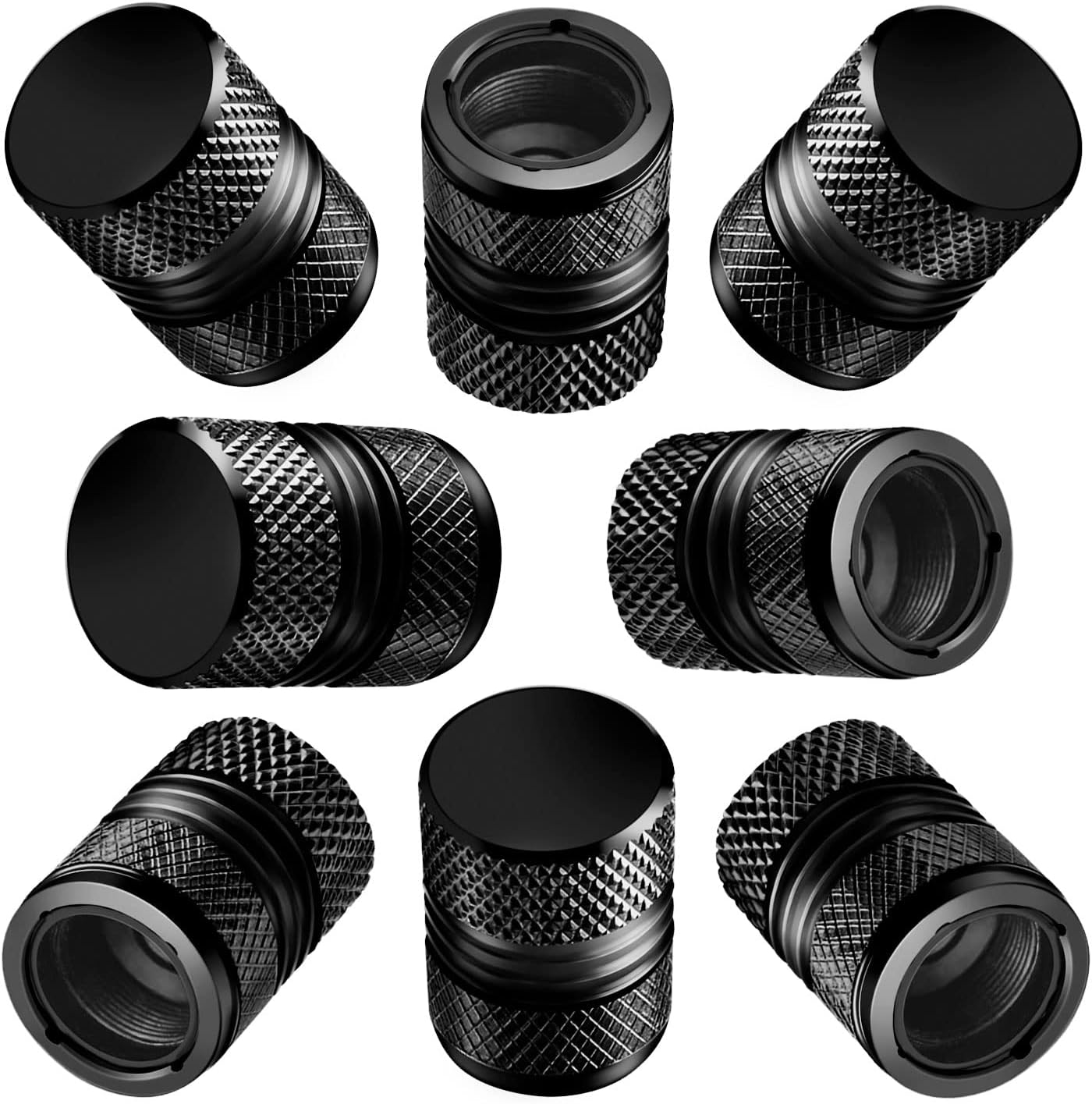
BAURATTI tire valve stem caps provide corrosion-resistant protection using anodized aluminum alloy with a plastic liner to help prevent rust and cracking. Designed for universal compatibility with standard Schrader valve stems, they install easily by hand and fit cars, SUVs, trucks, RVs, motorcycles, and bikes. Each pack includes 8 caps to support everyday replacement and sharing.
General Tire vs. Michelin, Toyo, Kumho, Cooper, and Goodyear
There is no reliable brand-wide rule that General always beats or loses to Michelin, Toyo, Kumho, Cooper, or Goodyear. A fair comparison must use equivalent tire types in the correct size.
| Comparison | What to Check |
|---|---|
| General vs. Michelin | Compare installed price, independent braking and treadwear results, ride quality, mileage coverage, and availability in your exact size. Michelin may justify a higher price in some categories, but that does not make every Michelin model the better purchase. |
| General vs. Toyo | Match touring against touring or all-terrain against all-terrain. Toyo and General both cover several truck and SUV uses, so exact model testing matters more than the badge. |
| General vs. Kumho | Compare current pricing, wet braking, comfort, snow needs, warranty mileage, and fitment. Either brand can be the better value in a particular size. |
| General vs. Cooper | Compare the exact touring, highway, all-terrain, or winter models. Neither brand is universally better for both commuting and rugged off-road use. |
| General vs. Goodyear | Look at equivalent model tests and total installed cost. Goodyear has a broad range, but General can remain competitive when its model meets the same fitment and performance priorities at a lower price. |
Who Should Buy General Tires?
General is most likely to suit you when:
- You want a mainstream replacement tire without automatically moving to the highest-priced option.
- You need an all-season touring tire such as the AltiMAX RT45.
- You want a 3PMSF all-weather tire that can remain installed year-round, such as the AltiMAX 365 AW.
- You drive a crossover, SUV, or pickup and need a highway, all-terrain, mud-terrain, or dedicated winter option.
- You value a 45-day exchange program and early road-hazard coverage.
- A current General model performs well in independent testing for your priorities and is competitively priced in your exact size.
Who Should Consider Another Option?
Another tire may be a better fit when:
- A competing model performs materially better in an independent test that matches your climate and vehicle.
- Your vehicle requires a specialized EV, run-flat, high-load, competition, or original-equipment fitment that General does not offer.
- You want maximum highway quietness but are considering a highly aggressive mud-terrain tire mainly for appearance.
- Your preferred General model is unavailable in the required size, load index, speed rating, or load range.
- The installed price is close to a better-tested premium alternative.
- Your driving requires dedicated winter tires rather than an ordinary all-season tire.
Frequently Asked Questions
Is General Tire a premium brand?
General is usually described more accurately as a mainstream, value-oriented brand. It offers established engineering, broad product coverage, and useful warranty benefits, but it is generally marketed below the highest-priced premium tier. An exact General model can still outperform a premium-brand model in a particular category or size.
Who owns General Tire?
Continental acquired General Tire in 1987. General now operates as a tire brand within Continental’s North American tire business.
What replaced the General AltiMAX RT43?
The AltiMAX RT45 is the current successor for shoppers seeking General’s standard all-season touring tire for passenger cars and crossovers. The exact size, speed rating, UTQG grade, and mileage warranty should still be checked before purchase.
What is better, Cooper or General?
Neither brand is universally better. Compare equivalent models in the required size. For example, compare touring tires for commuting or all-terrain tires for mixed road and trail use. Check independent wet braking, snow, noise, treadwear, warranty, and installed-price results.
Which is better, Goodyear or General?
Goodyear and General both sell many different types of tires, so the answer depends on the models being compared. Goodyear may lead a particular test or offer a specialized fitment, while General may provide a lower installed price or more attractive coverage in another size.
How long do General tires last?
There is no universal mileage figure. Select General models carry warranties ranging from about 50,000 to 75,000 miles, but actual service life depends on the model, tire size, vehicle, alignment, inflation, rotation, road conditions, climate, load, and driving habits. Replace a tire when it reaches its wear limit or becomes damaged or unsafe, even if warranty mileage remains.
Are General tires good in snow?
Some are. Standard all-season models are generally intended for light snow, while the AltiMAX 365 AW, Grabber A/TX, and dedicated Arctic models offer stronger snow-focused designs. Look for the Three-Peak Mountain Snowflake symbol when severe-snow capability is important.
Does General Tire’s 45-day trial provide a refund?
The published program is primarily an eligible exchange for another set of General-brand tires of equal or lesser value. It is not described as an unconditional cash refund. Proof of purchase, authorized-dealer procedures, treadwear limits, and exclusions apply.
Conclusion
General is a good tire brand when the exact model fits your vehicle, climate, and driving priorities. The AltiMAX RT45 is the current everyday touring choice, the AltiMAX 365 AW adds certified severe-snow capability, and the Grabber range covers highway, all-terrain, mud-terrain, and winter truck use.
The brand’s strongest advantages are broad model coverage, competitive mileage warranties on select fitments, a 45-day exchange program, and early road-hazard protection. Its main limitation is the same one that applies to every large tire brand: quality and suitability must be judged by model and size, not by the logo alone.
Sources
- General Tire Current Product Catalog — current passenger, performance, truck, off-road, and winter lineup.
- General Tire Shield+ Advantage Plan — manufacturer warranty, trial, mileage, and road-hazard overview.
- General Tire Limited Warranty and Adjustment Policy — detailed eligibility, exclusions, prorated coverage, trial, and maintenance terms.
- General AltiMAX RT45 Product Page — current touring-tire features and size-dependent warranty coverage.
- General Grabber A/TX Product Page — all-terrain use, 3PMSF marking, stud capability, and warranty information.
- NHTSA TireWise — tire size, placard pressure, tread, rotation, and replacement safety guidance.
[Products Worth Considering]

The SAFELIFE dial tire tread depth gauge measures tread depth in 1/32 inch increments with clear, easy-to-read 2-inch dial face. Color zones using a traffic light system help you quickly judge whether tread is low, marginal, or ample for safer driving. Built with a durable zinc cast body and a metal detect probe for precise, comfortable use across cars, motorcycles, trucks, and buses.

Accurately measure tire tread depth with a calibrated gauge marked from 0 to 1 inch in 1/32 inch increments. The color-coded bar helps you quickly identify tread condition ranges, supporting safe driving for trucks, motorcycles, automobiles, and passenger vehicles.
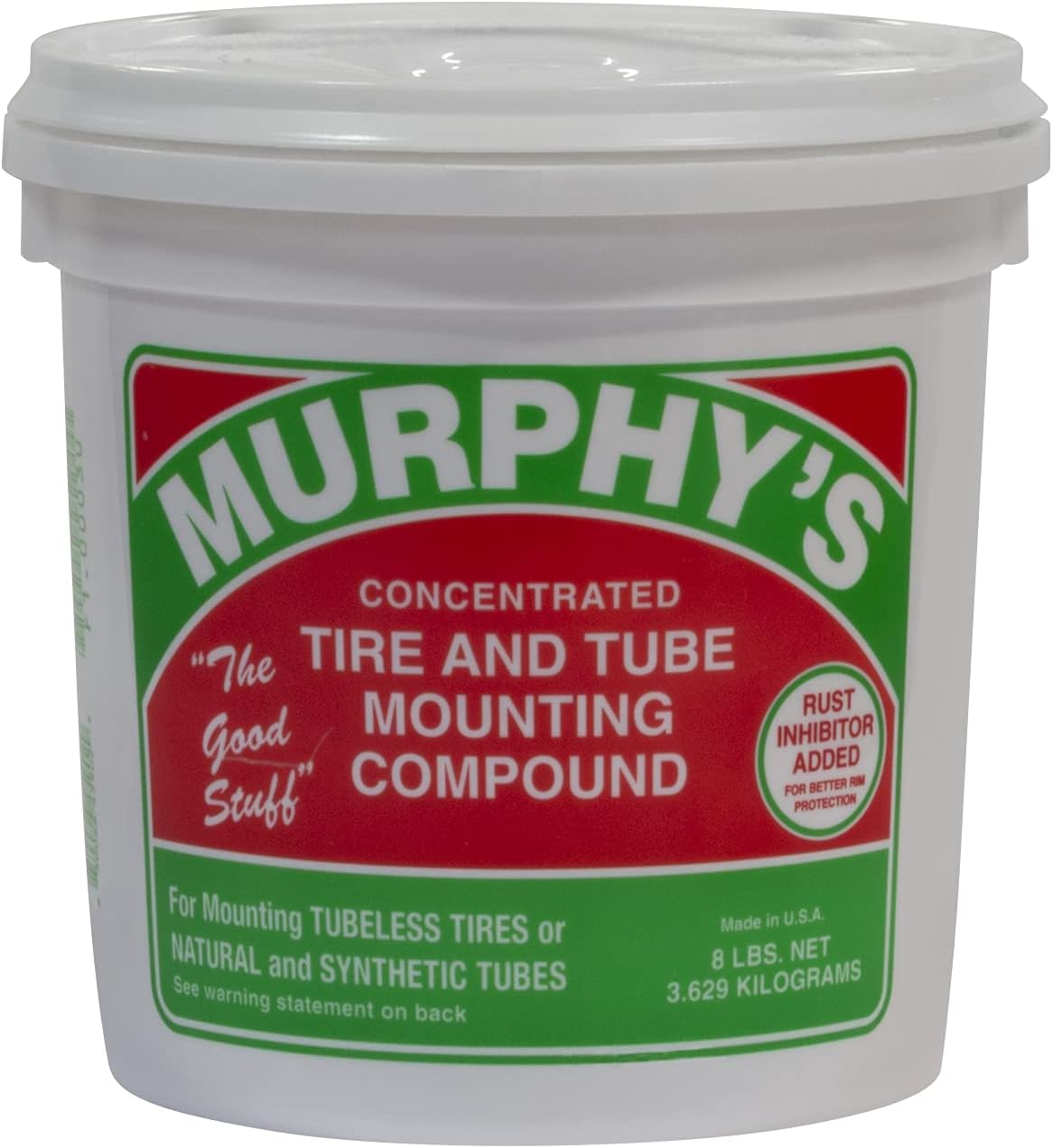
A concentrated tire and tube mounting compound designed to help simplify mounting rubber tires and tubes on passenger, semi truck, construction, and OTR applications. Its ultra-thick formula packs beads effectively and includes rust inhibitors to help protect against corrosion during use.

Related Articles

Best SUV Tires 2026: Top Picks for Comfort, Traction, and Long Tread Life
You rely on your SUV for daily driving, towing, and weekend trips, so tire choice directly affects your safety, comfort, and long‑term costs. This…
Read More
Best Tires for 2500HD Duramax 2026: Heavy-Duty Tires for Towing and Work Trucks
You depend on your 2500HD Duramax to tow heavy loads and handle demanding worksite conditions, so tire choice is not optional. The right tires…
Read More
Best Mastercraft Tires 2026: Reliable Tire Picks for Trucks, SUVs, and Daily Drivers
You need tires that match how you drive, where you live, and what your vehicle carries. This guide highlights Mastercraft models that stand out…
Read More