
How to Plant Potatoes in a Tire: Step-by-Step Garden Hack
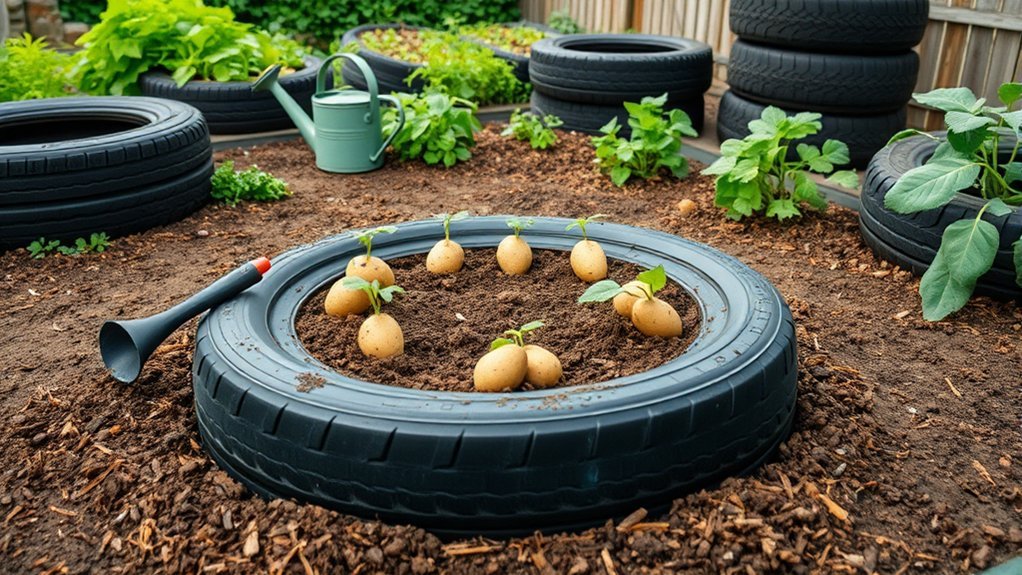
Growing potatoes in tires can save space, but it is not the safest container choice for edible crops unless you reduce soil contact with the rubber. Use a clean, intact tire only as an outer support, place a food-safe grow bag or heavy liner inside it, and give the potatoes loose soil, steady water, full sun, and regular hilling. With the right setup, you can grow a small, practical crop without digging a large garden bed.
Quick Answer
To grow potatoes in tires, place a clean tire on level, well-drained ground, add a food-safe liner or grow bag, fill it with loose compost-rich soil, and plant 2 to 4 certified seed potato pieces eyes up. Water evenly, add soil as shoots grow, and harvest when plants yellow and die back.
Key Takeaways
- A food-safe grow bag, bucket, barrel, or raised bed is safer for edible crops than direct soil contact with old tire rubber.
- If you use a tire, keep it clean, intact, stable, and lined so the soil is separated from the rubber.
- Use certified disease-free seed potatoes, not grocery potatoes, for a healthier start.
- Plant when soil is cool but workable, then hill the plants as they reach about 6 to 12 inches tall.
- Keep soil moist, not soggy, and never eat green potatoes, sprouts, leaves, stems, or potato berries.
At a Glance
| Time Required | 1 to 2 hours to set up, then about 10 to 20 weeks to harvest depending on variety and climate. |
| Difficulty | Easy to moderate. The main challenges are drainage, heat, food safety, and steady watering. |
| Tools Needed | Gloves, hose, brush, trowel, bucket, tarp, food-safe liner or grow bag, compost, potting mix, and certified seed potatoes. |
| Cost | Often $10 to $40 if the tire is reused. Costs rise if you buy compost, a grow bag, fertilizer, or a safer food-grade container. |
Warning: Tires are not food-grade containers. For the lowest-risk potato crop, use a food-safe grow bag, bucket, barrel, or wooden planter. If you still use a tire, keep soil separated from rubber with a food-safe liner or grow bag, never use crumb rubber as mulch, and never burn or heat-cut a tire.
Before You Start: Tire Safety and Better Options
Before you build a potato tire planter, understand the tradeoff. Tires are cheap, sturdy, and easy to stack, but they are made from rubber, metals, and additives that were never meant to hold edible crops. Washington State University Extension warns that rubber can leach metal and organic contaminants as it degrades, so direct soil contact with old tire rubber is not the best choice for vegetables.
The safest approach is to use a food-safe grow bag or a large container with drainage holes. If you want the tire look or need the tire for support, place the grow bag inside the tire and let the bag hold the soil. This gives you the vertical shape without putting your potato soil directly against the rubber.
Also keep tires from holding standing water. The CDC advises emptying, scrubbing, turning over, covering, or discarding water-holding items like tires once a week because mosquitoes lay eggs near water.
[Products Worth Considering]

The AstroAI portable tire inflator delivers fast, accurate inflation with a TrueGauge digital display that reads pressure extremely frequently for safer driving. It inflates common car tires quickly, includes auto shut-off, and features a premium metal build with an ergonomic handle and anti-slip base. A built-in ultra-bright 12 LED emergency light and multi-adapter compatibility make it convenient for cars, motorcycles, bikes, and inflatables (not for truck tires).

The AstroAI tire inflator delivers dual power for 12V DC car use and 120V AC home use, making it convenient for travel and everyday inflations. Choose high-pressure mode for car, bike, and motorcycle tires up to 150 PSI, or use large-volume mode for low-pressure inflatables like air mattresses. An LED light, digital pressure display, preset shutoff, and memory for your last setting simplify each session. Dual metal motors, OmniVent heat dissipation, and a 15-minute continuous work limit help it run reliably between cool-downs.

AstroAI’s tire pressure gauge with inflator helps you check and adjust car tire pressure accurately for safer, smoother driving. It offers 3-in-1 operation to inflate, deflate, or measure pressure, with an easy-to-read 2.5-inch glow dial and a heavy-duty air chuck for convenient use. Universal compatibility supports Schrader-valve tires and quick-connect 1/4" NPT air compressors for quick maintenance.
What You Need to Grow Potatoes in Tires
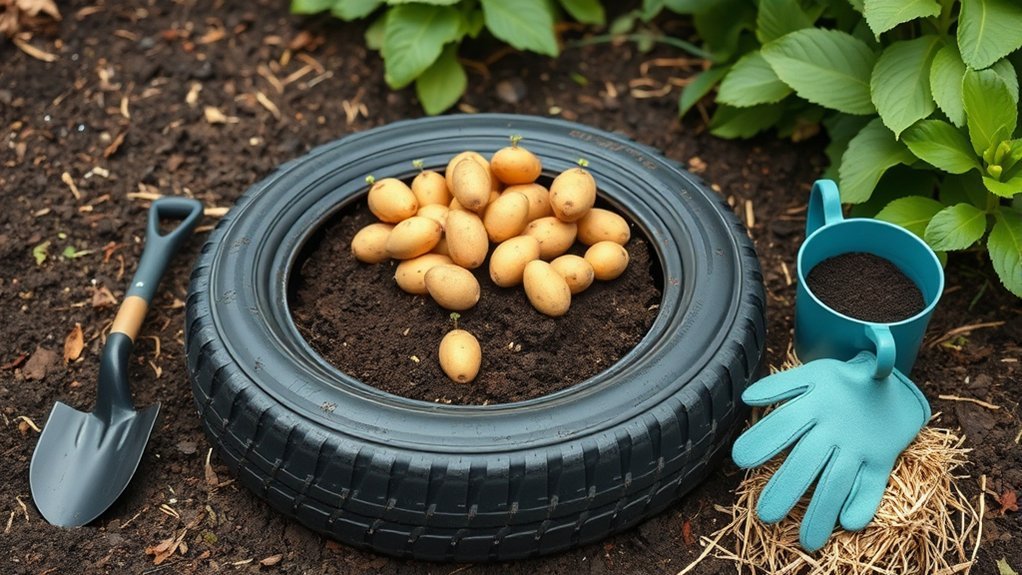
Gather everything before planting so the potatoes can go straight into loose, damp soil. For best results, use certified disease-free seed potatoes instead of potatoes from the grocery store. Grocery potatoes may be treated to slow sprouting, and they can carry diseases into your soil.
- One clean tire, used as an outer ring or support.
- Food-safe grow bag or liner to separate soil from the tire.
- Certified seed potatoes, ideally early or smaller container-friendly varieties.
- Loose potting mix or sandy garden soil blended with finished compost.
- Balanced organic fertilizer, used according to the label or a soil test.
- Gloves, brush, hose, and trowel for cleaning and planting.
- Tarp for harvest, so you can catch the soil and find the tubers easily.
Note: A tire tower does not guarantee a huge harvest. It saves ground space and makes harvest easier, but yield still depends on variety, sunlight, temperature, soil, fertilizer, and watering.
Pick the Best Time to Plant Potatoes
Potatoes grow best in cool, workable soil. In many cool and temperate regions, that means planting in spring, usually after the worst hard freezes are past. In the UK-style schedule, RHS lists first earlies around late March, second earlies in early to mid-April, and maincrops from mid-April to early May. In colder regions, wait longer. In hot climates, grow potatoes during the cool season instead of midsummer.
Early Potato Window
Early potatoes are a good match for tire growing because they mature faster and usually stay more compact. Plant them when the soil has warmed enough to work and your local forecast no longer shows repeated hard freezes. If a light frost threatens after shoots appear, cover the plants overnight with a frost cloth, straw, or extra compost, then uncover them once temperatures rise.
Maincrop Planting Time
Maincrop potatoes need more time and more room. You can grow them in a tire stack, but they are more likely to need steady feeding, deeper soil, and a longer season. If your tire is small, choose early or second early varieties instead. If you grow maincrops, give them the largest lined tire setup you can manage and keep the stack stable.
Frost Risk Timing
Potato shoots are tender. Frost can blacken the leaves, slow growth, and weaken young plants. Use your local last-frost date as a guide, then protect early shoots if the weather changes. A tire can warm quickly in sun, but that does not make the leaves frostproof.
Clean and Prep Your Tires Safely
Choose a tire that is intact, stable, and free from oil, fuel, pesticide residue, and heavy road grime. Do not use tires that smell strongly of chemicals, have exposed wire, or are breaking apart. Wear gloves while cleaning because old rubber can have sharp edges, embedded grit, and residue.
- Set the tire on pavement or gravel and scrub it with a stiff brush.
- Rinse it well with a hose and let it dry.
- Inspect the inside and outside for exposed wires, cracks, and sharp spots.
- Place it on level, well-drained ground where rainwater will not pool.
- Put a food-safe grow bag or liner inside the tire before adding soil.
You do not have to cut the tire. Leaving it intact is usually safer. If you decide to cut a sidewall for a wider opening, use eye protection, cut-resistant gloves, and the right tool for the tire type. Do not heat-cut a tire, and do not cut into steel wire unless you have the proper tools and experience.
Set Up Drainage and Soil
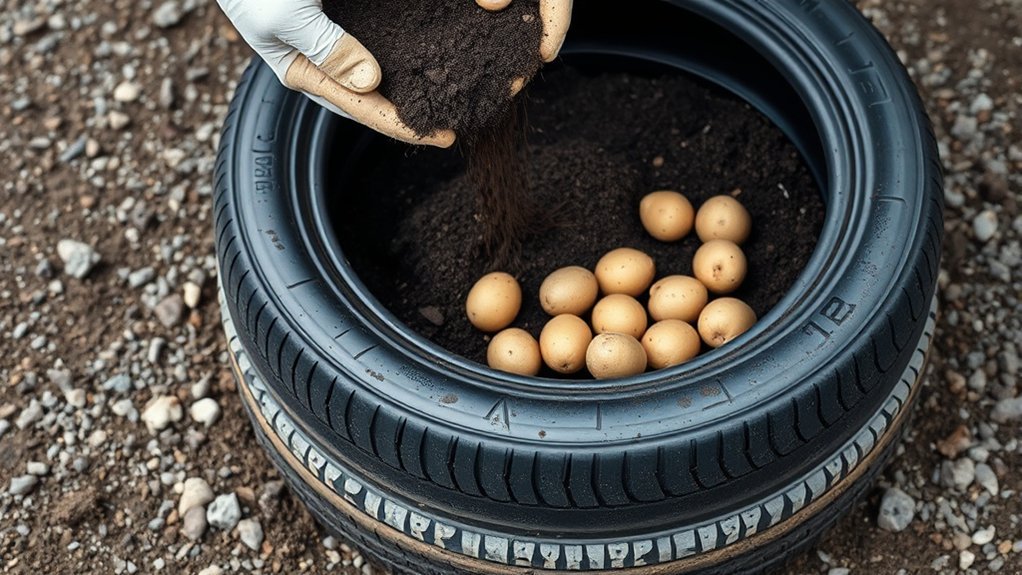
Good drainage matters more than a deep gravel layer. Place the tire on soil, gravel, or a firm surface where water can escape. If you use a grow bag inside the tire, make sure the bag has drainage holes and is not sitting in a puddle. A thin layer of coarse material under the bag can help keep the bottom from staying muddy, but the soil itself should stay loose and airy.
Use a mix that drains well but holds enough moisture for steady tuber growth. A simple blend is:
- 2 parts loose potting mix or sandy garden soil
- 1 part finished compost
- A small amount of balanced organic fertilizer, added by label directions
Potatoes prefer slightly acidic soil. University of Minnesota Extension notes that potatoes grow best in well-drained sandy soil and somewhat acidic conditions, with a pH around 6 to 6.5 while tolerating lower pH. Heavy, soggy soil raises the risk of rot and misshapen tubers.
Pro Tip: If your summers are hot, keep the tire where plants get strong morning sun but some afternoon relief. Black rubber can warm the soil quickly, and potatoes do not like hot, dry roots.
Plant Seed Potatoes Correctly
Cut large seed potatoes into pieces about 1.5 to 2 inches wide. Each piece should have at least one strong eye, and two eyes are better. Let cut pieces dry overnight to a few days until the cut surface feels sealed. This helps lower the risk of rot after planting.
- Add 4 to 6 inches of damp soil mix to the lined tire or grow bag.
- Place 2 to 4 seed potato pieces in the soil, depending on tire size.
- Keep seed pieces about 8 to 12 inches apart when space allows.
- Set the eyes or sprouts facing upward.
- Cover with 3 to 4 inches of loose soil mix.
- Water gently until the soil is evenly damp.
Do not pack the soil down hard. Potato roots and stolons need air as well as moisture. If the tire is small, use fewer seed pieces so the plants can make larger tubers instead of competing with each other.
Add Tire Layers as Plants Grow
As potato plants grow, you can add more soil around the stems. This is called hilling or earthing up. It protects developing tubers from light, helps reduce greening, and gives the plants more covered stem area. For tire growing, add soil gradually rather than burying the whole plant at once.
[Products Worth Considering]

Replace worn pool cleaner tires with this all-purpose C10 tire set made to fit compatible Polaris automatic pool cleaners. The tires are designed for maximum traction while helping protect your pool finish, and they match Polaris OEM size and material. Each pack includes three new tires in sealed bags.

Autel MX TPMS sensors combine 315MHz and 433MHz in a single easy-to-install press-in design for faster tire service. They support wireless programming with strong signal performance, and the sensors are clone-able for streamlined replacement. Built for reliability and tested to SAE standards, each sensor includes a series number for quality control.

This 22-piece car wash and detailing kit includes a collapsible 20L bucket, lint-free wash mitt, microfiber sponge, super-absorbent drying towels, and specialized tools for wheels, tires, and windows. Soft, scratch-free accessories help protect paint and glass while tackling grime both inside and out. It’s a complete interior and exterior care set for cars, motorcycles, RVs, and home cleaning tasks like windows and mirrors.
Stack Only When Plants Are Ready
Start hilling when shoots are about 6 to 12 inches tall. Add loose soil, compost, or potting mix around the stems, leaving the top leaves exposed. If you want a taller stack, add the next tire only after the first tire is nearly full and the plant is growing strongly.
Limit most tire towers to two or three tires. A taller stack can become unstable, dry out unevenly, and be hard to harvest safely. Keep every tire level and seated firmly before adding soil.
Keep Foliage Exposed
Never bury all the leaves. The green foliage feeds the plant through photosynthesis. If you cover the leaves, growth slows and the plant may rot. Each time you hill, leave several inches of green top growth exposed so the plant can keep building energy for tubers.
Hilling is not about making an endless tower. It is about keeping tubers covered, protecting them from light, and giving the plant loose soil where it can grow well.
Water, Feed, and Hill Your Potato Plants
Keep the soil evenly moist from planting through tuber growth. Too little water can cause small, knobby, or hollow potatoes. Too much water can cause rot. A good rule is to check the soil with your finger every few days. Water when the top inch starts to feel dry, and water deeply enough to reach the lower roots.
Containers dry faster than garden beds, and tire setups can dry even faster in warm sun. During hot, windy, or dry weather, check moisture more often. Water at the base of the plant so leaves stay drier, which can help reduce disease pressure.
- Water after planting so the mix settles around the seed pieces.
- Check moisture every few days while shoots emerge.
- Hill with loose soil when plants reach 6 to 12 inches tall.
- Water after each hilling so the new soil settles.
- Feed lightly if growth looks pale or weak, following your fertilizer label.
Do not overfeed with nitrogen. Too much nitrogen can push leafy growth at the expense of tubers. Compost plus a balanced fertilizer is usually enough for a small tire planter.
Prevent Common Tire-Garden Problems
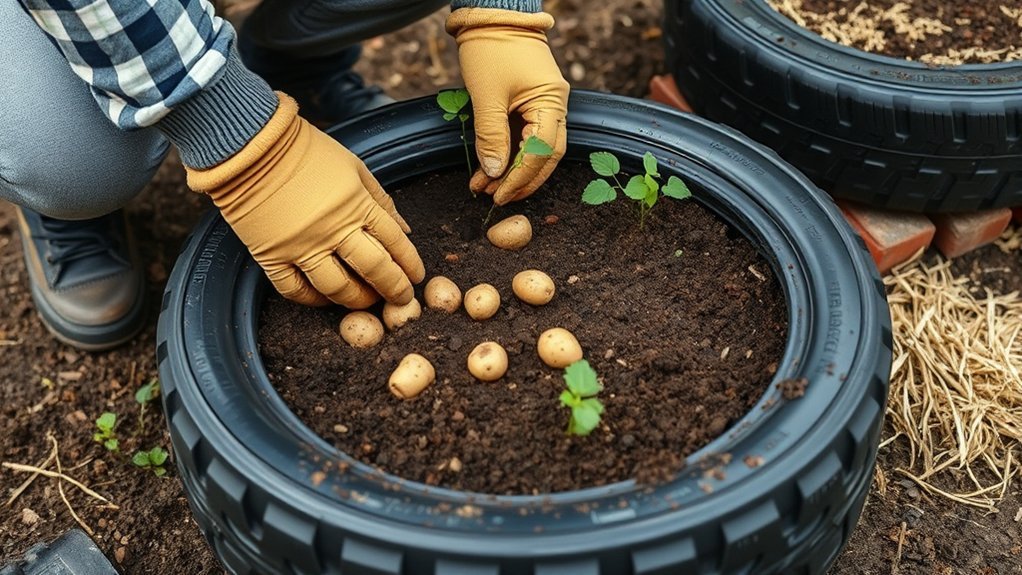
The biggest tire-garden problems are poor drainage, hot soil, crowding, pests, disease, and green tubers. Most problems are easier to prevent than fix, so start with clean materials, good airflow, certified seed potatoes, and a stable, lined container.
- Rot: Avoid soggy soil and make sure the liner or grow bag drains freely.
- Green tubers: Keep all developing potatoes covered with soil or compost.
- Small harvest: Use fewer seed pieces, give plants more sun, and water evenly.
- Pests: Check leaf undersides for eggs and insects, especially Colorado potato beetles and aphids.
- Disease: Use certified seed potatoes and avoid planting potatoes after tomatoes, peppers, eggplants, or potatoes in the same soil mix.
- Mosquitoes: Do not let rainwater collect inside or around unused tires.
Troubleshooting Quick Fixes
| Problem | Likely Cause | Fix |
| No sprouts | Cold soil, rotted seed piece, or weak seed potato | Wait for warmer soil, use certified seed potatoes, and avoid soggy mix. |
| Yellow leaves early | Water stress, low nutrients, heat, or disease | Check moisture, feed lightly, add mulch on top, and inspect for spots or pests. |
| Green potatoes | Tubers exposed to light | Hill sooner and discard potatoes with extensive green areas. |
| Tiny harvest | Too many seed pieces, too little light, or uneven water | Plant fewer pieces next time and keep moisture steady during tuber growth. |
| Soft or smelly tubers | Rot from wet soil or damage | Improve drainage, harvest gently, and do not store damaged potatoes. |
Harvest Potatoes From Tires
You can harvest small “new potatoes” once the plants flower or after the crop has had several weeks to size up. For mature potatoes that store better, wait until the foliage turns yellow and dies back. Then stop watering for several days so the soil is easier to handle.
- Lay a tarp beside the tire stack.
- Remove the top tire first, then work downward.
- Tip or lift the grow bag gently if you used one.
- Sift through the soil by hand to avoid bruising or cutting tubers.
- Set aside damaged potatoes to eat first.
- Discard green potatoes with extensive green areas.
- Cure sound potatoes in a dark, well-ventilated place before storage.
Do not wash potatoes before storage. Brush off dry soil after curing, then store only firm, undamaged tubers in a cool, dark, well-ventilated place. Check them every few weeks and remove any that soften, rot, or sprout heavily.
Frequently Asked Questions
How do you plant potatoes in a tire?
Clean the tire, place it on level ground, and put a food-safe grow bag or liner inside it. Add 4 to 6 inches of loose soil mix, set 2 to 4 certified seed potato pieces eyes up, cover with 3 to 4 inches of soil, and water well. Add more soil as shoots grow.
Is it safe to grow potatoes in tires?
A tire is not a food-grade container, so it is not the lowest-risk option for edible crops. A food-safe grow bag, bucket, barrel, or raised bed is safer. If you use a tire, use it as an outer support and keep the soil inside a food-safe liner or grow bag.
How many seed potatoes should I plant in one tire?
Most tire planters do best with 2 to 4 seed potato pieces. Use fewer pieces in a smaller tire and leave about 8 to 12 inches between pieces when possible. Crowding can give you more stems but smaller potatoes.
Is October too late to plant potatoes?
In most cold and temperate regions, October is too late for outdoor potatoes because frost can arrive before the plants mature. In warm, frost-free climates, fall or winter planting may work if you have enough cool growing weeks. For most gardeners, spring planting is more reliable.
Do tire towers really grow more potatoes?
They can save space, but they do not automatically produce a bigger crop. Many potatoes form most tubers near the original seed piece and lower stems. Good variety choice, sunlight, loose soil, steady water, and moderate hilling matter more than building a very tall stack.
How do Amish grow potatoes?
Many Amish growers use traditional row planting, compost or manure, hand tools, hilling, and crop rotation. You can copy the practical parts in a small garden by using healthy seed potatoes, spacing plants well, building soil with compost, and rotating away from other nightshade crops.
Can I just put a potato in the ground and it will grow?
A potato with a live eye may grow, but certified seed potatoes are better because they are grown for planting and inspected for disease. Grocery potatoes may sprout poorly, and they can bring disease into your soil.
Can I eat green potatoes from a tire planter?
Do not eat potatoes with extensive green areas. Greening means the tuber was exposed to light and may have higher glycoalkaloid levels. Prevent this by keeping tubers covered with soil while they grow and storing harvested potatoes in the dark.
Conclusion
Growing potatoes in tires is a space-saving method, but it needs honest safety steps. For edible crops, a food-safe grow bag or container is the better choice. If you use a tire, use it as an outer support, line it well, keep the stack stable, and manage water carefully. Plant certified seed potatoes in loose compost-rich soil, hill the stems as they grow, keep tubers covered, and harvest gently when the plants are ready.
Sources
- University of Minnesota Extension: Growing potatoes in home gardens — seed potatoes, soil, hilling, watering, pests, harvest, and storage.
- Royal Horticultural Society: How to grow potatoes — planting windows, container growing, earthing up, frost protection, harvest, and storage.
- Washington State University Extension: The Myth of Rubberized Landscapes — rubber leachate, contaminants, and tire/rubber landscape safety concerns.
- CDC: Mosquito Control at Home — standing-water prevention around tires and other outdoor containers.
[Products Worth Considering]

The AUTOWN tire repair kit is designed to quickly fix punctures and plug flats with professional-quality steel components. It includes a T-handle and spiral probe tool for easy tire access, plus a compact storage case for convenient carry. Suitable for many vehicles including cars, motorcycles, ATVs, RVs, trailers, and trucks, it helps restore airtight performance for reliable roadside repairs.

AUTOWN’s 68-piece tire repair kit helps you fix punctures and plug flats quickly and effectively. It includes a T-handle and spiral probe tool for easy insertion, while the steel patch and plug materials are designed for strong adhesion and long-lasting airtight performance. The compact case makes it convenient for roadside repairs across a wide range of vehicles.

This compact capsule-style tire repair kit helps you quickly fix punctures and plug flats with minimal effort. The rugged stainless steel shell protects the contents for reliable roadside use, while the simple plug assembly makes repairs fast and tool-free. Suitable for motorcycles, cars, ATVs, UTVs, and even mountain bikes.

Related Articles
What Is a Wheel Bolt Pattern? Can You Change It?
How does a wheel bolt pattern work, and can you really change it without trouble? Keep reading to find out.
Read More
Can You Replace Just One Tire? When It’s Safe
Can you replace just one tire safely? Discover the key match-up rules that could save your car’s handling and drivetrain.
Read More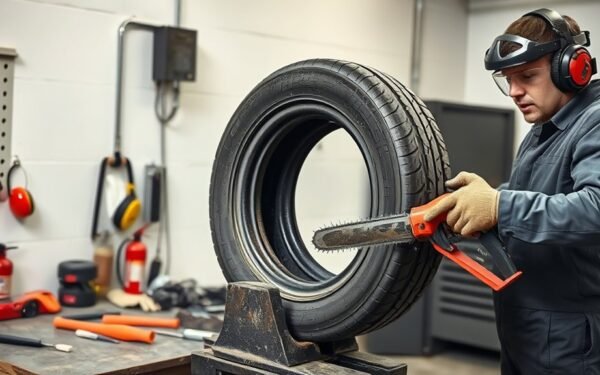
How to Cut a Tire in Half: Tools, Steps, and Safety
Tough tires need the right tools and safety steps to split cleanly—discover the easiest method, crucial warnings, and what happens next.
Read More