
How Tall Is a 33 INCH Tire? Exact Height, Width & Dimensions
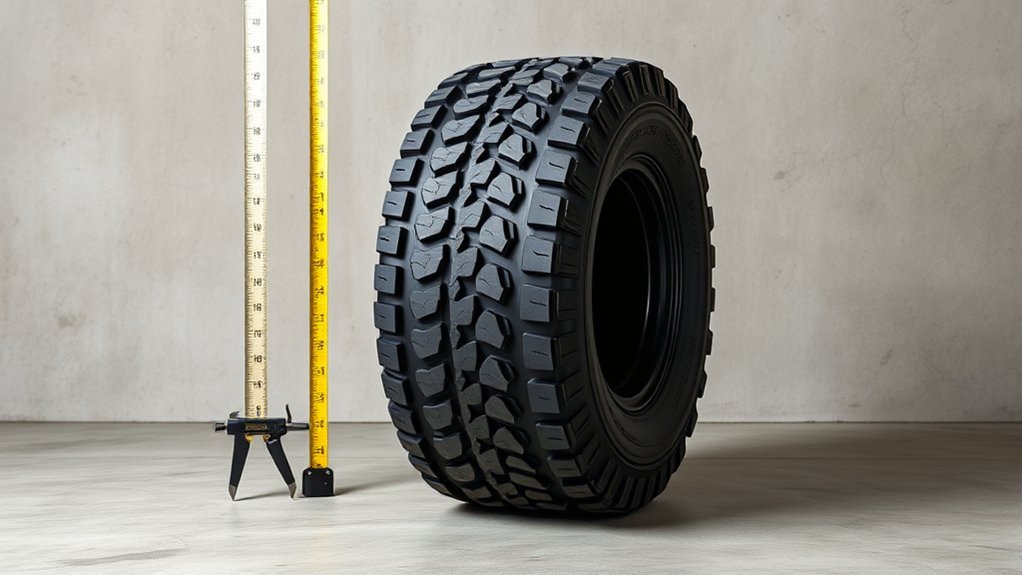
A 33-inch tire is a nominal tire size, not a promise that the tire will measure exactly 33 inches tall once mounted. Many 33-inch tires measure slightly shorter in real use because the final height depends on the tire model, tread depth, wheel width, air pressure, load, and how the manufacturer measures it. Width also varies, so you need to check the full size code before you buy.
Quick Answer
A 33-inch tire usually means a tire with a nominal outside diameter near 33 inches. In real use, many measure closer to the low-32-inch range once mounted and loaded. Common widths include 10.5, 11.5, and 12.5 inches, plus metric equivalents such as 285/70R17 and 285/75R16.
Key Takeaways
- A “33-inch” tire is a size category, so always check the manufacturer’s listed overall diameter.
- Common 33-inch tire widths include 10.5, 11.5, and 12.5 inches, but metric sizes vary by aspect ratio and wheel diameter.
- A metric number like 285 only tells you section width in millimeters. It does not tell you tire height by itself.
- Rim width, wheel offset, suspension clearance, load rating, and tire pressure matter as much as the advertised diameter.
- For safe fitment, use your owner’s manual, tire placard, manufacturer spec sheet, and a qualified tire dealer when changing sizes.
How Tall Is a 33-Inch Tire?
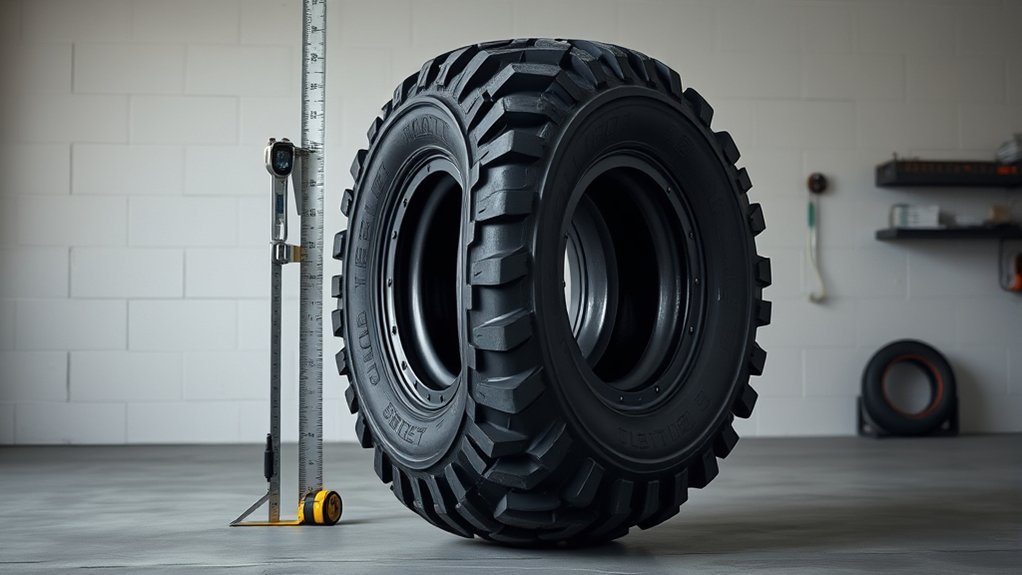
A 33-inch tire is designed to sit near 33 inches in outside diameter, but the exact mounted height can differ from the label. Some tires measure close to the advertised size, while others run shorter. That difference is normal because tire makers publish dimensions based on their own design, tread mold, and measuring rim.
You should treat the printed size as a starting point. For real fitment, check the tire maker’s spec sheet for overall diameter, section width, approved rim width range, load rating, and revolutions per mile. Those numbers tell you more than the simple “33-inch” label.
Note: A tire can measure differently when it is unmounted, mounted but unloaded, or mounted on a vehicle with weight on it. For fitment, the manufacturer’s mounted specification is more useful than a quick tape-measure check in the garage.
What Width Does a 33-Inch Tire Have?
A 33-inch tire’s width depends on the full tire size. In flotation sizing, the middle number tells you the approximate section width. For example, 33×10.50R15 is about 10.5 inches wide, while 33×12.50R15 is about 12.5 inches wide. In metric sizing, the first number is the section width in millimeters, so 285/70R17 is about 285 mm, or 11.2 inches, wide.
How to Read 33×12.50R17
A size like 33×12.50R17 uses flotation-style sizing. The first number is the nominal outside diameter in inches. The second number is the approximate section width in inches. The “R” means radial construction, and the final number is the wheel diameter in inches.
That means a 33×12.50R17 tire is roughly a 33-inch-tall, 12.5-inch-wide radial tire made for a 17-inch wheel. Still, the real measured diameter and width can vary by tire model, tread type, and approved measuring rim.
Common 33-Inch Widths
You will usually see 33-inch tires in these width ranges:
- 10.5 inches: narrower stance, often easier to fit on older trucks and Jeeps.
- 11 to 11.5 inches: balanced width for many metric 33-inch equivalents.
- 12.5 inches: wide footprint for a more aggressive off-road stance.
- Over 12.5 inches: less common and more likely to require wheel, lift, or trimming changes.
Measuring Tire Width
Use section width when you compare tires. Section width is the widest part of the inflated tire from sidewall to sidewall. It is not always the same as tread width, which is the part of the tire that contacts the road or trail.
Rim width can change the measured section width. A wider wheel can stretch the sidewalls outward, while a narrower wheel can pull them in. That is why a tire maker’s approved rim width range matters for safety and fitment.
Wide vs Skinny Options
Wide and skinny 33-inch tires behave differently. A narrower tire can track well in ruts and may cut through mud, slush, or loose top layers to find firmer ground. A wider tire spreads weight across a larger footprint, which can help with flotation in sand, snow, and soft dirt.
You are not choosing width for looks alone. You are choosing how the tire carries weight, clears the wheel well, steers, and grips on your usual terrain.
How to Calculate a Metric 33-Inch Tire
Metric tire sizes need a quick calculation because the height is not printed as one simple inch number. Use this formula:
Overall diameter in inches = (section width × aspect ratio × 2 ÷ 25.4) + wheel diameter
For example, a 285/70R17 tire calculates to about 32.7 inches tall: 285 × 0.70 × 2 ÷ 25.4 + 17. That makes it a common near-33-inch size. A 285/75R16 calculates to about 32.8 inches tall, which is also close to a 33-inch tire.
| Size | Approx. Calculated Diameter | Approx. Section Width | Best Use |
|---|---|---|---|
| 33×10.50R15 | Nominal 33 in. | 10.5 in. | Narrow flotation-size fitments |
| 33×12.50R15 | Nominal 33 in. | 12.5 in. | Classic wide off-road setup |
| 255/85R16 | About 33.1 in. | About 10.0 in. | Tall, narrow builds |
| 285/75R16 | About 32.8 in. | About 11.2 in. | Common truck and SUV upgrade |
| 285/70R17 | About 32.7 in. | About 11.2 in. | Popular 17-inch wheel fitment |
| 295/70R17 | About 33.3 in. | About 11.6 in. | Slightly taller 17-inch setup |
| 275/70R18 | About 33.2 in. | About 10.8 in. | 18-inch wheel setups |
| 275/60R20 | About 33.0 in. | About 10.8 in. | 20-inch wheel setups |
| 305/70R16 | About 32.8 in. | About 12.0 in. | Wide metric 33-inch equivalent |
Pro Tip: Use the formula for a quick estimate, but use the manufacturer’s actual spec sheet before ordering. Two tires with the same printed size can have different real diameters, widths, weights, tread depths, and rim-width requirements.
Metric vs Flotation 33-Inch Tires
You will see 33-inch tires listed in two common ways. Flotation sizes, such as 33×12.50R17, give you the nominal diameter and width in inches. Metric sizes, such as 285/70R17, give you section width in millimeters, sidewall height as a percentage, and wheel diameter in inches.
| Sizing Type | Example | What It Tells You |
|---|---|---|
| Flotation | 33×12.50R17 | Nominal 33-inch diameter, 12.5-inch section width, radial construction, 17-inch wheel. |
| Metric | 285/70R17 | 285 mm section width, 70% sidewall aspect ratio, radial construction, 17-inch wheel. |
Neither system replaces the manufacturer’s spec sheet. A tire’s actual mounted height can still differ from the calculated or advertised number.
Why 33-Inch Tires Measure Shorter
A 33-inch tire can measure shorter than expected for several reasons. The biggest reasons are manufacturer design, measuring rim width, air pressure, vehicle load, and tread wear. These details matter because a small diameter change can affect clearance, gearing, speedometer accuracy, and how the vehicle feels on the road.
Manufacturing Variations
Tire size labels are not exact tape-measure guarantees. Tire companies design each model with its own casing, tread depth, sidewall shape, and approved rim width range. A mud-terrain tire and an all-terrain tire with the same printed size may not measure the same.
Before buying, check the tire maker’s listed overall diameter, section width, tread depth, load range, speed rating, and approved rim width range. If the tire will go on a daily driver, also confirm that the load index or load range meets or exceeds what your vehicle requires.
Tread Wear Effects
Tread wear lowers the tire’s outside diameter over time. If a tire loses tread depth, the radius drops by that amount, and the full diameter drops by roughly twice that amount. A worn tire will not stand as tall as the same model when new.
For safety, do not judge tire life by height alone. The National Highway Traffic Safety Administration says tires should be replaced when tread is worn down to 2/32 of an inch.
Measurement Conditions
Measurement conditions can change the result. A tire measured off the vehicle can read differently from a tire mounted on a loaded truck. A cold tire can also read differently after highway driving because heat changes pressure.
To compare sizes fairly, measure tires under the same conditions. Use the same pressure, same vehicle load, and same surface. For the most reliable buying decision, use the tire maker’s published mounted specifications.
33-Inch Tire Sizes by Wheel Diameter
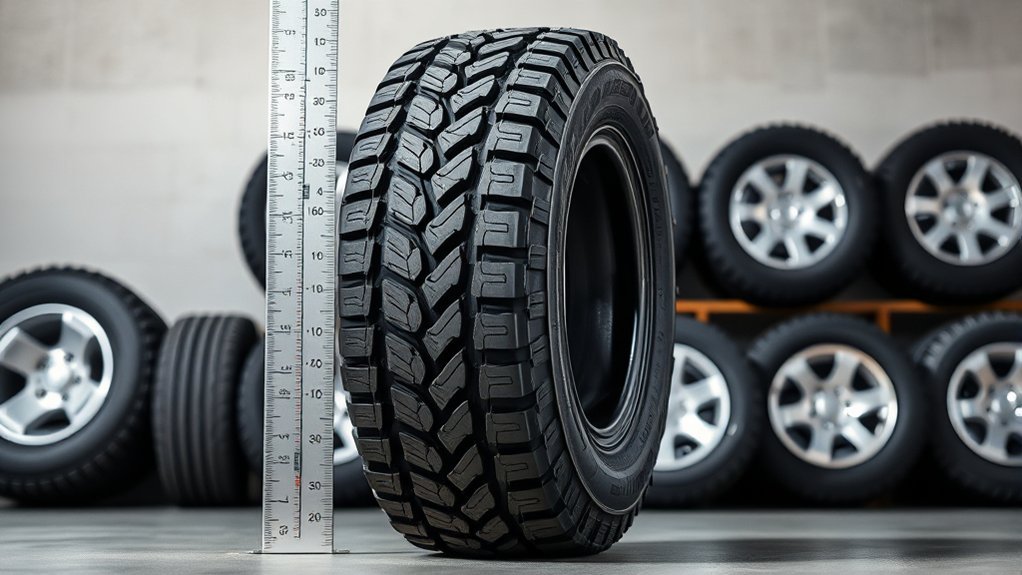
A 33-inch tire can fit several wheel diameters. The last number in the tire size tells you the wheel diameter. For example, 33×12.50R15 fits a 15-inch wheel, while 33×12.50R17 fits a 17-inch wheel. The outside tire diameter can stay similar while the sidewall height changes.
| Wheel Diameter | Common Near-33 Sizes | Fitment Notes |
|---|---|---|
| 15 in. | 33×10.50R15, 33×12.50R15 | Classic off-road sizes with taller sidewalls. |
| 16 in. | 255/85R16, 285/75R16, 305/70R16 | Useful for tall sidewall setups and older truck wheels. |
| 17 in. | 285/70R17, 295/70R17, 33×12.50R17 | Very common for modern trucks, Jeeps, and SUVs. |
| 18 in. | 275/70R18, 285/65R18 | Shorter sidewall than many 15- or 16-inch setups. |
| 20 in. | 33×12.50R20, 275/60R20 | Less sidewall cushion; check load rating and ride comfort. |
Load Rating, Speed Rating, and LT vs P-Metric Tires
A 33-inch tire that fits the wheel well is not automatically the right tire. You also need the correct load capacity, speed rating, and construction type for your vehicle. This matters more on trucks, SUVs, Jeeps, towing setups, and vehicles that carry cargo.
Check the vehicle’s Tire and Loading Information Label or owner’s manual before changing sizes. NHTSA recommends using the vehicle placard or owner’s manual to find the correct tire size and pressure, and consulting a tire dealer if you have any doubt about the correct size.
- Load index: tells you how much weight one tire can carry at its rated pressure.
- Load range: appears often on LT tires and indicates the tire’s strength category and pressure capability.
- Speed rating: tells you the tire’s tested speed capability under rated conditions.
- P-metric vs LT: P-metric tires often ride smoother, while LT tires usually suit heavier loads, towing, and tougher truck use.
Warning: Do not choose a 33-inch tire by height alone. The replacement tire must meet your vehicle’s load needs, fit the approved rim width, clear the suspension, and use a safe cold inflation pressure for the vehicle and tire type.
How Tire Pressure Changes Tire Height
Tire pressure can slightly change a tire’s loaded height because the sidewall flexes under the vehicle. Low pressure lets the tire flatten more at the contact patch. Higher pressure can reduce that flattening, but you should never inflate a tire only to gain height or clearance.
Use the correct cold tire pressure listed on your vehicle’s Tire and Loading Information Label or in the owner’s manual. NHTSA recommends checking all tires, including the spare, at least once a month when the tires are cold.
Warning: Do not use the maximum pressure printed on the tire sidewall as your normal inflation target. Use the vehicle maker’s recommended cold pressure unless a qualified tire professional gives you a safe pressure for a modified setup.
Skinny vs Wide 33-Inch Tires
A skinny 33-inch tire and a wide 33-inch tire can be nearly the same height but feel very different. Skinny tires place more vehicle weight over a narrower footprint. That can help them cut through loose surfaces and reduce rubbing in tight wheel wells.
Wide 33-inch tires spread the load over a broader footprint. That can improve flotation in sand, snow, and soft dirt, but it can also increase rubbing risk at the fender liner, control arms, sway bar, or bumper edge. Wider tires may also need different wheel offset or backspacing.
Choose width based on your vehicle, terrain, and wheel setup. A tire that looks aggressive but rubs every time you turn will not feel like an upgrade.
Speedometer Changes With 33-Inch Tires
A taller tire travels farther with each rotation. If your new 33-inch tire is taller than the original tire, your speedometer may read lower than your actual road speed. The larger the diameter jump, the larger the error.
Estimated actual speed = indicated speed × new tire diameter ÷ original tire diameter
For example, if your original tire is about 31 inches tall and your new tire is about 33 inches tall, an indicated 60 mph may be closer to 64 mph. That estimate is not exact because real tire diameter changes with load, tread wear, and pressure, but it shows why recalibration may matter.
Many modern vehicles can be recalibrated through factory settings, dealer tools, or aftermarket programmers. Check your vehicle documentation before assuming a tire-size change will be handled automatically.
Fitment Checklist Before Buying 33-Inch Tires
Before you buy 33-inch tires, check more than the diameter. Oversized tires can affect steering, braking, suspension travel, gearing, speedometer readings, fuel use, and spare-tire compatibility.
- Check the vehicle placard and owner’s manual. Confirm the original tire size, pressure, and load requirements.
- Check the manufacturer’s tire spec sheet. Look for overall diameter, section width, tread depth, load index, speed rating, weight, and approved rim width.
- Measure clearance at full steering lock. Check the front and rear of the wheel well while the wheels are turned left and right.
- Check suspension compression clearance. A tire that clears while parked may rub when the suspension compresses.
- Confirm wheel offset and backspacing. A wider tire can rub the frame, upper control arm, sway bar, or fender depending on wheel position.
- Plan for the spare. A much smaller spare can stress driveline parts on some 4WD and AWD vehicles.
- Expect speedometer changes. A taller tire travels farther per rotation, so recalibration may be needed.
- Confirm daily-driving tradeoffs. Larger and heavier tires can add road noise, reduce fuel economy, and make braking feel different.
Note: If you have any doubt about the correct tire size, NHTSA recommends consulting a tire dealer. That matters even more when you move away from the vehicle’s original tire size.
[Products Worth Considering]

The VIAIR 400P EF is a 12V portable air compressor designed for off‑road trucks and SUVs, delivering fast, high‑performance inflation for up to 35‑inch tires. Its upgraded head improves heat dissipation and reduces noise, while a 5‑in‑1 hose and dual‑compartment bag add convenience. Versatile power options and a stable I‑Beam sand tray make it ideal for rugged terrain and heavy‑duty use.

The VIAIR 300P delivers reliable tire inflation for trucks, SUVs, and jeeps with up to 150 PSI pressure and a 33% duty cycle, ensuring quick recovery from flats on and off road. Its 12‑volt operation and 2.30 CFM free flow make it ideal for emergency roadside use, while the deluxe dual‑compartment carry bag adds convenience and portability. Easy to connect to a vehicle battery and equipped with a 5‑in‑1 gauge, it provides accurate pressure monitoring and hassle‑free operation.

The VIAIR 85P is a compact, heavy‑duty 12V tire inflator that delivers up to 60 PSI and includes a built‑in pressure gauge, LED work light, and twist‑on brass chuck. Its 13‑foot hose and included Presta adapter let you inflate car, truck, SUV, motorcycle and bike tires quickly, while the durable carry bag makes storage and transport effortless. With a duty cycle of 20 minutes at 30 PSI and a flow rate of 1.26 CFM, it inflates a standard passenger tire in just over a minute, offering reliable on‑the‑go performance for daily commuting and off‑road adventures.
Best 33-Inch Mud Terrain Tires
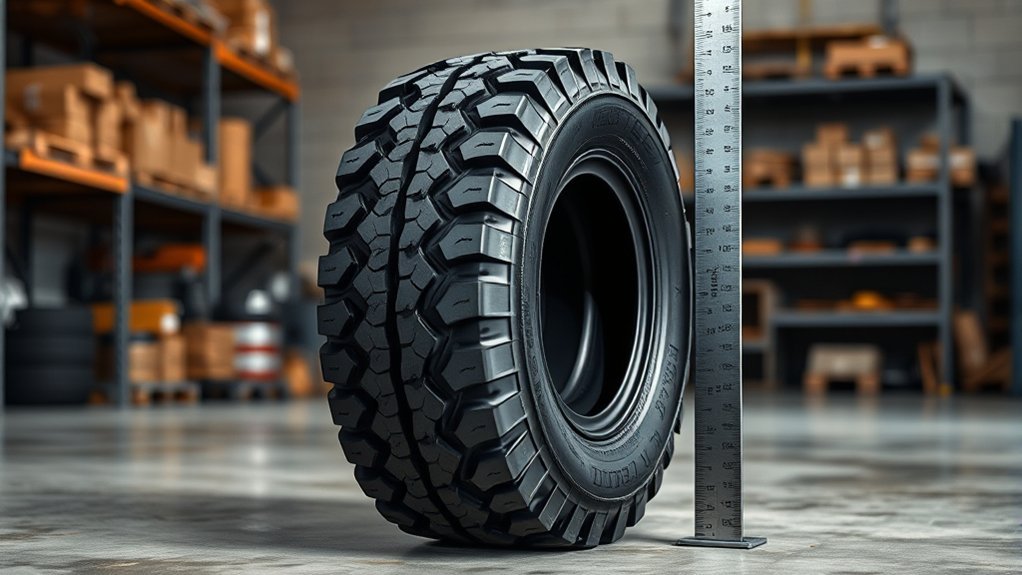
The best 33-inch mud-terrain tire depends on your vehicle weight, road use, terrain, and exact size availability. Instead of relying on star ratings from mixed retailers, compare the tire’s tread design, sidewall construction, load range, road noise, wet-road behavior, and manufacturer specifications.
Two strong examples to compare are the Toyo Open Country M/T and the BFGoodrich Mud-Terrain T/A KM3. Toyo highlights aggressive tread blocks, open shoulder blocks, and over-the-shoulder tread for off-road traction. BFGoodrich highlights mud traction, rock grip, and toughness for serious off-road use.
| Mud-Terrain Priority | What to Check |
|---|---|
| Mud clearing | Large voids, open shoulders, and self-cleaning tread channels. |
| Rock protection | Sidewall construction, shoulder lugs, and puncture-resistance features. |
| Daily driving | Road noise, wet braking, tread life, and ride comfort. |
| Heavy vehicles | Load range, load index, approved rim width, and pressure requirements. |
[Products Worth Considering]

The AstroAI 160 PSI portable inflator delivers fast, efficient tire inflation with TurboRise motors and a digital LCD screen for precise pressure control. Its dual metal cylinders and long hose allow back‑to‑back inflation of multiple tires, while the auto‑shutoff feature prevents over‑inflation. Compatible with SUVs, RVs, cars, and even air mattresses, it offers versatile power options via cigarette lighter or battery clamps.

The FORTEM tire inflator delivers fast, reliable inflation for car, truck, SUV, motorcycle and bike tires with up to 150 PSI, powered by any 12V vehicle outlet. Its compact design includes a 14‑foot power cable, LED flashlight for night emergencies, and automatic shut‑off for precise pressure control. Three interchangeable nozzles expand its use to sports balls, air mattresses and other inflatables, making it a versatile roadside companion.

Best 33-Inch All-Terrain Tires
A good 33-inch all-terrain tire should balance off-road grip with road comfort. NHTSA describes all-terrain tires as a compromise between on-road driving and off-road capability, so they make sense when you drive pavement during the week and trails, gravel, snow, or dirt on weekends.
Popular all-terrain options often include the Falken Wildpeak A/T4W, BFGoodrich All-Terrain T/A family, Nitto Ridge Grappler, and Toyo Open Country A/T III. The right choice depends on your size, load rating, snow needs, road-noise tolerance, and warranty expectations. For example, Falken lists the Wildpeak A/T4W with features such as staggered shoulder blocks, select-size 3-ply DURASPEC sidewall technology, and up to a 65,000-mile limited tread life warranty for non-LT sizes.
Do not choose an all-terrain tire from a generic “best” list alone. Confirm the exact 33-inch or near-33-inch size, then compare the manufacturer’s actual diameter, weight, load capacity, tread depth, snow rating, and warranty terms.
[Products Worth Considering]

TOUGHNESS MEETS COMFORT: BFGoodrich All-Terrain T/A KO2 radial car tires offer durability, control and comfort on and off the road: in mud, dirt, snow, sand and rocks

Pirelli Scorpion All Terrain Plus radial Tire-275/60R20 115T

Mud-Terrain vs All-Terrain vs Rugged-Terrain 33s
Not every 33-inch tire is built for the same driver. Tire category affects noise, comfort, wet-road grip, tread life, and trail performance as much as tire height does.
- All-terrain: best for mixed daily driving, gravel, camping roads, light trails, and moderate winter conditions.
- Rugged-terrain or hybrid-terrain: best if you want a more aggressive look and stronger trail bite than many all-terrains without going full mud-terrain.
- Mud-terrain: best for deeper mud, rocks, ruts, and frequent off-road use, but usually louder and less refined on pavement.
If snow matters, look beyond the tire size. Some all-terrain tires carry the Three-Peak Mountain Snowflake symbol, while many mud-terrain tires do not. Check the exact tire model and exact size before you buy.
Frequently Asked Questions
What is the actual size of a 33-inch tire?
A 33-inch tire is usually a nominal size near 33 inches in outside diameter. The actual mounted height can be slightly shorter or closer to the label depending on the tire model, tread depth, rim width, pressure, and load. Always check the manufacturer’s published overall diameter.
What does 33×12.50R17 mean?
It means the tire has a nominal 33-inch outside diameter, an approximate 12.5-inch section width, radial construction, and fits a 17-inch wheel. The real mounted size can still vary by tire model and measuring rim.
Is a 285 a 33-inch tire?
Not by itself. The number 285 only means the tire is about 285 mm wide. You need the full size, such as 285/70R17 or 285/75R16, to estimate diameter. A 285/70R17 calculates to about 32.7 inches, while a 285/75R16 calculates to about 32.8 inches.
Is a 275 tire a 33-inch tire?
A 275 tire can be near 33 inches, but only with the right aspect ratio and wheel size. For example, 275/70R18 calculates to about 33.2 inches. A 275/60R20 calculates to about 33.0 inches. A 275/65R18 is shorter, at about 32.1 inches.
Is 305 a 33-inch tire?
No, 305 only tells you the tire’s section width in millimeters. A 305/70R16 calculates to about 32.8 inches, so it is a common wide near-33-inch option. Other 305 sizes can be shorter or taller depending on aspect ratio and rim diameter.
Will 33-inch tires fit without a lift?
Sometimes, but it depends on the vehicle, wheel offset, tire width, suspension setup, and trimming. A narrow 33-inch tire may fit where a 12.5-inch-wide tire rubs. Check clearance at full steering lock and under suspension compression before driving.
What rim width do 33-inch tires need?
It depends on the exact tire size and model. A 33×12.50 tire often needs a wider approved rim range than a 33×10.50 tire. Always use the tire manufacturer’s approved rim width range instead of guessing from diameter alone.
Are 33-inch tires good for daily driving?
They can be, especially in an all-terrain pattern with the right load rating and wheel fitment. Expect possible tradeoffs, including more tire weight, more road noise, slower acceleration, lower fuel economy, and speedometer changes compared with the original tire size.
Do 33-inch tires affect the speedometer?
Yes, they can. If your new tire is taller than the original tire, it travels farther per rotation. That can make the speedometer read lower than your actual speed. Many vehicles need recalibration after a major tire-size change.
Conclusion
A 33-inch tire is best understood as a size category, not an exact measurement. The real height and width depend on the tire model, metric or flotation size, rim width, inflation pressure, load, and tread wear. If you want a clean fit, look beyond the label and compare the manufacturer’s actual specifications.
Before you buy, confirm clearance, load rating, speed rating, wheel width, offset, spare-tire plans, and speedometer impact. The right 33-inch tire can improve stance and off-road capability, but the best setup is the one that fits safely and works with your vehicle’s real driving conditions.
Sources
- NHTSA TireWise: backs up tire placard guidance, cold pressure checks, tread depth, tire safety, and tire maintenance.
- Toyo Open Country M/T: backs up mud-terrain feature examples, including open shoulder blocks and over-the-shoulder tread.
- BFGoodrich Mud-Terrain T/A KM3: backs up mud-terrain feature examples, including mud traction, rock grip, and toughness claims.
- Falken Wildpeak A/T4W: backs up all-terrain feature examples, warranty wording, and select-size sidewall technology claims.

Related Articles
What Does THE P Stand For on a Tire? Full Meaning Explained
I’ll explain what the “P” on a tire really means and why it could change how you choose your next set.
Read More
How to Use a Tubeless Tire Repair Kit: Complete Field Guide
Learn how to fix tubeless tire punctures fast with the right kit, because one small mistake can leave you stranded on the trail.
Read More
How to Tell a Tire’s Diameter: Easy Guide to Reading Tire Size
Want to decode tire sidewall numbers and find the right diameter, but wonder what those hidden digits really mean?
Read More