
Toyota RAV4 Tire Pressure: 30-35 PSI Guide
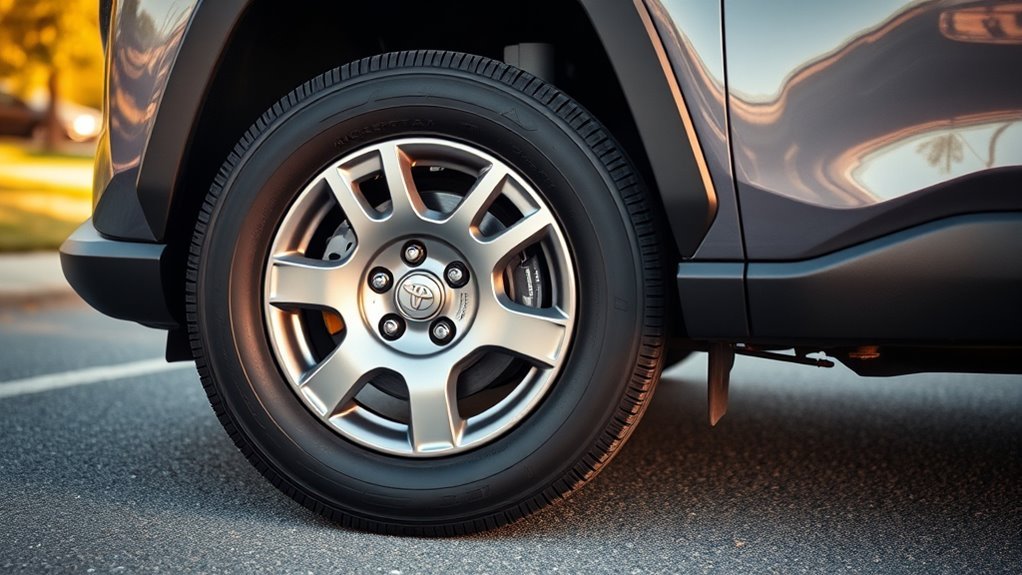
Low tire pressure can make your Toyota RAV4 feel less stable, wear tires faster, and use more fuel. Most RAV4 models need tire pressure in the 30-35 PSI range, but the exact number depends on your model year, tire size, and trim. Use this guide to check the right pressure, add air safely, handle a tire pressure warning light, and keep your tires in better shape.
What’s in This Article
- What Is the Recommended Tire Pressure for Your Toyota RAV4?
- How to Check Your Toyota RAV4 Tire Pressure Accurately
- Why Is Proper Tire Pressure Important for Your RAV4?
- Essential Tire Sizes and Pressures for Your Toyota RAV4
- How Can You Add Air to Your RAV4 Tires?
- What to Do If Your Tire Pressure Light Comes On?
- How Often Should You Check Your Tire Pressure?
- How to Maintain Your Toyota RAV4 Tires for Longevity
- What Tire Services Can You Find Near You?
- Frequently Asked Questions
Quick Answer
Most Toyota RAV4 models use a recommended tire pressure near 30-35 PSI. Many 2022 RAV4 trims list 35 PSI for the front and rear tires, but you should confirm the exact number on the driver-side door jamb sticker or in your owner’s manual. Check pressure when the tires are cold for the most accurate reading.
Key Takeaways
- Check your RAV4 tire pressure when the tires feel cold, before long drives when possible.
- Use the door jamb sticker or owner’s manual for the exact PSI for your model and tire size.
- Keep most RAV4 tires near 30-35 PSI unless Toyota lists a different pressure for your vehicle.
- Inspect tires for punctures, bulges, or uneven wear when the tire pressure light turns on.
- Rotate and inspect your tires on schedule to help them last longer.
What Is the Recommended Tire Pressure for Your Toyota RAV4?
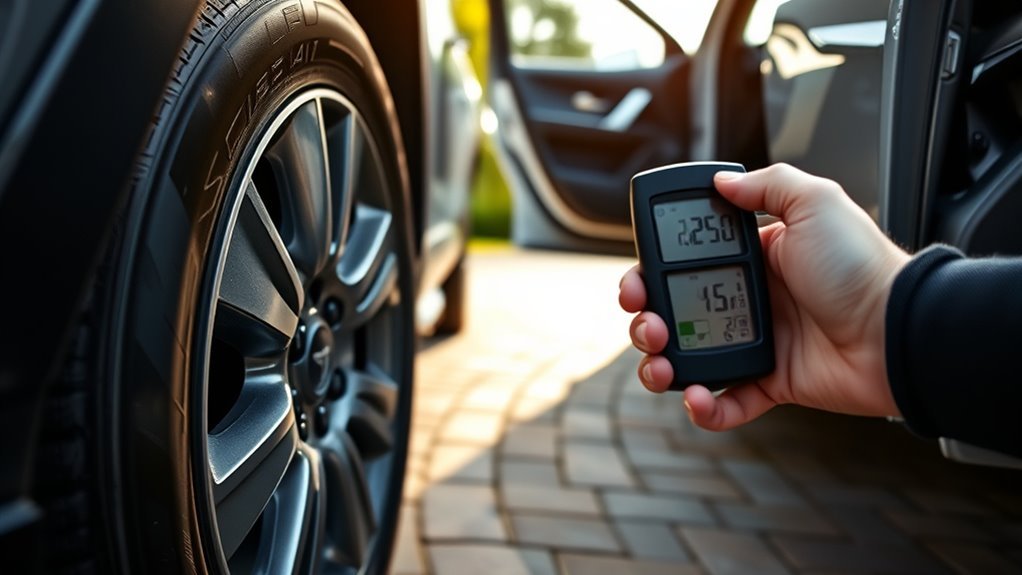
For many Toyota RAV4 models, the recommended tire pressure falls between 30 and 35 PSI. Many 2022 RAV4 trims list 35 PSI for both front and rear tires, but your exact trim and tire size may differ.
Check the tire information sticker inside the driver-side door jamb for the number Toyota assigned to your vehicle. You can also check your owner’s manual if the sticker is missing or hard to read.
Regular pressure checks help your RAV4 ride smoothly, brake predictably, and wear tires more evenly. Check the pressure about every two weeks and before long trips.
Watch your dashboard, too. The Tire Pressure Monitoring System (TPMS) warns you when one or more tires drop below the safe range.
[Products Worth Considering]

This portable cordless tire inflator delivers fast, efficient inflation for cars, motorcycles, bikes, and sports balls with a digital pressure gauge. Use the one-click PSI preset with auto shut-off for accurate, hands-free topping to your target pressure up to 150 PSI. It’s compact and rechargeable with a built-in emergency LED light plus valve adapters and accessories for quick, ready-to-go use.

This portable cordless tire inflator delivers up to 160 PSI with fast 17 L/min airflow to help you quickly top up tires and get back on the road. It features dual power mode, running on a 21V rechargeable battery or a 12V DC adapter for convenient roadside use. An automatic shut-off with digital pressure gauge helps prevent overinflation, and a built-in LED light improves visibility in low-light conditions.

EVOULTES heavy duty tire inflator with an integrated gauge delivers accurate pressure readings from 10–120 PSI, helping you inflate, deflate, and check tires in one tool. The 16.5-inch extended dual-head air chuck with swivel base reaches hard-to-access dual wheel valves on trucks and RVs. A brass trigger core and side-mounted air release valve make operation smooth, with standard 1/4" NPT threading and quick-connect compatibility for easy setup.
How to Check Your Toyota RAV4 Tire Pressure Accurately
Check your Toyota RAV4 tire pressure with a tire pressure gauge when the tires feel cold. Heat from driving raises pressure and can give you a higher reading than the tire has at rest.
- Park your RAV4 on a level surface and let the tires cool.
- Remove the valve cap from one tire stem.
- Press the tire pressure gauge firmly onto the valve stem.
- Read the PSI on the gauge and compare it with the door jamb sticker.
- Add or release air as needed, then check the pressure again.
- Replace the valve cap securely before moving to the next tire.
Newer RAV4 models may also show tire pressure readings on the dashboard display. Still, a handheld gauge gives you a helpful backup reading.
Here’s a quick reference table for common RAV4 pressure ranges:
| Tire Location | Common Recommended PSI Range |
|---|---|
| Front Left | 30-35 PSI |
| Front Right | 30-35 PSI |
| Rear Left | 30-35 PSI |
| Rear Right | 30-35 PSI |
Note: Use the PSI on your RAV4 door jamb sticker as the final number, not the maximum PSI printed on the tire sidewall.
Why Is Proper Tire Pressure Important for Your RAV4?
Proper tire pressure helps your Toyota RAV4 handle, brake, and ride the way Toyota designed it to. Correct pressure also helps the tire tread contact the road evenly.
Underinflated tires can create extra heat, reduce fuel economy, and wear out the tire shoulders faster. Overinflated tires can make the ride harsher and wear the center tread faster.
Good tire pressure also supports better traction in rain, snow, and uneven road conditions. That matters most when you need steady steering or a shorter stopping distance.
Warning: Do not ignore a tire pressure warning light, because low pressure can increase tire damage and affect vehicle control.
Essential Tire Sizes and Pressures for Your Toyota RAV4
Your Toyota RAV4 may use tire sizes such as 225/65R17, 225/60R18, 235/55R19, or 245/45R20, depending on the model year and trim. Each size still needs the pressure Toyota lists for your vehicle.
Most RAV4 pressure recommendations fall between 30 and 35 PSI. Do not guess based on tire size alone, because different trims can have different recommended pressures.
Use these sources in this order when you need the right number:
- Check the tire and loading information sticker on the driver-side door jamb.
- Review the owner’s manual for your model year.
- Ask a Toyota service center to confirm the right pressure for your tires.
Set pressure when the tires are cold, then recheck after you add air. Never exceed the tire manufacturer’s maximum pressure printed on the sidewall.
How Can You Add Air to Your RAV4 Tires?
You can add air to your RAV4 tires at many gas stations, tire shops, and service centers. Bring a tire pressure gauge so you can confirm the pressure before and after you inflate each tire.
Locate an Air Dispenser Nearby
Find an air dispenser at a nearby gas station or tire service center. Park close enough for the hose to reach all four tires.
Remove the valve cap from the first tire and keep it in your pocket or another safe spot. Before adding air, use a tire gauge to check the current pressure.
Add short bursts of air until the tire reaches the PSI listed on your RAV4 door jamb sticker. Replace the valve cap securely after you finish.
Check Current Tire Pressure
Check the pressure again after adding air. A second reading helps you avoid underinflating or overinflating the tire.
- Press the gauge straight onto the valve stem.
- Read the PSI and compare it with the recommended number.
- Add more air if the number stays too low.
- Release a little air if the number runs too high.
Repeat the same process on all four tires. Check the spare tire too if your RAV4 has one.
What to Do If Your Tire Pressure Light Comes On?
When your tire pressure light comes on, check your tire pressures right away with a gauge. Inspect each tire for damage, then adjust the pressure as needed.
Cold weather can trigger the light because tire pressure drops as air temperature falls. A puncture, slow leak, or damaged valve stem can also cause the warning.
[Products Worth Considering]

The Fanttik X10 Pro is a cordless portable tire inflator that reaches up to 150 PSI and can inflate an R15 tire in about 35 seconds for quick roadside or home top-ups. With AccuInFlate auto-stop and smart start/stop controls, it helps maintain accurate pressure and frees your hands once the target is reached. A high-visibility digital display and preset modes make it easy to set and monitor inflation for cars, motorcycles, bikes, and balls.
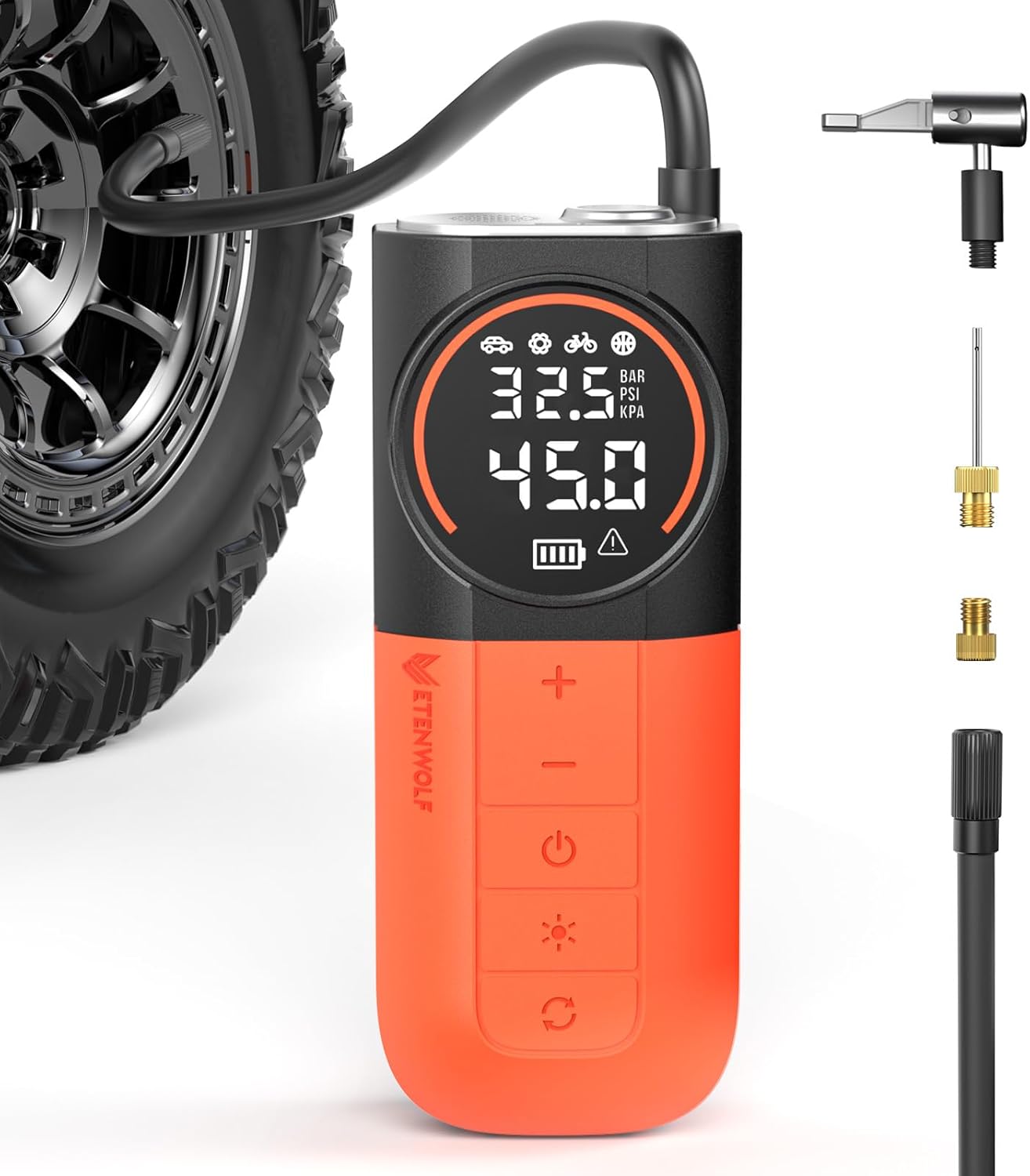
The ETENWOLF S1 cordless tire inflator delivers ultra-fast inflation with up to 160 PSI and a 20 L/min airflow for quicker tire top-offs. Its 5200mAh battery and cooling system support inflating many tires and sports balls on a single charge, while the digital pressure gauge and multi-unit display help you reach the right pressure accurately. With preset modes, pressure memory, an auto-stop feature, and an LED flashlight, it’s built for easy roadside and everyday use.
Check Tire Pressure Immediately
Check all four tires and compare each reading with the recommended PSI for your RAV4. If one tire reads much lower than the others, inspect it closely for a leak.
- Low pressure can make steering feel less stable.
- Low pressure can increase tire wear and replacement costs.
- Low pressure can reduce fuel efficiency.
- Low pressure can raise safety risks during hard braking or wet-road driving.
If the pressure is low, add air before you continue driving. If the tire loses air again soon, have a tire technician inspect it.
Inspect for Tire Damage
Inspect each tire for cuts, bulges, cracks, nails, screws, or other objects in the tread. These signs can point to damage or a slow leak.
| Signs of Damage | Action Required |
|---|---|
| Cuts or Punctures | Have the tire repaired or replaced |
| Bulges or Deformations | Replace the tire |
| Foreign Objects | Do not pull deep objects out before inspection |
Do not drive far on a tire with a visible bulge or severe sidewall damage. Call roadside help or visit a tire shop as soon as you can.
Reset the Tire Pressure Light
After you correct the tire pressure, your RAV4 may reset the Tire Pressure Monitoring System after a short drive. Some models also include a TPMS reset button or menu setting.
- Set all tires to the recommended cold pressure.
- Drive for several minutes so the system can read the sensors.
- Use the TPMS reset button or vehicle settings if your manual instructs you to do so.
- Schedule service if the light stays on or flashes.
A flashing TPMS light can point to a system fault, not just low pressure. Ask a technician to check the sensors if the warning does not clear.
How Often Should You Check Your Tire Pressure?
Check your Toyota RAV4 tire pressure about every two weeks and before long trips. You should also check it when the weather changes sharply.
Pressure can change as outside temperatures rise or fall. A quick pressure check helps you catch problems before they affect your drive.
| Check Frequency | Reason |
|---|---|
| Every two weeks | Supports safe handling and tire wear |
| Before long trips | Helps prevent road-trip tire issues |
| During weather changes | Accounts for temperature-related pressure shifts |
| After a warning light | Finds low pressure or leaks quickly |
Keep a simple pencil gauge or digital gauge in your glove box. That small tool can save you a service stop later.
How to Maintain Your Toyota RAV4 Tires for Longevity
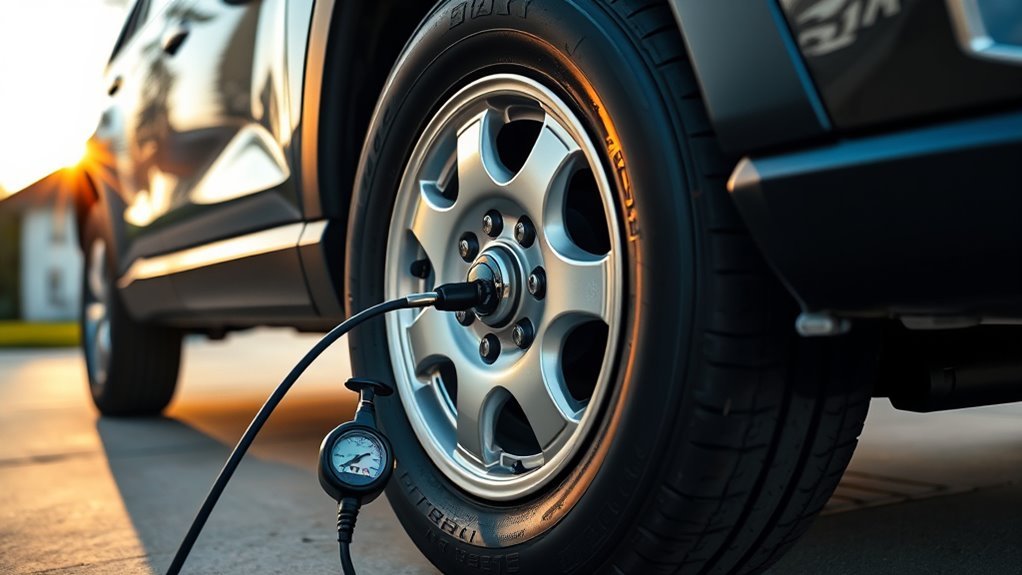
Good tire care helps your Toyota RAV4 tires last longer and perform better. Focus on pressure, rotation, alignment, and regular inspections.
- Check tire pressure every two weeks and before long trips.
- Rotate your tires on the schedule listed in your owner’s manual.
- Inspect tread depth and sidewalls for damage.
- Schedule alignment service if your RAV4 pulls to one side.
- Replace tires when tread wear indicators show or traction feels reduced.
Pro tip: Check tire pressure on the same day you fuel up every other week so the habit sticks.
What Tire Services Can You Find Near You?
You can find tire services for your Toyota RAV4 at Toyota dealerships, tire shops, and many general repair centers. Common services include pressure checks, tire rotations, balancing, alignment, and tire replacement.
A service center can also inspect the Tire Pressure Monitoring System if the warning light stays on. Tire specialists can help you choose all-season, winter, or performance tires based on your climate and driving habits.
You can often schedule service online or by phone. Ask the shop to confirm the tire size, load rating, speed rating, and recommended pressure before installation.
| Service Type | Description |
|---|---|
| Tire Rotation | Promotes more even tire wear |
| Alignment Services | Supports steady handling and tire life |
| Tire Pressure Check | Helps maintain safe tire inflation |
| Tire Recommendations | Matches tires to your RAV4 and driving needs |
Frequently Asked Questions
Is 32 PSI Too Low for a SUV?
No, 32 PSI is not too low for many SUVs, but your RAV4 may need a different number. Check the door jamb sticker or owner’s manual and set the pressure to Toyota’s listed PSI.
Is 40 PSI Too High for SUV Tires?
Yes, 40 PSI can be too high if your RAV4 calls for 30-35 PSI. Too much pressure can make the ride harsher and cause uneven tread wear.
Should Front and Rear RAV4 Tires Have the Same Pressure?
Many RAV4 models use the same PSI for front and rear tires. Confirm your exact model on the tire information sticker because some vehicles use different front and rear pressures.
Should You Check RAV4 Tire Pressure Hot or Cold?
Check tire pressure when the tires are cold for the most accurate reading. If you must check after driving, expect the pressure to read higher than a cold-tire reading.
Why Does My RAV4 Tire Pressure Light Stay On After Adding Air?
The light may stay on until the Tire Pressure Monitoring System updates after a short drive. If the light stays on or flashes, one tire may still be low, a sensor may need service, or a leak may be present.
Conclusion
Keeping your Toyota RAV4’s tire pressure at the recommended level helps protect safety, fuel economy, and tire life. Check the door jamb sticker, measure pressure when the tires are cold, and correct low pressure right away.
Make tire checks part of your normal maintenance routine, especially before long trips or major weather changes. A few minutes with a tire gauge can help every drive feel safer and smoother.
References
- Toyota Warranty and Owner’s Manuals — Toyota, current owner manual source
- Tires — National Highway Traffic Safety Administration
- Tire Pressure — National Highway Traffic Safety Administration

Related Articles

Toyota RAV4 TPMS Reset: Easy Steps That Work
Unlock the secrets to resetting your Toyota RAV4's TPMS effortlessly—discover the essential steps to ensure your tires are always safe.
Read More
Toyota RAV4 Tire Rotation: DIY Steps & Pattern
Take control of your Toyota RAV4's tire maintenance with our simple DIY rotation guide—discover the best steps for optimal performance and longevity!
Read More
Mix Tire Brands on a Toyota RAV4? Expert Guide
Keeping your RAV4 safe? Learn when mixing tire brands risks traction, ABS/TCS and AWD damage — and what exact matches you must insist on.
Read More
One Comment