
What Causes Tire Chopping? Suspension, Alignment & Fix Guide
Last updated: August 18, 2026
What causes tire cupping? Tire cupping, also called tire chopping or scalloping, starts when the tread does not keep smooth, consistent contact with the road. The strongest suspects are worn shocks, struts, or other suspension parts and an out-of-balance tire/wheel assembly. Misalignment, incorrect tire pressure, skipped rotations, damaged wheels, or an out-of-round tire can also contribute. Brake problems and severe wheel-bearing looseness can cause abnormal tire wear too, so they are worth checking when the symptoms fit.
Do not treat cupping as only a tire-noise problem. Fix the root cause first, then decide whether the tire can stay in service. Mild cupping may become less noticeable after pressure, balance, alignment, or suspension problems are corrected, but the worn tread itself cannot be restored. Deep scallops, exposed cords, bulges, deep cracks, very low tread, or strong vibration are reasons to stop normal use and have the tire inspected for replacement.
Quick Answer
Tire cupping is an uneven, scalloped tread-wear pattern caused by inconsistent road contact. Check worn shocks, struts, and suspension parts plus wheel balance first. Then check alignment, cold tire pressure, rotation history, wheel damage, and tire runout. Repair the cause before installing replacement tires; the cupped tread itself cannot be restored.
Key Takeaways
- Tire cupping creates scalloped tread dips that can cause humming, thumping, vibration, reduced grip, and uneven braking feel.
- Worn shocks, struts, or other suspension parts and wheel imbalance are leading suspects; alignment, pressure, rotation history, wheel damage, and runout can also contribute.
- You can fix the cause of cupping, but you cannot restore tread rubber that has already worn away.
- Check tire pressure and tread monthly, and rotate tires according to your owner’s manual or sooner if uneven wear appears.
- Do not ignore exposed cords, bulges, deep cracks, strong vibration, sudden ride changes, or a vehicle that pulls hard to one side.
At a Glance
| Time Required | A few minutes for a basic visual, pressure, and tread check; professional diagnosis takes longer and varies with the symptoms |
| Difficulty | Easy for spotting symptoms; professional inspection recommended for suspension, balance, alignment, wheel, and tire-structure checks |
| Tools Needed | Tire pressure gauge, tread depth gauge or penny, flashlight, phone camera, and a trusted repair shop for mechanical checks |
| Cost | A home inspection is free; shop cost depends on whether the fix involves inflation, balancing, alignment, suspension repair, wheel repair, or tire replacement |
Tire Cupping Diagnosis Map
Use the pattern, sound, and steering feel to narrow the problem before you authorize repairs. This table does not replace a shop inspection, but it helps you describe the symptom clearly and avoid replacing tires before the mechanical cause is fixed.
| What You Notice | Likely Area to Check | Best Next Step |
|---|---|---|
| Rhythmic hum or growl that rises with speed | Cupped tread, wheel bearing, balance, or tire runout | Inspect tread by hand, then have the shop check bearings, balance, and runout |
| Steering-wheel shake at highway speed | Front tire balance, bent wheel, runout, or loose steering part | Balance the assembly and inspect wheel condition before replacing tires |
| Same vehicle corner keeps damaging tires | Shock, strut, bushing, ball joint, tie rod, spring, or bearing | Inspect suspension and steering before mounting another tire on that corner |
| Pulling, off-center steering, or feathered edges | Alignment, steering linkage, ride height, or worn suspension | Correct worn parts first, then perform alignment to vehicle specifications |
| One wheel feels hot or the vehicle drags | Brake caliper, rotor, parking brake, bearing, or hub | Stop hard driving and have brakes and bearings inspected promptly |
[Products Worth Considering]

EVOULTES heavy duty tire inflator with an integrated gauge delivers accurate pressure readings from 10–120 PSI, helping you inflate, deflate, and check tires in one tool. The 16.5-inch extended dual-head air chuck with swivel base reaches hard-to-access dual wheel valves on trucks and RVs. A brass trigger core and side-mounted air release valve make operation smooth, with standard 1/4" NPT threading and quick-connect compatibility for easy setup.

The JACO FlowPro Tire Inflator measures, inflates, and airs down tires up to 100 PSI with battery-free operation and ±2% accuracy after calibration. It features a glowing pressure dial for night visibility, a heavy-duty steel build with a hybrid hose, and a precision push-to-inflate thumb trigger. The patented Lightning Air Chuck locks on for a secure seal, and the kit includes quick-connect hardware for easy inline use with your air compressor.
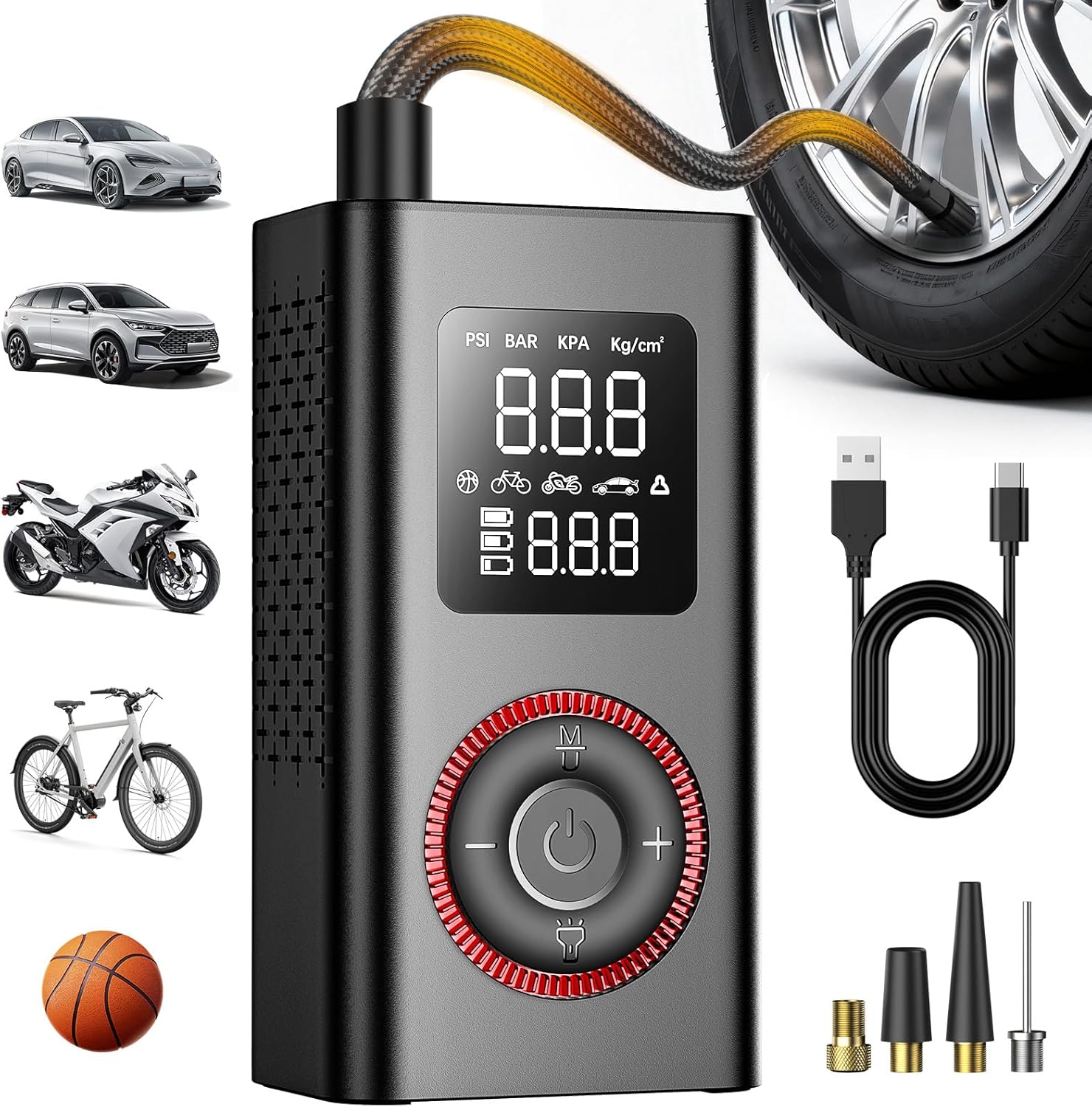
This portable tire inflator delivers fast, efficient inflation with a maximum 150 PSI rating and accurate pressure control for cars, motorcycles, bikes, and more. It features preset modes with automatic shutoff to help prevent overinflation, plus a real-time digital gauge and bright LED light for roadside use. Powered by a rechargeable 6000mAh battery with Type-C charging and a USB output, it’s also useful as an emergency power source for devices.
What Is Tire Cupping?
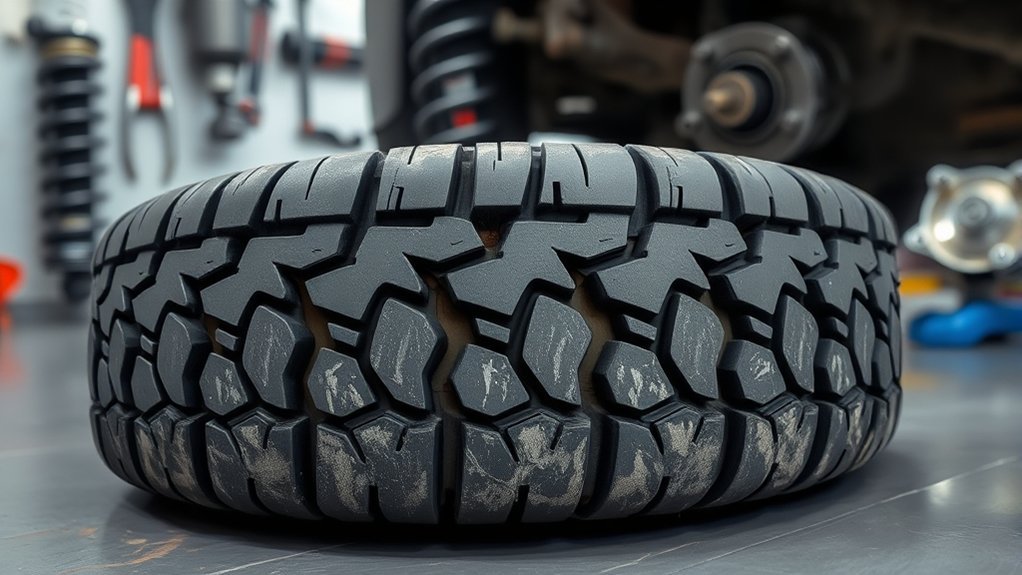
Tire cupping is an uneven tread wear pattern that looks like shallow scoops, dips, or scalloped patches around the tire. Instead of wearing evenly across the tread, the tire develops high and low spots. When those spots hit the road, they can create a repeating thump, hum, growl, or vibration.
You may feel the problem through the steering wheel, floor, or seat. You may also notice the vehicle wandering, pulling, or feeling less planted on rough pavement. The pattern often means the tire is not staying in steady contact with the road because something in the suspension, steering, wheel balance, wheel condition, pressure, or alignment is off.
Cupping matters because tread is what helps your vehicle grip the road. The National Highway Traffic Safety Administration explains that tire tread provides the gripping action that helps prevent slipping and sliding, especially on wet or icy roads. When tread wears unevenly, the tire cannot roll as smoothly or predictably.
What Causes Tire Cupping?
Tire cupping usually comes from a problem that lets the tread bounce, wobble, or meet the road unevenly. Worn shocks, struts, or suspension parts and wheel imbalance are classic causes of a scalloped pattern. Misalignment, incorrect tire pressure, skipped rotations, damaged wheels, tire runout, and loose steering parts can contribute or make the pattern worse. Brake faults and severe wheel-bearing looseness are broader abnormal-wear causes and should be ruled out when heat, drag, play, or bearing noise is present.
The U.S. Tire Manufacturers Association Tire Care and Safety Guide explains that tires, wheels, brakes, shock absorbers, steering, suspension, and alignment must work together for safe performance and normal tread wear. If one part of that system fails, the tire can wear rapidly or abnormally.
Start with the simplest checks first. Confirm cold tire pressure, inspect tread depth, look for visible damage, and note when the vibration happens. Then have a qualified technician check balance, alignment, shocks, struts, bushings, ball joints, tie rods, wheel bearings, wheel runout, and brake condition.
Tire construction or a tire defect can also make an irregular pattern harder to correct, but you should rule out service-related causes first. If the wear follows the same vehicle corner after rotation, suspect the vehicle. If the wear follows the same tire to a new position, ask the shop to inspect that tire and wheel assembly more closely.
Suspension, Balance, and Alignment Issues
Worn suspension parts and wheel imbalance are two of the clearest cupping suspects. Suspension controls how firmly the tire stays planted, while balance controls how smoothly the tire/wheel assembly rotates. Alignment still matters, but it more commonly shows up as feathering or one-sided wear and can combine with suspension or balance problems to worsen an irregular pattern.
Worn shocks, worn struts, damaged bushings, weak springs, loose ball joints, worn tie rods, and loose control-arm components can all let the wheel move more than it should. Incorrect camber or toe can also shift or scrub the contact patch. If the tire is cupped and the steering also pulls or the tread edges feel feathered, inspect alignment along with suspension and balance.
Have alignment checked when your vehicle pulls, the steering wheel sits off-center, tires show uneven wear, you hit a major pothole or curb, or suspension parts are replaced. Follow your owner’s manual for routine service intervals instead of relying on one universal mileage number.
Tire Imbalance, Wheel Runout, and Pressure
Even if the alignment is correct, a tire can still cup when the wheel and tire assembly is out of balance. An imbalance means weight is not distributed evenly around the rotating assembly. As speed increases, that uneven weight can create a shake or vibration that makes tread contact less consistent.
A bent rim, damaged wheel, tire nonuniformity, or wheel runout can create a similar problem. The tire may look normal at a glance but still rotate unevenly under load. A shop can measure runout and inspect the wheel more accurately than you can with a quick driveway check.
Tire pressure also matters. Underinflation, overinflation, or mismatched pressure can change how the tread contacts the road. NHTSA recommends checking all tires, including the spare, at least once a month when the tires are cold and using the pressure listed on the vehicle’s tire information label or owner’s manual.
| Check | What You Want | Why It Helps |
|---|---|---|
| Tire pressure | Vehicle placard pressure when cold | Keeps the tread contact patch more even |
| Wheel balance | Smooth rotation with no shake | Reduces vibration that can speed irregular wear |
| Alignment | Camber, caster, and toe within spec | Prevents the tire from scrubbing sideways |
| Suspension and steering | No leaks, looseness, bounce, bearing play, or damaged bushings | Helps the tire stay planted and pointed correctly |
| Wheel condition | No bent rim, runout, cracked wheel, or missing wheel weights | Reduces wobble and irregular road contact |
How Worn Suspension Causes Cupping
Your suspension controls how the tire moves after bumps, dips, braking, and cornering. When shocks, struts, bushings, joints, bearings, or springs wear out, the tire may bounce instead of tracking smoothly. Each bounce changes the load on the tread, so some spots hit the road harder than others.
Over time, that repeated impact can carve scalloped patches into the tread. You may hear a rhythmic hum, feel a shake, or notice one tire looks worse than the others. A suspension inspection should come before tire replacement, because a new tire can cup again if the root cause remains.
Worn Shocks and Struts
Shocks and struts help control spring movement and keep the tire in consistent contact with the road. When they weaken, the wheel can keep bouncing after a bump. That bounce can create uneven tread pressure and lead to choppy wear.
Watch for extra body bounce, nose dive during braking, fluid leakage on the shock or strut body, uneven ride height, clunking, or a tire that keeps developing the same wear pattern. These symptoms do not prove the shock or strut is bad by themselves, but they are strong reasons to schedule an inspection.
Do not rely on a quick “bounce test” as your only proof. Modern suspension systems can hide wear until the vehicle is moving. A technician can check for leaks, loose mounts, worn bushings, weak damping, and uneven ride height under safer conditions.
Suspension Play and Bounce
Loose suspension or steering parts can also cause cupping. Worn bushings, ball joints, tie rods, control arms, wheel bearings, or springs can let the tire shift instead of rolling straight. That movement changes the contact patch and can make the tread wear unevenly.
Check tread depth at several spots around each tire. If one tire has repeating high and low areas, compare it with the other tires on the vehicle. A shop can lift the vehicle, check for looseness, and inspect parts that are hard to evaluate safely at home.
Warning: Do not keep driving normally if a tire has exposed cords, bulges, deep cracks, a strong vibration, or a rapid pull to one side. If vibration or ride disturbance starts suddenly, slow down gradually, avoid hard braking or sharp steering, and pull off the road safely for inspection.
How Misalignment Wears Tires Unevenly
Wheel alignment sets the tire’s angle to the road and to the vehicle. The main alignment angles are camber, caster, and toe. When those angles drift away from the vehicle manufacturer’s specifications, the tire can scrub, drag, or carry too much load on one shoulder.
Toe problems often create feathered tread edges. Camber problems can wear one shoulder faster than the other. A severe or long-running alignment issue can also contribute to cupping, especially when it combines with worn suspension, imbalance, or a damaged wheel.
The NHTSA TireWise maintenance guide says wheel alignment helps maximize tire life and helps prevent a vehicle from veering right or left on a straight, level road. Get alignment checked when the vehicle pulls, the steering wheel is off-center, tires wear unevenly, or suspension parts are replaced.
How Unbalanced Tires Cause Vibration
An unbalanced tire can shake because the wheel and tire assembly does not rotate evenly. You may feel the vibration in the steering wheel, seat, or floor. The shake may appear only at certain speeds and then fade or change as speed changes.
A tire that shakes, hums, and shows scalloped tread wear is not just noisy. It is a clue that pressure, balance, alignment, wheel condition, or suspension needs attention.
- Inspect the tread and wheel for mud, stones, ice, or debris buildup.
- Check whether a wheel weight is missing or a rim is visibly bent.
- Note whether vibration appears at one speed range, such as highway speed.
- Have the tire balanced if vibration started after tire service, rotation, pothole impact, or new tire installation.
NHTSA notes that tire balancing helps wheels rotate properly and helps prevent the vehicle from shaking or vibrating. New tires should be balanced when installed, and recurring vibration should be checked by a qualified technician.
Other Causes of Tire Cupping
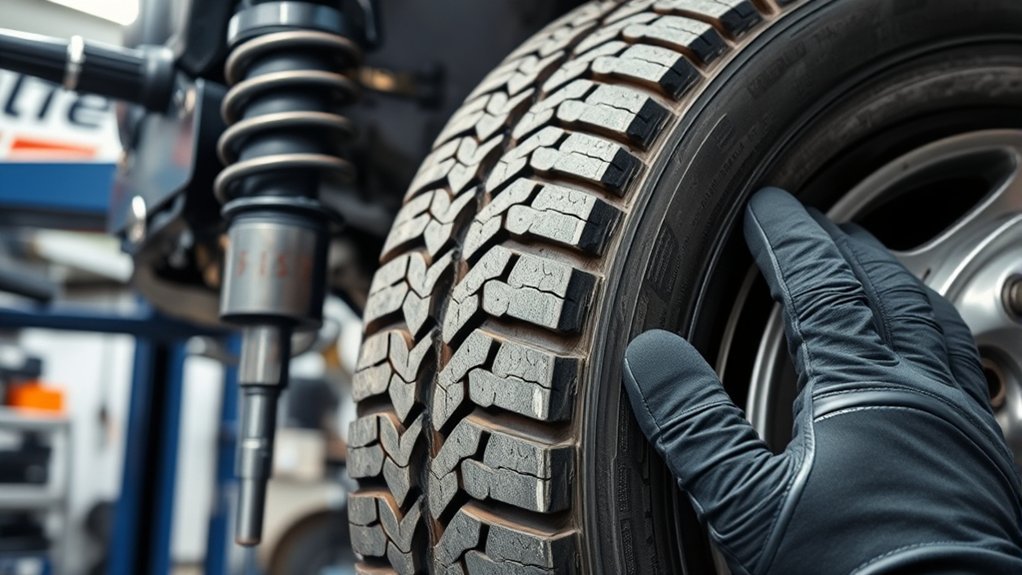
Suspension, alignment, balance, and pressure are the main causes to check first, but they are not the only possibilities. Rough roads, repeated pothole impacts, damaged wheels, tire defects, mismatched tires, improper tire size, heavy loads, and aggressive driving can all worsen uneven tread wear.
Dragging brakes can create abnormal wear if one wheel is fighting the road more than the others. Severe wheel-bearing looseness can also let the wheel move outside its normal path. These are not the first suspects for classic cupping, but they matter when the same corner runs hot, drags, has wheel play, or makes bearing-like noise. A bent wheel or out-of-round tire can create repeated high and low contact spots even if the tire still holds air.
Tire age and visible damage also matter. The U.S. Tire Manufacturers Association advises removing damaged tires from service when inspection finds serious conditions, and Transport Canada warns that deep cuts, cracks, blisters, or bulges can be dangerous. If one tire looks very different from the others, do not assume rotation alone will solve it.
What Does Tire Cupping Sound Like?
Tire cupping often sounds like a rhythmic hum, drone, thump, growl, or helicopter-like road noise that gets faster as the vehicle speeds up. The sound may seem louder on smooth pavement because the uneven tread blocks hit the road in a steady pattern. It can also change when you move the affected tire during rotation.
Noise alone does not prove cupping. A worn wheel bearing, rough road surface, brake issue, or damaged tire can sound similar. Pair the sound with a tread inspection. If you feel alternating high and low spots, see scalloped dips, or feel vibration through the wheel, seat, or floor, schedule a tire, wheel, bearing, balance, alignment, and suspension inspection.
Signs Your Tires Are Cupping
Cupping usually shows up as uneven tread wear with dips, scallops, or chopped-looking patches around the tire. Run your hand lightly over the tread while the vehicle is parked safely and the tire is cool. A cupped tire may feel wavy instead of smooth.
Cupping often creates repeating road noise, speed-related vibration, and visible tread dips that appear every few inches around the tire.
- Look for scalloped tread dips or alternating high and low spots.
- Listen for rhythmic humming, growling, or thumping that changes with speed.
- Note steering-wheel vibration, seat vibration, or a pull to one side.
- Compare tread depth at several points around the same tire.
- Check whether one tire is wearing differently from the others.
- Look for missing wheel weights, bent rims, uneven ride height, or leaking shocks.
Front vs. Rear Cupping Clues
Front-tire imbalance or cupping may be felt through the steering wheel, while rear-tire problems may be felt more through the seat or floor. Treat those as location clues, not a diagnosis. Bearing noise, alignment faults, and other rotating parts can create similar sensations, so pair the vibration location with tread inspection and professional checks.
Early detection gives you a better chance to stop the wear before the tire becomes too noisy or unsafe. If you find cupping, fix the cause before buying replacement tires.
Is It Safe to Drive on Cupped Tires?
Light cupping may not require immediate tire replacement, but it should still be inspected because it usually points to a mechanical or maintenance problem. The more severe the tread damage, the more likely you are to feel vibration, hear noise, and lose smooth road contact.
A tire should not stay in service if tread is worn down to 2/32 inch, if cords are exposed, or if the sidewall has bulges, deep cracks, blisters, or serious cuts. NHTSA recommends checking tread at least monthly and replacing tires when they reach the treadwear indicators. Transport Canada also warns that tires with deep cuts, cracks, blisters, or bulges can be dangerous and should be replaced.
When in doubt, have the tire inspected by a qualified tire professional. A technician can decide whether the tire is still serviceable, whether rotation may reduce noise, or whether replacement is the safer choice.
[Products Worth Considering]

This portable cordless tire inflator delivers fast, efficient inflation for cars, motorcycles, bikes, and sports balls with a digital pressure gauge. Use the one-click PSI preset with auto shut-off for accurate, hands-free topping to your target pressure up to 150 PSI. It’s compact and rechargeable with a built-in emergency LED light plus valve adapters and accessories for quick, ready-to-go use.

The Fanttik X10 Pro is a cordless portable tire inflator that reaches up to 150 PSI and can inflate an R15 tire in about 35 seconds for quick roadside or home top-ups. With AccuInFlate auto-stop and smart start/stop controls, it helps maintain accurate pressure and frees your hands once the target is reached. A high-visibility digital display and preset modes make it easy to set and monitor inflation for cars, motorcycles, bikes, and balls.
How to Diagnose Tire Cupping at Home
You can spot many cupping symptoms before visiting a shop. Park on level ground, let the tires cool, set the parking brake, and check each tire under good light. Do not crawl under a vehicle supported only by a jack.
- Check pressure first. Use a tire pressure gauge and compare the reading with the driver-side doorjamb placard or owner’s manual.
- Inspect tread depth. Use a tread depth gauge or penny test and compare several spots around each tire.
- Feel for scalloping. Gently run your palm over the tread surface and note any repeating dips.
- Look for visible damage. Check for bulges, cracks, cuts, nails, exposed cords, missing chunks, or uneven shoulder wear.
- Listen during a test drive. A cupped tire often makes rhythmic noise that rises and falls with speed.
- Watch the steering wheel. Vibration, wandering, or pulling can point to balance, alignment, wheel, or suspension issues.
- Take photos before rotation. Clear tread photos help you compare whether the wear pattern improves after repairs.
- Schedule a professional check. Ask the shop to inspect suspension play, shocks, struts, alignment, wheel balance, wheel condition, bearings, and brakes.
Pro Tip: Mark the tire location in your photo, such as “left front” or “right rear.” It helps you and the technician see whether the same corner keeps creating the wear pattern after rotation or repair.
What to Ask the Shop to Check
A good tire inspection should go beyond a quick glance at the tread. Ask the shop to find the cause, not just rotate the tire. Use the table below to describe what you feel and what needs inspection.
| Symptom or Clue | Ask the Shop to Inspect | Why It Matters |
|---|---|---|
| Vibration at highway speed | Tire balance, wheel weights, bent rim, tire runout | Rotating vibration can create irregular road contact |
| Repeated cupping on the same corner | Shock, strut, spring, bushing, ball joint, bearing | A corner-specific problem can damage every tire placed there |
| Pulling or off-center steering | Four-wheel alignment and steering linkage | Scrubbing can speed shoulder wear and cupping |
| Hot smell, dragging feel, or one hot wheel | Brake caliper, rotor, parking brake, wheel bearing | Drag or looseness can create abnormal wear and heat |
Tire Cupping vs. Other Uneven Wear Patterns
Cupping is only one type of uneven tire wear. The pattern you see can help narrow the cause, but it should not replace a proper inspection. Michelin’s passenger-tire wear guide says cupping or scalloping across the tread commonly points to a balance or suspension issue.
| Wear Pattern | What It Looks Like | Common Causes |
|---|---|---|
| Cupping / scalloping | Scooped dips or choppy patches around the tread | Worn suspension, imbalance, alignment issues, pressure problems, damaged wheels |
| Feathering | Tread ribs feel smooth one way and sharp the other | Toe alignment problems or worn steering parts |
| One-side wear | Inner or outer shoulder wears faster | Camber issues, worn parts, load changes, ride-height changes |
| Center wear | Middle of tread wears faster than shoulders | Often linked with overinflation or tire/load mismatch |
| Both-shoulder wear | Both outer edges wear faster than the center | Often linked with underinflation, overloading, or hard cornering |
| Flat spot | One localized worn patch on the tread | Hard braking, lockup, parking damage, or localized tire damage |
| Diagonal wear | Angled patches repeating around the tire | Misalignment, runout, imbalance, or a mechanical condition that lets the wheel track unevenly |
Will Alignment or Balancing Fix Tire Cupping?
Alignment or balancing can fix the cause of cupping only when that cause is actually misalignment or imbalance. Alignment corrects wheel angles so the tire does not scrub across the road. Balancing helps the tire and wheel rotate smoothly without speed-related shake. Neither service can restore rubber that has already worn away.
Use symptoms to choose the first check. If the vehicle pulls, the steering wheel sits off-center, or the tread edges feel feathered, alignment should be inspected. If vibration appears at a certain speed, balance and wheel runout deserve attention. If cupping repeats on the same corner, inspect shocks, struts, bushings, ball joints, tie rods, bearings, and brakes before installing new tires.
Can Tire Cupping Be Fixed?
You can fix the cause of tire cupping, but you cannot put missing tread rubber back onto the tire. If cupping is mild, correcting balance, alignment, pressure, wheel, and suspension problems may stop the pattern from getting worse. A rotation may also help even out future wear if the tire is still safe to use.
If cupping is deep, noisy, or paired with very low tread depth, exposed cords, sidewall damage, or strong vibration, replacement is usually the safer option. Replace the tire only after the root cause has been found, or the new tire may develop the same pattern.
Do not assume balancing alone will erase cupping. Balancing can reduce vibration if imbalance is part of the problem, but it cannot remove scalloped tread dips that already exist.
When to Repair the Cause vs. Replace the Tire
Use the tire’s condition to decide your next step. A shop can make the final call, but these guidelines help you understand the likely outcome.
- Repair the cause first if cupping is light, tread depth is still healthy, and there are no bulges, cracks, cords, or severe vibration.
- Balance and rotate if the tire is safe, the vibration is mild, and a technician confirms the tire can stay in service.
- Replace the tire if the tread is badly scalloped, the tire is at 2/32 inch or less, cords show, the tire has structural damage, or the vehicle shakes hard.
- Inspect suspension and alignment before installing new tires if the old tires show cupping, feathering, one-side wear, diagonal wear, or repeated wear on the same vehicle corner.
- Follow your owner’s manual if your vehicle uses all-wheel drive, staggered tire sizes, directional tires, or special tire-matching rules.
How to Prevent Tire Cupping
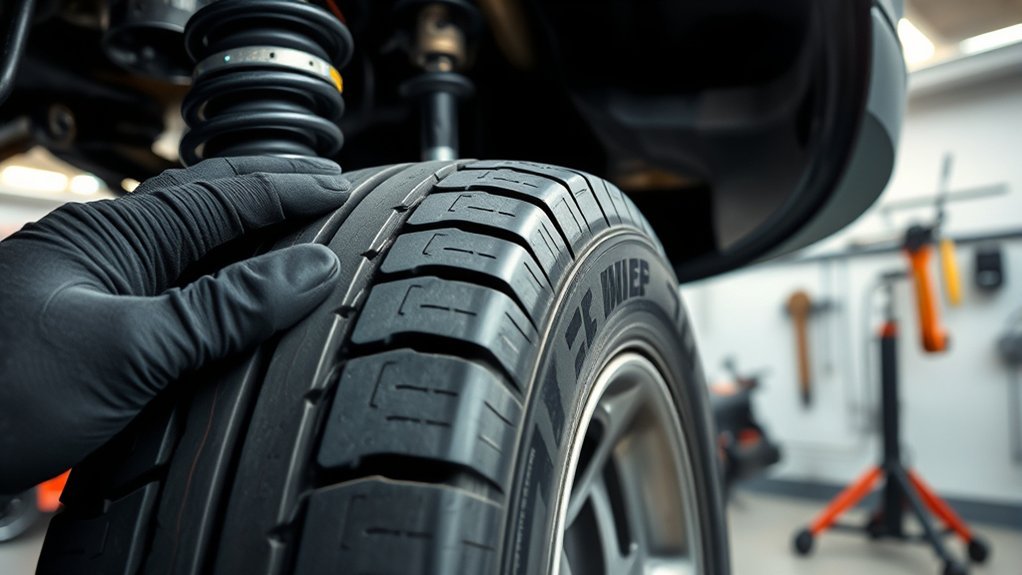
You prevent most tire cupping by keeping the tire, wheel, alignment, suspension, steering, and brakes working together. NHTSA recommends monthly tire-pressure checks, monthly tread checks, proper balancing and alignment, and tire rotation according to the owner’s manual. If your manufacturer recommends rotation, NHTSA says rotating every 5,000 to 8,000 miles or sooner when uneven wear appears can help reduce irregular wear.
- Check tire pressure monthly. Measure pressure when tires are cold and use the vehicle placard pressure, not the number molded on the tire sidewall.
- Inspect tread monthly. Look for scallops, cracks, bulges, nails, exposed cords, foreign objects, and uneven tread depth.
- Rotate on schedule. Follow the owner’s manual, especially if your tires are directional, staggered, or different sizes front to rear.
- Balance when needed. Balance new tires at installation and recheck balance if vibration appears.
- Check alignment after symptoms. Pulling, off-center steering, uneven wear, or hard pothole impacts are good reasons to schedule alignment service.
- Inspect suspension parts. Replace worn shocks, struts, bushings, joints, bearings, or springs before they damage another set of tires.
- Avoid repeated impacts. Slow down for potholes, curbs, railroad crossings, gravel, and rough roads when you can do so safely.
Note: Tire Pressure Monitoring Systems help warn you about significant underinflation, but they do not replace monthly pressure checks with a gauge.
Frequently Asked Questions
What causes tire cupping?
Tire cupping is usually caused by inconsistent road contact. Worn shocks, struts, or other suspension parts and wheel imbalance are leading suspects. Alignment, tire pressure, rotation history, wheel damage, tire runout, and loose steering parts can also contribute or worsen the pattern.
Can chopped tires be fixed?
Sometimes. If the cupping is mild and the tire still has safe tread depth, fixing the root cause may stop the wear from getting worse. That usually means checking pressure, balance, alignment, wheel condition, brakes, bearings, and suspension. Severe chopped tread cannot be restored and often requires replacement.
What does tire cupping sound like?
Tire cupping often sounds like a rhythmic hum, drone, growl, thump, or helicopter-like road noise that changes with speed. Because bearing noise and brake issues can sound similar, pair the sound with a tread inspection and a shop diagnosis.
How serious is tire cupping?
Tire cupping is serious because it points to uneven tire contact and can reduce ride quality, grip, braking feel, and tire life. Mild cupping should be inspected soon. Severe cupping, exposed cords, bulges, deep cracks, or strong vibration need prompt professional attention.
How long can you drive on cupped tires?
No universal mileage is safe. A lightly cupped tire may remain usable after inspection if tread depth and structure are safe. Do not keep driving normally if the tire has exposed cords, bulges, deep cracks, very low tread, strong vibration, or a sudden pull.
Will alignment fix tire cupping?
Alignment can fix one cause of cupping if the wheel angles are out of specification, but it cannot replace rubber that already wore away. If shocks, struts, balance, bearings, brakes, pressure, or wheel damage caused the cupping, those issues must be corrected too.
Will tire rotation fix cupping?
Rotation may help slow uneven wear if the tire is still safe, but it will not fix the underlying cause. If worn shocks, bad alignment, imbalance, incorrect pressure, brake drag, or a damaged wheel caused the cupping, those problems must be corrected first.
Can bad shocks cause tire cupping?
Yes. Weak shocks or struts can let the tire bounce after bumps. That repeated bouncing can create uneven tread pressure and lead to scalloped wear. A technician should inspect shocks, struts, bushings, joints, bearings, brakes, and alignment together.
Can wheel bearings cause tire cupping?
Yes. A loose or worn wheel bearing can let the wheel and tire move in ways they should not. That movement can create vibration, noise, and abnormal tread wear. Bearing noise can also sound like tire noise, so a professional inspection is important.
What is the most common cause of tire cupping?
There is no single cause on every vehicle. Worn shocks, struts, or other suspension parts and wheel imbalance are leading suspects because they can make road contact inconsistent. Alignment, pressure, rotation history, wheel damage, and tire runout should also be checked.
Conclusion
Tire cupping is a warning sign, not just a noise problem. It usually means the tire is bouncing, wobbling, or contacting the road unevenly. Start with suspension condition and wheel balance, then check alignment, tire pressure, rotation history, wheel damage, tire runout, and any steering, brake, or bearing symptoms that point to a broader mechanical problem.
Start with cold pressure and tread checks. Then have a technician inspect balance, alignment, shocks, struts, bushings, bearings, wheels, brakes, runout, and steering parts. If the tire is only lightly cupped, repairs may stop the damage from spreading. If the tread is badly scalloped or unsafe, replace the tire after the root cause is fixed.
Sources
- NHTSA TireWise tire safety guide — supports tire pressure, tread depth, balancing, alignment, rotation, TPMS, and tire replacement guidance
- U.S. Tire Manufacturers Association Tire Care and Safety Guide — supports abnormal tread-wear causes, damaged tire warnings, sudden vibration guidance, and professional inspection advice
- Michelin Wear Problems guide — supports passenger-tire wear-pattern interpretation, including cupping/scalloping, balance, suspension, feathering, and inflation-related wear
- Transport Canada Riding on Air tire safety guide — supports damaged tire replacement, uneven wear, alignment, balancing, and tire inspection guidance
- Bridgestone tire cupping guide — supports consumer-facing tire cupping terminology, causes, repair limits, and prevention context

Related Articles
Tire Balancing Weights: Types, Cost, and Why You Need Them
Precisely chosen tire balancing weights reduce vibration and wear, but which type fits your wheels and what it really costs may surprise you.
Read More
Tire Repair Kits: What’s Inside and How to Use One
Get the essentials of tire repair kits, learn how each tool works, and discover the simple steps that can save your trip.
Read More
How to Get More Miles Out of Your Tires: 10 Proven Tips
Maximize tire life with 10 proven tips that save money and boost safety—discover the simple habits that can add many more miles.
Read More