
RAV4 All-Terrain Tires: Fitment, MPG & Tradeoffs
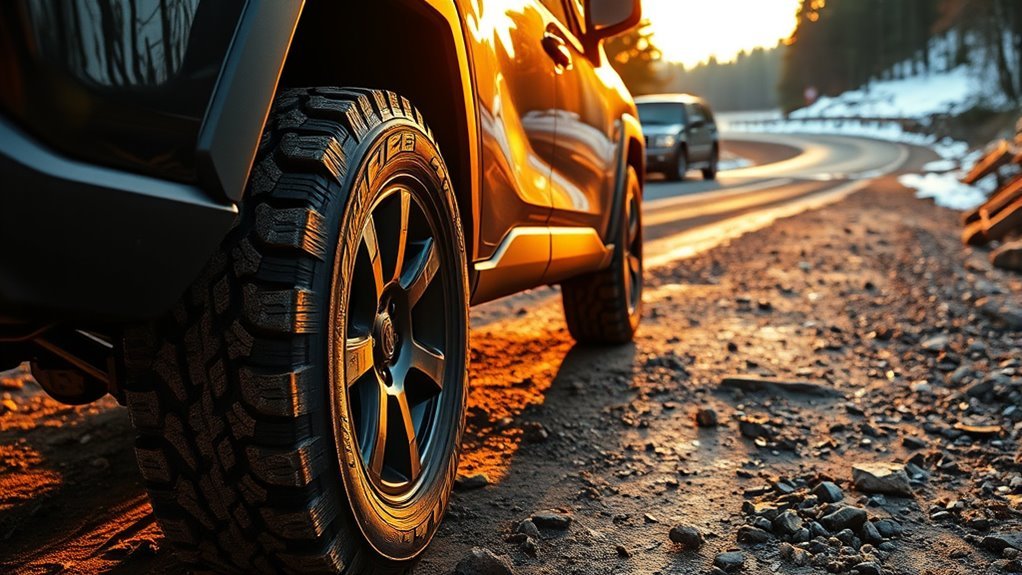
All-terrain tires can make your RAV4 feel more capable on gravel, dirt, and snow, but they also change how it drives on pavement. You may gain stronger traction and tougher sidewalls, while giving up some fuel economy, road comfort, and cabin quiet. This guide helps you decide when all-terrain tires make sense, what fitment checks matter, and which tradeoffs you should expect.
What’s in This Article
- Quick Decision: Should a RAV4 Get All-Terrain Tires?
- Match Your Driving: Commute vs. Weekend Adventure
- RAV4 Fitment Rules: Sizes, Load, and Speed Ratings
- What You’ll Give Up and Gain With AT Tires
- Best AT Tires for Different RAV4 Uses
- How AT Tires Affect MPG, Noise, and Ride on RAV4
- Quick Checklist: Keep Stock Tires or Upgrade to AT?
- Maintenance Checks After Installing AT Tires
- Frequently Asked Questions
- Conclusion
Quick Answer
You should put all-terrain tires on a RAV4 if you often drive on gravel, dirt, snow-packed roads, or light trails. Keep all-season or highway tires if most of your driving happens on smooth pavement and you value low noise, comfort, and fuel economy.
Key Takeaways
- Choose all-terrain tires if your RAV4 regularly sees gravel, dirt, mud, or snow-covered backroads.
- Check tire size, load rating, speed rating, and clearance before you swap from stock tires.
- Expect more road noise, a firmer ride, and lower fuel economy than standard all-season tires.
- Match the tire to your real driving habits, not the kind of trips you only plan to take.
- Keep up with pressure checks, rotations, and tread inspections after the upgrade.
Quick Decision: Should a RAV4 Get All-Terrain Tires?
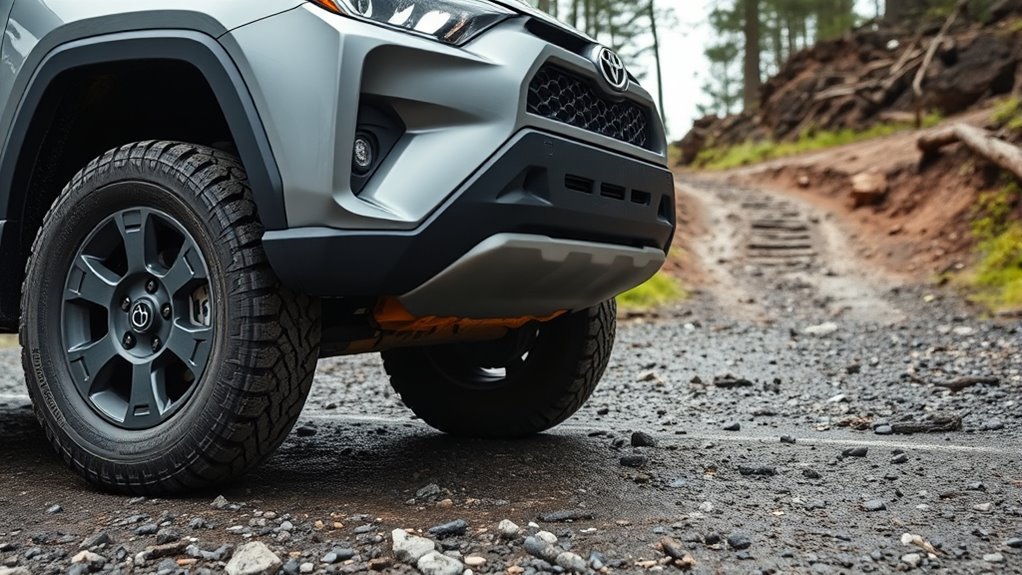
You should pick all-terrain tires if you split time between paved roads and loose surfaces. Their rugged tread patterns can improve grip on gravel, dirt, mud, and light snow, so your RAV4 feels more steady away from pavement.
Look for reinforced sidewalls if you haul gear or drive rough backroads. Stronger sidewalls can help reduce cuts and punctures, but they don’t make your RAV4 a rock crawler.
Expect a tradeoff. All-terrain tread usually adds road noise, increases rolling resistance, and can reduce fuel economy. If you mostly commute on smooth roads, all-season or highway tires will likely serve you better.
Warning: Never install tires with a lower load rating than your RAV4 requires, because that can affect handling and safety.
Match Your Driving: Commute vs. Weekend Adventure
If you mostly commute on paved roads, all-terrain tires can add noise and rolling resistance. You’ll trade some cabin quiet and fuel economy for traction you may rarely use.
If your weekends include gravel roads, muddy access roads, campsites, or snow-packed trails, all-terrain tires make more sense. Their deeper tread and stronger construction can give you better control on loose surfaces.
- Assess usage: Track how much of your weekly driving happens on pavement, gravel, dirt, or snow.
- Check gear and load: Choose tires with enough load capacity if you carry camping gear, tools, bikes, or roof cargo.
- Match the weather: Look for tire markings that fit your climate, especially if you need light snow traction.
Base your tire choice on your actual driving pattern. A practical match will feel better than an upgrade chosen for rare trips.
RAV4 Fitment Rules: Sizes, Load, and Speed Ratings
Your RAV4’s tires affect steering, braking, ride height, and fuel use. Start with the tire size listed on the driver’s door placard or in your owner’s manual.
Many RAV4 trims use sizes such as 225/65R17, but trim, model year, and wheel package can change the correct size. Check the exact spec for your vehicle before buying all-terrain tires.
Load index and speed rating matter too. A tire that looks right may still fail to meet the rating your RAV4 needs.
| Item | Typical RAV4 Range |
|---|---|
| Tire size | 225/65R17 |
| Load rating | 94–102 |
| Load per tire | 1,477–1,764 lb |
| Speed rating | T (118 mph), H (130 mph) |
| Fit concern | Clearance/turning rub |
After installation, turn the steering wheel fully left and right to check for rubbing. Also inspect clearance with passengers, cargo, and suspension movement.
Pro tip: Ask the tire shop to confirm speedometer change, clearance, and load rating before mounting a non-stock size.
What You’ll Give Up and Gain With AT Tires
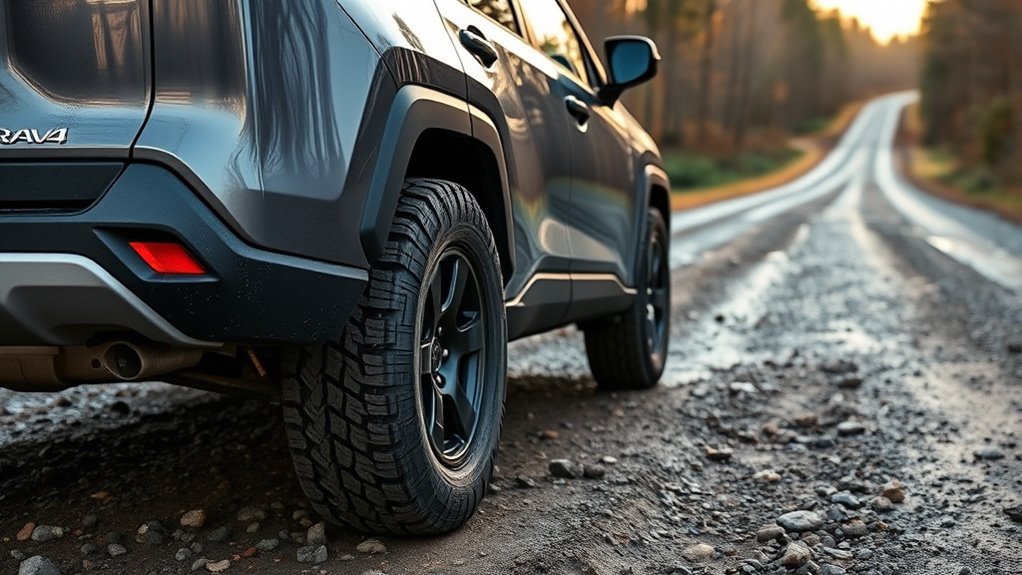
Switching your RAV4 to all-terrain tires gives you stronger grip off pavement and better tire protection on rough roads. You also accept more road noise, a firmer ride, and possible fuel economy loss.
The right tradeoff depends on where you drive most. A tire that feels perfect on a forest road may feel loud during a long highway commute.
Ride Quality Trade-Offs
All-terrain tires often use firmer sidewalls and deeper tread blocks than road-focused tires. You may feel more bumps through the cabin, especially on broken pavement.
- Handling: Expect less sharp steering than you may get from highway-oriented tires.
- Cushioning: Keep tire pressure within the recommended range to avoid a harsher ride.
- Noise management: Rotate and balance tires on schedule to reduce uneven wear and drone.
Fuel Economy Losses
All-terrain tires can reduce fuel economy because deeper tread and heavier construction often increase rolling resistance. The exact change depends on tire weight, tread pattern, tire pressure, driving speed, and load.
Some drivers may notice a small drop, while others may see a larger change on highway trips. Track your real fuel use after installation, rather than relying on broad estimates.
You can limit the loss by keeping tires inflated, removing unused roof racks, and avoiding aggressive driving. These steps help your RAV4 keep more of its normal range.
Off-Road Capability Gains
All-terrain tires give your RAV4 better bite on gravel, dirt, mud, and some snow-covered roads. The open tread pattern helps the tire grip loose surfaces instead of sliding across them.
- Durable construction: Reinforced sidewalls can help resist cuts from rocks, ruts, and trail debris.
- Grip and control: Aggressive tread can improve climbing, cornering, and braking on loose ground.
- On-road compromise: More tread movement can reduce steering feel and comfort on pavement.
Best AT Tires for Different RAV4 Uses
Your RAV4 may need different tire traits depending on how you drive. Focus on tread design, weight, road noise, snow rating, and sidewall strength before you choose a tire.
For daily driving with light trail use, Falken Wildpeak models often appeal to drivers who want a balanced all-terrain feel. For rougher mud and rock use, BFGoodrich All-Terrain T/A KO2 tires offer a more aggressive design, but they may feel heavier and louder.
If you want a quieter mixed-surface option, compare models such as the General Grabber A/TX. For winter routes, check whether the tire carries the Three-Peak Mountain Snowflake rating before you rely on it in severe snow.
Toyo Open Country A/T III can suit drivers who want capable trail grip with a more road-friendly feel. No single tire fits every RAV4 owner, so compare your daily route, weather, cargo, and comfort needs.
Note: Brand examples can help you compare tire types, but your exact size and rating should guide the final choice.
How AT Tires Affect MPG, Noise, and Ride on RAV4
All-terrain tires change how your RAV4 feels on daily roads. The larger tread blocks can hum at highway speed, and the heavier construction can make acceleration feel less sharp.
- Fuel and performance: Higher rolling resistance can lower miles per gallon and reduce range between fill-ups.
- Noise and cabin impact: Deep tread blocks can create more sound at highway speeds.
- Comfort and control: Stiffer tread and sidewalls can make the ride feel firmer on rough pavement.
You can reduce these effects with proper inflation, regular rotations, and good alignment. These habits also help the tires wear more evenly.
Quick Checklist: Keep Stock Tires or Upgrade to AT?
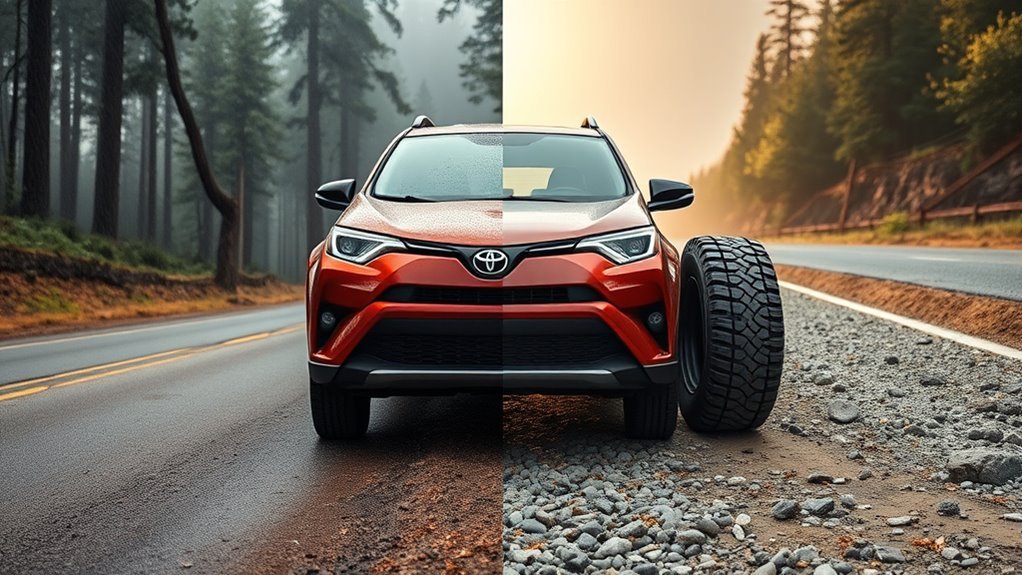
Need help deciding whether to keep your RAV4’s stock tires or step up to all-terrains? Use this checklist before you buy.
- Driving patterns: Upgrade if you often drive on unpaved roads, gravel, dirt, or trails.
- Weather and seasonality: Consider all-terrain tires if you face mixed weather and light snow.
- Load and usage: Choose stronger sidewalls if you carry heavy gear or use roof cargo.
- Comfort and economy: Keep stock-style tires if you value a quiet ride and better fuel economy.
- Maintenance and safety: Check pressure, rotate tires, and inspect tread no matter which tire you choose.
If most answers point to rough roads, variable weather, or extra load, all-terrain tires may fit your RAV4 well. If comfort and efficiency matter most, stock-style tires make more sense.
Maintenance Checks After Installing AT Tires
All-terrain tires need steady care because their tread can wear unevenly if pressure, rotation, or alignment slips. Check pressure when the tires are cold, and use the pressure listed for your RAV4 unless a tire professional gives you a safe adjustment.
Rotate the tires on schedule and inspect the tread blocks for cupping, cuts, or trapped stones. If the steering wheel vibrates or the vehicle pulls, schedule a balance and alignment check.
Recheck clearance after your first rough-road trip. Mud, cargo weight, and suspension movement can reveal rubbing that didn’t appear in the shop.
Frequently Asked Questions
When should you use all-terrain tires on a RAV4?
Use all-terrain tires when your RAV4 often travels on gravel, dirt, muddy roads, snow-packed roads, or rough job sites. They make less sense if you spend nearly all your time on smooth pavement.
Is RAV4 ground clearance enough for trails?
A RAV4 can handle many mild trails and rough roads when you drive carefully. For deep ruts, large rocks, or steep terrain, you may need more clearance, skid protection, and a more capable vehicle setup.
Will all-terrain tires hurt RAV4 fuel economy?
All-terrain tires can lower fuel economy because they often weigh more and create more rolling resistance. The real change depends on tire model, tire pressure, speed, cargo, and road surface.
Can you use all-terrain tires year-round on a RAV4?
You can use many all-terrain tires year-round if they match your climate and driving needs. For harsh winter roads, look for the Three-Peak Mountain Snowflake rating instead of relying on tread shape alone.
Do all-terrain tires void a RAV4 warranty?
All-terrain tires usually don’t void a warranty by themselves when they meet the correct size and rating requirements. Oversized tires or poor fitment can cause wear or damage that may create warranty problems.
Conclusion
Choose all-terrain tires for your RAV4 when your real driving includes rough roads, loose surfaces, gear hauling, or winter backroads. Check the correct size, load rating, speed rating, and clearance before you buy.
Keep stock-style tires if quiet commuting, comfort, and fuel economy matter more than off-pavement grip. The best tire is the one that fits how you drive each week, not just where you hope to go.
References
- Tires — National Highway Traffic Safety Administration
- Toyota Warranty and Owner’s Manuals — Toyota
- Tire Safety — U.S. Tire Manufacturers Association

Related Articles

Toyota RAV4 TPMS Reset: Easy Steps That Work
Unlock the secrets to resetting your Toyota RAV4's TPMS effortlessly—discover the essential steps to ensure your tires are always safe.
Read More
Toyota RAV4 Tire Rotation: DIY Steps & Pattern
Take control of your Toyota RAV4's tire maintenance with our simple DIY rotation guide—discover the best steps for optimal performance and longevity!
Read More
Mix Tire Brands on a Toyota RAV4? Expert Guide
Keeping your RAV4 safe? Learn when mixing tire brands risks traction, ABS/TCS and AWD damage — and what exact matches you must insist on.
Read More