
What Is Done During a Tire Inspection? What to Expect
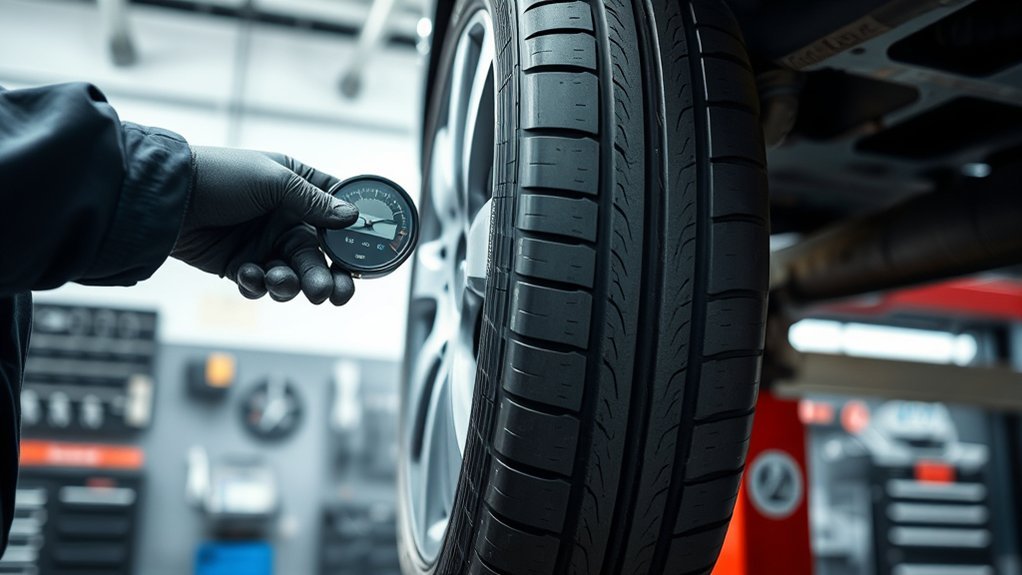
During a tire inspection, a technician checks whether your tires can still grip, carry weight, hold air, and wear evenly. You can expect checks for tire pressure, tread depth, visible damage, valve stems, tire age, and signs of rotation, balancing, or alignment problems. The goal is simple: confirm whether each tire is safe to keep using, needs service, or should be replaced.
Quick Answer
During a tire inspection, a technician checks cold tire pressure, tread depth, tread wear patterns, sidewall condition, punctures, cracks, bulges, valve stems, tire age, and signs of vibration or pulling. They may recommend inflation, rotation, balancing, alignment, repair, or replacement based on what they find.
Key Takeaways
- Tire pressure should be checked against the vehicle placard or owner’s manual, not the PSI printed on the tire sidewall.
- Technicians measure tread depth in several spots because uneven wear can reveal alignment, inflation, suspension, or rotation issues.
- Cuts, punctures, cracks, bulges, exposed cords, and leaking valve stems can make a tire unsafe.
- Tire age matters because rubber can degrade even when tread depth still looks acceptable.
- A basic inspection may lead to simple inflation, but serious damage, sidewall problems, or very low tread usually means replacement.
At a Glance
| Time Required | About 5 to 15 minutes for a basic visual, pressure, and tread check; longer if rotation, balancing, or alignment checks are added. |
| Difficulty | Easy for basic owner checks; professional inspection is best for leaks, punctures, vibration, sidewall damage, or uneven wear. |
| Tools Needed | Tire pressure gauge, tread depth gauge, flashlight, valve cap check, and access to the vehicle placard or owner’s manual. |
| Cost | Basic checks are often free or low-cost at tire shops, but rotation, balancing, alignment, repair, and replacement are separate services. |
Tire Inspection Checklist: What Technicians Check
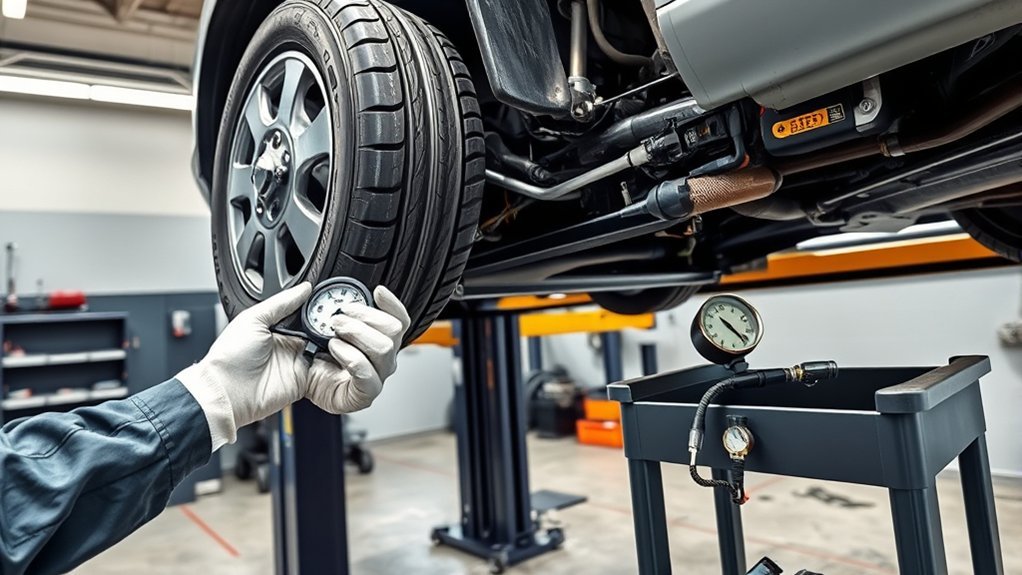
When a technician inspects your tires, they usually start with the basics: air pressure, tread depth, and visible damage. Then they look for wear patterns, leaks, valve-stem problems, tire age, and signs that your vehicle may need rotation, balancing, or alignment service.
- Tire pressure: They compare each tire to the vehicle manufacturer’s recommended cold PSI on the door placard or in the owner’s manual.
- Tread depth: They measure several grooves across each tire, not just one spot.
- Wear pattern: Edge wear, center wear, feathering, cupping, or patchy wear can point to pressure, alignment, balance, or suspension issues.
- Visible damage: They check tread, shoulders, and sidewalls for nails, cuts, cracks, bulges, exposed cords, and impact damage.
- Valve stems and caps: They look for cracked stems, missing caps, and slow leaks around the valve.
- Tire age: They may read the DOT Tire Identification Number to estimate the tire’s manufacturing date.
- Service needs: They may recommend rotation, balancing, alignment, repair, or replacement based on the inspection results.
This inspection helps you catch small problems before they become poor traction, vibration, air loss, or a roadside tire failure.
NHTSA reported 511 deaths in tire-related crashes in 2024, which is why tire pressure, tread, damage, and age checks should be treated as safety checks, not just maintenance tasks.
[Products Worth Considering]

EVOULTES heavy duty tire inflator with an integrated gauge delivers accurate pressure readings from 10–120 PSI, helping you inflate, deflate, and check tires in one tool. The 16.5-inch extended dual-head air chuck with swivel base reaches hard-to-access dual wheel valves on trucks and RVs. A brass trigger core and side-mounted air release valve make operation smooth, with standard 1/4" NPT threading and quick-connect compatibility for easy setup.

The AstroAI 2 pack air chucks provide a heavy-duty, closed-flow locking design that helps keep air flowing during inflation while securely attaching to the valve stem. Built with 250 PSI rated brass components and compatible with Schrader valves, they feature 1/4" female NPT threads for a wide fit with common inflators. The straight tip and locking clip make filling tires and monitoring pressure more convenient.

This multi-function tire valve stem removal tool set makes it fast to remove, install, bleed, and clean valve cores for easier tire maintenance. It includes valve core removers, a 4-way spool tool, replacement valve caps, and spare cores to handle replacements and repairs with confidence. Universal compatibility suits cars, trucks, motorcycles, bicycles, and more for roadside convenience.
Why Tire Pressure Comes First
You start with tire pressure because it affects road contact, braking, handling, tire life, and fuel use. A tire that is too low can build heat and wear unevenly. A tire that is too high can reduce the contact patch and make the ride harsher. Either condition can make the tire wear faster and perform worse.
Pressure Affects Safety
Proper inflation helps the tire keep its intended shape under load. That shape matters because the tread needs steady contact with the road. Underinflation can make steering feel vague, increase heat buildup, and wear the outer shoulders. Overinflation can wear the center of the tread faster and reduce ride comfort.
The correct PSI is not the maximum pressure printed on the tire. Use the vehicle’s Tire and Loading Information Label, usually on the driver’s door jamb, or the owner’s manual. NHTSA explains that proper tire pressure should be checked when the tires are cold, meaning the vehicle has not been driven for at least three hours.
PSI Check Procedure
During a proper PSI check, the technician uses a reliable gauge, checks all four tires, and may check the spare if your vehicle has one. They compare the reading with the vehicle placard, then add or release air as needed. If the tire was recently driven, they may note that the reading is warm and should be rechecked when cold.
- Find the recommended cold PSI on the vehicle placard or owner’s manual.
- Remove the valve cap and press the gauge firmly onto the valve stem.
- Record the pressure for each tire.
- Add air if the tire is low, or release air slowly if it is overinflated.
- Recheck the PSI and reinstall the valve cap.
Note: A TPMS warning light does not replace manual pressure checks. Federal TPMS rules are designed to warn drivers of significant underinflation, but NHTSA still recommends regular pressure checks with an accurate gauge.
How Technicians Measure Tread Depth
Technicians measure tread depth with a tread depth gauge because it gives a more accurate reading than a quick coin test. They usually check several grooves across the tire and repeat the process on all four tires. This helps them find low tread and spot uneven wear before it becomes a bigger safety issue.
Tread Depth Gauge Use
A tread depth gauge measures tread in 32nds of an inch. The technician places the gauge probe into a main tread groove, presses the base flat against the tread, and reads the number. They repeat this on the inner, center, and outer tread areas because one part of the tire may wear faster than another.
If the readings vary across the same tire, the technician may look for pressure problems, wheel alignment issues, worn suspension parts, or a lack of tire rotation. Consistent readings usually mean the tire is wearing more evenly.
Tread Depth Minimums
NHTSA says tires are not safe and should be replaced when tread reaches 2/32 inch. Many tires also have built-in treadwear indicators, also called wear bars. When the tread becomes level with those bars, the tire has reached its replacement point.
You should not wait until the tire is completely bald. Wet-road performance can drop before the tire reaches 2/32 inch, so many technicians recommend planning replacement earlier if you drive often in rain, snow, or heavy traffic. Local inspection rules can vary, so follow your state, province, or country’s requirements as well as your tire professional’s advice.
Wear Pattern Assessment
A tread depth gauge gives the numbers, but the wear pattern tells the story. During a tire inspection, technicians compare readings across each tire and from tire to tire. They also feel the tread surface for irregular texture.
- Center wear: Often points to overinflation or repeated high-pressure use.
- Outer-edge wear: Often points to underinflation or cornering wear.
- One-edge wear: Can point to alignment problems.
- Feathering: May suggest toe alignment issues.
- Cupping or scalloping: Can suggest worn shocks, struts, balance problems, or suspension issues.
Uneven wear does not always mean the tire is the only problem. It can be a clue that another vehicle system needs attention.
How Technicians Spot Tire Damage
During a tire inspection, the technician looks closely at the tread, shoulder, and sidewall. They check for nails, screws, glass, cuts, cracks, bulges, bubbles, exposed cords, and objects trapped between tread blocks. They also look around the bead area where the tire seals against the wheel.
A small puncture in the main tread area may be repairable after a professional removes the tire and inspects the inside. Sidewall damage, shoulder damage, bulges, exposed cords, severe cracks, and evidence of driving on a flat tire usually point toward replacement. The technician also checks whether the tire is losing air from the valve stem, bead seal, puncture, or wheel damage.
Warning: Do not keep driving on a tire with a bulge, exposed cords, deep sidewall crack, or sudden air loss. Have it inspected by a qualified tire professional before using the vehicle again.
How to Spot Uneven Wear
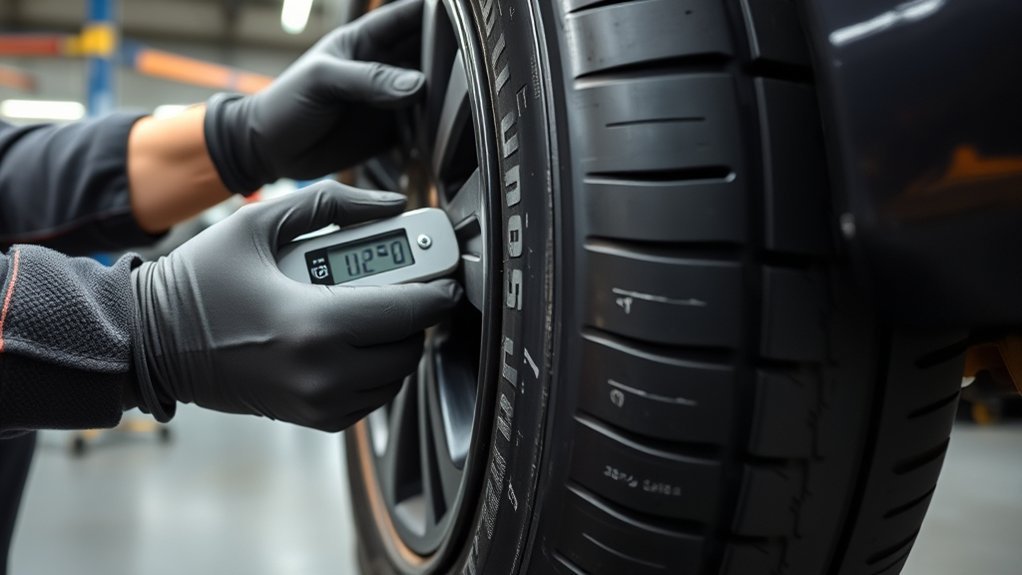
You can spot uneven tire wear by looking across the full width of the tread, not just the outer edge you see first. Turn the steering wheel to get a better view of the front tires, use a flashlight, and compare the inner shoulder, center ribs, and outer shoulder.
Run your hand lightly over the tread surface while the vehicle is parked safely and the tires are cool. A saw-tooth feel may point to feathering. Dips or waves may point to cupping. Smooth center wear may point to overinflation. Heavy shoulder wear may point to underinflation, hard cornering, or alignment trouble.
If one tire looks much different from the others, document it and have it inspected. Uneven wear can reduce traction, create vibration, and shorten tire life even when some tread depth remains.
When Tire Rotation and Balancing Help
Tire rotation helps tires wear more evenly by moving them to different wheel positions. NHTSA says that if the vehicle manufacturer recommends rotation, tires are often rotated every 5,000 to 8,000 miles or sooner when uneven wear appears. Always check the owner’s manual because some vehicles use staggered tire sizes or directional tires that limit rotation options.
Tire balancing helps the wheel and tire assembly rotate smoothly. If you feel vibration through the steering wheel, seat, or floor at certain speeds, balancing may help. However, vibration can also come from bent wheels, tire damage, worn suspension parts, or alignment problems, so a technician should inspect the full system.
Wheel alignment helps the tires meet the road at the correct angles. If the vehicle pulls, the steering wheel sits off-center, or one edge of a tire wears faster, alignment should be checked.
Pro Tip: Ask for the tread depth readings for each tire before and after rotation. Written readings help you track wear over time and spot a tire that is changing faster than the others.
[Products Worth Considering]

The JACO FlowPro Tire Inflator measures, inflates, and airs down tires up to 100 PSI with battery-free operation and ±2% accuracy after calibration. It features a glowing pressure dial for night visibility, a heavy-duty steel build with a hybrid hose, and a precision push-to-inflate thumb trigger. The patented Lightning Air Chuck locks on for a secure seal, and the kit includes quick-connect hardware for easy inline use with your air compressor.

This portable cordless tire inflator delivers up to 160 PSI with fast 17 L/min airflow to help you quickly top up tires and get back on the road. It features dual power mode, running on a 21V rechargeable battery or a 12V DC adapter for convenient roadside use. An automatic shut-off with digital pressure gauge helps prevent overinflation, and a built-in LED light improves visibility in low-light conditions.
Do You Need Repair or Replacement?
A tire inspection should end with a clear answer: keep using the tire, service it, repair it, or replace it. The decision depends on tread depth, damage location, air loss, tire age, and wear pattern.
| Inspection Result | Likely Recommendation |
| Low pressure with no visible damage | Inflate to the correct cold PSI and recheck for slow leaks. |
| Minor puncture in the main tread area | Professional internal inspection and repair may be possible. |
| Sidewall puncture, bulge, exposed cords, or deep crack | Replacement is usually required because the tire structure may be compromised. |
| Tread at 2/32 inch or wear bars are flush | Replace the tire. |
| Uneven wear across one or more tires | Check pressure, rotation history, alignment, balance, and suspension parts. |
| Older tire with cracking, vibration, or pressure loss | Have the tire professionally inspected and follow vehicle or tire manufacturer age guidance. |
Sometimes a repair is enough, but not every puncture is repairable. A technician needs to inspect the tire from the inside before making that call. If the tire has structural damage, sidewall damage, severe uneven wear, or very low tread, replacement is the safer choice.
How Technicians Check Tire Age
Tire age matters because rubber and internal materials change over time. A tire can age faster if it sits unused, is stored poorly, carries heavy loads, runs underinflated, or spends years in heat and sunlight.
Technicians can estimate tire age by reading the DOT Tire Identification Number on the sidewall. The last four digits show the week and year of manufacture. For example, a code ending in 2522 means the tire was made in the 25th week of 2022.
NHTSA says some vehicle and tire manufacturers recommend replacing tires that are six to 10 years old, regardless of treadwear. That does not mean every tire automatically fails at six years, but it does mean age should be part of the inspection, especially if you see cracking, vibration, air loss, or irregular wear.
What to Ask Before You Leave the Shop
Before you leave, ask the technician for clear results instead of a vague “looks fine.” Good inspection notes help you decide what to do next.
- What was the PSI reading for each tire before adjustment?
- What is the tread depth on each tire?
- Do all four tires show even wear?
- Did you see cracks, punctures, bulges, exposed cords, or valve-stem leaks?
- Do I need rotation, balancing, alignment, repair, or replacement?
- Is the tire age still within the vehicle or tire manufacturer’s guidance?
- Should I check for any tire recalls?
These questions make the inspection more useful because you leave with numbers, not guesses.
Frequently Asked Questions
What is the 3 tire rule?
The “3 tire rule” is not a universal official rule. Shops may use it as a practical guideline when three tires are already near replacement and the fourth is close behind. For all-wheel-drive vehicles, matching tread depth can be especially important, so check your owner’s manual before replacing only one tire.
What are the 7 steps of a tire inspection?
A simple seven-step tire inspection includes checking cold tire pressure, measuring tread depth, comparing wear across the tread, inspecting sidewalls, looking for punctures or embedded objects, checking valve stems and caps, and reviewing whether rotation, balancing, alignment, repair, or replacement is needed.
How much does a tire inspection cost?
A basic tire inspection is often free or low-cost at tire shops, especially if it only includes pressure, tread, and a visual damage check. Costs can increase if you add tire rotation, balancing, flat repair, alignment, or replacement. Ask the shop what is included before service starts.
What makes tires fail inspection?
Tires may fail inspection because of very low tread, exposed cords, sidewall bulges, deep cracks, unsafe punctures, leaks, severe uneven wear, damaged valve stems, or age-related deterioration. Local inspection rules vary, but any tire that cannot hold air or shows structural damage should be treated as unsafe until inspected by a professional.
Does TPMS mean my tire pressure is fine?
No. TPMS helps warn you when a tire becomes significantly underinflated, but it is not a replacement for manual pressure checks. Use an accurate tire gauge at least monthly and before long trips, and check pressure when the tires are cold.
Can a tire with a nail still pass inspection?
It depends on the location and damage. A small puncture in the main tread area may be repairable after internal inspection, but sidewall damage, shoulder damage, air loss, exposed cords, or signs of internal damage usually mean the tire should be replaced.
Conclusion
A tire inspection gives you a clear picture of pressure, tread, wear, damage, age, and service needs. If everything checks out, you leave with more confidence. If something is wrong, you can act before the tire loses air, wears out early, vibrates, or becomes unsafe.
The best inspection is specific. Ask for PSI readings, tread depth numbers, damage notes, and the reason behind any repair or replacement recommendation. Those details help you protect traction, tire life, and control every time you drive.
Sources
- NHTSA TireWise — backs tire pressure, tread depth, tire aging, tire rotation, TPMS maintenance guidance, and 2024 tire-related crash data.
- 49 CFR 571.138, Tire Pressure Monitoring Systems — backs federal TPMS warning requirements for significant underinflation and malfunction warnings.
- FuelEconomy.gov Vehicle Maintenance — backs the relationship between proper tire inflation, fuel economy, and routine vehicle maintenance.
- NHTSA Recalls — supports checking tires and vehicles for open safety recalls.

Related Articles
AWD Tire Rotation Pattern: How Often and How to Do It
W**ondering the right AWD tire rotation pattern and timing? Discover the simple method, ideal schedule, and mistakes to avoid before your tires wear unevenly.
Read More
Wheel Damage: Types, Repair Options, and Costs
Many wheel damages look minor, but some hide costly safety risks—learn which repairs are worth it and when replacement is smarter.
Read More
Tire Balancing Weights: Types, Cost, and Why You Need Them
Precisely chosen tire balancing weights reduce vibration and wear, but which type fits your wheels and what it really costs may surprise you.
Read More