
What Does OWL Mean on a Tire? Load, Speed & Rating Guide
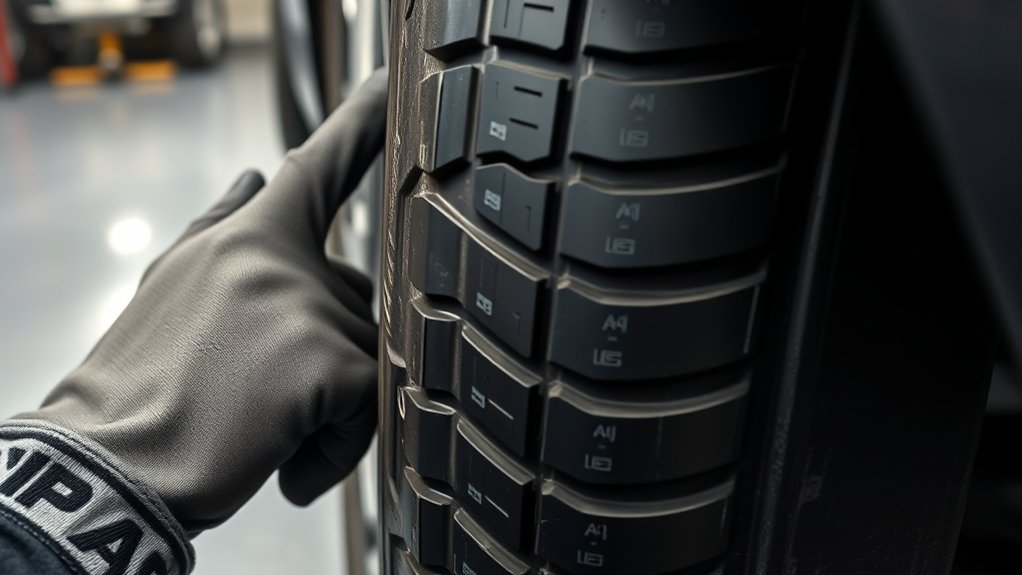
OWL on a tire means Outline White Letters, a sidewall style with raised white lettering for a clean, durable appearance. It doesn’t change your tire’s load index, speed rating, or overall performance. You’ll still need to check the size code, load capacity, and speed symbol to match your vehicle’s requirements. OWL and BSW versions can share the same specs, so your choice is mainly about appearance, and the details get more useful from here.
Key Takeaways
- OWL means Outline White Lettering, a tire sidewall style with raised white letters molded into the rubber.
- OWL tires are mostly an appearance choice and usually have the same performance as BSW, or Black Sidewall, versions.
- A tire’s load index shows the maximum weight it can safely carry, and it should meet or exceed the original rating.
- The speed rating indicates the maximum sustained speed the tire can handle under ideal conditions.
- Check the tire size, load index, speed rating, and DOT date code to confirm correct fit and safe use.
What Does OWL Mean on a Tire?
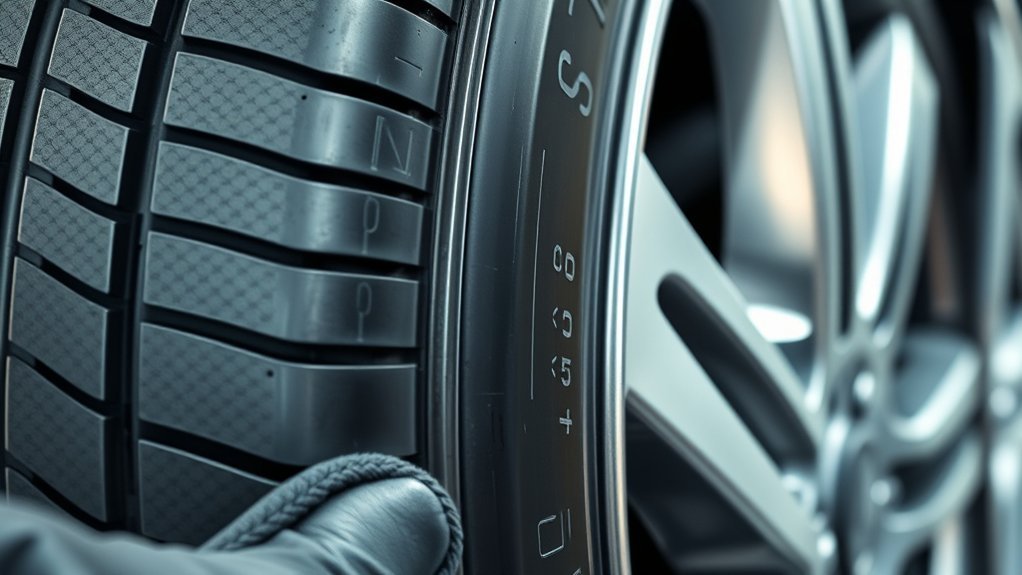
OWL on a tire stands for Outline White Lettering, meaning the tire has raised white lettering molded into the sidewall for a clean, durable finish. You’ll see OWL marked on many passenger-car tires, especially when you want a precise factory look with strong visual appeal. Because the lettering is built into the rubber, it resists wear better than painted markings, so the tire sidewall keeps its defined appearance longer under normal use. This design lets you choose a tire that supports your vehicle’s style without sacrificing durability. If you’re selecting tires for a sports car or custom build, OWL can help you express a sharper, more intentional presentation. When you shop, verify that the tire is a genuine factory OWL option so you get the exact finish you want. That way, your purchase aligns with your standards, not someone else’s modification. Additionally, consider a tire’s premium all-season capabilities for optimal performance in various driving conditions.
OWL vs. BSW: What’s the Difference?
If you’re comparing sidewall styles, the main distinction is straightforward: OWL means Outline White Letters, while BSW means Black Sidewall. With OWL, you get white lettering molded into the sidewall for visual emphasis and aesthetic appeal; with BSW, you get a uniform black finish that stays understated. You’re not choosing a different tire design or construction here. In many cases, the same tire model comes in both OWL and BSW versions, so the performance specs can match exactly. The difference sits in the surface treatment of the sidewall, not the internal structure. OWL tires often reveal white rubber beneath the outer layer, while BSW tires keep a consistent black color throughout. Your choice comes down to appearance, branding preference, and how much visual contrast you want on the tire. Some drivers favor OWL for a bolder look; others choose BSW for a cleaner, more subdued presentation. Additionally, many tires, including those for the 2023 RAV4, are available in both styles, giving consumers more options to meet their aesthetic and performance needs.
How to Read Tire Size and Load Rating
When you read a tire code such as P185/60R14, you’re identifying the section width in millimeters, aspect ratio, radial construction, and wheel diameter in inches. The load index, such as 82, tells you the maximum weight each tire can carry, and you can multiply that capacity across four tires to estimate the vehicle’s total support. You’ll use these markings to verify that the tire matches your vehicle’s size and load requirements. Additionally, understanding the load index is crucial for ensuring optimal performance and safety.
Tire Size Codes
Tire size codes are the quickest way to identify what a tire is designed to fit and how it will perform. When you read a code like P185/60R14, you decode the Tire Size: 185 mm section width, 60% aspect ratio, radial construction, and 14-inch rim diameter. The Load Index follows as a separate number, such as 82, telling you each tire’s maximum supported weight. Speed Ratings, like H or V, show the safe sustained speed limit under proper conditions. Check the DOT Code too; its last four digits reveal the week and year of manufacture. You gain control by matching these markings to your vehicle’s requirements, because correct sizing protects handling, payload capacity, and safety performance.
Load Index Basics
Right after you identify the tire size code, the load index tells you how much weight each tire can safely carry. A higher number means more Load capacity; for example, 82 equals 1,004 lbs (455 kg). You’ll find this value beside the speed rating, and together they define safe performance under real driving demands. Multiply the per-tire rating by four to estimate total vehicle support. When you replace tires, choose a load index equal to or higher than the original so you keep control and safety.
- Standard Load (SL): baseline carrying capacity
- Extra Load (XL): higher Load at increased inflation pressure
- Matching index: protects handling, braking, and freedom to drive confidently
Tire Speed Ratings and DOT Codes
You can read the tire’s speed rating symbol on the sidewall, usually after the size, to confirm the maximum sustained speed it’s built to handle. The DOT code includes a 4-digit date code at the end, which tells you the tire’s manufacturing week and year. You should check that date to verify tire age and spot replacement needs before performance or safety degrades. Additionally, understanding all-season tire performance can help you make informed decisions based on your driving conditions.
Speed Rating Symbols
Speed rating symbols tell you the maximum safe speed a tire can sustain under ideal conditions, and they matter because the rating must match your vehicle’s performance demands. You’ll see the speed, rating, and DOT marks near the size code, where they guide safe selection and proper pressure management. Higher symbols support higher speeds, but only when load, inflation, and road conditions stay within spec.
- S: a steady cruiser at 112 mph
- H: a sharper edge for brisk driving
- ZR: a high-performance tire built for over 149 mph
On older tires, the symbol may sit before the R; on modern tires, it’s embedded in the size. Read it precisely so you can choose tires that free your vehicle to perform safely and confidently.
DOT Date Code
Alongside speed rating symbols, the DOT date code tells you when a tire was made and helps you judge whether it’s still safe to use. You’ll find the DOT code molded into the sidewall; its final four digits show the production week and year. A four-digit code means the tire was made after 2000, while older three-digit formats can obscure exact age. This marking also links the tire to its manufacturer, so authorities can trace recalls and protect you. The Rubber Manufacturers Association says you should check this code regularly and replace tires over six years old, even if tread looks fine. Don’t ignore the recommended pressure either; proper inflation supports performance, but it doesn’t erase aging.
Tire Age Check
Because tire safety depends on both age and capability, check the DOT code and speed rating before you buy or keep using a tire. For a tire age check, read the DOT’s last four digits: the first two show the week, the last two the year. A code like 1501 means week 15 of 2001. If you see a three-digit pre-2000 code, treat it with caution; its age is harder to verify, and tires over six years old usually need replacement, even in normal usage.
- A sidewall stamped with fresh DOT numbers
- A worn tread hiding heat-cracked rubber
- Speed ratings like S or H guarding your pace
Match speed ratings to your vehicle, because they define sustained safe speed. Older tires can fail before tread does.
Common Sidewall Markings Besides OWL
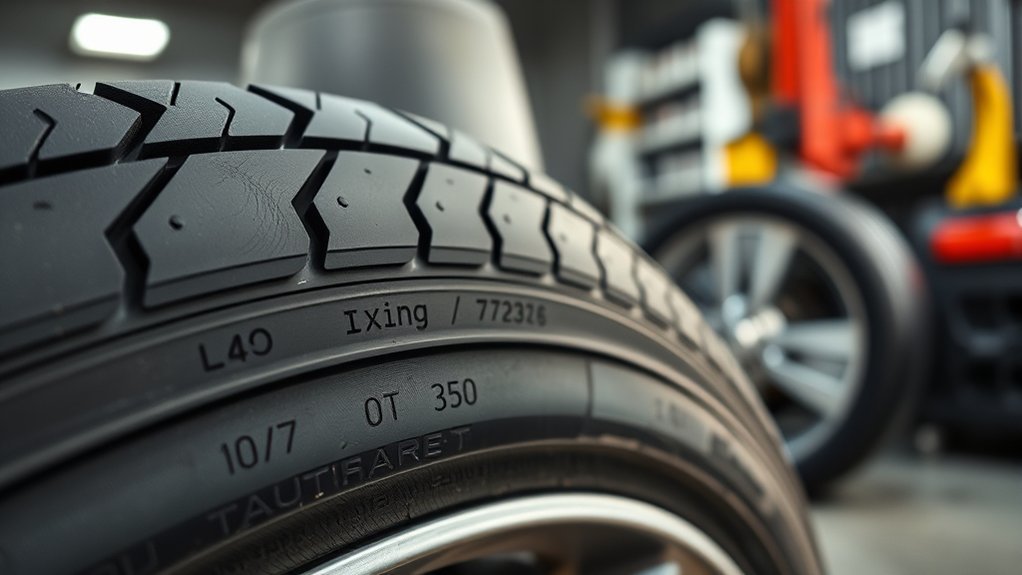
Beyond OWL, tire sidewalls often carry markings that tell you a lot about appearance, load capacity, and intended use. You may see BSW, which means Black Sidewall and signals a fully black, unadorned finish. RWL (Raised White Lettering) identifies raised white letters molded into the sidewall for a more prominent visual profile. The M&S: Mud and Snow mark shows the tire meets tread criteria for mud, snow, and many all-season applications. XL (Extra Load) tells you the tire can support heavier loads than a Standard Load tire, but it may need higher inflation pressure to perform correctly. The DOT Code is equally critical: it records the manufacturer, plant, size code, and production date, and it helps you verify compliance, trace recalls, and assess safety status. Additionally, understanding the treadwear warranty can provide insights into the expected longevity of your tires. Read these markings together, and you’ll understand what your tire can carry, how it’s built, and whether it fits your needs.
When OWL Tires Make Sense
OWL tires make sense when you want the look of raised white lettering without giving up normal tire performance, since OWL, or Outline White Lettering, is mainly an appearance feature rather than a functional upgrade. You can choose them for aesthetic reasons on a performance tire or luxury model and still keep the same performance specifications as a black sidewall version. That means you’re free to match factory styling, preserve authenticity, and honor a collector build without sacrificing safety or grip.
- Crisp white lettering along a glossy sidewall
- A factory-correct stance on a coupe or roadster
- A subtle visual cue that signals careful selection
You should inspect them regularly, though, because the exposed lettering can wear faster on rough pavement. If you want clean design, technical consistency, and a liberated choice that respects the car’s original intent, OWL tires are a smart fit. Additionally, all-season tires often provide reliable performance across various conditions, making them a versatile choice for many drivers.
Frequently Asked Questions
What Do Owl Tires Mean?
OWL tires mean Outline White Lettering, so you see white sidewall letters for a distinct look. You don’t get different tire specifications, load capacity, speed ratings, or performance characteristics from OWL itself; it’s mainly a cosmetic designation. The white rubber sits under the lettering, so it won’t just paint off. You may need to handle curbs and rough terrain more carefully, since the exposed white area can mark faster.
Should I Get a 10 Ply or 12 Ply Tire?
You should get a 12-ply tire if you haul heavy loads, tow, or need better off road performance; it offers higher tire durability and load capacity. A 10-ply tire usually costs less and still works for lighter-duty use, so the cost comparison may favor it. Check your vehicle’s specs first—your freedom to choose should still respect safety limits. If your driving’s moderate, 10-ply can be enough; if not, go 12-ply.
What Is the Quietest and Smoothest Riding Tire?
The quietest, smoothest tire you can choose is usually a premium touring all-season, like the Michelin Primacy MXM4 or Bridgestone Turanza QuietTrack. You’ll get lower tire noise, better ride comfort, and less vibration from their optimized tread design and compliant sidewalls. Keep air pressure at the manufacturer’s spec; underinflation raises noise and harshness. If you want liberation from rough roads, pick a high-aspect-ratio tire tuned for comfort.
What Are Nubs on a Tire?
Nubs on a tire are small rubber protrusions, usually called tread nibs, left from the molding process. You might think they’re cosmetic, but they can briefly show wear and help you gauge tire maintenance. On aggressive tire tread, they can aid traction control on loose surfaces while increasing road noise slightly. As they wear off, you’ll lose that extra texture, so inspect them regularly for performance and safety.
Conclusion
In short, when you spot OWL on your tire, you’re looking at outlined white lettering—a styling detail, not a load or speed rating. You still need to check the full sidewall for your tire size, load index, speed symbol, and DOT code to confirm performance. Think of the sidewall as your tire’s ID card: every marking matters. When you know what each code means, you can choose tires with confidence and drive smarter.

Related Articles
What Does DOT Mean on a Tire? Load, Speed & Rating Guide
How to decode DOT, load, speed, and rating marks on your tire—and why the hidden date code could change everything.
Read More
What Does 94H Mean on a Tire? Load, Speed & Rating Guide
Haven’t seen what 94H really means on a tire? Discover the load, speed, and safety details before choosing your next set.
Read More
What Does 265 Mean on a Tire? Load, Speed & Rating Guide
Decoding 265 on a tire reveals more than width—discover load, speed, and rating details before choosing the wrong fit.
Read More