
Is Dextero a Good Tire Brand? Performance Review & Rating

Disclosure: As an Amazon Associate, we earn from qualifying purchases. If you click a link on this page and make a purchase, we may receive a small commission at no extra cost to you.
Choosing a budget tire brand can feel risky because tire quality affects ride comfort, braking, tread life, and safety. Dextero can be a good tire brand if you want affordable, no-frills tires for normal commuting, light truck use, and mild all-season driving. The brand is connected to Giti Tire Group, and its commonly listed models include the DTR1, All Terrain DAT1, and DHT2. This guide will help you decide when Dextero makes sense, when you should compare premium options, and what to check before installation.
Quick Verdict
Rating: Recommended with caveats
Best For: Budget-focused drivers, older vehicles, light trucks, SUVs, CUVs, and mild all-season use.
Bottom Line: Dextero is a practical value tire brand when you choose the right model and size for your vehicle. It is not the best choice for severe winter driving, premium refinement, or performance-focused handling.
Quick Answer
Dextero is a solid budget tire brand for everyday drivers who want acceptable comfort, basic wet-road performance, and a lower upfront cost. It works best when you match the exact model to your vehicle and driving conditions. It is not the best choice for severe winter weather, high-performance driving, or shoppers who want premium-level quietness and treadwear.
Key Takeaways
- Dextero is best viewed as a value tire brand, not a premium-performance brand.
- Giti Tire Group backs the brand, and Giti Tire USA lists Dextero among its North American tire lines.
- The DTR1 is the basic passenger and CUV all-season option, the DAT1 is the all-terrain option, and the DHT2 is aimed at SUVs, CUVs, and light trucks.
- Do not assume every Dextero tire has the same warranty, load rating, price, review history, or U.S.-made status.
- The listed DTR1, DAT1, and DHT2 pages do not show Three-Peak Mountain Snowflake severe-snow certification.
Is Dextero a Good Tire Brand?

Yes, Dextero is generally a good tire brand for budget-conscious drivers who want dependable daily-use tires without paying premium-brand prices. You should expect practical performance, not luxury-level quietness, track-ready grip, or elite snow traction.
The brand makes the most sense for commuters, older vehicles, work trucks, basic SUVs, and drivers who mostly stay on paved roads. Dextero tires can also be a reasonable choice if you need to replace a full set without spending as much as you would on major premium brands.
Before You Buy: Do not judge Dextero, or any tire brand, by price alone. Always confirm the exact size, load index, speed rating, DOT date code, mileage warranty, and winter rating before installation.
[Products Worth Considering]

Monitor tire tread wear with a smart, color-coded depth gauge that shows clear condition ranges at a glance. The bar is range marked for fast, easy readings, helping you maintain safer traction and performance. Each gauge is portable with a pocket clip, and the set includes 20 units for daily use and sharing.

The 22800 wheel stud installer makes replacing wheel studs quick and secure, saving time and effort during tire service. It uses a ratchet or impact wrench to pull new studs firmly into place, helping when existing studs are too long. Compatible with most automotive wheels and light-duty truck wheel studs, it’s designed for easy, tool-assisted installation.
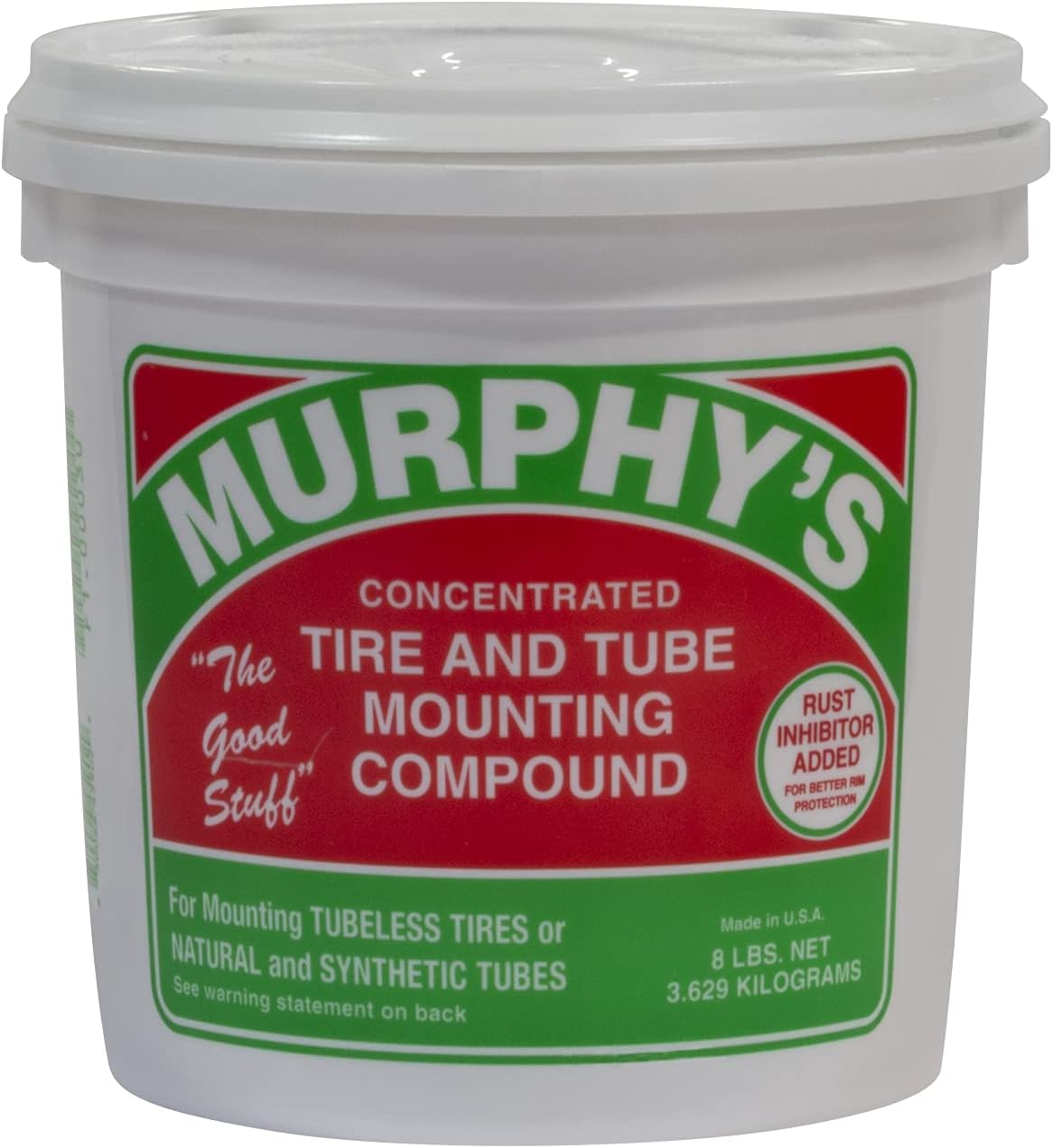
A concentrated tire and tube mounting compound designed to help simplify mounting rubber tires and tubes on passenger, semi truck, construction, and OTR applications. Its ultra-thick formula packs beads effectively and includes rust inhibitors to help protect against corrosion during use.
Dextero Tires at a Glance
| Specification | Detail |
|---|---|
| Brand | Dextero |
| Brand backing | Associated with Giti Tire Group and Giti Tire USA’s North American brand portfolio |
| Product type | Value replacement tires for passenger cars, CUVs, SUVs, and light trucks |
| Models covered | Dextero DTR1, Dextero All Terrain DAT1, Dextero DHT2 |
| Best use | Daily commuting, budget replacements, paved-road driving, mild all-season use, and light-duty truck or SUV use |
| Not best for | Severe winter driving, high-performance handling, luxury-level quietness, or heavy towing unless the exact tire rating supports it |
| Main strength | Low upfront cost and practical everyday performance |
| Main weakness | Model-by-model variation in warranty, availability, wet traction, treadwear, and owner feedback |
| Safety note | Match the vehicle’s tire size, load rating, speed rating, pressure, and service needs before you buy. |
What Are Dextero Tires?
Dextero tires are value-focused replacement tires sold for common passenger, CUV, SUV, and light-truck uses. The brand is not positioned like a premium tire line, so you should compare it on practical fit, model features, and total installed cost rather than expecting the most refined ride in the category.
The DTR1, DAT1, and DHT2 cover different needs. The DTR1 is the basic passenger and CUV all-season tire, the DAT1 is the more aggressive all-terrain option, and the DHT2 is the highway-focused tire for SUVs, CUVs, and light trucks.
The best way to shop Dextero is to compare the exact tire size, not just the brand name. A DTR1 passenger tire and a DAT1 light-truck size can have very different load ratings, tread depth, ride feel, and long-term owner feedback.
Who Makes Dextero Tires?
Dextero is connected to Giti Tire Group, a Singapore-based tire company that serves consumers, tire dealers, auto service outlets, and original equipment manufacturers in more than 130 countries. In North America, Giti Tire USA lists Giti, GT Radial, Primewell, and Dextero as branded tire lines.
Giti Tire Group
Giti Tire Group gives Dextero more credibility than many anonymous budget tire labels. The company has been in the tire business since 1951 and operates globally. That does not automatically make every Dextero tire premium, but it does mean the brand is backed by a real tire manufacturer rather than an unknown private-label source.
U.S. Manufacturing Site
Giti’s U.S. manufacturing site is in Richburg, South Carolina. The company says the facility began production in October 2017, includes a manufacturing plant and R&D center, and produces passenger and light truck tires for North America. Giti Tire Manufacturing (USA) Ltd. has also reported ISO 9001:2015 and IATF 16949:2016 quality management certifications.
Note: Do not assume every Dextero tire is made in the United States. Some listings describe select sizes as U.S.-made. The most reliable check is the tire’s DOT plant code and the specific retailer or manufacturer listing for the exact size you are buying.
Dextero Model Comparison
| Model | Best Use | Main Strength | Watch-Out |
| Dextero DTR1 | Passenger cars, CUVs, coupes, sedans, minivans, and commuting | 45,000-mile mileage warranty on the listed SimpleTire page, all-season tread, and quiet-road design | Not Three-Peak Mountain Snowflake rated on the listed page |
| Dextero All Terrain DAT1 | Jeeps, SUVs, light trucks, gravel, dirt, mud, and mild off-road use | Aggressive tread, self-cleaning channels, cut and chip resistance, five-pitch tread pattern, and sidewall traction lugs | Mixed owner feedback on wet grip, noise, sidewall flex, and treadwear; listed mileage warranty may show N/A |
| Dextero DHT2 | SUVs, CUVs, light trucks, paved roads, and highway driving | Four circumferential grooves, noise and vibration reduction, solid shoulders, and Tension Body Technology | Warranty, load rating, price, and availability can vary by selected size and retailer listing |
Who Should Buy Dextero Tires?
Best For
- Drivers who want a lower-cost replacement tire for daily commuting.
- Older cars, second vehicles, basic SUVs, CUVs, and light trucks used in mild conditions.
- Shoppers willing to compare exact tire size, load rating, warranty, and recent owner feedback before buying.
Skip If
- You need severe-snow traction, frequent ice performance, or mountain-winter confidence.
- You drive a performance car or want premium steering feel and braking grip.
- You tow heavy loads or carry high weight without confirming the exact load range and tire rating.
How Good Is the Dextero DTR1?
The Dextero DTR1 is a basic all-season tire for passenger cars, CUVs, coupes, sedans, and minivans. It is the model to consider if your driving is mostly commuting, errands, school runs, and normal highway use.
The DTR1 listing highlights a 45,000-mile mileage warranty, circumferential grooves to help move water away from the tread, lateral grooves and siping for light-snow grip, and an optimized design intended to reduce road noise and vibration. That makes it a sensible budget tire for ordinary driving.
Its limitation is winter performance. The listed DTR1 page shows Three-Peak Mountain Snowflake status as “No,” so it should not be treated like a dedicated severe-snow tire.
How Does the Dextero DAT1 Perform Off Road?
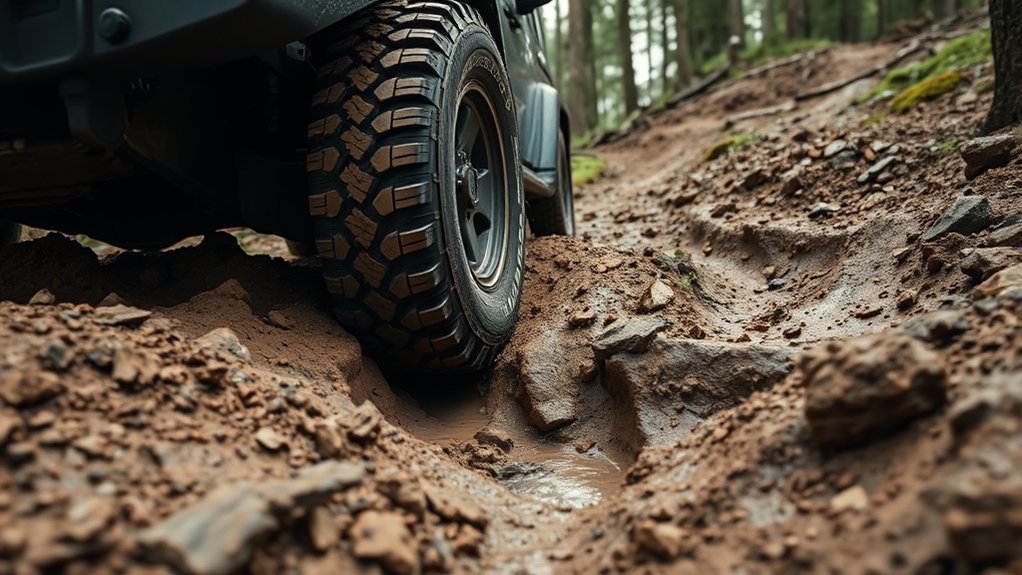
The Dextero All Terrain DAT1 is the better Dextero choice if you drive a Jeep, SUV, or light truck and want more bite on gravel, dirt, mud, and mixed terrain. Its tread is designed to push mud, dirt, stones, rocks, and water out of the tire, which helps it stay more consistent off pavement.
The DAT1 also uses a rugged tread compound for cut and chip resistance, a five-pitch tread pattern for road-noise control, and sidewall traction lugs for softer terrain. Those features give it more off-road usefulness than a basic highway all-season tire.
Still, you should keep expectations realistic. Owner feedback is mixed: some drivers like the bargain price and off-road grip, while others report weaker wet traction, more noise, sidewall flex, or shorter tread life than expected. If you tow, haul heavy loads, or drive in frequent rain, confirm the exact load range and read recent reviews for your tire size.
Is the Dextero DHT2 Good for Highway Driving?
The Dextero DHT2 is built for SUVs, CUVs, and light trucks that spend most of their time on paved roads. It is a better match for highway use than the DAT1 because it focuses more on wet-road stability, comfort, and reduced road noise.
The DHT2 listing highlights four circumferential grooves to help clear water from the tread, an optimized design to reduce noise and vibration, solid shoulders and lateral grooves for cornering, and Dextero’s Tension Body Technology for balanced wet and dry performance.
This tire can make sense for a daily-driven SUV or light truck, especially if you want a lower-cost highway tire. Before buying, check the exact listing because the displayed mileage warranty, load index, and price can change by size and seller.
How It Performs in Real Use
For Daily Commuting
Dextero makes the most sense in daily commuting because the brand focuses on practical value. The DTR1 and DHT2 are better fits for paved-road use because their listings emphasize water evacuation, reduced vibration, and everyday comfort.
For Highway Driving
The DHT2 is the better Dextero option for SUVs, CUVs, and light trucks that see more highway miles. Its four circumferential grooves and noise-reduction design are more useful on paved roads than the DAT1’s all-terrain tread.
For Gravel, Dirt, and Light Off-Road Use
The DAT1 is the stronger choice for mixed terrain because it has a more aggressive tread, self-cleaning channels, and sidewall traction lugs. It is still not a free pass for heavy rock crawling, frequent towing, or oversized loads unless the exact size and load range support your use.
For Rain, Light Snow, and Winter Roads
Dextero tires can be acceptable in rain and mild winter conditions when they are properly inflated and not worn out. The key limit is severe winter traction because the listed DTR1, DAT1, and DHT2 pages show Three-Peak Mountain Snowflake status as “No.”
Are Dextero Tires Comfortable and Quiet?

Dextero tires can be reasonably comfortable and quiet for the price, especially models designed for paved-road use. The DTR1 and DHT2 listings both emphasize reduced road noise and vibration, which matters for commuting and longer highway drives.
The DAT1 may be noisier because it has a more aggressive all-terrain tread. That is a normal tradeoff: the same tread blocks that help on dirt and gravel can create more road hum on pavement.
If quietness is your top priority, choose the DTR1 or DHT2 over the DAT1, and make sure the tires are mounted, balanced, inflated, and rotated correctly. Poor balancing, uneven wear, and incorrect inflation can make almost any tire feel rough or noisy.
How Long Do Dextero Tires Last?
Dextero tread life depends on the exact model, tire size, vehicle, alignment, load, inflation pressure, rotation schedule, climate, and driving style. The DTR1 listing shows a 45,000-mile mileage warranty, while other listings may show different coverage or no mileage warranty for the selected size.
For normal driving, Dextero tires should be treated like value tires with reasonable but not premium-level tread-life expectations. You may get good service life if you maintain them well, but aggressive driving, heavy loads, poor alignment, underinflation, and rough roads can shorten tire life quickly.
[Products Worth Considering]

Accurately measure tire tread depth with a calibrated gauge marked from 0 to 1 inch in 1/32 inch increments. The color-coded bar helps you quickly identify tread condition ranges, supporting safe driving for trucks, motorcycles, automobiles, and passenger vehicles.

Measure tyre tread depth precisely with a digital gauge that reads in both MM and inches, helping you monitor safe driving conditions. The large LCD screen is easy to operate, and the compact tool fits for cars, trucks, and motorcycles. It provides high accuracy with a 0-25.4mm range and includes a 1-year warranty for added peace of mind.

Measure tire tread depth quickly and accurately with this LUMITECO dial gauge that reads in 1/32" increments up to 14/32". The color-coded green/yellow/red zones make it easy to judge tire wear and know when replacement is needed. A rugged, compact design with a protective pouch helps keep the gauge ready for use on cars, trucks, motorcycles, and more.
Maintenance Checklist for Longer Tread Life
- Check tire pressure at least once a month when the tires are cold.
- Use the vehicle’s door-jamb tire placard or owner’s manual for pressure, not the maximum PSI printed on the tire sidewall.
- Rotate tires on the vehicle manufacturer’s schedule, commonly every 5,000 to 8,000 miles if recommended.
- Get an alignment if the vehicle pulls, the steering wheel is off-center, or tread wear is uneven.
- Replace tires when tread reaches 2/32 inch or sooner if you see cracks, bulges, exposed cords, or recurring pressure loss.
Pro Tip: Compare total installed price, not just tire price. Mounting, balancing, disposal, TPMS service, taxes, shipping, and road-hazard coverage can change the real value of a budget tire.
Are Dextero Tires Safe in Rain and Snow?
Dextero tires can be safe in rain and mild winter conditions when they are the correct size, properly inflated, evenly worn, and matched to the vehicle. The DTR1, DAT1, and DHT2 listings include wet-weather tread features such as grooves that help move water through the tread.
The key limitation is severe winter driving. The listed DTR1, DAT1, and DHT2 pages show Three-Peak Mountain Snowflake status as “No.” That means you should not treat them as dedicated severe-snow tires. If you regularly drive in deep snow, ice, mountain passes, or freezing winter conditions, use a proper winter tire that fits your vehicle and local conditions.
A budget tire can only perform safely when it is the correct size, properly inflated, evenly worn, and suitable for the weather you drive in.
Compatibility and Safety Checks Before You Buy
Tire compatibility starts with the vehicle’s tire placard, not the online search result. Use the size, load rating, and pressure information on the driver-side label or in your owner’s manual before you choose a Dextero model.
For trucks and SUVs, pay close attention to load index, load range, and speed rating. A tire that looks right may still be wrong for towing, hauling, commercial use, or a heavier trim level.
- Match the size: Use the tire size listed on your vehicle placard or owner’s manual.
- Check the load rating: Make sure the tire can support your vehicle and normal cargo.
- Confirm the speed rating: Choose a replacement that meets or exceeds your vehicle’s needs.
- Check the DOT date code: Avoid old stock, especially if the tires have been stored for years.
- Ask a tire professional: Get help if you tow, haul, use staggered tire sizes, or changed wheels.
What Do Drivers Say About Dextero Tires?
Driver feedback on Dextero is generally value-focused. Many shoppers like the low price, acceptable comfort, and practical performance for older vehicles, work trucks, and everyday transportation. Positive comments often mention bargain pricing, easy balancing, decent ride quality, and good enough traction for normal use.
The negative feedback is just as important. Some drivers report wet traction concerns, more noise as the tire wears, uneven wear, sidewall flex, or shorter tread life than expected. Those complaints do not mean every Dextero tire is bad, but they do show why you should choose carefully by model and size.
Pros and Cons
Pros
- Lower upfront cost than many premium tire brands.
- Backed by a known tire company instead of an anonymous private-label source.
- Separate models for basic all-season, highway, and all-terrain use.
- DTR1 and DHT2 listings emphasize reduced road noise and water evacuation.
- DAT1 offers a more aggressive tread for gravel, dirt, mud, and light off-road driving.
Cons
- Warranty and availability can vary by model, size, and retailer listing.
- Not the right choice for severe snow unless the exact tire has the needed winter rating.
- Owner feedback on wet grip, treadwear, noise, and ride feel can vary by size.
How Much Do Dextero Tires Cost?
Dextero tires are usually positioned as budget or value tires, but the final price depends on size, model, load rating, speed rating, retailer, installation, shipping, tire disposal fees, and road-hazard coverage. Do not rely on a single old price range.
Current retailer examples can run above $100 per tire for some sizes, while unavailable listings may not show a live price at all. The best approach is to compare the exact tire size on at least two retailers, then add installation, balancing, valve stems or TPMS service, taxes, and any road-hazard plan.
Factors Affecting Cost
- Tire size: larger SUV and light-truck sizes usually cost more than small passenger sizes.
- Load range: LT and higher-load tires often cost more than standard passenger tires.
- Warranty: some Dextero listings show mileage coverage, while others may show N/A.
- Installation: mounting, balancing, disposal, and TPMS service can change the out-the-door price.
- Availability: closeout sizes, online discounts, and local stock can shift prices quickly.
Is Dextero Worth the Price?
Dextero can be worth the price if you need an affordable tire for normal use and you accept value-brand tradeoffs. The strongest value case is for older vehicles, second vehicles, daily commuters, and basic work vehicles that do not need premium handling or severe-snow performance.
The value gets weaker if your exact size has poor recent reviews, no useful warranty, or a load rating that does not match your vehicle. In that case, paying more for a better-reviewed tire can make more sense over the life of the set.
How Dextero Compares to Alternatives
Dextero competes most directly with other budget and value tire brands. Compared with premium all-season or all-terrain tires, Dextero usually appeals more on upfront price than on refinement, winter grip, or long mileage guarantees.
If you want maximum wet braking, quiet highway manners, or long tread-life confidence, compare Dextero against a better-reviewed mid-range or premium option in the same size. If your goal is a lower-cost replacement tire for normal driving, Dextero can still be a reasonable shortlist brand.
How to Check the Exact Dextero Tire Before Buying
Before you buy any Dextero tire, check the exact tire rather than relying on general brand reviews. A DTR1 passenger tire, DAT1 all-terrain tire, and DHT2 highway tire can behave very differently.
- Match the size: Use the size on your door-jamb tire placard or owner’s manual.
- Check load and speed rating: Make sure the replacement tire meets or exceeds your vehicle’s requirements.
- Confirm the mileage warranty: Warranty coverage can vary by model and size.
- Check the winter rating: Look for Three-Peak Mountain Snowflake certification if you need severe-snow traction.
- Inspect the DOT date code: Avoid old stock, especially if the tire has been sitting for years.
- Read size-specific reviews: Reviews for one size or vehicle may not match another size or load range.
- Compare installed price: Include mounting, balancing, disposal, TPMS service, tax, and road-hazard coverage.
Common Mistakes to Avoid
- Buying by brand name only: Compare the exact Dextero model and size.
- Ignoring load range: This matters for trucks, SUVs, towing, and work use.
- Skipping the winter rating: All-season and all-terrain tires are not always severe-snow tires.
- Comparing tire-only prices: Installation and fees can change the final value.
- Forgetting maintenance: Budget tires need correct pressure, rotation, alignment, and inspection like any other tire.
Frequently Asked Questions
Who are Dextero tires made by?
Dextero tires are associated with Giti Tire Group. Giti Tire USA describes Giti as a Singapore-based tire group serving tire dealers, retailers, auto service outlets, vehicle manufacturers, and consumers in more than 130 countries.
Is Dextero trustworthy?
Dextero can be trustworthy as a budget tire choice when you buy the correct model and size from a reputable retailer. The brand has real manufacturer backing, but you should still verify the warranty, DOT date, load rating, speed rating, and recent reviews for your exact tire.
Which Dextero tire model should I choose?
Choose the DTR1 for basic passenger-car or CUV commuting, the DHT2 for highway-focused SUV, CUV, and light-truck use, and the DAT1 for gravel, dirt, mud, and mild off-road driving. Always confirm that the selected size matches your vehicle’s placard and load requirements.
How many miles do Dextero tires last?
Mileage depends on the model and size. The listed Dextero DTR1 page shows a 45,000-mile mileage warranty, while other Dextero listings may show different coverage or no mileage warranty for the selected size. Inflation, alignment, rotation, load, and road conditions strongly affect actual tread life.
Are Dextero tires good in snow?
Dextero all-season and all-terrain tires may handle light snow, but the listed DTR1, DAT1, and DHT2 pages show Three-Peak Mountain Snowflake status as “No.” For deep snow, ice, or regular winter mountain driving, choose a dedicated winter tire.
Are Dextero tires made in the USA?
Some Dextero sizes may be tied to Giti’s U.S. operation, and the DAT1 listing says select sizes are made in the USA. Do not assume every Dextero tire is U.S.-made. Check the specific retailer listing and the DOT plant code on the tire.
What should I check before installing Dextero tires?
Check the tire size, load index, speed rating, DOT date code, pressure requirement, mileage warranty, and winter rating. Also make sure the tire is mounted, balanced, and inflated according to the vehicle manufacturer’s guidance.
Are Durun tires good quality?
Durun is a separate budget tire brand, not the same as Dextero. Like most low-cost tire brands, Durun may work for basic commuting in mild conditions, but you should compare size-specific reviews, wet traction, warranty coverage, and safety ratings before choosing it over Dextero or another brand.
The Bottom Line
Dextero is a reasonable budget tire brand for daily driving, older vehicles, basic SUVs, CUVs, and light trucks. Models like the DTR1, DAT1, and DHT2 give you affordable choices for commuting, light all-terrain use, and highway driving.
The tradeoff is that Dextero is not a premium tire brand. You should expect practical value, not top-tier winter grip, ultra-quiet refinement, or high-performance handling. If you compare the exact model, size, warranty, load rating, winter rating, and recent reviews before buying, Dextero can be a smart way to save money without choosing a completely unknown tire.
Sources
- Giti Tire USA, manufacturer background, North America brand context, and company overview.
- Giti USA Plant, Richburg, South Carolina plant facts and production timeline.
- Giti USA Quality Certifications, ISO 9001:2015 and IATF 16949:2016 certification details.
- SimpleTire Dextero DTR1, DTR1 warranty, specs, all-season features, and 3PMS status.
- SimpleTire Dextero All Terrain DAT1, DAT1 features, owner feedback, specs, and 3PMS status.
- SimpleTire Dextero DHT2, DHT2 highway-use features, owner feedback, specs, and 3PMS status.
- NHTSA TireWise, tire pressure, tread depth, rotation, sizing, maintenance, winter-tire, and safety guidance.
[Products Worth Considering]

The ETENWOLF T600 digital tire pressure gauge delivers precise, manually calibrated readings to ANSI B40.7 Grade 2A standards with ±0.5% PSI accuracy. Its 360° rotating nozzle and display hold make it easy to check pressures from any angle, while a bleed button helps dial tires to the perfect level. With a 0–250 PSI range and support for PSI, BAR, and KPA, it’s a convenient tool for maintaining tire performance across many vehicles and seasons.

ETENWOLF’s tire pressure gauge helps you quickly and accurately check tire PSI across cars, trucks, motorcycles, bikes, and more. It’s manually calibrated to ANSI B40.1 Grade A for reliable readings, includes a large glow dial for easy nighttime viewing, and features a 360-degree swivel chuck for use at any valve angle. The gauge also works consistently in extreme hot or cold weather.

ETENWOLF T300 is a calibrated digital tire pressure gauge for accurate readings from 3 to 200 PSI across light and heavy-duty vehicles. It includes thermal compensation for reliable performance in extreme cold or heat, with an auto shut-off to extend battery life and an LED for easier reading. The sturdy design supports rugged everyday use, making it ideal for pickups, RVs, and industrial applications.

Related Articles
Best Tires for 2500HD Duramax 2026: Heavy-Duty Tires for Towing and Work Trucks
You depend on your 2500HD Duramax to tow heavy loads and handle demanding worksite conditions, so tire choice is not optional. The right tires…
Read More
Best Mastercraft Tires 2026: Reliable Tire Picks for Trucks, SUVs, and Daily Drivers
You need tires that match how you drive, where you live, and what your vehicle carries. This guide highlights Mastercraft models that stand out…
Read More
Best Lionhart Tires 2026: Budget Performance Tires for Cars and SUVs
You want tires that deliver confident handling, predictable braking, and acceptable longevity without stretching your budget. Lionhart’s 2026 lineup focuses on delivering those trade-offs…
Read More