
How to Tell What Year a Tire Was Manufactured: DOT Guide
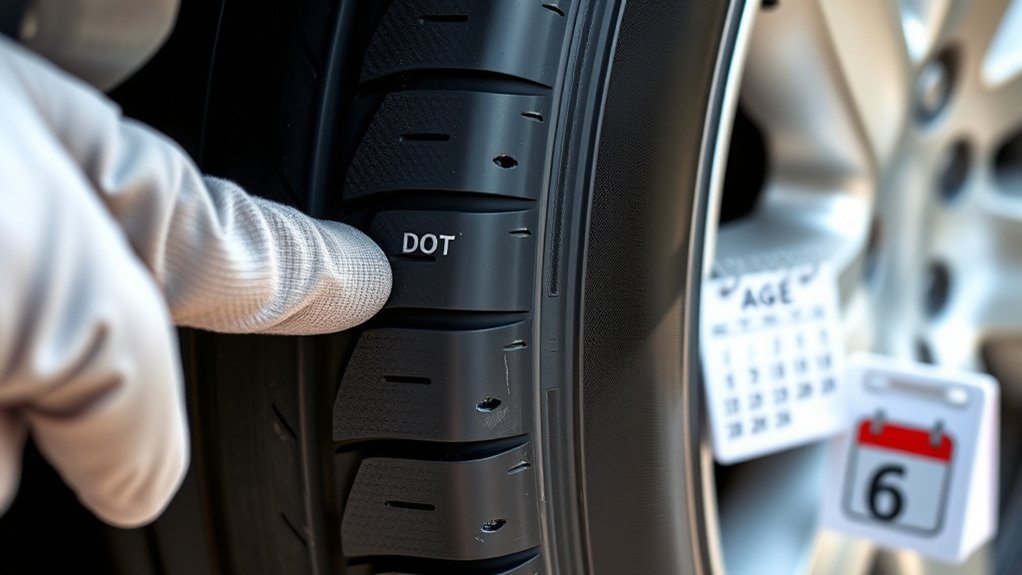
You can tell what year a tire was manufactured by reading the DOT Tire Identification Number on the sidewall. The date code is the final four digits of the full TIN: the first two digits show the production week, and the last two digits show the production year.
Last updated: July 7, 2026.
Quick Answer
Find the DOT code on the tire sidewall, then read the last four numbers of the full Tire Identification Number. A code ending in 2319 means the tire was made in the 23rd week of 2019. If the tire has a three-digit date code, it was made before 2000 and should be replaced.
Key Takeaways
- The DOT Tire Identification Number, or TIN, is molded or marked on the tire sidewall.
- For tires made in 2000 or later, the final four digits show the week and year of manufacture.
- The first two date-code digits show the production week, and the last two show the production year.
- The full TIN may appear on only one sidewall, so check both sides if you cannot find the date code.
- At six years old, tires deserve closer inspection; at 10 years old, many tire makers recommend replacement even if tread remains.
At a Glance
| Time Required | 2 to 5 minutes per tire |
| Difficulty | Easy |
| Tools Needed | Flashlight, clean cloth, phone camera, and safe access to both sidewalls |
| Cost | Free unless you need a tire shop to inspect or remove the wheel |
Where Is the Tire Date Code?
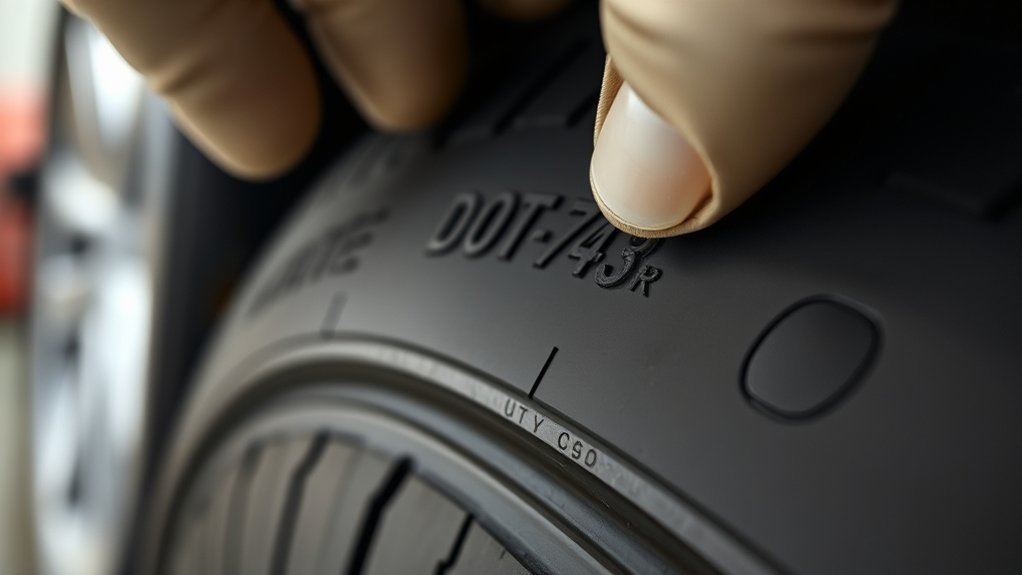
You’ll find the tire date code on the sidewall, near the “DOT” marking. The date code is part of the DOT Tire Identification Number, often shortened to TIN. It tells you when the tire manufacturer made the tire.
Check both sidewalls carefully. The full TIN with the four-digit date code may appear on only one side of the tire. The other side may show a partial TIN without the date code, especially on many passenger and light-truck tires.
If the date code faces inward, use a flashlight and your phone camera to look behind the wheel. If you still cannot read it safely, ask a tire shop to inspect it during rotation, balancing, or service.
Note: A DOT marking alone is not the date. You need the final four numbers of the full TIN to identify the manufacture week and year.
[Products Worth Considering]

This VEVOR tire bead breaker uses a slide-hammer impact and wedge tip to separate tire beads from rims quickly and efficiently without damaging hub surfaces. The long handle and sturdy steel construction help reduce user strain while providing reliable, portable tire changing for cars, trucks, and more. Ideal for home mechanics and repair shops handling multiple vehicle tire sizes.

Universal magnetic jack pad with aluminum grooved design to protect vehicle pinch welds during lifting. Durable nylon pad inserts are upgraded and secured with screws to resist damage and keep in place. Designed to fit most single vehicle pinpoint welds for safer, stable jacking when changing tires, repairs, or performing oil changes.

This cordless portable tire inflator delivers fast, safe inflation with an automatic shutoff when the target pressure is reached, helping prevent overinflation. The built-in LED lighting and real-time digital display make it easier to check pressure and handle roadside tire changes at night. It includes multiple nozzles for use on cars, motorcycles, bicycles, and inflatables like balls and swimming rings.
What Does the DOT Code Mean?
The DOT marking shows that the tire is certified to meet applicable U.S. Federal Motor Vehicle Safety Standards. The letters and numbers after DOT form the Tire Identification Number, which helps identify the plant, tire details, and manufacture date.
The date code is always the final group of the full TIN. Under 49 CFR § 574.5, the date code uses four numerical symbols. The first two identify the week of the year, and the last two identify the final two digits of the manufacture year.
For example, a TIN ending in 2910 means the tire was manufactured in the 29th week of 2010. A TIN ending in 0324 means the tire was manufactured in the third week of 2024.
The final four digits of the full DOT Tire Identification Number tell you the tire’s production week and year.
How to Check a Tire’s Manufacture Year Step by Step
- Park safely and let the tire stop moving. Never inspect a tire while the vehicle is in traffic or on an unstable surface.
- Find the DOT marking. Look on the outer sidewall first, near the rim edge or lower sidewall lettering.
- Look for the full TIN. If the code does not end in four numbers, check the other sidewall.
- Read the last four digits. Split them into two pairs. The first pair is the week; the second pair is the year.
- Calculate the tire’s age. Compare the date code with today’s date and your vehicle or tire maker’s age guidance.
- Inspect the tire condition. Look for cracking, bulges, cuts, uneven wear, vibration, or slow air loss.
Pro Tip: Take a clear photo of each tire’s full DOT code when you buy tires. Store the photos with your service records so you can check tire age and recalls later.
How Do You Read the Last Four Digits?
To read the last four digits, split them into two parts. The first two digits show the week of manufacture. The last two digits show the year of manufacture.
| DOT date code | Meaning |
| 2319 | 23rd week of 2019 |
| 0522 | 5th week of 2022 |
| 4024 | 40th week of 2024 |
| 0109 | First full week of 2009 |
If you see 2319, the tire was manufactured in the 23rd week of 2019. As of July 7, 2026, that tire is about seven years old, so it deserves a careful inspection and may need replacement depending on condition, service history, and manufacturer guidance.
If you see only a three-digit date code, the tire was made before 2000. That tire is far beyond normal service-life guidance and should not stay in regular road use.
Warning: Never keep using a tire just because the tread looks deep. Replace any tire with cracking, bulging, exposed cords, repeated air loss, sidewall damage, or a date code that shows it is too old for safe service.
How Do You Read 7- to 13-Character TINs?
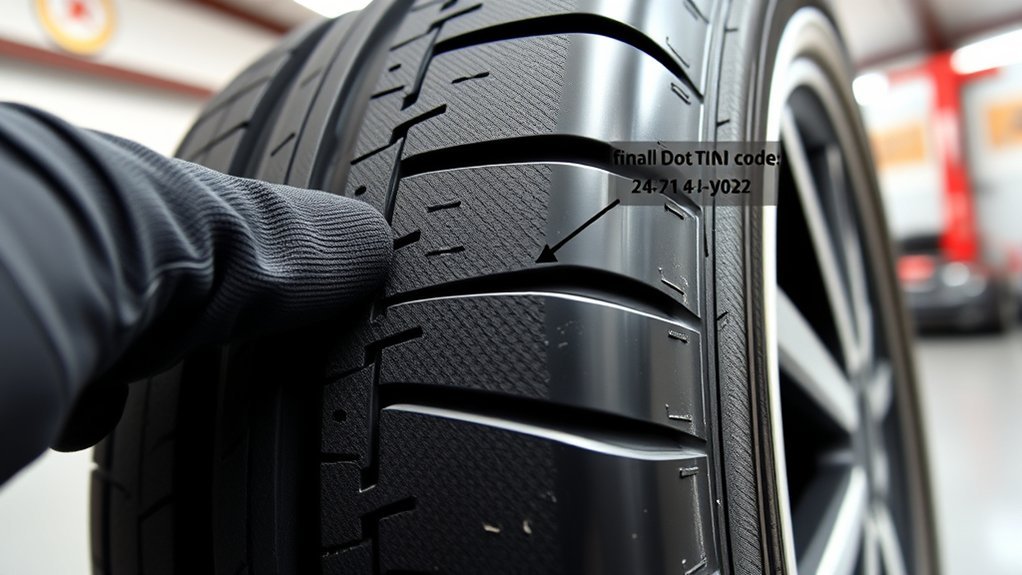
The Tire Identification Number has changed over time, so the format you see depends on when the tire was made and whether it is a new tire or a retreaded tire.
Older tires already on the road may show a 7- to 12-character TIN. In that older format, the first two characters identify the plant, the next characters identify tire size or optional tire information, and the final four numbers show the week and year of manufacture.
For the current new-tire format after the April 13, 2025 phase-out of old two-symbol plant codes, the TIN uses a three-symbol plant code, a six-symbol manufacturer code, and a four-digit date code. That creates a 13-symbol TIN for new tires. Retreaded tires use a shorter structure because the six-symbol manufacturer code does not apply to retreads.
| TIN type | What to read | Date-code location |
| Older 7- to 12-character TIN | Plant code, size or optional manufacturer information, date code | Final four digits |
| Current 13-symbol new-tire TIN | Three-symbol plant code, six-symbol manufacturer code, four-digit date code | Final four digits |
| Retreaded tire TIN | Retreader plant code and date code; an “R” mark identifies retread status but is not part of the TIN | Final four digits |
No matter which format you see, focus on the final four digits of the full TIN. Those four numbers are the fastest way to identify the tire’s production date.
What If You Can’t Find the Date Code?
If you find DOT letters but no final four numbers, you may be looking at the partial TIN. Move to the other side of the tire and check again. On mounted tires, the full TIN sometimes faces inward toward the vehicle.
If the code is covered by dirt, clean the sidewall gently with water and a cloth. Do not scrape the sidewall with a sharp tool. If the code is damaged, unreadable, or hidden on the inner sidewall, a tire professional can inspect the tire safely.
This step matters before you buy used tires. Never buy a used tire if you cannot confirm the date code, inspect the full sidewall, and verify that it has no cracking, patches in unsafe locations, bulges, exposed cords, or signs of impact damage.
When Should You Replace Tires by Age?
Tire age matters because rubber compounds change over time. Heat, sunlight, oxygen, storage conditions, load, and inflation habits can all affect how quickly a tire ages.
The National Highway Traffic Safety Administration says some vehicle and tire manufacturers recommend replacing tires that are six to 10 years old, regardless of treadwear. Michelin also recommends replacing tires 10 years after the date of manufacture as a precaution, even when the tread still looks usable.
| Tire age | Recommended action | Main risk |
| 0 to 5 years | Inspect monthly for pressure, tread, damage, and uneven wear | Low if maintained well |
| 6 years | Get a careful professional inspection and check your vehicle or tire maker’s guidance | Age-related weakening begins to matter more |
| 7 to 9 years | Inspect more often and plan replacement, especially before long trips or harsh weather | Higher risk from hidden aging and cracking |
| 10 years | Replace, even if tread depth still looks acceptable | Critical age-related failure risk |
| Any age | Replace if you see bulges, exposed cords, major cracking, sidewall cuts, or repeated pressure loss | Unsafe damage |
Do not ignore your spare tire. Spare tires age even when they are rarely used, and the date code on the spare can be older than the tires mounted on the vehicle. Check it before road trips, especially if it sits under the vehicle where heat, moisture, and road debris can speed up aging.
Does Tire Age Affect Performance?
Yes. Tire age can affect grip, ride quality, durability, and resistance to cracking. That matters whether you drive on touring tires, performance tires, winter tires, or all-season tires.
Age is only one part of tire condition. You should also check tread depth, tire pressure, load rating, speed rating, visible damage, and whether the tire matches your vehicle’s required size. For example, tire age can influence tire performance, but so can the tire category, road surface, temperature, and vehicle setup.
If you drive in changing seasons, the condition of all-season tires and all-season tire performance matters even more as the rubber ages. For colder climates, winter tires should also be inspected for age, cracking, tread depth, and storage condition before each season.
When comparing tire life, do not rely on the DOT date alone. Treadwear ratings can help compare expected wear within the same general tire category, but they do not override age, damage, poor maintenance, or manufacturer service-life guidance.
Can the DOT Code Help With Recalls?
Yes. The full TIN helps identify whether a tire belongs to a specific production group. That matters because tire recalls often apply to certain brands, models, sizes, plants, and date-code ranges.
You can search tire recalls through NHTSA’s recall page or the U.S. Tire Manufacturers Association tire recall lookup. Keep your tire purchase records and DOT codes so you can act quickly if a tire recall affects your set.
Frequently Asked Questions
Does the DOT code tell me the tire’s age?
Yes. The final four digits of the full DOT Tire Identification Number show the week and year the tire was made. For example, 2319 means the tire was manufactured in the 23rd week of 2019.
How old are my tires by DOT number?
Read the last four numbers of the full TIN. The first two numbers show the production week, and the last two show the production year. Then compare that week and year with today’s date to estimate the tire’s age.
How do you read the DOT manufacture date on tires?
Find the DOT marking, locate the full TIN, and read the final four digits. A code ending in 2910 means the tire was made in the 29th week of 2010. If you only find a partial TIN, check the opposite sidewall.
How long are tires good for after the DOT date?
It depends on the tire, vehicle, climate, storage, and maintenance. Many safety recommendations treat six years as a point for closer inspection and 10 years as a common maximum service-life limit. Replace damaged tires at any age.
What does a three-digit tire date code mean?
A three-digit tire date code usually means the tire was made before 2000. That tire is now far too old for regular road use and should be replaced instead of inspected for continued service.
Can I use tires that look new but have an old DOT date?
Be careful. Low mileage does not stop rubber from aging. If a tire is six years or older, get it inspected closely. If it is 10 years old, replacement is the safer choice even when tread depth looks good.
Sources
- NHTSA TireWise — DOT TIN location, tire age, tire inspection, and six- to 10-year replacement guidance.
- 49 CFR § 574.5 Tire Identification Requirements — official TIN structure, date-code format, DOT symbol, and April 13, 2025 phase-out date.
- Federal Register: Tire Identification and Recordkeeping — background on TIN rules, date codes, and recall traceability.
- Michelin: When to Replace Tires — 10-year maximum service-life recommendation.
- U.S. Tire Manufacturers Association Tire Recall Lookup — tire recall lookup using the TIN.
Conclusion
Now you know how to find the DOT code, read the final four digits, and identify the tire’s manufacture year. The process is simple: find the full TIN, split the final four numbers into week and year, then compare that date with the tire’s condition and service-life guidance.
Do not stop at the date code. Check both sidewalls, inspect the tread and rubber, confirm your spare tire’s age, and look up recalls when needed. If a tire is old, damaged, or impossible to verify, replace it before it puts your next drive at risk.

Related Articles

How Long Can a Car Sit on a Flat Tire? Risks Explained
Sitting too long on a flat tire can quietly cause costly damage—discover when repair ends and replacement begins.
Read More
Tire Boot Removal: When and How to Remove It Safely
Never force off a tire boot yourself—learn when removal is legal, what it costs, and how to avoid bigger trouble.
Read More
Squeaky Tires When Turning: Causes and How to Fix Them
How can you tell if squeaky tires when turning mean a simple fix or a bigger problem hiding beneath the noise?
Read More