
Tire Performance in Snow: A Guide for Toyota RAV4 Owners
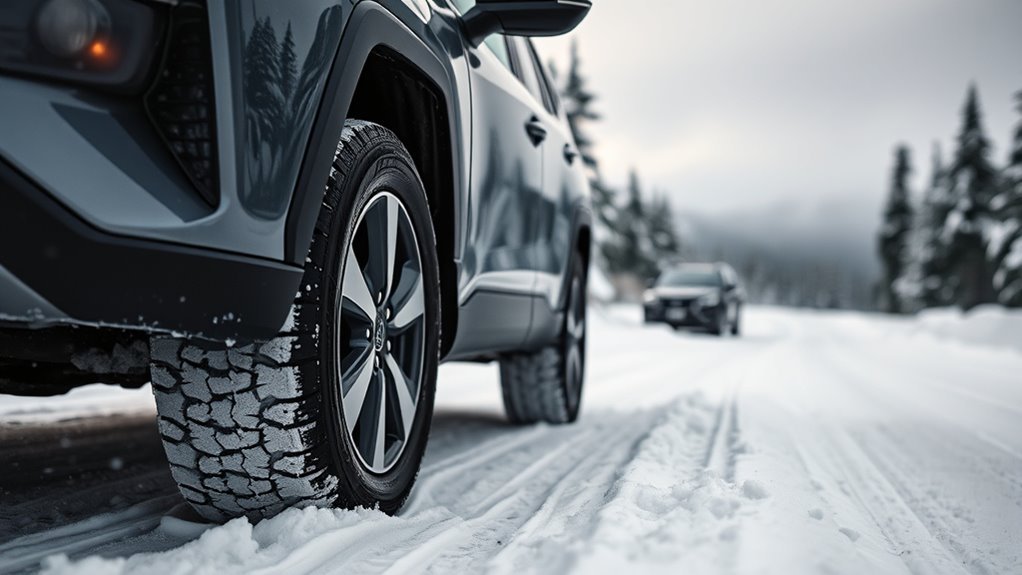
The best snow tires for a Toyota RAV4 depend on your winter roads, not just the badge on the sidewall. A city commute with plowed streets may be fine on a 3PMSF all-weather tire, while rural ice, mountain passes, or repeated deep snow call for a dedicated winter tire. Start with your RAV4’s exact tire size and pressure placard, then choose the tire type that matches your climate, route, and local chain or stud rules.
Quick Answer
For most RAV4 owners who see regular snow or ice, choose four matching 3PMSF-rated winter tires in the exact size, load index, and speed rating shown on your door placard or owner’s manual. Use all-weather tires only for mixed, moderate winters; keep all-season tires for mild winters with mostly wet roads.
Key Takeaways
- Use your RAV4’s door-jamb tire placard or owner’s manual as the final fitment authority before buying.
- Pick dedicated winter tires for repeated snow, ice, steep roads, or rural routes.
- Pick all-weather tires for one-set convenience in moderate winters, but do not confuse them with basic all-season tires.
- Look for the 3PMSF symbol, but remember it confirms severe-snow traction testing, not guaranteed ice control.
- Plan replacement around 5/32 inch tread depth for snow performance, not only the legal 2/32 inch wear limit.
At a Glance
| Time Required | 15–30 minutes to verify tire size, pressure, route needs, and local chain/stud rules before shopping |
| Difficulty | Easy for tire selection; professional mounting and balancing recommended |
| Tools Needed | Tire-pressure gauge, tread-depth gauge or quarter, owner’s manual, door-jamb tire placard, flashlight |
| Cost | Usually the cost of four tires plus mounting, balancing, TPMS service if needed, and optional winter wheels |
Quick Decision Guide: Winter vs. All-Weather vs. All-Season for RAV4
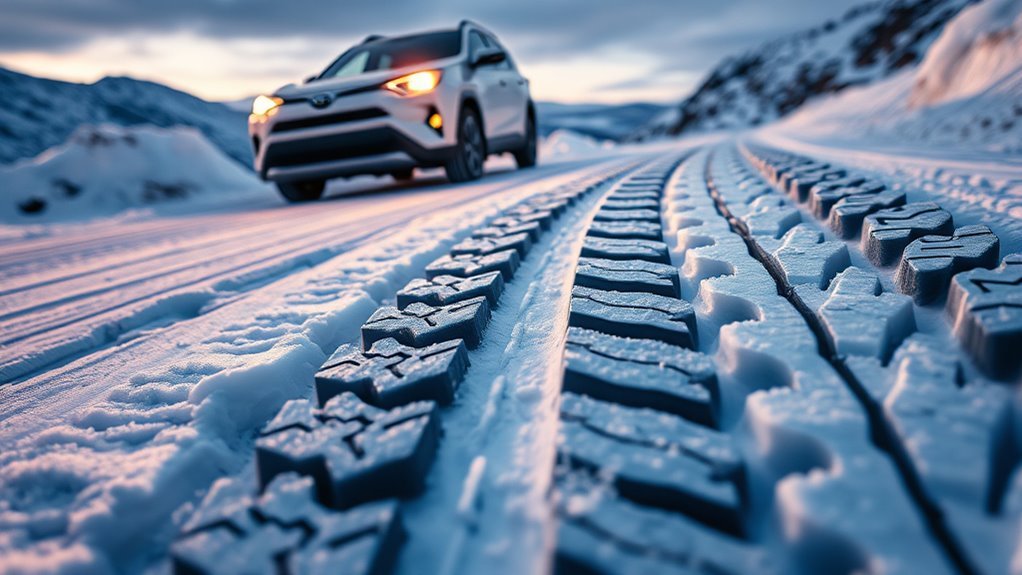
Choose your RAV4 winter tire by the worst conditions you expect to drive through, not the best. All-wheel drive can help you start moving, but tires decide how well the vehicle turns and stops.
| Tire Type | Best For | RAV4 Owner Notes |
| Dedicated winter tires | Frequent snow, ice, freezing rain, steep roads, rural routes, mountain trips | Best cold-weather control. Install as a matching set of four. |
| All-weather tires | Mixed climates with cold rain, light-to-moderate snow, and occasional slush | Look for the 3PMSF symbol. Good one-set solution, but not equal to a dedicated winter tire on repeated ice. |
| All-season tires | Mild winters, plowed urban roads, mostly rain, rare light snow | Fine for many warm climates, but grip drops when roads become icy or snow-packed. |
| Studded or studdable winter tires | Persistent hard ice where local law allows studs | Check local rules first. Studs can be restricted by date, road type, or region. |
Warning: Do not install only two winter tires on a RAV4. Mismatched front/rear grip can make the vehicle harder to control during braking or turning. Use four matching tires of the specified size, type, and rating.
[Products Worth Considering]

Keep RV, trailer, or truck dual-axle tires protected with waterproof, UV-resistant covers that help guard against sunlight, snow, rust, and dirt. The dual tire covers are easy to install with a rope/bungee fastener for a stable fit that won’t easily slip. Designed for 27–30 inch diameter wheels, they help maintain tire condition through harsh weather.
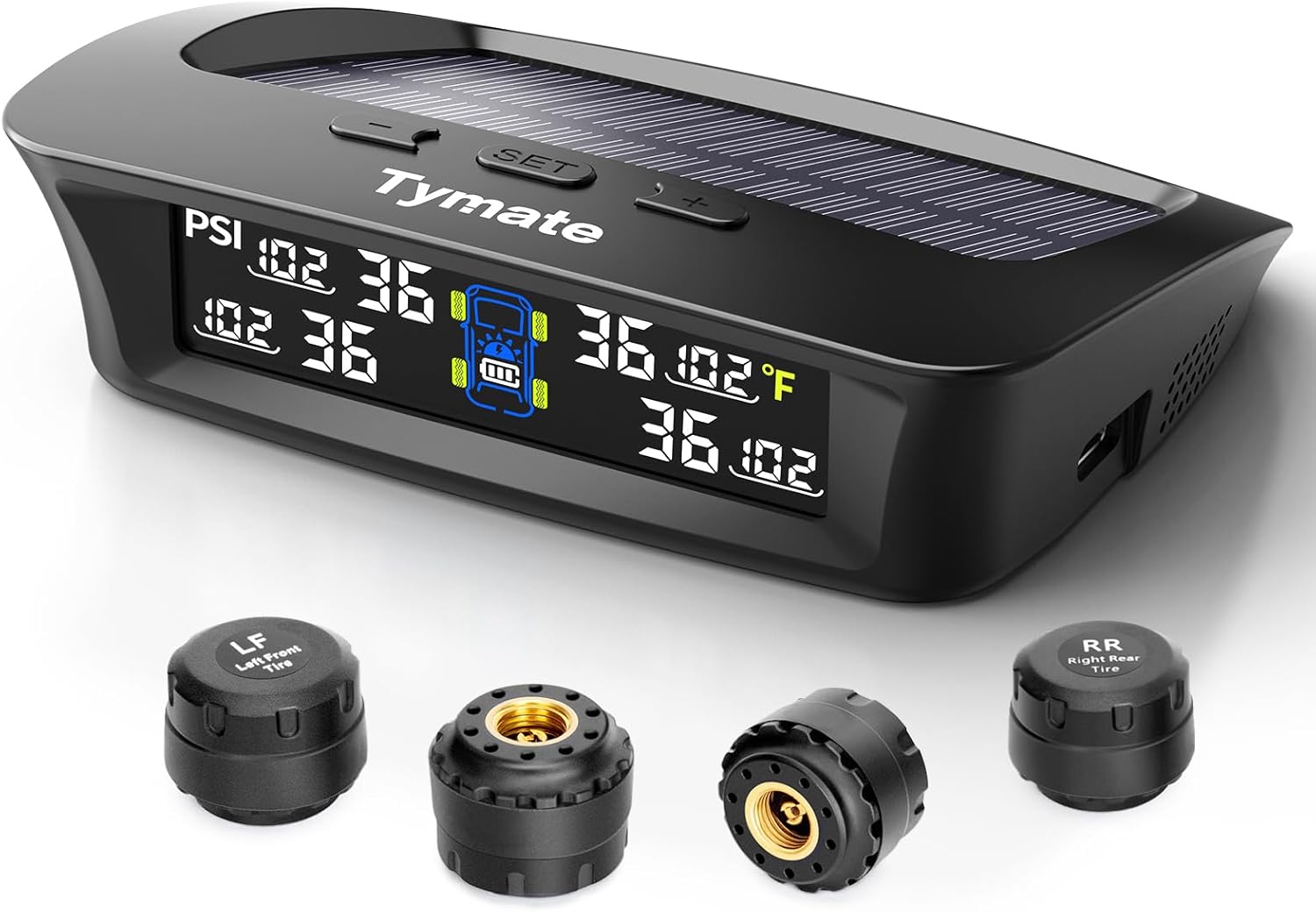
The Tymate TM3 RV TPMS delivers real-time tire pressure monitoring from 0 to 144 PSI with accurate readings and dependable wireless communication. It includes four external sensors with pre-pairing, six alarm modes for rapid leak, pressure extremes, temperature, and signal loss, plus an easy-reference setup for alert thresholds. Solar and USB-C charging help keep the display powered, while the color LCD and adaptive backlight improve visibility for safer driving and towing.
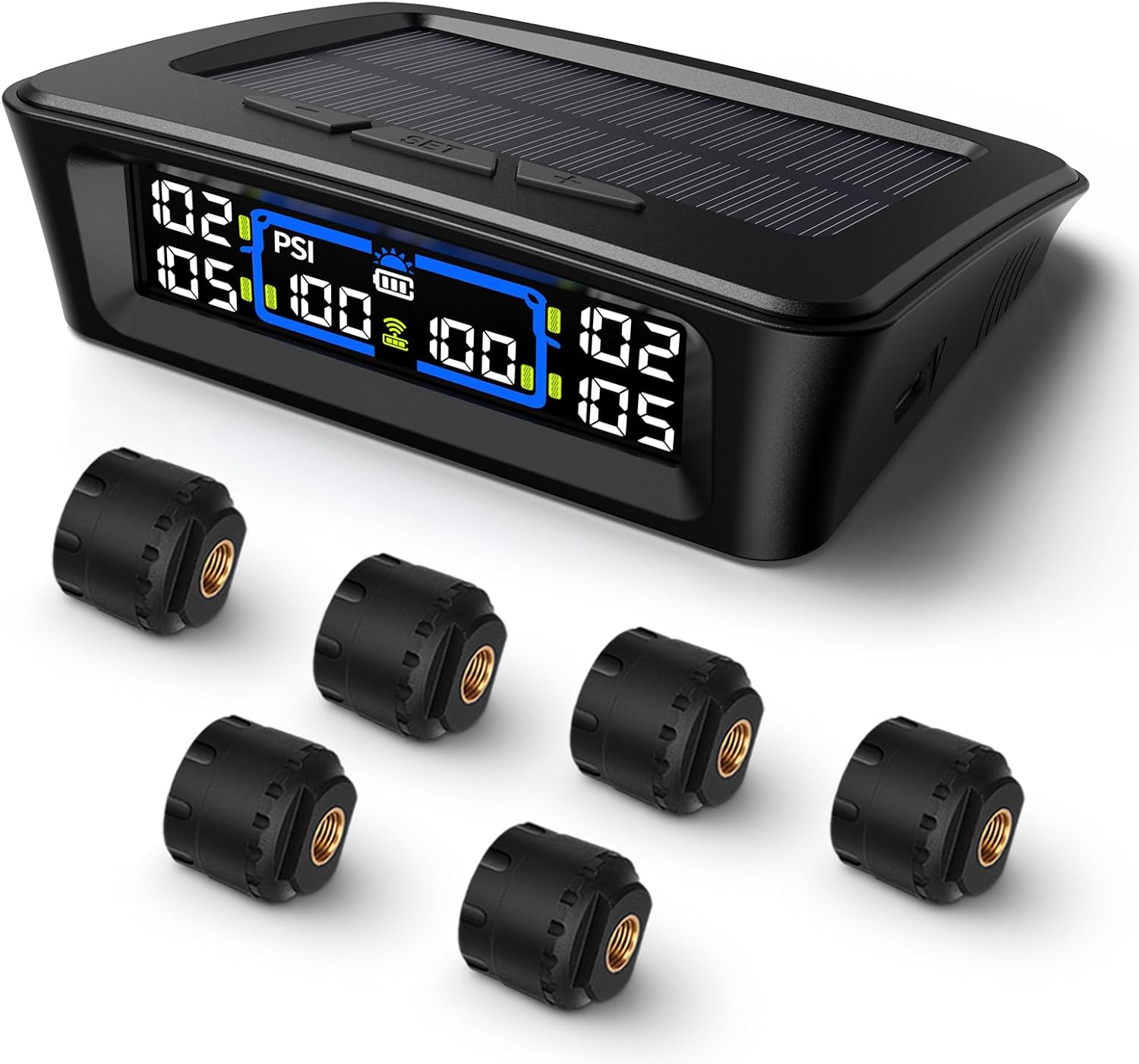
The Tymate TM12 RV TPMS delivers real-time tire pressure and temperature monitoring with a stable 433Hz display for safer long-distance driving. It supports simultaneous monitoring across vehicle and trailer zones, includes six alarm modes for pressure, temperature, leakage, battery, and signal loss, and features easy DIY installation with auto calibration. Power is supplied via USB-C charging or solar recharging, with a wide 0–144 PSI range and up to 50 ft signal coverage for RVs and towable trailers.
Tire Features That Improve Wet and Snow Braking
Good winter grip comes from the whole tire design: tread depth, rubber compound, siping, water evacuation, and sidewall rating. The tire also needs to match your RAV4’s size, load capacity, and speed rating.
Tread Pattern Design
For snow and slush, look for deep grooves, open channels, and tread blocks with many biting edges. Wide circumferential grooves help move water and slush away from the contact patch, while dense sipes create small edges that bite into packed snow.
Directional winter tread patterns often work well in slush because they push water and snow outward. Some all-weather tires use a V-shaped or directional tread to balance dry, wet, and light-snow traction. For a RAV4 that sees unplowed roads, choose tread depth and snow evacuation over sporty steering feel.
Winter Compound & 3PMSF
Winter tires use rubber compounds designed to stay more flexible in cold weather. That flexibility helps the tread conform to rough ice and packed snow instead of hardening like a warm-weather compound.
The Three-Peak Mountain Snowflake symbol, often shortened to 3PMSF, means the tire meets a severe-snow-use traction definition. It is more meaningful than an M+S mark alone, but it does not guarantee ice braking, hill climbing, or safe speed in every storm.
- Choose 3PMSF-rated tires for regular snow exposure.
- Choose dedicated winter tires for repeated ice, steep grades, or rural routes.
- Choose all-weather tires when you need one year-round set for moderate winter conditions.
- Use local chain or stud rules as part of the decision, especially for mountain travel.
Tread Depth and Tire Age
New winter tires usually start with deep tread, but snow performance falls as the grooves wear down. A practical planning point is about 5/32 inch for snow traction. At 4/32 inch, wet-road evacuation is already reduced, and at 2/32 inch a tire may be at or near the legal wear limit in many places.
Also check the DOT date code. Tires can age out even when tread remains, especially if they show cracking, bulges, vibration, or hardening. If a tire is more than six years old, have it inspected carefully; at ten years, many tire safety organizations recommend replacing it regardless of appearance.
Pro Tip: Use a tread-depth gauge before the first storm, not after. If your winter tires are near 5/32 inch, replace them before snow season instead of trying to stretch one more winter.
Common RAV4 Tire Sizes and How to Pick the Right One
Do not buy RAV4 snow tires from a generic size list alone. Toyota RAV4 tire sizes vary by model year, trim, wheel package, gasoline/hybrid/Prime model, and market. The safest process is simple:
- Open the driver-side door and read the tire-and-loading placard.
- Confirm the current sidewall size, such as 225/65R17, 225/60R18, 235/55R19, or an older trim-specific size.
- Match the load index and speed rating unless a tire professional confirms an approved winter alternative.
- Check the owner’s manual for snow-tire and chain restrictions.
- Buy four matching tires, not two.
Many late-model RAV4 trims use 17-, 18-, or 19-inch wheels, while older generations may use different sizes. If you downsize to a smaller winter wheel, keep the overall tire diameter close to the factory setup and confirm brake clearance, TPMS compatibility, load rating, and speedometer accuracy.
Note: The maximum PSI printed on the tire sidewall is not your daily inflation target. Use the cold inflation pressure on your RAV4’s tire placard or owner’s manual, as explained by NHTSA TireWise.
Best RAV4 Snow Tires by Use Case
The “best” RAV4 snow tire changes by route. A tire that is great for a plowed city commute may not be the best choice for icy rural roads or mountain passes. Use this guide as a starting point, then verify availability in your exact RAV4 size.
| Use Case | Good Tire Category | Example Models to Compare |
| City commute with plowed streets | 3PMSF all-weather | Michelin CrossClimate 2, Goodyear Assurance WeatherReady 2 |
| Deep snow and unplowed roads | Dedicated studless winter | Bridgestone Blizzak WS90 where available, newer Blizzak IcePeak where available, Michelin X-Ice Snow SUV, Nokian Hakkapeliitta lines |
| Mixed cold rain, slush, and occasional snow | All-weather touring | Goodyear Assurance WeatherReady 2, Michelin CrossClimate 2, Bridgestone WeatherPeak |
| Dry/wet performance with rare light snow | Performance all-season | Continental ExtremeContact DWS06 Plus, but only if your winter is mild and fitment is correct |
For severe winter driving, prioritize braking and predictable steering over treadwear claims. If your route includes steep driveways, shaded icy corners, untreated roads, or mountain passes, a dedicated winter tire is usually the safer RAV4 setup.
Choose Studs, Studdable, or Studless Tires for Your Region

Studless winter tires are the best default for most RAV4 drivers because they work on snow, cold pavement, slush, and many icy roads without damaging pavement. Modern studless tires use soft winter rubber, high sipe density, and tread blocks designed to grip packed snow.
Studded tires can help on persistent hard ice, but they are noisy, can wear roads, and are restricted in many regions. Studdable tires give you the option to add studs later, but once studs are installed, they should be installed correctly and used only where legal and useful.
Warning: Check your state, province, or local transportation rules before buying studded tires or using chains. Chain placement, allowed dates, maximum speeds, and road restrictions can vary by region and by RAV4 model year.
Seasonal Setup: Swap Timing, Pressure, Rotation, and Storage
Install winter tires when temperatures are consistently near 45°F (7°C) or when snow and ice are likely. Do not wait for the first major storm if your local tire shops become busy; schedule the swap before the rush.
- Pressure: Check tire pressure cold, meaning the vehicle has been parked for at least three hours. Cold weather changes pressure by roughly 1 psi for each 10°F change, so recheck after big temperature swings.
- Rotation: Rotate winter tires every 5,000–7,500 miles unless your owner’s manual or tire manufacturer gives a different interval.
- Tread: Measure before installation. Replace around 5/32 inch for snow performance.
- Storage: Store off-season tires in a cool, dry, dark place away from direct sun, ozone sources, and standing water.
- Position marking: Mark each tire location when removing it, such as LF, RF, LR, and RR, so wear patterns can be tracked.
If you use a second set of winter wheels, confirm TPMS compatibility and recalibration needs. A dedicated wheel-and-tire package costs more upfront but can reduce seasonal mounting costs and protect your main wheels from salt.
[Products Worth Considering]
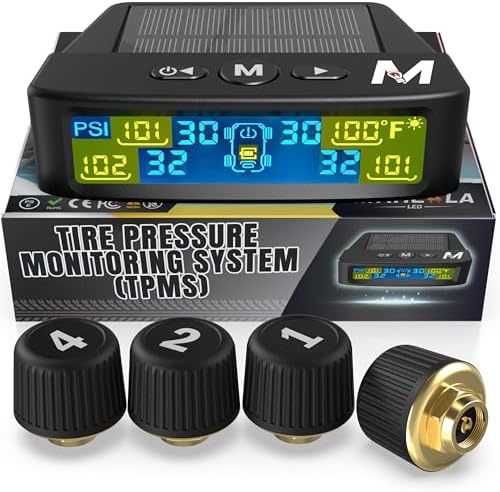
Marcala’s TPMS set of four sensors helps you monitor tire pressure and temperature in real time while driving, with updates every second. The bright color LCD uses auto-dimming for easy viewing, powered by dual solar and USB charging, and offers six alarm modes. Built for trailers, RVs, campers, trucks, and towing setups, the sensors support monitoring 1-4 wheels up to 98 PSI with IP67 waterproof protection.

RVMATE dual-axle RV tire covers help shield your tires from sunlight, snow, rust, and dirt to keep them in better condition in harsh weather. Made with heavy-duty waterproof, UV-resistant 420D Oxford fabric, they provide strong shading and help reduce wear. They install easily by placing the cover on the wheel and fastening the rope for a stable fit.
Driving Setup and Techniques to Maximize Traction
RAV4 tires do the most important winter work, but the right vehicle setup and driving technique help you use that grip. On equipped AWD models, Snow Mode can be selected for slippery surfaces. It can help smooth power delivery, but it does not shorten stopping distance like better tires do.
- Accelerate slowly so the tires can bite instead of spinning.
- Brake earlier than normal and avoid sudden steering inputs.
- Leave more following distance than you would on dry pavement.
- Use chains only when required or when tire traction is not enough, and follow your exact owner’s manual for placement and clearance.
- Practice chain installation at home before you need it on a cold roadside.
AWD helps a RAV4 move, but winter tires help it stop and turn. For snow safety, braking grip matters more than launch traction.
Troubleshooting: Poor Traction, Uneven Wear, When to Upgrade or Change Vehicle Systems
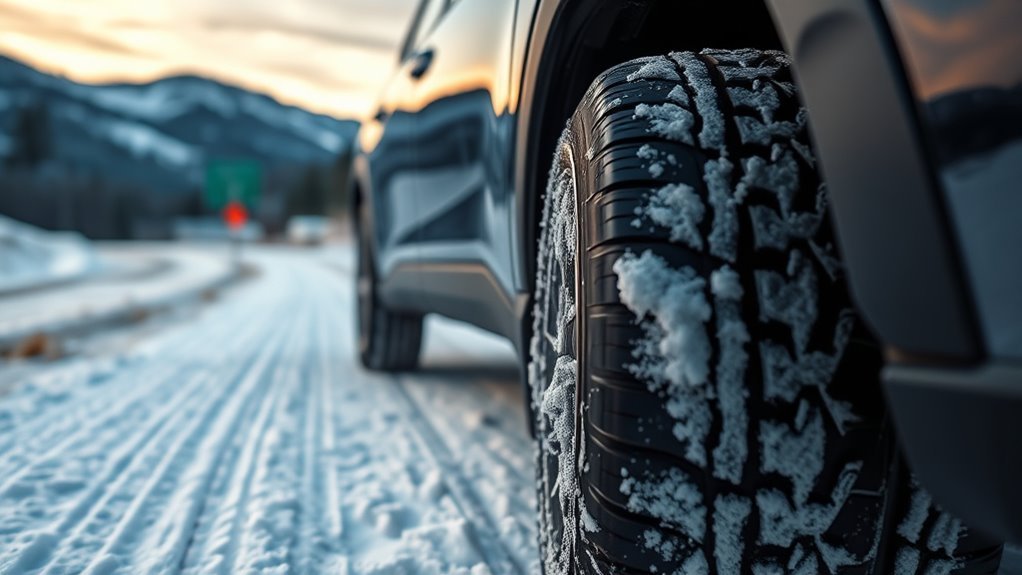
If your RAV4 feels nervous in snow, start with the tires before blaming AWD, traction control, or suspension. Most winter traction complaints come from the wrong tire type, worn tread, old rubber, incorrect pressure, or uneven wear.
Diagnose Traction Loss
- Measure tread depth: If winter tread is near or below 5/32 inch, snow traction may be weak.
- Check pressure cold: Underinflation can make steering vague and increase heat buildup.
- Inspect wear patterns: One-sided wear can point to alignment problems; cupping can point to worn suspension or balance issues.
- Check tire type: M+S all-season tires are not the same as dedicated winter tires.
- Watch traction-control behavior: Frequent flashing on mild slopes can be a sign your tires lack grip.
When To Replace
Replace RAV4 winter tires when they no longer match the conditions you expect. For snow driving, do not wait until the legal wear bars. Replace earlier if tread is near 5/32 inch, if braking feels long, if sidewalls are cracked, if a tire has bulges, or if the rubber has aged and hardened.
If tires wear unevenly, fix the alignment, pressure, suspension, or rotation issue before installing a new set. Otherwise, the new tires can develop the same problem.
When to Check Vehicle Systems
If you have four proper winter tires with good tread and correct pressure but the RAV4 still slips, pulls, vibrates, or triggers warnings, schedule a professional inspection. Ask the shop to check alignment, brakes, wheel balance, suspension components, AWD fault codes, and TPMS sensor operation.
Frequently Asked Questions
What mode should my RAV4 be in for snow?
Use Snow Mode if your RAV4 is equipped with it and road conditions are slippery. Snow Mode can help smooth power delivery, but it does not replace winter tires, lower speed, or longer following distance.
Are Toyota RAV4s good in the snow?
A RAV4 can be good in snow when it has the right tires, correct pressure, and a careful driver. AWD helps with acceleration, but tires determine most braking and cornering grip. Dedicated winter tires make the biggest difference in repeated snow or ice.
Do I need winter tires if my RAV4 has AWD?
Yes, if you regularly drive on snow, ice, or freezing roads. AWD helps distribute power, but it does not create extra tire grip when stopping or turning. Four matching winter tires provide better cold-weather control than AWD with worn or basic all-season tires.
Can I use all-weather tires on a RAV4 year-round?
Yes, all-weather tires can be a good year-round choice if your winters are moderate and the tire carries the 3PMSF symbol. For frequent ice, deep snow, mountain roads, or long rural commutes, dedicated winter tires are usually the safer choice.
When should I replace RAV4 winter tires?
Replace them when snow traction drops, when tread is near 5/32 inch for winter use, when they show cracks or bulges, or when age has hardened the rubber. Also replace tires with uneven wear after correcting the cause.
Conclusion
The safest RAV4 winter setup starts with fitment, then climate. Confirm your exact tire size, load rating, speed rating, and cold pressure from the door placard or owner’s manual. Choose dedicated winter tires for serious snow and ice, all-weather tires for mixed moderate winters, and basic all-seasons only for mild conditions. Keep tread depth, tire age, pressure, chains, and local rules in the plan, and your RAV4 will be much better prepared for winter roads.
Sources
- Toyota Owners — RAV4 winter driving tips — snow-driving technique, snow tires, chains, and winter precautions.
- Toyota Owners — RAV4 Snow Mode switch — Snow Mode availability and operation on equipped AWD vehicles.
- NHTSA TireWise — tire pressure, cold inflation, placard guidance, and tire safety basics.
- U.S. Tire Manufacturers Association — TISB 37 — severe-snow-use tire definition and 3PMSF marking guidance.
- Tire Rack — When Should Tires Be Replaced? — tread-depth replacement guidance for snow, wet, and dry roads.
- Michelin CrossClimate 2 — example of a 3PMSF all-weather tire for moderate winter use.

Related Articles

Toyota RAV4 TPMS Reset: Easy Steps That Work
Unlock the secrets to resetting your Toyota RAV4's TPMS effortlessly—discover the essential steps to ensure your tires are always safe.
Read More
Toyota RAV4 Tire Rotation: DIY Steps & Pattern
Take control of your Toyota RAV4's tire maintenance with our simple DIY rotation guide—discover the best steps for optimal performance and longevity!
Read More
Mix Tire Brands on a Toyota RAV4? Expert Guide
Keeping your RAV4 safe? Learn when mixing tire brands risks traction, ABS/TCS and AWD damage — and what exact matches you must insist on.
Read More