What Actually Busts a Tire? Real Causes & Prevention Tips
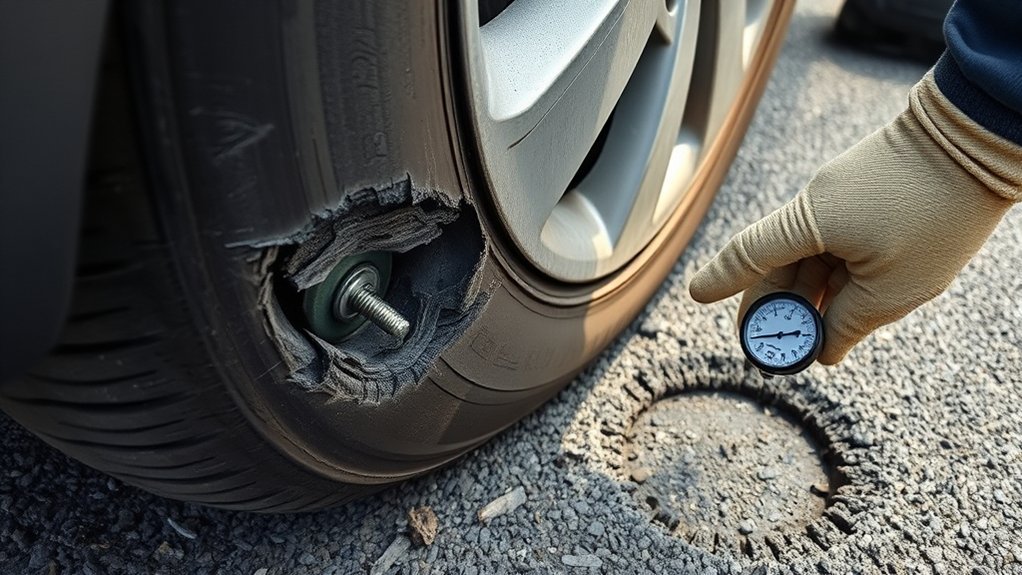
A tire usually busts when heat, pressure, and structural stress exceed its limits. Underinflation makes the sidewalls flex too much, creating heat and weakening the casing. Overloading or overinflation can also trigger failure by stressing or bulging the tire. Worn tread, pothole hits, poor alignment, and hidden damage raise the risk further. You can reduce blowouts with regular pressure checks, rotation, inspections, and proper load control, and a few more details can sharpen your prevention.
Key Takeaways
- Underinflation is a leading cause of tire blowouts because it increases flexing, heat buildup, and sidewall stress.
- Overloading a vehicle can exceed tire load ratings and trigger rapid air loss or a blowout.
- Potholes, sharp objects, and impact damage can weaken tire structure and cause sudden failure.
- Worn, aged, or unevenly worn tires are more likely to burst, especially if alignment is poor.
- Prevent blowouts with monthly pressure checks, regular inspections, proper alignment, tire rotations, and correct load limits.
What Causes a Tire Blowout?
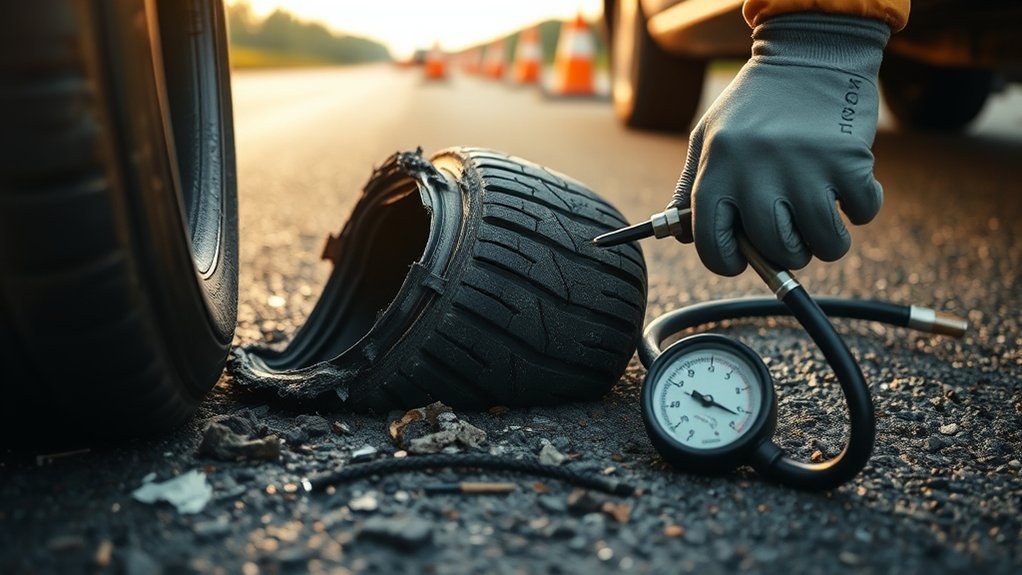
A tire blowout typically starts with underinflation, because too little air increases sidewall flexing, builds excess heat, and can cause structural failure. You control tire blowouts by monitoring tire pressure and correcting underinflation before damage escalates. Overloading your vehicle also stresses the casing, especially when you ignore load ratings. Worn tires with low tread wear and aged rubber lose resilience, so they’re more vulnerable to road hazards and sudden rupture. Impact damage from potholes, curbs, or sharp objects can cut cords or pinch the sidewall, creating hidden weakness. You need regular inspections to detect bulges, cuts, embedded debris, and uneven wear before failure spreads. Proper inflation, matched to the manufacturer’s specification, reduces excessive heat and preserves integrity. Use preventative measures: check tires cold, rotate them, replace degraded tires, and keep load within limits. Additionally, maintaining proper treadwear ratings can significantly enhance tire longevity and performance, helping to prevent blowouts. That’s how you protect your mobility and keep control on every road.
Why Underinflation Causes Tire Failure?
When you run a tire below its recommended pressure, the sidewalls flex more with each rotation, and that flexing generates excess heat. If you keep driving this way, the heat and repeated deformation can weaken the tire’s structure and trigger failure. Proper inflation reduces sidewall stress, limits heat buildup, and helps prevent blowouts. Additionally, maintaining the correct tire tread depth is crucial for ensuring optimal grip and safety on the road.
Low Pressure Heat Buildup
Underinflation increases sidewall flexing, and that repeated deformation generates excess heat from internal friction as you drive. When your tire pressure falls below the recommended tire pressure, underinflation raises rolling resistance, wastes energy, and drives heat buildup fast. A tire 20% low can see about 50% more heat buildup, pushing tire blowouts closer. You can stay ahead by building regular tire maintenance into your routine: check your tires with a gauge before long trips and during temperature swings. Tires often lose 1 PSI for every 10°F drop, so pressure checks matter in cold weather. Keeping correct pressure improves fuel efficiency 3% to 4% and helps prevent blowouts. NHTSA links underinflated tires to over 300 fatalities yearly.
Sidewall Flex And Failure
Excess heat from low pressure is only part of the failure mechanism; the larger problem is how underinflation changes tire geometry and load distribution. When you run low tire pressure, sidewall flex rises, and excessive flexing turns each rotation into heat and stress. That stress can exceed heat tolerance, trigger structural compromise, and create tire blowouts. The sidewalls also lose margin against cuts and punctures, so tire integrity falls fast.
- Check pressure when tires are cold.
- Watch for uneven wear and sidewall bulges.
- Correct underinflation before long drives.
- Use regular checks to preserve freedom from failure.
Studies show each 1 psi drop can cut fuel efficiency by 0.4%, proving this isn’t minor. You protect control, efficiency, and safety by keeping tire pressure correct.
How Overloading and Overinflation Damage Tires?
When you overload a vehicle, you push each tire beyond its rated load limit, which increases heat buildup and strains the internal structure until failure becomes more likely. When you overinflate tires, you raise internal pressure above the recommended PSI, which bulges the sidewalls and increases blowout risk from puncture or impact damage. You can reduce both hazards by checking load conditions and maintaining proper tire pressure at regular intervals. Choosing low rolling resistance tires can also help enhance fuel efficiency and reduce heat generation.
Overloading Strains Tire Structure
Overloading your vehicle beyond its specified weight limit puts direct strain on the tire structure, forcing each tire to carry more than its designed maximum load and generating excess heat that can lead to rapid air loss or blowouts. When you ignore the weight limit, you increase stress, overheating, and tire failure risk. The National Highway Traffic Safety Administration warns that overloaded tires also create uneven wear, cutting performance and shortening service life. You can protect your mobility by checking the door sticker, matching cargo to capacity, and keeping air pressure within spec. Freedom on the road starts with respecting engineering limits.
- Load capacity isn’t optional; it’s structural.
- Heat buildup weakens internal materials fast.
- Uneven wear signals overload before failure.
- Your tires can’t negotiate with physics.
Overinflation Raises Blowout Risk
Too much weight isn’t the only pressure problem that can damage your tires. When you push tire pressure beyond the maximum pressure on the sidewall, overinflation stiffens the casing and concentrates tire stress in weak zones. That makes your tires more vulnerable to punctures, impact damage, and tire blowouts, especially at high speeds. You’ll also see uneven wear, often in the center of the tread, which cuts tire performance and shortens service life. Add excess vehicle weight, and the load multiplies the risk. You free yourself from failure by regularly checking tire pressure, because even small errors matter. Use prevention tips: match inflation to the manufacturer’s spec, respect load limits, and don’t treat more air as more safety.
Preventive Checks Protect Tires
Because tire damage often starts before you notice any warning signs, preventive checks are essential. You protect your freedom to drive by regularly checking tire pressure and load index, then keeping both within the manufacturer-recommended limits. Overloading creates excessive heat buildup, stresses the carcass, and accelerates tread depth loss; overinflated tires bulge, raising puncture and impact risk.
- Check your vehicles before trips and after heavy hauling.
- Compare cargo weight to the tire’s load index.
- Inspect for underinflated tires, cuts, and sidewall bulges.
- Watch for uneven wear that signals misuse.
These preventive checks reduce tire blowouts, preserve handling, and extend service life. When you stay disciplined, you cut failure probability and keep control over your machine.
Signs Your Tire Is About to Blow?
How can you tell when a tire is nearing failure? You track specific signs before tire blowouts happen. Listen for popping or thumping; those sounds often point to internal damage or a weakened carcass. Inspect visible signs: cracks, bulges, and uneven tread wear can expose structural stress long before failure. Watch for a handling change—if the vehicle pulls to one side, the tire may be losing low pressure or carrying damage that alters load distribution. Repeated need for inflation suggests a slow leak or compromised sidewall integrity, not routine fluctuation. Feel for excessive vibration at speed; that often signals imbalance, separation, or a defect that raises blowout risk. You don’t need guesswork: these indicators are measurable, and they let you act early. Use them as prevention tips, because detection gives you freedom from roadside uncertainty and keeps control where it belongs—under you. Additionally, maintaining proper treadwear ratings can significantly enhance tire longevity and performance.
What to Do During a Tire Blowout?
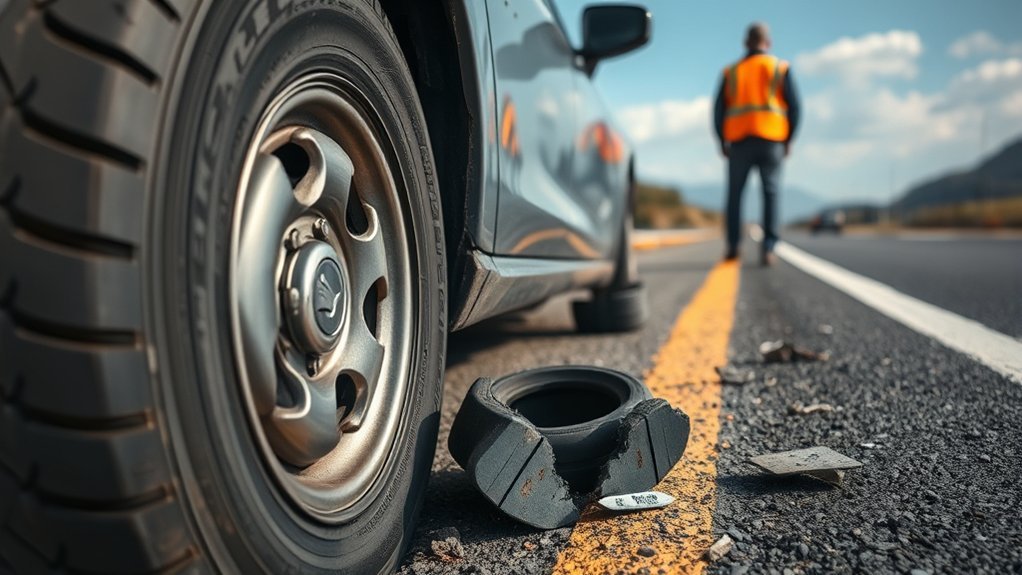
If a tire blows out, stay calm and keep both hands firmly on the wheel; don’t slam the brakes, since abrupt braking can make the vehicle harder to control. During tire blowouts, you need to remain calm, steer straight, and keep the car tracking forward. A brief, slight acceleration can help maintain momentum and counter the pull from the failed tire, then you can begin gradually decelerating by easing off the accelerator. Switch on your emergency flashers immediately so other drivers see your situation.
- Grip the wheel firmly.
- Avoid sudden lane changes.
- Guide the vehicle to safely maneuver off the roadway.
- Assess the situation before you exit or call for assistance.
Once you’re stopped, check for visible damage and note tire pressure only if it’s safe. Then decide whether you can change the tire or need roadside help. Your goal is control, visibility, and a clean exit from danger. Additionally, understanding the importance of dedicated winter tires can enhance safety during adverse weather conditions.
How to Prevent Tire Blowouts?
Preventing a tire blowout starts with controlling the factors that stress the tire before failure occurs. You should check tire pressure regularly and keep it at the manufacturer’s recommended PSI; underinflation raises heat, flexing, and the chance of blowouts. Inspect each tire monthly with visual inspections, looking for cuts, cracks, bulges, or uneven wear and tear. If you spot damage early, you can prevent a sudden failure later. Rotate tires every 6,000 to 8,000 miles so tread wear stays even across all positions. You also need to avoid overload; exceeding the vehicle’s load capacity puts excessive strain on the casing and sidewalls. Finally, choose high-quality tires matched to your driving conditions, because better construction improves durability, grip, and thermal stability. When you control pressure, load, and tread condition, you reduce risk, preserve performance, and keep the vehicle freer from predictable failure. Regular checks give you more command over the road and fewer blowouts. Additionally, selecting tires with a strong UTQG rating can enhance overall performance and reduce the risk of blowouts.
Tire Maintenance Tips That Extend Tire Life
Keeping your tires in top condition starts with routine maintenance, because small issues can quickly turn into uneven wear or structural failure. You should make a monthly check of tire pressure; underinflation raises heat, stresses sidewalls, and increases tire blowouts. Rotate your tires every 6,000 miles to distribute tread wear and preserve handling freedom on the road.
- Inspect your tire for visible damage: cuts, cracks, or bulges.
- Confirm proper alignment and balance to stop irregular wear.
- Choose high-quality tires with the correct load index and speed rating.
- Track tread depth so you know when replacement is due.
When you inspect your tire, act fast on defects. You don’t need to accept premature failure; disciplined maintenance gives you control, extends service life, and keeps performance predictable. Additionally, selecting tires with a higher UTQG rating can enhance durability and longevity.
Frequently Asked Questions
What Causes a Tire to Bust?
A tire busts when you run low tire pressure, overload load capacity, or hit road hazards that damage its structure. You also face risk from tread wear, tire age, manufacturing defects, and poor puncture repairs. Harsh driving habits, temperature fluctuations, and seasonal changes can raise heat and stress. You’ll prevent failure by checking pressure, inspecting sidewalls, rotating tires, and replacing worn rubber before it can betray your freedom.
What Cuts Tires Easily?
Sharp objects like nails, glass, and metal shards cut tires easily. You’ll also face debris punctures from road hazards, potholes, poor alignment, improper inflation, tire age, manufacturing defects, off road driving, and heavy loads. Smart tire maintenance helps you inspect sidewalls, tread, and pressure before cuts spread. When you drive with precision, you reduce heat, stress, and vulnerability, keeping your vehicle resilient and your movement free.
What Damages Tires the Most?
Underinflation damages tires the most; even a 20% drop in tire pressure can sharply raise heat and failure risk. You’ll also see road debris, sharp objects, and pothole impact cut into the casing. Overloading vehicle weight, improper alignment, worn tread, and sidewall damage compound the stress. Temperature fluctuations and harsh driving habits accelerate wear, so you should inspect often, rotate regularly, and keep pressure exact.
What Can Burst a Tire?
A tire can burst when you run low tire pressure, overload past weight limits, or hit road hazards like potholes and sharp objects. High driving speed raises heat, while temperature changes and seasonal changes shift pressure. Worn tire age, improper alignment, and manufacturing defects weaken the casing. You can reduce risk by checking inflation, rotating tires, and inspecting tread, sidewalls, and load before you drive.
Conclusion
By staying alert to pressure, load, tread wear, and heat, you can dramatically reduce the odds of a blowout. You’ve seen how underinflation, overinflation, and overloading each stress the tire structure in different ways. If you inspect your tires regularly and respond to early warning signs, you’ll extend service life and improve safety. A tire failure can feel catastrophic, but with disciplined maintenance, you can keep that risk from becoming a road disaster.

Related Articles
How Tight Should Tire Nuts Be? Torque Specs & Safety Guide
How tight should tire nuts be to stay safe without damage? Discover the exact torque specs, warnings, and re-torque tips before you wheel away.
Read More
How Do You Get a Bubble in Your Tire: Complete Guide, Tips & Expert Advice
Know how tire bubbles form and why they’re dangerous before it’s too late—discover the warning signs, causes, and what to do next.
Read More
Does Insurance Cover Tire Slashing? What Your Policy May Cover
Likely covered under comprehensive insurance, but tire slashing claims have fine print—learn what’s included before assuming your policy helps.
Read More