
How to Check Tire Pressure on a Toyota RAV4: A Step-by-Step Guide
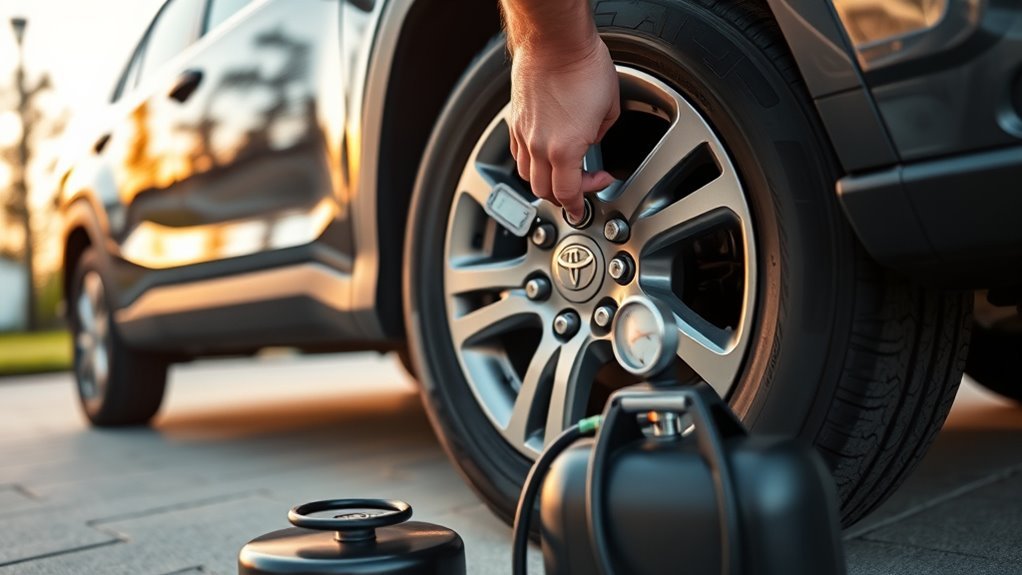
Checking Toyota RAV4 tire pressure takes only a few minutes, but it affects steering, braking, fuel economy, tread wear, and how accurately the tire pressure warning system works. The key is to check the tires when they are cold, compare each reading with the PSI on your driver’s door-jamb placard, and adjust the air before the tires become visibly low.
Quick Answer
To check tire pressure on a Toyota RAV4, use a reliable tire gauge when the tires are cold, remove the valve cap, press the gauge firmly onto the valve stem, and compare the PSI reading with the driver’s door-jamb placard. Add or release air as needed, then recheck each tire.
Key Takeaways
- Use the PSI on your RAV4’s driver-side door-jamb sticker or owner’s manual, not the maximum PSI printed on the tire sidewall.
- Check pressure when the tires are cold, ideally before driving or after the vehicle has been parked for at least three hours.
- Many RAV4 models are near 33 PSI, but the exact number can vary by year, trim, tire size, and market.
- The TPWS/TPMS light is helpful, but it does not replace a monthly tire-gauge check.
At a Glance
| Time Required | 5–10 minutes |
| Difficulty | Easy |
| Tools Needed | Tire pressure gauge, air pump or portable inflator, valve caps |
| Cost | Usually free to a few dollars for air; $5–$25 for a basic gauge |
Understanding Tire Pressure: Why It Matters
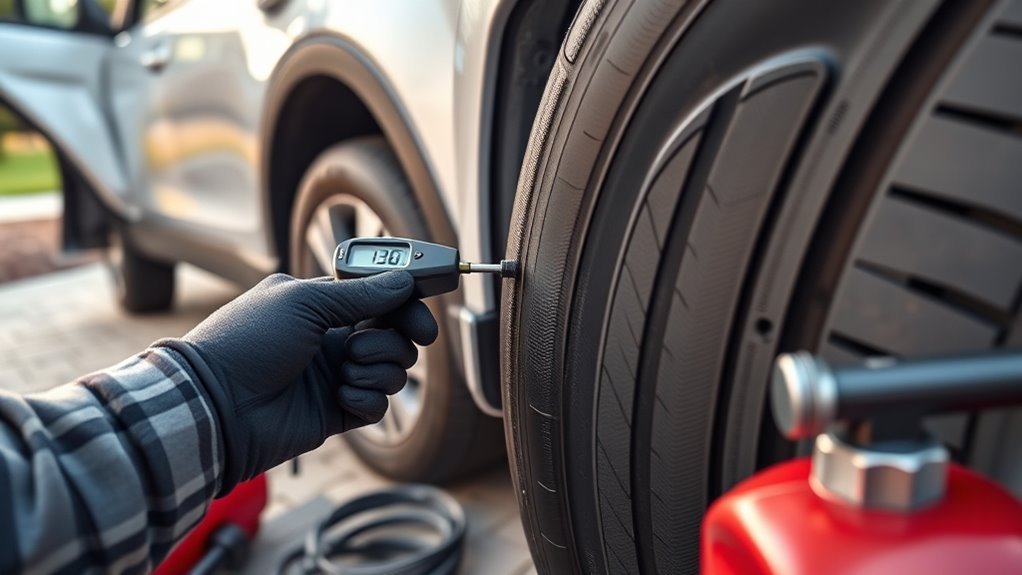
Proper tire pressure helps your Toyota RAV4 keep the right tire shape and contact patch on the road. That improves steering feel, braking response, traction, ride comfort, and tire life.
Underinflated tires can run hotter, wear unevenly, reduce fuel economy, and increase the risk of tire damage. Overinflated tires can make the ride harsher and reduce the amount of tread touching the road. The safest target is the vehicle manufacturer’s recommended cold tire pressure, not a guess and not the maximum pressure stamped on the tire sidewall.
Warning: Do not use the “MAX PSI” number molded into the tire sidewall as your RAV4’s normal tire pressure. That number is the tire’s maximum limit, not Toyota’s recommended pressure for your vehicle.
[Products Worth Considering]

The AstroAI 2 pack air chucks provide a heavy-duty, closed-flow locking design that helps keep air flowing during inflation while securely attaching to the valve stem. Built with 250 PSI rated brass components and compatible with Schrader valves, they feature 1/4" female NPT threads for a wide fit with common inflators. The straight tip and locking clip make filling tires and monitoring pressure more convenient.

EVOULTES heavy duty tire inflator with an integrated gauge delivers accurate pressure readings from 10–120 PSI, helping you inflate, deflate, and check tires in one tool. The 16.5-inch extended dual-head air chuck with swivel base reaches hard-to-access dual wheel valves on trucks and RVs. A brass trigger core and side-mounted air release valve make operation smooth, with standard 1/4" NPT threading and quick-connect compatibility for easy setup.

This portable cordless tire inflator delivers up to 160 PSI with fast 17 L/min airflow to help you quickly top up tires and get back on the road. It features dual power mode, running on a 21V rechargeable battery or a 12V DC adapter for convenient roadside use. An automatic shut-off with digital pressure gauge helps prevent overinflation, and a built-in LED light improves visibility in low-light conditions.
Find the Correct RAV4 Tire Pressure First
Before you add or release air, find the correct PSI for your exact RAV4. On most Toyota RAV4 models, the tire and loading information label is on the driver’s door edge or door jamb. You can also check your printed owner’s manual or Toyota’s official Toyota Owners manuals.
Many RAV4 models use a cold tire pressure near 33 PSI, but do not treat that as universal. The correct pressure can change with model year, trim, tire size, load rating, hybrid or gas configuration, and regional specifications. If your placard lists different front and rear pressures, follow the placard.
If your RAV4 has a spare tire, check the spare’s placard or manual specification too. A full-size spare may use a normal road-tire PSI, while a compact temporary spare often uses a much higher pressure. Never assume the spare matches the four road tires.
Measuring Tire Pressure: A Step-by-Step Guide
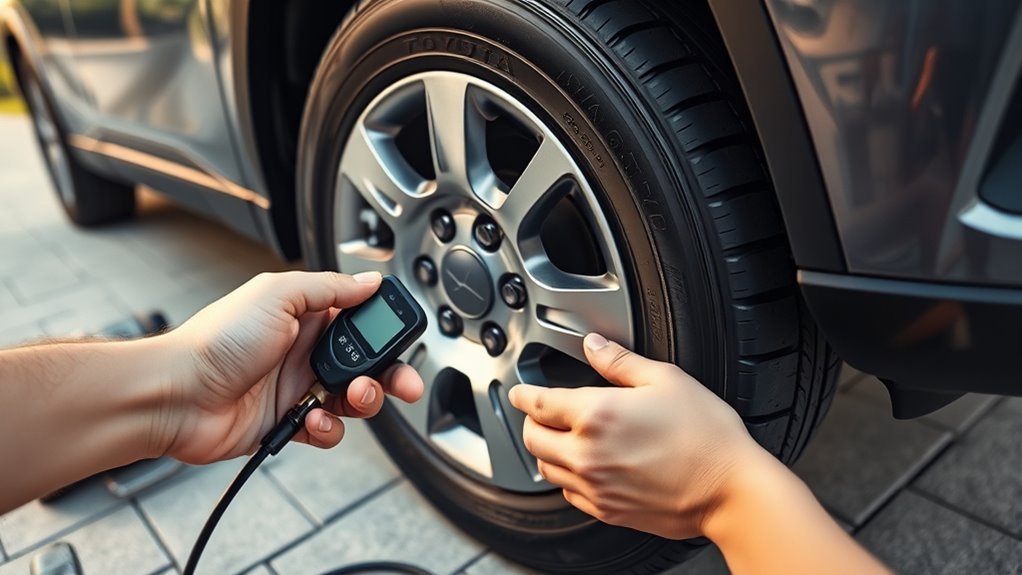
Measuring tire pressure accurately is simple when the tires are cold. “Cold” means the vehicle has been parked for at least three hours or has only been driven a very short distance at low speed.
- Park safely on level ground. Set the parking brake and keep the tire gauge within reach.
- Find the recommended PSI. Read the driver’s door-jamb sticker or owner’s manual before checking the tires.
- Remove the valve cap. Put the cap in your pocket so it does not roll away.
- Press the gauge straight onto the valve stem. A brief hiss is normal, but a long hiss means the gauge is not sealed firmly.
- Read the PSI. Compare it with the recommended cold pressure for that tire position.
- Repeat for all four tires. Check the spare too if your RAV4 has one that requires pressure maintenance.
- Reinstall every valve cap. Valve caps help keep dirt and moisture out of the valve stem.
Pro Tip: Keep a small digital gauge in the glove box. Gas-station gauges get dropped often, and a personal gauge makes it easier to compare readings month after month.
When to Check Your Tire Pressure for Optimal Performance
Check your RAV4 tire pressure at least once a month, before long trips, after a large temperature swing, and any time the tire pressure warning light appears. The most accurate reading comes before driving, not after the tires have warmed up on the road.
Best Times To Check
- Before the first drive of the day: This gives the cleanest cold-pressure reading.
- Before highway travel: Proper inflation reduces heat buildup and helps stability at speed.
- After seasonal weather changes: Cold snaps can drop PSI enough to trigger the warning light.
- When a tire looks low: Do not rely on appearance alone; confirm with a gauge.
Seasonal Pressure Adjustments
Tire pressure changes with temperature. A practical rule of thumb is that tire pressure changes by about 1 PSI for every 10°F change in ambient temperature. That means a tire set correctly in warm weather may become underinflated on a cold morning.
Do not bleed air from hot tires just because the reading is higher after driving. Heat from driving raises pressure temporarily. If you need the most accurate adjustment, wait until the tires cool and check again.
How to Adjust Tire Pressure to Meet Manufacturer Specifications
Once you know the current PSI and the recommended PSI, adjust the pressure slowly. Use an air pump at a gas station, a shop air hose, or a portable inflator.
- If the tire is low: Add air in short bursts, then recheck with your gauge.
- If the tire is high: Press the center pin inside the valve stem briefly to release air, then recheck.
- If the tire keeps losing air: Inspect for a nail, screw, cracked valve stem, damaged sidewall, bead leak, or wheel damage.
- If pressure drops quickly: Do not keep driving on it. Install the spare if safe to do so or call roadside assistance.
After adjusting all tires, drive normally and watch the TPWS/TPMS light. Some systems need several minutes of driving to update tire-pressure readings.
Resetting the Tire Pressure Warning System (TPWS)
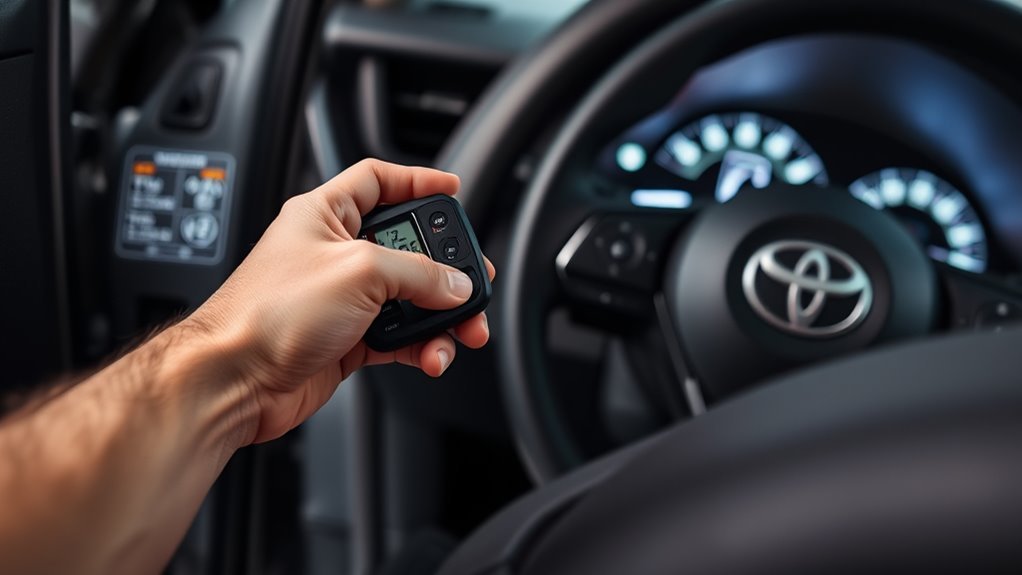
Toyota often refers to the tire pressure system as TPWS, while many drivers call it TPMS. Both refer to the system that warns you when tire pressure is low or the system has a fault.
Reset or initialize the system only after all tires are adjusted to the correct cold PSI. If you reset the system while the tires are underinflated, the warning threshold may be wrong.
Button-Equipped RAV4 Models
- Park safely and adjust all tires to the correct cold PSI.
- Turn the ignition to ON without starting the engine, or use the ignition-on mode on push-button models.
- Locate the tire pressure reset switch if your RAV4 has one. It may be under the lower dash or near the steering column.
- Press and hold the switch until the tire pressure warning light blinks three times.
- Release the switch and drive normally so the system can relearn the pressure setting.
Menu-Equipped RAV4 Models
- Park safely and adjust all tires to the correct cold PSI.
- Use the steering-wheel controls or vehicle settings menu.
- Look for Vehicle Settings, TPWS, Set Pressure, or similar wording.
- Select the set/initialize option and follow the on-screen prompt.
- Drive for several minutes. Some displays show dashes until the system receives updated pressure data.
Note: The exact TPWS reset path depends on your RAV4 model year and display. Use your owner’s manual if the button or menu wording does not match your vehicle.
Avoid These Common Tire Pressure Checking Mistakes
Small tire-pressure mistakes can lead to bad readings or repeated warning lights. Avoid these common problems:
- Checking only after driving: Hot tires read higher than cold tires, so the number may mislead you.
- Using the sidewall maximum: Use the door-jamb placard, not the tire’s maximum PSI.
- Skipping the spare: If your RAV4 has a spare, it may need a separate pressure check.
- Forgetting valve caps: Missing caps let dirt and moisture reach the valve stem.
- Resetting TPWS before adding air: Always correct the pressure first, then reset or initialize the system if needed.
- Trusting TPWS alone: The warning system is helpful, but it is not a replacement for monthly gauge checks.
[Products Worth Considering]
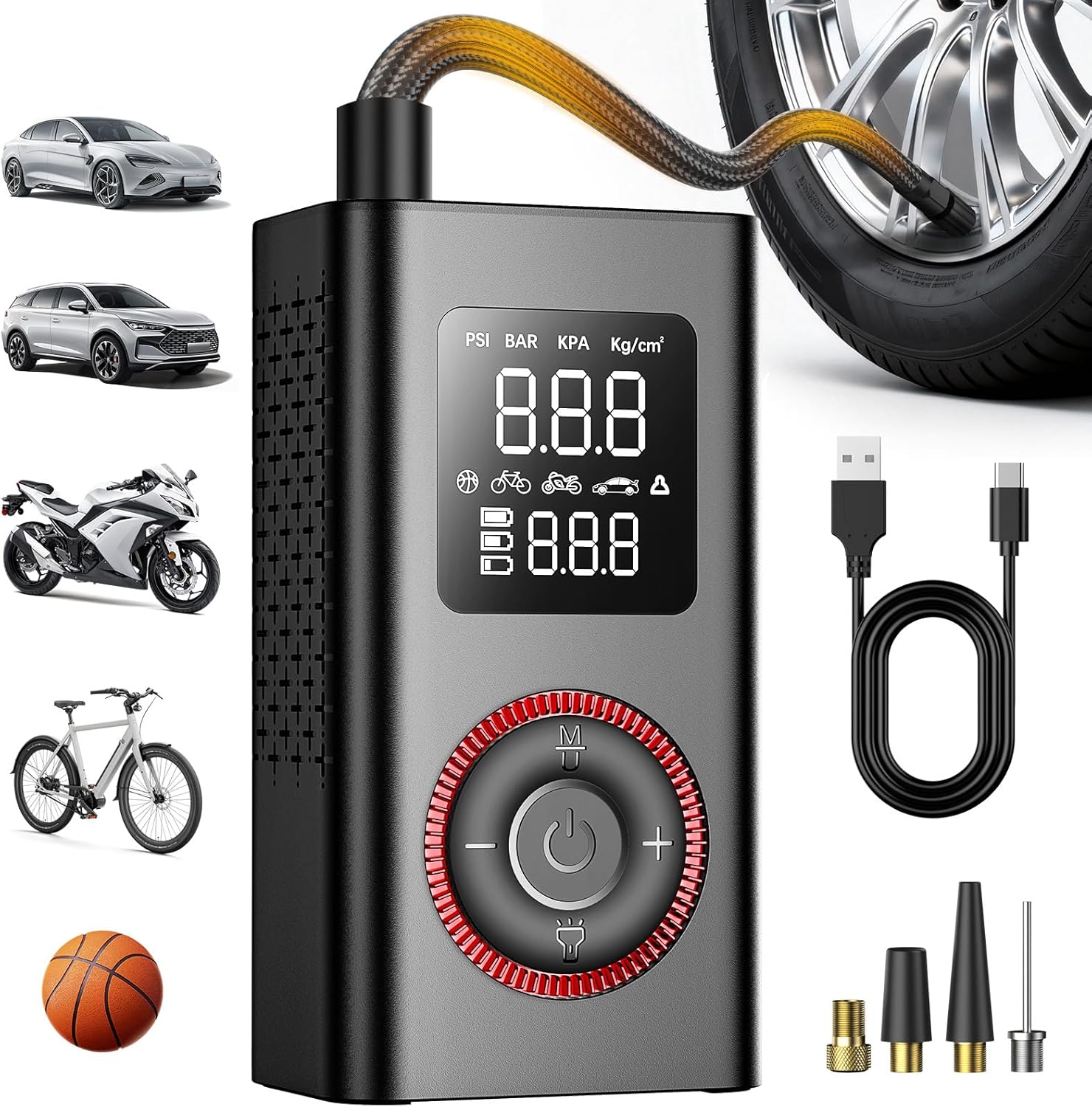
This portable tire inflator delivers fast, efficient inflation with a maximum 150 PSI rating and accurate pressure control for cars, motorcycles, bikes, and more. It features preset modes with automatic shutoff to help prevent overinflation, plus a real-time digital gauge and bright LED light for roadside use. Powered by a rechargeable 6000mAh battery with Type-C charging and a USB output, it’s also useful as an emergency power source for devices.

This portable cordless tire inflator delivers fast, efficient inflation for cars, motorcycles, bikes, and sports balls with a digital pressure gauge. Use the one-click PSI preset with auto shut-off for accurate, hands-free topping to your target pressure up to 150 PSI. It’s compact and rechargeable with a built-in emergency LED light plus valve adapters and accessories for quick, ready-to-go use.
Effects of Improper Tire Pressure on Vehicle Performance
Improper tire pressure affects how your RAV4 feels and performs. It can change ride comfort, steering response, braking distance, tire wear, and fuel economy.
Stability and Handling Issues
Underinflated tires can flex too much, build heat, and feel sluggish during turns. Overinflated tires can ride harshly and reduce grip on rough or wet pavement. Either condition can reduce confidence during sudden stops or quick lane changes.
- Low pressure can increase heat buildup and uneven shoulder wear.
- High pressure can increase center tread wear and reduce ride comfort.
- Uneven pressure from side to side can make the vehicle pull or feel unstable.
Fuel Efficiency Impact
Proper tire pressure also helps fuel economy. According to FuelEconomy.gov, keeping tires inflated to the proper pressure can improve gas mileage by about 0.6% on average and up to 3% in some cases. Underinflated tires can lower gas mileage by about 0.2% for every 1 PSI drop in the average pressure of all tires.
| Tire Pressure Condition | Likely Effect | What To Do |
|---|---|---|
| Underinflated | More heat, faster wear, lower fuel economy | Add air to the placard PSI |
| Overinflated | Harsher ride, less even tread contact | Release air slowly and recheck |
| Correct cold PSI | Better handling, tire life, and efficiency | Check monthly and before trips |
A tire can look normal and still be several PSI low. A gauge check is the only reliable way to know whether your RAV4 tires are properly inflated.
Seasonal Changes: How They Impact Tire Pressure
Seasonal temperature changes are one of the most common reasons a RAV4 tire pressure light appears. When outside temperatures drop, the air inside the tire contracts and PSI falls. When temperatures rise, PSI increases.
Check your tires more often during fall and winter, after cold snaps, before road trips, and after big temperature swings. Set pressure to the placard PSI when the tires are cold. If the TPWS light turns on during a cold morning and then turns off after driving, still check pressure with a gauge. The tires may be near the warning threshold.
Best Practices for Maintaining Optimal Tire Health
Tire pressure is only one part of tire care. For the best tire life and safest performance, combine pressure checks with regular tread, rotation, and damage inspections.
- Check tread depth monthly. The NHTSA says tires should be replaced when tread is worn to 2/32 of an inch.
- Rotate tires as recommended. Many vehicles use a 5,000–8,000 mile rotation interval when recommended by the manufacturer, but your owner’s manual is the final authority.
- Look for damage. Replace or inspect tires with bulges, deep cuts, exposed cords, punctures near the sidewall, or repeated air loss.
- Keep valve caps installed. They protect the valve core from grit and moisture.
- Do not ignore vibration. New vibration, pulling, or noise can point to tire damage, balance issues, or alignment problems.
Frequently Asked Questions
What should the tire pressure be on a Toyota RAV4?
Many Toyota RAV4 models are around 33 PSI when cold, but the correct number is the one printed on your driver’s door-jamb tire placard or listed in your owner’s manual. Use that number because pressure can vary by model year, trim, tire size, and market.
How do you know which tire is low on a Toyota RAV4?
Some RAV4 displays show individual tire pressures, while others only show a warning light. If your display does not identify the tire, check all four tires with a gauge. Also check the spare if your model has a monitored spare or if your owner’s manual tells you to maintain spare pressure.
Should I check RAV4 tire pressure hot or cold?
Check pressure cold whenever possible. A cold reading means the vehicle has been parked for at least three hours or driven only a short distance. Hot tires read higher because driving warms the air inside the tire.
Why did my RAV4 tire pressure light come on after cold weather?
Cold air lowers tire pressure. A drop of about 10°F can change tire pressure by about 1 PSI. If your tires were already close to the warning threshold, a cold morning can trigger the TPWS light even without a puncture.
What does it mean if the TPWS light flashes?
A solid light usually means at least one tire is low. A light that flashes for about a minute and then stays on can indicate a TPWS/TPMS malfunction, such as a sensor or system issue. Check the tires first, then have the system inspected if the flashing continues.
How often should I check Toyota RAV4 tire pressure?
Check tire pressure at least once a month, before long trips, after major temperature changes, and whenever the tire pressure warning light turns on. A monthly check helps catch slow leaks before they become roadside problems.
Conclusion
Keeping your Toyota RAV4 tire pressure correct is one of the easiest ways to protect safety, fuel economy, and tire life. Start with the PSI on the driver’s door-jamb placard, check the tires when they are cold, adjust air slowly, and recheck with a reliable gauge. If the TPWS light stays on, flashes, or returns soon after inflation, inspect for leaks or have the system checked by a tire professional or Toyota dealer.
Sources
- Toyota Owners Manuals and Warranties — official Toyota source for model-specific RAV4 owner’s manuals and tire-pressure information.
- Toyota RAV4 Tire Inflation Pressure — Toyota manual section for tire inflation pressure guidance.
- NHTSA TireWise — tire pressure checks, cold inflation guidance, TPMS limits, tread depth, rotation, and tire safety.
- FuelEconomy.gov: Keeping Your Vehicle in Shape — fuel-economy impact of proper tire inflation and warning not to use sidewall maximum PSI.
- Bridgestone Tire Inflation Guidance — temperature-related tire pressure changes and cold-tire checking guidance.

Related Articles

Toyota RAV4 TPMS Reset: Easy Steps That Work
Unlock the secrets to resetting your Toyota RAV4's TPMS effortlessly—discover the essential steps to ensure your tires are always safe.
Read More
Toyota RAV4 Tire Rotation: DIY Steps & Pattern
Take control of your Toyota RAV4's tire maintenance with our simple DIY rotation guide—discover the best steps for optimal performance and longevity!
Read More
Mix Tire Brands on a Toyota RAV4? Expert Guide
Keeping your RAV4 safe? Learn when mixing tire brands risks traction, ABS/TCS and AWD damage — and what exact matches you must insist on.
Read More