
How Wide Is a 225 Tire? Exact Width & Fitment Guide
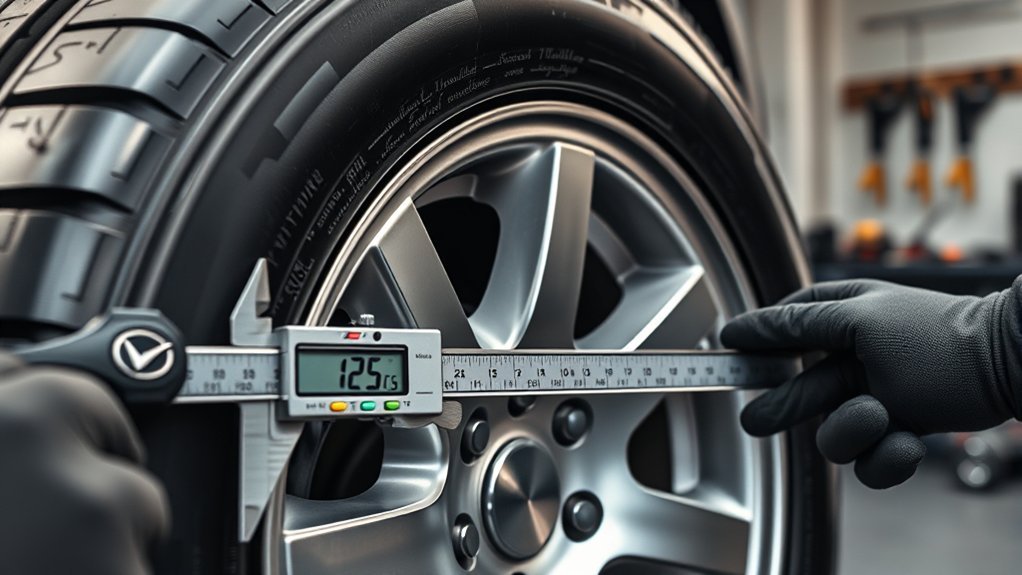
A 225 tire has a nominal section width of 225 millimeters, which converts to about 8.86 inches. That number describes the tire’s approximate sidewall-to-sidewall width when it is mounted on its specified measuring rim, not the exact tread width you see touching the road. Real-world measurements can vary by tire model, wheel width, sidewall design, and inflation.
Quick Answer
A 225 tire is about 8.86 inches wide because 225 millimeters divided by 25.4 equals 8.86 inches. In tire sizing, “225” means nominal section width from sidewall to sidewall, not tread width. Always confirm the full tire size, approved rim width, load rating, and vehicle clearance before changing sizes.
Key Takeaways
- A 225 tire is nominally 225 mm wide, or about 8.86 inches.
- The 225 number is section width, measured sidewall to sidewall, not tread width.
- Actual measured width can change slightly by tire brand, model, rim width, and sidewall shape.
- Many common 225 passenger tires use approved rim ranges from about 6.0 to 9.0 inches, but the exact range depends on the full size and tire model.
- A 225 tire is 10 mm wider than a 215, 10 mm narrower than a 235, and 20 mm narrower than a 245.
- Before buying, match the vehicle placard or owner’s manual for size, load index, speed rating, inflation pressure, and clearance.
How Wide Is a 225 Tire in Inches?
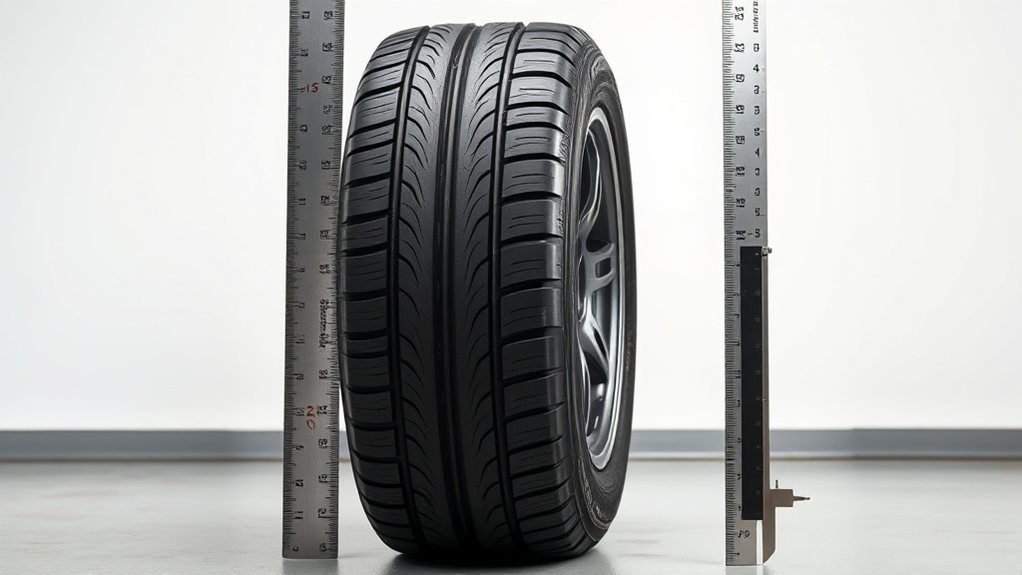
A 225 tire is about 8.86 inches wide. The math is simple:
225 mm ÷ 25.4 = 8.86 inches
That 8.86-inch figure is the tire’s nominal section width. In a size such as 225/45R17 or 225/60R16, the first number tells you the tire’s approximate width in millimeters. Tire Rack’s tire-dimension guide explains that the first three numbers in a metric tire size indicate section width in millimeters and can be converted to inches by dividing by 25.4.
Still, you should treat 8.86 inches as a sizing label, not a promise that every 225 tire will measure exactly 8.86 inches on your wheel. A tire’s physical width can shift slightly depending on the measuring rim, the wheel you mount it on, casing shape, sidewall design, and the specific tire model.
[Products Worth Considering]
CKAuto tire repair strings provide a fast, reliable way to seal punctures in tubeless off-road tires without removing the tire from the rim. The rubber repair plugs are...
What Is a 225 Tire’s Section Width?
A 225 tire’s section width is its approximate width from one sidewall to the other sidewall. This is different from tread width. Section width includes the tire’s widest body shape, while tread width is only the part of the tread area designed to contact the road.
The Tire Industry Association describes the “225” in a size such as P225/60R16 as the approximate section width of the tire from sidewall to sidewall. Tire Rack also notes that section width is measured on an industry-standard measuring rim and that actual section width depends on wheel width.
Note: Section width is not the same as tread width. Two tires can both be labeled 225, but one may have a wider-looking tread and the other may have a rounder sidewall, depending on the tire’s design.
Why a 225 Tire May Not Measure Exactly 225 mm
The number on the sidewall is a nominal size. A real tire can measure a little narrower or wider after it is mounted because:
- Wheel width changes sidewall shape. A wider wheel can pull the sidewalls outward; a narrower wheel can make them bulge.
- Tire models vary. Touring, performance, winter, all-terrain, and run-flat tires can have different casing shapes.
- Protective sidewall features matter. Rim guards, raised lettering, and sidewall ribs can affect the outside profile.
- Inflation and load affect the contact patch. Pressure and vehicle weight change how the tire sits on the road.
- Manufacturer specs are the final reference. The exact tire model’s spec sheet is better than a generic size chart when clearance is tight.
If you are close to fenders, suspension arms, struts, or brake components, do not rely on the 8.86-inch conversion alone. Confirm the tire maker’s published section width, approved rim width range, and your vehicle’s clearance.
Which Wheel Width Fits a 225 Tire?
There is no single wheel width that fits every 225 tire. A 225/60R16, 225/45R17, and 225/40R18 all share the same nominal 225 mm section width, but their approved rim widths can differ because aspect ratio and tire construction affect how the sidewall is designed to sit on the wheel.
For many passenger-car 225 sizes, the approved rim range commonly falls somewhere around 6.0 to 9.0 inches. A narrower, taller 225 tire may allow a narrower wheel, while a lower-profile 225 performance tire usually needs a wider wheel. Tire Rack’s measuring rim width guide shows how measuring rim width changes by tire size and aspect ratio.
Warning: Do not choose a wheel by tire width alone. Check the approved rim width range for the exact tire model, and confirm clearance, load index, speed rating, and the vehicle manufacturer’s recommended size before mounting.
Common 225 Tire Sizes by Rim
Here are common 225 tire sizes and their approximate dimensions. These numbers use the standard tire-size calculation, so they are useful for comparison. Actual tire specs can vary slightly by manufacturer.
| Tire Size | Approx. Width | Approx. Diameter | Common Use |
| 225/60R16 | 8.86 in | About 26.6 in | Comfort-focused sedans and crossovers |
| 225/55R16 | 8.86 in | About 25.7 in | Sedans and touring setups |
| 225/50R17 | 8.86 in | About 25.9 in | Balanced ride and response |
| 225/45R17 | 8.86 in | About 25.0 in | Sportier compact and midsize cars |
| 225/40R18 | 8.86 in | About 25.1 in | Lower-profile performance fitments |
The width stays 225 mm across these examples, but the sidewall height and overall diameter change because the aspect ratio changes. That is why you should compare the full tire size, not just the first number.
How to Calculate a 225 Tire’s Overall Diameter
The overall diameter depends on three parts of the tire size:
- Section width: the first number, such as 225 mm.
- Aspect ratio: the second number, such as 45, 50, or 60.
- Wheel diameter: the last number, such as 16, 17, or 18 inches.
For example, here is the calculation for a 225/45R17:
- Sidewall height: 225 mm × 0.45 = 101.25 mm
- Two sidewalls: 101.25 mm × 2 = 202.5 mm
- 17-inch wheel in millimeters: 17 × 25.4 = 431.8 mm
- Total diameter: 202.5 + 431.8 = 634.3 mm
- Convert to inches: 634.3 ÷ 25.4 = about 25.0 inches
This is why a 225/45R17 is not about 26 inches. It is closer to 25 inches. A 225/60R16, even though it has a smaller wheel diameter, has a taller sidewall and lands closer to 26.6 inches overall.
225 Tire Fitment by Rim Size
For a 225 tire, rim fitment matters as much as width. The tire must match both the wheel diameter and the approved wheel width range. A 225/45R17 fits a 17-inch wheel, while a 225/60R16 fits a 16-inch wheel. You cannot mount a 225/45R17 on a 16-inch wheel or a 225/60R16 on a 17-inch wheel.
The rim width also shapes the tire. A wheel that is too narrow can pinch the tire and cause excessive sidewall bulge. A wheel that is too wide can stretch the sidewall and reduce bead support. Either problem can hurt steering feel, treadwear, ride quality, and safety.
Pro Tip: When comparing 225 tires, look up the exact tire model’s spec sheet. The approved rim width range, measured section width, tread width, overall diameter, load index, and revolutions per mile can vary from one model to another.
225 vs 215, 235, and 245 Tires
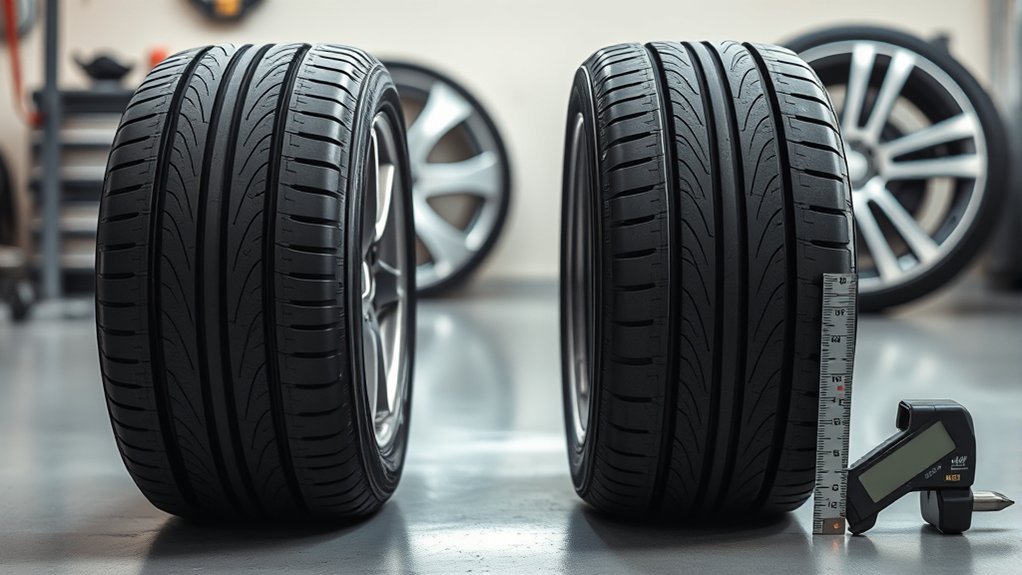
The difference between 215, 225, 235, and 245 tire widths is measured in millimeters. Each step of 10 mm equals about 0.39 inch.
| Comparison | Width Difference | What It Usually Means |
| 215 vs 225 | 225 is 10 mm wider | Slightly wider stance and contact patch, if the full size fits. |
| 225 vs 235 | 235 is 10 mm wider | The 235 may feel more planted, but fitment, tire model, and wheel width matter. |
| 225 vs 245 | 245 is 20 mm wider | The 245 needs more clearance and a compatible wheel; it may also change steering feel and rolling resistance. |
A wider tire can increase dry-road grip when the compound, construction, pressure, and alignment are all appropriate. It can also add weight, rolling resistance, or clearance problems. A narrower tire can feel lighter and may be easier to fit, but it may give up some dry traction. Width alone does not make a tire better; the whole setup does.
How 225 Tires Affect Handling
A 225 tire often gives a practical balance between grip, steering response, ride comfort, and efficiency. Compared with a narrower tire, a 225 can provide a broader footprint and more cornering stability. Compared with a wider tire, it may feel lighter, ride more comfortably, and fit more vehicles without clearance issues.
Handling still depends on more than width. A premium 225 tire with the right compound and tread design can outperform a wider budget tire. Tire pressure, wheel width, alignment, suspension condition, and load also affect how the tire feels.
If you are changing from 215 to 225, or from 225 to 235, compare the full diameter and clearance. Even a small width change can cause rubbing if your vehicle has tight fender or suspension space.
When 225 Tires Make Sense
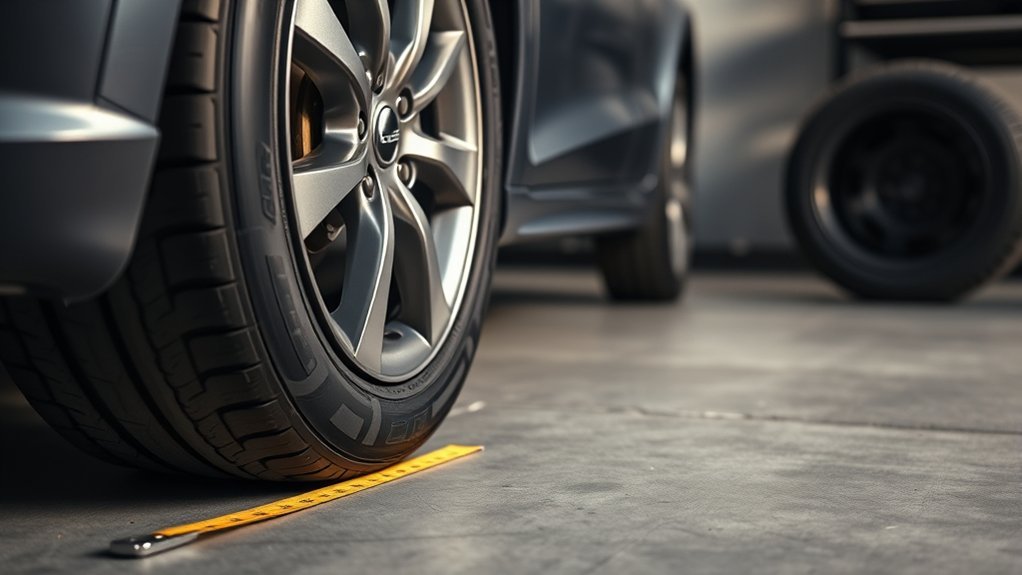
A 225 tire makes sense when your vehicle was designed for that size or when a compatible 225 alternative keeps the overall diameter, load rating, speed rating, and clearance within safe limits. It is a common width for sedans, coupes, compact performance cars, crossovers, and some small SUVs.
Choose a 225 tire when you want:
- Balanced daily driving: enough width for stable handling without going overly wide.
- Predictable steering: especially with common sizes such as 225/45R17 or 225/50R17.
- Ride comfort: especially with taller sidewalls such as 225/60R16.
- Reasonable fitment: many vehicles have factory or approved optional 225 sizes.
- Seasonal flexibility: 225 widths are available in all-season, summer, touring, performance, and winter tire categories.
If your vehicle came with a different width, do not switch to 225 just because it “looks right.” Check the door placard, owner’s manual, and tire maker specs first.
Best 225 Tire Sizes for Daily Driving
The best 225 size depends on your vehicle, not only your driving preference. Still, several 225 sizes are popular for daily use:
- 225/60R16: Taller sidewall, smoother ride, good for comfort-focused cars and some crossovers.
- 225/55R16: A balanced touring size with moderate sidewall height.
- 225/50R17: Good middle ground between comfort and sharper response.
- 225/45R17: Sportier steering feel with a lower sidewall.
- 225/40R18: Lower-profile look and response, but usually a firmer ride.
For daily driving, do not chase the widest option without a reason. A properly matched 225 tire can give you strong braking, stable highway manners, and predictable wet-weather behavior when the tread design and compound match your climate.
What To Know Before Buying 225 Tires
Before you buy 225 tires, verify the complete tire size and vehicle requirements. The Tire Industry Association’s tire replacement guidance says to follow the tire information placard or owner’s manual for tire size, inflation pressure, load index, and speed rating. The U.S. Tire Manufacturers Association also advises using the same size, load index, and speed rating designation recommended by the vehicle or tire manufacturer.
Use this checklist before mounting a 225 tire:
- Confirm the full size. A 225/45R17 and a 225/60R16 are both 225 mm wide, but they are not interchangeable.
- Check wheel diameter. The R16, R17, or R18 part must match your wheel diameter.
- Check approved rim width. Use the exact tire model’s spec sheet, not a generic guess.
- Compare overall diameter. A major diameter change can affect speedometer reading, ABS, traction control, gearing, and clearance.
- Match or exceed load index. Never use a lower load index than the vehicle requires.
- Match the correct speed rating. Use the vehicle manufacturer’s recommended rating or a safe approved equivalent.
- Check fender and suspension clearance. Look at inner and outer clearance at full steering lock and under suspension compression.
- Use the correct inflation pressure. Follow the vehicle placard unless a tire professional gives a verified adjustment for a custom setup.
- Be careful with AWD and 4WD vehicles. Mismatched tire diameters can stress drivetrain components.
NHTSA TireWise emphasizes that tires are central to safe driving and that tire maintenance, inflation, labeling, and buying decisions all matter. A 225 tire can be a smart fit, but only when the full setup matches the vehicle.
Frequently Asked Questions
How wide is a 225 tire in inches?
A 225 tire is about 8.86 inches wide. The conversion is 225 millimeters divided by 25.4. This is nominal section width, so the exact physical width can vary slightly by tire model and rim width.
Is a 225 tire wider than a 235?
No. A 225 tire is 10 millimeters narrower than a 235 tire. The 235 may offer a slightly wider footprint, but it also needs proper wheel width and clearance.
Is 225 considered a wide tire?
A 225 tire is moderately wide for many passenger cars. It is wider than common 195, 205, and 215 sizes, but narrower than 235, 245, and larger performance sizes.
Which tire is wider, 215 or 225?
A 225 tire is wider than a 215 tire by 10 millimeters, or about 0.39 inch. Before switching from 215 to 225, compare the full tire size, overall diameter, rim width, and clearance.
Which tire is wider, 225 or 245?
A 245 tire is wider than a 225 tire by 20 millimeters, or about 0.79 inch. That extra width may need a wider wheel and more fender or suspension clearance.
Can I put a 225 tire on a 7-inch rim?
Sometimes, yes, but it depends on the full tire size and the tire model’s approved rim width range. Many 225 tires allow a 7-inch rim, but some lower-profile or performance sizes may prefer or require a wider wheel.
Does switching to a 225 tire affect the speedometer?
Width alone does not determine speedometer change. Overall diameter does. If the new 225 size has a different diameter from the original tire, it can change speedometer reading, odometer reading, ABS behavior, and clearance.
Conclusion
A 225 tire is about 8.86 inches wide, but that number is only the starting point. It tells you the tire’s nominal section width, not the exact tread width or the guaranteed mounted width. To choose the right 225 tire, compare the full size, approved rim width, overall diameter, load index, speed rating, inflation pressure, and vehicle clearance. When those details match, a 225 tire can deliver a strong mix of grip, comfort, steering response, and everyday usability.
Sources
- Tire Rack — How Do I Calculate Tire Dimensions? — backs up 225 mm to 8.86 inches and nominal diameter calculation.
- Tire Rack — What Is the Measuring Rim Width for a Tire? — explains measuring rim width and why wheel width affects tire width.
- Tire Industry Association — Reading a Tire Sidewall — backs up the meaning of 225, aspect ratio, rim diameter, load index, and speed symbol.
- Tire Industry Association — Tire Replacement — backs up replacement guidance for tire placard, load index, speed rating, and professional fitment.
- U.S. Tire Manufacturers Association — Replacing Tires — backs up replacement-size, load-index, and speed-rating cautions.
- NHTSA TireWise — backs up tire safety, buying, maintenance, labeling, and fuel-efficiency context.

Related Articles
What Is a 33 INCH Tire Equivalent To? Size Conversion Chart
Discover the closest 33-inch tire equivalents and chart your best fit, because the right size may surprise you.
Read More
What Is a 305 Tire Equivalent To? Size Conversion Chart
Outgrowing confusion over 305 tire equivalence? Discover the size chart that reveals the closest match and what you might still be missing.
Read More
What Is a 285 Tire Equivalent To? Size Conversion Chart
Get the surprising 285 tire equivalents and size conversions that could change your fitment—see which option is closest before you decide.
Read More