
How to Apply Tire Shine: Step-by-Step Guide for a Lasting Finish
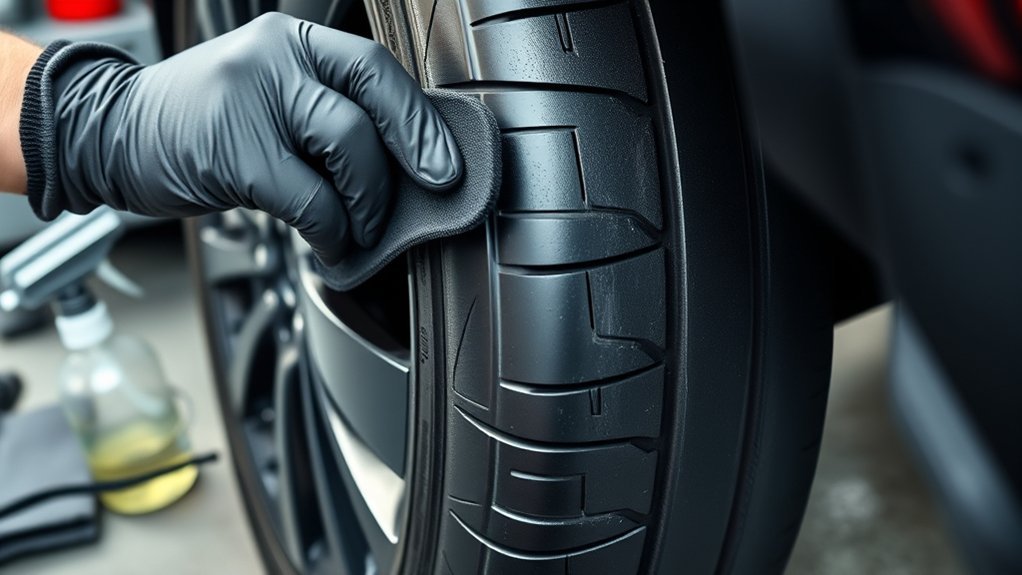
Applying tire shine looks simple, but the finish only lasts when the tire is cleaned, dried, dressed, and cured correctly. The goal is to coat the sidewall evenly without leaving a greasy layer that slings onto paint, wheels, or trim during the first drive.
Quick Answer
To apply tire shine for a lasting finish, wash the tire sidewalls with a tire-safe cleaner, scrub away old dressing and browning, rinse, and dry completely. Apply a thin, even coat to the sidewall only, let it dry until it no longer looks wet, then lightly buff off excess before driving.
Key Takeaways
- Clean tires first. Tire shine bonds better to bare, dry rubber than to dirt, brake dust, old dressing, or soap residue.
- Apply tire shine to the sidewall only. Never put dressing on tread, brakes, pedals, motorcycle tires, bicycle tires, seats, or any surface that needs grip.
- Use thin coats. Heavy application causes pooling, streaks, and sling.
- Let the product dry or cure according to the label. Many dressings need about 10–20 minutes before driving, but coatings and some formulas need longer.
- Maintain the finish with gentle washing and reapply only when the sidewall starts to fade, not every time you wash the car.
At a Glance
| Time Required | 20–40 minutes for four tires, plus any extra cure time listed on the product label. |
| Difficulty | Easy, but prep and dry time matter. |
| Tools Needed | Tire cleaner, stiff tire brush, hose or rinse water, microfiber towel, foam or microfiber applicator, and tire shine. |
| Cost | Usually low if you already have car-wash supplies; expect the tire shine and applicator to be the main cost. |
What Is Tire Shine and Why Use It?
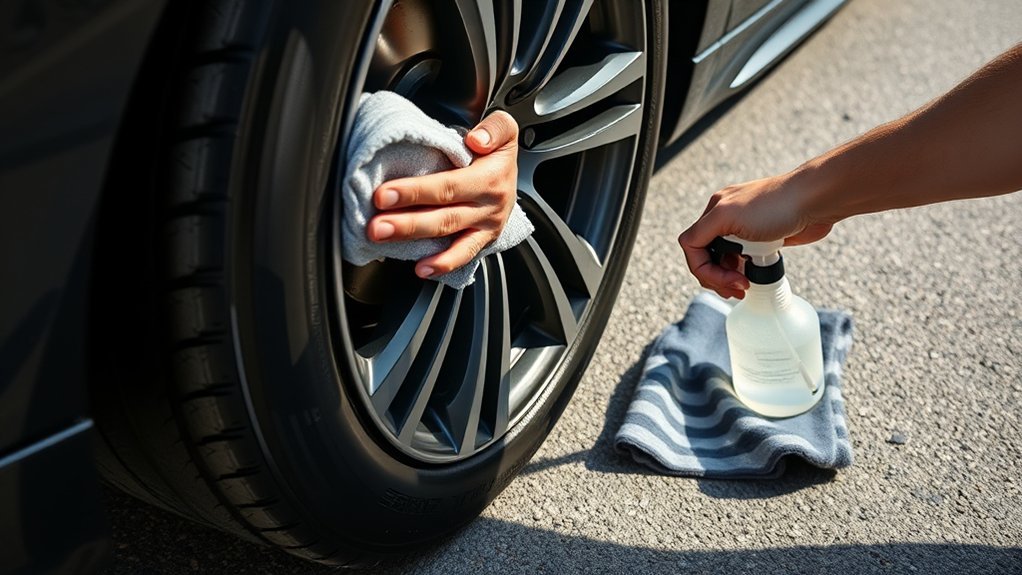
Tire shine, also called tire dressing, is a detailing product made for tire sidewalls. It darkens faded rubber, adds a satin or glossy finish, and may help reduce UV-related fading or drying when the formula includes protective ingredients. It does not replace real tire maintenance such as checking tire pressure, inspecting tread depth, rotating tires, or replacing damaged tires.
The safest way to think about tire shine is simple: it is a sidewall appearance and protection product, not a traction product. The National Highway Traffic Safety Administration explains that proper tire pressure, tread condition, alignment, balance, and rotation are key tire-safety factors. Tire shine should stay off the tread because the tread is the part that grips the road.
Warning: Apply tire shine to sidewalls only. Do not apply it to tire tread, brake rotors, brake drums, brake pedals, motorcycle tires, bicycle tires, seats, steering controls, or any surface that needs traction or grip.
[Products Worth Considering]

Adam’s Pro Tire Hex Grip applicators are molded foam sponges designed for precise, even tire dressing application. The ergonomic grip helps you spread product without overapplying, reducing sling that can splash onto paint and helping keep your hands clean during wheel and trim detailing. They’re durable, washable, and reusable for repeated detailing sessions.

Cristal Products Untouchable Tire Shine Spray delivers a deep, wet-look gloss that enhances your vehicle’s tires. It’s quick-drying and spreads smoothly for consistent, streak-free coverage, while forming a protective coating against UV rays, road grime, and weather. Suitable for all tire types, it helps restore dull, faded tires to a showroom-quality finish.

Blackline Blackout is a water-based trim and tire dressing that restores rubber, vinyl, and plastic with a rich satin, blackout look. Its no-sling formula dries quickly and helps prevent messy transfer onto paint. The coating repels water and offers UV protection to help prevent fading, cracking, and discoloration for a clean, long-lasting finish.
How Do You Prep Tires Before Shine?
Prep is the difference between a clean, lasting finish and a greasy coating that disappears after one drive. Tire sidewalls collect road film, brake dust, old dressing, blooming residue, and grit. If you dress over that layer, the shine sits on contamination instead of bonding evenly to the rubber.
| Prep Step | Why It Matters | Result |
| Rinse | Removes loose dirt and grit before scrubbing. | Less scratching and cleaner rubber. |
| Scrub | Lifts old dressing, browning, brake dust, and bonded road film. | Better adhesion and more even gloss. |
| Rinse Again | Clears cleaner residue that can cause streaks. | Cleaner, more uniform finish. |
| Dry | Prevents dilution and runoff. | Less sling and better bonding. |
| Inspect | Shows missed grime, blooming, or heavy buildup. | A longer-lasting, more consistent sidewall finish. |
Start by rinsing the tires thoroughly. Spray a tire-specific cleaner onto the sidewall, let it dwell only as long as the label allows, then scrub with a firm tire brush. If the foam turns brown, that usually means old dressing and grime are lifting. Rinse until the runoff is clear, then dry the tire completely with a microfiber towel or allow it to air-dry before dressing.
Note: Tire shine should be the last step after washing wheels and tires. If you wash the wheels after dressing the tires, cleaner and rinse water can strip or streak the finish.
Which Tire Shine Formula Is Best?
The best tire shine formula depends on the finish you want, how often you drive, and how much maintenance you are willing to do. Most products fall into a few practical groups: water-based dressings, solvent-based dressings, aerosol foams, gels, and longer-lasting coatings.
Water-Based vs. Solvent-Based
Water-based tire dressings are usually easier to work with, easier to clean off, and a good choice for a natural satin finish. They are a strong option for routine maintenance because you can layer them lightly without building a greasy surface.
Solvent-based dressings often create a darker, wetter gloss and may last longer in rain, but they need more careful application. Use them sparingly, keep them away from paint and brakes, and wipe overspray immediately. Some solvent and aerosol products can contribute to volatile organic compound concerns; the California Air Resources Board Consumer Products Program regulates chemically formulated consumer products as part of VOC and air-quality efforts.
| Formula | Best For | Watch Out For |
| Water-based dressing | Natural satin look, easy maintenance, lower mess. | Usually needs more frequent reapplication. |
| Solvent-based dressing | High-gloss finish and stronger water resistance. | Overspray, sling, odor, and product-specific chemical precautions. |
| Gel | Controlled hand application. | Can look greasy if applied too thick. |
| Aerosol or foam | Fast application. | Overspray on wheels, brakes, paint, or driveway surfaces. |
| Tire coating | Longer-term durability. | Requires deeper cleaning and longer cure time. |
Gloss Level and Durability
Gloss level is mostly a matter of preference. A satin finish looks clean and factory-like, while a high-gloss finish gives a wet, show-car look. Durability depends on product chemistry, prep quality, weather, road grime, tire texture, and cure time.
For daily drivers, a thin satin or medium-gloss finish is usually easier to maintain than a heavy wet-look coating. If you want more shine, apply a second thin coat after the first coat dries to the touch. Do not try to get maximum gloss with one heavy pass.
How Do You Apply Tire Shine Without Sling?
Tire sling happens when excess dressing stays wet on the sidewall and gets thrown onto the bodywork as the tire spins. The fix is simple: clean the rubber, apply less product, keep it off the tread, let it dry, and buff the surface before driving.
Clean, Dry Tires First
Use tire shine only after the sidewall is clean and dry. Product directions from 3M Tire Dressing describe applying a thin, uniform coating to a clean, dry tire, wiping lightly, and allowing it to dry. That same product guidance also warns against use on two-wheeled vehicle tires or seats and warns users to avoid brake components and pedals.
- Rinse the tires first to remove loose grit.
- Scrub the sidewalls with a tire-safe cleaner and tire brush.
- Rinse away all cleaner residue.
- Dry the tire fully before dressing.
- Keep the product on the sidewall, not the tread.
Apply Thin, Even Coats
Put tire shine on an applicator pad rather than spraying directly at the tire whenever possible. This gives you better control and reduces overspray. Work the product into the raised lettering, sidewall texture, and outer edge of the tire using light pressure.
- Load the applicator lightly. Start with less product than you think you need.
- Spread around the sidewall. Use overlapping passes for an even finish.
- Avoid the tread edge. Stop short of any area that contacts the road.
- Let it settle. Wait until the shine looks uniform instead of wet and patchy.
- Buff excess. Wipe the sidewall lightly with a clean microfiber towel or dry applicator.
- Add a second coat only if needed. Wait until the first coat is dry to the touch.
Pro Tip: For a clean daily-driver finish, apply one thin coat, wait 10–20 minutes, then buff the sidewall. The final buff is one of the easiest ways to reduce sling without removing the dressed look.
How Long Should Tire Shine Dry?
Most conventional tire dressings need about 10–20 minutes to dry enough for careful driving, but the label is the final authority. Some coatings need much longer to cure, and cold weather, shade, thick application, or humidity can slow the process.
Do not judge dry time by the clock alone. Check the surface. If it still looks wet, oily, or uneven, it needs more time or a light buff. If rain is expected soon, wait to apply the dressing or choose a product with a cure window that fits the weather.
The best no-sling finish is not the thickest coat. It is the thinnest coat that gives even coverage after proper cleaning and drying.
[Products Worth Considering]

This wheel brush kit delivers pro-level cleaning at home, lifting dirt, grime, and brake dust to help restore wheel appearance. It includes multiple brush styles and applicator pads for tackling different wheel surfaces, with gentle, metal-free bristles designed to reduce scratching risk. The flat and double-ended brushes are built for comfort and reach, making wheel care easier for cars, trucks, and RVs.

This oesee 8-piece wheel care kit helps you clean, scrub, and dry wheels safely with purpose-built brushes and towels. The scratch-free microfiber wheel brush lifts brake dust and grime, while the stiff pro-grip tire brush removes tire browning and embedded dirt. A twist loop microfiber drying towel and an applicator help achieve a streak-free finish and cleaner, more even product application.
How Do You Keep Tires Shiny Longer?
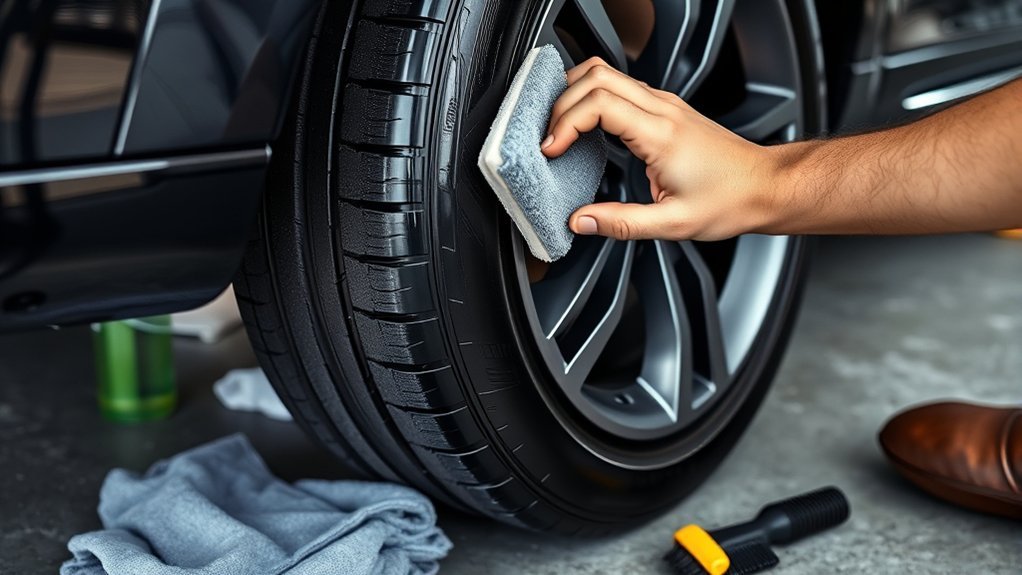
To keep tires shiny longer, wash them gently during normal car washes and avoid harsh, unnecessary scrubbing after the dressing has cured. Use a tire-safe cleaner when the sidewalls look brown, greasy, or dirty, then reapply tire shine only after the rubber is fully dry.
Reapplication timing depends on the product. A regular water-based dressing may need refreshing every one to four weeks on a daily driver. A more durable coating may last longer, but it usually requires deeper prep and a longer cure. Always follow the product label for cleaning, recoat timing, and temperature limits.
Good tire appearance also depends on basic tire care. Michelin recommends habits such as correct pressure, rotation, alignment checks, and watching for uneven wear, while NHTSA recommends checking tire pressure at least monthly when tires are cold. These steps do not make the tire shine glossier, but they help keep the tire safe and evenly wearing.
Common Tire Shine Mistakes and How to Fix Them
If the finish looks uneven or messy, the problem is usually prep, product amount, or dry time. Use this troubleshooting guide before adding more dressing.
| Problem | Likely Cause | Fix |
| Sling on paint | Too much product or not enough dry time. | Use thinner coats, wait longer, and buff before driving. |
| Streaky finish | Wet tire, leftover cleaner, or uneven spreading. | Clean, rinse, dry fully, then reapply with an applicator. |
| Brown tires after dressing | Old dressing or tire blooming was not fully cleaned. | Deep clean with tire cleaner and brush until rinse water runs clearer. |
| Greasy look | Heavy coat or formula is glossier than desired. | Buff with a dry towel or switch to a satin water-based dressing. |
| Overspray on wheels | Sprayed directly onto the tire. | Spray onto an applicator instead and wipe overspray immediately. |
Frequently Asked Questions
Do you apply tire shine when tires are wet or dry?
Apply tire shine to dry tires unless the product label specifically says it can be used on wet rubber. Dry sidewalls help the dressing spread evenly, reduce dilution, and lower the chance of sling.
How do you correctly apply tire shine?
Clean the tire sidewalls, rinse away residue, dry completely, apply a thin coat with an applicator pad, keep the product off the tread, let it dry, and lightly buff away excess before driving.
How long should tire shine sit before driving?
A typical tire dressing should sit about 10–20 minutes, but dry time varies by product, temperature, humidity, and coat thickness. Wait until the sidewall no longer looks wet, then buff excess before driving.
How do you get tire shine to last longer?
Start with a deep clean, apply thin coats, allow proper dry or cure time, and avoid harsh cleaners after application. Reapply when the finish fades rather than layering new dressing over dirty rubber.
Can tire shine damage tires?
A tire shine used according to its label should be safe for sidewalls. Problems usually come from using the wrong product, overapplying, leaving heavy residue, applying it to tread, or ignoring manufacturer warnings.
Should you wipe tire shine after applying it?
Yes, in most cases a light final wipe helps remove excess dressing and reduce sling. Some products say to leave the dressing untouched for a higher-gloss look, so follow the label if it gives different instructions.
Conclusion
The right tire shine method is simple: clean the sidewall, rinse well, dry completely, apply a thin even coat, let it set, and buff away excess before driving. That routine gives you a darker, cleaner finish without the greasy sling that comes from overapplication. Tire shine can improve the look of your tires, but it should always stay on the sidewall and work alongside real tire maintenance, not replace it.
Sources
- NHTSA TireWise tire safety guide — supports tire maintenance, pressure, tread, rotation, and tire-safety context.
- Michelin Routine Tire Care Tips — supports monthly tire checks, tread inspection, and broader tire-care habits.
- 3M Tire Dressing product directions — supports clean, dry application, thin coating, drying, overspray removal, and safety warnings.
- California Air Resources Board Consumer Products Program — supports VOC and chemically formulated consumer-product context.
- Dura-Dressing Instructions & Care — supports product-specific cure, weather, temperature, and reapplication variability.

Related Articles
Feathered Tire Wear: Causes, Fixes, and Prevention
I’ll show you why feathered tire wear happens, how to spot it fast, and the fixes that stop it before your tires suffer further.
Read More
TPMS Not Reading One Tire: Causes and How to Fix It
One tire’s TPMS won’t read? Explore the likely causes and fixes to find out why that sensor still isn’t talking.
Read More
Wheel Bolt Torque Guide: Correct Specs and Tightening
Bolt your wheels safely with the right torque specs and tightening steps, then discover the crucial mistakes to avoid before you drive.
Read More