
How Do Tires Affect Gas Mileage in a RAV4? Understanding the Link
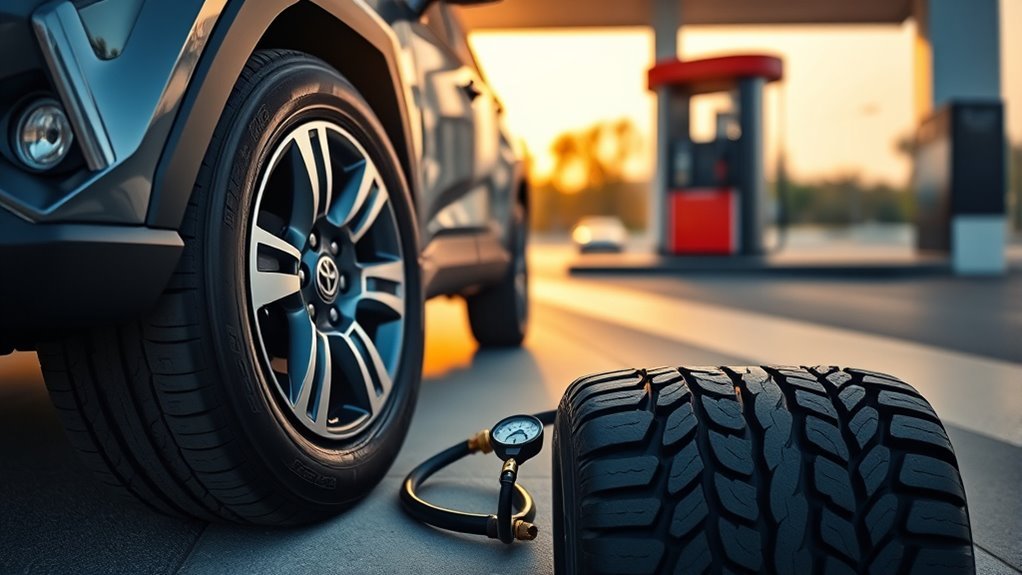
Tires can change your RAV4’s MPG, but the size of the change depends on the tire model, size, weight, tread pattern, inflation pressure, alignment, vehicle load, weather and your driving style. The biggest easy wins are simple: use the correct tire size, keep pressures at the door-jamb placard setting, rotate tires on schedule and avoid unnecessarily heavy or aggressive tread if most of your driving is on pavement.
Quick Answer
Yes, tires affect RAV4 MPG. Low pressure, heavy tires, larger outside diameter and aggressive tread increase rolling resistance, so the engine or hybrid system uses more energy. Properly inflated, correctly sized, low-rolling-resistance tires can protect fuel economy, while oversized or off-road-style tires usually cost MPG.
Key Takeaways
- Rolling resistance is the main tire-related MPG factor; lower rolling resistance means less wasted energy as the tire flexes on the road.
- According to FuelEconomy.gov, proper tire inflation can improve gas mileage by 0.6% on average and up to 3% in some cases.
- Changing tire diameter can affect your speedometer, odometer and MPG calculations, not just real fuel use.
- All-terrain, mud-terrain and some performance tires often trade fuel economy and road quietness for grip, durability or off-road traction.
- The best RAV4 tire for MPG is usually an OEM-size touring or highway all-season tire with good rolling-resistance, wet-braking and tread-life ratings.
At a Glance
| Time Required | 10 minutes to check pressure; 2–4 fuel tanks to measure MPG accurately |
| Difficulty | Easy for pressure checks; moderate for MPG comparison |
| Tools Needed | Accurate tire gauge, air pump, tread-depth gauge or penny, fuel receipts or MPG app |
| Cost | Usually free to low-cost, unless tires, alignment or repairs are needed |
How Much Can Tires Change RAV4 MPG?
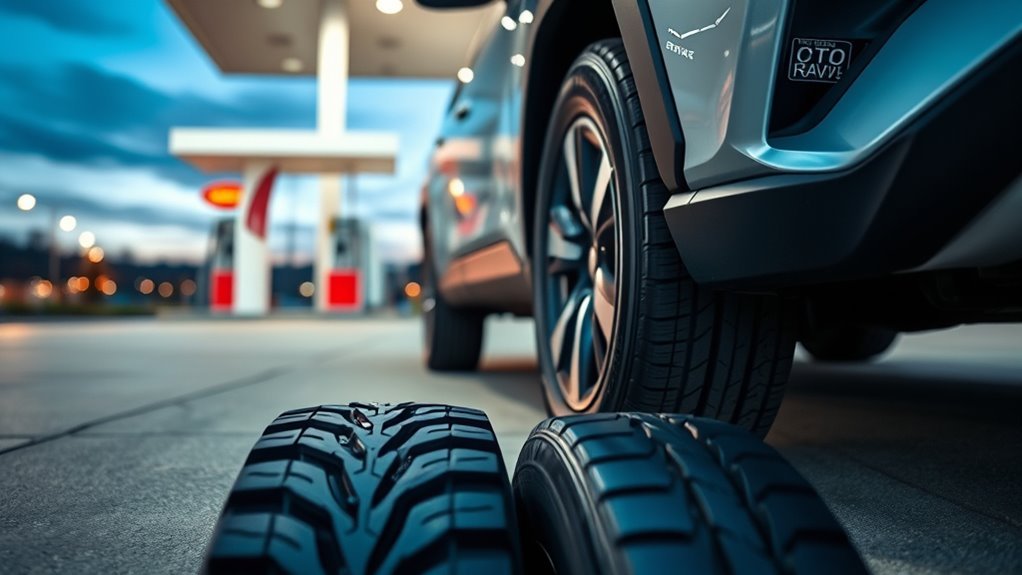
New tires can change your RAV4’s MPG by a small amount or a noticeable amount. For many drivers, a tire swap in the same size and category may only change fuel economy slightly. A move to heavier, wider, larger-diameter or more aggressive all-terrain tires can cost more because the tire needs more energy to roll and accelerate.
Do not treat any single MPG number as guaranteed. A RAV4 Hybrid, RAV4 Prime, gas AWD model and older RAV4 can all respond differently. The same tire can also behave differently in city driving, highway driving, winter weather, hot pavement or loaded road trips.
NHTSA estimates that a 10% reduction in tire rolling resistance can improve vehicle fuel economy by about 1% to 2%.
The most reliable way to know the real effect is to measure your own MPG before and after the tire change. Use the same route, same pressure, same cargo load and similar weather whenever possible.
[Products Worth Considering]

This portable cordless tire inflator delivers up to 160 PSI with fast 17 L/min airflow to help you quickly top up tires and get back on the road. It features dual power mode, running on a 21V rechargeable battery or a 12V DC adapter for convenient roadside use. An automatic shut-off with digital pressure gauge helps prevent overinflation, and a built-in LED light improves visibility in low-light conditions.

The JACO FlowPro Tire Inflator measures, inflates, and airs down tires up to 100 PSI with battery-free operation and ±2% accuracy after calibration. It features a glowing pressure dial for night visibility, a heavy-duty steel build with a hybrid hose, and a precision push-to-inflate thumb trigger. The patented Lightning Air Chuck locks on for a secure seal, and the kit includes quick-connect hardware for easy inline use with your air compressor.

This portable cordless tire inflator delivers fast, efficient inflation for cars, motorcycles, bikes, and sports balls with a digital pressure gauge. Use the one-click PSI preset with auto shut-off for accurate, hands-free topping to your target pressure up to 150 PSI. It’s compact and rechargeable with a built-in emergency LED light plus valve adapters and accessories for quick, ready-to-go use.
Why Rolling Resistance and Tire Weight Matter for RAV4 MPG
Rolling resistance is the energy your RAV4 loses as each tire flexes, heats up and returns to shape while rolling. The more energy lost in that process, the more fuel or battery energy your vehicle needs to maintain speed.
Rolling Resistance Basics
Low-rolling-resistance tires are designed to reduce energy loss. They use tread compounds, casing designs and tread patterns that help the tire roll with less drag. That does not mean every low-rolling-resistance tire is automatically the best choice; you still need safe wet grip, correct load rating, good braking performance and the right size for your RAV4.
For daily commuting and highway use, a quality touring or highway all-season tire in the factory size is usually the best balance for MPG, comfort and tread life. For trail use, snow, gravel or job-site roads, you may accept lower MPG in exchange for stronger traction or tougher construction.
Tire Weight Effects
Heavier tires can reduce MPG because your RAV4 must use more energy to spin them up during acceleration. Extra tire and wheel weight is especially noticeable in stop-and-go driving, where the vehicle repeatedly accelerates from low speed.
Weight is not the only factor, though. A light tire with high rolling resistance can still be less efficient than a slightly heavier tire with a better compound and casing design. When shopping, compare the complete tire: size, weight, tread type, rolling-resistance information, wet braking, road noise, warranty and real-world reviews.
Mitigation And Maintenance
The cheapest MPG improvement is maintenance. Keep tires inflated to the cold pressure listed on your RAV4’s tire and loading information label, usually found on the driver-side door jamb. Toyota also directs owners to use the vehicle’s tire information label and owner’s manual for the correct tire size and inflation pressure.
Pro Tip: Check pressure when the tires are cold, before driving more than a short distance. Pressure rises as tires heat up, so a warm reading can make an underinflated tire look closer to correct than it really is.
Also keep up with tire rotation, balancing and alignment. Uneven wear increases drag and can shorten tire life. If the steering wheel is off-center, the vehicle pulls to one side or the tread wears unevenly, have the alignment checked.
Do Tire Size Changes Affect RAV4 MPG and Speedometer?
Yes. Tire size changes can affect both actual MPG and the MPG number you calculate. A larger outside diameter travels farther with each wheel rotation. If your RAV4 is calibrated for the original tire size, a taller tire can make the speedometer read lower than your true speed and make the odometer record fewer miles than you actually drove.
For example, if the new tire’s outside diameter is 3% larger than the original, your true road speed is roughly 3% higher than the indicated speed. At an indicated 60 mph, the vehicle may be traveling about 62 mph. Your hand-calculated MPG can also be skewed because the odometer is no longer reporting distance the same way.
Warning: Do not install wheels or tires that are outside Toyota’s recommended specifications without professional guidance. Toyota warns that using wheels of a different size than recommended can affect handling control.
If you want a different wheel size, choose a tire with an outside diameter close to the factory setup. Common plus-size changes can work when the total diameter stays close, but the exact tire model matters. Always confirm load index, speed rating, clearance, TPMS compatibility and overall diameter before buying.
Tread Types and RAV4 MPG: Performance vs All-Terrain
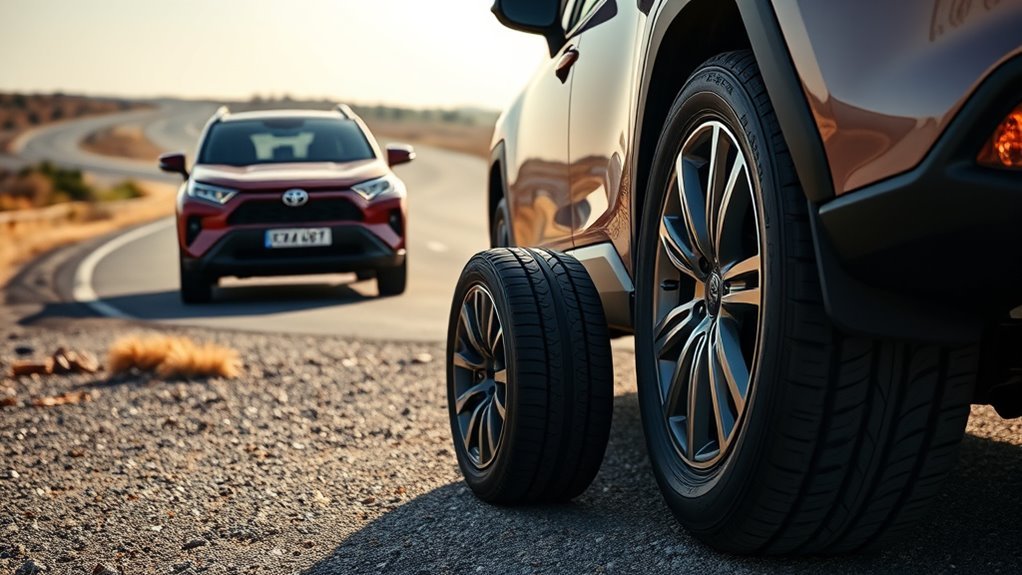
Tread pattern changes how much rubber touches the road, how the tire flexes and how much noise it creates. That is why two tires in the same size can produce different MPG, ride comfort and cabin noise.
- Touring all-season tires: Usually the best MPG-friendly choice for paved commuting, quiet driving and long tread life.
- Performance tires: Can improve steering response and dry grip, but softer compounds and wider contact patches may increase rolling resistance and wear faster.
- All-terrain tires: Add traction on gravel, dirt, snow and rough roads, but deeper tread blocks and heavier construction often reduce MPG on pavement.
- Winter tires: Improve cold-weather traction, but softer rubber and extra siping can reduce efficiency in mild weather. Use them seasonally, not year-round.
- Mud-terrain tires: Usually the worst fit for fuel economy and road noise unless you truly need deep off-road traction.
Choose tread based on where you actually drive. A RAV4 that spends 95% of its life on highways does not need a heavy off-road tire just because it looks tougher. A RAV4 that regularly sees snow, forest roads or rocky trails may justify the MPG tradeoff.
Check Pressure, Tread, and Alignment for Easy MPG Gains
Before blaming your tire model, check the basics. Low pressure, uneven tread and poor alignment can waste fuel even when the tire itself is efficient.
Check Tire Pressure
Check tire pressure at least monthly and before long trips. FuelEconomy.gov says underinflated tires can lower gas mileage by about 0.2% for every 1 psi drop in the average pressure of all tires. Properly inflated tires are also safer and last longer.
- Use a reliable gauge: Do not rely only on the tire-pressure warning light.
- Check cold pressure: Measure before driving, or after the vehicle has been parked for several hours.
- Use the door-jamb placard: Do not inflate to the maximum pressure molded on the tire sidewall.
- Recheck after big temperature changes: Tire pressure drops as outside temperature falls.
Align And Inspect Tread
Inspect tread depth and wear patterns regularly. If one edge of a tire is wearing faster, the center is wearing faster than the shoulders, or the vehicle drifts on a straight road, you may have pressure, alignment or suspension issues.
Use a tread-depth gauge for the best reading. Many U.S. states use 2/32 inch as the legal minimum tread depth, but wet-weather performance can decline before that. If you drive in rain, snow or on unpaved roads, replace tires before they become marginal.
Note: A tire can improve MPG and still be a poor choice if it sacrifices too much wet braking, snow traction or load capacity. Safety matters more than chasing a tiny MPG gain.
How to Pick RAV4 Tires: Grip, Noise, and Fuel-Economy Tradeoffs
The best RAV4 tire is not simply the one with the highest MPG. It is the tire that fits your driving mix while protecting safety, comfort, tread life and efficiency.
- Start with the factory size: Check the driver-side door placard and owner’s manual for the approved tire size, load rating and pressure.
- Match the tire to your roads: Use touring or highway all-season tires for pavement, all-terrain tires for mixed surfaces and winter tires for cold climates.
- Compare rolling resistance: When available, choose tires marketed and tested for low rolling resistance, especially for highway commuting.
- Do not ignore wet braking: A tire that saves a little fuel but stops poorly in rain is not a good trade.
- Watch tire weight: Heavier tires and wheels can hurt city MPG and ride quality.
- Stay close to original diameter: This protects speedometer accuracy, odometer accuracy, AWD behavior and clearance.
- Read current owner feedback: Look for reviews from RAV4 owners with the same generation, drivetrain and wheel size.
If your goal is maximum MPG, look for an OEM-size grand touring or highway all-season tire with low rolling resistance, strong wet ratings and moderate weight. If your goal is trail capability, expect some fuel-economy loss and choose the lightest all-terrain tire that still meets your traction and durability needs.
[Products Worth Considering]
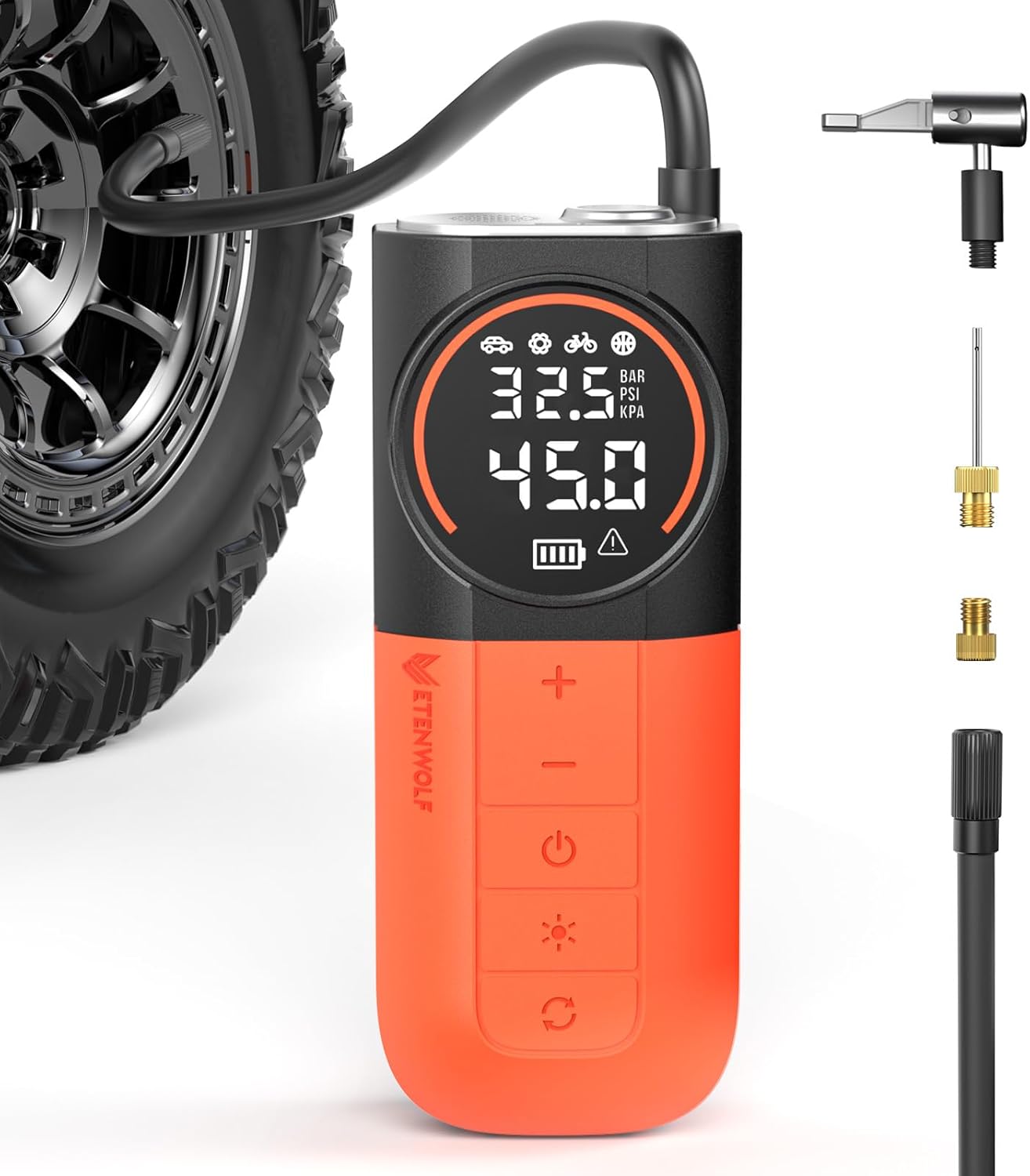
The ETENWOLF S1 cordless tire inflator delivers ultra-fast inflation with up to 160 PSI and a 20 L/min airflow for quicker tire top-offs. Its 5200mAh battery and cooling system support inflating many tires and sports balls on a single charge, while the digital pressure gauge and multi-unit display help you reach the right pressure accurately. With preset modes, pressure memory, an auto-stop feature, and an LED flashlight, it’s built for easy roadside and everyday use.

The Fanttik X10 Pro is a cordless portable tire inflator that reaches up to 150 PSI and can inflate an R15 tire in about 35 seconds for quick roadside or home top-ups. With AccuInFlate auto-stop and smart start/stop controls, it helps maintain accurate pressure and frees your hands once the target is reached. A high-visibility digital display and preset modes make it easy to set and monitor inflation for cars, motorcycles, bikes, and balls.
How to Measure RAV4 MPG Before and After a Tire Change
To measure the tire effect, collect clean baseline data before the swap and repeat the same test after the new tires are installed. One tank is not enough because wind, traffic, temperature and fill-up variation can hide the real result.
| Metric | What to Record |
|---|---|
| Route type | City, highway, mixed, commute or road trip |
| Distance | Miles driven per tank or test loop |
| Fuel used | Gallons from the pump receipt |
| Tire pressure | Cold PSI before each run |
| Vehicle load | Passengers, cargo, roof rack and accessories |
| Weather | Temperature, wind, rain or snow |
| MPG change | Average before vs. average after |
- Record at least two tanks before the tire change. Three is better if your driving varies.
- Set tire pressure correctly. Use the same cold PSI method before and after.
- Use the same calculation. Manual MPG is miles driven divided by gallons used.
- Correct for tire diameter changes. If the new tire diameter is different, adjust mileage or use GPS distance for comparison.
- Give new tires a short break-in period. New tread depth and mold-release residue can slightly change feel and rolling behavior at first.
- Average the results. Compare trends, not one unusually good or bad tank.
This method frees you from guessing. If MPG dropped after the tire change but pressure, alignment, weather and driving stayed similar, the tire design or size is probably part of the reason.
Common RAV4 Tire MPG Mistakes
Most MPG losses come from small decisions that stack together. Avoid these common mistakes when buying or maintaining RAV4 tires.
- Buying for looks only: A more aggressive tire may look better, but it can add road noise, weight and rolling resistance.
- Ignoring load rating: A tire must meet or exceed the load requirement for your RAV4.
- Mixing tire types: Mismatched tire models, tread depths or sizes can affect handling and AWD behavior.
- Using max sidewall pressure: The correct pressure is the vehicle placard pressure, not the tire’s maximum pressure.
- Skipping alignment after impacts: Potholes, curbs and rough roads can knock alignment out and increase drag.
- Comparing MPG in different seasons: Cold weather, winter fuel blends and snow tires can lower MPG even if your tire choice is reasonable.
Frequently Asked Questions
Why is my RAV4 getting bad gas mileage?
Bad RAV4 gas mileage can come from low tire pressure, aggressive tires, poor alignment, roof racks, heavy cargo, cold weather, short trips, worn spark plugs, dirty filters, dragging brakes or driving habits. Start with tire pressure, tread wear and alignment because they are quick to check and often easy to fix.
Do bigger tires lower RAV4 MPG?
Bigger tires can lower RAV4 MPG if they are heavier, wider, more aggressive or larger in outside diameter. They can also change speedometer and odometer accuracy, which affects calculated MPG. A small size change with similar diameter may have little effect, but a larger all-terrain setup is more likely to reduce efficiency.
Are all-terrain tires bad for RAV4 MPG?
All-terrain tires are not automatically bad, but they usually use deeper tread, stronger construction and larger voids than touring tires. That can increase rolling resistance, tire weight and road noise. They make sense if you need gravel, dirt, snow or trail traction; they are not the most efficient choice for mostly highway driving.
Can low tire pressure reduce RAV4 MPG?
Yes. Low tire pressure increases rolling resistance because the tire flexes more as it rolls. FuelEconomy.gov says underinflated tires can lower gas mileage by about 0.2% for every 1 psi drop in the average pressure of all tires. Check cold pressure monthly and inflate to the RAV4’s door-jamb placard setting.
What type of tire is best for RAV4 fuel economy?
For most paved-road driving, an OEM-size touring or highway all-season tire with low rolling resistance, good wet braking and moderate weight is the best fuel-economy choice. For winter or off-road use, choose the safest tire for those conditions and accept that MPG may be lower.
Conclusion
Tires can quietly steal MPG from your RAV4, but they can also help you protect fuel economy when chosen and maintained correctly. Focus on the controllable factors first: correct cold pressure, factory-approved size, healthy tread, proper alignment and a tire category that matches your real driving. If you switch to heavier, larger or more aggressive tires, expect a possible MPG tradeoff and measure it over several tanks before judging the result.
Sources
- FuelEconomy.gov: Keeping Your Vehicle in Shape — supports tire-pressure and fuel-economy guidance.
- NHTSA TireWise: Tire Safety Ratings and Awareness — supports rolling-resistance, tire safety and maintenance guidance.
- Toyota Owners: 2025 RAV4 Tire Inflation Pressure — supports using the tire and loading information label for correct tire pressure and size.
- Toyota Owners: 2025 RAV4 Wheels — supports caution about using wheel sizes outside Toyota recommendations.
- U.S. EPA: Low Rolling Resistance Tire Technologies — supports the general role of low-rolling-resistance tire technology in reducing fuel use and emissions.

Related Articles

Toyota RAV4 TPMS Reset: Easy Steps That Work
Unlock the secrets to resetting your Toyota RAV4's TPMS effortlessly—discover the essential steps to ensure your tires are always safe.
Read More
Toyota RAV4 Tire Rotation: DIY Steps & Pattern
Take control of your Toyota RAV4's tire maintenance with our simple DIY rotation guide—discover the best steps for optimal performance and longevity!
Read More
Mix Tire Brands on a Toyota RAV4? Expert Guide
Keeping your RAV4 safe? Learn when mixing tire brands risks traction, ABS/TCS and AWD damage — and what exact matches you must insist on.
Read More