
Tire Belt Materials: Steel vs. Kevlar for Toyota RAV4 Tires
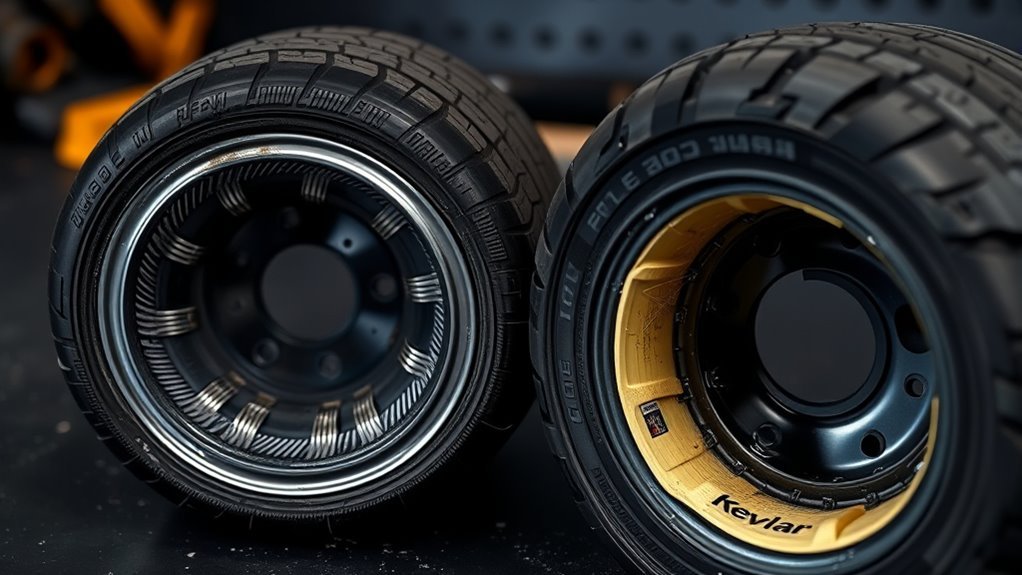
Choosing tires for a Toyota RAV4 is not usually a simple “steel belts versus Kevlar belts” purchase. Most modern passenger and SUV tires are steel-belted radials, while Kevlar or other aramid fibers may appear in select all-terrain, performance, cap-ply, carcass, or sidewall reinforcements. The smarter move is to match the whole tire—size, load index, speed rating, tread design, warranty, and construction—to how you actually drive.
Quick Answer
For most RAV4 owners, a quality steel-belted radial tire is the best default because it is widely available, affordable, stable, and easy to replace. Consider a Kevlar- or aramid-reinforced tire only if it fits your exact RAV4 size and you need extra ruggedness for gravel, job sites, or off-road use.
Key Takeaways
- Steel belts are the normal construction choice in modern radial tires and help stabilize the tread for wear, handling, and traction.
- Kevlar is a high-strength aramid fiber used in some specialty tires, but it does not automatically mean the tire is better for every RAV4.
- Do not choose a tire by belt material alone. Match the tire placard, owner’s manual, load index, speed rating, tread type, and driving conditions.
- For commuting and light towing, steel-belted touring or all-season tires usually make the most sense. For rough roads or trail use, an all-terrain tire with aramid/Kevlar reinforcement may be worth considering.
Who This Guide Helps And What It Covers
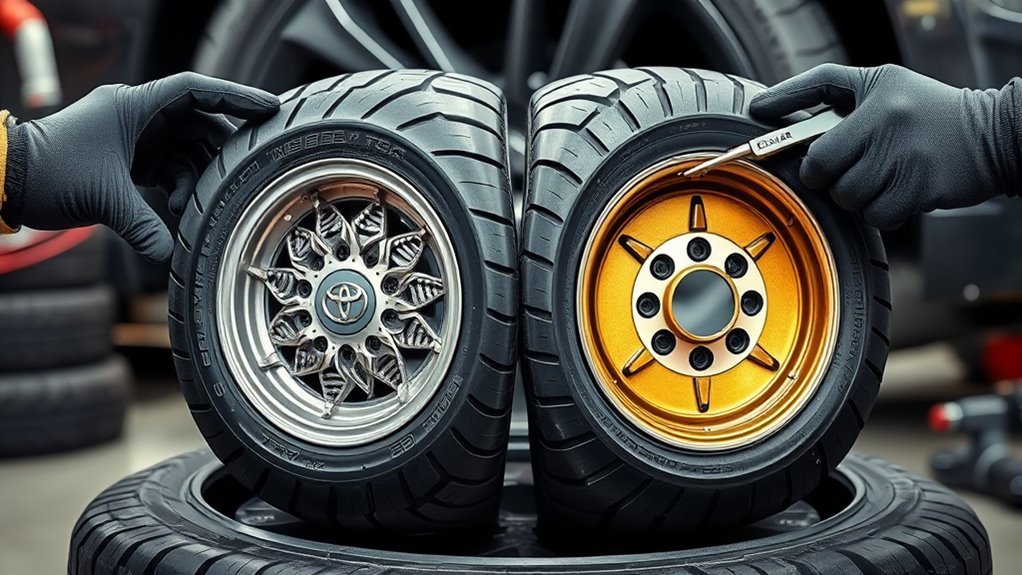
This guide helps Toyota RAV4 owners, technicians, and fleet managers understand what steel belts and Kevlar-style aramid reinforcement actually do inside a tire. It covers material differences, real-world performance trade-offs, tire sidewall checks, load and speed ratings, winter traction, towing, off-road use, and maintenance habits that matter more than marketing labels.
The goal is simple: help you avoid overpaying for a buzzword while still recognizing when a reinforced all-terrain or specialty tire could be useful. You will learn how steel contributes to predictable tread stability, how aramid fibers can reduce weight or improve cut resistance in certain designs, and why the final tire choice should always start with the RAV4’s tire placard and owner’s manual.
[Products Worth Considering]

Monitor tire tread wear with a smart, color-coded depth gauge that shows clear condition ranges at a glance. The bar is range marked for fast, easy readings, helping you maintain safer traction and performance. Each gauge is portable with a pocket clip, and the set includes 20 units for daily use and sharing.

These universal tire valve stem caps help protect valve cores from dust, debris, and moisture while helping maintain stable tire pressure. The corrosion-resistant metal construction and sealed design provide reliable protection in road grime, mud, and winter conditions. Twist-on installation makes them quick to fit on cars, SUVs, trucks, and motorcycles.

Upgrade your Toyota’s wheels with durable aluminum alloy valve stem caps that help protect valve cores from corrosion and direct exposure to road grime, clay, water, and snow. Rubber rings improve sealing to help prevent air leakage and maintain stable tire pressure for safer driving. These caps are easy to install or remove without tools and add a unique, stylish look to your car.
What The Decision Really Comes Down To
The best RAV4 tire is the one that fits the vehicle, carries the load safely, matches your climate, and suits your road surface. Belt material is only one part of that decision.
According to the U.S. Tire Manufacturers Association, tire belts under the tread typically use steel cords laid at opposing angles to add tread-area stability and support wear, handling, and traction. Textile materials, including aramid cords, can also be used in tire plies or reinforcements depending on the tire design.
Kevlar, a branded aramid fiber, is used in some tire applications for strength, reinforcement, cut resistance, weight reduction, and performance tuning. DuPont’s automotive Kevlar information describes uses in tires, carcass designs, cap plies, and other reinforced components, but those benefits depend on the exact tire—not just the word “Kevlar” in the product name.
Note: You do not buy tire belts separately. You buy a complete tire model. Always confirm the RAV4’s exact tire size, cold inflation pressure, and load information on the driver-side door placard or in the owner’s manual before comparing tire construction.
Steel-Belt Construction Explained: What It Gives Your RAV4
Steel-belted radial construction is the standard layout for many passenger and SUV tires. In a typical tire, steel belts sit under the tread and help keep the tread area stable as the tire rolls, corners, brakes, and carries weight.
Improved Tread Stability
Steel belts help the tread maintain a flatter, more controlled contact patch. For a RAV4 used on highways, city streets, school runs, and weekend trips, that stability supports predictable steering, even tread wear, and confident braking.
| Steel-Belt Feature | Practical RAV4 Benefit |
|---|---|
| Tread-area stiffness | More stable footprint during braking, cornering, and highway driving |
| Broad availability | Easier replacement, more price choices, and more warranty options |
| Proven radial design | Good fit for commuting, family use, and light-duty SUV driving |
Puncture Resistance Benefits
Steel belts can help resist penetration through the tread area, especially from small road debris. They do not make a tire puncture-proof, and they do not protect the sidewall the same way an off-road sidewall reinforcement might. The tread pattern, rubber compound, tire pressure, load, and road conditions still play a major role.
Consistent High-Speed Handling
At highway speeds, steel belts help limit tread squirm and heat buildup in the tread area. That is one reason steel-belted radials work so well for everyday RAV4 driving. For most owners, this stable and affordable construction is the most practical choice.
Warning: Do not inflate tires to the maximum pressure printed on the sidewall just because a tire has strong belts. Toyota advises using the recommended cold tire pressure shown in the owner’s manual or tire information placard unless a qualified tire professional gives application-specific guidance.
Kevlar-Belt Construction For RAV4: How It Differs
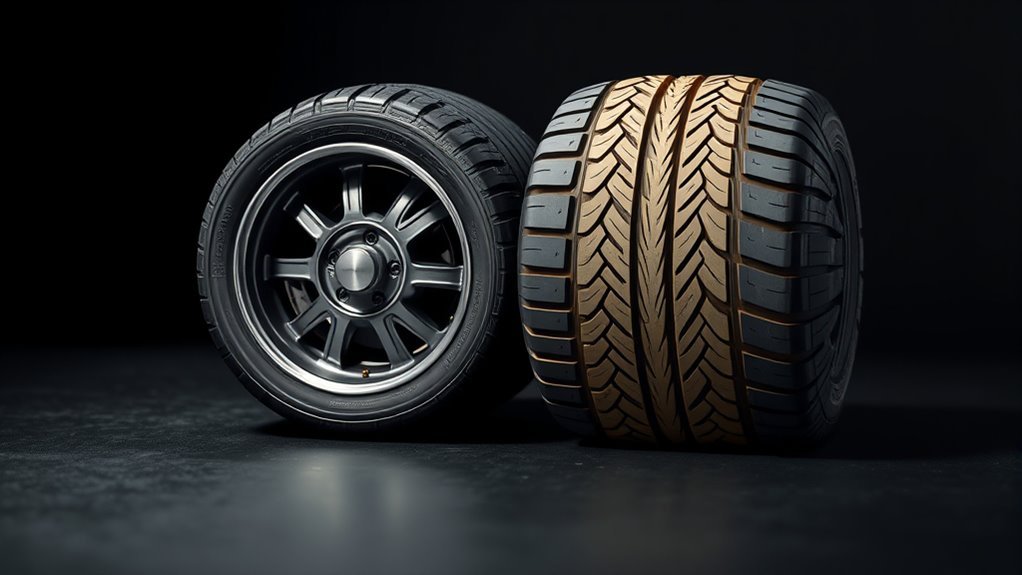
Kevlar is a brand name for a strong, lightweight aramid fiber. In tire construction, aramid materials may be used in different places depending on the tire: carcass plies, cap plies, sidewall reinforcement, bead-area reinforcement, or tread-area reinforcement. That means a “Kevlar tire” is not always built the same way from one brand or model to another.
For RAV4 owners, the practical value of Kevlar or aramid reinforcement is usually strongest in rough-road, all-terrain, or impact-prone use. It may help reduce weight, improve cut resistance, support handling, or add durability in a specific tire design. It is not a guarantee of better fuel economy, longer tread life, or better wet braking by itself.
Steel belts are the dependable default; Kevlar or aramid reinforcement is a specialty feature that only pays off when the tire’s full design matches your RAV4’s roads, loads, and weather.
- Lighter reinforcement potential: Aramid fibers can help reduce weight in certain tire designs, but the actual tire weight depends on the full construction.
- Ruggedness potential: Some all-terrain tires use Kevlar or aramid reinforcement to improve cut, chip, or puncture resistance.
- Fitment limitation: Kevlar-labeled SUV tires may not be available in every RAV4 size, load index, or speed rating.
Performance Comparison: Handling, Fuel Economy, Ride Comfort
Handling, fuel economy, and ride comfort are influenced by the entire tire package: belt angles, carcass stiffness, tread compound, tread depth, tire weight, sidewall height, load rating, and inflation pressure. Belt material matters, but it is not the only driver of performance.
| Category | Steel-Belted Tire | Kevlar/Aramid-Reinforced Tire |
|---|---|---|
| Handling | Predictable, stable, and widely proven for daily driving | Can feel responsive or rugged if the overall tire is designed for that goal |
| Fuel economy | Depends on rolling resistance, tread, and pressure maintenance | May reduce weight or rolling resistance in some designs, but not automatically |
| Ride comfort | Often smooth in touring and highway all-season tires | Can absorb impacts well, but aggressive all-terrain tread may add noise |
| Availability | Excellent in common RAV4 sizes | More limited; often tied to specific all-terrain or performance models |
If your RAV4 spends nearly all its time on pavement, a premium steel-belted touring, grand-touring, or all-weather tire will usually outperform a rugged specialty tire in noise, comfort, wet braking, and value. If your RAV4 sees gravel, farm roads, construction sites, or trailheads, reinforced all-terrain construction may become more attractive.
Durability & Puncture Resistance For Typical RAV4 Use
For typical RAV4 use, durability starts with the right tire category. A highway all-season tire, all-weather tire, winter tire, and all-terrain tire are built for different jobs. A steel-belted all-season tire may last longer and ride better on pavement, while an aramid-reinforced all-terrain tire may better handle sharp gravel or rough shoulders.
For puncture resistance, separate tread-area protection from sidewall protection. Steel belts mainly help under the tread. Reinforced sidewalls help more when you brush rocks, ruts, curbs, or debris. Check the manufacturer’s spec sheet to see whether Kevlar or aramid is used in the tread, sidewall, carcass, or cap ply.
- Check tire pressure at least monthly and before long trips; Toyota also points owners to the tire information placard for the correct cold pressure.
- Inspect tread and sidewalls for cuts, bulges, embedded objects, cracks, and uneven wear.
- Rotate tires according to the maintenance schedule to reduce uneven wear.
- Replace tires when treadwear indicators show, when damage is visible, or when a tire professional says the casing is unsafe.
Pro Tip: When comparing two tires, look past the headline material. Compare UTQG treadwear, traction and temperature grades, warranty length, weight, tread depth, load index, speed rating, severe-snow rating, and real fitment for your exact RAV4 trim.
Cost, Availability, And Long-Term Value For RAV4 Owners

Steel-belted RAV4 tires usually win on cost and availability. You will find more options, more price points, more seasonal categories, and easier warranty replacement. That matters if you commute daily or want predictable replacement costs.
Kevlar- or aramid-reinforced tires can cost more because they are often specialty tires. Their long-term value depends on whether the reinforcement solves a real problem for you. If you regularly damage tires on gravel, potholes, construction access roads, or rocky trails, a reinforced all-terrain model may reduce downtime. If you mostly drive pavement, the extra cost may not pay you back.
Best Belt Choice By RAV4 Use Case: Commuting, Towing, Off-Road
Your RAV4’s use case should guide the decision more than belt material alone.
| RAV4 Use Case | Best Tire Direction | Why |
|---|---|---|
| Daily commuting | Steel-belted touring, all-season, or all-weather tire | Best mix of price, comfort, quietness, wet traction, and availability |
| Light towing or cargo | Steel-belted tire with correct or higher load index | Load capacity and pressure compliance matter more than material branding |
| Gravel roads and job sites | All-terrain tire; consider aramid/Kevlar reinforcement if available | Extra cut and impact resistance may be useful |
| Snow and ice | Dedicated winter or severe-snow-rated all-weather tire | Compound and tread design matter more than belt material |
| Sportier on-road feel | Performance-oriented tire that matches OEM specs | Sidewall stiffness, tread compound, and speed rating drive response |
[Products Worth Considering]

Keep your tires properly inflated with this analog VONDIOR tire pressure gauge, designed for fast, easy readings without batteries. The swiveling, two-axis hose and large glow dial help you measure at any tire angle with instant visibility. Built with a protective rubber shield, it supports durable, low-maintenance use for cars and trucks.

Replace worn or missing TPMS sensors with a pre-programmed 4-pack designed for compatible GM vehicles. These 315MHz sensors provide real-time tire pressure monitoring and alert you if pressure is too high, too low, or if a rapid air leak occurs. Most installations are ready with minimal relearn effort after mounting, helping improve safety and driving confidence.

These aluminum alloy tire valve stem caps with an O-ring seal help protect valve stems from corrosion while adding a clean, stylish look to your vehicle. The universal fit works across cars, trucks, motorcycles, bicycles, and more, making them an easy upgrade for everyday driving and off-road use. Installation is quick, and the included four-pack keeps all your tires dressed and protected.
How To Check Belt Materials On A Tire Sidewall
The sidewall can tell you more than the marketing page. Look for the tire construction text molded into the rubber. A common example might read something like: “TREAD: 2 polyester + 2 steel + 1 nylon; SIDEWALL: 2 polyester.” That tells you what materials are used under the tread and in the sidewall area.
- Find the construction statement: Look near the tire size, DOT code, and UTQG markings.
- Separate tread from sidewall: A tire may have steel under the tread but polyester or another textile in the sidewall.
- Check the product spec sheet: If a tire advertises Kevlar or aramid, verify where that material is used.
- Confirm the service description: The load index and speed rating must match or exceed the RAV4 requirement.
- Ask before mixing: If you are replacing only two tires, ask a tire professional about matching construction, tread depth, and AWD requirements.
How To Pick The Right Tire: Size, Speed Rating, And Belt Checklist
Start with the RAV4’s tire information placard, usually on the driver-side door jamb. Toyota’s tire-pressure guidance tells owners to check the owner’s manual or tire information placard for the correct tire pressure. The placard is also the best starting point for the original tire size and load information.
- Size: Match the size listed on your RAV4 placard unless you are using a professionally approved alternate size.
- Load index: Match or exceed the required load index. This is especially important for passengers, cargo, roof boxes, and towing.
- Speed rating: Match or exceed the rating specified for your vehicle and tire size. Do not choose a lower rating just because your local speed limits are lower.
- Tread category: Choose all-season, all-weather, winter, highway, or all-terrain based on climate and road surface.
- Construction: Prefer steel-belted radial tires for normal use; consider aramid/Kevlar reinforcement only when the tire’s full specs fit your needs.
- Warranty: Compare treadwear warranty, road-hazard coverage, and exclusions before buying.
- TPMS and balancing: New tires should be balanced, and tire pressure monitoring sensors should be serviced or relearned as needed.
Warning: Avoid mixing tire sizes, construction types, speed ratings, or significantly different tread depths on the same axle. On AWD RAV4 models, mismatched tire diameter can also affect drivetrain behavior, so follow Toyota and tire-shop guidance when replacing fewer than four tires.
Winter Traction, Studding, And Seasonal Use
Belt material is not the main factor in winter traction. Cold-weather rubber compound, tread pattern, siping, tread depth, and a Three-Peak Mountain Snowflake rating matter far more. NHTSA’s tire safety guidance also explains that winter tires are more effective than all-season tires in deep snow.
If you use snow tires, Toyota manual guidance for RAV4 models says snow tires should be the same size, construction, and load capacity as the original tires, and snow tires should be installed on all wheels. Studded tires may be restricted by local law, and only tires designed for studs should be studded.
Maintenance Tips That Matter More Than Belt Material
A neglected premium tire can perform worse than a well-maintained basic tire. To get the most from either steel-belted or aramid-reinforced tires, keep maintenance consistent.
- Check cold tire pressure regularly and before long highway trips.
- Rotate tires at the interval listed in your maintenance schedule.
- Have alignment checked if you see feathering, shoulder wear, pulling, or steering-wheel vibration.
- Balance tires after installation and whenever vibration appears.
- Inspect sidewalls after pothole hits, curb contact, trail use, or heavy loads.
- Replace tires that show bulges, exposed cords, severe cracking, or treadwear indicators.
Frequently Asked Questions
Can mixing steel-belted and Kevlar-reinforced tires on one axle cause issues?
Yes, it can. The problem is not only the belt material; it is the possibility of different tire models, tread patterns, stiffness, traction, and rolling diameter. For stable handling, use matching tires on the same axle, and on AWD RAV4 models, keep all four tires closely matched in size and tread depth.
Do belt materials affect TPMS or wheel balance needs?
No. Belt material does not change TPMS calibration by itself. Any new tire should still be balanced, and TPMS sensors may need service, replacement, or relearning when tires or wheels are changed.
How do belt types influence winter traction and studding?
They influence it only modestly. Winter traction comes mostly from the rubber compound, tread pattern, siping, tread depth, and winter rating. Studding depends on whether the tire is designed for studs and whether local regulations allow studded tires.
Are recycled or eco-friendly belt materials available for RAV4 tires?
Some tire makers use recycled, bio-based, or lower-rolling-resistance materials in certain tire lines, but availability depends on the exact RAV4 size and tire model. Look for manufacturer sustainability claims, rolling-resistance information, warranty details, and verified fitment rather than assuming one belt material is automatically greener.
Will tire warranties differ between steel and Kevlar-belted tires?
They can, but the difference comes from the tire model and manufacturer warranty, not the belt material alone. Compare treadwear mileage coverage, road-hazard coverage, workmanship coverage, exclusions, rotation requirements, and proof-of-maintenance rules.
Is a Kevlar-reinforced tire always better for a Toyota RAV4?
No. Kevlar or aramid reinforcement can be useful for certain rugged, high-performance, or specialty tires, but it is not automatically better for commuting, wet braking, snow traction, ride comfort, or tread life. Choose the tire that best matches your RAV4’s placard, climate, road surface, and budget.
Conclusion
For most Toyota RAV4 owners, steel-belted radial tires are the right default. They are stable, widely available, cost-effective, and well suited to commuting, errands, highway driving, and light-duty SUV use. Kevlar or aramid reinforcement becomes worth considering when it appears in a tire that also fits your RAV4’s exact size, load rating, speed rating, climate needs, and rough-road use.
The safest approach is to start with the tire placard, then compare complete tire models—not just belt materials. If your priority is pavement comfort and value, choose a high-quality steel-belted touring, all-season, all-weather, or winter tire. If your RAV4 regularly faces gravel, potholes, trailheads, or job-site debris, compare reinforced all-terrain options and verify exactly where the aramid/Kevlar reinforcement is used.
Sources
- U.S. Tire Manufacturers Association: Tires 101 — tire belt, steel, textile, and tire construction basics.
- NHTSA Tire Safety — tire ratings, tire safety, winter tire guidance, and consumer tire information.
- Toyota Support: Recommended Tire Pressure — guidance to use the owner’s manual or tire information placard for correct pressure.
- Toyota 2025 RAV4 Owner’s Manual: Tires — tire inspection, treadwear, and replacement guidance.
- Toyota RAV4 Owner’s Manual: Snow Tires — same size, construction, load capacity, and all-wheel snow tire guidance.
- DuPont Kevlar for Automotive — Kevlar tire reinforcement applications and material benefits.
[Products Worth Considering]
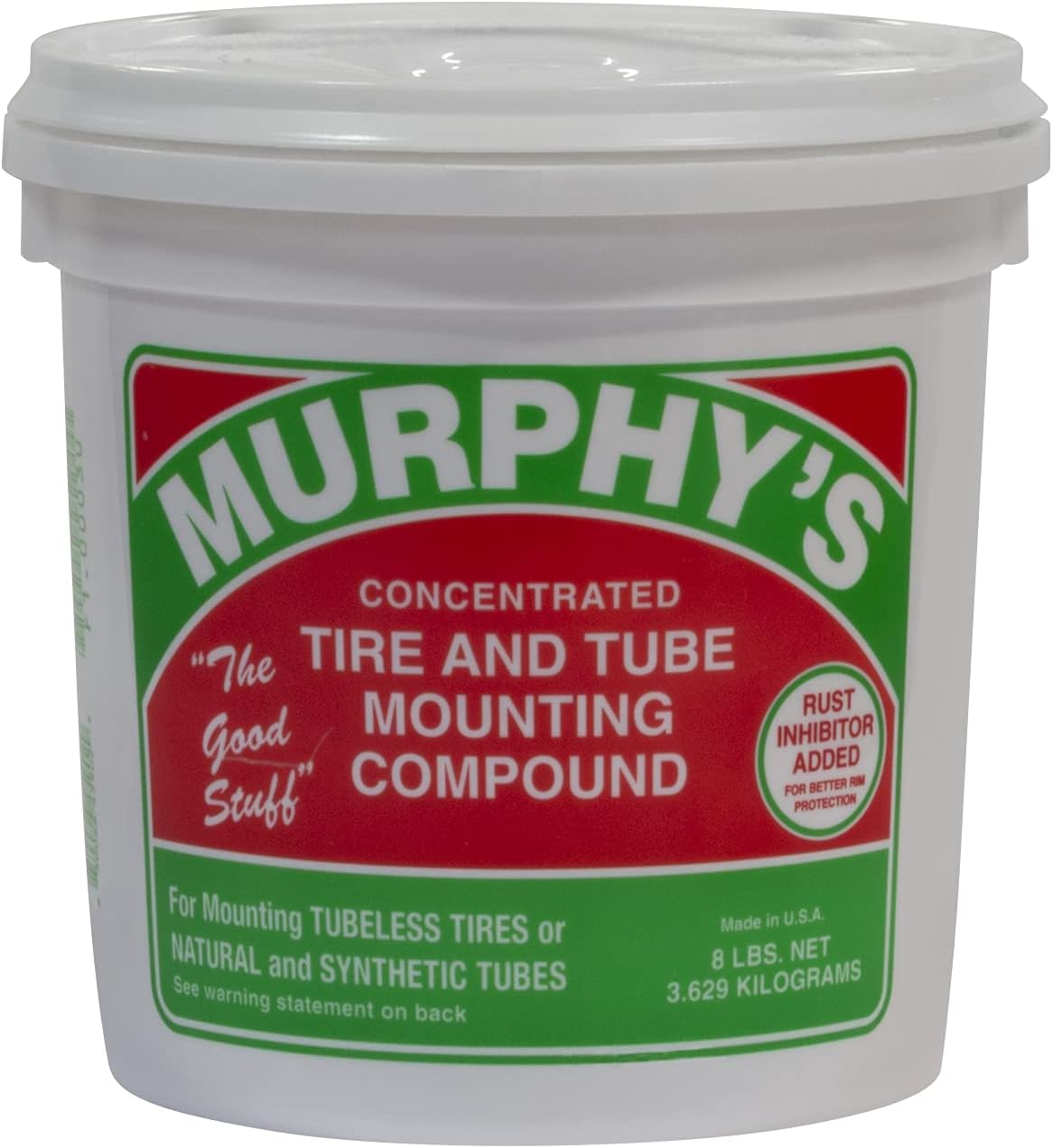
A concentrated tire and tube mounting compound designed to help simplify mounting rubber tires and tubes on passenger, semi truck, construction, and OTR applications. Its ultra-thick formula packs beads effectively and includes rust inhibitors to help protect against corrosion during use.

Measure tire tread depth quickly and accurately with this LUMITECO dial gauge that reads in 1/32" increments up to 14/32". The color-coded green/yellow/red zones make it easy to judge tire wear and know when replacement is needed. A rugged, compact design with a protective pouch helps keep the gauge ready for use on cars, trucks, motorcycles, and more.

Marsflex brand TPMS replacement sensors help restore tire pressure monitoring for compatible Toyota, Lexus, Scion, and Pontiac models. Each sensor is pre-programmed for the vehicle application and includes a long-life battery for up to 8 years of normal use. Designed to replace common OE numbers and requires relearning using a TPMS scan tool after installation.

Related Articles

Toyota RAV4 TPMS Reset: Easy Steps That Work
Unlock the secrets to resetting your Toyota RAV4's TPMS effortlessly—discover the essential steps to ensure your tires are always safe.
Read More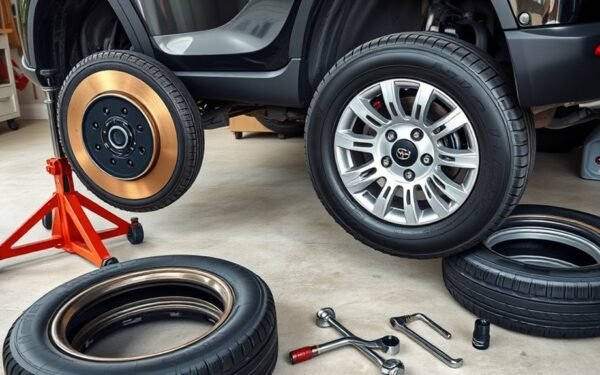
Toyota RAV4 Tire Rotation: DIY Steps & Pattern
Take control of your Toyota RAV4's tire maintenance with our simple DIY rotation guide—discover the best steps for optimal performance and longevity!
Read More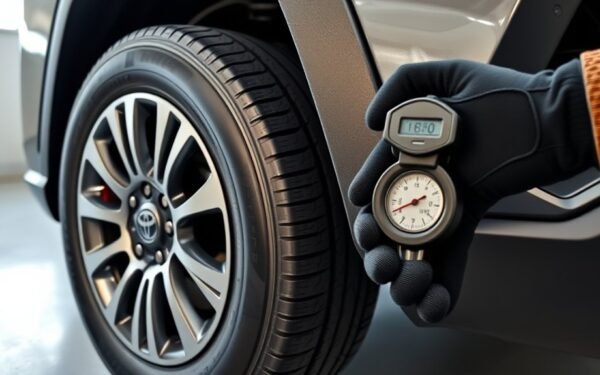
Mix Tire Brands on a Toyota RAV4? Expert Guide
Keeping your RAV4 safe? Learn when mixing tire brands risks traction, ABS/TCS and AWD damage — and what exact matches you must insist on.
Read More