
TPMS Explained: How Tire Pressure Sensors Work
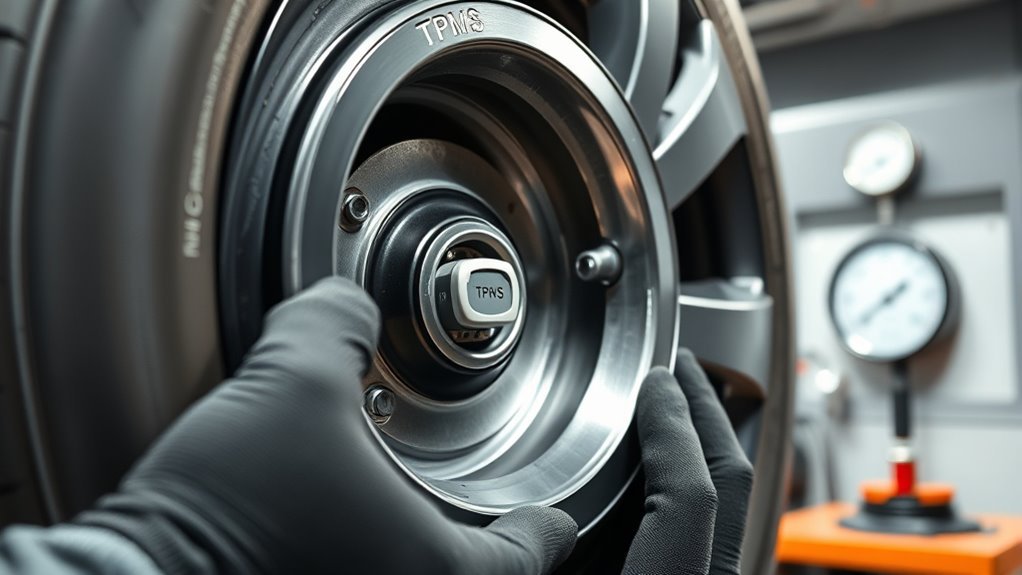
You rely on a tire pressure monitoring system (TPMS) to catch unsafe pressure loss before it overheats a tire, shortens tread life, wastes fuel, or affects handling. A TPMS is useful, but it is not a replacement for checking tire pressure with a gauge. The safest approach is to understand whether your vehicle uses a direct or indirect system, know what the dashboard light means, and reset or service the system correctly after tire work.
Quick Answer
A TPMS monitors tire pressure and warns you when pressure becomes unsafe. Direct TPMS uses sensors inside each wheel to measure pressure and temperature. Indirect TPMS uses ABS wheel-speed data to infer pressure loss. A steady light usually means low pressure; a flashing light usually means a system fault.
Key Takeaways
- Direct TPMS measures pressure and temperature at each wheel and sends wireless data to the vehicle module.
- Indirect TPMS estimates pressure loss from wheel-speed changes and needs recalibration after inflation changes, tire rotations, or tire replacement.
- A TPMS warning means you should stop safely, check all tires with a gauge, and inflate to the pressure on the vehicle placard, not the tire sidewall.
- Direct TPMS sensor batteries are sealed and commonly last about 5–10 years, so sensor replacement is normal as vehicles age.
- TPMS is an early-warning system, not a substitute for monthly cold tire-pressure checks.
At a Glance
| Time Required | 5–10 minutes for a pressure check; 10–30 minutes for most reset or relearn procedures |
| Difficulty | Easy for basic checks; moderate for sensor relearn or replacement |
| Tools Needed | Accurate tire pressure gauge, air compressor, owner’s manual, and possibly a TPMS scan/relearn tool |
| Cost | Usually free for a reset; roughly $40–$200 per direct sensor plus labor when replacement is needed |
Who This Guide Is For & How to Use It
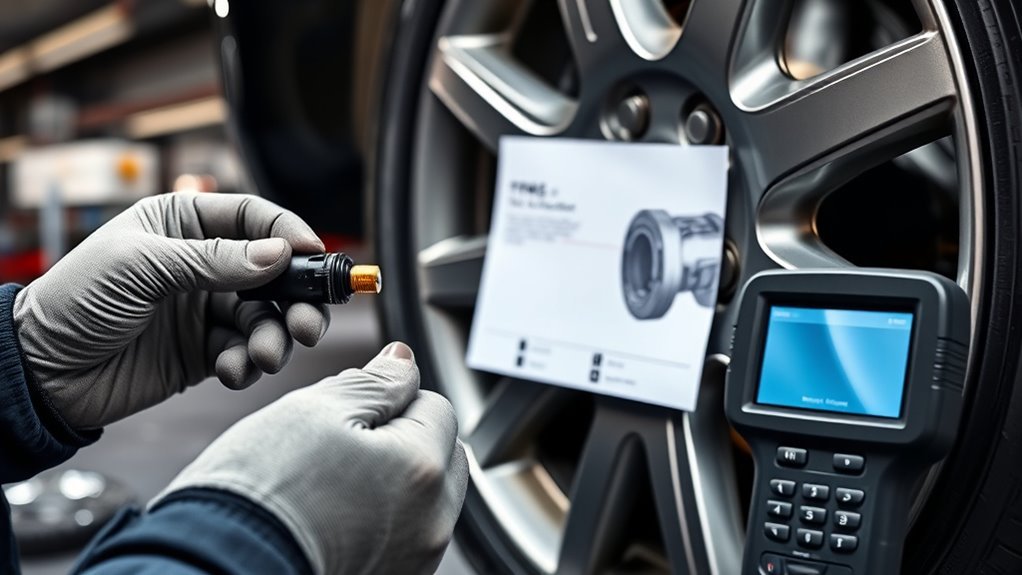
This guide is for vehicle owners, automotive enthusiasts, technicians, and fleet operators who want practical, accurate TPMS guidance without marketing fluff. Use it to understand how direct and indirect systems work, what dashboard warnings mean, how to reset TPMS after tire service, and when a sensor fault needs professional diagnosis.
For best results, read the sections in order if you are learning the system from scratch. If your TPMS light is already on, start with the warning-light table, then move to troubleshooting and reset steps.
Direct vs. Indirect TPMS: Quick Comparison
The two main TPMS designs solve the same safety problem in different ways. A direct TPMS uses a battery-powered sensor at each wheel to measure actual air pressure, and often temperature, then sends the data wirelessly to the vehicle’s control module. A indirect TPMS does not measure PSI directly. It uses ABS wheel-speed sensors to look for changes in rolling behavior that suggest one tire has become smaller from under-inflation.
| Feature | Direct TPMS | Indirect TPMS |
|---|---|---|
| How it detects pressure loss | Measures tire pressure with wheel-mounted sensors | Infers pressure loss from wheel-speed and rolling-radius changes |
| Typical display | May show individual tire PSI and temperature | Usually shows a general warning light |
| Accuracy | Higher because it measures actual pressure | Lower because it estimates pressure changes |
| Maintenance | Sensor batteries eventually require sensor replacement | No wheel sensor batteries, but resets are important |
| Best fit | Drivers who want per-tire readings and clearer diagnostics | Vehicles designed to reduce hardware cost and maintenance |
Note: Some vehicles use direct sensors but do not show individual tire pressure on the dashboard. Others show each tire’s PSI. Always check your owner’s manual for your exact system.
How Indirect TPMS Detects Under-Inflation
Indirect TPMS uses the wheel-speed sensors already used by the anti-lock braking system. When a tire loses air, its rolling diameter becomes slightly smaller. That tire may rotate faster than the others at the same road speed. The control module compares wheel-speed patterns, filters out normal driving changes, and triggers a warning when the pattern looks like sustained pressure loss.
Wheel-Speed Comparison
Wheel-speed comparison is the core of indirect TPMS. The system watches each wheel’s rotation rate and compares it with the other wheels and with learned baseline values. If one tire spins faster over a sustained period, the vehicle may interpret that as under-inflation.
This method is cost-effective because it uses existing ABS hardware, but it depends on clean calibration. Uneven tire wear, mismatched tire sizes, snow chains, aggressive cornering, or a recent tire rotation can confuse the system.
Rotational Diameter Calculation
The control module converts wheel-speed data into an estimate of effective rolling circumference. A smaller rolling circumference often means the tire is under-inflated. Because the system estimates pressure rather than measuring PSI, it cannot tell you the exact pressure in each tire.
After inflating tires, rotating tires, replacing tires, or changing wheel sizes, reset the system using the owner’s manual procedure. Some vehicles require only a dashboard-menu reset; others require driving for several minutes so the system can relearn its baseline.
How Direct TPMS Sensors Measure & Transmit Pressure
Direct TPMS sensors are usually mounted inside the wheel at the valve stem or attached to the rim. Each sensor contains a pressure transducer, electronics, a radio transmitter, and a sealed battery. Many direct sensors also measure temperature and send a unique sensor ID so the vehicle can identify which sensor is reporting.
When the vehicle is moving, the sensor sends short wireless data bursts to a receiver or control module. The module checks the sensor ID, pressure reading, temperature data when available, and diagnostic status. If the pressure is below the programmed warning threshold or if the sensor stops communicating correctly, the dashboard warning light comes on.
Under U.S. FMVSS No. 138, a compliant TPMS must warn the driver when one or more tires are at least 25% below the vehicle manufacturer’s recommended cold inflation pressure, or below the standard’s minimum pressure threshold, whichever is higher.
Direct TPMS is the more precise system, but it has one predictable maintenance issue: sensor batteries are sealed. When the battery fails, the sensor is replaced as a unit rather than recharged or opened.
Common TPMS Warnings and Dashboard Light Meanings
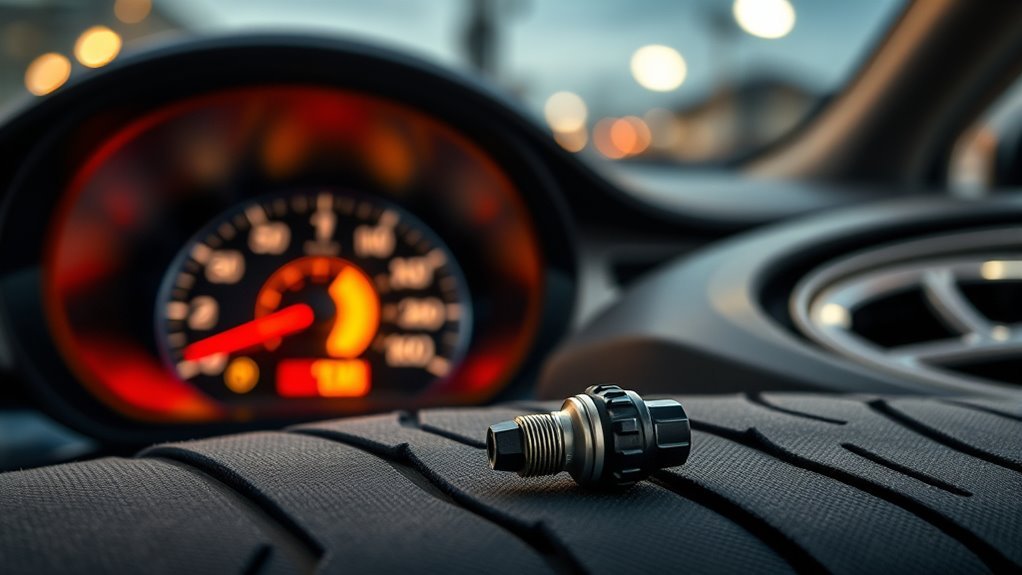
If the TPMS light comes on while driving, slow down, avoid sharp steering or hard braking, and stop in a safe place. Then check every tire with a gauge, including the spare if your vehicle monitors it. Inflate tires to the cold pressure shown on the driver-door placard or fuel-door label. Do not use the maximum pressure printed on the tire sidewall as your target.
| Indicator | Likely Cause | What to Do |
|---|---|---|
| Steady amber TPMS light | One or more tires are significantly under-inflated; some systems may also detect over-inflation | Check all tires cold and inflate to the placard pressure |
| Flashing amber light for about one minute, then steady | TPMS malfunction, failed sensor, sensor battery issue, or incompatible wheel/tire setup | Check pressure first, then schedule TPMS diagnosis if the light returns |
| Light appears during cold weather | Pressure dropped as air temperature fell | Adjust pressure when the tires are cold |
| Light stays on after inflation | System has not reset, pressure is still wrong, or there is a sensor/communication fault | Drive as directed by the manual, perform reset if required, then diagnose if persistent |
Warning: Do not ignore a TPMS light. Driving on a significantly under-inflated tire can cause overheating, poor handling, longer stopping distance, tire damage, and sudden tire failure.
Routine Maintenance: Resets, Battery Life & Replacement Costs
TPMS maintenance is simple when you separate pressure maintenance from electronic maintenance. Tire pressure should be checked monthly when the tires are cold, meaning the vehicle has been parked for at least three hours or driven only a short distance at low speed. Electronic maintenance depends on the type of TPMS your vehicle uses.
When to Reset or Relearn TPMS
Reset or relearn the system when the owner’s manual calls for it, especially after:
- Inflating tires after a warning light
- Rotating tires
- Replacing one or more tires
- Replacing wheels
- Replacing a direct TPMS sensor
- Installing seasonal tires or a second wheel set
- Changing tire size, if approved for the vehicle
Basic TPMS Reset Steps
- Park safely and let the tires cool if possible.
- Find the recommended cold tire pressure on the vehicle placard.
- Check all tires with a reliable pressure gauge.
- Add or release air until each tire matches the placard value.
- Use the dashboard menu, reset button, or relearn procedure described in the owner’s manual.
- Drive the vehicle if the manual says the system needs motion to relearn.
- If the light flashes or returns after correct inflation, have the TPMS scanned for sensor faults.
Pro Tip: If one direct TPMS sensor fails because of age, ask the shop to check the battery status and signal strength of the other sensors. Replacing all aging sensors during tire service can save repeat labor later.
Sensor Battery Life and Replacement Cost
Direct TPMS sensors typically last about 5–10 years, depending on sensor design, temperature exposure, driving time, and how often the sensor transmits. When the sealed battery dies, the sensor usually stops transmitting or sends intermittent data. Symptoms include a flashing TPMS light, missing tire-pressure readings, or warnings that return after correct inflation.
Replacement costs vary by vehicle and sensor type. A common range is about $40–$200 per sensor plus labor, valve service parts, programming, and relearn time. Luxury vehicles, specialty wheels, and some OEM sensors may cost more.
TPMS Troubleshooting: False Alerts, Rotations & Sensor Faults
A TPMS warning is not always a damaged tire, but you should treat it seriously until you confirm pressure with a gauge. Work through the checks below before replacing parts.
First: Check the Actual Pressure
Use a gauge on all four tires, not just the one that looks low. A tire can be dangerously under-inflated before it appears flat. If your vehicle has a full-size spare with TPMS, check it too.
Common Causes of False or Confusing Alerts
- Cold-weather pressure drop: Tire pressure falls as air temperature drops, so the first cold morning of the season often triggers warnings.
- Recent tire rotation: Indirect systems may need recalibration; direct systems may need sensor-location relearn.
- Mismatched tires: Different tire sizes, uneven wear, or mixed brands can confuse indirect TPMS.
- Dead or weak sensor battery: A flashing light often points to a system fault rather than simple low pressure.
- Aftermarket wheels: Some wheels need compatible sensors, valve stems, or relearn steps.
- Radio interference or damaged sensor: Sensor damage can happen during tire mounting, corrosion, impact, or valve-stem service.
When to Seek Professional Diagnosis
Visit a qualified tire shop or technician if the TPMS light flashes, if a sensor is not reading, if the light stays on after correct pressure and reset, or if the vehicle recently had wheel or tire work. A TPMS scan tool can read sensor IDs, pressure, temperature, battery status when supported, and signal output.
Aftermarket TPMS for Consumers: Retrofit Options & Pricing
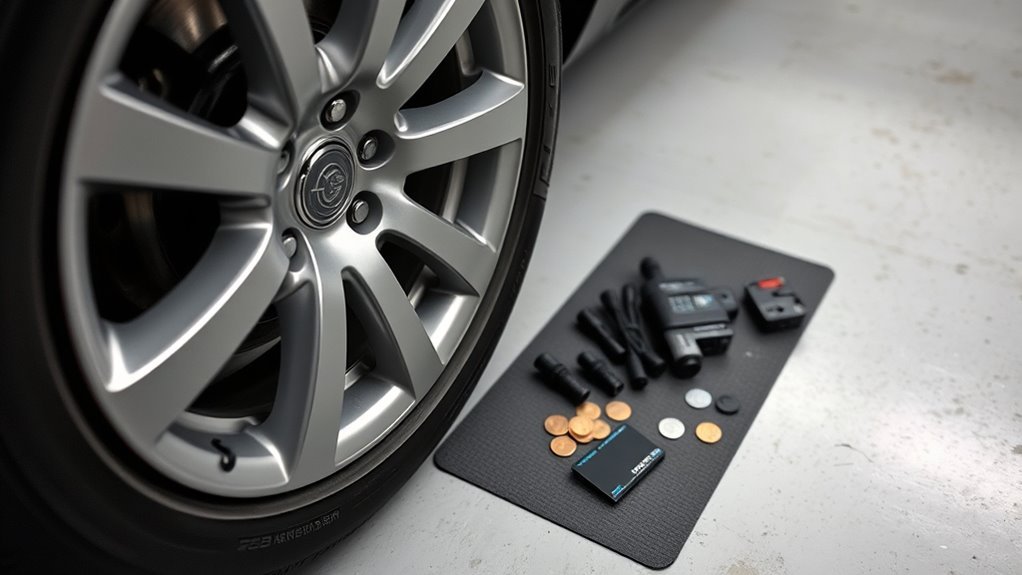
If your vehicle did not come with TPMS, or if you want added monitoring for a trailer, RV, motorcycle, bicycle, or second wheel set, aftermarket systems can help. Most consumer kits use external valve-cap sensors, internal valve-stem sensors, or band/clamp-mounted sensors.
External valve-cap systems are easy to install but are more exposed to theft, weather, and impact. Internal sensors are better protected and look like factory hardware, but they require tire dismounting for installation. Many kits include a dashboard monitor, phone app, or receiver that shows pressure and temperature.
What to Check Before Buying an Aftermarket Kit
- Sensor compatibility with your valve stems and wheel design
- Maximum pressure rating for your vehicle, RV, trailer, or truck tires
- Number of sensors supported
- Temperature monitoring and high-temperature alerts
- Battery type and replacement process
- Display visibility and alert volume
- Water resistance for exposed sensors
- Support for trailers, long vehicles, or signal repeaters if needed
Basic aftermarket kits often cost about $50–$200, while RV, trailer, and heavy-duty systems can cost more because they need more sensors, longer range, repeaters, or fleet telemetry features.
Fleet & Heavy-Duty TPMS: Telematics and Remote Monitoring
Fleet TPMS turns tire data into maintenance decisions. Instead of relying only on a driver seeing a dashboard light, the system can send pressure and temperature alerts to a fleet platform, maintenance team, or dispatch dashboard. That helps catch slow leaks, overheating tires, and pressure problems before they become roadside failures.
- Real-time alerts: Notify drivers or fleet managers when pressure drops or temperature rises.
- Maintenance planning: Create work orders before a tire failure causes downtime.
- Fuel and tread management: Correct inflation reduces rolling resistance and uneven wear.
- Asset tracking: Sensor data can be tied to vehicle, trailer, axle, and wheel position.
- Compliance support: Commercial operators in some markets must consider TPMS requirements for new trucks, buses, and trailers.
For heavy-duty vehicles, verify the system’s pressure range, sensor durability, trailer compatibility, axle mapping, and integration with existing telematics software. A good fleet installation process includes sensor mapping, driver training, alert thresholds, maintenance escalation rules, and periodic audits.
TPMS Laws, Privacy & Security Best Practices
In the United States, Federal Motor Vehicle Safety Standard No. 138 sets performance requirements for TPMS on covered light vehicles. In the European Union, passenger-car TPMS requirements began under earlier general safety rules, and current type-approval requirements are handled under Regulation (EU) 2019/2144 and UN Regulation No. 141 for relevant vehicle categories.
For everyday drivers, the practical takeaway is simple: if your vehicle is equipped with TPMS, keep it working. Do not disable the warning light, ignore sensor faults, or install incompatible wheels without proper sensors and relearn procedures.
Privacy and Security Considerations
Direct TPMS sensors transmit wireless messages that can include unique sensor IDs. Research has shown that those identifiers may create a tracking risk if captured by nearby radio equipment. For most consumers, the best response is awareness rather than panic. For fleets, connected-vehicle teams, and telematics vendors, TPMS data should be handled like other vehicle telemetry: limit retention, restrict access, encrypt data in backend systems, and keep firmware and fleet software updated.
| Priority | Control Type | Audit Checkpoint |
|---|---|---|
| Privacy | Limit collected data and retention | Data retention schedule and access logs |
| Security | Secure telematics platform access | User permissions and unauthorized-access alerts |
| Compliance | Map vehicle category and market rules | Regulatory review for new fleet purchases |
| Service quality | Document relearn and sensor replacement | Maintenance records and sensor ID mapping |
Frequently Asked Questions
How does TPMS know which tire is which?
Direct systems use unique sensor IDs that are learned by the vehicle and mapped to wheel positions. Some vehicles relearn positions automatically after driving; others need a scan tool or a manual relearn sequence after rotation. Indirect systems infer a pressure problem from wheel-speed behavior rather than reading a sensor in each tire.
How long do tire pressure sensors usually last?
Direct TPMS sensors commonly last about 5–10 years. Battery life depends on sensor design, temperature, driving habits, and transmission frequency. Because the battery is sealed inside most sensors, the sensor is replaced when the battery fails.
Can I drive with the TPMS light on?
Drive only as far as needed to stop safely and check the tires. A steady TPMS light may mean a tire is significantly under-inflated. A flashing light usually means the system has a fault and may not warn you about low pressure correctly.
Why did my TPMS light come on after a cold night?
Cold air lowers tire pressure. If the tires were already close to the warning threshold, a cold morning can trigger the light. Check pressure when the tires are cold and inflate to the vehicle placard pressure.
Do I need to reset TPMS after rotating tires?
Often, yes. Indirect systems usually need recalibration after a rotation. Direct systems may need a relearn so the vehicle knows each sensor’s new wheel position. Follow your owner’s manual or ask the tire shop to complete the relearn.
Is TPMS enough, or should I still use a tire gauge?
You should still use a tire gauge. TPMS is designed as a warning system for significant pressure problems. It may not warn you about small pressure losses, and indirect systems do not show actual PSI.
Conclusion
TPMS is one of the most useful tire-safety systems on modern vehicles, but it works best when you understand its limits. Direct systems give precise sensor-based readings; indirect systems estimate pressure loss from wheel behavior. Both need correct tire inflation, proper resets after service, and attention when the warning light appears. Check your tires monthly, treat TPMS warnings seriously, and document sensor replacement or relearn work so the system stays reliable.
Sources
- eCFR — 49 CFR § 571.138, Tire Pressure Monitoring Systems — U.S. TPMS performance requirements, warning thresholds, malfunction behavior, and driver-maintenance language.
- NHTSA TireWise — Tire Safety Ratings and Awareness — cold tire-pressure checking, placard pressure guidance, and tire-safety recommendations.
- EUR-Lex — Regulation (EU) 2019/2144 — current EU general safety type-approval framework, including TPMS requirements.
- EUR-Lex — UN Regulation No. 141 — technical definition and requirements for tyre pressure monitoring systems.
- Continental Aftermarket — Tire Pressure Monitoring Systems — direct TPMS sensor measurement and wireless transmission details.
- REDI-Sensor — Understanding TPMS Batteries — direct sensor battery lifespan, sealed battery design, and battery-related failure symptoms.

Related Articles

What Does THE P Stand For on a Tire? Full Meaning Explained
I’ll explain what the “P” on a tire really means and why it could change how you choose your next set.
Read More
How to Use a Tubeless Tire Repair Kit: Complete Field Guide
Learn how to fix tubeless tire punctures fast with the right kit, because one small mistake can leave you stranded on the trail.
Read More
How to Tell a Tire’s Diameter: Easy Guide to Reading Tire Size
Want to decode tire sidewall numbers and find the right diameter, but wonder what those hidden digits really mean?
Read More