
What Happens When You Drive on a Flat? Damage Explained
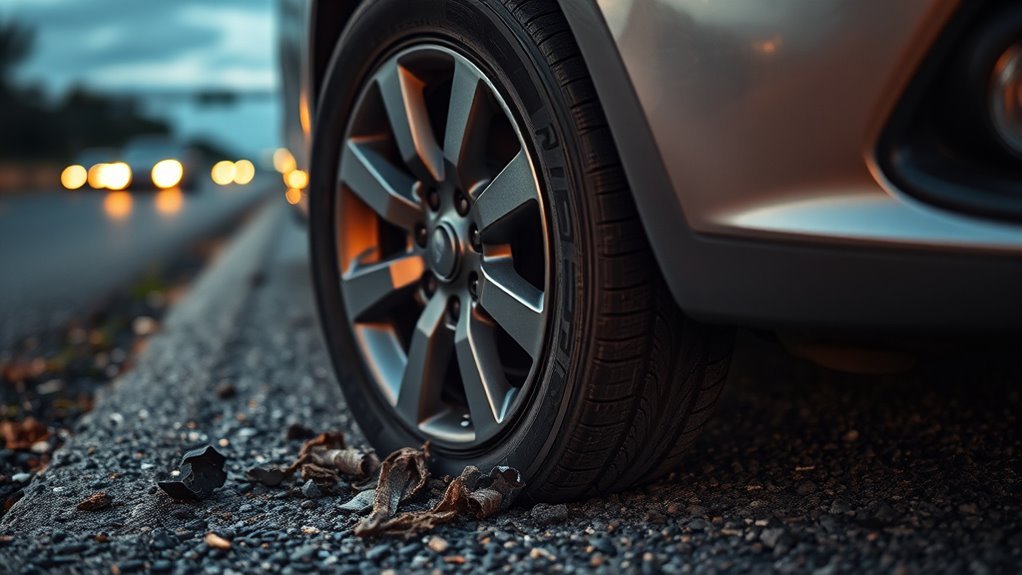
If you drive on a flat tire, stop as soon as you can do so safely. A fully deflated tire cannot support the vehicle, so the rim starts pinching the sidewall, the tread overheats, and the wheel can contact the road. Even a short “limp” can turn a repairable puncture into a ruined tire, bent rim, alignment problem, or unsafe blowout risk.
Quick Answer
Driving on a flat tire can crush the sidewall, shred the tread, damage the rim, strain suspension parts, and make the vehicle hard to control. Pull over immediately, turn on your hazards, install a spare if it is safe, or call roadside assistance. Drive only far enough to escape active traffic.
Key Takeaways
- A true flat can become non-repairable quickly because the rim pinches and breaks down the sidewall.
- The safest move is to pull over, use hazard lights, and change to a spare or call for help.
- TPMS warnings mean low pressure, not always a full flat, but they should be checked right away.
- Sidewall, shoulder, large, or previously plugged punctures usually require replacement, not a simple patch.
- Run-flat tires have their own speed and distance limits; always follow the tire and vehicle manufacturer’s instructions.
At a Glance
| Time Required | 5–20 minutes to assess and install a spare, or longer for roadside assistance |
| Difficulty | Moderate if changing a tire; easy if calling for help |
| Tools Needed | Hazard lights, spare tire, jack, lug wrench, tire gauge, gloves, flashlight, and reflective triangles if available |
| Cost | Often low for a simple tread repair, but much higher if the tire, wheel, alignment, or suspension is damaged |
Flat vs. Low Pressure: What Counts as a Real Flat
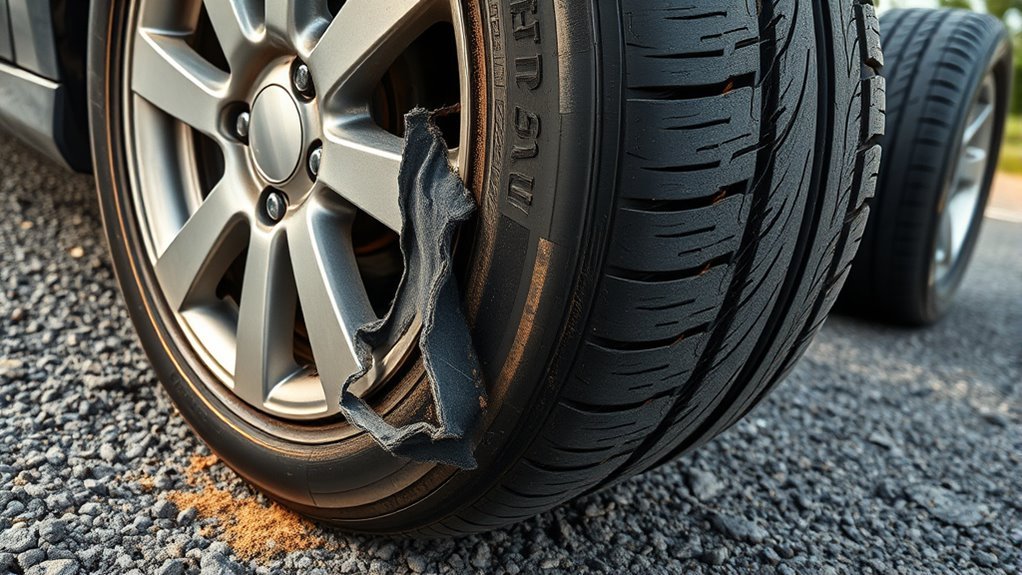
A true flat has lost enough air that the tire can no longer hold the vehicle’s weight correctly. The sidewall folds, the tread contact patch changes shape, and the wheel may sit visibly lower than the other wheels. A low-pressure tire still has air in it, but it is below the recommended cold pressure shown on the driver-side door placard or in the owner’s manual.
Do not rely on a universal “normal PSI” number. Many passenger vehicles are around the 30–35 PSI range, but the correct pressure is the one specified for your vehicle, tire size, and load. The National Highway Traffic Safety Administration recommends checking tire pressure regularly, including the spare, and inspecting tires for cracks, objects, uneven wear, and other damage.
Note: A TPMS light usually means one or more tires are significantly underinflated. Federal TPMS rules require the warning to illuminate when pressure is at or below 25% under the vehicle manufacturer’s recommended cold inflation pressure, or a specified minimum threshold, whichever is higher.
[Products Worth Considering]

This tire repair kit provides fast emergency puncture repair without removing the tire from the rim, helping you get back on the road quickly. Its screw plug system is designed for punctures in both tread and sidewall and includes a complete patch plug tool set with essential accessories. A portable storage bag makes it easy to carry for cars, trucks, SUVs, motorcycles, and heavy-duty applications.

This VEVOR tire bead breaker uses a slide-hammer impact and wedge tip to separate tire beads from rims quickly and efficiently without damaging hub surfaces. The long handle and sturdy steel construction help reduce user strain while providing reliable, portable tire changing for cars, trucks, and more. Ideal for home mechanics and repair shops handling multiple vehicle tire sizes.

This roadside assistance kit helps drivers and passengers in urgent situations after an accident or breakdown, providing practical support while waiting for help. It includes a lightweight, compact tire inflator for fast inflation of standard vehicle tires, plus reinforced jumper cable protection for safer handling. Ideal for winter weather, road trips, camping, and travel, with everything stowed neatly in a trunk bag.
How to Tell You Have a Flat Right Now
A flat tire usually announces itself through the way the vehicle feels, sounds, and handles. Pull over safely and check the tire if you notice any of these signs:
- Strong vibration: The steering wheel, seat, or floor shakes more than normal.
- Pulling to one side: The vehicle drifts toward the damaged tire, especially while braking or coasting.
- Thumping, flapping, or grinding: A deflated tire can slap the road or wheel well as it breaks down.
- TPMS warning light: The system is warning you that pressure is dangerously low or falling.
- Visible sagging: One tire looks crushed, wrinkled, or lower than the others.
- Burning rubber smell: Heat and friction may be building in the tire carcass.
If the car feels unstable, do not continue toward your destination. Your priority is reaching a safe stopping place, not preserving your schedule.
Can You Drive on a Flat Tire? Quick Rules
You should not drive on a flat tire except to get out of immediate danger. If you are in a live lane, on a narrow shoulder, or in a place where stopping is more dangerous than moving, creep slowly to the closest safe, level area. Avoid sharp steering, hard braking, potholes, curbs, and sudden acceleration.
There is no safe distance that guarantees the tire or rim will survive. A few hundred feet can damage the sidewall if the tire is fully flat, the vehicle is heavy, the road is rough, or the rim contacts pavement. If you must move, keep it short, slow, and controlled.
Warning: Do not “limp home” on a conventional flat tire. That can destroy the tire, bend the wheel, damage suspension parts, and make the vehicle harder to steer or stop.
Immediate Steps to Take If You Find a Flat Tire
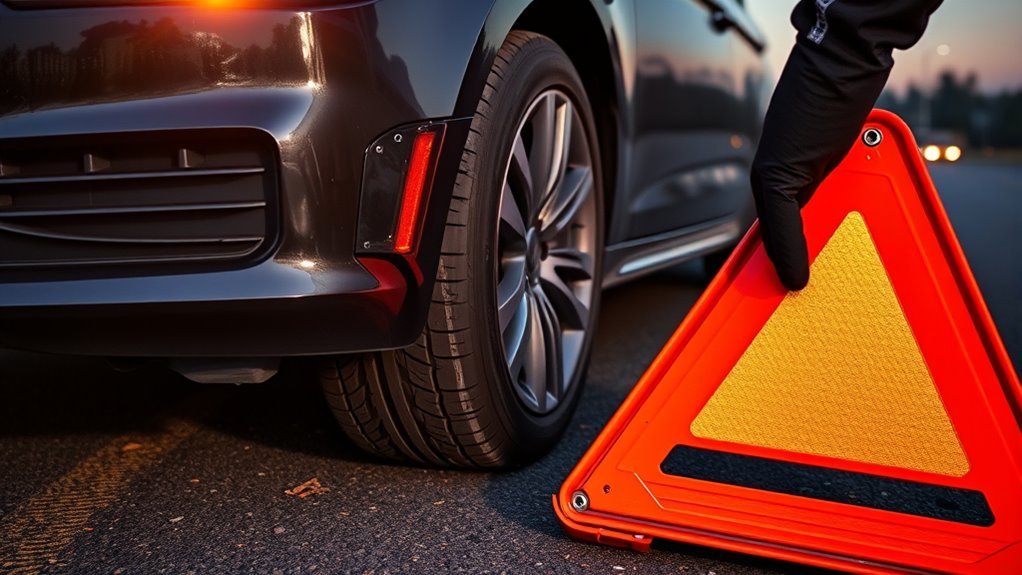
When you notice a flat, act quickly but calmly. The safest response is to control the vehicle, get away from traffic, and avoid further tire and wheel damage.
Pull Over Safely
Ease off the accelerator, keep a firm grip on the wheel, and move as far out of traffic as possible. Look for a wide shoulder, parking lot, side street, rest area, or other flat surface. Once stopped, turn on your hazard lights and set the parking brake.
- Stop on solid, level ground if possible.
- Turn on hazard lights right away.
- Keep passengers away from traffic.
- Exit on the curb side when it is safe.
- Use reflective triangles or flares if available and legal.
- Do not change the tire in a lane of traffic or on an unstable shoulder.
AAA’s tire-changing guidance also emphasizes pulling out of traffic, using hazards, setting the parking brake, and using the correct tools before attempting a roadside change.
Inspect and Call Assistance
Inspect the tire only from a safe position. Look for a nail, screw, cut, bulge, shredded tread, sidewall damage, or a tire separated from the wheel. Do not touch a hot wheel, crawl under the vehicle, or attempt a repair where passing traffic puts you at risk.
If you have a properly inflated spare and can change it safely, follow the vehicle owner’s manual. If not, call roadside assistance or a tow service. If the tire has sidewall damage, exposed cords, a large puncture, or shredded tread, skip temporary fixes and have the tire inspected by a professional.
Pro Tip: Before long trips, confirm your spare tire is present, inflated, and compatible with your vehicle. Many newer vehicles use a sealant kit or run-flat tires instead of a traditional spare.
Why Even a Few Feet of Driving Makes a Flat Worse
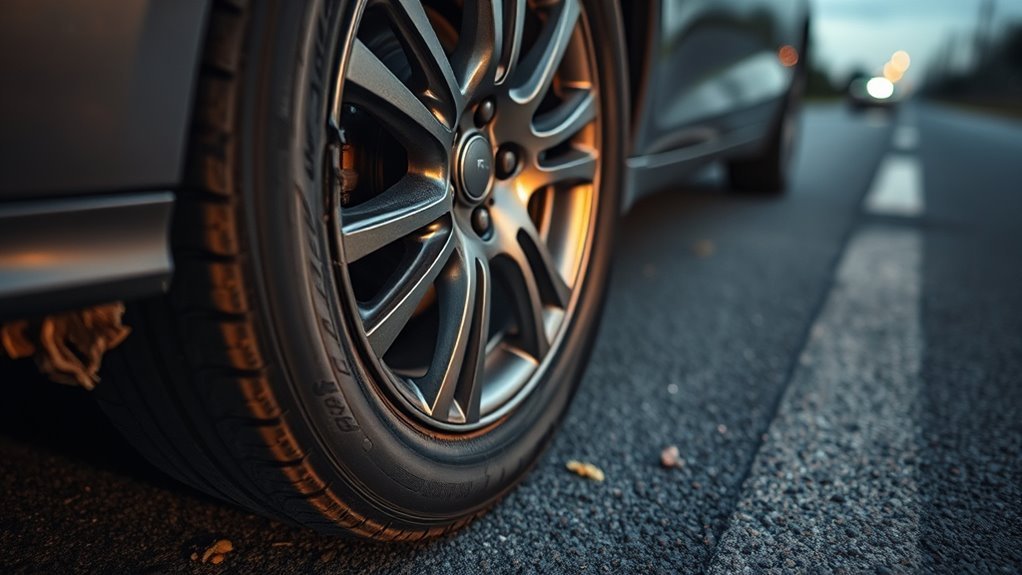
A tire is designed to carry weight with air pressure supporting its shape. When that air is gone, the tire folds under the vehicle. The rim pinches the sidewall, heat builds quickly, and the tread no longer rolls the way it should. That is why “just a little farther” can make the damage permanent.
Immediate Sidewall Crushing
The sidewall is the flexible part of the tire between the tread and the wheel. When you drive on a flat, it gets squeezed between the rim and the road. This can break internal cords, create bulges, and tear rubber layers that cannot be safely restored.
- Sidewall plies get pinched between the rim and the pavement.
- Internal cords can stretch, tear, or separate.
- Heat builds from repeated flexing.
- Bulges and cracks may appear after the tire is reinflated.
- Repairability drops sharply once internal damage starts.
Rim and Suspension Damage
With no air cushion, the rim can hit the road directly. That can scrape, bend, crack, or distort the bead seat where the tire seals to the wheel. The impact also sends abnormal forces into the suspension, steering, wheel bearing, control arms, and alignment.
This is where repair costs multiply. A simple puncture repair is one job. A tire, rim, alignment, and suspension inspection is a much bigger repair. Stopping early preserves your options.
How a Flat Destroys the Tire
When a flat tire keeps rolling, its sidewall, tread, bead, and internal liner all take stress they were not designed to handle. Even if the outside looks only slightly damaged, the inside may be torn, wrinkled, or overheated.
- Sidewall cuts and bulges: Repeated flexing weakens the structure.
- Tread shredding: Heat and friction can tear away rubber and expose cords.
- Bead damage: The area that seals against the rim can be stretched or torn.
- Inner-liner damage: Hidden damage can make future air loss more likely.
- Ply separation: Internal layers can separate, making a patch unsafe.
The Tire Industry Association says a proper tire repair requires removing the tire from the rim so a trained technician can inspect the inside. It also notes that punctures in the shoulder or sidewall are not repairable.
How a Flat Damages Rims and Wheels
A properly inflated tire spreads impact across the tread and sidewall. A flat tire cannot do that, so the rim absorbs impacts from pavement, potholes, debris, and curbs. The wheel lip may bend, the finish may scrape, the bead seat may deform, or an alloy wheel may crack.
Once the bead seat is damaged, the tire may no longer hold air reliably even after a new tire is installed. A technician may be able to straighten some steel wheels or minor bends, but cracks, severe bends, or bead damage often require replacement.
[Products Worth Considering]

This car emergency kit keeps essential roadside tools organized in a durable, portable bag so you can respond quickly during common driving emergencies. It includes battery jumper cables, a bright LED headlight, first aid supplies, a tire pressure gauge, and safety essentials like gloves and an emergency poncho. Designed for trunk or storage use, it helps you be prepared for dead batteries, minor malfunctions, and unexpected roadside issues.
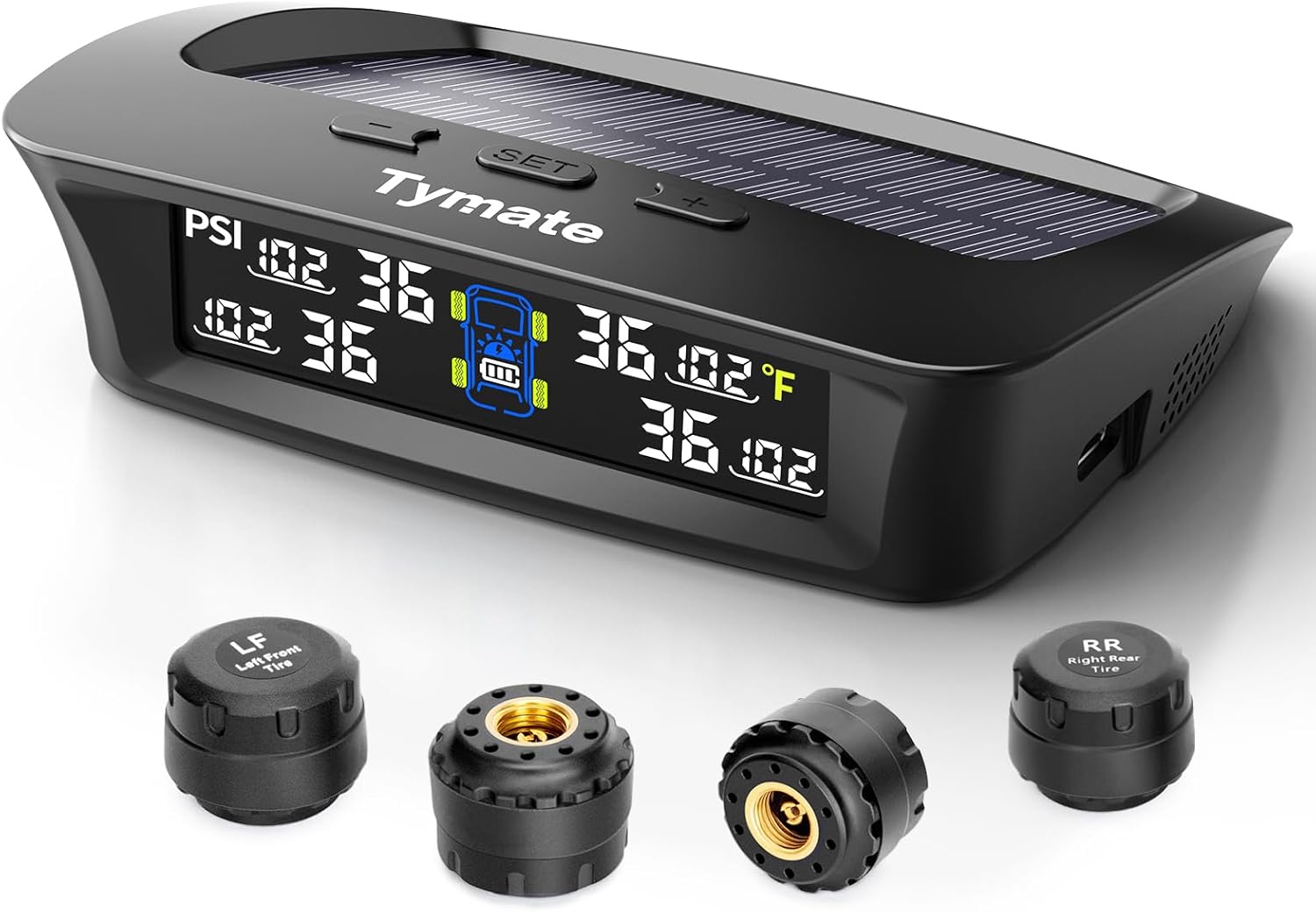
The Tymate TM3 RV TPMS delivers real-time tire pressure monitoring from 0 to 144 PSI with accurate readings and dependable wireless communication. It includes four external sensors with pre-pairing, six alarm modes for rapid leak, pressure extremes, temperature, and signal loss, plus an easy-reference setup for alert thresholds. Solar and USB-C charging help keep the display powered, while the color LCD and adaptive backlight improve visibility for safer driving and towing.
Suspension, Alignment, and Safety Risks From Driving on a Flat
A flat tire changes the height and load path of one corner of the vehicle. That creates uneven forces through the wheel assembly and can make the car pull, wander, brake unevenly, or respond late to steering input.
- Suspension strain: Struts, shocks, bushings, and control arms can take abnormal loads.
- Alignment shift: Toe and camber can move out of spec, causing pulling and uneven tire wear.
- Wheel bearing stress: Vibration and side loading can accelerate wear.
- Reduced braking stability: The vehicle may not stop in a straight, predictable line.
- Higher blowout risk: Heat, tread damage, and structural weakness can lead to sudden tire failure.
NHTSA reports that tire-related crashes killed 511 people in 2024, which is why pressure checks, tire inspections, and quick action after a warning light matter.
Prevention and Repair Options
You cannot prevent every puncture, but you can reduce the chance of a roadside emergency and limit damage when one happens.
Keep a Usable Spare and Tools
Check the spare tire pressure at least monthly and before road trips. Confirm that your jack, lug wrench, wheel lock key, inflator, sealant kit, and owner’s manual are in the vehicle. If your vehicle uses a compact spare, follow the speed and distance limits printed on the spare or listed in the manual.
Understand Run-Flat Tire Limits
Run-flat tires are built to support the vehicle for a limited time after air loss, but they are not unlimited. Bridgestone explains that its run-flat tires can continue after a loss of pressure for up to 50 miles at speeds up to 50 mph, but drivers should always follow the tire and vehicle manufacturer’s exact specifications.
Use TPMS as an Early Warning
A TPMS warning is not something to ignore. It may mean a slow leak, temperature-related pressure loss, or the beginning of a fast deflation. Pull over when safe, check the tire, and inflate to the vehicle placard pressure if the tire is not damaged. If the tire is flat, do not reinflate and drive without checking for damage first.
Know What Can and Cannot Be Repaired
Professional repair is usually limited to certain tread-area punctures. The U.S. Tire Manufacturers Association says puncture repairs require removing the tire from the rim, inspecting all damage, and using both a plug/stem and an inner-liner patch. It also states that puncture injuries greater than 1/4 inch, repairs in the shoulder or sidewall area, overlapping repairs, and outside-in repairs should not be made.
What to Do After You Accidentally Drove on a Flat
If you already drove on a flat, do not simply add air and continue. A tire can hold pressure after being internally damaged, which makes it look safer than it is.
- Stop driving: Park in a safe place and turn on hazards.
- Do not reinflate and resume the trip: Hidden sidewall or inner-liner damage may remain.
- Install the spare or call for a tow: Avoid adding more damage.
- Have the tire demounted and inspected: A technician needs to check the inside of the tire.
- Ask for a wheel and alignment check: Do this especially if you felt grinding, vibration, pulling, or hit a pothole while flat.
Frequently Asked Questions
What damage does driving on a flat tire do?
Driving on a flat tire can crush the sidewall, shred tread, damage the bead, bend or crack the rim, strain suspension parts, knock the alignment out, and make the vehicle harder to steer or stop.
How long can you drive on a flat tire before it is ruined?
There is no guaranteed safe distance. A fully flat conventional tire can be damaged within a very short distance, especially under a heavy vehicle or on rough pavement. Drive only far enough to get out of active traffic, then stop.
What should I do if I have to drive on a flat?
Move only if staying where you are is unsafe. Keep your speed very low, turn on hazard lights, steer smoothly, avoid hard braking and sharp turns, and stop at the closest safe location. Then install a spare or call roadside assistance.
Can I repair a tire after driving on it flat?
Sometimes, but only after a professional removes the tire from the wheel and inspects the inside. If the sidewall, shoulder, inner liner, bead, or cords are damaged, the tire should be replaced.
Is it safe to use tire sealant on a flat?
Tire sealant can be a temporary emergency option if your vehicle includes a manufacturer-approved kit and the damage is minor. It is not a permanent repair, and it should not be used for sidewall damage, shredded tread, large punctures, or a tire that has been driven flat.
Conclusion
Driving on a flat tire rarely saves money or time. It usually trades a small tire problem for a bigger repair involving the tire, rim, alignment, suspension, and your safety. Pull over as soon as it is safe, use your spare or roadside assistance, and have the tire professionally inspected before putting it back in service. The practical rule is simple: if it is flat, stop, assess, and fix it before you drive farther.
Sources
- NHTSA TireWise: Tire Safety Ratings and Awareness — tire pressure, tire inspection, tire-related crash data, and maintenance guidance
- 49 CFR § 571.138 Tire Pressure Monitoring Systems — TPMS warning requirements for significant underinflation
- Tire Industry Association: Tire Repair — professional inspection, repair limits, and sidewall/shoulder repair guidance
- U.S. Tire Manufacturers Association: Tire Repair Basics — tread repair area, 1/4-inch puncture limit, and plug-plus-patch repair guidance
- Bridgestone: What Are Run Flat Tires? — run-flat tire distance and speed limits
- AAA Club Alliance: How to Change a Tire — safe pull-over, hazard light, parking brake, and tool guidance

Related Articles
AWD Tire Rotation Pattern: How Often and How to Do It
W**ondering the right AWD tire rotation pattern and timing? Discover the simple method, ideal schedule, and mistakes to avoid before your tires wear unevenly.
Read More
Wheel Damage: Types, Repair Options, and Costs
Many wheel damages look minor, but some hide costly safety risks—learn which repairs are worth it and when replacement is smarter.
Read More
Tire Balancing Weights: Types, Cost, and Why You Need Them
Precisely chosen tire balancing weights reduce vibration and wear, but which type fits your wheels and what it really costs may surprise you.
Read More