
Honda Accord Lug Nut Replacement: A Step-by-Step Guide
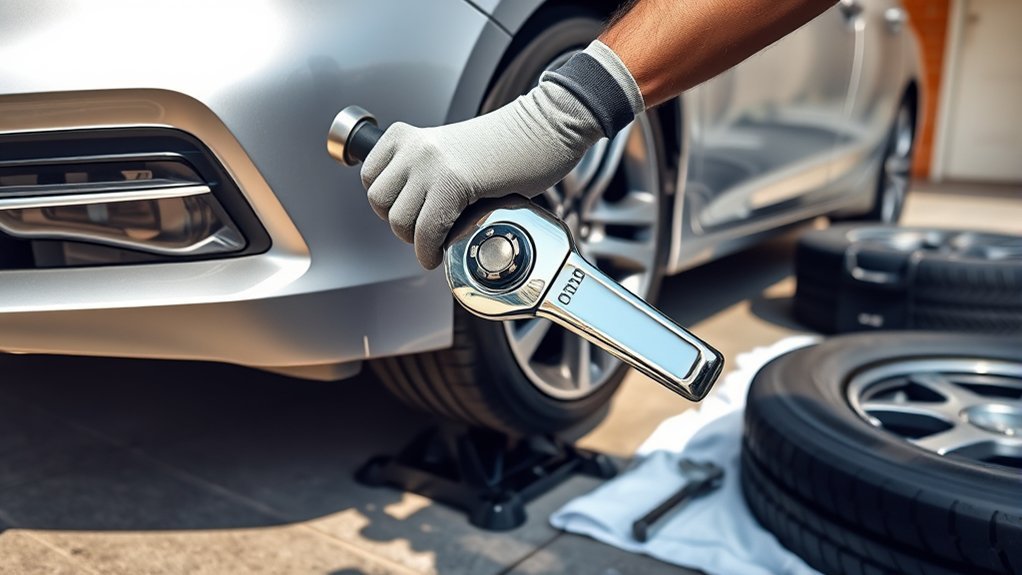
Replacing lug nuts on your Honda Accord is a simple job, but it is also safety-critical. The lug nuts must match your wheel and studs, thread on by hand, and be tightened with a torque wrench to the correct specification for your model year.
Quick Answer
To replace Honda Accord lug nuts, park on level ground, chock the wheels, loosen the nuts before lifting, support the car with a jack stand, hand-thread the new nuts, snug them in a star pattern, then torque them with a calibrated torque wrench. Many Accord models use 80 lb-ft, but always confirm your exact model year in the owner’s manual.
Key Takeaways
- Check your Honda Accord owner’s manual before tightening because lug nut torque is a specification, not a guess.
- Use jack stands and wheel chocks. Never work around a raised car supported only by a jack.
- Make sure the new lug nuts match the thread pitch, seat type, and wheel design before installation.
- Start every lug nut by hand to avoid cross-threading the wheel studs.
- Recheck torque after a short drive, especially after replacing wheels, lug nuts, or wheel locks.
At a Glance
| Time Required | 15 to 30 minutes for one wheel, longer if a lug nut is seized or damaged |
| Difficulty | Beginner to moderate, depending on rust, wheel locks, and stud condition |
| Tools Needed | Lug wrench or breaker bar, correct socket, torque wrench, car jack, jack stand, wheel chocks, gloves, and replacement lug nuts |
| Cost | Usually low if you already own the tools; cost rises if you need a torque wrench, wheel lock set, or professional help |
Essential Tools for Lug Nut Replacement
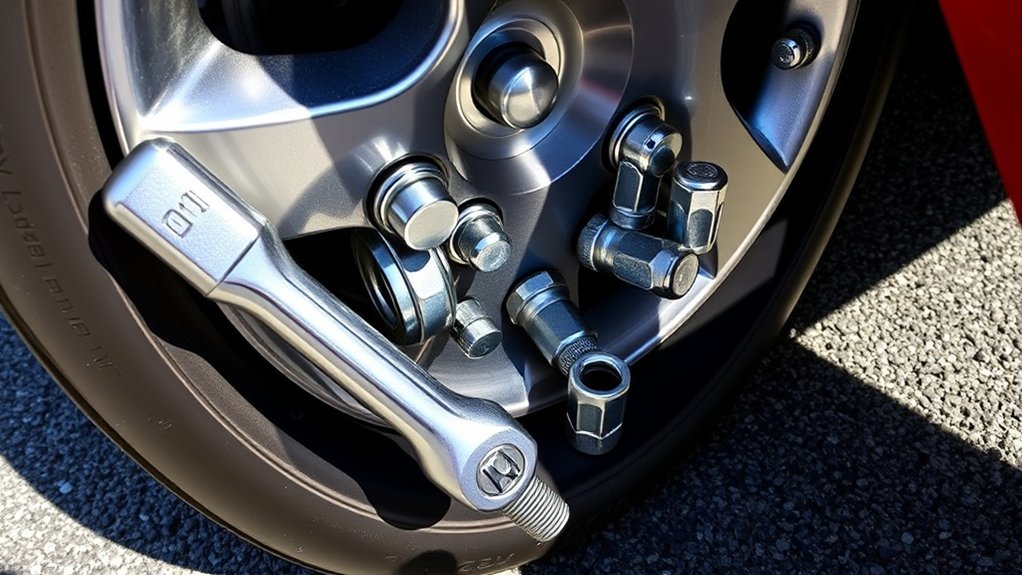
Before you replace lug nuts on your Honda Accord, gather the right tools and set up a safe work area. You need a lug wrench or breaker bar to loosen the old nuts, the correct socket for your lug nuts, and a torque wrench for final tightening.
You also need a car jack, at least one jack stand, and wheel chocks. The jack lifts the car, but the jack stand supports it while you work. Check your owner’s manual for the correct jack point before raising the vehicle.
Warning: Never remove a wheel or work around a raised Honda Accord supported only by a jack. Use a level surface, set the parking brake, chock the opposite wheels, and place a jack stand under the proper support point.
A torque wrench is not optional for final tightening. A lug wrench can make a nut feel tight, but it cannot confirm the correct torque. Honda owner manuals are the final source for your vehicle’s wheel nut torque, and many Accord models list 80 lb-ft. Always verify the value for your exact year, trim, and wheel setup.
[Products Worth Considering]

Universal magnetic jack pad with aluminum grooved design to protect vehicle pinch welds during lifting. Durable nylon pad inserts are upgraded and secured with screws to resist damage and keep in place. Designed to fit most single vehicle pinpoint welds for safer, stable jacking when changing tires, repairs, or performing oil changes.

Secure your parked vehicle quickly with AFA Tooling 4T rubber wheel chocks in a 4-pack for two dual-wheel sets. The ribbed design and textured base grip fast without pounding, so you can chock tires on trailers, RVs, ATVs, and work vehicles with confidence. EZ rustproof handles with rope ties keep the pair together for easy placement and removal, while nylon-reinforced rubber stands up to dirt, ice, salt, and harsh weather.

Camco’s RV wheel chocks with an attached rope help keep your travel trailer securely in place for safer unhitching or parking. This 2-pack is compatible with wheels up to 26-inch diameter and features durable UV-resistant construction for reliable outdoor performance. The rope enables quick, safe removal so you can prepare for your next trip with less hassle.
Check Lug Nut Fit Before Installation
Do not buy lug nuts by appearance alone. A Honda Accord commonly uses M12 x 1.5 wheel studs, but you should still confirm your exact model year and wheel type before installing replacements.
Also check the lug nut seat style. OEM Honda wheels often use a ball or radius seat, while many aftermarket wheels use a conical seat, tuner seat, spline-drive nut, or a different shank style. If the seat shape does not match the wheel, the nut may not clamp the wheel correctly.
- Thread pitch: Confirm the nut matches the wheel stud, often M12 x 1.5 on many Accord models.
- Seat type: Match the lug nut seat to the wheel, not just the car.
- Hex or key style: Make sure your socket or wheel lock key fits before you start.
- Stud condition: Replace or repair damaged wheel studs before installing new nuts.
- Wheel type: Follow the wheel manufacturer’s instructions if you use aftermarket wheels.
Note: If a new lug nut will not spin on smoothly by hand, stop. Forcing it with a wrench can cross-thread the stud and turn a simple repair into a wheel stud replacement.
Step-by-Step Guide to Replacing Lug Nuts on Your Honda Accord
Follow these steps when replacing lug nuts on your Honda Accord. Work on one wheel at a time unless you are also rotating tires or removing multiple wheels for another repair.
- Park safely. Choose a flat, solid surface. Shift to Park, set the parking brake, and chock the wheels that will stay on the ground.
- Break the lug nuts loose. Before lifting the car, use a lug wrench or breaker bar to loosen each lug nut about a quarter turn. Do not remove them yet.
- Lift at the correct jack point. Use the factory jack point listed in your Honda Accord owner’s manual.
- Support the vehicle. Place a jack stand under the correct support area before removing the wheel or working around it.
- Remove the old lug nuts. Take the nuts off by hand after they are loose. Keep them together so you can compare them to the replacements.
- Inspect the wheel studs. Look for rust, damaged threads, stretched studs, or signs that a nut was forced on crooked.
- Install the new lug nuts by hand. Thread each lug nut several turns by hand before using any tool.
- Snug the nuts in a star pattern. For a five-lug Accord wheel, move across the wheel instead of going around in a circle.
- Lower the tire lightly to the ground. Let the tire touch enough to prevent spinning, but do not put the full vehicle weight on it yet.
- Torque the lug nuts. Use a calibrated torque wrench and tighten in a star pattern to the specification in your owner’s manual.
- Fully lower the vehicle. Remove the jack stand, lower the car, and do one final torque check in the same star pattern.
Pro Tip: Use the impact wrench only for removal or light snugging if you know how to control it. Final tightening should be done by hand with a torque wrench, not by impact gun.
Cost Breakdown: DIY vs. Professional Lug Nut Replacement
DIY lug nut replacement is usually affordable if you already own basic tire-changing tools. Your main cost is the replacement lug nuts or wheel lock set. If you need to buy a torque wrench, jack stand, or breaker bar, the first repair costs more, but those tools can be reused.
Professional replacement may make sense if the lug nuts are seized, stripped, swollen, or matched to a wheel lock key you no longer have. A shop can also inspect the studs, clean the mounting face, and replace damaged hardware if needed.
| DIY Replacement | Best when the nuts are not seized, you have the correct tools, and you can safely lift and support the car. |
| Professional Replacement | Best when threads are damaged, a wheel lock key is missing, a nut is rounded, or the wheel will not seat correctly. |
Choosing BONOSS or Other Quality Aftermarket Lug Nuts
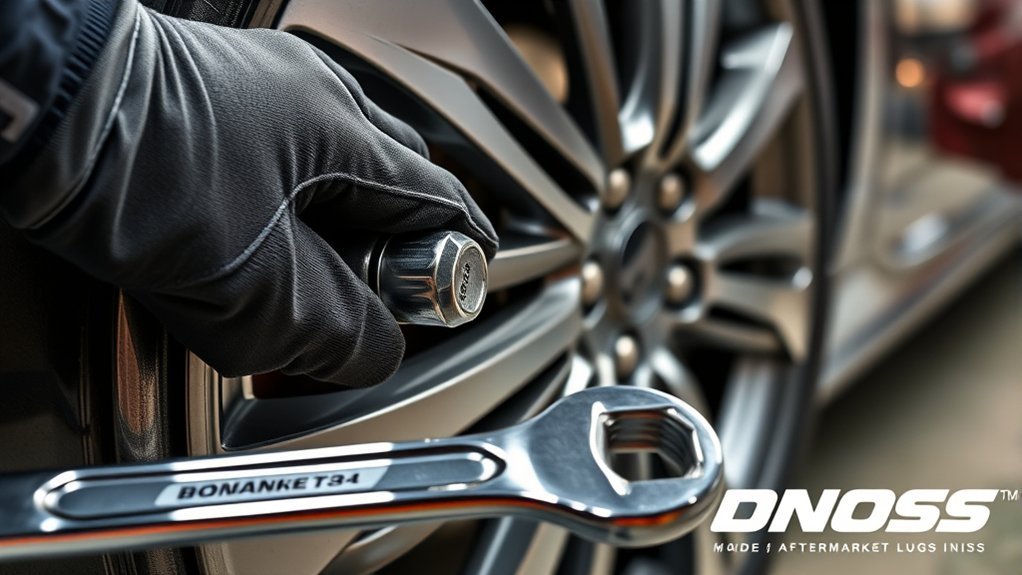
BONOSS is one aftermarket option, but brand name should not be your only buying factor. The safest lug nut is the one that correctly matches your Honda Accord’s wheel studs, wheel seat style, and torque requirements.
Before buying BONOSS or any other aftermarket lug nut set, confirm the thread pitch, seat type, overall length, key design, finish, and whether the set is intended for OEM Honda wheels or aftermarket wheels. If a product listing mentions forged steel, corrosion testing, certifications, or a warranty, verify those claims on the current manufacturer page before relying on them.
Wheel locks can add theft resistance, but they also add one more part to manage. Keep the wheel lock key in the vehicle, and store a photo or note of the key pattern in case you need a replacement later.
[Products Worth Considering]

This roadside assistance kit helps drivers and passengers in urgent situations after an accident or breakdown, providing practical support while waiting for help. It includes a lightweight, compact tire inflator for fast inflation of standard vehicle tires, plus reinforced jumper cable protection for safer handling. Ideal for winter weather, road trips, camping, and travel, with everything stowed neatly in a trunk bag.

This 4-in-1 tire valve core removal tool helps you deflate, unblock, and remove or install valve cores quickly for easier tire repair. The multifunction design also supports re-taping damaged threads and reaming inside the valve stem for smoother service. Included as a 2-pack, it’s compact for convenient carry and works for cars, bicycles, and motorcycles.
Common Mistakes to Avoid
- Using the wrong seat type: The nut may thread on but fail to clamp the wheel correctly.
- Skipping the torque wrench: Over-tightening can damage studs, while under-tightening can allow the wheel to loosen.
- Starting nuts with power tools: This can cross-thread the stud before you notice a problem.
- Lubricating threads without instructions: Oil or anti-seize can change clamping force at the same torque reading unless the manual or wheel maker calls for it.
- Ignoring damaged studs: A new lug nut will not fix stretched, rusty, or stripped wheel studs.
Tips for Long-Lasting Performance After Replacement
After replacing your Honda Accord lug nuts, recheck torque after a short drive. Many tire and wheel service guides recommend a retorque after roughly 25 to 50 miles, especially after wheel removal, tire rotation, wheel replacement, or new lug nut installation.
Inspect the lug nuts during tire rotations and seasonal tire checks. Look for rust, rounded corners, cracked caps, swollen chrome covers, missing wheel lock keys, or nuts that no longer thread smoothly by hand.
Keep your tire pressure at the value listed on the driver-side door placard, not the maximum pressure printed on the tire sidewall. Proper tire pressure supports handling, braking, tire wear, and overall safety.
Frequently Asked Questions
How often should I check my lug nut tightness?
Check lug nut torque after any wheel removal, tire change, tire rotation, or lug nut replacement. It is also smart to recheck after a short drive, especially if the wheel or lug nuts were recently installed.
What size lug nuts does a Honda Accord use?
Many Honda Accord models use M12 x 1.5 lug nuts, but you should verify your exact model year, wheel type, and seat style before buying replacements. Thread pitch alone is not enough because the seat must also match the wheel.
What torque should I use for Honda Accord lug nuts?
Many Accord models use 80 lb-ft for wheel nut torque, but the correct value is the one listed in your owner’s manual for your exact model year and wheel setup. If you use aftermarket wheels, also follow the wheel manufacturer’s instructions.
Can I use a power tool for lug nut replacement?
You can use an impact wrench carefully for removal, but do not rely on it for final tightening. Start new lug nuts by hand, snug them lightly, then finish with a torque wrench in a star pattern.
What should I do if a lug nut is stripped?
Stop using force. A stripped or rounded lug nut may need a damaged-nut removal socket, extractor, or professional service. If the wheel stud threads are damaged, replace the stud before driving.
Are aftermarket lug nuts safe for my Honda Accord?
Aftermarket lug nuts can be safe if they match the wheel stud thread, seat type, wheel design, and torque requirement. Avoid universal claims, and confirm compatibility with your wheel manufacturer or a qualified tire shop.
Should lug nuts be installed dry or with anti-seize?
Install lug nuts on clean, dry threads unless your Honda manual or wheel manufacturer gives different instructions. Lubricants can change the clamping force created by the same torque reading.
Conclusion
Replacing lug nuts on your Honda Accord is manageable when you work safely and use the correct parts. The key steps are simple: verify fitment, support the vehicle properly, start each lug nut by hand, tighten in a star pattern, and finish with the correct torque from your owner’s manual.
If a lug nut is seized, stripped, cross-threaded, or matched to a missing wheel lock key, do not force it. Get professional help before the wheel stud or wheel mounting surface is damaged.
Sources
- Honda Owners Manual Lookup — supports checking the factory owner’s manual for jack points and wheel nut torque.
- National Highway Traffic Safety Administration: Tires — supports tire pressure, tire maintenance, and tire safety guidance.
- Continental Tires: Retorquing Wheels — supports rechecking wheel fastener torque after wheel service.
- Tire Rack: Lug Nut Types — supports matching lug nut seat style to the wheel design.

Related Articles

How Tall Is a 305 70 R17 Tire? Exact Height, Width & Dimensions
Curious how tall a 305 70 R17 tire really is—and whether it fits your truck?
Read More
Can-Am Defender Tire Size Guide: Stock Specs & Upgrade Options
Just how big can you go on a Can-Am Defender before mods become necessary?
Read More
How Tall Is a 275 65 20 Tire? Exact Height, Width & Dimensions
Check the exact height, width, and hidden fitment effects of a 275/65R20 tire before you buy or upgrade.
Read More