
When All-Season Tires Fall Short on a Honda Accord
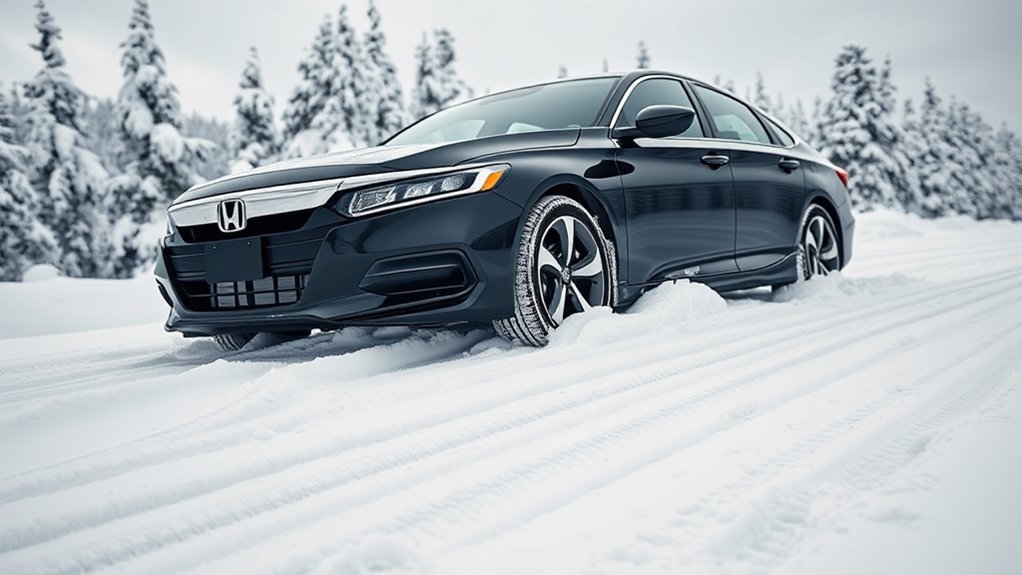
All-season tires can work on a Honda Accord in mild winter weather, but they are not the best choice if you regularly drive in snow, ice, slush, freezing rain, or long stretches of cold temperatures. The Accord is a balanced, efficient sedan, but its safety still depends heavily on the four small tire contact patches touching the road. When winter roads get slick, the right tire compound, tread depth, and tire pressure matter more than the badge on the trunk.
Quick Answer
All-season tires are usually enough for a Honda Accord in mild climates with mostly cold rain and light, occasional snow. If you drive in regular snow, ice, packed snow, mountain passes, or temperatures near or below freezing for weeks at a time, dedicated winter tires or 3PMSF-rated all-weather tires are the safer choice.
Key Takeaways
- All-season tires are a compromise; they are not optimized for ice, packed snow, or repeated freezing conditions.
- Winter tires use cold-weather rubber and tread designs that help with braking, steering, and traction on snow and ice.
- Look for the Three-Peak Mountain Snowflake symbol if you need a tire rated for severe snow service.
- For a Honda Accord, always match the tire size, load index, and inflation pressure listed on the driver-door placard or owner’s manual.
- Install winter tires in a set of four; mixing two winter tires with two all-season tires can make handling unpredictable.
At a Glance
| Best Tire Choice | Mild winter: quality all-season or all-weather tires. Regular snow/ice: dedicated winter tires. |
| Symbol to Look For | Three-Peak Mountain Snowflake for severe snow service. |
| Install Set | Use four matching tires of the same type, size, and similar tread depth. |
| Maintenance | Check cold tire pressure monthly and inspect tread before winter trips. |
Why All-Season Tires Aren’t Enough for Your Honda Accord
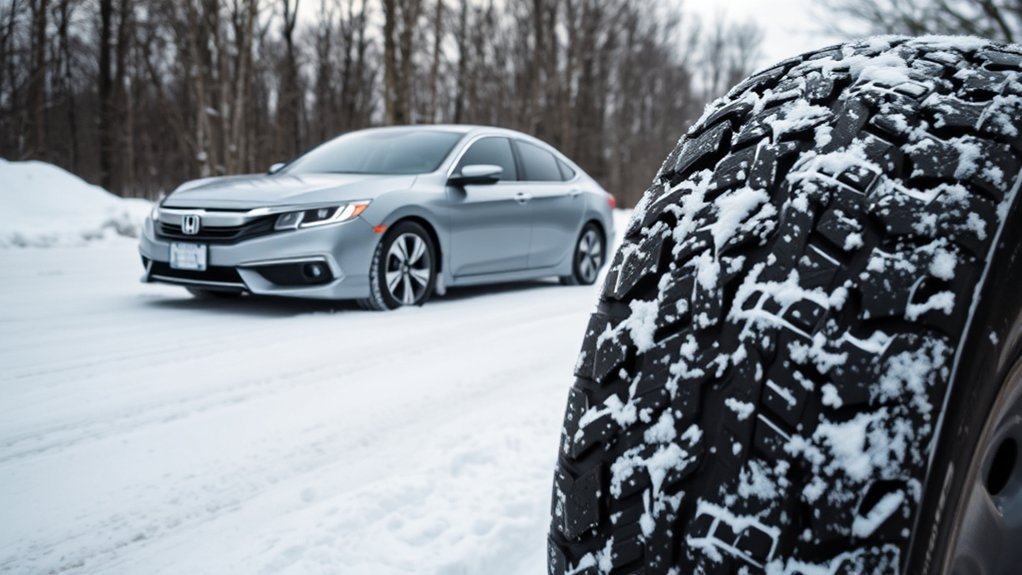
All-season tires are built to handle a wide range of conditions, not to excel in the worst winter conditions. That trade-off is fine for many Accord drivers in warmer regions, but it becomes a problem when roads are icy, snowy, or covered in slush.
On a cold, wet highway, all-season tires may still feel normal. On packed snow or black ice, the limits show up fast: braking takes longer, steering response becomes weaker, and the tires can lose grip with less warning. A Honda Accord does not need an SUV tire to be safe in winter, but it does need tires matched to the weather you actually drive in.
Warning: Do not rely on traction control, ABS, or careful driving alone to make up for worn or unsuitable tires. Those systems can help manage a skid, but they cannot create grip if the tires cannot bite into the road.
[Products Worth Considering]

Milton S-921 pencil tire pressure gauge helps you maintain optimal tire pressure for passenger cars with accurate readings in PSI and kPa. It features a built-in deflator valve for convenient pressure adjustments, plus a single chuck head and nylon indicator bar for easy use on the go. Built from durable plated brass and designed for reliable performance, it’s a practical road trip and cold-weather maintenance tool.

The Kurgo Seasonal Tire Tote helps protect your car interior, clothes, and garage from tire grime, brake dust, and residue during seasonal tire changes. Its universal design fits most passenger tires between 22" and 31" in diameter, making storage and transport simpler with less mess. Built for rugged, repeated use, it’s machine washable for easy care and comes with a lifetime warranty.

The TYAMATE TM8 solar-powered wireless TPMS delivers real-time tire pressure and temperature monitoring with six alarm modes for safer driving. A vibrant color LCD display shows readings clearly while windshield mounting keeps it hands-free and easy to read. With a wide 0–87 PSI range, strong 433.92 MHz signal transmission, and quick sensor pairing, it’s ideal for RV, sedan, SUV, MPV, and truck use.
How Cold Weather Affects All-Season Tire Performance
Cold weather changes how a tire behaves. Many all-season tires become less flexible as temperatures drop, which can reduce how well the tread conforms to rough, icy, or snowy pavement. Winter tires are designed with compounds that stay more flexible in cold conditions, helping the tire maintain better contact with the road.
The temperature guideline many tire professionals use is about 7°C (45°F), especially when colder weather is consistent rather than just a brief overnight dip. That number is not a magic cutoff for every tire, but it is a useful signal: if your Accord spends most of winter below that range and you see snow or ice, it is time to consider winter tires or a true all-weather tire.
- Cold rubber can reduce grip during braking and cornering.
- Snow and slush need tread grooves that can clear packed material quickly.
- Ice demands as much flexible rubber contact as possible.
- Wet winter roads increase hydroplaning risk when tread is shallow.
- Cold weather can also lower tire pressure, so monthly checks matter.
Why Winter Tires Are Essential for Safety
Winter tires are not just “snow tires” for deep snow. They are cold-weather tires designed to improve braking, steering, and traction on snow, ice, slush, and freezing pavement. In testing cited by Edmunds and the Traffic Injury Research Foundation, winter tires have shown about 30% shorter stopping distances than all-season tires in winter conditions, though actual results vary by tire model, road surface, tread depth, vehicle, and speed.
For a Honda Accord, the biggest safety benefit is predictable control. The Accord is usually front-wheel drive, which helps it pull away from a stop, but front-wheel drive does not shorten stopping distance on ice. Braking and cornering still depend on tire grip at all four wheels.
When shopping, look for the Three-Peak Mountain Snowflake symbol. This marking identifies tires that meet a snow-traction performance standard. Some all-season tires carry M+S markings, but M+S alone is not the same as a severe-snow-rated winter tire.
Essential Differences Between All-Season and Winter Tires
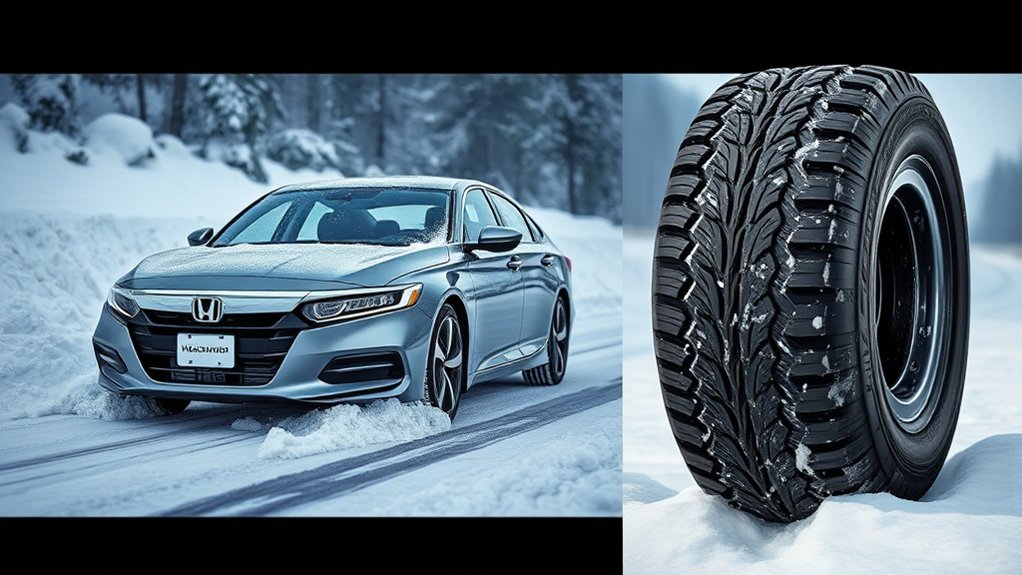
The main differences come down to rubber compound, tread depth, tread pattern, and snow-rating symbols.
| Feature | All-Season Tires | Winter Tires |
|---|---|---|
| Rubber Compound | Balanced for broad seasonal use | Designed to stay flexible in cold weather |
| Tread Design | Moderate grooves and siping | Deeper grooves, more biting edges, better slush evacuation |
| Snow Rating | Often M+S, but not always severe-snow rated | Usually carries the Three-Peak Mountain Snowflake symbol |
| Best Use | Mild winters, rain, light occasional snow | Regular snow, ice, slush, mountain driving, freezing conditions |
When Do All-Season Tires Fail in Winter Conditions?
All-season tires are most likely to fall short when the road is cold and slick, not just when snow is visibly deep. A thin layer of ice, packed snow at intersections, slush in lane ruts, or freezing rain can all expose the limits of an all-season tire.
| Condition | Why All-Season Tires Struggle |
|---|---|
| Packed snow | The tread may not have enough biting edges to hold the surface. |
| Black ice | Less flexible rubber can slide before the driver feels much warning. |
| Slush | Shallower or less aggressive grooves may not clear water and slush quickly. |
| Cold rain near freezing | Wet braking and hydroplaning risk get worse as tread wears down. |
| Mountain passes | Weather changes quickly, and traction-device rules may apply. |
The Impact of Tire Technology on Performance
Modern tire technology matters, but the category matters too. A premium all-season tire can be excellent in rain and light snow, yet still fall behind a quality winter tire on ice or packed snow. Likewise, a worn winter tire will not perform like a new winter tire.
Important technology differences include:
- Compound: winter compounds stay more flexible in cold conditions.
- Siping: small cuts in the tread create extra biting edges.
- Groove depth: deeper channels help clear snow, slush, and water.
- Shoulder design: winter shoulders can help the tire grip during turning.
- Snow rating: the Three-Peak Mountain Snowflake symbol is more meaningful for winter use than M+S alone.
Note: Tire labels and symbols help narrow your choices, but they do not replace fitment checks. Always confirm the correct size, load index, speed rating, and inflation pressure for your exact Accord trim.
How Tread Design Affects Winter Driving
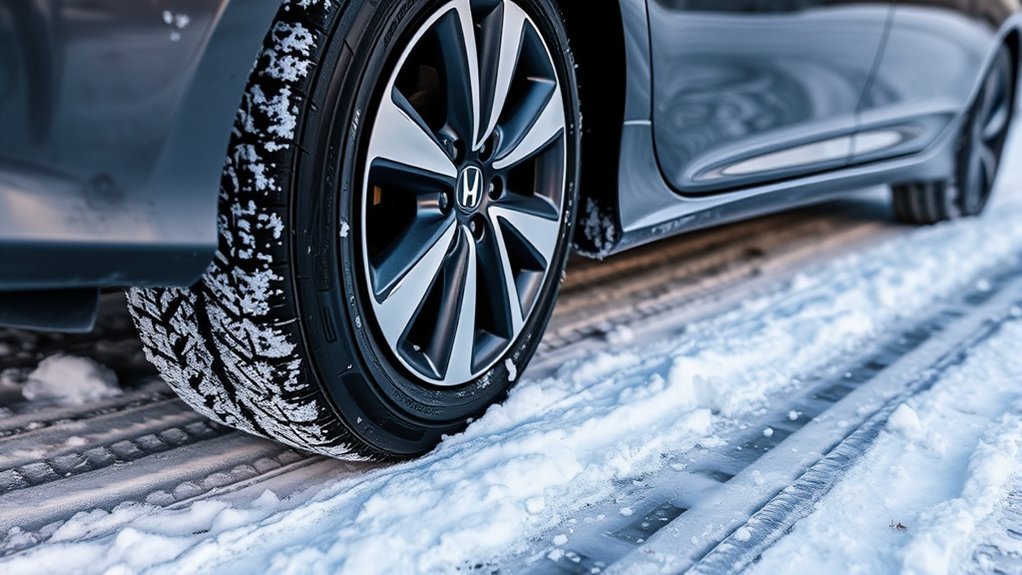
Tread design controls how a tire grips, clears water, and handles loose snow. Winter tires usually have a more open tread pattern than all-season tires, along with more siping. That helps the tread pack, release, and bite into snow instead of simply sliding over it.
Tread Patterns and Grip
Winter tread patterns are designed to create many small gripping edges. These edges help the tire grab snow and ice during braking and cornering. On a Honda Accord, that extra grip can make the car feel more stable when turning into a snowy driveway, stopping at a cold intersection, or changing lanes through slush.
- Deeper grooves help move snow and slush away from the contact patch.
- Sipes create extra edges that bite into slick surfaces.
- Directional or asymmetric tread designs can improve water and slush evacuation.
- A full set of four matching tires keeps front and rear grip balanced.
Water Displacement Efficiency
Winter roads are often wet, not just snowy. Melting snow, road salt, and freezing rain can leave standing water and slush across the lane. If your all-season tires are worn, they may struggle to move that water away fast enough, increasing hydroplaning risk.
| Feature | Why It Matters |
|---|---|
| Deep grooves | Help evacuate water, slush, and loose snow. |
| Wide channels | Reduce the chance of riding on top of slush. |
| Sipes | Add biting edges for slick surfaces. |
How Vehicle Weight Influences Tire Selection
Vehicle weight matters, but you do not need to calculate it yourself to choose tires for a Honda Accord. Honda already accounts for the car’s weight, axle loading, passenger capacity, and original tire size on the Tire and Loading Information Label, usually located on the driver-side door jamb.
Use that label and your owner’s manual as the starting point. Match or exceed the required load index, use the correct tire size, and follow the recommended cold inflation pressure. Do not buy a winter tire only because it “fits the wheel.” It also needs the right load rating and clearance.
- Tire size: match the size listed for your Accord trim or an approved alternate winter size.
- Load index: use a tire rated to carry at least the required load.
- Speed rating: follow the owner’s manual and tire-shop guidance for winter fitment.
- Wheel clearance: confirm that the tire does not rub suspension, brakes, or fenders.
- TPMS: if you use a second wheel set, plan for compatible tire-pressure sensors.
[Products Worth Considering]

These aluminum alloy tire valve stem caps protect the valve core from corrosion and help prevent air leakage for more stable tire pressure. The rubber ring design helps support a secure, safe seal while adding a stylish look to your Honda wheels. Easy to install by hand, these caps are ideal for everyday driving and weather exposure.

Accurately measure tire tread depth with a calibrated gauge marked from 0 to 1 inch in 1/32 inch increments. The color-coded bar helps you quickly identify tread condition ranges, supporting safe driving for trucks, motorcycles, automobiles, and passenger vehicles.

Steelman white tire marking crayons provide high-contrast, semi-permanent marks for repairing and inspecting tires and equipment. They write on wet or dry, smooth or coarse surfaces including rubber, metal, glass, and wood, making them ideal for puncture location and damage outlining. The lead- and zinc-free crayons resist weather and fading yet wipe away when you no longer need the marks.
All-Weather vs. All-Season Tires for a Honda Accord
All-weather tires are different from ordinary all-season tires. Many all-weather tires carry the Three-Peak Mountain Snowflake symbol, which makes them a useful middle ground for drivers who see real winter weather but do not want to swap tires twice a year.
For an Accord in a mild-to-moderate winter climate, a high-quality all-weather tire can be a smart compromise. For frequent ice, steep hills, lake-effect snow, rural roads, or mountain travel, dedicated winter tires are still the stronger choice.
| Tire Type | Best For | Main Trade-Off |
|---|---|---|
| All-season | Rain, dry roads, mild winters, light occasional snow | Not optimized for ice or packed snow |
| All-weather | One-tire solution for moderate winter areas | May not match a dedicated winter tire on ice |
| Winter | Snow, ice, slush, freezing weather, mountain roads | Needs seasonal storage and spring removal |
Do AWD, Traction Control, or ABS Replace Winter Tires?
No. Driver-assist systems can help, but they cannot replace tire grip. Most Honda Accords are front-wheel drive, and even vehicles with excellent traction control still rely on the tires for braking and steering.
Think of it this way: traction control can reduce wheelspin while accelerating, ABS can help prevent wheel lockup while braking, and stability control can help correct a slide. None of those systems can make an all-season tire grip ice like a proper winter tire.
Are Winter Tires Required in Your Area?
Winter tire and traction-device rules depend on where you drive. Some areas only recommend winter tires, while others require winter-rated tires, chains, or other traction devices on certain dates, roads, mountain passes, or weather days.
Quebec is a well-known example: many passenger vehicles registered there must use winter tires during the winter tire period. Other regions may have chain controls or traction laws only when conditions require them. Before a winter road trip, check your state transportation department, provincial authority, or route-specific chain-control page.
This matters for Accord owners because a sedan with good winter tires may be legal and safe in conditions where a sedan on worn all-season tires is not. Local rules can also specify minimum tread depth, accepted symbols, and whether chains must be carried.
How to Transition to Winter Tires Safely
Switching to winter tires is simple, but timing and installation matter. Do it before the first major storm, not after appointment slots are gone and roads are already icy.
- Watch the forecast. When cold weather becomes consistent and snow or ice is likely, schedule the changeover.
- Install four matching tires. Do not put winter tires only on the front of your Accord.
- Check tire size and load rating. Match the driver-door placard or an approved alternate size.
- Set cold tire pressure. Use the pressure listed by Honda, not the maximum pressure printed on the tire sidewall.
- Recheck pressure after the first cold snap. Temperature changes can lower pressure.
- Store off-season tires correctly. Keep them clean, cool, dry, and away from direct sunlight.
Pro Tip: A separate winter wheel-and-tire package can make seasonal swaps faster and may reduce mounting costs over time. Just make sure the wheels clear the brakes and the TPMS sensors are compatible.
Winter Tire Maintenance for Honda Accord Owners
Winter tires only work well if they are maintained. Before and during winter, inspect tread depth, pressure, sidewalls, and wear patterns. If the Accord pulls to one side, vibrates, or wears tires unevenly, have the alignment and balance checked.
- Pressure: check all tires, including the spare if equipped, at least once a month when cold.
- Tread: replace tires that are worn, damaged, cracked, or no longer safe for winter use.
- Rotation: follow the owner’s manual or tire-shop schedule to promote even wear.
- Storage: clean tires before storage and keep them away from heat, sunlight, oil, and ozone sources.
- Age: old tires can harden even if tread remains; inspect the date code and sidewalls.
Frequently Asked Questions
Can I use all-season tires year-round in warmer climates?
Yes. If your area has mild winters, little to no snow, and roads that are mostly dry or rainy, quality all-season tires can be practical year-round. Keep them properly inflated, rotate them on schedule, and replace them when tread is low or the rubber is aging.
How often should I check my tire pressure in winter?
Check tire pressure at least once a month when the tires are cold, and check again before long trips or after major temperature swings. Use the pressure listed on your Honda Accord’s driver-door placard or owner’s manual, not the maximum pressure printed on the tire sidewall.
Are there specific winter tire brands recommended for a Honda Accord?
Michelin, Bridgestone, Goodyear, Continental, Nokian, Pirelli, and Yokohama all sell winter or all-weather tires that may fit certain Accord trims. The best choice depends on your tire size, budget, climate, road type, and whether you prioritize ice grip, snow traction, wet braking, ride comfort, or tread life.
What is the average lifespan of winter tires?
Many winter tires last several seasons, but lifespan depends on mileage, alignment, rotation, road surface, storage, driving style, and how often they are used in warm weather. Replace them when tread is too low, grip has clearly declined, sidewalls are cracked, or the tire shop says age or damage makes them unsafe.
How do I store my winter tires off-season?
Clean the tires, dry them, place them in tire bags if possible, and store them in a cool, dry, dark location away from sunlight, heaters, oil, and electric motors. If the tires are mounted on wheels, stacking them flat is usually acceptable. If unmounted, store them upright and rotate their position occasionally.
Should I put winter tires only on the front of my Honda Accord?
No. Install winter tires in a complete set of four. Putting winter tires only on the front can leave the rear with less grip, which may cause the back of the car to slide during braking or cornering.
Are all-weather tires good enough for a Honda Accord in winter?
All-weather tires can be a good one-set solution for moderate winter climates, especially if they carry the Three-Peak Mountain Snowflake symbol. For frequent ice, heavy snow, steep hills, or mountain travel, dedicated winter tires remain the safer option.
Conclusion
All-season tires can be enough for a Honda Accord in mild winter conditions, but they are not the safest choice for regular snow, ice, slush, or freezing-weather driving. If winter in your area means more than occasional light snow, choose four matching winter tires or consider 3PMSF-rated all-weather tires for a balanced year-round option.
The safest approach is simple: match the tire to your climate, follow the Accord’s tire placard for size and pressure, check tread and inflation monthly, and confirm local winter tire or chain rules before traveling. Better tires will not make winter driving risk-free, but they give your Accord the grip it needs to brake, steer, and respond more predictably when roads turn slick.
Sources
- NHTSA TireWise — tire size, tire pressure, tread, rotation, and tire-maintenance guidance.
- Associated Press / Edmunds: Why You Need Winter Tires — winter tire performance, stopping-distance context, and seasonal tire guidance.
- LegisQuébec: Regulation respecting the use of tires specifically designed for winter driving — Quebec winter tire legal reference.
- ISO 18106: Passenger car, commercial vehicle, truck and bus tyres — methods for measuring snow grip performance — snow-grip performance testing reference.
- ASTM F1805 Snow and Ice Traction Test Method — standardized single-wheel driving traction testing on snow- and ice-covered surfaces.
[Products Worth Considering]

ETENWOLF T300 is a calibrated digital tire pressure gauge for accurate readings from 3 to 200 PSI across light and heavy-duty vehicles. It includes thermal compensation for reliable performance in extreme cold or heat, with an auto shut-off to extend battery life and an LED for easier reading. The sturdy design supports rugged everyday use, making it ideal for pickups, RVs, and industrial applications.

This digital tire pressure gauge with built-in inflator helps you accurately check and adjust tire pressure for safer driving and better fuel efficiency. It supports multiple units (PSI, KPA, BAR, KG/CM²) and reads within 1% for reliable results. The 3-in-1 design inflates, deflates, and measures, with a quick-connect air chuck and compatible hose setup for cars, trucks, SUVs, RVs, and motorcycles.

The SAFELIFE dial tire tread depth gauge measures tread depth in 1/32 inch increments with clear, easy-to-read 2-inch dial face. Color zones using a traffic light system help you quickly judge whether tread is low, marginal, or ample for safer driving. Built with a durable zinc cast body and a metal detect probe for precise, comfortable use across cars, motorcycles, trucks, and buses.

Related Articles
How Tall Is a 305 70 R17 Tire? Exact Height, Width & Dimensions
Curious how tall a 305 70 R17 tire really is—and whether it fits your truck?
Read More
Can-Am Defender Tire Size Guide: Stock Specs & Upgrade Options
Just how big can you go on a Can-Am Defender before mods become necessary?
Read More
How Tall Is a 275 65 20 Tire? Exact Height, Width & Dimensions
Check the exact height, width, and hidden fitment effects of a 275/65R20 tire before you buy or upgrade.
Read More