
What Is the TPMS on a Toyota RAV4? Tire Pressure Monitoring Guide
The Tire Pressure Monitoring System (TPMS) on your Toyota RAV4 keeps an eye on your tire pressure and alerts you about any issues, ensuring safety and efficiency. It uses advanced sensors to monitor pressure and temperature in real-time. If the dashboard warning light activates, it’s time to check your tires. Proper maintenance of your TPMS enhances performance and prevents accidents. Curious about how to add air or address warning signs? There’s more to explore!
Understanding the Basics of TPMS
When you start your Toyota RAV4, the Tire Pressure Monitoring System (TPMS) kicks into action, ensuring your tires are properly inflated and safe for the road. This innovative system, rooted in TPMS history, utilizes advanced sensor technology to monitor air pressure and temperature in each tire continuously. By activating at startup, it provides real-time data, helping you avoid the dangers of driving with low tire pressure.
If your tire pressure drops below recommended levels, a warning light on your dashboard alerts you, signaling that immediate attention might be necessary. This vital feature enhances your vehicle’s safety, preventing tire failures and promoting peak performance. Plus, you can easily check and reset the TPMS through the Toyota app, which offers valuable insights into tire conditions and maintenance recommendations. Understanding these basics empowers you to maintain your RAV4 effectively and safely on the road.
How TPMS Monitors Tire Pressure in Real-Time
The TPMS in your Toyota RAV4 continuously monitors tire pressure and temperature using advanced sensors. As soon as you start your vehicle, it checks for any discrepancies and sends real-time data to the onboard computer. If it detects significant drops in pressure, you’ll see a warning light on your dashboard, keeping you informed and safe on the road.
Real-Time Pressure Monitoring
Equipped with advanced sensors, the Tire Pressure Monitoring System (TPMS) in your Toyota RAV4 continuously tracks air pressure and temperature in each tire. This real-time monitoring activates when you start your vehicle, ensuring tire conditions are checked right away. If there’s a significant drop in tire pressure, the TPMS warning light on your dashboard alerts you instantly, enhancing your safety and optimizing tire performance.
| Tire Condition | Status |
|---|---|
| Normal Pressure | Safe |
| Low Pressure | Warning Light On |
| High Pressure | Warning Light On |
| Temperature Alert | Warning Light On |
| System Malfunction | Check System |
With TPMS, you can drive confidently, knowing your tires are monitored for maximum safety benefits.
Sensor Data Transmission
Real-time monitoring is just one part of how the Tire Pressure Monitoring System (TPMS) keeps your Toyota RAV4 safe and efficient. The system uses built-in sensors to continuously track air pressure and temperature in each tire. This data is transmitted to your vehicle’s onboard computer, which analyzes it for peak performance and safety. Sensor calibration guarantees that this information maintains high data accuracy, allowing for immediate detection of any irregularities when you start the vehicle. Plus, if you want to stay even more informed, the Toyota app can connect via Bluetooth or Wi-Fi, letting you view real-time tire pressure readings right from your smartphone. Stay empowered and aware of your tire health!
Alerts for Low Pressure
As you drive your Toyota RAV4, the Tire Pressure Monitoring System (TPMS) works quietly in the background, constantly checking the air pressure in all four tires. This system uses sensors to measure both air pressure and temperature, ensuring accurate readings to keep you safe on the road. If tire pressure drops considerably, a warning light illuminates on your dashboard, prompting you to check your tires. This continuous monitoring is essential, especially since external temperature changes can affect tire pressure. By staying alert to these alerts, you can address low tire pressure issues before they escalate, enhancing your driving experience and maintaining your vehicle’s performance. Regularly checking tire pressure helps you stay empowered and in control.
Impacts of Low Tire Pressure
When you drive with low tire pressure, you’re not just risking your vehicle’s performance; you’re also compromising your safety. Under-inflated tires increase rolling resistance, which can greatly decrease fuel efficiency and empty your wallet at the pump. Additionally, low tire pressure raises the risk of blowouts or flat tires, putting you and your passengers in danger.
You might also notice uneven tire wear, meaning you’ll need to replace your tires more often, adding to your costs. Handling and traction suffer as well, leading to longer stopping distances, especially in adverse weather conditions. That’s why your Toyota RAV4’s Tire Pressure Monitoring System (TPMS) is so essential; it keeps you informed about your tire safety, allowing you to take action before issues escalate. Prioritize maintaining proper tire pressure to enhance both your driving experience and overall safety on the road.
Steps for Adding Air to Your Tires
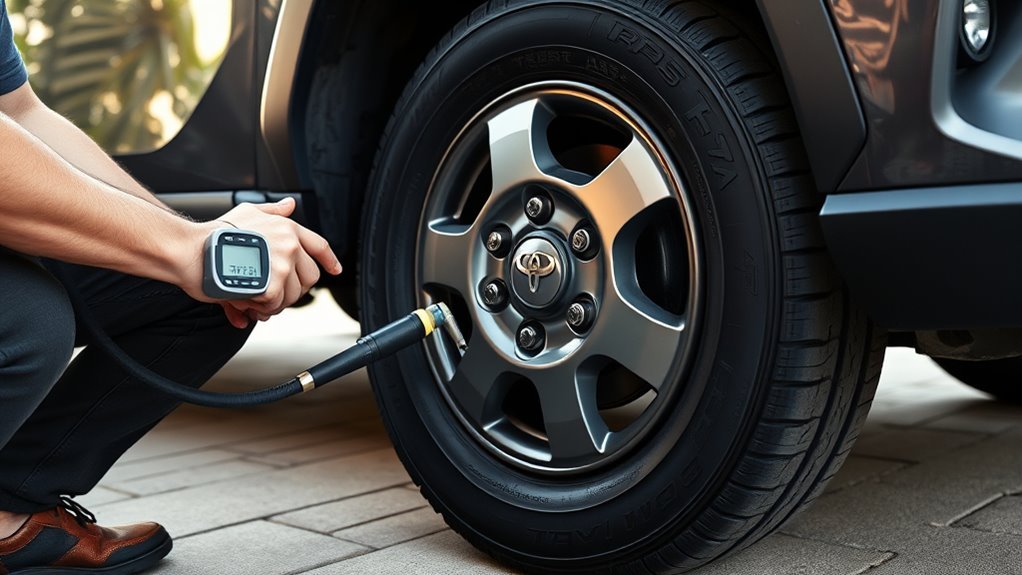
Maintaining proper tire pressure is essential for your Toyota RAV4’s performance and safety. Start by checking the recommended tire pressure, which you’ll find on the driver’s side door jamb or in your owner’s manual. Grab a reliable tire pressure gauge to measure the current pressure in each tire.
If you discover the pressure is below the recommended level, it’s time to locate an air compressor at a gas station or use a portable air pump. Inflate the tires gradually, checking the pressure frequently to avoid over-inflation, which can lead to handling issues.
Once you’ve added air, verify the TPMS warning light turns off. If it remains on, you may need to conduct further inspection. Keeping your tires properly inflated not only enhances your driving experience but also boosts fuel efficiency and prolongs tire life. Take charge of your tire health for a smoother ride!
Troubleshooting Persistent TPMS Warning Lights
If your TPMS warning light stays on after you’ve added air, it might be time for a reset. Factors like tire rotation or temperature changes can also trigger this alert, so knowing how to troubleshoot is key. Let’s explore the common causes and the steps to reset that light effectively.
Common Causes Explained
Persistent TPMS warning lights can be frustrating, especially after you’ve rotated or replaced your tires. One common cause is the need for sensor recalibration, which can occur during these changes. Additionally, weather effects play a significant role; temperature fluctuations can cause tire pressure to drop, triggering the warning light. If you’ve added air but the light remains on, you might need to manually reset the system by holding the Reset button until it blinks three times. Ignoring this warning can lead to dangerously low tire pressure, putting your safety at risk. If the light doesn’t turn off after the reset, it’s wise to consult a qualified technician for further inspection. Stay safe and informed!
Resetting the TPMS Light
When the TPMS warning light on your Toyota RAV4 stays illuminated despite properly inflated tires, it can be both puzzling and concerning. You might need to follow the TPMS reset procedure to clear the warning light. Start by turning on the engine and locating the Reset button; press it until the light blinks three times. After that, drive your RAV4 for a few minutes to help the system recalibrate. If the light persists, it could indicate a faulty sensor or a need for tire rotation, so further inspection is essential. Regular maintenance and prompt attention to those warning light indications can enhance your vehicle’s safety and prolong tire life, ensuring a smoother drive ahead.
Benefits of Maintaining Proper Tire Pressure
Maintaining proper tire pressure is essential not just for your safety but also for your vehicle’s performance. Adequate tire inflation leads to significant tire pressure benefits, enhancing safety improvements and overall driving experience.
| Benefit | Description | Impact |
|---|---|---|
| Safety | Reduces risk of tire blowouts and improves handling | Fewer accidents |
| Fuel Efficiency | Lowers rolling resistance, saving you money on gas | More miles per gallon |
| Tire Longevity | Prevents excessive wear, extending tire lifespan | Fewer replacements |
| Traction & Stability | Guarantees better control in various driving conditions | Enhanced driving safety |
| Accident Reduction | Regular checks lower chances of issues with tires | Increased peace of mind |
How to Use the Toyota App for Tire Monitoring
Keeping your tires in top shape doesn’t stop with regular pressure checks; technology can enhance your maintenance routine. The Toyota app connects to your RAV4 via Bluetooth or Wi-Fi, offering real-time monitoring of tire pressure and temperature through built-in TPMS sensors. With its intuitive app features, you can easily view individual tire pressure readings and receive alerts for significant drops directly on your device.
To check tire conditions, simply log into the app, select your vehicle, and navigate to the Tire Maintenance section for current readings. The app also provides recommended tire pressure specifications and displays tire size information, enhancing your user experience. Regularly using the app not only keeps you informed about tire health but also promotes timely maintenance for peak safety and performance. Embrace this technology for a more liberated driving experience, knowing your tires are well-monitored.
What Common TPMS Problems Should You Watch Out For?
What should you be on the lookout for with your TPMS? One common issue is a persistent warning light even after adding air. This might mean you need a manual reset or there’s a sensor malfunction. Be aware that temperature fluctuations can also affect tire pressure, leading to false alerts. If you see a flashing TPMS light, it’s a critical sign—either a tire is considerably under-inflated, or there’s a serious sensor issue. Improper tire rotations or replacements can confuse the system, keeping that warning light on until you recalibrate. Ignoring these alerts isn’t just risky; it can lead to unsafe driving conditions and increased tire wear, potentially causing failure. Stay vigilant, and verify your TPMS is functioning properly to keep your RAV4 safe and reliable on the road.
When to Seek Professional Help for TPMS Issues
Ignoring TPMS warnings can lead to serious safety issues, so knowing when to seek professional help is key. Here are three situations that call for immediate attention:
- Persistent Low Tire Pressure: If your tire pressure readings remain low, even after regular inflation, it might indicate a leak or a malfunctioning sensor. Don’t ignore it!
- Flashing TPMS Light: A flashing warning light signals a critical issue, such as severe underinflation or a malfunctioning sensor. This requires immediate professional inspection.
- Unusual Tire Wear or Handling: If you notice irregular tire wear or handling problems, consult a Toyota service center for thorough diagnostics and sensor calibration.
Regular inspections by a qualified mechanic are vital. Addressing these issues promptly secures your safety and keeps your RAV4 performing at its best. Trust your instincts—if something feels off, get it checked!
Frequently Asked Questions
Does RAV4 Tell You Which Tire Is Low?
No, your RAV4 won’t tell you which tire is low. It uses tire sensors to monitor pressure and sends alerts when there’s an issue, so you’ll need to check each tire manually for accurate readings.
Conclusion
In the grand journey of your Toyota RAV4, keeping an eye on your TPMS is like having a trusty co-pilot. Staying proactive about tire pressure not only enhances your vehicle’s performance but also guarantees your safety on the road. Remember, a well-maintained tire isn’t just a smoother ride—it’s your shield against unexpected troubles. So, embrace the tech at your fingertips, and keep your wheels rolling smoothly into the horizon. Your adventure awaits!

Related Articles

Upsizing Wheels on a Toyota RAV4: Pros, Cons, and Considerations
Boost your Toyota RAV4's performance with larger wheels, but discover the hidden trade-offs that could impact your ride before you decide.
Read More
Can I Change Tire Size on My Toyota RAV4? Rules and Recommendations
Are you considering changing the tire size on your Toyota RAV4? Discover the essential rules and recommendations before making a decision.
Read More
What to Do If the TPMS Light Comes On in Your RAV4
Understand the steps to take when the TPMS light illuminates in your RAV4, as overlooking it could lead to serious tire problems.
Read More