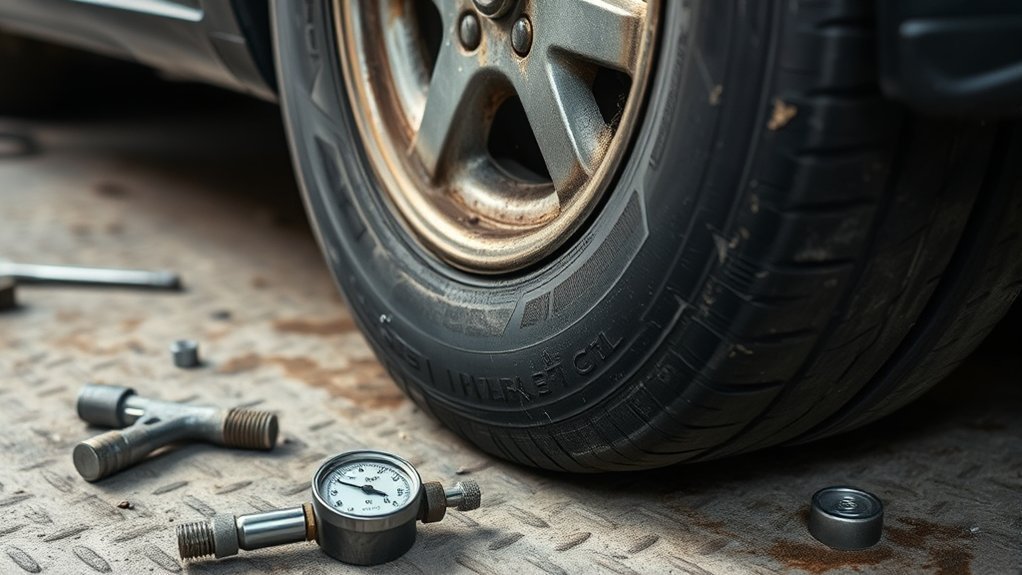
Not proper tire maintenance means ignoring the basic checks that keep your tires safe: air pressure, tread depth, rotation, balance, alignment, visible damage, tire age, and spare-tire condition. These mistakes can reduce traction, speed up uneven wear, hurt fuel economy, and raise the risk of a roadside failure. Good tire care is simple, but it has to be consistent.
Quick Answer
Not proper tire maintenance includes skipping monthly pressure checks, relying only on TPMS, driving on underinflated or overinflated tires, ignoring worn tread, delaying rotation or balancing, driving with bad alignment, overlooking cuts or bulges, and forgetting tire age or the spare tire.
Key Takeaways
- Check tire pressure at least once a month and before long trips, using the cold PSI on the driver’s door placard or owner’s manual.
- Do not rely only on TPMS; many systems warn only after pressure is already far below the recommended level.
- Replace tires when tread reaches 2/32 inch, and inspect sooner if wet traction feels weak or wear is uneven.
- Rotate tires every 5,000 to 8,000 miles if your owner’s manual does not list a different interval.
- Do not keep driving on sidewall bulges, exposed cords, deep cuts, or tires that cannot hold air.
At a Glance
| Time Required | 5 to 10 minutes for a monthly check; longer if rotation, balancing, alignment, or repair is needed |
| Difficulty | Easy for pressure, tread, and visual checks; professional service recommended for repairs, mounting, balancing, and alignment |
| Tools Needed | Tire pressure gauge, tread-depth gauge or penny, flashlight, owner’s manual, and access to an air pump |
| Cost | Usually free for basic checks; tire gauges are inexpensive, while rotation, balancing, repair, alignment, and replacement vary by shop and vehicle |
Common Tire Maintenance Mistakes That Hurt Safety
Skipping a few basic tire checks can quickly become a safety problem. The National Highway Traffic Safety Administration says tires are the only thing between your vehicle and the road, and its TireWise guidance covers buying, maintenance, aging, labeling, fuel efficiency, and recalls.
The most common mistakes are simple: not checking pressure, using the wrong PSI, ignoring tread depth, delaying rotation, driving with vibration or pulling, and overlooking damage. Proper tire care keeps the contact patch stable, helps the tire run cooler, improves handling, and gives you more predictable braking in rain or emergency maneuvers.
Warning: Do not keep driving on a tire with a sidewall bulge, exposed cord, rapid air loss, or a deep cut. Use the spare if it is safe and properly inflated, or call roadside assistance.
Skipping Monthly Tire Pressure Checks
One of the biggest tire maintenance mistakes is skipping monthly tire pressure checks. A tire can look normal and still be low. Use a reliable gauge, check pressure when the tires are cold, and compare the reading with the vehicle placard on the driver’s door jamb or the owner’s manual.
FuelEconomy.gov says properly inflated tires are safer and last longer. It also notes that underinflated tires can lower gas mileage by about 0.2% for every 1 PSI drop in the average pressure of all tires, while keeping tires properly inflated can improve mileage by 0.6% on average and up to 3% in some cases.
- Check all four tires at least once a month.
- Check the spare tire, too, if your vehicle has one.
- Use the vehicle placard PSI, not the maximum PSI printed on the tire sidewall.
- Recheck pressure before long trips, towing, or carrying heavy loads.
- Look for slow leaks, nails, valve damage, or uneven pressure loss.
Why TPMS Is Not Enough
A tire pressure monitoring system is helpful, but it is not a replacement for a pressure gauge. The U.S. Tire Manufacturers Association explains that TPMS warns drivers when tires are 25% underinflated, which may be too late to prevent damage in some cases. Monthly manual checks catch problems earlier.
Running Tires Underinflated or Overinflated
Running tires below or above the recommended pressure is not proper tire maintenance. Both conditions change how the tire touches the road, how heat builds up, and how the tread wears.
[Products Worth Considering]

Keep your tires properly inflated with this analog VONDIOR tire pressure gauge, designed for fast, easy readings without batteries. The swiveling, two-axis hose and large glow dial help you measure at any tire angle with instant visibility. Built with a protective rubber shield, it supports durable, low-maintenance use for cars and trucks.

Monitor tire tread wear with a smart, color-coded depth gauge that shows clear condition ranges at a glance. The bar is range marked for fast, easy readings, helping you maintain safer traction and performance. Each gauge is portable with a pocket clip, and the set includes 20 units for daily use and sharing.

Measure tire tread depth quickly and accurately with this LUMITECO dial gauge that reads in 1/32" increments up to 14/32". The color-coded green/yellow/red zones make it easy to judge tire wear and know when replacement is needed. A rugged, compact design with a protective pouch helps keep the gauge ready for use on cars, trucks, motorcycles, and more.
Underinflation Risks
Underinflated tires flex more than they should. That extra flex creates heat, stress, and irregular wear. It can also make steering feel slower and reduce control during sudden braking or evasive moves. If a tire is very low, stop and inflate it safely before driving farther, or use roadside help.
- Edges of the tread may wear faster than the center.
- The tire may run hotter, especially at highway speed.
- Handling can feel soft or delayed.
- Fuel economy can drop because rolling resistance increases.
Overinflation Hazards
Overinflated tires can reduce the tire’s contact patch with the road. That can lower traction, create a harsher ride, and cause the center of the tread to wear faster. Overinflated tires are also more vulnerable to cuts or impact damage from potholes and sharp road hazards.
Proper Pressure Checks
Check pressure when the tires are cold, meaning the vehicle has been parked for at least a few hours or driven only a short distance. Remove the valve cap, press the gauge squarely on the valve stem, compare the reading to the placard PSI, and add or release air as needed.
Pro Tip: Keep a small tire gauge in the glove box. Gas station gauges can be damaged or inaccurate, and a personal gauge makes monthly checks easier to repeat.
Ignoring Tire Tread Depth and Wear
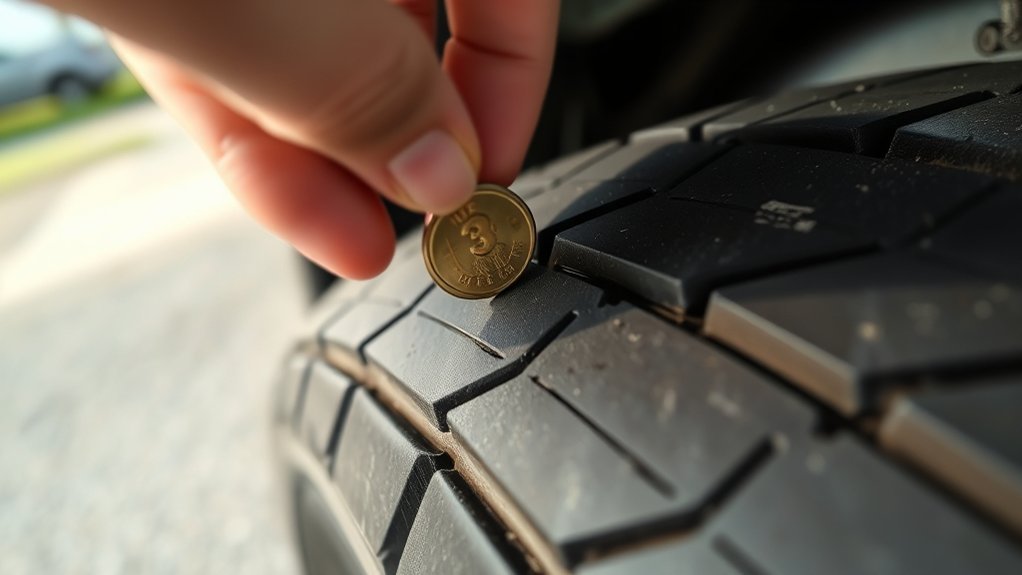
Ignoring tire tread depth reduces traction and raises the risk of hydroplaning on wet roads. Tread grooves move water away from the tire. As they wear down, the tire has less ability to grip, stop, and steer in rain.
Use a tread-depth gauge or the penny test. Place a penny upside down into a tread groove. If you can see the top of Lincoln’s head, the tread is at or below the common 2/32 inch replacement point. Tires also have built-in wear bars; when the tread is flush with those bars, the tire needs replacement.
| What You See | What It Means | What To Do |
| Even tread with enough depth | Normal wear | Keep checking monthly |
| Wear bars flush with tread | Tire is at minimum tread | Replace the tire |
| One edge wearing faster | Possible alignment issue | Schedule inspection and alignment check |
| Cupping or patchy wear | Possible balance, suspension, or tire issue | Have a professional inspect it |
[Products Worth Considering]

The SAFELIFE dial tire tread depth gauge measures tread depth in 1/32 inch increments with clear, easy-to-read 2-inch dial face. Color zones using a traffic light system help you quickly judge whether tread is low, marginal, or ample for safer driving. Built with a durable zinc cast body and a metal detect probe for precise, comfortable use across cars, motorcycles, trucks, and buses.

Accurately measure tire tread depth with a calibrated gauge marked from 0 to 1 inch in 1/32 inch increments. The color-coded bar helps you quickly identify tread condition ranges, supporting safe driving for trucks, motorcycles, automobiles, and passenger vehicles.

The Milton S-693 straight foot dual head air chuck is designed for accurate tire pressure checks and quick, secure valve-core engagement with lock-on threads on both ends. With a 1/4" FNPT connection and a maximum 150 PSI rating, it’s built for use on inner duals and common vehicle tires, including trucks and RVs.
Delaying Tire Rotation and Balancing
Even when pressure and tread checks are correct, tires can still wear unevenly if you delay rotation and balancing. Front and rear tires do different jobs, and drive wheels usually wear faster. Rotation spreads wear more evenly and can extend tire life.
Follow the schedule in your owner’s manual. If no interval is listed, the U.S. Tire Manufacturers Association recommends rotating tires every 5,000 to 8,000 miles. Balancing should be checked when you feel vibration, after a tire repair, after new tire installation, or when a shop recommends it based on wear.
- Rotate tires on schedule to slow uneven wear.
- Balance wheels when vibration appears at certain speeds.
- Inspect tread patterns during every rotation.
- Do not ignore vibration, thumping, or shaking in the steering wheel.
[Products Worth Considering]

Milton S-921 pencil tire pressure gauge helps you maintain optimal tire pressure for passenger cars with accurate readings in PSI and kPa. It features a built-in deflator valve for convenient pressure adjustments, plus a single chuck head and nylon indicator bar for easy use on the go. Built from durable plated brass and designed for reliable performance, it’s a practical road trip and cold-weather maintenance tool.
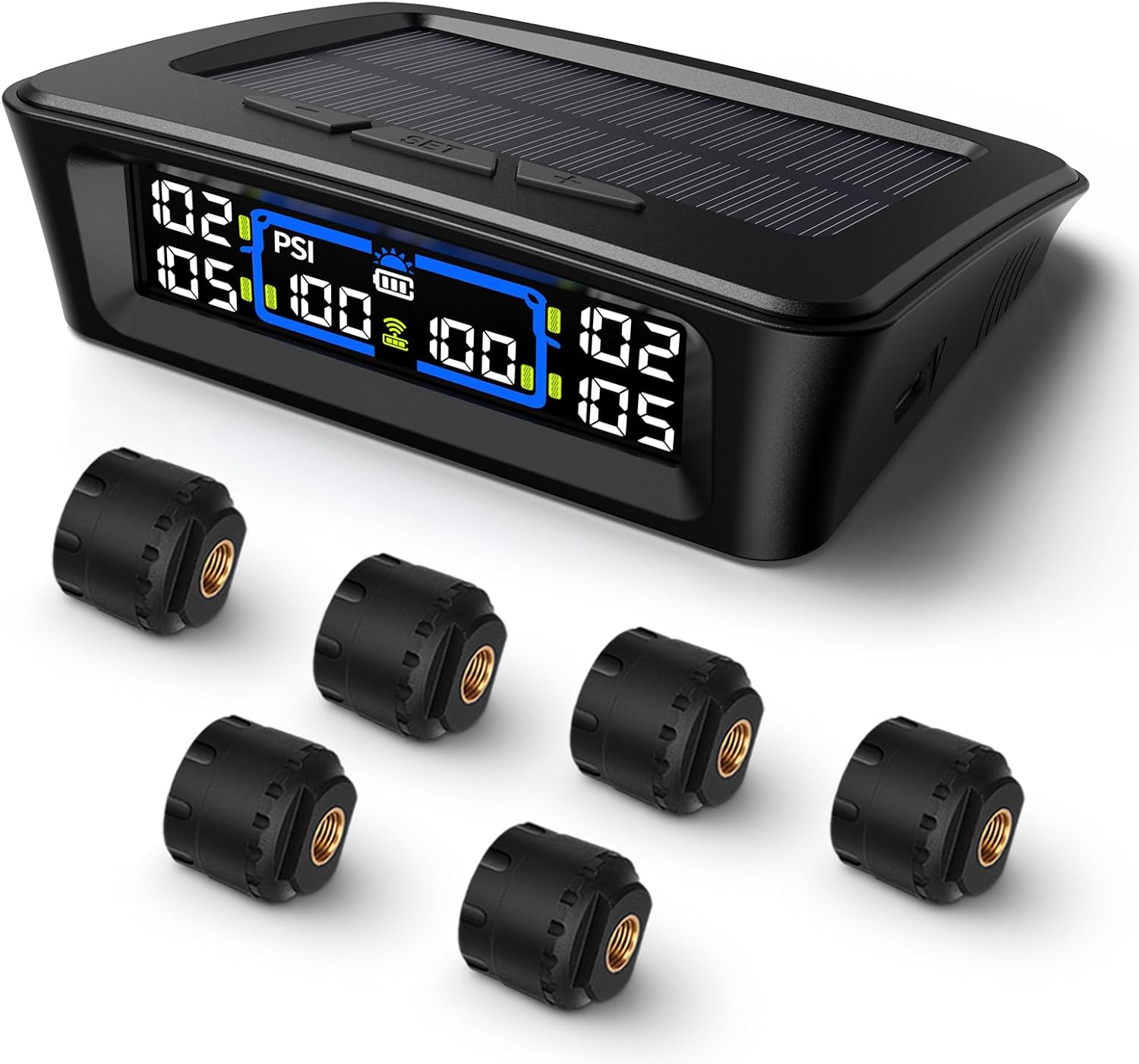
The Tymate TM12 RV TPMS delivers real-time tire pressure and temperature monitoring with a stable 433Hz display for safer long-distance driving. It supports simultaneous monitoring across vehicle and trailer zones, includes six alarm modes for pressure, temperature, leakage, battery, and signal loss, and features easy DIY installation with auto calibration. Power is supplied via USB-C charging or solar recharging, with a wide 0–144 PSI range and up to 50 ft signal coverage for RVs and towable trailers.

Get precise tire readings with the ETENWOLF T300 Plus digital gauge, calibrated to ANSI B40.7 Grade 2A for reliable accuracy. It measures across a wide 3–200 PSI range and includes thermal compensation for dependable performance from extreme cold to heat. The bright LED display, LED illumination, and replaceable AAA batteries make it easy to check pressures quickly, even in low light.
Driving Too Long With Bad Alignment
Driving with bad alignment is not proper tire maintenance because it forces the tires to scrub across the road instead of rolling straight. This can create rapid edge wear, pulling, crooked steering, reduced control, and lower efficiency.
Alignment problems often show up after hitting a pothole, curb, road debris, or a hard bump. You may notice the vehicle pulling to one side, the steering wheel sitting off-center, or one tire wearing faster than the others. Have alignment checked at any sign of trouble and as recommended in your owner’s manual.
Note: Alignment, balancing, tire mounting, and puncture repairs should be handled by properly trained and equipped service personnel. AAA recommends professional service for these tire maintenance tasks.
Forgetting to Inspect Tires for Damage
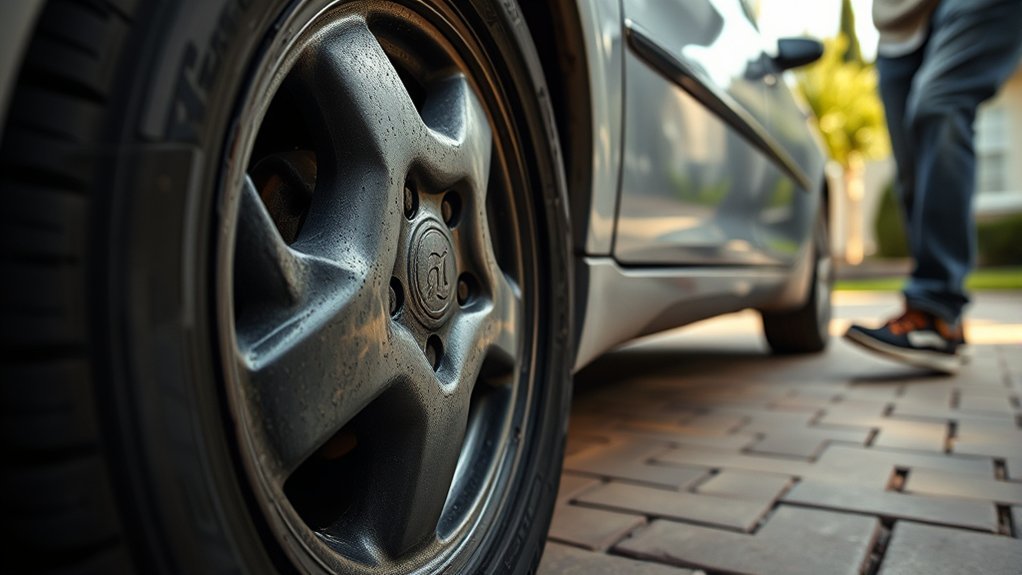
You should inspect your tires for visible cuts, bulges, cracks, punctures, embedded objects, and exposed cords. Damage can weaken the tire structure, cause slow leaks, or lead to sudden air loss.
Visible Cuts, Bulges, and Sidewall Cracks
Visible cuts and bulges are warning signs. A bulge often means internal damage, and sidewall damage is especially serious. Michelin notes that cuts, cracks, bulges, or blisters on the sidewall may indicate structural damage and should be inspected immediately by a tire professional.
- Replace any tire with a sidewall bulge.
- Do not repair a sidewall puncture as a normal tread repair.
- Do not drive on exposed cords.
- Have vibration, thumping, or pulling inspected right away.
Embedded Nails, Screws, and Debris
Small punctures can cause slow leaks before they become obvious. Check the tread for nails, screws, glass, metal, or sharp stones. If you find an embedded object and the tire still holds air, do not pull it out on the roadside unless you are prepared for the tire to deflate. Have the tire inspected and repaired properly.
| Check | Result |
| No debris, no damage, normal pressure | Continue driving and recheck monthly |
| Embedded object in tread | Have the tire inspected for proper repair |
| Pressure loss, bulge, exposed cord, or sidewall cut | Stop driving and replace or get professional help |
Ignoring Tire Age and Spare Condition
Even if tread looks acceptable, tire age still matters. Rubber changes over time, especially with heat, sunlight, moisture, heavy loads, and poor storage. That is why tire age should be part of regular tire maintenance.
Check the DOT date code on the sidewall. The last four digits show the week and year the tire was made. For example, 2524 means the tire was made in the 25th week of 2024. Bridgestone recommends taking tires more than 10 years old out of service, including the spare. Michelin recommends professional inspection after five years and replacement at ten years from manufacture, even if tread remains.
| Item | Risk | Action |
| Aging tire | Reduced grip or hidden deterioration | Inspect after five years and replace by age limit or sooner if damaged |
| Spare tire | May be flat, cracked, old, or missing tools | Check pressure, age, condition, jack, and lug wrench |
| Cracks, bulges, or exposed cords | Possible tire failure | Stop using the tire and replace it |
Tire Maintenance Habits That Prevent Trouble
Good tire maintenance is mostly about small checks done on time. You do not need to wait for a warning light, vibration, or flat tire. A simple routine can prevent many problems before they become expensive or dangerous.
A five-minute monthly tire check can catch low pressure, worn tread, sidewall damage, and slow leaks before they turn into roadside trouble.
- Check pressure monthly with a gauge.
- Inspect tread depth and wear bars.
- Look for cuts, cracks, bulges, nails, and exposed cords.
- Rotate tires on schedule.
- Balance wheels when vibration appears.
- Check alignment when the vehicle pulls, the steering wheel is off-center, or tread wear is uneven.
- Inspect the spare tire and tire-changing tools before road trips.
- Check tire recalls when buying used tires or after receiving a recall notice.
What To Do If You Find a Tire Problem
If you find a tire problem, match the action to the risk. Low pressure can often be corrected with air if there is no visible damage and the tire holds pressure. A nail in the tread may be repairable if it is in the proper repair area, but it should still be inspected by a trained tire professional. Sidewall damage, a bulge, exposed cords, or repeated air loss usually means replacement.
- Low pressure only: Inflate to the placard PSI and recheck soon for leaks.
- Slow leak: Schedule inspection and repair before a long trip.
- Vibration or pulling: Check pressure first, then schedule tire, balance, suspension, or alignment service.
- Bulge, exposed cords, or sidewall cut: Stop driving on that tire and replace it.
- Old spare or flat spare: Replace or service it before you need it in an emergency.
Frequently Asked Questions
What is not considered proper tire maintenance?
Not proper tire maintenance means skipping the tasks that protect tire safety and life. Examples include ignoring tire pressure, using the sidewall maximum PSI instead of the vehicle placard, relying only on TPMS, driving on worn tread, delaying rotation, ignoring alignment problems, and overlooking tire age or damage.
What is the 3 rule on tires?
There is no single official “3 rule” for every tire, but a useful three-point habit is pressure, tread, and rotation. Check pressure monthly, replace tires at 2/32 inch tread depth or sooner if unsafe, and rotate tires according to the owner’s manual or every 5,000 to 8,000 miles when no interval is listed.
What tire pressure should my Kia Carnival be at?
Use the tire pressure listed on your Kia Carnival’s driver-side door placard or in the owner’s manual for your exact model year, tire size, and load. Do not rely on one universal PSI number online, and do not use the maximum pressure printed on the tire sidewall as your normal setting.
What is not true about proper tire care?
It is not true that proper tire care only means looking at the tires or waiting for the TPMS light. A tire can be low, old, damaged, or unevenly worn before it looks unsafe. Proper care includes pressure checks, tread checks, rotation, alignment attention, damage inspection, and spare-tire checks.
How often should I rotate my tires?
Follow your vehicle owner’s manual first. If it does not give a rotation interval, a common recommendation is every 5,000 to 8,000 miles. Rotate sooner if a tire professional sees uneven wear or if your driving conditions are severe.
Do tires need replacement if the tread still looks good?
Yes, sometimes. Tire age, cracks, bulges, sidewall damage, punctures, exposed cords, and repeated pressure loss can make a tire unsafe even if the tread looks acceptable. Check the DOT date code and have older or damaged tires inspected by a tire professional.
Conclusion
Not proper tire maintenance is usually a pattern of small skipped checks: no monthly pressure reading, no tread inspection, late rotation, ignored vibration, bad alignment, visible damage, old tires, or a forgotten spare. These mistakes can reduce traction, shorten tire life, hurt fuel economy, and raise the chance of a blowout or flat.
Stay consistent. Check pressure cold, measure tread, inspect for damage, rotate on schedule, fix alignment or balance problems early, and replace unsafe tires without delay. A few minutes of tire care helps protect your vehicle, your wallet, and everyone riding with you.
Sources
- NHTSA TireWise — tire safety, maintenance, aging, labeling, fuel efficiency, and recall guidance.
- FuelEconomy.gov Gas Mileage Tips — proper tire inflation and fuel-economy impact.
- U.S. Tire Manufacturers Association Tire Care Essentials — pressure checks, TPMS limits, tread depth, rotation, and alignment guidance.
- AAA Car Maintenance Guide: Tires — monthly inspections, tire wear signs, and professional service guidance.
- Michelin: When to Replace Tires — tread wear, sidewall damage, tire age, inspection, and replacement guidance.
- Bridgestone Tire Replacement Guidance — age-related replacement guidance for tires and spare tires.