
Why Your TPMS Light Keeps Coming On (And How to Fix It)
If your TPMS light keeps coming on, check each tire with a calibrated gauge and compare to the manufacturer’s PSI. Temperature drops can cut 1–2 PSI per 10°F, so top up as needed. Inspect for slow leaks, nails, valve-stem damage, or tread issues. If pressures are correct yet the lamp stays lit, suspect sensor faults, dead sensor batteries, or a needed relearn/calibration. Inflate and drive to reset; continue below for diagnostic steps and repair options.
Quick Answer
- Check all four tires (plus the spare) with a calibrated gauge and inflate to the spec on your door jamb.
- Cold weather drops pressure 1–2 PSI per 10°F — top up during seasonal shifts.
- If pressures are correct but the light stays on, the issue is likely a faulty sensor, dead battery, or a calibration that needs to be redone.
- After fixing the cause, drive at moderate speed for a few minutes to let the system reset. If the light persists, get a professional diagnostic scan.
Diagnosing Why the TPMS Light Keeps Coming On
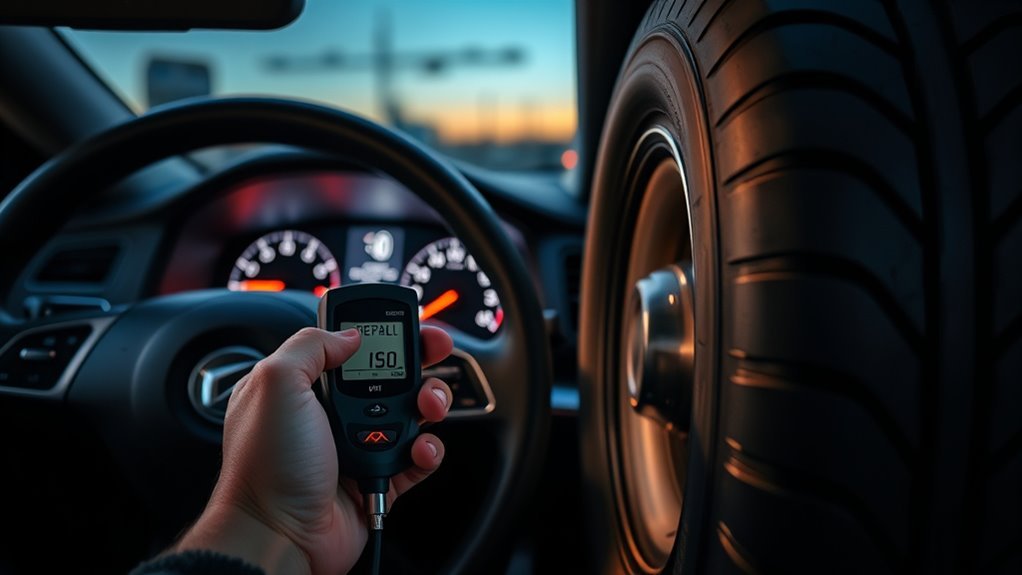
When the TPMS light keeps coming on, start by checking tire pressures with a calibrated gauge. Seasonal temperature drops are a common trigger — pressure can fall 1–2 PSI for every 10°F drop in temperature. From there, work through the likely causes one by one: verify static pressures, inspect valves and tread for slow leaks, and check whether a recent rotation or alignment might need sensor recalibration.
It also helps to understand your system type. Indirect TPMS infers pressure from wheel speed data, while direct TPMS uses valve-mounted sensors with batteries that eventually die. A dead sensor battery or physical sensor damage can cause persistent false alerts even when your tires are fine. If manual pressure readings match the dashboard readout but the light stays on, run a diagnostic scan to read sensor IDs and signal strength, then recalibrate or replace the faulty sensor.
Immediate Actions: Check and Fix Tire Pressure Now
Grab a calibrated gauge and check every tire against the manufacturer’s spec — you’ll find it on the driver’s door jamb or in the owner’s manual. The TPMS light typically activates when one or more tires drops 25% or more below the recommended pressure, so don’t put this off.
Measure all four tires and the spare if your vehicle has one. If any reading is low, inflate to spec. In most cases, the TPMS light goes out within a few minutes of correcting the pressure. Check more often during seasonal temperature shifts, since cold weather alone can drop pressure enough to trip the warning. If pressures are correct and the light stays on, the problem is likely a sensor fault, a slow leak, or a system error — and that calls for professional diagnostics.
Check and Correct Tire Pressure (Step‑by‑Step)
Start by measuring each tire’s pressure with a calibrated gauge and comparing every reading to the manufacturer’s specification on the driver’s door jamb or in the owner’s manual. Check all four tires plus the spare. The TPMS light can react to a single low tire, so don’t skip any.
If any reading is below spec, inflate to the precise recommended value at a gas station or service center, then re-check to confirm. After correcting pressures, drive for a few minutes at moderate speed to let the TPMS recalibrate. The warning should go out once the sensors register normal pressure. If it stays on, you’ve ruled out simple under-inflation — move on to checking for sensor faults or system errors.
Common Reasons the TPMS Light Triggers: Leaks, Temperature, and Damage

A TPMS light often points to something specific: a slow leak, a temperature swing, or physical damage. Start with a visual and tactile inspection for nails, punctures, or bead leaks. A drop to roughly 25% below the recommended pressure will trip the system.
Seasonal temperature swings are a frequent culprit. Expect to lose 1–2 PSI for every 10°F of temperature drop, which can repeatedly trigger the warning as winter sets in. Physical damage is a different story. Sidewall cuts, impact breaks, corroded valve cores, or damaged valve stems all cause genuine pressure loss that requires repair or replacement.
Don’t guess between a leak and a temperature fluctuation. Diagnose first, then act. After repairs or inflation, verify pressures and monitor the system while you drive.
TPMS System Problems: Sensors, Batteries, and Calibration
When the TPMS light stays on despite correct tire pressures, a sensor, its battery, or the system calibration is usually at fault. You’ll need to isolate which by diagnostic scanning, swap testing, or visual inspection. A scan tool reads sensor IDs, battery voltage, and fault codes — this is the fastest way to pinpoint the problem.
Sensors typically last 5–7 years, though some reach 10. As a federal safety standard requirement on most vehicles built since 2008, these sensors are built to last — but not forever. Check physical sensors for corrosion or impact damage, and make sure the calibration process runs after any rotation or tire change. If sensors are aging or giving inconsistent readings, plan for replacement.
- Visual: Look for cracked valve stems or corrosion that suggests sensor damage.
- Scan: No sensor ID or low battery voltage points to a failing transmitter.
- Swap: Move a suspect sensor to isolate the faulty unit.
- Calibrate: Confirm the calibration process completed and that fault messages cleared.
When to Reset or Relearn the TPMS (Simple Steps)
After any tire rotation, replacement, or change in tire size, reset or relearn the TPMS so the module correctly matches each sensor to its wheel. Check the owner’s manual for the exact TPMS reset procedure — some cars use a dashboard button, others use a menu sequence, and some perform an automatic relearn while driving.
Perform sensor reprogramming when the TPMS light won’t go out after you’ve set tires to recommended pressures. That usually means the module has lost track of which sensor belongs to which wheel. The steps are straightforward: confirm all tires are inflated to spec, engage the ignition per the manual, execute the reset or relearn routine, then drive at the required speed if the system asks for it. If the light still won’t clear, suspect misprogrammed sensors or a failed transmitter and move on to a targeted inspection.
When to See a Technician: Diagnostics, Parts, and Replacement
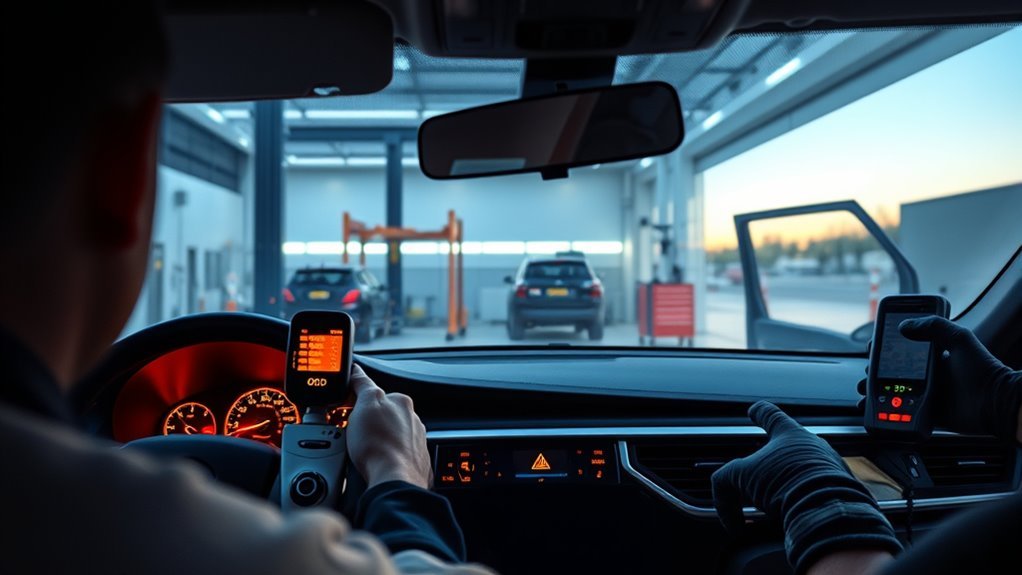
If the TPMS light stays on after you’ve checked pressures and followed the relearn/reset procedure, it’s time to see a technician for diagnostic testing and targeted repairs. A professional scan tool reads each transmitter, flags weak RF signals, and confirms ECU status. The tech will also check for slow leaks, punctures, or valve corrosion that could be throwing off readings.
When a sensor fails to communicate or reports erratic data, replacement is usually the answer. Sensor batteries aren’t serviceable on their own, so a full sensor swap is what restores reliable monitoring. After any repair or tire service, the technician will recalibrate or reset the system to confirm accurate baseline readings.
If the TPMS light persists after resets and pressure checks, seek professional diagnostics — sensor replacement and system recalibration restore reliability.
- Technician runs a TPMS scan to identify faulty transmitters and ECU faults.
- Visual and pressure inspection locates slow leaks or damaged valves.
- Replace non-communicating sensors, including the new sensor and valve stem.
- Relearn/reset and post-repair verification to confirm system integrity.
Frequently Asked Questions
How Much Does It Usually Cost to Fix a Tire Pressure Sensor?
Sensor replacement typically runs $50–$150 per sensor — parts are usually $30–$75, with labor on top. Diagnostic fees at a dealership or shop may add $100–$200 depending on the level of testing needed. Before committing to a full replacement, it’s worth doing a basic check of valve stems and sensor connections yourself, since those are sometimes all that needs fixing.
Conclusion
If your TPMS light keeps coming on, treat it like a warning you shouldn’t ignore. Check and correct tire pressure right away, look for leaks or damage, and make sure sensors and batteries are working. Relearn or reset the system after any repairs. If the light keeps coming back, get professional diagnostics for sensor replacement or module calibration. Catching the problem early protects handling, fuel economy, and safety.
Related Articles

Run-Flat Tires Explained: Safe Zero-Pressure Driving
Hesitant to change a tire? Discover how run‑flat technology lets you keep driving safely after a puncture—and what limits you must never ignore.
Read More
Signs You Need New Tires: Visual & Performance Clues
Lifelong safety starts with spotting tread wear, bulges, or vibration—learn the simple checks that tell you when tires must be replaced.
Read More
Tire Wear Indicator Bars: Built-In Safety Markers Decoded
On the brink of legal tread limits? Discover how tire wear indicator bars reveal danger and when to replace—read on to protect your ride.
Read More