Tire Insulation and Heat Buildup: A Guide for RAV4 Owners
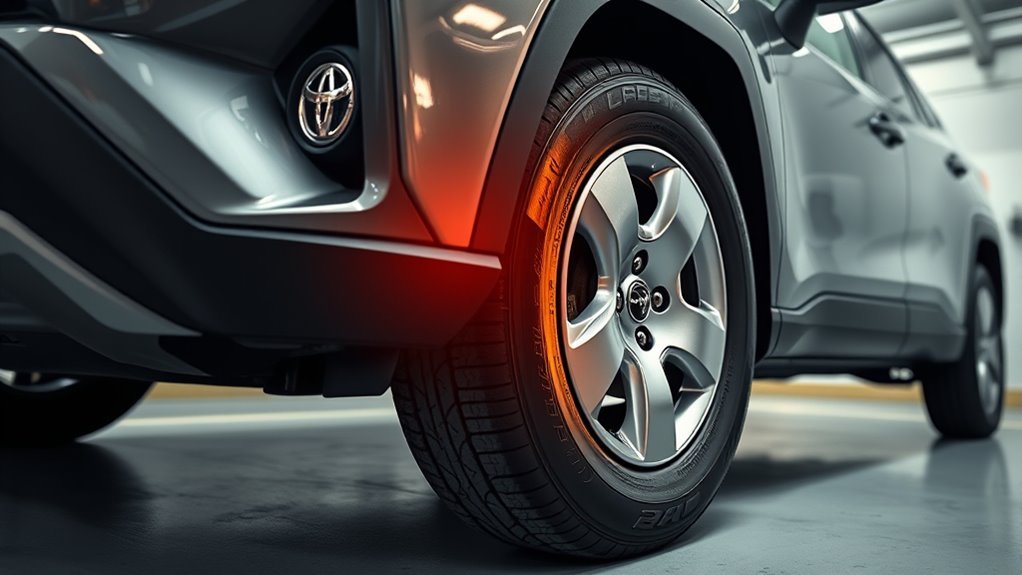
You can cut RAV4 tire heat and blowout risk by keeping inflation at 32–36 PSI, rotating every 5,000–7,500 miles, and replacing tires under 0.16 in (4 mm) tread. Inspect sidewalls for cuts, cracks or bulges and manage cargo to avoid overloading. Choose heat-resistant, quiet-running tires and consider improved wheel-well insulation to slow heat transfer and lower cabin noise. Follow TPMS setup after changes; continue for specific upgrade options and step-by-step checks.
Quick Actions to Reduce RAV4 Tire Heat and Blowout Risk
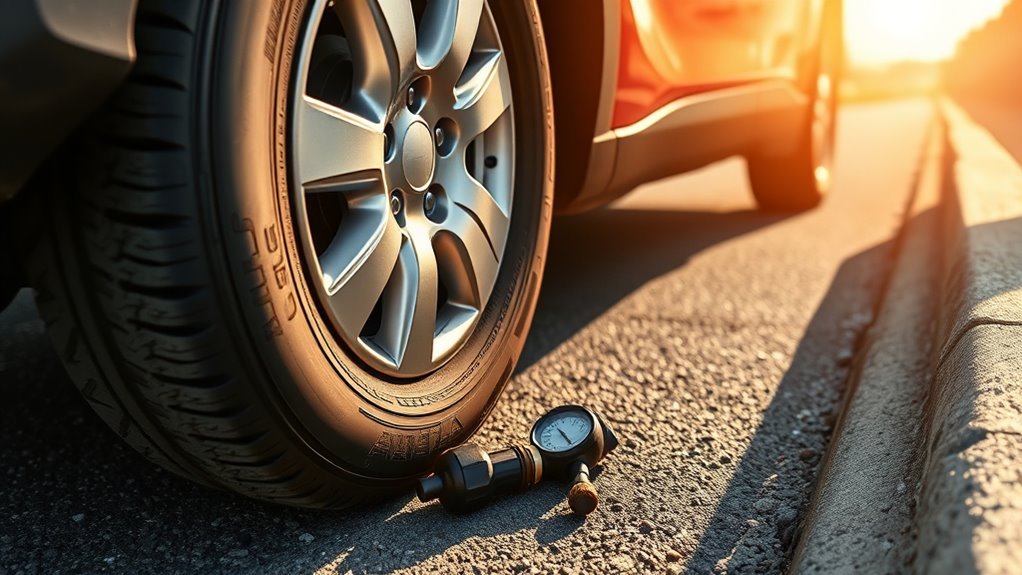
Start by making a few routine checks that directly reduce tire heat and the chance of a blowout: keep your RAV4’s tire pressure between 32–36 PSI, rotate tires every 5,000–7,500 miles, and measure tread depth—replace any tire under 0.16 in. (4 mm). You’ll want to monitor tire pressure weekly and after long trips; underinflation raises rolling resistance and promotes heat buildup, so correct inflation is liberation from preventable failure. Rotate on schedule to equalize wear and maintain uniform heat dissipation across the contact patch. Inspect sidewalls and tread for cuts, cracks, or bulges that concentrate stress and amplify thermal risk. For hot climates, choose tires formulated with heat-resistant compounds; they lower operating temperatures and extend safe service life. Record inspections and pressures to spot trends early. These practical, repeatable actions reduce thermal stress, preserve performance, and free you from emergency repairs—keep control, minimize risk, and drive with confidence.
How RAV4 Tires Heat Up: Tread, Pressure, Load, and Driving Habits
Because heat in your RAV4’s tires comes from energy lost at the contact patch, small changes in tread condition, pressure, vehicle load, and driving style can meaningfully change operating temperature. You should inspect tread depth and pattern: worn tread reduces heat dissipation and alters how tire materials flex under load, concentrating energy in fewer rubber zones. Maintain correct inflation; under‑inflation increases sidewall flexing and internal friction, raising temperatures and blowout risk, while over‑inflation shifts load to the center, reducing contact area and traction. Manage vehicle load—distribute cargo and avoid excess weight—to limit additional flexing that generates heat. Adjust driving habits: avoid rapid acceleration, heavy braking, and sustained high speeds, which all amplify frictional heating and wear. Monitor tire temperature after long drives or heavy loads; compare to baseline values to detect compromised heat management. These precise controls let you reclaim safety and performance by reducing thermal stress on tires and extending their service life.
How RAV4 Insulation and Design Affect Tire Heat Transfer and Cabin Noise
After checking tread, pressure, load, and driving habits, you should consider how the RAV4’s insulation and wheel‑well design affect both tire heat transfer and cabin noise. You’ll find that engineered insulation materials and targeted sound‑deadening reduce heat radiated from tires into the cabin and improve cabin acoustics. Effective wheel‑well liners slow conductive and radiative heat paths, helping tires maintain ideal temperatures for longevity and consistent grip. When you pair higher‑quality, quiet‑running tires with the RAV4’s insulation, highway noise drops and thermal load on the tire carcass decreases. Design variations across trims change how much insulation is applied, so model choice affects both heat management and perceived quiet.
- Feel empowered by measurable reductions in cabin noise and tire heat.
- Experience liberation through confident, quiet long drives.
- Trust data‑driven insulation choices to protect tire life.
- Reclaim control with targeted upgrades that respect factory acoustics.
Inspect insulation materials and cabin acoustics specs when selecting tires or trim.
Practical Maintenance Checks: Pressure, Tread, Rotation, and Spare
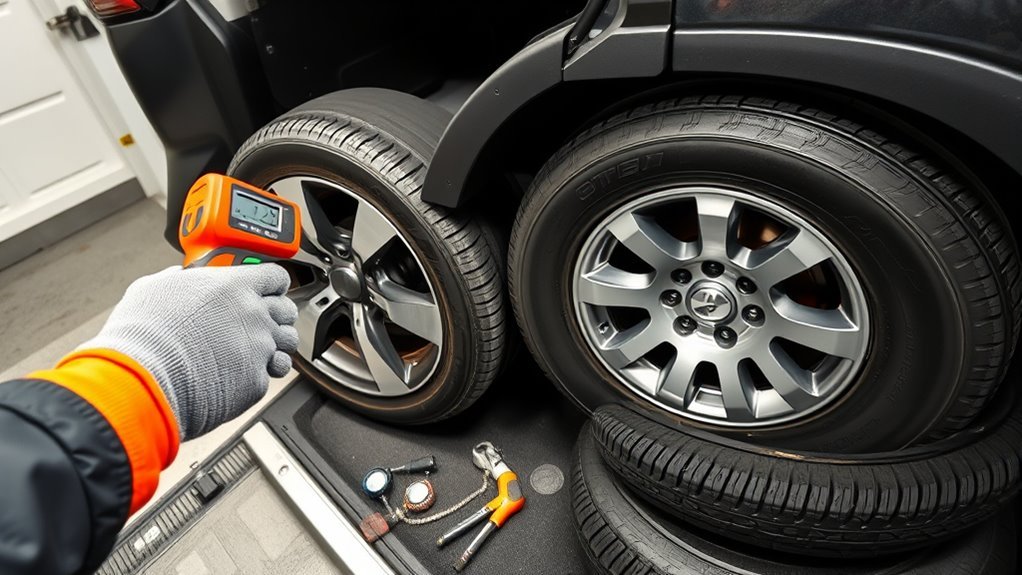
1 clear routine keeps your RAV4’s tires performing safely and efficiently: check pressure weekly (target 32–36 PSI), inspect tread depth (maintain at least 0.16 in / 4 mm), look for cuts or bulges, and verify the spare is inflated and crack‑free. You’ll perform tire maintenance that reduces heat buildup, preserves handling, and supports confident independence on the road. Use a calibrated gauge for pressure checks before driving; record values and correct deviations promptly. Measure tread with a gauge at multiple points; uneven readings signal the need for rotation. Rotate tires every 5,000–7,500 miles to equalize wear and thermal load across positions. Visually scan sidewalls and shoulders for cuts, bulges, or embedded debris; any anomaly mandates immediate replacement. Confirm the spare’s PSI and rubber integrity; it’s your fail‑safe. Keep concise logs of inspections and service intervals so you control maintenance, avoid surprises, and maintain the RAV4’s resilience and your mobility without relying on external permission.
Upgrades and When to See a Dealer: Insulation, Quieter Tires, and TPMS Setup
Keeping your weekly checks in place sets the stage for targeted upgrades that reduce noise and heat around the wheels. You’ll choose quieter tires and targeted insulation materials to liberate your cabin from intrusive road noise and excess heat. Prioritize tire selection for low rolling noise and heat-dissipating compound; pairing that with wheel-well and under-hood insulation reduces transmitted heat and acoustic energy. After any tire change, initialize and verify the TPMS so sensors report accurate pressure; inspect sensor batteries, valve stems, and mounting to prevent silent failures that compromise safety and comfort. Consult your Toyota dealer for model-specific recommendations on insulation materials and approved tire options to preserve ride dynamics and warranty coverage. Schedule dealer support when TPMS faults persist, when sensor replacement is needed, or when you want professional installation of larger insulation panels.
- Reclaim quiet on long drives.
- Reduce heat where it matters.
- Guarantee TPMS reliability.
- Preserve vehicle performance.
Frequently Asked Questions
Is 37 PSI Too High for RAV4?
Yes — 37 PSI’s slightly high for most RAV4s; you should target the manufacturer’s recommended tire pressure for ideal inflation. Check pressures regularly, adjust for temperature, and prioritize safety to maintain control and avoid uneven wear.
Conclusion
You can cut tire heat and blowout risk with a few exact moves: match pressure to load, check tread and rotate, don’t overload, and use quieter, better-insulated tires or liners when you need them. Coincidentally, the same insulation that tames cabin noise often slows heat transfer into the wheel well, so upgrading one thing helps the other. Keep TPMS calibrated and inspect the spare—small, precise actions prevent big failures and keep your RAV4 safer.

Related Articles

Upsizing Wheels on a Toyota RAV4: Pros, Cons, and Considerations
Boost your Toyota RAV4's performance with larger wheels, but discover the hidden trade-offs that could impact your ride before you decide.
Read More
Can I Change Tire Size on My Toyota RAV4? Rules and Recommendations
Are you considering changing the tire size on your Toyota RAV4? Discover the essential rules and recommendations before making a decision.
Read More
What to Do If the TPMS Light Comes On in Your RAV4
Understand the steps to take when the TPMS light illuminates in your RAV4, as overlooking it could lead to serious tire problems.
Read More