Buying tires for your Toyota RAV4 is not just about finding a set that fits the wheels. The right choice depends on your exact tire size, trim, climate, driving style, load rating, warranty, and maintenance habits. A common RAV4 size is 225/65R17, but many RAV4 trims use different sizes, so always confirm the tire information placard on the driver-side door jamb before ordering.
Quick Answer
Choose Toyota RAV4 tires by matching the tire size, load index, speed rating, and cold tire pressure shown on your driver-door placard. Then pick the tire type for your climate: touring all-season for mild weather, all-weather or winter tires for snow, and crossover all-terrain tires for light trails.
Key Takeaways
- Do not rely on one “typical” RAV4 tire size. Confirm the exact size on the tire placard, current tire sidewall, or owner’s manual.
- Match the tire size, load index, speed rating, and wheel diameter before comparing brands or prices.
- All-season tires suit many daily drivers, but winter, all-weather, or all-terrain tires may be safer depending on your climate and roads.
- Use the cold PSI listed by Toyota for your vehicle, not the maximum PSI molded on the tire sidewall.
- Rotate, inspect, balance, and align your tires on schedule to protect tread life and warranty coverage.
At a Glance
| Time Required | 30–60 minutes to compare tires; professional installation usually takes longer and depends on the shop. |
| Difficulty | Easy for shopping; moderate to advanced for DIY installation. |
| Tools Needed | Tire placard, tire pressure gauge, tread depth gauge or penny, current tire sidewall, and owner’s manual. |
| Cost | Varies by size, brand, warranty, season rating, retailer, installation, balancing, disposal fees, and rebates. |
Understanding Your Toyota RAV4 Tire Specifications
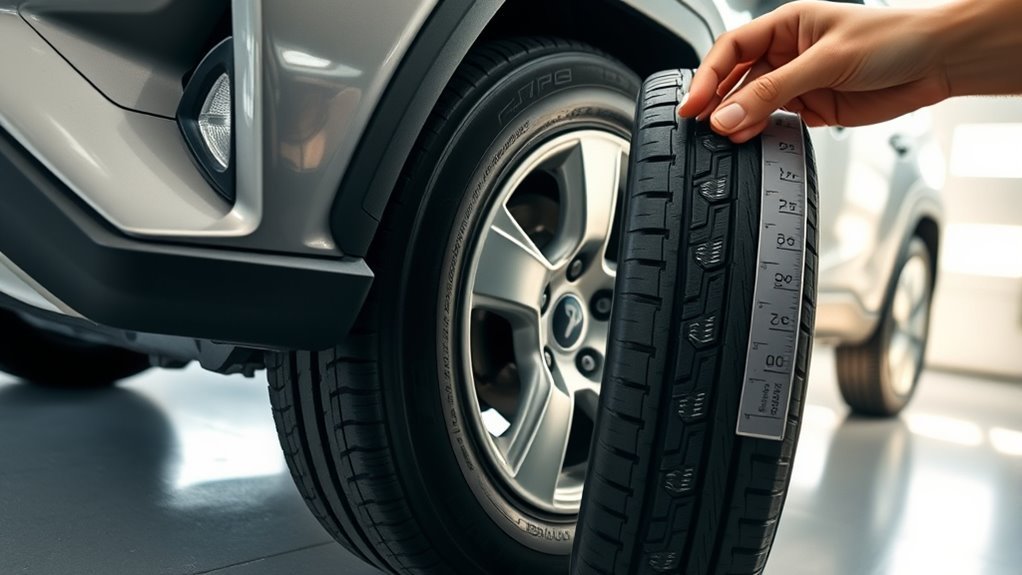
Your first step is to confirm the exact tire size and specifications for your own RAV4. You can usually find this information in three places: the sidewall of your current tire, the sticker inside the driver-side door, and your owner’s manual. Toyota also explains that the three-digit number is tire width, the two-digit number after the slash is aspect ratio, the letter shows construction, and the final number is rim diameter.
For example, in 225/65R17, “225” is the tire width in millimeters, “65” is the sidewall height as a percentage of the width, “R” means radial construction, and “17” means the tire fits a 17-inch wheel. Many RAV4s use sizes such as 225/65R17, 225/60R18, or 235/55R19 depending on year, trim, and wheel package, so do not order tires from size alone unless it matches your vehicle placard.
Also check the load index and speed rating. These codes tell you how much weight the tire is built to carry and the speed category it is designed for. A replacement tire should meet or exceed the original load index and speed rating unless Toyota or a qualified tire professional confirms another fitment is appropriate.
Warning: Never buy RAV4 tires based only on a blog post, online fitment tool, or “typical” size. A wrong size, low load index, or mismatched speed rating can affect handling, braking, stability control, clearance, and tire wear.
Why Tire Quality Matters for Safety and Performance
Tire quality affects how your Toyota RAV4 brakes, corners, rides, handles rain, resists hydroplaning, and wears over time. A better tire does not automatically mean the most expensive tire, but it should match your driving conditions and carry trustworthy ratings for wet traction, tread life, ride comfort, and durability.
For example, a touring all-season tire such as the Yokohama GEOLANDAR CV G058 is designed for crossovers and midsize SUVs, with features focused on wet grip, winter traction, long tread life, and a quieter ride. A long-lasting highway tire such as the Michelin Defender2 emphasizes tread life, comfort, and all-season road use. A crossover-focused all-terrain option such as the Falken Wildpeak A/T Trail is built for drivers who want more trail and snow capability without moving to a heavy truck-style tire.
The best tire for your RAV4 is the one that fits correctly, matches your climate, supports your load needs, and performs well in the conditions you actually drive in.
When to Choose All-Season vs. Specialty Tires
Choosing the right tire type can make a bigger difference than choosing between two similar brands. Start with your climate and road use, then narrow your choices by size, warranty, and price.
[Products Worth Considering]

These aluminum alloy tire valve stem caps with an O-ring seal help protect valve stems from corrosion while adding a clean, stylish look to your vehicle. The universal fit works across cars, trucks, motorcycles, bicycles, and more, making them an easy upgrade for everyday driving and off-road use. Installation is quick, and the included four-pack keeps all your tires dressed and protected.

This tire inflator with pressure gauge delivers long-lasting performance with a durable rubber-protected gauge and sturdy build. The longer hose and 360 swivel air chuck help you seal the valve securely and keep your hands free while measuring, inflating, or deflating. It’s battery-free for reliable use and provides ±2 PSI accuracy in the mid-range for most typical tires, with universal compatibility for 1/4 NPT compressor outputs.

Monitor tire tread wear with a smart, color-coded depth gauge that shows clear condition ranges at a glance. The bar is range marked for fast, easy readings, helping you maintain safer traction and performance. Each gauge is portable with a pocket clip, and the set includes 20 units for daily use and sharing.
All-Season Tire Benefits
All-season tires are a practical choice for many RAV4 owners who drive in mild to moderate climates. They are designed to balance dry traction, wet traction, tread life, ride comfort, and light snow capability. They are convenient because you can use one set year-round in places that do not get long periods of ice, deep snow, or extreme winter temperatures.
Touring all-season tires are especially good for daily commuting, highway driving, school runs, and errands because they usually prioritize quiet ride, stable handling, and longer treadwear.
When to Choose Specialty
Choose specialty tires when your driving conditions demand more than a standard all-season tire can provide. If you regularly drive on icy or snowy roads, dedicated winter tires or severe-snow-rated all-weather tires are safer choices. If you frequently travel on gravel roads, forest roads, or light trails, a crossover all-terrain tire can add toughness and traction.
For mostly highway driving, a premium touring tire may be the better specialty choice because it can improve comfort and reduce road noise. For sporty driving or warmer climates, a performance all-season tire may sharpen handling but could sacrifice tread life or winter confidence.
Weather Conditions Consideration
Use your local weather as the deciding factor:
- Mild climates: Touring all-season tires usually provide the best balance of comfort, value, and year-round usability.
- Frequent rain: Prioritize wet braking, hydroplaning resistance, and tread design with strong water evacuation.
- Snow and ice: Choose winter tires or all-weather tires with the Three-Peak Mountain Snowflake symbol if you need stronger cold-weather grip.
- Light trails: Consider crossover all-terrain tires, but avoid oversized or overly heavy tires unless a tire professional confirms fitment.
Note: “All-season” and “all-weather” are not the same. All-weather tires are usually built for stronger winter performance, while many standard all-season tires are best for light snow and moderate temperatures.
How to Choose the Right Tire Size for Your RAV4
To choose the right tire size for your Toyota RAV4, follow a simple order:
- Check the driver-door tire placard. This is the most important source because it is tied to your vehicle’s original tire and wheel setup.
- Match the tire sidewall. Compare the current tire size to the placard. If they differ, confirm whether the wheels are original or aftermarket.
- Confirm wheel diameter. A 17-inch tire cannot fit an 18-inch or 19-inch wheel.
- Check load index and speed rating. Meet or exceed the original equipment rating unless a qualified professional approves an alternative.
- Avoid clearance problems. Oversized tires can rub the wheel well, suspension, or fender liner and may affect speedometer accuracy.
If you want a plus-size wheel setup, off-road tire, or different tire diameter, work with a tire shop that understands RAV4 fitment. A small change can affect ride comfort, fuel economy, acceleration, braking, and the accuracy of driver-assistance systems.
[Products Worth Considering]

The Trivd Frol 1/2" air impact wrench delivers high performance torque up to 1500 ft-lbs with a twin hammer impact mechanism for strong, balanced blows. It features an ergonomic grip, compact lightweight design, and quick-stop control with 3 forward speeds up to 8000 RPM plus a reverse speed. Built for demanding automotive repair and tire shop work, the rear exhaust helps keep debris away from the surface.

Measure tire tread depth quickly and accurately with this LUMITECO dial gauge that reads in 1/32" increments up to 14/32". The color-coded green/yellow/red zones make it easy to judge tire wear and know when replacement is needed. A rugged, compact design with a protective pouch helps keep the gauge ready for use on cars, trucks, motorcycles, and more.

The 22800 wheel stud installer makes replacing wheel studs quick and secure, saving time and effort during tire service. It uses a ratchet or impact wrench to pull new studs firmly into place, helping when existing studs are too long. Compatible with most automotive wheels and light-duty truck wheel studs, it’s designed for easy, tool-assisted installation.
Understanding Tread Design for Better Performance
Tread design affects wet grip, snow traction, road noise, braking, fuel economy, and tread life. Look at these features before buying:
- Circumferential grooves: Wide channels help move water away from the tread to reduce hydroplaning risk.
- Sipes: Small cuts in tread blocks create biting edges for wet and light snow traction.
- Block pattern: Larger, more open blocks can help on gravel or trails but may create more road noise.
- Tread depth: Deeper tread can help in rain and snow, but compound and design matter too.
- Noise-reduction pattern: Multi-pitch tread designs can reduce the humming sound that develops on some SUV tires.
Do not choose a tire only because the tread “looks aggressive.” A RAV4 used mostly on pavement usually benefits from a tire that balances wet braking, ride comfort, noise, and tread life. A rugged tire can be useful for dirt roads, but it may reduce fuel economy or ride comfort if it is heavier than the original tire.
Budget vs. Premium Tires: What’s Right for You?
Budget tires can make sense if you drive low annual mileage, stay in mild weather, and need a safe replacement without premium features. Premium tires usually cost more because they may offer stronger wet braking, quieter ride, longer treadwear warranty, better ride comfort, or more advanced compounds.
Instead of choosing by price alone, compare these details:
- Correct fitment: size, load index, speed rating, and wheel diameter.
- Warranty: treadwear mileage, road hazard coverage, trial period, and exclusions.
- Wet performance: braking, hydroplaning resistance, and traction ratings.
- Noise and comfort: especially important if you drive long highway miles.
- Climate rating: all-season, all-weather, winter, or all-terrain.
- Installation package: mounting, balancing, valve stems, TPMS service, disposal fees, and alignment.
Exact prices change often by size, retailer, location, and rebates, so use current quotes rather than relying on a fixed price from an article.
The cheapest tire is not always the lowest-cost tire. A tire that wears evenly, brakes better in rain, and includes a stronger warranty can be the better value over its service life.
[Products Worth Considering]

Keep your tires properly inflated with this analog VONDIOR tire pressure gauge, designed for fast, easy readings without batteries. The swiveling, two-axis hose and large glow dial help you measure at any tire angle with instant visibility. Built with a protective rubber shield, it supports durable, low-maintenance use for cars and trucks.

These universal tire valve stem caps help protect valve cores from dust, debris, and moisture while helping maintain stable tire pressure. The corrosion-resistant metal construction and sealed design provide reliable protection in road grime, mud, and winter conditions. Twist-on installation makes them quick to fit on cars, SUVs, trucks, and motorcycles.

Upgrade your wheels with MIKKUPPA M12x1.5 mag seat lug nuts built for secure, corrosion-resistant performance. These closed-end chrome lug nuts are a direct replacement for select Toyota models, including Camry, Corolla, RAV4, Sienna, Avalon, Highlander, Matrix, Venza, and Prius. Triple-chromium plating and cold-forged, heat-treated steel help deliver strength for daily driving and replacement needs.
What Should You Expect From Tire Warranties?

Tire warranties can be useful, but they are not a promise that every driver will get the listed mileage. Mileage depends on tire pressure, rotation, alignment, driving style, road conditions, load, climate, and maintenance records.
Look for these warranty details before you buy:
- Limited treadwear warranty: Some tires offer mileage coverage, such as 65,000 or 80,000 miles, but terms vary by tire line and fitment.
- Standard limited warranty: Covers eligible defects in materials or workmanship, not normal wear or damage caused by misuse.
- Road hazard coverage: May cover damage from potholes or debris, but it is often a separate retailer or manufacturer program.
- Trial period: Some tire makers offer a satisfaction guarantee for a limited time.
- Maintenance requirements: Many warranties require proof of proper inflation, alignment, and tire rotation.
Register your tires after purchase and keep receipts for installation, rotation, balancing, and alignment. Those records can matter if you ever need a warranty adjustment.
Installation Tips for Your New Tires
Proper installation matters as much as tire choice. If you install tires yourself, use safe lifting points, wheel chocks, jack stands, and the correct torque specification from your owner’s manual or repair information. If you are not fully confident, professional installation is the safer choice.
| Step | Tool or Service | Key Action |
|---|---|---|
| Size verification | Door placard and sidewall | Confirm size, load index, speed rating, and wheel diameter. |
| Mounting | Tire machine | Have tires mounted without damaging wheels, beads, or TPMS sensors. |
| Balancing | Wheel balancer | Balance each wheel and tire assembly to reduce vibration and uneven wear. |
| Lug nut tightening | Torque wrench | Tighten to Toyota’s specified torque for your model and recheck if instructed by the installer. |
| Cold tire pressure | Tire pressure gauge | Set pressure to the cold PSI shown on your driver-door tire placard. |
| Alignment check | Alignment rack | Check alignment if the old tires show uneven wear, the steering pulls, or the vehicle recently hit a pothole. |
Pro Tip: Ask the installer to show you the final tire pressure and alignment printout. Keep those records with your tire warranty paperwork.
Maintaining Your Tires for Longevity and Performance
Good maintenance helps your RAV4 tires last longer and perform more consistently. Toyota’s 2025 RAV4 maintenance guide calls for scheduled maintenance every 5,000 miles or six months, and the maintenance chart shows tire rotation at each 5,000-mile interval. Always follow the guide for your own model year.
- Check cold tire pressure regularly. Use the PSI on the driver-door placard. Check when the vehicle has been parked long enough for the tires to cool.
- Rotate tires on schedule. Regular rotation helps even out front-to-rear wear and can protect warranty coverage.
- Inspect tread depth. Replace tires at minimum tread depth, and consider earlier replacement if wet or snow traction has noticeably declined.
- Look for sidewall damage. Bulges, deep cuts, exposed cords, or repeated pressure loss need professional inspection.
- Balance and align when needed. Vibration, pulling, cupping, or uneven shoulder wear are signs that something needs attention.
- Check tire age. The DOT date code on the sidewall shows the week and year the tire was made. Old tires can degrade even if tread remains.
- Check for recalls. Tires can be recalled just like vehicles, so register them after purchase and check recall resources if you notice a safety concern.
If your tire pressure warning light comes on, do not assume the TPMS will handle everything. Check all four tires with a gauge as soon as it is safe, adjust to the placard pressure, and inspect for punctures or damage.
Frequently Asked Questions
How often should I rotate my RAV4 tires?
For many late-model RAV4s, Toyota schedules maintenance every 5,000 miles or six months, and tire rotation appears at each 5,000-mile service interval. Check your own warranty and maintenance guide because schedules can vary by model year and driving conditions.
What is the typical lifespan of RAV4 tires?
Many RAV4 tires last somewhere in the broad range of 40,000 to 80,000 miles, but real life depends on tire model, alignment, rotation, pressure, road surface, climate, and driving style. Use tread depth, age, damage, and performance—not mileage alone—to decide when replacement is needed.
Can I mix different tire brands on my RAV4?
It is best to use four matching tires with the same size, type, tread pattern, load index, and speed rating. If you must replace only two tires, ask a tire professional where to place them and make sure the new tires match the remaining tires as closely as possible.
What should I do if my tire pressure warning light comes on?
Pull over safely when you can, check all tires with a pressure gauge, and inflate them to the cold PSI on the driver-door placard. If one tire is much lower than the others or keeps losing pressure, have it inspected for a puncture, valve leak, bead leak, or wheel damage.
Are there eco-friendly tire options for my RAV4?
Yes. Look for low-rolling-resistance tires or tire lines marketed for efficiency. These can help reduce energy loss, but you should still prioritize correct size, wet traction, load rating, and safe braking performance.
Do I need winter tires for a Toyota RAV4?
You should consider winter tires if you regularly drive on snow, ice, or very cold roads. All-wheel drive can help the RAV4 move, but tires determine much of your braking and cornering grip.
Should I replace two tires or all four?
Replacing all four is usually best for even traction and handling. If only two are replaced, the new tires should match the size and ratings of the existing tires, and you should follow professional guidance for placement, especially on all-wheel-drive models.
What tread depth is too low for RAV4 tires?
Tires should be replaced when they reach the minimum tread depth indicated by wear bars, commonly 2/32 inch. For rain, snow, or mountain driving, traction can decline before that point, so inspect tread depth and performance regularly.
Conclusion
The right Toyota RAV4 tires are the ones that match your exact vehicle specifications and your real driving conditions. Start with the tire placard, confirm size and ratings, choose the correct tire type for your climate, compare warranties honestly, and have the tires installed and maintained properly. Do that, and your RAV4 will ride more smoothly, brake more confidently, and get better value from every set of tires.
Sources
- Toyota tire size guide — where to find tire size and how to read tire code basics.
- Toyota tire pressure support — use the owner’s manual or tire placard for correct pressure.
- Toyota 2025 RAV4 Warranty & Maintenance Guide — scheduled maintenance and tire rotation intervals.
- NHTSA TireWise — tire buying, pressure, tread, aging, TPMS, recalls, and safety guidance.
- Yokohama GEOLANDAR CV G058 — all-season crossover tire features and warranty details.
- Falken Wildpeak A/T Trail — crossover all-terrain features, severe snow rating, and warranty details.