Latex vs TPU Tubes: Best Performance Guide
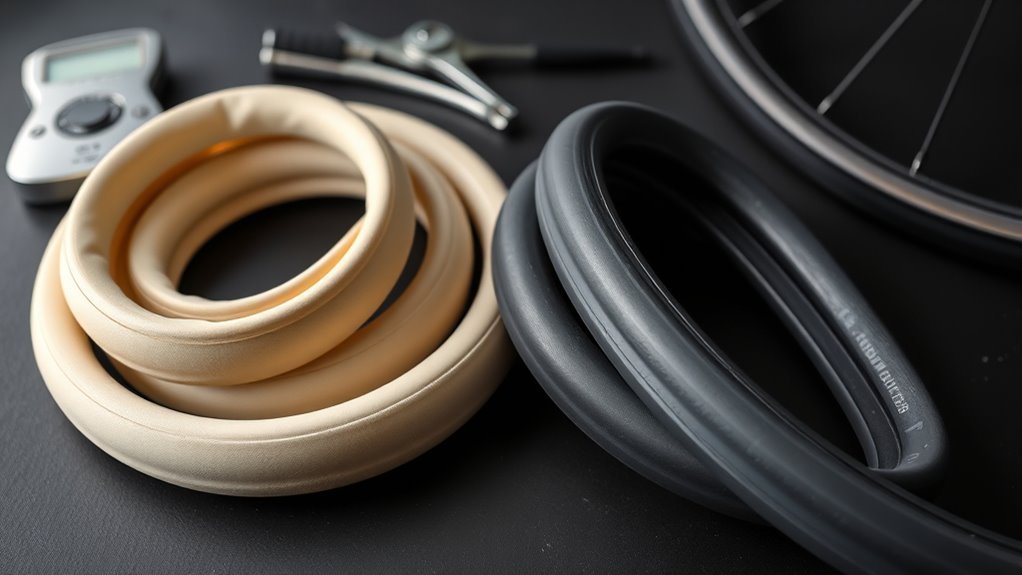
Pick latex for the lowest rolling resistance and reliable field repairs. Choose TPU if you want lighter weight and better puncture resistance on rough roads. Latex saves about 7.1 W over butyl; TPU saves about 5.6 W, and its lighter mass helps on steep climbs. Latex loses air faster but patches reliably. TPU holds pressure longer but patches inconsistently. Valve length, rim type, and your spare strategy all matter — more on each below.
Quick Decision: Latex vs TPU (Who Should Pick Which)
Latex is the better choice for riders who want the lowest rolling resistance on smooth, maintained roads. If efficiency and speed are your main goals, latex delivers. TPU wins on weight: its lighter mass makes a real difference on steep climbs. On rough or gravel terrain, TPU also holds the edge for puncture resistance and works well with sealants, which cuts flat frequency. If you want simple, reliable roadside repairs, latex is easier to patch. On a tight budget, latex or butyl costs less per tube than TPU.
The short version: smooth-road efficiency → latex. Climbing or rough terrain → TPU. Puncture-prone routes → TPU.
Rolling Resistance & Weight: Tests, Math, Real Gains
AeroCoach inner tube rolling resistance testing shows latex reduces rolling resistance by about 7.1 watts versus a standard butyl tube at 45 km/h (for a pair of wheels). TPU sits close behind at roughly 5.6 watts better than butyl. On flat roads, the difference is small. On longer efforts and climbs, it adds up.
A 100 g weight saving in tubes is perceptible to most riders, improving responsiveness and acceleration feel, especially during repeated surges. TPU’s advantage concentrates on steep gradients — for a typical 75 kg rider, the crossover point is roughly 23.6%, where TPU’s lower mass outweighs latex’s rolling resistance edge and produces measurable time gains. Below that gradient, latex holds its efficiency advantage. Independent TPU tube rolling resistance comparisons confirm that latex still edges out even the lightest TPU tubes for pure rolling efficiency, though the gap is small enough that rotational weight savings can offset it on the right terrain.
In practice, the performance difference between latex and TPU is minor for most riders. Choose based on what matters most: pure rolling efficiency on smooth roads, or lighter weight on climbs — and accept the trade-offs that come with each.
Punctures, Sealant & Repairs: What Actually Works
TPU tubes hold up better to punctures in controlled tests, resisting perforation more effectively than latex. They can struggle on very rough surfaces, though. Latex tubes are more vulnerable to small perforations but resist pinch flats and accept patches reliably.
TPU accepts manufacturer-recommended sealants and repair sprays, but results vary. If the tube hole doesn’t align with the tire’s puncture site, sealant may not seal properly. Patching TPU roadside is inconsistent and can be tricky. Latex takes standard repair techniques quickly and predictably.
Match the material to your repair habits. Choose TPU if you want fewer punctures and plan to use sealant. Choose latex if you value reliable, straightforward roadside patching.
Climbs, Rough Roads & Temperature: Real-World Tradeoffs

TPU can offer a measurable edge on very steep pitches and rough surfaces, but actual gains depend on gradient, rider weight, and temperature. On grades below 15%, latex generally holds the advantage for climbing efficiency. TPU’s lower mass only pulls ahead on the steepest climbs — roughly above 23.6% for a 75 kg rider — where its construction yields slightly better power transfer.
On rough roads, TPU increases puncture resilience and cuts downtime, but it can feel less responsive than latex on uneven surfaces. Temperature plays a role too: TPU can feel sluggish in cold conditions, while latex stays responsive but needs more frequent inflation due to higher air loss. Prioritize puncture resilience for long, exploratory routes. Prioritize climbing efficiency and tactile feedback if you’re focused on speed and small margins.
Buying & Setup for Latex vs TPU (Valves, Rims, Pressures, Spares)
Check tube compatibility before buying. TPU works with both tubeless-ready and standard clincher tires. Latex works with standard clincher tires; for rim tape, check with your rim manufacturer, as requirements vary by rim design. For aero rims, use valve lengths of 50 mm or 70 mm for either material. Avoid valve extenders — they raise the risk of breakage. Set pressures based on your specific tire and rim specs. TPU handles a broad pressure range and has no published rider weight limit, so you can tune for comfort or rolling resistance. Latex pressure is more sensitive to system stiffness.
For spares, TPU packs smaller and lighter, making it practical to carry on long rides. Bring a latex spare if you prefer easy patching. Plan for inflation frequency: latex loses air faster, so carry a pump or CO2 and expect to top up more often. TPU holds pressure much longer but needs specific patch kits or repair sprays to fix on the road.
Frequently Asked Questions
Can Latex or TPU Tubes Be Used With Tubeless-Ready Tires?
Yes. Both fit in tubeless-ready tires and work as standard clincher setups. You do give up the puncture protection of a sealed tubeless system with sealant, and air retention will be lower than a true tubeless configuration.
How Do Tube Materials Affect Wheel Balance and High-Speed Stability?
Tube elasticity affects mass distribution and damping. Uneven stretch can create subtle imbalance, which may reduce high-speed stability slightly. Latex’s lower rolling resistance helps at speed, but precise inflation and careful installation matter more than material choice alone.
Are There Environmental Differences in Disposing Latex Versus TPU Tubes?
Latex is biodegradable and can be composted under the right conditions. TPU does not biodegrade but can be recycled through industrial processes. If environmental impact matters to you, check whether your local facilities handle each material before disposing.
Do Either Tube Types Affect Vibration Damping in Carbon Rims?
Yes, modestly. Latex absorbs high-frequency vibrations slightly better than TPU, with some tests showing transmissibility reductions in the range of 5–10%. In practice, this translates to a marginally smoother feel. Tire casing and pressure have a larger influence on overall ride quality.
How Do Storage Conditions Influence Long-Term Tube Lifespan?
Store tubes somewhere cool, dark, dry, and sealed. UV exposure and temperature swings accelerate degradation in both materials. Moisture promotes mold and corrosion near valves. Rotate your stock and keep tubes away from ozone sources like electric motors or fluorescent lights.
Conclusion
Latex wins on rolling resistance and field repairability. TPU wins on weight, puncture resilience, and air retention. Data show latex shaves watts on smooth roads but loses its edge on rough terrain. TPU patches are unreliable roadside, so carry the right repair kit and know how to use it. Match your tube material to your terrain, your riding style, and how far you plan to be from support.
Related Articles

Wide vs Narrow Tires: Ultimate Grip vs MPG Guide
A concise guide comparing wide and narrow tires for grip, speed, and fuel efficiency—discover which suits your driving needs and why it matters.
Read More
Motorcycle Tire Pressure Chart: Recommended PSI by Type
Discover ideal PSI ranges for road, track, and wet motorcycle tires — practical tips and adjustments await to optimize grip and safety.
Read More
Bicycle Tire Pressure Chart by Rider Weight: PSI Guide
Want optimal ride feel and fewer flats? Discover PSI baselines by weight, tire type, and wheel size to fine-tune grip and comfort.
Read More