
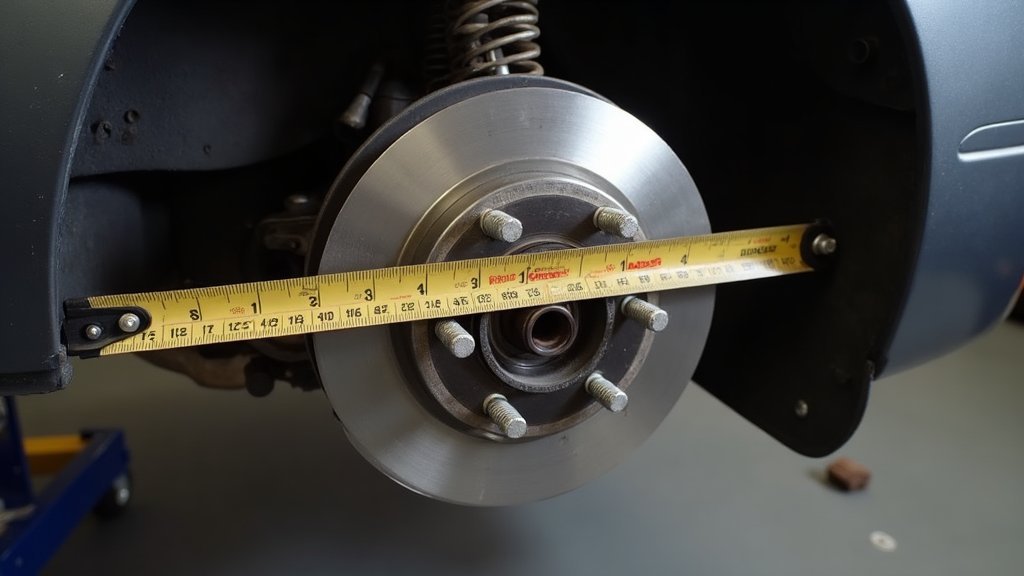
Shopping for wheels, winter rims or a spare for a Hyundai Sonata starts with three numbers: the bolt pattern, the center bore and the lug thread. Get any of them wrong and the wheel will not fit safely. Here are the Sonata’s wheel specifications and what else to check before you buy.
Quick Answer
The Hyundai Sonata uses a 5×114.3 mm (5×4.5 in) bolt pattern with M12 x 1.5 lug nuts and a 67.1 mm center bore. Recent factory wheels run from 16 to 19 inches. Wheels from other cars with 5×114.3 may still need hub-centric rings and the right offset to fit.
Key Takeaways
- Bolt pattern: 5 lugs on a 114.3 mm circle (5×4.5 inches).
- Lug thread: M12 x 1.5 nuts with a conical seat on factory wheels.
- Center bore: 67.1 mm; wheels with a bigger bore need hub-centric rings.
- Offset and width matter as much as bolt pattern for clearance.
Hyundai Sonata Wheel Fitment Specs
| Spec | Hyundai Sonata |
|---|---|
| Bolt pattern (PCD) | 5×114.3 mm (5×4.5 in) |
| Lug fastener | Lug nuts, M12 x 1.5 |
| Center bore | 67.1 mm |
| Factory wheel sizes (2020-2026) | 16 to 19 inches |
| Wheel nut torque (current gen) | 79-94 lb-ft per 2025 guidance |
Fitment databases list the eighth-generation (DN8) Sonata with 12×1.5 nuts, a 5×114.3 pitch circle and a 67.1 mm hub diameter, and the 2026 Sonata uses the same 5×114.3 pattern with a 67.1 mm center bore. Factory DN8 wheels include 16×6.5 ET43 and 17×7 ET48 sizes, with 18- and 19-inch options on sportier trims.
Products Worth Considering

Upgrade your wheels with MIKKUPPA closed-end lug nuts designed for reliable fit and corrosion resistance. The one-piece, cold-forged and heat-treated steel construction helps resist rust and stripping, while the integrated finish delivers a durable black appearance. Built to OEM standards with a conical 60-degree seat, these nuts provide a secure solution for compatible Ford, Honda, Jeep, and Chevrolet models.

These M14x1.5 closed-end chrome lug nuts are a one-piece replacement designed for secure fitment on compatible GM, Ford, and select Chrysler/Dodge models. Featuring a 60-degree conical seat and anti-rust chrome plating, they help resist corrosion and maintain a bright look for everyday driving. Built for long-term durability, they include OEM-style part references and are backed by 12 months of support.

Upgrade your wheels with MIKKUPPA M12x1.5 mag seat lug nuts built for secure, corrosion-resistant performance. These closed-end chrome lug nuts are a direct replacement for select Toyota models, including Camry, Corolla, RAV4, Sienna, Avalon, Highlander, Matrix, Venza, and Prius. Triple-chromium plating and cold-forged, heat-treated steel help deliver strength for daily driving and replacement needs.
How to Read 5×114.3
The first number is the lug count and the second is the diameter of the circle through the center of the studs, in millimeters. 114.3 mm is 4.5 inches, which is why you will also see the pattern written as 5×4.5. It is one of the most common patterns on Japanese and Korean cars, so many wheels will bolt on, but bolting on is not the same as fitting correctly.
Center Bore and Hub-Centric Rings
The Sonata’s hub is 67.1 mm across. Factory Hyundai wheels are machined to that size so the hub carries the load and centers the wheel. Aftermarket wheels are often bored larger (for example 73.1 mm) to fit many cars. If you buy one of those, install hub-centric rings that step it down to 67.1 mm; without them the wheel is centered only by the lug nuts, which can cause vibration.
Warning: A wheel with a center bore smaller than 67.1 mm will not seat on the hub at all. Never force it.
Products Worth Considering

The GADFISH spare tire carrier is built for reliable hauling with a reinforced welded triangular structure and a behind plate that securely holds the tire up to 150 lbs. It fits a wide range of trailer wheel lug setups, making it suitable for boat trailers as well, while the sloping design helps reduce wind resistance and provides low-ground clearance. Installation is designed to be straightforward with different length bolts and no drilling required.

The Trivd Frol 1/2" air impact wrench delivers high performance torque up to 1500 ft-lbs with a twin hammer impact mechanism for strong, balanced blows. It features an ergonomic grip, compact lightweight design, and quick-stop control with 3 forward speeds up to 8000 RPM plus a reverse speed. Built for demanding automotive repair and tire shop work, the rear exhaust helps keep debris away from the surface.

This 1/2-inch drive breaker bar delivers powerful leverage for loosening and tightening stubborn lug nuts and automotive fasteners. The 180-degree flex head helps you reach tight spaces at the angle you need, making tire and brake jobs easier. A spring-loaded ball detent design holds 1/2-inch sockets securely while the chrome-moly head provides durable strength for everyday use.
Offset, Width and Tire Size
Matching the bolt pattern does not guarantee clearance. Factory Sonata wheels have high positive offsets (around ET43 to ET55). A wheel with much lower offset pushes the tire out toward the fender; one with too much may hit the suspension. Keep the overall tire diameter close to stock so the speedometer and stability systems stay accurate. Our Sonata tire size chart lists the factory sizes for every year.
- Use nuts with the seat type the new wheel requires (conical or ball).
- Confirm TPMS sensors will transfer or order new ones.
- Torque the nuts to the value in your manual after fitting.
Frequently Asked Questions
What is the bolt pattern on a Hyundai Sonata?
The Sonata uses a 5×114.3 mm bolt pattern, also written 5×4.5 inches, with M12 x 1.5 lug nuts.
What is the center bore of a Hyundai Sonata?
The Sonata’s hub bore is 67.1 mm. Aftermarket wheels with a larger bore need hub-centric rings to center correctly.
Will Honda or Toyota wheels fit a Sonata?
Many share the 5×114.3 pattern, but Honda (64.1 mm) and Toyota (60.1 mm) center bores are smaller than the Sonata’s 67.1 mm hub, so those wheels will not seat. Offset can also differ.
Sources
- 2026 Hyundai Sonata wheel and tire sizes
- Hyundai Sonata VIII (DN8) wheel specs
- Hyundai owner’s manuals
Products Worth Considering

Masoll Gen 2 external TPMS sensors are a DIY replacement set of 4 for select GM vehicles made after 2006, helping you shut off the TPMS warning light quickly. Simply screw the sensors onto the tire valves and sync to your car ECU using the included EL-50448 relearn tool. Dual-frequency 315/433 MHz design provides OEM-level performance with accurate readings and replaceable batteries for about two years.
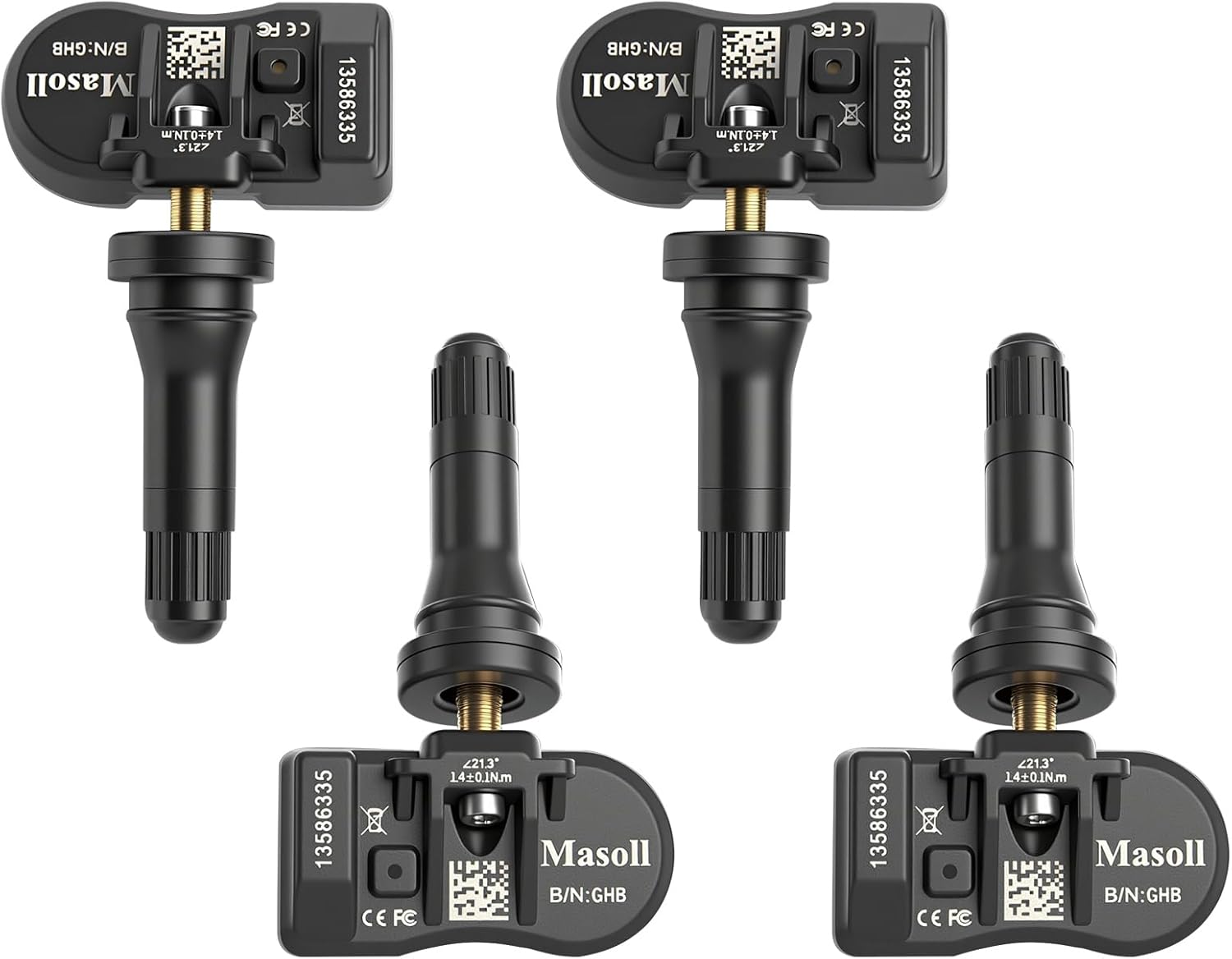
Masoll TPMS sensors are designed for most GM vehicles after 2006, helping you clear tire pressure warnings with OEM-level 315/433MHz compatibility. The 4-pack includes pre-programmed sensors, but re-learning is required after installation using a GM TPMS relearn tool or scan tool. Built with a dual-antenna design and a long-life CR2050 battery, these sensors deliver reliable performance in extreme temperatures with corrosion-resistant valve construction.

These aluminum alloy tire valve stem caps with an O-ring seal help protect valve stems from corrosion while adding a clean, stylish look to your vehicle. The universal fit works across cars, trucks, motorcycles, bicycles, and more, making them an easy upgrade for everyday driving and off-road use. Installation is quick, and the included four-pack keeps all your tires dressed and protected.