Disclosure: As an Amazon Associate, we earn from qualifying purchases. If you click a link on this page and make a purchase, we may receive a small commission at no extra cost to you.
A dead battery and a low tire can leave you waiting for help, especially when both problems happen away from home. The HPBS 5000A Jump Starter combines a 12V battery booster, a 150 PSI inflator, an emergency light, and portable charging in one compact case. Its main strengths are broad engine compatibility and useful roadside features, but its compressor needs cooling breaks and its 5000A figure is a peak rating, not continuous output. This review helps you decide whether the HPBS A1 is a practical emergency tool for your vehicle or whether you need a heavier-duty option.
Quick Verdict
Rating: 8/10, recommended with caveats
Best For: Drivers who want one portable tool for 12V jump starts, tire top-offs, lighting, and emergency phone charging.
Bottom Line: The HPBS A1 offers a strong mix of jump-starting and inflation functions in a 1.6-pound package. It is a useful vehicle backup, but it is not a substitute for a shop compressor, a battery charger, or diagnosis of a failing battery.
HPBS 5000A Jump Starter
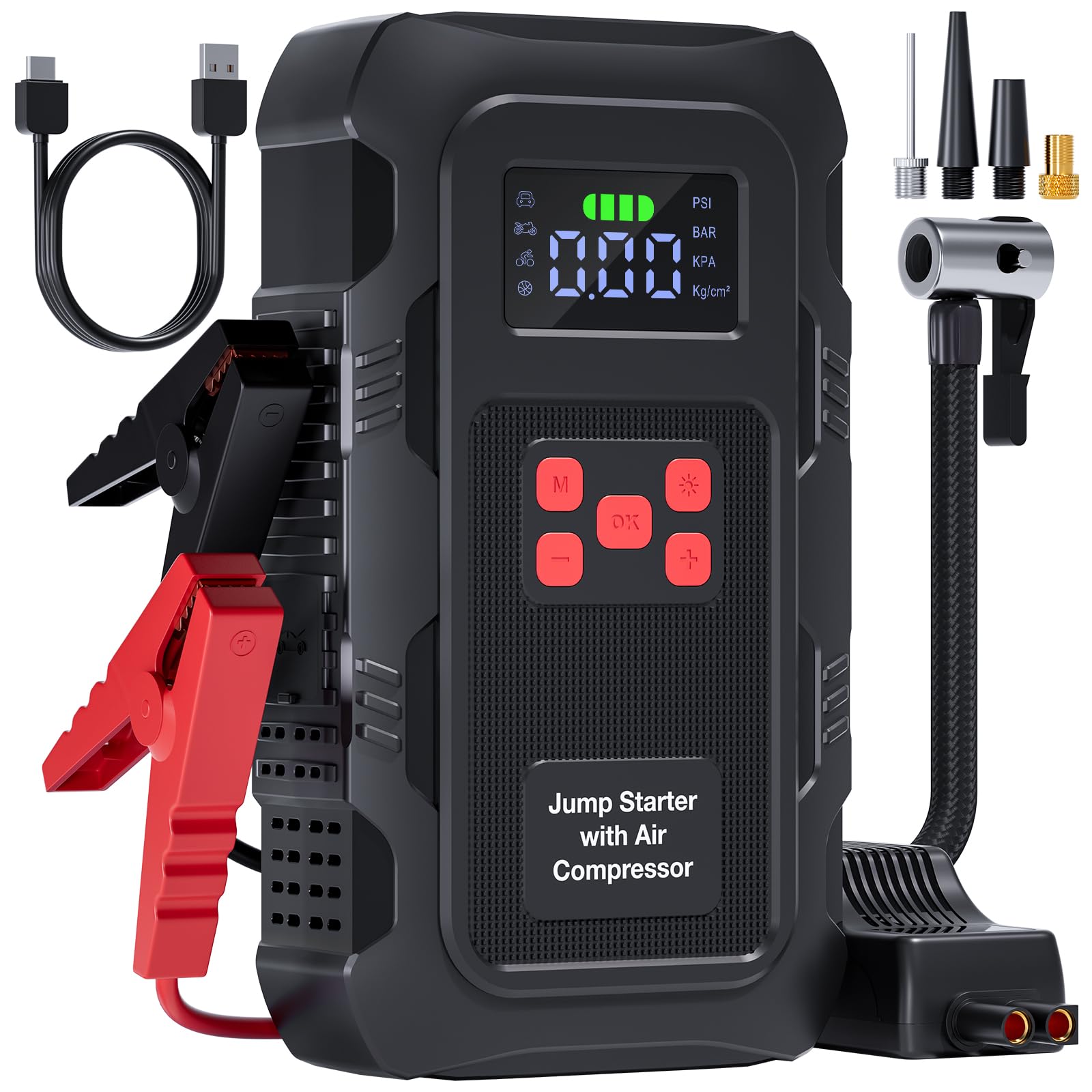
Model A1 portable 12V jump starter with a 150 PSI tire inflator, digital controls, emergency lighting, USB charging, smart clamps, an air hose, nozzle adapters, and a storage case.
View Product on Amazon →Key Specifications
| Specification | Detail |
|---|---|
| Brand | HPBS |
| Model | A1 |
| Product type | Portable jump starter, tire inflator, power bank, and emergency light |
| Vehicle system | 12V vehicle batteries |
| Peak current | 5000A claimed peak output |
| Engine compatibility | Up to 10.0L gasoline and 8.0L diesel engines |
| Maximum inflator pressure | 150 PSI |
| Airflow | 30 L/min claimed airflow |
| Battery | Lithium-polymer, 59.2 Wh energy capacity |
| Dimensions | 5.5 x 8.46 x 4.7 inches |
| Weight | About 1.6 pounds |
| Operating range | -4°F to 140°F (-20°C to 60°C) |
| Light output | 400-lumen emergency flashlight with multiple modes |
| Included items | Smart jumper cable, USB-C charging cable, storage case, air hose, four nozzle adapters, and manual |
What Is the HPBS A1?
The HPBS A1 is an all-in-one emergency unit built around two main jobs: supplying a short burst of power to a weak 12V vehicle battery and adding air to a tire. The 5000A number describes peak current under ideal conditions. Actual starting results still depend on the vehicle, battery condition, temperature, clamp contact, and the charge level inside the jump pack.
The inflator reaches a claimed maximum of 150 PSI and uses preset pressure controls with automatic stopping. That makes it suitable for topping up passenger-vehicle tires, motorcycle tires, bicycle tires, lawn equipment, sports balls, and compatible inflatables. The unit also works as a USB power bank and includes a 400-lumen light for roadside visibility.
Who Should Buy It?
Best For
- Drivers who want one trunk-ready tool for a weak battery and low tire pressure.
- Multi-car households that need a portable backup instead of jumper cables and a separate inflator.
- Campers, riders, and homeowners who also inflate small equipment or recreational gear.
Skip If
- You need to start a commercial vehicle beyond the stated 10.0L gas or 8.0L diesel limit.
- You need continuous inflation for large truck tires, air tools, or shop work.
- You want a maintenance charger that can repair or keep a vehicle battery charged over time.
Before You Buy: Treat this as an emergency booster and tire top-off tool. It cannot repair a damaged tire, revive every failed battery, replace a proper battery charger, or run its compressor continuously without cooling breaks.
[Products Worth Considering]

The GOOLOO A3 3000A 12V jump starter delivers fast, reliable starts for dead vehicles while also providing a built-in 150 PSI cordless tire inflator. It supports gas and diesel engines up to 9.0L/6.5L and includes multiple inflation modes with smart shutoff and an LED display for convenient pressure control. A high-efficiency BMS provides 10 safety protections, and the unit also functions as a flashlight and device-charging power bank.
![[2026NEW] 5000A Jump Starter with Air Compressor (150PSI)](https://m.media-amazon.com/images/I/71oG4PFNsmL._AC_SL1500_.jpg)
The 2026 Povasee 5000A jump starter is an all-in-one car power solution that jump-starts 12V vehicles and also inflates tires with a high-output air compressor. It supports multiple inflation presets with an LCD display, plus LED lighting and SOS signaling for safer roadside help. With secure protection systems, fast charging for phones, and 24-month standby, it’s built for reliable emergency performance in a wide temperature range.
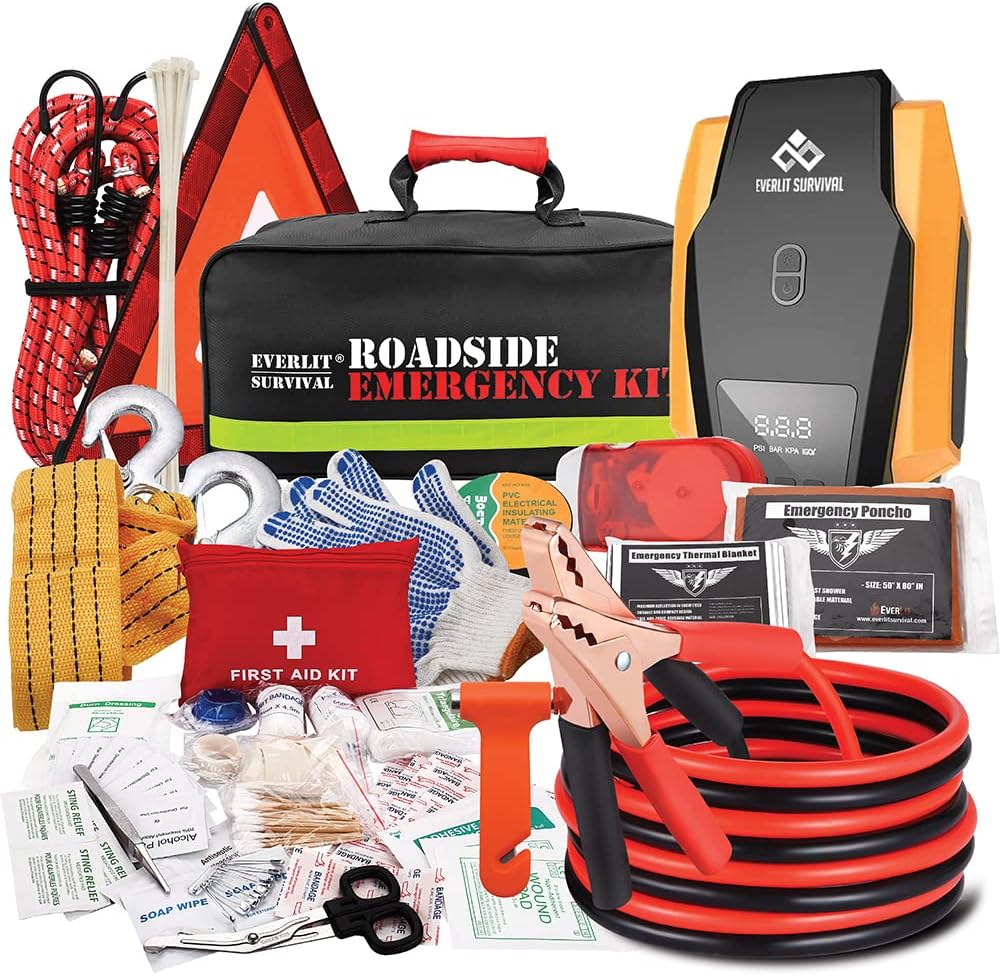
The Everlit Road Guardian emergency kit is designed for roadside breakdowns, combining essential safety gear and roadside tools in one compact bag. It includes a digital 12V auto tire inflator with preset and auto shutoff, plus 12-foot 8-gauge jumper cables to get you moving again. You also get a full 108-piece first aid kit, reflective warning tools, safety gloves, and emergency convenience items for safer travel.
What People Say
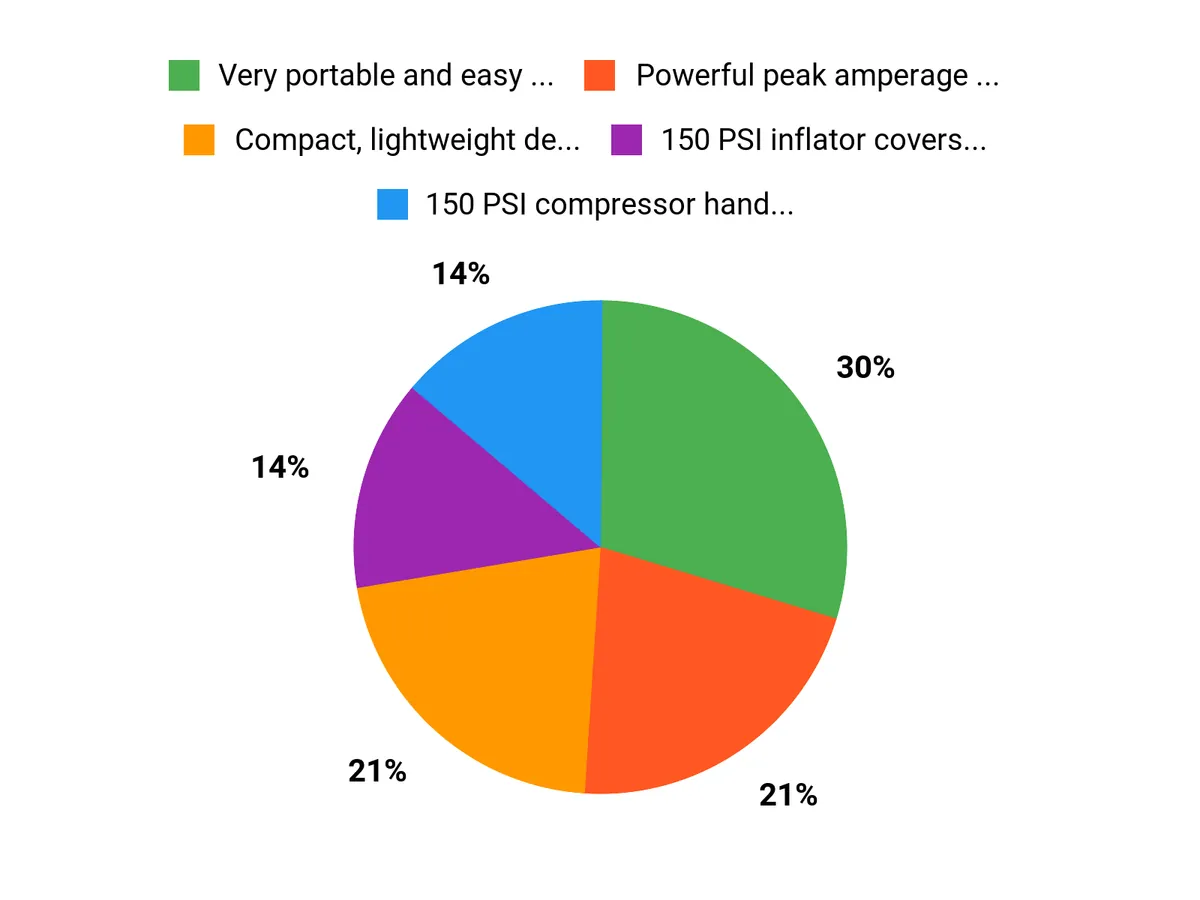
The buyer feedback summarized in the original review is mostly positive. Portability, simple controls, and the convenience of combining a jump starter with an inflator are the most common strengths. Buyers also mention using it on vehicles that have been sitting and on lawn equipment that needs either a jump or added tire pressure.
The main concern is less about basic function and more about confidence in the charge display and overall fit and finish. That matters for emergency gear because you need to know the unit is ready before you leave it in a vehicle for months.
Overall Sentiment: Positive

Pros and Cons
Pros
- Combines jump starting, tire inflation, lighting, and USB charging in one case.
- Rated for 12V engines up to 10.0L gasoline and 8.0L diesel.
- 150 PSI inflator includes pressure monitoring and automatic stopping.
- About 1.6 pounds, so it is easy to store in a trunk, cargo box, or garage cabinet.
- Smart clamps and built-in electrical protections help reduce common connection errors.
Cons
- The compressor needs at least a 10-minute cooling break after 10 minutes of continuous operation.
- The peak-amperage rating does not guarantee a start when a battery is damaged, frozen, or deeply failed.
- Some buyer feedback in the source article mentions an unclear charging indicator.
Feature-by-Feature Review
Jump-Starting Power and Compatibility
HPBS rates the A1 for 12V vehicles with engines up to 10.0L gasoline or 8.0L diesel. That range covers most passenger cars, SUVs, pickups, motorcycles, and common yard equipment. The pack also includes an RST or manual-boost function for very low-voltage batteries, but you should use that feature only as directed in the manual because it can bypass normal safeguards.
Peak current is only one part of starting performance. Clean clamp contact, a charge level above 75%, moderate battery temperature, and a battery that is not physically damaged all improve your odds. The manual also calls for a 30-second wait between attempts to limit heat buildup.
Air Compressor Performance
The 150 PSI rating gives the inflator enough pressure range for passenger tires and many small pneumatic items. Its claimed 30 L/min airflow is more relevant than maximum PSI for normal car tires because airflow affects how quickly the tire gains volume. Automatic stopping lets you set a target pressure and step back, reducing the chance of accidental overinflation.
This compressor is best for top-offs and emergency inflation, not repeated full fills of large tires. The manual limits continuous operation to 10 minutes, followed by at least 10 minutes of cooling. A badly deflated truck tire may require more than one cycle.
Battery, Charging, and Power Bank Use
The A1 uses a lithium-polymer battery with a listed energy capacity of 59.2 Wh. Earlier product data sometimes labels that number as amp-hours, but watt-hours is the more credible unit for this compact pack. USB-C charging simplifies cable replacement, while USB output lets you charge a phone or another small device during an outage or roadside stop.
Charge the unit fully before first use and before long trips. For storage, the manual recommends recharging every two to three months. A jump starter that remains untouched through a hot summer or cold winter may not have enough charge when you finally need it.
Controls, Lighting, and Portability
The digital interface shows battery and inflator information, while the pressure controls let you choose a target value. The 400-lumen light adds steady illumination plus emergency modes for visibility. At about 1.6 pounds, the unit is light enough to move between vehicles, but keeping it in its case protects the hose, clamps, and nozzle adapters from getting lost.
Included Accessories
The package includes the main A1 unit, smart jumper cable, USB-C charging cable, hard storage case, pump hose, four air nozzles, and a user manual. That is enough for common vehicle valves, bicycles, balls, and compatible inflatables. Check the package when it arrives so you can resolve a missing hose or adapter before an emergency.
How It Performs in Real Use
Roadside Battery Emergency
For a passenger vehicle with a weak but undamaged battery, the compact pack is easier to position than another car and a set of jumper cables. You can connect the clamps, confirm the indicator status, start the engine, and pack the unit away without needing a second vehicle.
Low Tire Pressure Warning
For a tire that is several PSI below the door-jamb recommendation, the preset inflator is convenient. Set the target, attach the hose firmly, and let auto-stop end the cycle. A punctured tire may lose pressure again, so inflation should help you reach a safe repair location, not replace repair.
Camping and Outdoor Equipment
The nozzle adapters extend the unit beyond car tires. You can use it for motorcycle or bicycle tires, lawn equipment, sports balls, and compatible inflatable gear. The light and USB output also help when you are away from a wall outlet.
Multi-Car Household
One portable unit can move between vehicles for seasonal checks, but emergency gear works best when it is already in the car that needs it. If your household shares the A1, create a routine for returning it to the same location and checking its charge every few months.
How to Use It Correctly
Jump-Starting Steps
- Turn off the vehicle and electrical accessories, then confirm the jump starter has sufficient charge.
- Connect the positive clamp to the positive battery terminal and the negative clamp to the specified negative terminal or approved chassis ground.
- Check the clamp indicator for a correct connection, then follow the manual’s start procedure.
- After the engine starts, disconnect the clamps in the order stated by the manual and keep them from touching.
- Wait at least 30 seconds before another attempt if the engine does not start.
Inflation Steps
- Check the vehicle’s door-jamb label or equipment manual for the correct pressure.
- Attach the hose securely to the unit and valve stem.
- Select the pressure unit and target value, then start the compressor.
- Stop and allow cooling if operation reaches 10 continuous minutes.
- Recheck pressure with a separate gauge when accuracy is critical.
Pro Tip: Put a recurring reminder on your phone to recharge the jump starter every two to three months. Check the hose, clamps, and adapters at the same time so the full kit is ready.
Compatibility and Safety
Use the HPBS A1 only with compatible 12V vehicle systems and stay within its stated engine limits. Do not connect it to a damaged, leaking, or frozen battery. Keep the unit dry, avoid direct heat, and inspect the cable insulation, clamps, hose, and housing before use.
The manual lists safeguards for reverse connection, overcurrent, overvoltage, overload, overcharge, discharge, temperature, and short-circuit conditions. These protections reduce risk, but they do not replace correct polarity or safe handling. Stop if the smart clamps beep, show an error, become unusually hot, or do not indicate a proper connection.
Store the pack in its case in a cool, dry location. Extreme cabin temperatures can reduce lithium-battery performance and service life, so consider a protected cargo area and follow the storage limits in the manual.
Why Customers Choose
The HPBS A1 appeals to buyers who would otherwise carry separate jumper cables, a compressor, a flashlight, and a power bank. Its compact weight and broad list of functions make it easier to keep emergency gear organized. The strongest reason to choose it is convenience, while the main tradeoff is that each function is designed for portable emergency use rather than continuous professional work.
Is It Worth the Price?
The HPBS A1 offers strong value if you need both a jump starter and an inflator but do not want two separate devices in your trunk. The case, smart clamps, hose, adapters, light, and USB charging make the package more complete than a basic booster pack.
Value depends on how you will use it. It is a smart buy for everyday roadside preparation and occasional tire top-offs. It is not the best fit if you need a brand with a large service network, a dedicated high-duty compressor, or a long-term battery maintainer.
[Products Worth Considering]

Inflate car tires, bicycles, and sports balls quickly with a fast 50-second inflation design and a digital pressure gauge for confident pressure control. The 12V DC inflator features auto shut-off to stop at your preset PSI, plus an emergency LED light for added visibility. Continuous use supports no-rest inflation across all four tires, with low vibration and low noise operation for easier handling.

This dual power portable tire inflator lets you run from a 12V vehicle cigarette lighter or a 110V/120V wall outlet for flexible roadside and home use. It delivers up to 150 PSI with quick inflation, including a fast fill example from 0 to 36 PSI, and features auto shutoff with pressure memory plus a backlit LCD display with unit switching. Designed for multiple inflations, it includes extra nozzles for cars, motorcycles, bikes, sports equipment, and inflatables, while compact storage and a carry bag make it easy to keep on hand.

AstroAI AIRUN H is a compact 12V tire inflator designed for fast, convenient inflation with an easy-to-read digital pressure gauge. Set your target pressure with programmable controls and let the auto shut-off turn off the pump when the preset is reached. It also includes a backlit screen and LED flashlight for nighttime use, with a ToughUltra durability design for longer service life.
How It Compares to Alternatives
The NOCO Boost X GBX55 is worth comparing if jump-starting support, fast USB-C charging, and an established jump-starter platform matter more than having a built-in compressor. Its engine rating is lower than the HPBS claim, and you would still need a separate inflator.
The Fanttik X8 APEX is a better comparison if tire inflation is your main task. It is a dedicated 150 PSI inflator with strong airflow and longer continuous runtime, but it does not replace a jump starter. The HPBS A1 makes the most sense when you prefer one compact emergency kit instead of separate specialized tools.
[Products Worth Considering]

This portable tire inflator delivers fast, efficient inflation with a smart cooling design that helps prevent overheating during extended use. It features a digital pressure gauge with ±1 PSI accuracy, four preset modes for quick setup, and auto shut-off at your target pressure. You can power it either with the built-in 6000mAh battery or your vehicle’s 12V outlet for flexible use on the go or at home.

This portable cordless air pump inflates car, motorcycle, bike, and ball tires with up to 150 PSI and real-time LCD pressure monitoring. It features a built-in rechargeable battery, four unit modes (PSI/KPA/BAR/KG/CM²), and an auto shut-off to prevent over-inflation. An LED light and USB-C/USB-A ports make it useful for nighttime emergencies and charging devices.

The Airmoto portable tire inflator quickly and accurately fills car, truck, SUV, motorcycle, and bicycle tires up to 120 PSI with auto shut-off when your target pressure is reached. Its large LCD, multi-unit pressure display, and digital gauge make it easy to dial in settings and verify readings, while the built-in LED flashlight helps in low light. The included polyurethane hard carrying case and storage mesh pocket keep the inflator and accessories protected and organized.
Frequently Asked Questions
Will the HPBS 5000A work with my vehicle?
It is designed for 12V vehicles with engines up to 10.0L gasoline or 8.0L diesel. Confirm your vehicle voltage and engine size before use, and choose a commercial-grade unit for engines beyond those limits.
Can it start a completely dead battery?
It may start a very low-voltage battery when the pack is charged and the battery is otherwise serviceable. It cannot guarantee a start if the battery has internal damage, is frozen, or the vehicle has another electrical or mechanical fault.
How long can the air compressor run?
The manual limits continuous compressor use to 10 minutes. Let it cool for at least 10 minutes before continuing so heat does not damage the pump or battery.
Does the inflator stop automatically?
Yes. You can select a target pressure and the inflator is designed to stop when it reaches that setting. Use the pressure listed on the vehicle’s door-jamb label, not the maximum pressure molded into the tire sidewall.
How often should I recharge it?
Charge it fully before first use and before a long trip. During storage, recharge it every two to three months and confirm the indicator shows enough power before relying on it.
What comes in the package?
The documented package includes the A1 jump starter, smart jumper cable, USB-C charging cable, hard case, pump hose, four nozzle adapters, and a user manual. Check the contents when the unit arrives because each accessory supports a different function.
Who should skip this jump starter?
Skip it if you need to support larger commercial engines, inflate large tires continuously, or maintain a battery over weeks or months. Those jobs call for a heavier booster, a higher-duty compressor, or a dedicated smart charger.
The Bottom Line
The HPBS A1 is a practical choice for drivers who want a compact 12V jump starter and 150 PSI inflator in one organized kit. Its portability, engine compatibility, auto-stop inflation, and included accessories support common roadside needs, but the compressor duty cycle and peak-current limitations make it better for emergencies than professional use. Buyers who need continuous air or commercial starting power should choose separate heavy-duty equipment.
Ready to Buy?
Check the latest price, seller details, package contents, and product information before you decide.