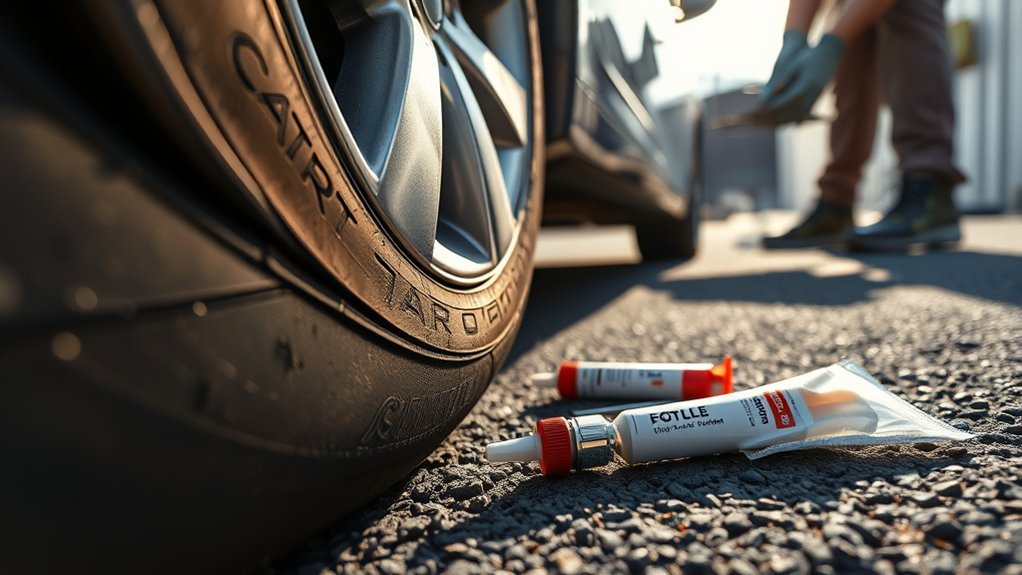
A Toyota Camry tire can sometimes be patched, but only when the damage meets strict passenger-tire repair limits. The safe answer depends on where the puncture is, how large it is, how much tread remains, and whether the tire has hidden internal damage. When in doubt, have the tire demounted and inspected by a trained tire technician before driving on it again.
Quick Answer
Yes, a Toyota Camry tire can usually be patched if the puncture is in the tread/crown area, is no larger than 1/4 inch (6 mm), and the tire passes an internal inspection. Sidewall damage, shoulder damage, bulges, severe wear, or a plug-only repair means replacement is the safer choice.
Key Takeaways
- A Camry tire repair should be limited to the tread area only, not the shoulder or sidewall.
- The puncture should be no larger than 1/4 inch (6 mm), following USTMA tire repair guidance.
- A proper repair uses both a rubber stem/plug to fill the injury and a patch to seal the inner liner.
- The tire must be removed from the wheel so the inside can be inspected for hidden damage.
- Replace the tire if it has sidewall bubbles, shoulder damage, tread separation, overlapping repairs, or tread worn to the indicators.
At a Glance
| Time Required | Usually 30–60 minutes at a tire shop, depending on wait time and inspection results |
| Difficulty | Professional recommended; on-the-wheel repairs are not proper permanent repairs |
| Tools Needed | Tire machine, inspection light, injury probe, buffing tools, vulcanizing cement, and a one-piece or two-piece plug-patch repair unit |
| Cost | Varies by shop and tire condition; replacement is required if the tire fails inspection |
When Is a Tire Repairable?

A Toyota Camry tire is repairable only when the puncture is in the main tread area, often called the crown area, and away from the shoulder where the tread curves into the sidewall. The puncture must also be small enough, the tire must have enough tread left, and the internal liner must be in good condition.
For passenger tires, the commonly accepted maximum repairable puncture size is 1/4 inch (6 mm). This is the limit used by the U.S. Tire Manufacturers Association and reinforced by the Tire Industry Association. Damage outside that safe repair area should not be patched.
Warning: Do not rely on a surface-only patch, a plug-only repair, or a string plug installed while the tire is still on the Camry. Those may slow a leak temporarily, but they do not allow a technician to inspect the inside of the tire for hidden liner, belt, or sidewall damage.
Critical Factors for Successful Tire Repair
A safe Camry tire repair comes down to three questions: where is the damage, how large is it, and what repair method will be used?
Damage Location Matters Most
The puncture must be in the tread/crown area. Punctures in the shoulder, sidewall, bead area, or any area where the tire flexes heavily are not safe candidates for repair. Sidewall bubbles, bulges, exposed cords, cuts, or cracking are replacement signs, not patching signs.
If the puncture is close to the shoulder and the technician cannot clearly confirm it is inside the repairable tread area, the conservative choice is to take the tire out of service.
Repair Size Limitations
For a Toyota Camry passenger tire, use the passenger-tire limit: 1/4 inch (6 mm). Do not apply larger truck-tire repair assumptions to a Camry tire.
| Condition | Patchable? | What to Do |
|---|---|---|
| Small nail or screw in the center tread, no larger than 1/4 inch | Usually yes | Have the tire demounted, inspected, and repaired with a plug-patch unit |
| Puncture in shoulder or sidewall | No | Replace the tire |
| Hole larger than 1/4 inch (6 mm) | No | Replace the tire |
| Overlapping repair or old improper repair | No | Replace the tire |
| Tread worn to treadwear indicators or 2/32 inch | No | Replace the tire |
Repair Method Standards
A proper repair fills the puncture channel and seals the inner liner. That usually means a one-piece combination repair unit or a two-piece repair that includes both a rubber stem and an inner liner patch. A plug by itself does not seal the inner liner, and a patch by itself does not fill the injury channel.
Note: Some run-flat, self-sealing, foam-lined, or specialty tires may have extra manufacturer repair limits. Ask the shop to follow both industry repair procedures and the tire manufacturer’s repair policy.
How to Patch a Tire Step-by-Step
This is what a proper professional repair should look like. Use it as a checklist when you talk to a tire shop.
- Locate the puncture. The technician confirms the leak source and checks whether it is in the tread/crown area.
- Measure the injury. The puncture must be no larger than 1/4 inch (6 mm) for a Camry passenger tire.
- Remove the tire from the wheel. This is required so the inside can be inspected.
- Inspect the inner liner and sidewall. The technician looks for run-flat damage, sidewall scuffing, belt damage, old repairs, or rubber dust inside the tire.
- Prepare the injury channel. Damaged material is removed and the channel is prepared according to the repair material instructions.
- Buff and clean the inner liner. The repair area must be clean and properly textured so the patch can bond.
- Apply the repair unit. The stem fills the puncture path and the patch seals the inside liner.
- Remount, inflate, and leak-test. The repaired tire should be checked for leaks before it goes back on your Camry.
Pro Tip: If your Camry’s tire pressure warning light comes on after a repair, check cold tire pressure with a gauge. The recommended pressure is on the driver-side doorjamb label, not the maximum pressure printed on the tire sidewall.
[Products Worth Considering]

Measure tire tread depth quickly and accurately with this LUMITECO dial gauge that reads in 1/32" increments up to 14/32". The color-coded green/yellow/red zones make it easy to judge tire wear and know when replacement is needed. A rugged, compact design with a protective pouch helps keep the gauge ready for use on cars, trucks, motorcycles, and more.

Monitor tire tread wear with a smart, color-coded depth gauge that shows clear condition ranges at a glance. The bar is range marked for fast, easy readings, helping you maintain safer traction and performance. Each gauge is portable with a pocket clip, and the set includes 20 units for daily use and sharing.

TP-M13W combination repair unit kit includes wrapped stems with matching patches for fast, reliable tire repairs. It’s suitable for both radial and bias ply tires and is designed for chemical or heat vulcanization. Gray vulcanizing gum with blue backing helps create a strong bond, with the stem portion wrapped for added effectiveness.
Frequent Errors in Tire Repair Techniques

Tire repair mistakes usually happen when the repair is rushed or the tire is not removed from the wheel. Avoid these common errors:
- Using a plug-only repair as permanent repair. A string plug may get you to a repair shop, but it is not the same as a proper internal plug-patch repair.
- Patching a shoulder or sidewall puncture. These areas flex too much for a reliable repair.
- Ignoring tread depth. A tire worn to the treadwear indicators or 2/32 inch should be replaced, not patched.
- Repairing a tire that was driven flat. Driving on a severely underinflated tire can damage the sidewall from the inside.
- Overlapping old repairs. Repairs that overlap or sit too close together can weaken the tire and should be rejected.
NHTSA reported 511 deaths in tire-related crashes in 2024, which is why questionable tire damage should be treated as a safety issue—not just an inconvenience.
When Tire Repair Isn’t Enough: Signs for Replacement
Replace the Camry tire instead of patching it if you see any of these signs:
- Sidewall puncture, cut, bubble, bulge, or exposed cord
- Damage in the shoulder where the tread curves toward the sidewall
- Puncture larger than 1/4 inch (6 mm)
- Multiple punctures close together or overlapping repairs
- Tire driven flat or severely underinflated
- Tread separation, belt damage, or rubber dust inside the tire
- Tread worn to the treadwear indicators or 2/32 inch
- Old cracking, dry rot, bead damage, or air loss from the bead area
If the tire is not repairable and the other tires are worn, ask the shop whether replacing one tire will affect handling, traction, or all-wheel-drive operation if your Camry is equipped with AWD. Tire size, tread depth, and matching matter for safe handling.
[Products Worth Considering]

Vigorder rubber cement glue delivers superior adhesion and cures quickly within about 30 seconds for seamless rubber bonding. Once cured, it helps provide a strong, durable, waterproof seal that holds up to vehicle weight, pressure, and heat. Suitable for cars, motorcycles, trucks, bicycles, and off-road tires, it’s designed for emergency patch and maintenance repairs.
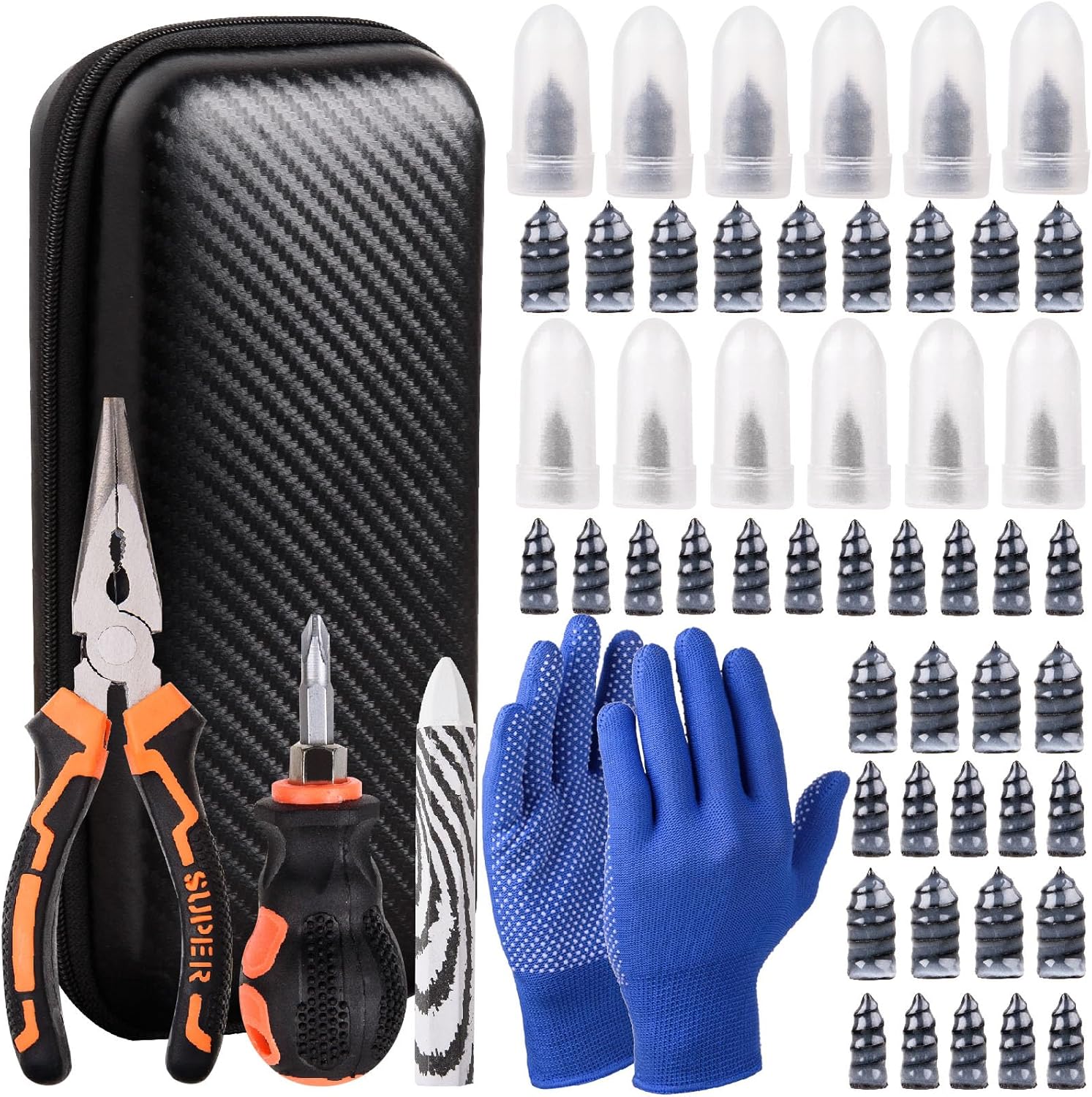
This tire sidewall puncture repair kit fixes flats fast without removing the tire, helping you get back on the road in minutes. It includes self-tapping repair nails, essential tools, gloves, and a portable storage bag for convenient roadside use. Designed for tubeless tires, it helps create a tight, leak-resistant seal for cars, motorcycles, trucks, SUVs, and ATVs.

The SAFELIFE dial tire tread depth gauge measures tread depth in 1/32 inch increments with clear, easy-to-read 2-inch dial face. Color zones using a traffic light system help you quickly judge whether tread is low, marginal, or ample for safer driving. Built with a durable zinc cast body and a metal detect probe for precise, comfortable use across cars, motorcycles, trucks, and buses.
Why You Should Get Professional Tire Inspections
A professional tire inspection does more than find the nail. The technician checks whether the tire was damaged while underinflated, whether the inner liner is intact, and whether the puncture sits in a safe repair zone.
This matters because damage inside the tire can be invisible from the outside. A small nail in the tread can still cause internal damage if the tire was driven with low pressure. That is why the Tire Industry Association recommends demounting the tire for a full internal inspection.
Warning: If your Camry tire is visibly flat, has a sidewall bulge, or loses air quickly, do not keep driving on it. Use the spare or tire mobility kit if your model has one, or call roadside assistance.
[Products Worth Considering]

Steelman white tire marking crayons provide high-contrast, semi-permanent marks for repairing and inspecting tires and equipment. They write on wet or dry, smooth or coarse surfaces including rubber, metal, glass, and wood, making them ideal for puncture location and damage outlining. The lead- and zinc-free crayons resist weather and fading yet wipe away when you no longer need the marks.

This chemical vulcanizing cement cures rubber at room temperature, creating a strong bond for reliable tire patch and plug repairs. The fast-drying formula helps reduce vulcanization time, while the built-in brush makes application quick and even. Suitable for car, motorcycle, and bicycle tires, it supports repairs for tubeless tires, outer tires, and inner tubes.

Mosconly tire repair glue and nail kit delivers an elastic, waterproof bond for quick sidewall puncture repairs. The adhesive cures securely to help prevent peeling, flaking, and tearing, while the included nails support a strong, seamless repair. Designed for easy roadside use, it works on car, motorcycle, bike, and other tire types, with full curing within 24 hours.
Tips for Maintaining Tire Health After Repair

After a tire repair, keep an eye on pressure, tread depth, and ride quality. A good repair should hold air, but the tire still needs normal maintenance.
Regular Pressure Checks
Check tire pressure at least once a month when the tires are cold. The National Highway Traffic Safety Administration recommends checking all tires, including the spare if equipped, when the vehicle has not been driven for at least three hours.
Use the pressure listed on your Camry’s driver-side doorjamb label or in the owner’s manual. Do not inflate to the maximum number molded on the tire sidewall unless the vehicle manufacturer specifically calls for it.
Tire Rotation Schedule
Rotate tires according to your Camry’s maintenance guide and tire wear pattern. Toyota tells owners to follow the mileage or time interval in the maintenance schedule, whichever comes first, and the Toyota Manuals & Warranties page lets you look up the correct guide for your model year.
After a repair, also watch for vibration, pulling, pressure loss, or uneven wear. Those signs may point to a balance issue, alignment problem, bead leak, valve stem leak, or damage that was missed during the first inspection.
Frequently Asked Questions
Why would a tire not be able to be patched?
A tire should not be patched if the puncture is in the sidewall or shoulder, the hole is larger than 1/4 inch (6 mm), the tire was driven flat, the tread is too worn, or the tire has internal damage, bulges, exposed cords, bead damage, or overlapping repairs.
Can you patch a tire while it is still on the vehicle?
No. A proper permanent repair requires removing the tire from the wheel so the technician can inspect the inside. A string plug installed from the outside may be a temporary roadside measure, but it is not the same as a proper internal plug-patch repair.
Why does my tire keep going flat but there is no visible damage?
The leak may come from a valve stem, valve core, bead seal, wheel corrosion, cracked rim, tiny tread puncture, or temperature-related pressure drop. A shop can submerge or leak-test the tire and wheel assembly to find the source.
Is it better to plug or patch a Camry tire?
For a permanent repair, it is best to use a combination repair that fills the puncture channel and patches the inner liner. A plug alone is not considered a proper permanent repair because it does not seal the inner liner from inside the tire.
Can I drive my Camry with a nail in the tire?
Only drive as far as needed to reach a safe stop or repair facility if the tire is holding pressure and there is no sidewall damage. If pressure is dropping quickly, the tire is flat, or the sidewall looks damaged, stop driving and use roadside assistance.
Does tire sealant count as a permanent repair?
No. Tire sealant or an emergency inflator may help temporarily, but it does not replace a proper internal inspection and plug-patch repair. Tell the tire shop if sealant was used because it may affect inspection and repair.
Conclusion
Patching a Toyota Camry tire is safe only when the puncture is small, located in the tread area, and repaired correctly from inside the tire. If the damage is in the sidewall or shoulder, larger than 1/4 inch, close to another repair, or paired with low tread or internal damage, replacement is the safer move. A healthy tire is not just about holding air—it is about keeping the Camry stable, predictable, and safe at road speed.
Sources
- U.S. Tire Manufacturers Association — Tire Repair Basics — backs tread-area-only, 1/4-inch repair limit, demounting, and plug-patch guidance.
- Tire Industry Association — Tire Repair — backs internal inspection, temporary nature of string plugs, shoulder/sidewall limits, and treadwear limits.
- NHTSA TireWise — Tire Safety — backs monthly cold pressure checks, tread depth replacement guidance, and tire safety context.
- Toyota Manuals & Warranties — official Toyota source for model-year owner’s manuals and maintenance guides.
- Michelin — Can My Tire Be Repaired? — manufacturer guidance confirming tread-only, 1/4-inch, sufficient-tread repair conditions.