
How to Fix a Leaking Tire Valve Stem on a RAV4
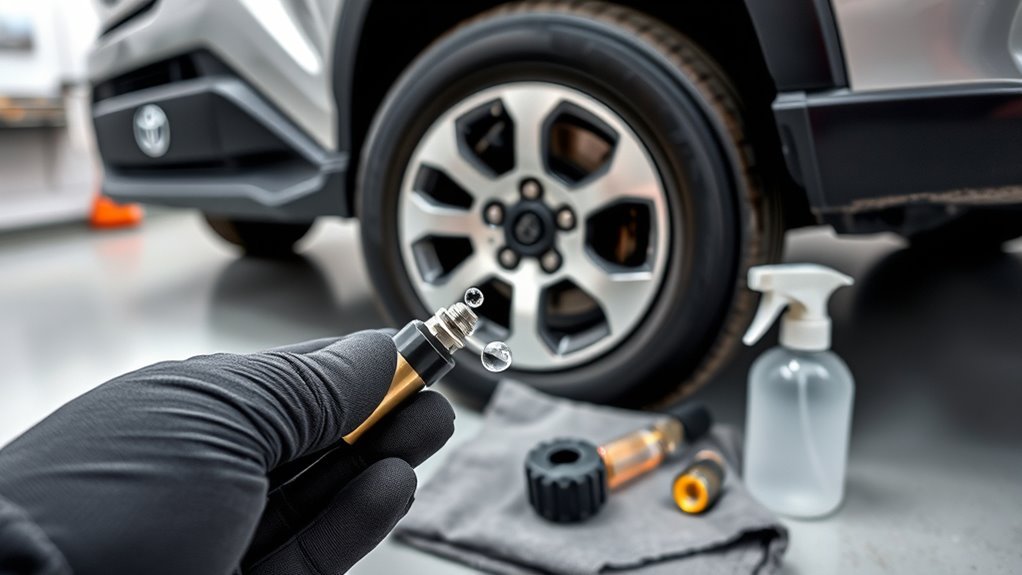
To fix a leaking tire valve stem on your RAV4, start by confirming the leak using soapy water or listening for a hiss. Gather essential tools like a valve core tool and replacement valve core. Remove the tire, unscrew the old valve stem, and inspect for damage. Insert the new valve stem, ensuring a snug fit, then inflate the tire and check for leaks again. You can find detailed steps for a successful repair ahead.
Confirming Your Tire Valve Stem Is Leaking
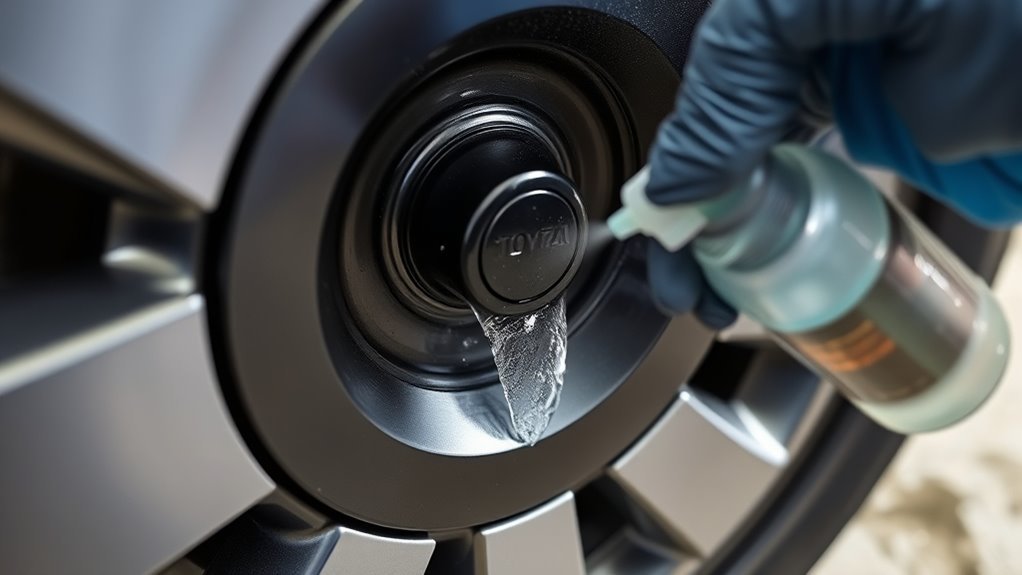
To confirm your tire valve stem is leaking, start by removing the valve cap and listening for any hissing sound that indicates escaping air. If you hear a hiss, it’s a clear sign of a leak. Next, apply a mixture of dish soap and water to the valve stem; bubbles forming will confirm the leak visually. Don’t forget to inspect the valve stem for any visible cracks or damage that could lead to air loss. It’s also vital to verify there are no punctures or leaks elsewhere on the tire, as this helps isolate the issue specifically to the valve stem. Regular tire pressure checks enhance valve maintenance, allowing you to identify leaks early and maintain peak tire safety. By staying proactive, you empower yourself to guarantee your vehicle’s performance remains uncompromised, contributing to a safer driving experience.
Essential Tools for Your Repair
Once you’ve confirmed the leak in your tire valve stem, it’s time to gather the necessary tools for the repair. Having the right equipment will streamline the process and guarantee safety. Here’s what you’ll need:
- Valve core tools: Essential for removing and replacing the valve core effortlessly.
- Replacement valve cores: These are critical for creating a proper seal once you’ve removed the damaged core.
- Safety glasses: Protect your eyes from debris and escaping air during the repair.
Additionally, a tire inflator is essential for refilling air after installing the new valve stem core. You might also want to have soapy water on hand; applying it to the valve stem can help detect any further leaks, as bubbles will form if air escapes. Following these tire maintenance tips will help assure a successful repair and keep you on the road safely.
How to Remove the Old Valve Stem: A Step-by-Step Guide
Start by jacking up your RAV4 to relieve tire pressure, ensuring a safe working environment. Next, grab a valve stem tool and unscrew the core of the valve stem. This will allow the tire to deflate rapidly, making it easier to work with.
Using a tire iron, carefully separate the tire bead from the wheel to access the valve stem from inside the tire. Once you’ve done that, take needle nose pliers and grip the valve stem firmly, pulling it away from the wheel. Be cautious to avoid damaging the rim during this process.
After you’ve removed the old valve stem, inspect the area for any corrosion or damage. This step is essential for effective tire maintenance, especially since different valve stem types can affect performance. Make sure the surface is clean before proceeding with the installation of your new valve stem.
Step-by-Step Instructions for Installing the New Valve Stem
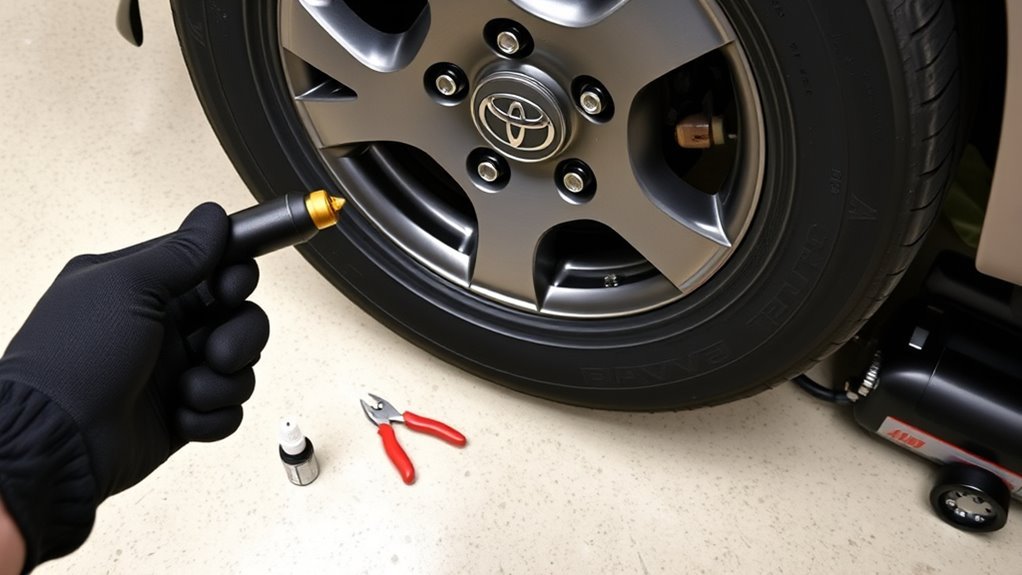
Installing a new valve stem is a straightforward process that guarantees your tire maintains proper pressure. Follow these steps for successful installation:
- Jack up your RAV4 and remove the tire for easy access.
- Use a valve stem tool to remove the old valve stem core, allowing the tire to deflate completely.
- Insert the new valve stem through the wheel hole, ensuring it fits snugly.
To ease installation, apply a small amount of lubricant or soap to the new valve stem. Once the stem is in place, inflate the tire to the desired psi. This is essential for effective valve stem maintenance, ensuring your tire pressure remains ideal. After inflating, check for leaks by applying soapy water to the valve stem and watching for bubbles. This simple process helps you maintain your tire’s integrity and drive safely.
How to Test for Leaks After Installing the New Valve Stem
After installing the new valve stem, you need to test for leaks to guarantee a proper seal. Inflate the tire to the recommended PSI, then apply a soap and water mixture to the valve stem and watch for bubbles. If you see persistent bubbles, it indicates a leak that requires further attention.
Visual Inspection For Bubbles
To guarantee your newly installed valve stem is leak-free, conducting a visual inspection for bubbles is essential. This method, known as bubble detection, allows you to quickly identify any leaks. Here’s how to perform the test:
- Mix a small amount of dish soap with water to create a soap solution.
- Apply this solution around the valve stem area after removing the cap.
- Observe for bubbles forming, which indicate air escaping.
Before starting, verify your tire pressure is within the recommended psi range for accurate results. Wait until the tire has fully re-inflated post-installation. If you see bubbles, recheck the valve stem installation, ensuring it’s securely tightened to prevent air loss.
Pressure Check After Installation
Once you’ve confirmed the valve stem is secure and free of leaks through bubble detection, it’s time to check the tire pressure. Refill the tire to the manufacturer’s recommended pressure, ensuring it’s securely mounted on the rim. After installation, monitor the tire pressure over the next few days. A significant drop can signal a leak around the new valve stem, indicating the need for further valve maintenance. Additionally, inspect the valve stem cap for any cracks or damage, as these can also lead to air loss. If leaks persist, consider rechecking your installation or consulting a professional for a thorough assessment. Keeping your tire pressure ideal is essential for safe driving and long-lasting performance.
Keep Your Valve Stems and Tires in Top Shape
Maintaining your valve stems and tires in top shape is essential for ideal vehicle performance and safety. Regular tire maintenance and valve stem care not only enhance your driving experience but also prevent potential issues down the road.
- Check tire pressure weekly to avoid valve stem seizing.
- Use high-quality, OEM valve stem caps to reduce removal difficulties.
- Apply anti-seize lubricant on chrome caps to prevent corrosion.
Inspect your valve stems for cracks or damage, as leaks often originate from these components, especially in aluminum rims. Consistent cleaning of your rims and sealing with high-quality tire bead sealant can help prevent leaks and extend the lifespan of your tire components. By staying proactive with these practices, you’ll guarantee your tires and valve stems perform at their best, keeping you safe and confident on the road.
Frequently Asked Questions
How Do You Stop a Valve Stem Seal From Leaking?
To stop a valve stem seal from leaking, inspect the valve stem materials for cracks, maintain proper tire pressure, and apply anti-seize lubricant. Regular tire maintenance helps prevent leaks and guarantees peak performance.
Can You Replace a Valve Stem Without Removing the Tire?
Absolutely, you can replace a valve stem without removing the tire. For effective valve replacement tips, make certain you follow proper tire maintenance advice, using tools like a valve core tool and lubricant for smooth installation.
How Much Does It Cost to Fix a Valve Stem Leak?
Fixing a valve stem leak typically costs between $150 to $200, including labor and parts. Regular tire maintenance, like checking pressure and using quality valve caps, can help prevent costly repairs in the future.
Conclusion
In wrapping up, you’ve skillfully addressed that pesky tire valve stem issue. By replacing it, you’ve not just restored your tire’s health but also guaranteed a smoother ride ahead. Remember, keeping an eye on your valve stems and tires can prevent future headaches. So, stay proactive and give your vehicle the care it deserves. With a little attention, you guarantee every journey is as seamless as possible. Happy driving!

Related Articles

Upsizing Wheels on a Toyota RAV4: Pros, Cons, and Considerations
Boost your Toyota RAV4's performance with larger wheels, but discover the hidden trade-offs that could impact your ride before you decide.
Read More
Can I Change Tire Size on My Toyota RAV4? Rules and Recommendations
Are you considering changing the tire size on your Toyota RAV4? Discover the essential rules and recommendations before making a decision.
Read More
What to Do If the TPMS Light Comes On in Your RAV4
Understand the steps to take when the TPMS light illuminates in your RAV4, as overlooking it could lead to serious tire problems.
Read More