
How Often to Replace Tires on a Toyota RAV4: Mileage Guide
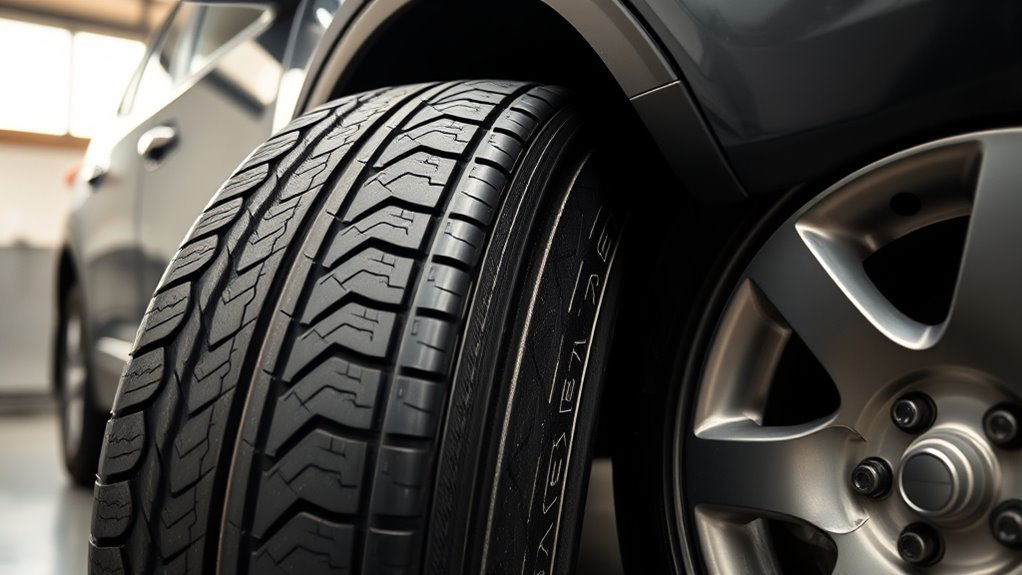
You should plan to replace your RAV4’s tires between about 40,000 and 70,000 miles, or sooner if tread, damage, or age compromise safety. Check tread depth: replace at 2/32″ and consider replacement around 4/32″ for wet traction. Rotate tires every 5,000–10,000 miles, monitor pressure, and inspect for cracking or dry rot—tires over six years often need replacement regardless of miles. Follow these rules and you’ll preserve performance and safety; more details follow.
Quick Answer: When to Replace RAV4 Tires (Years vs Miles)

Wondering when to change the tires on your RAV4? You should treat age and mileage as complementary limits: replace tires every six years regardless of miles because rubber degrades, and sooner if you hit the low-mileage end. Most RAV4 tires last 40,000–70,000 miles; consult the tire warranty and the manufacturer’s specs for your model to set expectations. Rotate tires every 5,000–7,500 miles to equalize wear and extend service life. Inspect for uneven wear patterns that signal alignment or suspension faults and mandate immediate service. If tread depth falls below 2/32“, replace immediately for safety, but don’t rely solely on tread—age and damage matter. Factor seasonal considerations: if you switch between summer and winter tires, monitor each set’s age and mileage separately and keep records tied to the warranty. Act proactively—replace on schedule or at the first sign of structural or wear issues to preserve mobility and autonomy.
Tread-Depth Guide: 2/32, 4/32 and How to Measure
You’ve covered when to replace tires; now focus on how much tread remains. Check tread wear regularly: 2/32″ is the legal minimum in many areas and signals immediate replacement for safe driving. At 4/32″, expect reduced traction in wet conditions; replacement is recommended to mitigate safety concerns before performance degrades further.
Measure precisely with a tread depth gauge for repeatable readings. If you don’t have one, use the penny test: insert Lincoln’s head down into the groove—if you see all of his head, tread depth is at or below 2/32″ and you must replace the tire. Record measurements across multiple tread grooves and both shoulders to detect uneven wear patterns.
Regular checks reduce hydroplaning risk and improve handling on your RAV4. Combine numerical measurement with inspection for cracking or sidewall damage; even adequate tread can mask aged rubber that creates separate safety concerns.
Toyota RAV4 Service Intervals That Affect Tire Checks (5K–10K)
At every 5,000-mile service you’ll get a tire rotation, which evens wear patterns and extends tread life. You’re given an early wear inspection at these intervals and a more thorough tread-depth and condition check at 10,000 miles to catch uneven or accelerated wear. Regular pressure checks during visits also help prevent irregular wear that would trigger earlier replacement.
Tire Rotation Frequency
Think of tire rotation as a routine balancing act: Toyota recommends rotating RAV4 tires every 5,000 to 10,000 miles to promote even wear and maintain handling. You’ll get rotation benefits at the 5K service, where technicians pair tire rotation with an oil change and multi-point inspection. That appointment is a built-in opportunity for tire maintenance tips: they’ll check pressure and tread depth, correct imbalances, and reposition tires per the recommended pattern. At 10K miles, another rotation continues that protective rhythm, extending tread life and stabilizing performance. Follow these intervals to safeguard traction and safety; disciplined rotations reduce uneven wear and delay replacement. You control longevity by adhering to scheduled rotations and monitoring pressure and tread at every service.
Early Wear Inspection
A 5,000‑ to 10,000‑mile service window gives you an early opportunity to catch uneven tire wear before it accelerates. You’ll get rotations at 5K and 10K, routine checks of pressure and tread depth, and brake pad assessments—each reduces asymmetric tire wear and extends life. Use systematic inspection techniques: measure tread depth, compare shoulder vs. center, verify pressures, and note any cupping or feathering. If brakes show uneven wear, address alignment or caliper issues promptly. Perform these inspections every 5,000 miles or six months, more often under severe use. Stay proactive to preserve handling and safety and reclaim control over maintenance.
| Item | Purpose |
|---|---|
| Rotation | Even tire wear |
| Tread check | Remaining life |
| Brake check | Prevents uneven tire wear |
When Tire Age Matters for RAV4 Tires (The 6‑Year Rule)
Mileage isn’t the only factor — you should replace RAV4 tires at about six years regardless of miles because rubber properties degrade over time. Inspect sidewall DOT date codes to confirm age and watch for dry rot indicators like hairline cracks, stiffness, or loss of elasticity. Have a qualified technician evaluate tires near the six‑year mark to determine whether age, not tread, warrants replacement.
Tire Age Versus Mileage
Every RAV4 tire reaches a point where age, not miles, dictates replacement: manufacturers and safety experts recommend swapping tires at about six years from the manufacture date because rubber compounds degrade over time. You’ll prioritize safety over false economy by tracking tire material aging via the DOT code on the sidewall; mileage becomes secondary once compounds harden. Follow a disciplined inspection and replacement cadence to maintain safe driving practices.
- Note manufacture week/year from the sidewall immediately.
- Treat six years as the upper service limit regardless of tread.
- Have a professional evaluate any older tire for structural issues.
- Replace to restore predictable handling and minimize blowout risk.
Act decisively—liberate yourself from uncertainty with timely replacement.
Signs Of Dry Rot
When inspecting tires after noting their manufacture date, watch for dry rot indicators like fine, branching cracks in the sidewall rubber, weathered or flaky tread surfaces, and small pieces of rubber separating from the casing. You should act: dry rot compromises integrity, raising blowout risk and degrading handling. Follow the six‑year rule as a baseline, but factor climate, storage, and use. Regular tire maintenance and dry rot prevention include visual checks, proper inflation, sun protection, and prompt replacement when deterioration appears. Consult manufacturer guidance and a tire professional for borderline cases. Embrace autonomy: maintain control of your vehicle’s safety through disciplined inspection and replacement decisions.
| Sign | Risk | Action |
|---|---|---|
| Sidewall cracks | High | Replace |
| Flaky tread | Medium | Inspect |
| Rubber separation | High | Replace |
| Weathered look | Medium | Monitor |
Manufacturer Date Codes
Tire age matters: check the DOT code stamped on the sidewall to read the four‑digit manufacture date (week and year) so you can apply the six‑year replacement guideline correctly. You’ll use that DOT sequence as the primary age indicator when evaluating tire manufacturing date and lifespan. Inspect regularly; rubber degrades even with adequate tread.
- Read the last four digits of the DOT code (WWYY) to determine age.
- Replace at six years from manufacture regardless of tread, unless earlier damage exists.
- Remove immediately if you observe cracks, bulges, or other structural defects.
- Cross‑check recommendations in your RAV4 owner’s manual and from the tire manufacturer.
Track age to preserve safety and autonomy on the road.
Driving Habits That Shorten RAV4 Tire Life

Although you might not notice it day-to-day, aggressive driving—rapid acceleration, hard braking, and sustained high speeds—raises tire temperatures and tread wear, cutting RAV4 tire life substantially. You can change that by controlling driving speed and smoothing inputs; higher speeds and repeated hard stops accelerate molecular breakdown in rubber and deepen wear patterns. Regularly using rough or unpaved road conditions transmits impact loads that fatigue sidewalls and tread blocks, so choose routes that reduce abuse when you can. Respect vehicle load limits: overloading increases contact patch stress, raises internal temperatures, and risks blowouts. Maintain correct tire pressure and inspect for uneven wear patterns; under- or over-inflation amplifies edge or center wear and masks alignment issues. Finally, adopt disciplined maintenance habits—frequent visual checks and prompt pressure corrections—to extend service life. These practical adjustments free you from avoidable replacements and preserve performance without compromising your independence on the road.
Tire-Specific Factors: Type, Load Rating, Alignment, and Rotation
Choose the right tire type for your RAV4— all-season, winter, or performance—because each has a different expected tread life (all-season ≈50k–70k miles). Match the tire’s load rating to your typical cargo and towing to prevent accelerated wear. Keep alignment within spec and rotate tires every 5,000–7,500 miles while maintaining correct pressure to maximize even tread wear and service life.
Tire Type Effects
Because different tire designs and maintenance choices directly affect wear patterns, you should factor tire type, load rating, alignment, and rotation into replacement timing. You’ll evaluate tire durability factors and the impact of weather when choosing tires for your RAV4: all-season offers 40,000–70,000 miles in typical climates, winter tires trade lifespan for cold traction, and performance tires wear faster under spirited use.
- Select tire type to match driving climate and desired lifespan.
- Match load rating to your payload; mismatches accelerate wear.
- Maintain alignment to avoid edge wear that shortens service life.
- Rotate every 5,000–7,500 miles to equalize wear and extend usable tread.
Monitor tread to 2/32″ and replace proactively to preserve freedom of safe mobility.
Load, Alignment, Rotation
When you match tire type and load rating to your RAV4 and keep alignment and rotation on schedule, you’ll maximize tread life and preserve handling. Choose tires whose load rating meets or exceeds vehicle specs; under-rated or overloaded tires and low tire pressure accelerate wear and risk failure. Select all-season for longer tread life, performance for grip but shorter mileage. Maintain proper alignment—correct camber, toe, and caster prevent uneven shoulder wear that shortens service life. Rotate tires every 5,000–7,500 miles to equalize wear patterns between axles and positions; this preserves balanced handling across varying driving conditions. Monitor tread depth and pressure frequently, adjust for payload or towing, and replace tires within the 25,000–50,000 mile expectancy based on observed wear.
How to Inspect RAV4 Tires at Home and During Service
A quick, regular inspection will catch issues before they become safety hazards, so check your RAV4’s tires at home at least once a month and whenever you notice handling changes. You’ll perform a focused tire inspection: measure tread wear with a penny (if Lincoln’s head is fully visible, the tire’s ≤2/32” and needs replacement), scan for uneven wear that signals alignment or inflation problems, and inspect sidewalls for cuts, bulges, or punctures that threaten integrity.
- Measure tread depth with a penny; record results and compare across all four tires.
- Check pressure monthly against the driver-door placard; adjust to spec for efficiency and control.
- Visually inspect sidewalls and tread for damage; don’t ignore bulges or deep cuts.
- At service visits, request balancing and a professional inspection to verify wear patterns and rotational history.
You’ll liberate yourself from surprise failures by staying methodical, consistent, and evidence-driven.
Replace vs Repair: When to Swap, Rotate, or Patch Tires
How do you decide whether to patch, rotate, or replace a RAV4 tire? Start by evaluating damage location and size: tread punctures under 1/4 inch can be patched safely; sidewall or shoulder damage requires replacement. Check tread depth—replace at 2/32″ or within six years regardless of wear. Rotate tires every 5,000–7,500 miles to equalize wear and delay replacement.
Factor in tire warranty and repair costs. If a puncture is covered under warranty and repair costs are minimal, patching preserves resources and performance. If uneven wear suggests alignment or suspension faults, repair those first; continued wear may force earlier replacement despite recent rotation.
Maintain recommended PSI monthly to optimize life and efficiency. When in doubt, prioritize structural integrity and controlled mobility: a patched tread with proper PSI and even wear is acceptable; any sidewall compromise, severe uneven wear, or age beyond six years mandates swap for safety and freedom on the road.
Choosing the Right Replacement RAV4 Tires (Tread & Season)
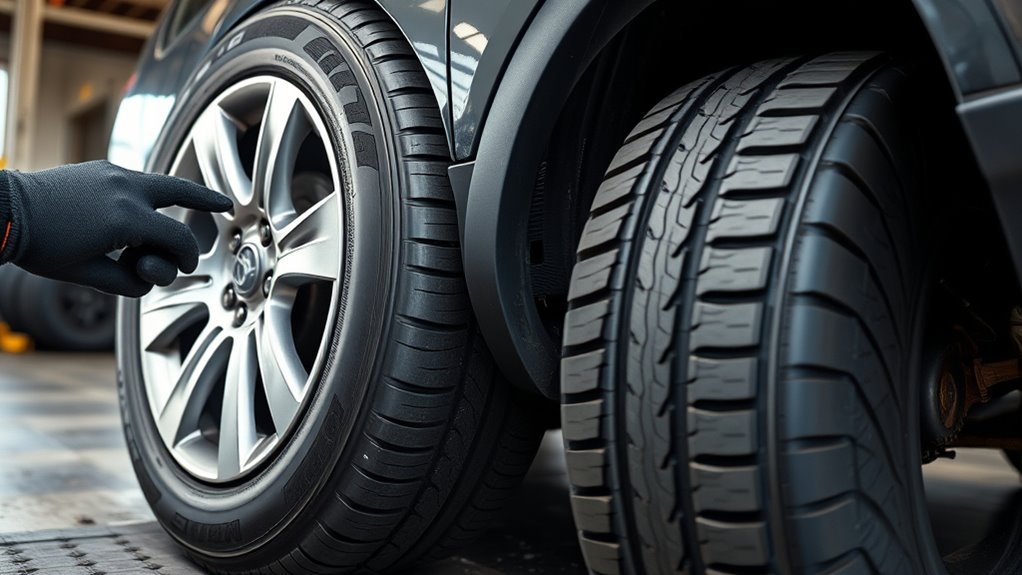
After you decide whether to patch or replace a tire, pick replacement rubber that matches your driving conditions and the RAV4’s OE specs: choose all-season tread for balanced year‑round performance or dedicated winter tires if temperatures regularly fall below 45°F. You’ll prioritize tire performance, load capacity, and speed rating to maintain safety and handling. Inspect tread depth; replace at 2/32″ minimum. Watch for uneven wear—correct alignment to preserve lifespan.
- Verify OE specs: rim size, load index, speed rating to confirm compatibility and predictable handling.
- Tread choice: select all‑season for mixed climates; choose dedicated winter tires when seasonal considerations demand improved snow/ice traction.
- Tread depth and wear: measure regularly; replace at legal/functional limits and address cupping or feathering immediately.
- Maintenance: rotate, balance, and align per schedule to maximize mileage and liberate yourself from premature replacements.
Make selections that free you from compromise—prioritize objective metrics over marketing claims.
Where to Buy RAV4 Tires in St. Louis (Recommended Models)
Looking for RAV4 tires in St. Louis? Start with local retailers—Discount Tire, Tire Rack, and Firestone—where you’ll find expert fitment and installation. You’ll see recommended models such as Michelin Defender LTX M/S, Goodyear Assurance WeatherReady, and Bridgestone Dueler H/L Alenza Plus; these all-season choices balance durability, traction, comfort, and fuel efficiency for regional conditions.
You’ll want retailers that mount and balance tires on-site to preserve alignment and rolling efficiency. Compare quoted labor, warranty terms, and available tire brands to maintain value and performance. Check inventory for exact size and load ratings that match your RAV4’s placard.
Time purchases to coincide with seasonal promotions and rebates to reduce cost without compromising specification. If you value autonomy, prioritize shops that provide transparent test data, clear warranty documentation, and quick installation windows so you can control maintenance on your terms.
Frequently Asked Questions
How Does Tire Warranty Coverage Affect Replacement Decisions for RAV4 Owners?
You’ll prioritize replacement timing based on warranty terms and tire maintenance records; you’ll file claims for defects, track tread wear thresholds, and choose earlier replacement if coverage lapses or safety margins shrink to retain autonomy and control.
Can TPMS Sensor Issues Influence When Tires Should Be Replaced?
Yes — you should: TPMS maintenance detects pressure problems early, and a sensor malfunction can mask slow leaks, forcing premature tire replacement or unsafe retention; you’ll inspect, recalibrate, and replace sensors to protect longevity and freedom.
What Impact Do Seasonal Storage Practices Have on Spare RAV4 Tire Lifespan?
Seasonal conditions directly affect spare RAV4 tire lifespan: temperature effects accelerate tire degradation, so you’ll use proper storage techniques—cool, dry, elevated, covered—to minimize ozone and UV exposure and preserve performance and freedom.
Are Run-Flat or Self-Sealing Tires Available for the RAV4?
Yes — you can fit run-flat or self-sealing tires on a RAV4; you’ll gain run flat benefits like limited mobility after puncture and self sealing technology that auto-plugs small holes, empowering you to stay mobile and independent.
How Do Aftermarket Wheel Sizes Affect Tire Wear and Replacement Timing?
50% of uneven wear shows within 5,000 miles: you’ll accelerate wear with larger aftermarket wheels if you neglect tire pressure, mismatched tread pattern, aggressive driving habits, or poor wheel alignment; monitor regularly and correct to reclaim control.
Conclusion
Keep tires within safe tread and age limits: replace them at 2/32″ or by 6 years even if tread remains. Check tread every oil/service interval (5–10K miles), watch driving habits that accelerate wear, and inspect for cuts, bulges, or uneven wear at home and during service. Repair small punctures when appropriate; replace when irreparable. Pick tires matched to season and load. Like a metronome, timely checks keep performance and safety in steady rhythm.

Related Articles

Upsizing Wheels on a Toyota RAV4: Pros, Cons, and Considerations
Boost your Toyota RAV4's performance with larger wheels, but discover the hidden trade-offs that could impact your ride before you decide.
Read More
Can I Change Tire Size on My Toyota RAV4? Rules and Recommendations
Are you considering changing the tire size on your Toyota RAV4? Discover the essential rules and recommendations before making a decision.
Read More
What to Do If the TPMS Light Comes On in Your RAV4
Understand the steps to take when the TPMS light illuminates in your RAV4, as overlooking it could lead to serious tire problems.
Read More