
Emergency Tire Repair Methods for a RAV4: What to Do

When you get a flat tire on your RAV4, park on a level surface and activate your flashers. Inspect the tire for visible damage, then grab your spare tire, jack, and lug wrench. Use a tire plug kit for quick fixes and check pressure regularly. Confirm safety by wearing reflective gear and moving to a safe area. Remember, temporary fixes aren’t permanent solutions. There are more detailed steps and tips you can use to address these issues effectively.
Immediate Actions for Flat Tires: What You Should Do First

When you discover a flat tire, your first step is to safely park your RAV4 on a level surface and activate your emergency flashers to alert other drivers. This guarantees tire safety and minimizes risks. Next, inspect the tire for visible punctures or embedded objects. Use a tire pressure gauge to check for low pressure. If you have a spare tire, retrieve it along with the jack and lug wrench. Loosen the lug nuts slightly while the vehicle remains on the ground.
Once you’ve jacked up the vehicle, remove the flat tire and install the spare. Tighten the lug nuts in a crisscross pattern to guarantee even pressure. After replacing the tire, drive a short distance to allow any temporary sealants to distribute evenly, then check the tire pressure again. If you’re uncertain or need assistance, don’t hesitate to call roadside assistance for support.
Essential Tools for Tire Repair Emergencies
When facing a tire emergency, having the right tools at your disposal is essential. A tire plug kit, portable air pump, and tire pressure gauge are vital for effective repairs and ensuring safety. Additionally, a can of tire sealant can serve as a quick fix until you reach professional help.
Recommended Repair Kits
A well-equipped tire repair kit can make all the difference during an emergency. Essential kits typically include plug kits, puncture rasps, rubber cement, and tire sealants, ensuring effective roadside repairs. For quick inflation, consider adding a battery-operated air pump to your kit. You’ll find various repair kit options at local auto parts stores or through online purchasing on platforms like Amazon. If you often face challenging repairs, heavy-duty kits from places like Harbor Freight offer added durability and reliability. Don’t forget to include a tire gauge to monitor pressure post-repair; this step is vital for maintaining safe driving conditions. Equip yourself wisely to handle any tire emergency with confidence.
Essential Repair Tools
Having the right tools on hand can make emergency tire repairs much more manageable. A tire plug kit is vital; it typically includes rubber plugs and a puncture rasp for preparing the hole. You’ll also need a portable air pump, preferably a battery-operated inflator, to reinflate the tire after the repair, ensuring you can safely reach a service location. Don’t forget needle nose pliers, which are essential for removing debris like nails or screws. Additionally, carrying a tire gauge helps you monitor the tire pressure post-repair, ensuring it’s adequately inflated for safe driving. If your heavy-duty repair kit includes rubber cement, it can simplify plug insertion, enhancing the effectiveness of your repair process.
How to Identify the Puncture Location
To identify a puncture location, start with a visual inspection of the tire for any embedded objects like nails or screws. Next, use the soapy water method to look for bubbles that indicate air escaping from the puncture. If necessary, consider dismounting the tire for a thorough examination of any internal damage.
Visual Inspection Techniques
When you suspect a puncture in your RAV4’s tire, effective visual inspection techniques can help pinpoint the issue quickly. Start by examining the tread for visible punctures or any embedded objects; these are common culprits of flat tires. Don’t overlook the valve stem; check it for cracks or leaks. Applying soapy water here can reveal air loss through bubbles. For a thorough check, immerse the tire in water to observe any escaping air forming bubbles at the puncture site. Regularly confirming tire pressure with a gauge is essential for tire safety, as it can help you detect slow leaks that might not be immediately visible. Stay proactive to maintain your RAV4’s performance.
Soapy Water Method
After completing a thorough visual inspection, the soapy water method serves as an effective way to pinpoint the exact location of a puncture. Mix soap and water in a spray bottle and apply it to the tire’s surface. Watch for bubble formation, which indicates escaping air.
- Focus on the tread area; repairs are often viable if punctures are under ¼ inch and at least an inch from the shoulder.
- Confirm your tire pressure is ideal before testing.
- Regularly inspect for visible damage or embedded objects to prevent unexpected flats.
- After identifying a puncture, consult a professional for a thorough inspection, even if a temporary fix is applied.
Immersion Test Procedure
The immersion test procedure is a reliable method for pinpointing punctures in your tire. Start by fully deflating the tire to enhance visibility, then submerge it in water. Watch for escaping air bubbles, which indicate the leak’s location. Alternatively, you can use a soapy sponge to coat the tire surface; any punctures will produce bubbles at the site of the leak. Conduct this test in a well-lit area to guarantee you can easily observe any bubbles forming. Once you identify the puncture, mark it for reference before proceeding with repairs or seeking professional assistance. Regular tire maintenance, including monitoring air pressure, can prevent future issues and keep your RAV4 performing at its best.
Quick Fixes: Using Fix-a-Flat
Fix-a-Flat offers a quick solution for punctured tires, making it an essential tool for RAV4 drivers in emergencies. With its tire sealant benefits, you can swiftly address tire issues without hassle. Here’s how to use it effectively:
- Remove the valve cap from the tire’s valve stem.
- Attach the canister securely to the valve.
- Press the button to release the sealant and inflate the tire.
- Drive a short distance to evenly distribute the sealant inside.
After using Fix-a-Flat, always check the tire pressure and inflate as necessary for peak performance. Remember, while this method is great for emergency tire preparation, it’s not a permanent fix. A professional inspection is vital afterward to verify no underlying damage exists. This quick fix can get you back on the road, but prioritize long-term solutions for your RAV4’s safety.
Temporary Fixes vs. Long-Term Repairs
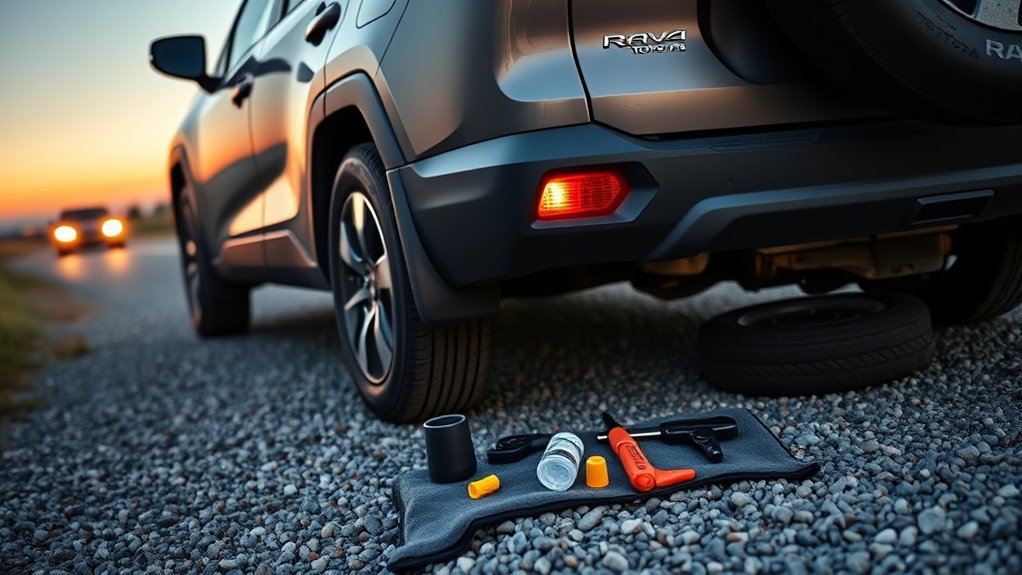
When dealing with tire issues, it’s essential to understand the difference between temporary fixes and long-term repairs. While solutions like tire sealants can provide quick relief, they only mask the problem and necessitate a professional inspection afterward. Long-term repairs, including proper patching and internal evaluations, guarantee your tire remains safe and reliable on the road.
Temporary Solutions Overview
Although temporary solutions like tire sealants can quickly address minor punctures, they aren’t meant to replace long-term repairs. These fixes can be lifesavers in emergencies, but you should always follow up with a professional inspection.
- Temporary sealants inflate and seal small punctures.
- Roadside assistance may be necessary for extensive damage.
- Punctures under ¼-inch in the tread area are generally repairable.
- Driving on a flat tire can worsen damage, making it irreparable.
While these methods provide immediate relief, they shouldn’t substitute for long-lasting repairs or tire replacements. Prioritize safety and reliability by ensuring your tire is thoroughly checked after any temporary fix.
Permanent Repair Considerations
While temporary fixes can provide immediate relief, understanding the necessity of permanent repairs is vital for your safety. Temporary solutions, like sealants, may mask underlying issues. Professional tire inspections are essential to assess damage and adhere to repair specifications. Remember, plugging a tire, especially near the sidewall, is often insufficient for long-term use.
| Repair Type | Considerations |
|---|---|
| Temporary Fix | Quick relief; underlying damage may persist. |
| Permanent Repair | Requires tire inspection; guarantees safety and longevity. |
Regular maintenance and pressure checks not only extend tire life but also minimize the need for emergency repairs. Prioritize your tire’s condition to guarantee a safe driving experience.
When to Opt for a Spare Tire Over Repairs?

Opting for a spare tire instead of attempting repairs can be essential for your safety and vehicle performance. Knowing when to make this choice can save you time and guarantee your peace of mind. Here are some scenarios where a spare tire is the best option:
- The puncture is in the sidewall or shoulder, areas deemed unrepairable.
- You have multiple punctures or damage exceeding a ¼-inch diameter.
- The repair requires tools or expertise you lack, making a spare a quicker alternative.
- A professional repair shop advises against repairs after inspection.
In these cases, using a spare tire not only enhances your safety but also assures better vehicle performance. Always prioritize your well-being over repair strategies that may compromise your safety on the road.
Safety Precautions During Tire Repairs
When performing tire repairs, guaranteeing your safety is paramount. Always wear safety gear, including a reflective vest, to increase your visibility to oncoming traffic. Before starting any repair work, move your RAV4 to a safe, level area away from busy roads. This minimizes the risk of accidents during the repair process.
Set up warning triangles around your vehicle to alert drivers of your presence. Make sure you have a tire repair kit, air pump, and sealant readily accessible in your vehicle. Regularly check the air pressure of your spare tire and repair kit to verify they’re functional when needed. Keeping a backup repair kit enhances safety and provides peace of mind. By prioritizing roadside awareness and preparation, you can tackle tire issues with confidence and reduce the likelihood of further complications.
Mistakes People Make When Repairing Tires
Properly repairing a tire requires attention to detail, yet many overlook critical steps that can compromise safety. Understanding common misconceptions and setting realistic repair expectations are essential to guarantee your safety on the road.
Proper tire repairs demand meticulous attention; overlooking key steps can jeopardize your safety on the road.
- Failing to inspect for internal damage before attempting a repair can lead to ineffective fixes.
- Using incorrect tools, like a standard screwdriver instead of a puncture rasp, results in poor plug insertion.
- Neglecting to check tire pressure after a repair means risking blowouts from under-inflated tires.
- Assuming that temporary fixes like Fix-a-Flat are permanent solutions ignores the need for professional inspection.
Professional Help: When Is It Necessary?
How can you tell if your tire needs professional help? If you find a puncture on the sidewall or within an area deemed unrepairable—like within one inch of the shoulder—it’s time to seek expert assistance for safety. Extensive damage or hidden internal problems require a professional tire inspection to avoid future failures. If you’re dealing with repeated flat tires or notice rapid air loss after a temporary fix, don’t hesitate to consult a professional for a thorough assessment. For complex repairs or when you lack the right tools, contacting roadside assistance can guarantee the situation is handled safely and effectively. Always rely on professional help if you’re unsure about the repairability of your tire; the consequences of driving on a compromised tire can be severe. Following proper repair guidelines is essential for maintaining safety and performance.
Regular Maintenance for Tire Longevity
To guarantee your RAV4’s tires last longer and perform at their highest level, regular maintenance is essential. Here are key practices to follow:
- Check tire pressure monthly with a gauge, confirming it matches the recommended PSI to prevent uneven wear and boost fuel efficiency.
- Rotate your tires every 5,000 to 7,500 miles to promote even tread wear and extend their lifespan.
- Inspect tires for damage, like punctures or embedded objects, at least once a month, addressing any issues promptly.
- Maintain proper wheel alignment and balance to avoid premature tire wear and enhance handling.
Additionally, replace tires when tread depth falls below 2/32 of an inch to guarantee peak traction and safety, especially in wet conditions. By committing to these maintenance practices, you’ll not only prolong the life of your tires but also enhance your driving experience in your RAV4.
Frequently Asked Questions
Does Glue Tread Really Work?
Glue tread can work for temporary fixes, but its effectiveness varies. You’ll find tire patching techniques like this useful for short distances, though professional repairs remain essential for long-term safety and performance.
Can a Toyota Roadside Fix a Flat Tire?
Think of Toyota roadside assistance as your tire’s superhero. Yes, they can fix a flat using tire repair kits and emergency tools. Just remember, sidewall damage often requires a different approach. Stay prepared!
What Do I Do if My Tire Goes Flat and I Don’t Have Roadside?
If your tire goes flat without roadside assistance, grab your emergency kit, retrieve the spare tire, and use the lug wrench to change it. Regularly check your spare’s air pressure to guarantee reliability.
Conclusion
In emergencies, addressing a flat tire swiftly is essential. Remember, preparation prevents panic. With the right tools and techniques, you can tackle tire troubles effectively. Always prioritize safety, steering clear of common mistakes. Seek professional support when necessary, guaranteeing your RAV4 rolls safely. Regular maintenance guarantees longevity, keeping your ride reliable. Stay savvy and secure on the road—your tires deserve diligent care for dependable driving. Don’t delay, deal decisively with any tire troubles you encounter!

Related Articles

Upsizing Wheels on a Toyota RAV4: Pros, Cons, and Considerations
Boost your Toyota RAV4's performance with larger wheels, but discover the hidden trade-offs that could impact your ride before you decide.
Read More
Can I Change Tire Size on My Toyota RAV4? Rules and Recommendations
Are you considering changing the tire size on your Toyota RAV4? Discover the essential rules and recommendations before making a decision.
Read More
What to Do If the TPMS Light Comes On in Your RAV4
Understand the steps to take when the TPMS light illuminates in your RAV4, as overlooking it could lead to serious tire problems.
Read More